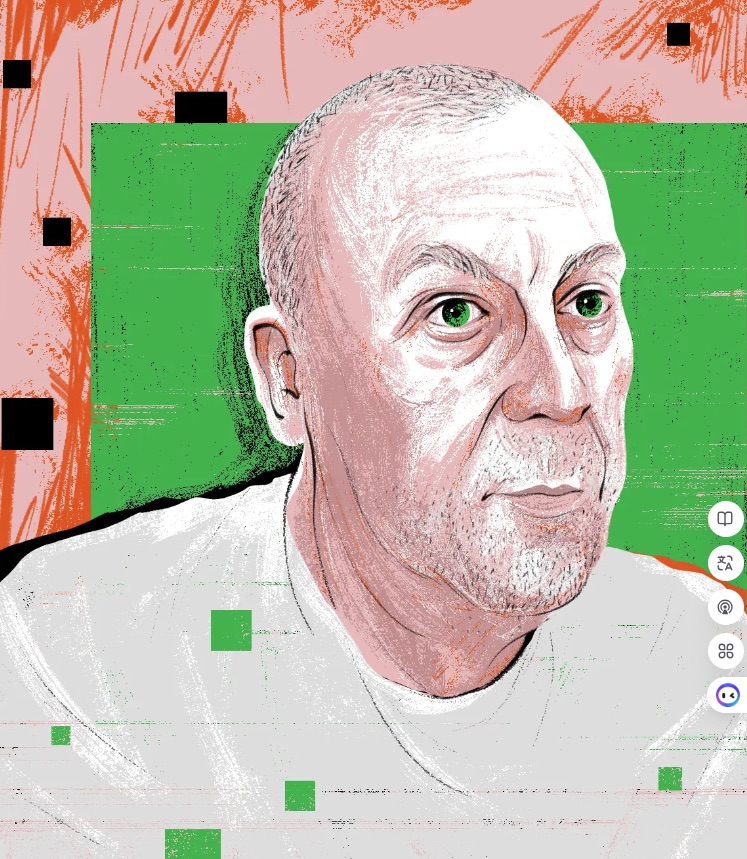
ニック・ランド
Nick Land
The
Lede, Silicon Valley’s Favorite Doomsaying Philosopher
☆ニック・ランド[Nick Land]は、アクセラレーション主義[加速主義:accelerationism]と
いうイデオロギーを広めたことで最もよく知られるイギリスの哲学者である[2]。彼の著作は思弁的リアリズムの発展と結びつけられており[3][4]、学
術論文の形式的な慣例から逸脱し、非正統的かつ難解な影響を取り入れている[5]。彼の著作の多くは、2011年のアンソロジー『Fanged
Noumena』に収録された。
1990年代、ランドはウォーリック大学において、自身とサイバーフェミニスト哲学者サディ・プラントが共同設立した「理論・フィクション」集団「サイバ
ネティック・カルチャー・リサーチ・ユニット(CCRU)」と密接に関わっていた。[3][6]
この時期、ランドはポスト構造主義理論や、バタイユ、マルクス、ドゥルーズ&ガタリといった左派思想家、さらにはSF、レイヴ・カルチャー、オカルトから
もインスピレーションを得ていた。[7]
また、独自の現実を生み出すミーム的な思想を指す「ハイパースティション(hyperstition)」という用語を考案した。
ランドは1998年にウォリック大学を辞任した。アンフェタミンの乱用を経て、2000年代初頭に精神の苦悩を経験し、公の場から姿を消した。[8]
その後、上海に移住し、政治的右派の人物として再登場し、「ダーク・エンライトメント」として知られる反動運動の基礎を築いた思想家となった。彼の関連著
作では、反平等主義的かつ反民主主義的な思想が探求されている。
| Nick Land is an
English philosopher best known for popularising the ideology of
accelerationism.[2] His work has been tied to the development of
speculative realism,[3][4] and departs from the formal conventions of
academic writing, incorporating unorthodox and esoteric influences.[5]
Much of his writing was anthologized in the 2011 collection Fanged
Noumena. In the 1990s, Land was closely affiliated with the Cybernetic Culture Research Unit (CCRU), a "theory-fiction" collective co-founded by Land and cyberfeminist philosopher Sadie Plant at the University of Warwick.[3][6] During this era, Land drew inspiration from post-structuralist theory and leftist thinkers like Bataille, Marx, and Deleuze & Guattari as well as science fiction, rave culture, and the occult.[7] He also coined the term hyperstition to refer to memetic ideas that bring about their own reality. Land resigned from Warwick in 1998. After a period of amphetamine abuse, he suffered a breakdown in the early 2000s and disappeared from public view.[8] Later, he moved to Shanghai and re-emerged as a figure on the political right, becoming a foundational thinker in the reactionary movement known as the Dark Enlightenment. His related writings have explored anti-egalitarian and anti-democratic ideas. |
ニック・ランド[Nick Land]は、アクセラレーション主義[加速主義:accelerationism]というイデオロギーを広めた
ことで最もよく知られるイギリスの哲学者である[2]。彼の著作は思弁的リアリズム[speculative realism]の発展と結びつけられており[3][4]、学術論文の形式的な慣例から
逸脱し、非正統的かつ難解な影響を取り入れている[5]。彼の著作の多くは、2011年のアンソロジー『Fanged Noumena』に収録された。 1990年代、ランドはウォーリック大学において、自身とサイバーフェミニスト哲学者サディ・プラントが共同設立した「理論・フィクション」集団「サイバ ネティック・カルチャー・リサーチ・ユニット(CCRU)」と密接に関わっていた。[3][6] この時期、ランドはポスト構造主義理論や、バタイユ、マルクス、ドゥルーズ&ガタリといった左派思想家、さらにはSF、レイヴ・カルチャー、オカルトから もインスピレーションを得ていた。[7] また、独自の現実を生み出すミーム的な思想を指す「ハイパースティション(hyperstition)」という用語を考案した。 ランドは1998年にウォリック大学を辞任した。アンフェタミンの乱用を経て、2000年代初頭に精神の苦悩を経験し、公の場から姿を消した。[8] その後、上海に移住し、政治的右派の人物として再登場し、「ダーク・エンライトメント」として知られる反動運動の基礎を築いた思想家となった。彼の関連著 作では、反平等主義的かつ反民主主義的な思想が探求されている。 |
| Biography Land obtained a PhD in 1987 in the University of Essex under David Farrell Krell, with a thesis on Heidegger's 1953 essay Die Sprache im Gedicht (Language in the Poem), which is about Georg Trakl's work.[9] He began as a lecturer in continental philosophy at the University of Warwick from 1987 until his resignation in 1998.[5] In 1992, he published The Thirst for Annihilation: Georges Bataille and Virulent Nihilism.[10] Land published an abundance of shorter texts, many in the 1990s during his time with the CCRU.[3] Most of these articles are compiled in the retrospective collection Fanged Noumena, published in 2011. At Warwick, Land and Sadie Plant co-founded the Cybernetic Culture Research Unit (CCRU), an interdisciplinary research group described by philosopher Graham Harman as "a diverse group of thinkers who experimented in conceptual production by welding together a wide variety of sources: futurism, technoscience, philosophy, mysticism, numerology, complexity theory, and science fiction, among others".[11] During his time at Warwick, Land participated in Virtual Futures, a series of cyber-culture conferences. Virtual Futures 96 was advertised as "an anti-disciplinary event" and "a conference in the post-humanities". One session involved Land "lying on the ground, croaking into a mic", recalls Robin Mackay, while Mackay played jungle records in the background.[2] He was also the thesis advisor of some PhD students.[12] After he resigned, the CCRU continued meeting under his leadership. In the early 2000s, Land suffered a breakdown after a period of "fanatical" amphetamine abuse, disappearing from public.[2] Land taught at the New Centre for Research & Practice until March 2017, when the Centre ended its relationship with him "following several tweets by Land this year in which he espoused intolerant opinions about Muslims and immigrants".[13][better source needed] As of 2017, Land resided in Shanghai.[2] During the COVID-19 pandemic, he experienced Shanghai's strict lockdown measures firsthand. After Xenosystems, his primary blog, was removed from the internet in 2022, he took a hiatus from social media before returning later that year. In October 2023, he launched a new social media account, Xenocosmography, marking a shift toward religious and numerological themes.[14] In February 2026, Land met Curtis Yarvin for the first time in San Francisco. [15] |
略歴 ランドは1987年、エセックス大学にてデヴィッド・ファレル・クレルの指導の下、ゲオルク・トラクルの作品に関するハイデガーの1953年の論文『詩に おける言語(Die Sprache im Gedicht)』を主題とした博士論文を提出し、博士号を取得した。[9] 1987年から1998年に辞任するまで、ウォリック大学で大陸哲学の講師を務めた。[5] 1992年には、『The Thirst for Annihilation: Georges Bataille and Virulent Nihilism』を出版した。[10] ランドは数多くの短編テキストを発表しており、その多くは1990年代、CCRUに所属していた時期に執筆されたものである。[3] これらの論文のほとんどは、2011年に出版された回顧集『Fanged Noumena』に収録されている。 ウォリック大学において、ランドとサディ・プラントは「サイバネティック・カルチャー・リサーチ・ユニット(CCRU)」を[1993年に]共同設立した。これは学際的な 研究グループであり、哲学者グラハム・ハーマンはこれを「未来主義、テクノサイエンス、哲学、神秘主義、数秘術、複雑系理論、SFなど、多種多様な源泉を 融合させることで概念的生産の実験を行った、多様な思想家たちの集団」と評している。[11] ウォーリック大学在学中、ランドはサイバーカルチャーに関する一連の会議「バーチャル・フューチャーズ」に参加した。「バーチャル・フューチャーズ96」 は、「反学問的イベント」であり、「ポスト・ヒューマニティーズにおける会議」として宣伝されていた。ロビン・マッケイの回想によれば、あるセッションで はランドが「地面に横たわり、マイクに向かってガラガラと声を絞り出していた」という。その間、マッケイはバックグラウンドでジャングル・ミュージックの レコードを流していた。[2] また、彼は数名の博士課程学生の論文指導教員でもあった。[12] 彼が辞任した後も、CCRUは彼の指導の下で活動を続けた。2000年代初頭、ランドは「狂信的」なアンフェタミン乱用を経て苦悩し、公の場から姿を消し[CCRUも2003年には消滅し] た。[2][CCRU-pdf] ランドは2017年3月までニュー・センター・フォー・リサーチ・アンド・プラクティスで教鞭を執っていたが、同センターは「今年、ランドがイスラム教徒 や移民に対する不寛容な意見を唱えた一連のツイートを理由に」彼との関係を断った。[13][より信頼できる出典が必要] 2017年時点で、ランドは上海に居住していた。[2] COVID-19のパンデミック中、彼は上海の厳しいロックダウン措置を身をもって体験した。2022年に彼の主要なブログである 「Xenosystems」がインターネット上から削除された後、彼はソーシャルメディアから一時離れていたが、同年後半に復帰した。2023年10月、 彼は新しいソーシャルメディアアカウント「Xenocosmography」を開設し、宗教や数秘術をテーマとする方向へと転換した。[14] 2026年2月、ランドはサンフランシスコでカーティス・ヤーヴィンと初めて会った。[15] |
| Concepts Vincent Le defines Land's work in general, from his time at Warwick to the 2000s, by its critique of anthropocentrism, particularly in Immanuel Kant's transcendental idealism and its denial of a reality beyond human comprehension.[16][17][18] Land's work has been influential to the political philosophy of accelerationism; Land views capitalism as the driver of modernity[19][20] and deterritorialization,[16][21] advocating its use to dissolve existing social systems[19] and reach a technological singularity.[16][20] Along with the other members of CCRU, Land wove together ideas from the occult, cybernetics, science fiction, and poststructuralist philosophy to try to describe the phenomena of technocapitalist acceleration.[2] His work would also incorporate what Le called "numbering practices", drawing upon mathematical concepts such as Cantor's set theory and Gödel's incompleteness theorems; as well as incorporating Kabbalah and numerology.[17] Land coined the term hyperstition, a portmanteau of superstition and hyper, to describe something "equipoised between fiction and technology". According to Land, hyperstitions are ideas that, by their very existence as ideas, bring about their own reality.[22][23] Land later contributed to the Dark Enlightenment—also known as the neo-reactionary movement (NRx)—which opposes egalitarianism and democracy. According to reporter Dylan Matthews, Land believes democracy restricts accountability and freedom.[24] His Dark Enlightenment work also contributes to his accelerationism; he views democratic and egalitarian policies as only delaying acceleration and the technocapital singularity. Thus, he prefers capitalist monarchies to pursue long-term technological progress, as he believes democracy focuses on short-term public interests.[20][25] Shuja Haider notes, "His sequence of essays setting out its principles [has] become the foundation of the NRx canon."[23] His writing has also discussed themes of scientific racism and eugenics, or what he has called "hyper-racism".[26][27][28][29] Since 2016, he has increasingly been recognised as an inspiration for the alt-right.[30] Land disputes that the NRx movement is a movement, and defines the alt-right as distinct from the NRx.[31] Around this time, Land would also turn to writing abstract horror novellas, drawing upon writers such as H. P. Lovecraft as a vehicle for his philosophical critique of anthropocentrism.[18] |
概念 ヴィンセント・ルは、ウォーリック大学在籍時から2000年代に至るランドの著作全般を、人間中心主義、とりわけイマヌエル・カントの超越論的観念論およ び人間の理解を超えた現実の否定に対する批判によって定義している。[16][17][18] ランドの著作は、アクセラレーション主義の政治哲学に多大な影響を与えてきた。ランドは資本主義を、近代性[19][20]および脱領土化[16] [21]の原動力と見なし、既存の社会システムを解体し[19]、技術的特異点に到達するために資本主義を活用することを提唱している。[16][20] CCRUの他のメンバーと共に、ランドはオカルト、サイバネティクス、SF、ポスト構造主義哲学からの思想を織り交ぜ、テクノ資本主義的加速という現象を 記述しようとした[2]。彼の著作には、レが「数え上げの実践」と呼んだものも取り入れられており、カンタールの集合論やゲーデルの不完全性定理といった 数学的概念に加え、カバラや数秘術も取り入れられている。[17] ランドは、「フィクションとテクノロジーの狭間に均衡を保つもの」を表現するために、「迷信(superstition)」と「ハイパー(hyper)」 を組み合わせた造語「ハイパースティション(hyperstition)」を考案した。ランドによれば、ハイパースティションとは、アイデアとしての存在 そのものが、それ自体の現実を生み出すような思想のことである。[22] [23] ランドは後に、平等主義や民主主義に反対する「ダーク・エンライトメント」(ネオ・リアクション運動(NRx)としても知られる)に貢献した。記者ディラ ン・マシューズによれば、ランドは民主主義が説明責任と自由を制限すると考えている。[24] 彼のダーク・エンライトメントに関する著作は、彼のアクセラレーション主義にも寄与している。彼は、民主主義的・平等主義的な政策は、アクセラレーション とテクノキャピタル・シンギュラリティを遅らせるだけだと見なしている。したがって、彼は民主主義が短期的な公共の利益に焦点を当てていると考えるため、 長期的な技術的進歩を追求するには資本主義的君主制を好む。[20][25] シュジャ・ハイダーは、「その原則を提示した一連のエッセイが、NRxの正典の基礎となっている」と指摘している。[23] 彼の著作では、科学的人種主義や優生学、あるいは彼が「ハイパー・レイシズム」と呼ぶテーマについても論じられている。[26][27][28][29] 2016年以降、彼はオルタナ右翼のインスピレーション源としてますます認知されるようになった。[30] ランドは、NRx運動がひとつの運動であることに異議を唱え、オルタナ右翼をNRxとは区別して定義している。[31] この頃、ランドはH・P・ラヴクラフトなどの作家を参考に、人間中心主義に対する哲学的批判の手段として、抽象的なホラー中編小説の執筆にも取り組むようになった。[18] |
| Books Heidegger's 'Die Sprache im Gedicht' and the Cultivation of the Grapheme Archived 31 October 2020 at the Wayback Machine (PhD Thesis, University of Essex, 1987). Textual transcription. The Thirst For Annihilation: Georges Bataille and Virulent Nihilism (An Essay in Atheistic Religion) (London and New York: Routledge, 1992). Machinic Postmodernism: Complexity, Technics and Regulation (with Keith Ansell-Pearson & Joseph A. McCahery) (SAGE Publications, 1996) The Shanghai World Expo Guide 2010 (China Intercontinental Press, 2010). Shanghai Basics (China Intercontinental Press, 2010). Land, Nick (2011). Mackay, Robin; Brassier, Ray (eds.). Fanged Noumena: Collected Writings 1987-2007. London: Urbanomic. ISBN 978-0955308789. Calendric Dominion (Urbanatomy Electronic, 2013). Suspended Animation (Urbanatomy Electronic, 2013). Fission (Urbanomic, 2014). Templexity: Disordered Loops through Shanghai Time (Urbanatomy Electronic, 2014). Phyl-Undhu: Abstract Horror, Exterminator (Time Spiral Press, 2014). Shanghai Times (Urbanatomy Electronic, 2014) ASIN B00IGKZPBA. Dragon Tales: Glimpses of Chinese Culture (Urbanatomy Electronic, 2014) ASIN B00JNDHBGQ. Xinjiang Horizons (Urbanatomy Electronic, 2014) ASIN B00JNDHDVY. Chasm (Time Spiral Press, 2015) ASIN B019HBZ2Q4. The Dark Enlightenment (Imperium Press, 2022) ISBN 978-1922602688. Xenosystems (Passage Publishing, 2024) ASIN B0D8MNTVHY Urban Future (Noumena Institute, 2025) ISBN 978-1922602688. Outsideness: 2013–2023 (Noumena Institute, 2025) ISBN 978-0646712703. Occult Xenosystems (Noumena Institute, 2025) ISBN 978-0646730295 |
書籍 ハイデガーの『詩における言語』とグラフエームの育成 2020年10月31日ウェイバックマシンにアーカイブ済み(博士論文、エセックス大学、1987年)。テキスト転写。 『消滅への渇望:ジョルジュ・バタイユと猛毒的なニヒリズム(無神論的宗教に関する一論考)』(ロンドンおよびニューヨーク:Routledge、1992年)。 『機械的ポストモダニズム:複雑性、技術、規制』(キース・アンセル=ピアソン、ジョセフ・A・マッカヘリーとの共著)(SAGE Publications、1996年) 『2010年上海万博ガイド』(チャイナ・インターコンチネンタル・プレス、2010年)。 『上海の基礎知識』(チャイナ・インターコンチネンタル・プレス、2010年)。 ランド、ニック(2011年)。マッケイ、ロビン;ブラッシエ、レイ(編)。『牙を持つヌメノン:1987-2007年 著作集』。ロンドン:アーバノミック。ISBN 978-0955308789。 『Calendric Dominion』(アーバナトミー・エレクトロニック、2013年)。 『Suspended Animation』(アーバナトミー・エレクトロニック、2013年)。 『Fission』(アーバノミック、2014年)。 『Templexity: Disordered Loops through Shanghai Time』(アーバナトミー・エレクトロニック、2014年)。 『Phyl-Undhu: Abstract Horror, Exterminator』(タイム・スパイラル・プレス、2014年)。 『Shanghai Times』(アーバナトミー・エレクトロニック、2014年)ASIN B00IGKZPBA。 『Dragon Tales: Glimpses of Chinese Culture』(Urbanatomy Electronic、2014年)ASIN B00JNDHBGQ。 『Xinjiang Horizons』(Urbanatomy Electronic、2014年)ASIN B00JNDHDVY。 『Chasm』(Time Spiral Press、2015年)ASIN B019HBZ2Q4。 『ダーク・エンライトメント』(インペリウム・プレス、2022年)ISBN 978-1922602688。 『ゼノシステムズ』(パッセージ・パブリッシング、2024年)ASIN B0D8MNTVHY 『アーバン・フューチャー』(ヌーメナ研究所、2025年)ISBN 978-1922602688。 『アウトサイデネス:2013–2023』(ヌメナ・インスティテュート、2025年)ISBN 978-0646712703。 『オカルト・ゼノシステムズ』(ヌメナ・インスティテュート、2025年)ISBN 978-0646730295 |
| References 01. Fisher, Mark (2014) [2012]. "Terminator vs Avatar". In Mackay, Robin; Avanessian, Armen (eds.). #Accelerate: The Accelerationist Reader. pp. 341–2. Beckett, Andy (11 May 2017). "Accelerationism: How a fringe philosophy predicted the future we live in". The Guardian. Archived from the original on 11 April 2022. Retrieved 13 July 2017. Fisher, Mark (1 June 2011). "Nick Land: Mind Games". Dazed and Confused. Archived from the original on 9 June 2018. Retrieved 29 September 2014. de Cisneros, Roc Jiménez (9 September 2014). "The Accelerationist Vertigo". CCCB LAB. Archived from the original on 22 April 2025. Retrieved 10 October 2025. Mackay, Robin (27 February 2013). "Nick Land – An Experiment in Inhumanism". Divus. Archived from the original on 25 November 2020. Land, Nick (2011). Fanged Noumena: Collected Writings 1987–2007. Introduction by Ray Brassier and Robin Mackay. Falmouth: Urbanomic. ISBN 978-0955308789. Wark, McKenzie. "On Nick Land". Verso. Retrieved 23 January 2025. Beckett, Andy (11 May 2017). "Accelerationism: how a fringe philosophy predicted the future we live in". The Guardian. ISSN 0261-3077. Archived from the original on 11 April 2022. Retrieved 24 July 2019. Land himself, after what he later described as "perhaps a year of fanatical abuse" of "the sacred substance amphetamine", and "prolonged artificial insomnia ... devoted to futile 'writing' practices", suffered a breakdown in the early 2000s, and disappeared from public view. Acknowledgement section of Heidegger's 'Die Sprache im Gedicht' and the Cultivation of the Grapheme Archived 31 October 2020 at the Wayback Machine (PhD Thesis, University of Essex, 1987) Wark, McKenzie (20 June 2017). "On Nick Land". Verso Books. Archived from the original on 14 July 2019. Retrieved 14 July 2019. Harman, Graham (2011). The Speculative Turn: Continental Materialism and Realism. re.press. ISBN 978-0980668346 – via Google Books. Sawhney, Deepak Narang (May 1996). Axiomatics: the apparatus of capitalism (Ph.D. dissertation). University of Warwick. "Statement on Nick Land". Facebook. 29 March 2017. Archived from the original on 7 September 2019. Retrieved 14 July 2019. Miller, Daniel (5 October 2025). "Who Is Nick Land?". Tablet Magazine. Retrieved 7 October 2025. "Sunset on the Dark Enlightenment: Inside Nick Land's San Francisco 'Arrival Party'". Vice. 12 February 2026. Le, Vincent (23 March 2018). ""These Violent Delights Have Violent Ends": Decrypting Westworld as Dual Coding and Corruption of Nick Land's Accelerationism". Colloquy: Text Theory Critique. (34): 3–23 – via EBSCO. Le, Vincent (2019). "One Two Many: On Nick Land's Numbering Practices" (PDF). Colloquy: Text, Theory, Critique. 37: 80–105. Le, Vincent (2020). "Philosophy's dark heir: On Nick Land's abstract horror fiction". Horror Studies. 11 (1): 25–42. Jiménez de Cisneros, Roc (5 November 2014). "The Accelerationist Vertigo (II): Interview with Robin Mackay". Centre de Cultura Contemporània de Barcelona. Archived from the original on 18 August 2019. Retrieved 1 June 2025. Beauchamp, Zack (18 November 2019). "Accelerationism: the obscure idea inspiring white supremacist killers around the world". Vox. Vox Media. Archived from the original on 10 February 2025. Retrieved 1 June 2025. Fisher, Mark (2014). "Terminator vs Avatar". In Mackay, Robin; Avanessian, Armen (eds.). #Accelerate: The Accelerationist Reader. Urbanomic. pp. 335–46: 340, 342. ISBN 978-0957529557. Carstens, Delphi; Land, Nick (2009). "Hyperstition: An Introduction: Delphi Carstens interviews Nick Land". Orphan Drift Archive. Retrieved 19 April 2021. Haider, Shuja (28 March 2017). "The Darkness at the End of the Tunnel: Artificial Intelligence and Neoreaction". Viewpoint Magazine. Archived from the original on 13 October 2017. Retrieved 13 October 2017. Matthews, Dylan (25 August 2016). "Alt-right explained". Vox. Archived from the original on 31 August 2017. Retrieved 13 June 2017. Le, Vincent (2018). "THE DECLINE OF POLITICS IN THE NAME OF SCIENCE? CONSTELLATIONS AND COLLISIONS BETWEEN NICK LAND AND RAY BRASSIER". Cosmos & History. 14 (3): 31–50 – via EBSCO Information Services. Burrows, Roger (10 June 2020). "On Neoreaction". The Sociological Review. Archived from the original on 21 December 2020. Retrieved 11 June 2020. Topinka, Robert (14 October 2019). ""Back to a Past that Was Futuristic": The Alt-Right and the Uncanny Form of Racism". b2o. Archived from the original on 28 October 2019. Retrieved 28 October 2019. Land proposes an acceleration of the "explicitly superior" and already "genetically self-filtering elite" through a system of "assortative mating" that would offer a "class-structured mechanism for population diremption, on a vector toward neo-speciation". Burrows, Roger (2018). "Urban Futures and The Dark Enlightenment: A Brief Guide for the Perplexed". In Jacobs, Keith; Malpas, Jeff (eds.). Towards a Philosophy of the City: Interdisciplinary and Transcultural Perspectives. London: Rowman & Littlefield. Land, Nick (4 October 2014). "HYPER-RACISM". Archived from the original on 7 October 2014. Bacharach, Jacob (23 November 2016). "I Was a Teenage Nazi Wannabe". The New Republic. Archived from the original on 16 December 2019. Retrieved 12 November 2019. York, Chris (25 November 2016). "What Is The Alt-Right Movement And Who Is In It? The Frightening Rise And Rise Of The White Nationalists". HuffPost UK. Archived from the original on 24 January 2018. Retrieved 12 November 2019. Gray, Rosie (10 February 2017). "Behind the Internet's Anti-Democracy Movement". The Atlantic. Archived from the original on 30 June 2019. Retrieved 12 November 2019. Blincoe, Nicholas (18 May 2017). "Nick Land: the Alt-writer". Prospect Magazine. Archived from the original on 29 September 2019. Retrieved 12 November 2019. Goldhill, Olivia (18 June 2017). "The neo-fascist philosophy that underpins both the alt-right and Silicon Valley technophiles". Quartz. Archived from the original on 18 June 2017. Retrieved 12 November 2019. . He advocates for racial separation under the belief that "elites" will enhance their IQs by associating only with each other. Duesterberg, James (2 July 2017). "Final Fantasy: Neoreactionary politics and the liberal imagination". The Point. Archived from the original on 12 October 2019. Retrieved 6 January 2020. Topinka, Robert (14 October 2019). "Back to a Past that Was Futuristic: The Alt-Right and the Uncanny Form of Racism". b2o. Archived from the original on 23 April 2021. Retrieved 6 January 2020. Beauchamp, Zack (18 November 2019). "Accelerationism: the obscure idea inspiring white supremacist killers around the world/". Vox. Archived from the original on 18 February 2021. Retrieved 4 January 2020. 31. Gray, Rosie (10 February 2017). "The Anti-Democracy Movement Influencing the Right". The Atlantic. Archived from the original on 30 June 2019. Retrieved 16 August 2019. |
参考文献 01. フィッシャー、マーク(2014年)[2012年]。「ターミネーター対アバター」。マッケイ、ロビン;アヴァネシアン、アルメン(編)『#Accelerate: The Accelerationist Reader』所収。341–2頁。 ベケット、アンディ(2017年5月11日)。「アクセラレーション主義:一風変わった哲学が、私たちが生きる未来をいかに予言したか」。『ガーディアン』。2022年4月11日にオリジナルからアーカイブされた。2017年7月13日閲覧。 フィッシャー、マーク(2011年6月1日)。「ニック・ランド:マインド・ゲームズ」。『Dazed and Confused』。2018年6月9日にオリジナルからアーカイブされた。2014年9月29日に閲覧。 デ・シスネロス、ロック・ヒメネス(2014年9月9日)。「アクセラレーション主義のめまい」。『CCCB LAB』。2025年4月22日にオリジナルからアーカイブされた。2025年10月10日に閲覧。 マッケイ、ロビン(2013年2月27日)。「ニック・ランド――非人間主義の実験」。『Divus』。2020年11月25日にオリジナルからアーカイブされた。 ランド、ニック(2011年)。『Fanged Noumena: Collected Writings 1987–2007』。レイ・ブラッシエとロビン・マッケイによる序文。ファルマス:アーバノミック。ISBN 978-0955308789。 ワーク、マッケンジー。「ニック・ランドについて」。『Verso』。2025年1月23日に閲覧。 ベケット、アンディ(2017年5月11日)。「アクセラレーション主義:一風変わった哲学が、私たちが生きる未来をいかに予言したか」。 『ガーディアン』。ISSN 0261-3077。2022年4月11日にオリジナルからアーカイブされた。2019年7月24日閲覧。ランド自身は、後に「『神聖な物質』アンフェタ ミンの、おそらく1年にわたる狂信的な乱用」と「無益な『執筆』活動に没頭した長期にわたる人工的な不眠」と表現した時期を経て、2000年代初頭に精神 崩壊を起こし、公の場から姿を消した。 ハイデガーの『詩における言語』とグラフエームの育成の謝辞の節 2020年10月31日ウェイバックマシンにアーカイブ済み(博士論文、エセックス大学、1987年) ワーク、マッケンジー(2017年6月20日)。「ニック・ランドについて」。ヴェルソ・ブックス。2019年7月14日にオリジナルからアーカイブされた。2019年7月14日閲覧。 ハーマン、グラハム(2011年)。『思弁的転回:大陸哲学的唯物論と実在論』。re.press。ISBN 978-0980668346 – Googleブックス経由。 ソーニー、ディーパック・ナラン(1996年5月)。『アクシオマティクス:資本主義の装置』(博士論文)。ウォリック大学。 「ニック・ランドに関する声明」。Facebook。2017年3月29日。2019年9月7日にオリジナルからアーカイブされた。2019年7月14日に閲覧。 ミラー、ダニエル(2025年10月5日)。「ニック・ランドとは誰か?」。『タブレット・マガジン』。2025年10月7日に閲覧。 「ダーク・エンライトメントの黄昏:ニック・ランドのサンフランシスコ『到着パーティー』の舞台裏」。『Vice』。2026年2月12日。 レ、ヴィンセント(2018年3月23日)。「『These Violent Delights Have Violent Ends』:『ウエストワールド』を、ニック・ランドの加速主義における二重コーディングと腐敗として解読する」 。『Colloquy: Text Theory Critique』 (34): 3–23 – EBSCO経由。 レ、ヴィンセント(2019年)。「One Two Many:ニック・ランドの番号付けの実践について」(PDF)。『Colloquy: Text, Theory, Critique』 37: 80–105。 レ、ヴィンセント(2020年)。「哲学の闇の継承者:ニック・ランドの抽象的ホラー・フィクションについて」。『ホラー・スタディーズ』。11 (1): 25–42. ヒメネス・デ・シスネロス、ロック(2014年11月5日)。「アクセラレーション主義のめまい(II):ロビン・マッケイへのインタビュー」。バルセロナ現代文化センター。2019年8月18日にオリジナルからアーカイブされた。2025年6月1日に閲覧。 ビーチャム、ザック(2019年11月18日)。「アクセラレーション主義:世界中の白人至上主義の殺人者にインスピレーションを与える難解な思想」。『Vox』。Vox Media。2025年2月10日にオリジナルからアーカイブされた。2025年6月1日に閲覧。 フィッシャー、マーク(2014年)。「ターミネーター対アバター」。マッケイ、ロビン;アヴァネシアン、アルメン(編)『#Accelerate: The Accelerationist Reader』。アーバノミック。335–46頁:340、342。ISBN 978-0957529557。 カーステンズ、デルフィ;ランド、ニック(2009年)。「ハイパースティション:序論:デルフィ・カーステンズによるニック・ランドへのインタビュー」。『Orphan Drift Archive』。2021年4月19日閲覧。 ハイダー、シュジャ(2017年3月28日)。「トンネルの果ての闇:人工知能とネオリアクション」。『Viewpoint Magazine』。2017年10月13日にオリジナルからアーカイブされた。2017年10月13日閲覧。 マシューズ、ディラン(2016年8月25日)。「オルタナ右翼の解説」。『Vox』。2017年8月31日にオリジナルからアーカイブされた。2017年6月13日閲覧。 レ、ヴィンセント(2018年)。「科学の名の下における政治の衰退か? ニック・ランドとレイ・ブラッシエの間の星座と衝突」。『コスモス&ヒストリー』。14 (3): 31–50 – EBSCO Information Services経由。 バローズ、ロジャー(2020年6月10日)。「ネオリアクションについて」。『ザ・ソシオロジカル・レビュー』。2020年12月21日にオリジナルからアーカイブされた。2020年6月11日に閲覧。 トピンカ、ロバート(2019年10月14日)。「『未来的な過去への回帰』:オルタナ右翼と不気味な形態の人種主義」。『b2o』。 2019年10月28日にオリジナルからアーカイブされた。2019年10月28日に閲覧。ランドは、「『明示的に優越した』かつすでに『遺伝的に自己選 別されたエリート』」の加速を、「『同質交配』のシステム」を通じて提案している。これは「新種分化に向けたベクトル上で、人口の二分化をもたらす階級構 造化されたメカニズム」を提供するものである。 バロウズ、ロジャー(2018年)。「都市の未来と『ダーク・エンライトメント』:困惑する者たちのための簡潔なガイド」。ジェイコブス、 キース;マルパス、ジェフ(編)。『都市の哲学に向けて:学際的かつ異文化間の視点』。ロンドン:ロウマン&リトルフィールド。 ランド、ニック(2014年10月4日)。「HYPER-人種主義」。2014年10月7日にオリジナルからアーカイブされた。 バカラック、ジェイコブ(2016年11月23日)。「私はティーンエイジャーのナチス志望者だった」。『ザ・ニュー・リパブリック』。2019年12月16日にオリジナルからアーカイブされた。2019年11月12日に閲覧。 ヨーク、クリス(2016年11月25日)。「オルタナ右翼運動とは何か、その構成員は誰か? 白人ナショナリストたちの恐ろしい台頭」。『ハフポストUK』。2018年1月24日にオリジナルからアーカイブされた。2019年11月12日に閲覧。 グレイ、ロージー(2017年2月10日)。「インターネット上の反民主主義運動の舞台裏」。『アトランティック』。2019年6月30日にオリジナルからアーカイブされた。2019年11月12日に閲覧。 ブリンコー、ニコラス(2017年5月18日)。「ニック・ランド:オルタナティブ・ライター」。『プロスペクト・マガジン』。2019年9月29日にオリジナルからアーカイブされた。2019年11月12日に閲覧。 ゴールドヒル、オリビア(2017年6月18日)。「オルタナ右翼とシリコンバレーのテクノロジー愛好家の両方を支えるネオファシスト的哲学」。『クォー ツ』。2017年6月18日にオリジナルからアーカイブされた。2019年11月12日に閲覧。彼は、「エリート」が互いにのみ交流することでIQを高め られるという信念のもと、人種分離を提唱している。 デュースターバーグ、ジェームズ(2017年7月2日)。「ファイナルファンタジー:ネオリアクショナリー政治とリベラルな想像力」。『The Point』。2019年10月12日にオリジナルからアーカイブされた。2020年1月6日に閲覧。 トピンカ、ロバート(2019年10月14日)。「未来的な過去への回帰:オルタナ右翼と不気味な形の人種主義」。b2o。2021年4月23日にオリジナルからアーカイブされた。2020年1月6日に閲覧。 ビーチャム、ザック(2019年11月18日)。「アクセラレーション主義:世界中の白人至上主義の殺人者にインスピレーションを与える難解な思想/」。Vox。2021年2月18日にオリジナルからアーカイブされた。2020年1月4日に閲覧。 31. グレイ、ロージー(2017年2月10日)。「右派に影響を与える反民主主義運動」。The Atlantic。2019年6月30日にオリジナルからアーカイブされた。2019年8月16日に閲覧。 |
| https://en.wikipedia.org/wiki/Nick_Land |
☆Cybernetic Culture Research Unit [サイバネティック・カルチャー・リサーチ・ユニット]
サ
イバネティック・カルチャー・リサーチ・ユニット(CCRU、Ccruと表記されることもある)は、1995年後半にイギリスのウォリック大学で結成され
た実験的な文化理論家集団であり[1]、2000年代初頭に解散するまで、徐々に学界から距離を置いていった。同ユニットは、哲学、サイバーパンク、オカ
ルティズムを取り入れた独特でシュールな「理論小説」で評判を博し、その作品はその後、アクセラレーション主義の人気の高まりと相まって、オンライン上で
熱狂的な支持層を獲得している[2][3]。CCRUは、かつての主要メンバーであるサディ・プラント、マーク・フィッシャー、ニック・ランドと強く結び
ついている[4][5]。
| The Cybernetic
Culture Research Unit (CCRU, sometimes typeset Ccru) was an
experimental cultural theorist collective formed in late 1995 at
Warwick University, England[1] which gradually separated from academia
until it dissolved in the early 2000s. It garnered reputation for its
idiosyncratic and surreal "theory-fiction" which incorporated
philosophy, cyberpunk, and occultism, and its work has since had an
online cult following related to the rise in popularity of
accelerationism.[2][3] The CCRU are strongly associated with their
former leading members, Sadie Plant, Mark Fisher and Nick Land.[4][5] |
サイバネティック・カルチャー・リサーチ・ユニット(CCRU、
Ccruと表記されることもある)は、1995年後半にイギリスのウォリック大学で結成された実験的な文化理論家集団であり[1]、2000年代初頭に解
散するまで、徐々に学界から距離を置いていった。同ユニットは、哲学、サイバーパンク、オカルティズムを取り入れた独特でシュールな「理論小説」で評判を
博し、その作品はその後、アクセラレーション主義の人気の高まりと相まって、オンライン上で熱狂的な支持層を獲得している[2][3]。CCRUは、かつ
ての主要メンバーであるサディ・プラント、マーク・フィッシャー、ニック・ランドと強く結びついている[4][5]。 |
| Established at the University of
Warwick philosophy department, the group listed their interests as
"cinema, complexity, currencies, dance music, e-cash, encryption,
feminism, fiction, images, inorganic life, jungle, markets, matrices,
microbiotics, multimedia, networks, numbers, perception, replication,
sex, simulation, sound, telecommunications, textiles, texts, trade,
video, virtuality, war". Iain Hamilton Grant notes Neuromancer as
particularly influential to the group's formation.[3] Jungle music was
a crucial part of the CCRU, with Fisher stating the "CCRU was trying to
do with writing what Jungle, with its samples from such as [sic]
Predator, Terminator and Blade Runner, was doing in sound: 'text at
sample velocity', as Kodwo Eshun put it."[2][3] |
ウォリック大学哲学部に設立されたこのグループは、その関心分野として
「映画、複雑性、通貨、ダンスミュージック、電子マネー、暗号化、フェミニズム、フィクション、イメージ、無機的生命、ジャングル、市場、行列、微生物
学、マルチメディア、ネットワーク、数字、知覚、複製、セックス、シミュレーション、音、通信、繊維、テキスト、貿易、ビデオ、仮想性、戦争」を挙げた。
イアン・ハミルトン・グラントは、同グループの結成に『ニューロマンサー』が特に大きな影響を与えたと指摘している。[3]
ジャングル・ミュージックはCCRUにとって極めて重要な要素であり、フィッシャーは「CCRUは、執筆において、『プレデター』、『ターミネーター』、
『ブレードランナー』などのサンプルを用いたジャングルが音で成し遂げようとしていたこと――コドウォ・エシュンが述べた『サンプル速度のテキスト』――
を実現しようとしていた」と述べている。[2][3] |
| In addition to building off of
Gilles Deleuze and Félix Guattari's Anti-Oedipus and A Thousand
Plateaus, to which references can be found in the CCRU's writings, the
collective variously drew from writers including H. P. Lovecraft,
William Gibson, J. G. Ballard, Friedrich Nietzsche, Octavia Butler,
William S. Burroughs and Carl Jung.[6] Fisher described the CCRU's work
as "a kind of exuberant anti-politics, a ‘technihilo' celebration of
the irrelevance of human agency, partly inspired by the pro-markets,
anti-capitalism line developed by Manuel DeLanda out of Braudel, and
from the section of Anti-Oedipus that talks about marketization as the
'revolutionary path.'"[2] The CCRU's work is considered to be a
precursor to sinofuturism due to their interest in China as an ideal
society for accelerationism, with Scottish electronic musician and CCRU
member Kode9 having coined the term "sinofuturism".[7][8] Their later
work drew upon occultism, esotericism, numerology, and the work of
Lovecraft and Aleister Crowley.[3] Roc Jiménez de Cisneros considers
the CCRU's work to be influential on the development of speculative
realism,[9] while Fisher considered speculative realism to be returning
to the CCRU's areas of interest in 2010.[2] |
CCRUの著作にはジル・ドゥルーズとフェリックス・ガタリの『アン
チ・オイディプス』や『千のプラトー』への言及が見られるが、同集団はこれらに加え、H・P・ラヴクラフト、ウィリアム・ギブソン、J・G・バラード、フ
リードリヒ・ニーチェ、オクタヴィア・バトラー、ウィリアム・S・バロウズ、カール・ユングといった作家たちからも多方面にわたり影響を受けていた。
[6]
フィッシャーは、CCRUの活動を「ある種の奔放な反政治、人間の主体性の無意味さを称える『テクニヒロ』であり、その一部は、マニュエル・デランダがブ
ローデルに基づいて展開した市場支持・反資本主義の路線や、『アンチ・オイディプス』の中で市場化を『革命的な道』として論じている部分から着想を得てい
る」と説明した。[2]
CCRUの活動は、アクセラレーション主義にとっての理想社会としての中国への関心から、シノフューチャリズムの先駆けと見なされている。スコットランド
のエレクトロニック・ミュージシャンでありCCRUのメンバーであるKode9が「シノフューチャリズム」という用語を造語した。[7][8]
彼らの後の活動は、オカルティズム、秘教、数秘術、そしてラブクラフトやアレイスター・クロウリーの著作に依拠していた。[3]
ロック・ヒメネス・デ・シスネロスは、CCRUの活動が思弁的リアリズムの発展に影響を与えたと考えている[9]。一方、フィッシャーは2010年、思弁
的リアリズムがCCRUの関心領域へと回帰しつつあると見なしていた[2]。 |
| One of the CCRU's predominant
ideas is hyperstition, which Nick Land referred to as "the experimental
(techno-)science of self-fulfilling prophecies" where, by means of
esoteric cybernetic principles, certain ideas and beliefs that are
initially incomprehensible (akin to superstitions) can covertly
circulate through reality and establish cultural feedback loops that
then drastically meld society, which they also referred to in total as
"cultural production".[10] The CCRU's esoteric numerological cybernetic
system for comprehending hyperstition, the Numogram, often appears in
their writings alongside its circulatory zones and their respective
demons.[6] |
CCRUの主要な思想の一つに「ハイパースティション」がある。ニッ
ク・ランドはこれを「自己成就的予言の実験的(テクノ)科学」と呼び、そこでは難解なサイバネティクスの原理を通じて、
当初は理解不能であった(迷信に似た)特定の思想や信念が、現実の世界を密かに循環し、文化的フィードバックループを形成することで、社会を劇的に変容さ
せる。彼らはこれを総称して「文化的生産」と呼んでいた。[10]
ハイパースティションを理解するためのCCRUの難解な数秘術的サイバネティクス体系である「ヌモグラム」は、その循環ゾーンやそれぞれの悪魔と共に、彼
らの著作に頻繁に登場する。[6] |
| History 1993–1996 Theorist and researcher Sadie Plant, working in the University of Warwick, formed the collective around 1993–1994 as a cyberfeminist research group which initially only involved itself in studies and did not publish texts. Eventually, as she left her academic post, students and philosopher Nick Land who had at the time recently published his monograph The Thirst for Annihilation became the driving force in determining its methods and ideas.[11][3] Other major contributors included Kodwo Eshun, Iain Hamilton Grant and Stephen Metcalf, as well as other colleagues whose research were inspired by emerging nihilist, psychoanalytic and materialist theory.[citation needed] The connections made leading up to the formation of the CCRU and during its tenure eventually lead to the Virtual Futures conferences. The conferences, organised from 1994 to 1996, were initially founded by Joan Broadhurst, Dan O’Hara, Otto Imken, Eric Cassidy, and postgraduate students under the aegis of the Warwick Centre for Research in Philosophy and Literature.[12][13] Stephen Metcalf was a central player in the CCRU's creation. His essay "Autogeddon" is included in the 1998 Virtual Futures book published by Routledge, and in 1996, Metcalf translated, edited and published a collection of texts by Friedrich Nietzsche, Hammer of the Gods: Apocalyptic Texts for the Criminally Insane, that reflected and influenced how Nietzsche was being read by those who formed the CCRU at the time.[citation needed] |
沿革 1993年~1996年 ウォリック大学に所属していた理論家兼研究者のサディ・プラントは、1993年から1994年頃、サイバーフェミニストの研究グループとしてこの集団を結 成した。当初は研究活動のみを行い、テキストの発表は行っていなかった。やがて彼女が学界を去ると、学生たちや、当時単行本『The Thirst for Annihilation』を出版したばかりの哲学者ニック・ランドが、その方法論や思想を決定づける原動力となった。[11][3] その他の主要な貢献者には、コドウォ・エシュン、イアン・ハミルトン・グラント、スティーブン・メトカーフのほか、新興のニヒリズム、精神分析、唯物論の 理論に触発された研究を行う同僚たちがいた。[出典必要] CCRUの結成に至るまでの過程や活動期間中に築かれたつながりは、やがて「バーチャル・フューチャーズ」会議へとつながった。1994年から1996年 にかけて開催されたこの会議は、当初、ジョーン・ブロードハースト、ダン・オハラ、オットー・イムケン、エリック・キャシディ、および大学院生たちによっ て、ウォリック大学哲学・文学研究センターの支援の下で設立された。[12] [13] スティーブン・メトカーフは、CCRUの創設において中心的な役割を果たした。彼のエッセイ「オートゲドン」は、1998年にラウトリッジ社から出版され た『バーチャル・フューチャーズ』に収録されている。また1996年、メトカーフはフリードリヒ・ニーチェのテキスト集『神々の槌:犯罪的狂人のための黙 示録的テキスト』を翻訳・編集・出版したが、これは当時CCRUを結成した者たちによるニーチェの読み方を反映し、また影響を与えたものである。[要出 典] |
| 1997–2000s The CCRU drastically took on new forms and became increasingly experimental under the direction of Land; it was not a sanctioned academic project.[14] According to Robin Mackay, by around 1998, "the CCRU became quasi-cultish, quasi-religious". Mackay mentions having "left before it descended into sheer madness", with Iain Hamilton Grant asserting that the later excesses drove several members into mental breakdown. The collective became increasingly unorthodox in its work, with its output including writing, performance events, music and collaborative art, and exploring post-structuralism, cybernetics, science fiction, rave culture, and occult studies.[3] The CCRU's written output was largely self-published in zines such as ***collapse and Abstract Culture, and many of these writings are maintained online on the website for the CCRU.[15][16][17] Land's antisocial behavior, reliance on amphetamines, and increasingly experimental writing at this time led academics and contemporaries to distance themselves from him until he eventually left his academic post. As a consequence, the CCRU could no longer use space at or claim affiliation with Warwick University. The CCRU continued to operate from a flat in Leamington Spa up until Land suffered a breakdown and disappeared from public view in the early 2000s, with the CCRU vanishing along with him.[3] Fisher stated of the group's existence, "it was never formally disbanded but then again it was never formally constituted."[2] |
1997年~2000年代 CCRUはランドの指導の下、その形態を劇的に変え、ますます実験的なものになっていった。これは公認された学術プロジェクトではなかった。[14] ロビン・マッケイによれば、1998年頃には「CCRUは疑似カルト的、疑似宗教的なものになっていた」という。マッケイは「それが完全な狂気へと陥る前 に脱退した」と述べており、イアン・ハミルトン・グラントは、後期の行き過ぎた行動が数名のメンバーを精神崩壊へと追い込んだと主張している。この集団の 活動はますます非正統的なものとなり、その成果物には執筆、パフォーマンスイベント、音楽、共同制作アートなどが含まれ、ポスト構造主義、サイバネティク ス、SF、レイヴ文化、オカルト研究などを探求していた。[3] CCRUの著作物の多くは、『***collapse』や『Abstract Culture』といったZINEで自主出版され、これらの著作の多くはCCRUのウェブサイト上でオンライン公開されている。[15][16] [17] この時期のランドの反社会的行動、アンフェタミンへの依存、そしてますます実験的になっていった執筆活動により、学者や同時代の人々は彼から距離を置くよ うになり、最終的に彼は学内の職を去ることになった。その結果、CCRUはもはやウォリック大学の施設を利用することも、同大学との提携を主張することも できなくなった。CCRUは、2000年代初頭にランドが精神崩壊を起こし、公の場から姿を消すまで、リーミントン・スパのアパートを拠点として活動を続 けたが、彼と共にCCRUも消え去った。[3] フィッシャーは、このグループの存在について、「正式に解散したことはなかったが、かといって正式に結成されたこともなかった」と述べている。[2] |
| Members and affiliates Following the departure of Plant, whereupon the University of Warwick began to deny any relationship to the group, some of the CCRU's members have had an ongoing subcultural impact.[18][19] Those who were affiliated with the CCRU during and after its time as part of the University of Warwick Philosophy department include philosophers Stephen Metcalf, Iain Hamilton Grant, Ray Brassier and Reza Negarestani; cultural theorists Mark Fisher and Kodwo Eshun; publisher and philosopher Maya B. Kronic; digital media theorists Luciana Parisi and Matthew Fuller; electronic music artist and Hyperdub label head Steve Goodman, a.k.a. Kode9;[20] writer and theorist Anna Greenspan; sound theorist Angus Carlyle; novelist Hari Kunzru; and artists Jake and Dinos Chapman, among others.[21][18] Land and the CCRU collaborated frequently with the experimental art collective 0[rphan]d[rift>] (Maggie Roberts and Ranu Mukherjee),[22] notably on Syzygy, a month-long multidisciplinary residency at Beaconsfield Contemporary Art gallery in South London, 1999, and on 0[rphan]d[rift>]'s Cyberpositive (London: Cabinet, 1995), a set of texts which demonstrated the CCRU's approaches.[23][17] |
メンバーおよび関連者 プラントの離脱後、ウォリック大学は同グループとの一切の関係を否定し始めたが、CCRUの一部のメンバーは、その後もサブカルチャーに継続的な影響を与え続けている。[18] [19] CCRUがウォリック大学哲学部の一部門であった時期およびその後、同グループと関係のあった人物には、哲学者スティーブン・メトカーフ、イアン・ハミル トン・グラント、レイ・ブラッサイア、レザ・ネガレスタニ、文化理論家のマーク・フィッシャーとコドウォ・エシュン、出版者兼哲学者マヤ・B・クロニッ ク、 デジタルメディア理論家のルチアナ・パリシとマシュー・フラー;電子音楽アーティストであり、レーベル「Hyperdub」の代表であるスティーブ・グッ ドマン(別名Kode9);[20] 作家兼理論家のアンナ・グリーンスパン;サウンド理論家のアンガス・カーライル;小説家のハリ・クンズル;そしてアーティストのジェイク&ディノス・ チャップマンなどが挙げられる。[21] [18] ランドとCCRUは、実験芸術集団0[rphan]d [rift>](マギー・ロバーツとラヌ・ムカジー)と頻繁に共同作業を行った[22]。特に、1999年にロンドン南部のビーコンズフィールド・ コンテンポラリー・アート・ギャラリーで行われた1ヶ月にわたる学際的なレジデンシー「Syzygy」、およびCCRUのアプローチを明らかにしたテキス ト集である0[rphan]d[rift>]の『Cyberpositive』(ロンドン:キャビネット、1995年)において顕著であった。 [23][17] |
| Legacy The CCRU played an instrumental role in the development of accelerationism.[3][24] Mackay credits the publishing of Fanged Noumena, a 2011 anthology of Land's work, with an emergence of new accelerationist thinking.[25] In 2014, Urbanomic published #Accelerate: The Accelerationist Reader, which anthologized works related to the accelerationist movement, including some by former CCRU members and two written under the CCRU name. In 2015, Urbanomic and Time Spiral Press published Writings 1997-2003 as a complete collection of known texts published under the CCRU name, besides those that have been irrecoverably lost or attributed to a specific member. However, some works under the CCRU name are not included, such as those in #Accelerate: The Accelerationist Reader.[17][26] American electronic musician Oneohtrix Point Never credited the CCRU's writings as an influence on his 2018 song "Black Snow" from his album Age Of.[27] |
レガシー CCRUはアクセラレーション主義の発展において極めて重要な役割を果たした。[3][24] マッケイは、2011年に刊行されたランドの著作を収録したアンソロジー『Fanged Noumena』の出版が、新たなアクセラレーション主義的思考の台頭につながったと指摘している。[25] 2014年、アーバノミック社は『#Accelerate: The Accelerationist Reader』を出版した。本書は、元CCRUメンバーによる作品や、CCRUの名義で書かれた2編を含む、アクセラレーション主義運動に関連する作品を 収録したアンソロジーである。2015年、アーバノミックとタイム・スパイラル・プレスは、『Writings 1997-2003』を刊行した。これは、CCRUの名義で発表された既知のテキストのうち、回復不能に失われたものや特定のメンバーに帰属するものを除 いた完全な全集である。ただし、『#Accelerate: The Accelerationist Reader』に収録された作品など、CCRUの名義で発表された一部の作品は含まれていない。[17] [26] アメリカのエレクトロニック・ミュージシャン、Oneohtrix Point Neverは、自身のアルバム『Age Of』に収録された2018年の楽曲「Black Snow」において、CCRUの著作が影響を与えたと述べている。[27] |
| Further reading The doctoral theses of several CCRU members and associates, submitted to Warwick University in the late 1990s and early 2000s, are available online and provide another perspective on the research of the CCRU. Alien Theory: The Decline of Materialism in the Name of Matter by Ray Brassier[28] Capitalism's Transcendental Time Machine by Anna Greenspan[29] Flatline Constructs: Gothic Materialism and Cybernetic Theory-Fiction by Mark Fisher[30] Touch-Sensitive: Cybernetic Images and Replicant Bodies in the Post-Industrial Age by Suzanne Livingston[31] Turbulence: A Cartography of Postmodern Violence by Steve Goodman[32] Abstract Culture on the CCRU's website (no homepage) |
追加文献(さらに読む) 1990年代後半から2000年代初頭にかけてウォリック大学に提出された、CCRUのメンバーおよび関連研究者数名による博士論文はオンラインで公開されており、CCRUの研究に対する別の視点を提供している。 『エイリアン・セオリー:物質の名のもとの唯物論の衰退』レイ・ブラッシエ著[28] 『資本主義の超越的タイムマシン』アンナ・グリーンスパン著 [29] 『フラットライン・コンストラクト:ゴシック唯物論とサイバネティック理論・フィクション』(マーク・フィッシャー著)[30] 『タッチ・センシティブ:ポスト産業時代におけるサイバネティックなイメージとレプリカントの身体』(スザンヌ・リビングストン著)[31] 『タービュランス:ポストモダン暴力の地図学』(スティーブ・グッドマン著)[32] CCRUのウェブサイトに掲載されている『アブストラクト・カルチャー』(ホームページなし) |
| Alternate history Alternate reality game Cyberdelic Serial Experiments Lain Theosophy Theosophy and literature |
パラヒストリー オルタナティブ・リアリティ・ゲーム サイバーデリック シリアル・エクスペリメンツ・レイン 神智学 神智学と文学 |
| References 01. "RENEGADE ACADEMIA: THE Cybernetic Culture Research Unit, 1999 - Simon Raynolds". energyflashbysimonreynolds.blogspot.com. Retrieved 2021-12-02. Wilson, Rowan (January 16, 2017). "They Can Be Different in the Future Too: Mark Fisher interviewed". Verso Books. Archived from the original on February 17, 2025. Retrieved 2025-03-06. Beckett, Andy (11 May 2017). "Accelerationism: how a fringe philosophy predicted the future we live in". The Guardian. Archived from the original on May 11, 2017. Retrieved 29 May 2020. "Cybernetic Culture Research Unit - Monoskop". monoskop.org. Retrieved 2021-05-02. Doyle, Rob. "Writing On Drugs by Sadie Plant (1999)". The Irish Times. Retrieved 2021-05-02. Press, The MIT. "Writings 1997–2003 | The MIT Press". mitpress.mit.edu. Retrieved 2021-04-11. Conn, Virginia L. (2023). "Scry, the Beloved Country: Sinofuturist Forecasting and Accelerationist Aesthetics". World Futures Review. 15 (1): 56–74 – via EBSCO Information Services. de Seta, Gabriele (2020-09-04). "Sinofuturism as Inverse Orientalism: China's Future and the Denial of Coevalness". SFRA Review. Archived from the original on February 8, 2025. Retrieved 2025-08-07. de Cisneros, Roc Jiménez (2014-09-09). "The Accelerationist Vertigo". CCCB LAB. Archived from the original on April 22, 2025. Retrieved 2025-10-10. Carstens, Delphi; Land, Nick (2009). "Hyperstition: An Introduction: Delphi Carstens interviews Nick Land". Orphan Drift Archive. Retrieved 2021-04-19. Fisher, Mark (1 June 2011). "Nick Land: Mind Games". Dazed. Retrieved 29 May 2020. Eric Cassidy, one of the organisers The Virtual Futures Virtual Futures Twitter account, 11 November 2017, names these four organisers and states that the idea Ccru was involved is 'revisionist history'. This was retweeted by Joan Broadhurst Dazed (2011-06-01). "Nick Land: Mind Games". Dazed. Retrieved 2021-04-11. "Abstract Culture". Cybernetic culture research unit. Archived from the original on January 30, 2025. Retrieved February 23, 2020. Reynolds, Simon (1998). "Simon's interview with CCRU (1998)". k-punk. Archived from the original on February 20, 2025. Retrieved 2025-03-07. CCRU (2015). Writings 1997-2003. United Kingdom: Urbanomic, Time Spiral Press. ISBN 9780995455061. Fisher, Mark "Nick Land: Mind Games." Dazed and Confused Simon Reynolds, 'Renegade Aacdemia', unpublished feature for Lingua Franca, 1999. Accessed 27 December 2014. Sandhu, Sukhdev (16 November 2015). "How dub master Kode9 became the hero of zero". The Guardian. Retrieved 31 May 2020. Mackay, Robin (27 February 2013) "Nick Land: An Experiment in Inhumanism." Archived 2019-11-10 at the Wayback Machine Divus "0rphan Drift Archive". www.orphandriftarchive.com. "0rphan Drift :: Neo Future > CTM13 Berlin". www.orphandriftarchive.com. Robin Mackay and Armen Avanessian, 'Introduction' to #Accelerate: The Accelerationist Reader, (Falmouth: Urbanomic, 2014) pp.1-46 Jiménez de Cisneros, Roc (5 November 2014). "The Accelerationist Vertigo (II): Interview with Robin Mackay". Centre de Cultura Contemporània de Barcelona. Archived from the original on 18 August 2019. Retrieved 5 February 2015. Mackay, Robin; Avanessian, Armen, eds. (May 2014). #Accelerate: The Accelerationist Reader (1st ed.). United Kingdom: Urbanomic. ISBN 978-0957529557. "Oneohtrix Point Never's vision of a post-apocalyptic, AI-ruled future | Dazed". Dazed. 30 April 2018. Retrieved May 19, 2018. Brassier, Ray (2001) 'Alien theory: the decline of materialism in the name of matter' Greenspan, Anna (2000) 'Capitalism's transcendental time machine' Fisher, Mark (1999) 'Flatline constructs: Gothic materialism and cybernetic theory-fiction' '' Livingston, Suzanne (1998) 'Touch-sensitive: cybernetic images and replicant bodies in the post-industrial age' '' 32. Goodman, Steve (1999) 'Turbulence: a cartography of postmodern violence' |
参考文献 01. 「RENEGADE ACADEMIA: THE Cybernetic Culture Research Unit, 1999 - Simon Raynolds」。energyflashbysimonreynolds.blogspot.com。2021年12月2日閲覧。 ウィルソン、ローワン(2017年1月16日)。「未来でも彼らは異なる存在であり得る:マーク・フィッシャーへのインタビュー」。Verso Books。2025年2月17日にオリジナルからアーカイブされた。2025年3月6日閲覧。 ベケット、アンディ(2017年5月11日)。「アクセラレーション主義:一風変わった哲学が、私たちが生きる未来をいかに予言したか」。『ガーディアン』。2017年5月11日にオリジナルからアーカイブされた。2020年5月29日閲覧。 「サイバネティック・カルチャー・リサーチ・ユニット - モノスコップ」。monoskop.org。2021年5月2日に閲覧。 ドイル、ロブ。「サディ・プラント著『Writing On Drugs』(1999年)」。『アイリッシュ・タイムズ』。2021年5月2日に閲覧。 MITプレス。「著作 1997–2003 | MITプレス」。mitpress.mit.edu。2021年4月11日に閲覧。 コン、バージニア・L. (2023)。「Scry, the Beloved Country: Sinofuturist Forecasting and Accelerationist Aesthetics」。『World Futures Review』. 15 (1): 56–74 – EBSCO Information Services経由。 デ・セタ、ガブリエレ(2020年9月4日)。「逆オリエンタリズムとしてのシナフューチャリズム:中国の未来と同時代性の否定」。『SFRA Review』。2025年2月8日にオリジナルからアーカイブされた。2025年8月7日に閲覧。 デ・シスネロス、ロック・ヒメネス(2014年9月9日)。「アクセラレーション主義のめまい」。『CCCB LAB』。2025年4月22日にオリジナルからアーカイブされた。2025年10月10日に閲覧。 カーステンズ、デルフィ;ランド、ニック(2009年)。「ハイパースティション:序論:デルフィ・カーステンズによるニック・ランドへのインタビュー」。『Orphan Drift Archive』。2021年4月19日に閲覧。 フィッシャー、マーク(2011年6月1日)。「ニック・ランド:マインド・ゲームズ」。『Dazed』。2020年5月29日に閲覧。 主催者の一人であるエリック・キャシディ『The Virtual Futures』 『Virtual Futures』のTwitterアカウント(2017年11月11日)は、これら4人の主催者を挙げ、Ccruが関与していたという説は「修正主義的な歴史観」であると述べている。これはジョーン・ブロードハーストによってリツイートされた Dazed (2011年6月1日). 「ニック・ランド:マインド・ゲームズ」. Dazed. 2021年4月11日閲覧。 「Abstract Culture」。サイバネティック・カルチャー・リサーチ・ユニット。2025年1月30日にオリジナルからアーカイブされた。2020年2月23日閲覧。 レイノルズ、サイモン(1998年)。「サイモンによるCCRUへのインタビュー(1998年)」。k-punk。2025年2月20日にオリジナルからアーカイブされた。2025年3月7日閲覧。 CCRU(2015年)。『Writings 1997-2003』。イギリス:Urbanomic、Time Spiral Press。ISBN 9780995455061。 フィッシャー、マーク「ニック・ランド:マインド・ゲームズ」。『Dazed and Confused』 サイモン・レイノルズ、「レネゲード・アカデミア」、1999年『Lingua Franca』誌への未掲載記事。2014年12月27日にアクセス。 サンドゥ、スクデヴ(2015年11月16日)。「ダブ・マスターのKode9がいかにして『ゼロの英雄』となったか」。『ガーディアン』。2020年5月31日閲覧。 マッケイ、ロビン(2013年2月27日)「ニック・ランド:非人間主義の実験」。2019年11月10日、ウェイバックマシンにアーカイブ。Divus 「0rphan Drift Archive」。www.orphandriftarchive.com。 「0rphan Drift :: Neo Future > CTM13 Berlin」。www.orphandriftarchive.com。 ロビン・マッケイ、アルメン・アヴァネシアン、「序文」『#Accelerate: The Accelerationist Reader』(ファルマス:アーバノミック、2014年)pp.1-46 ヒメネス・デ・シスネロス、ロック(2014年11月5日)。「アクセラレーション主義のめまい(II):ロビン・マッケイへのインタビュー」。バルセロナ現代文化センター。2019年8月18日にオリジナルからアーカイブされた。2015年2月5日に閲覧。 マッケイ、ロビン;アヴァネシアン、アルメン、編(2014年5月)。#Accelerate: The Accelerationist Reader(第1版)。イギリス:Urbanomic。ISBN 978-0957529557。 「Oneohtrix Point Neverが描く、ポスト・アポカリプスでAIが支配する未来 | Dazed」。Dazed。2018年4月30日。2018年5月19日に閲覧。 ブラッシエ、レイ(2001)『エイリアン理論:物質の名の下における唯物論の衰退』 グリーンスパン、アンナ(2000)『資本主義の超越的タイムマシン』 フィッシャー、マーク(1999)『フラットラインの構築:ゴシック唯物論とサイバネティック理論・フィクション』『』 リビングストン、スザンヌ(1998)『タッチ・センシティブ:ポスト産業時代におけるサイバネティックなイメージとレプリカントの身体』『』 32. グッドマン、スティーブ(1999)『タービュランス:ポストモダンな暴力の地図』 |
| CCRU-pdf ccru.wiki |
|
| https://en.wikipedia.org/wiki/Cybernetic_Culture_Research_Unit |
リ ンク
文 献
そ の他の情報
CC
Copyleft,
CC, Mitzub'ixi Quq Chi'j, 1996-2099
