
Tag Archives: Von Donop Inlet

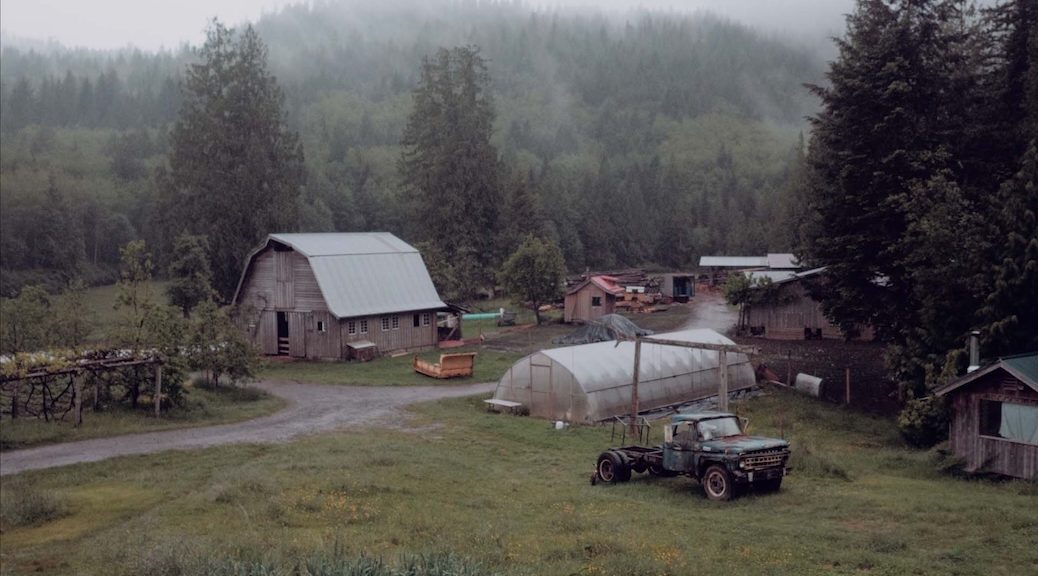
Getting back to Blue Jay Lake Farm: Green Valley, A Film by Morgan Tams

Morgan Tams was an integral part of the Cortes Island community for eight years before he and his partner Carly left in 2024. He recorded part of their experience as members of the Blue Jay Lake Farm community on a documentary that will air at Vancouver’s DOXA Festival on May 3 and 9, as well as the Knowledge Network later this year. 

Morgan Tams: “ It was about five years working on this, not exclusively but of my time. I’ve had some really great showings on Cortes, which was really fantastic.” 

“Now to have it play in Vancouver where I think there will be some crossover, some Cortes people in Vancouver, but I think there’s a city where people are right now so interested in alternative ways of living. I think partially just the direction the world is going, ideas about community, about being more connected to our food sources, about being connected to one another and being connected to skills like building and growing food are really pertinent topics for our time.” 

Continue reading Getting back to Blue Jay Lake Farm: Green Valley, A Film by Morgan Tams

New system alerts coastal First Nations about hazardous spills on land and water

Editor’s note: According to the BC Treaty Commission’s Interactive Map, the waters of Von Donop Inlet and Carrington Bay, on Cortes Island, are within the traditional territory We Wai Kai and Wei Wai Kum Nations. They also claim Quadra, Read and Raza Islands, as well as Toba Inlet. These are all areas that are within the traditional territories of the Klahoose First Nation. whose principle village is on Cortes Island. The K’omoks and Klahoose First Nations have overlapping claims on Read, Quadra and Mitlenatch Islands.

By Madeline Dunnett, The Discourse Local Journalism Initiative Reporter

A new notification system and app that alerts coastal B.C. First Nations about oil or hazardous chemical spills on their lands and waters was recently launched.

The initiative was developed collaboratively between 12 First Nations and the province’s Ministry of Environment and Climate Change Strategy. The process was coordinated by Coastal First Nations-Great Bear Initiative.  

The system uses technology from Alertable, an emergency alert system that is used by various local governments to notify residents about critical alerts in their communities such as those related to floods or fires. 

Continue reading New system alerts coastal First Nations about hazardous spills on land and water

From The Ground Up: The Story Of Cortes Island Dwellings

A new exhibition in the Cortes Island Museum looks at the island’s housing from pre-colonial times up until the present. ‘From the Ground Up: Cortes Island Dwellings And Their Histories’ combines photographs and artifacts from the museum’s collections, stories and images from the community and a display from the Cortes Housing Society. Melanie Boyle, Managing Director of the Museum, took Cortes Currents on a tour of the exhibit. 

Continue reading From The Ground Up: The Story Of Cortes Island Dwellings

Wolf Tales from Cortes Island

Cortes Island’s wildlife coexistence programs can be traced back to  human/wolf conflicts in 2009. Local biologist Sabina Leader Mense reached out to Bob Hansen, then wildlife-human conflict specialist with Pacific Rim National Park Reserve.  The Cortes Community Wolf Project is modelled on the Wild Coast program that Hansen had been running in the Pacific Rim for more than a decade. Hansen and Conservation Officer Ben York helped Sabina write ‘Learning to Live with Wolves on Cortes Island,’ a five-point primer which FOCI endorses and posts throughout the community.

Hansen returned to Cortes at Sabina’s invitation, for the first time since 2011, on February 3. He gave a workshop on electric fences and a demonstration on using bear spray at Linnaea Farm. There were also a lot of ‘wolf stories’ and new information. 

Continue reading Wolf Tales from Cortes Island

Early Logging on Cortes Island and Vicinity: Local History with Lynne Jordan

Lynne Jordan has contributed to historical booklets available at the Cortes Island Museum and is currently researching the history of early logging activity in Whaletown.

In the course of an extensive 3-part interview, Lynne draws on original documents, archives, and oral histories to paint a picture of early settler loggers on Cortes — their equipment, their floating camps, the economy in which some prospered and some failed.

The logging community was always a really mixed bag… Much of the logging was done by hand. Some of it using horses.

Logging was not a good way to get rich.

Continue reading Early Logging on Cortes Island and Vicinity: Local History with Lynne Jordan