(1) PROPOSED SETTLEMENT TERMS OF SUIT AGAINST AI FIRM ANTHROPIC. Unveiled today — “Anthropic Agrees To Pay $1.5 Billion To Settle Authors’ AI Lawsuit” reports Deadline. (Read the terms of Anthropic’s copyright settlement at the link.)
AI firm Anthropic has agreed to pay at least $1.5 billion into a class action fund as part of a settlement of litigation brought by a group of book authors.
The sum, disclosed in a court filing on Friday, “will be the largest publicly reported copyright recovery in history, larger than any other copyright class action settlement or any individual copyright case litigated to final judgment,” the attorneys for the authors wrote.
The settlement also includes a provision that releases Anthropic only for its conduct up to August 25, meaning that new claims could be filed over future conduct, according to the filing. Anthropic also has agreed to destroy the datasets used in its models.
The settlement figure amounts to about $3,000 per class work, according to the filing.
A hearing in the case is scheduled for Sept. 8.
Last month, Anthropic and the authors’ group said that they had reached a “settlement in principle” of the creators’ lawsuit….
The settlement motion says in part:
…In negotiating the settlement, Class Counsel consulted with leading membership and trade associations for rightsholders—the Authors Guild and the Association of American Publishers. Authors Guild CEO Mary Rasenberger praised the results for “authors, publishers, and rightsholders generally,” stating that the settlement is a “strong message to the AI industry that there are serious consequences when they pirate authors’ works to train their AI, robbing those least able to afford it.”…
(2) WB VERSUS MIDJOURNEY. Meanwhile, around at the front door of the courthouse a new lawsuit has been filed: “Warner Bros. Discovery Sues Midjourney for Infringement In Major Legal Battle” – The Hollywood Reporter has details.
Warner Bros. Discovery is suing a prominent artificial intelligence image generator for copyright infringement, escalating a high-stakes battle involving the use of movies and TV shows owned by major studios to teach AI systems.
The lawsuit accuses Midjourney, which has millions of registered users, of building its business around the mass theft of content. The company “brazenly dispenses Warner Bros. Discovery’s intellectual property” by letting subscribers produce images and videos of iconic copyrighted characters, alleges the complaint, filed on Thursday in California federal court.
“The heart of what we do is develop stories and characters to entertain our audiences, bringing to life the vision and passion of our creative partners,” said a Warner Bros. Discovery spokesperson in a statement. “Midjourney is blatantly and purposefully infringing copyrighted works, and we filed this suit to protect our content, our partners, and our investments.”
For years, AI companies have been training their technology on data scraped across the internet without compensating creators. It’s led to lawsuits from authors, record labels, news organizations, artists and studios, which contend that some AI tools erode demand for their content.
Warner Bros. Discovery joins Disney and Universal, which earlier this year teamed up to sue Midjourney. By their thinking, the AI company is a free-rider plagiarizing their movies and TV shows….
(3) CORRECTION. Item #1 in yesterday’s Pixel Scroll about China’s forthcoming Galaxycon, whose ads feature Robert J. Sawyer among others, raised a question of why Sawyer told Facebook readers he had no current plans to go to China. That has been reconciled with an assist from Roderick Leeuwenhart in comments:
(1) I might be able to shed some light on the mystery of whether or not Robert is coming to China: my contacts said he is featured in the promotional images as a “permanent friend of the con” (I would maybe call it a patron saint), but will not be attending the con himself. So it all checks out.
Ersatz Culture, who wrote the item, agreed he’d made an error and gave this explanation:
This error is definitely down to me relying on machine translation. I usually try to put anything that looks ambiguous through multiple machine translators; unfortunately this was a case where both Google Translate and Xiaohongshu/RedNote’s rendered a character with multiple English meanings as “attend(ee)” rather than the alternative “consult/counsel”. (And Weibo’s machine translator was actively unhelpful, as it renders that sentence as “The big coffee announcement!”)
Apologies for any confusion or embarrassment caused.
(4) GARY FARBER MEDICAL UPDATE. Gary Farber is home from the hospital and would like to hear from you.
Are cases of fans being hospitalized for a month and ill and injured, news any more, or is that just SOP for our generation now? Anyway, I’d have loved to have heard from any and all old friends and wishers-well this past month in hospital, and still would. I’m barely clinging for now to the ability to stay home, having arrived yesterday on oxygen, with an amputated left big toe and a samurai pirate sword attack to my gut with a femoral to femoral bypass.
People can contact me via Facebook, audio and video, with prior text arrangement. I have overwhelming brain fog, alas.
(5) STRANGELY LESS EXPENSIVE NEW WORLDS. [Item by Daniel Dern.] (Yes, I am all too well aware of Para’s non-Star-Trek activities. Your Parsecage May Vary.)

Paramount Plus currently (thru Sept 18, according to, among other places, Tom’s Guide: “Paramount Plus launches epic 50% off streaming deal — here’s how to get it now”) you can get a one-year subscription for half price — making the ad-free version the cost of a regular (full price) with with-ads.
If you have trouble finding the deal on (your) Paramount (account) (like I had), you can sort it out via their CHAT (with a human agent).
(Note, in my case, I already had a similar deal from a year ago, and the CHAT person told me it would stay in effect…I’ll be checking my account in a weekish to verify that. The more general point, the deal, once you’ve gotten it, may not be reflected in what you see, so check your payment mechanism also.)
(6) WHELAN ON DESIGN. “Setting Type” discusses how decisions are made about integrating book cover art and verbiage at The Art of Michael Whelan.
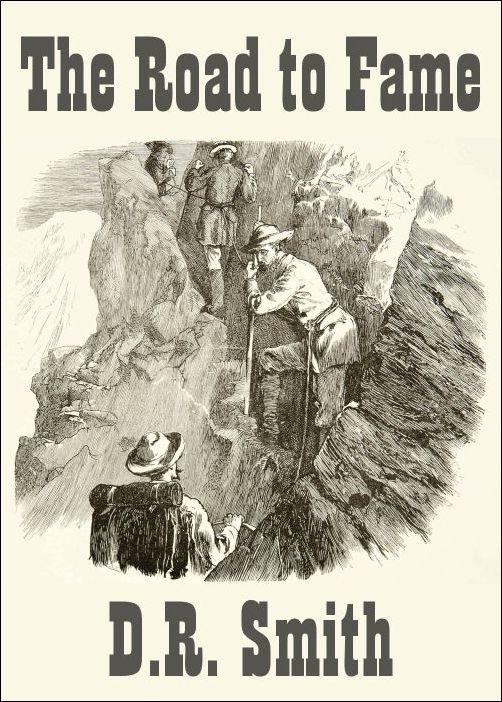
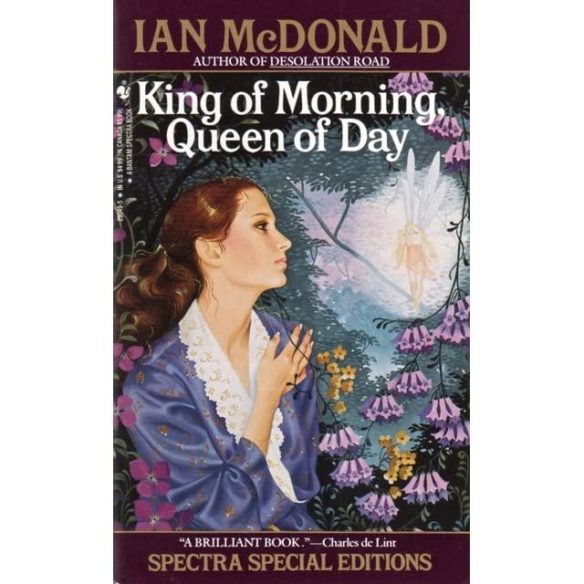
…A book cover illustration assignment comes with the understanding that type will occupy a good portion of the cover real estate. Most of the time I’d compose things so the top third of the painting would not contrast too much with any type that would be placed there, but I didn’t worry too much about it. I’m usually content for the publishers to find the best solution that they can for the book and leave them to it….
Many examples of book cover styles at the link.
(7) BEAR ON THE RADIO MONDAY. Elizabeth Bear will be speaking with Megan Zinn on the “Writer’s Block” segment of Talk the Talk on WHMP Radio in Northampton MA on Monday, September 8, between 8:30 and 9:00 a.m. Eastern. You can listen live here.
The segment will be rebroadcast at 5:30 pm that afternoon. Bear has been told it will be available on the website as a podcast afterwards.
(8) FF Q&A. Today A Deep Look by Dave Hook devotes a post to “The Fantastic Four: The First Family of Comics”, based on his experience on a panel at the Seattle Worldcon.
Q2: What’s one thing you would retcon about the FF if you could? (or alternatively, what’s one thing you would add to the world of the FF?)
I am not sure this was really an answer, but I had two issues that I was unhappy with, both concerning the Invisible Girl. In Issue # 22, “The Return of the Mole Man!”, Sue Storm gets the power of projecting force fields through a somewhat weak, handwavium mechanism. I liked the idea, but I felt Jack and Stan Lee could have done better with a reason for this new power.
Secondly, in Issue # 83, “Shall Man Survive?”, after escaping imprisonment by Maximus the Mad, Sue and others have returned to the Baxter Building where she is shown tucking in the as-yet unnamed baby. She says to the baby about Reed (Richards, her husband and Mr. Fantastic) not being there, “And to help me choose a Name for you! The more I think about it, the more confused I grow! But Reed is so good at things like this!” Aagh. Even if Stan and Jack are old enough for WW 2 service (Jack in Europe), this is 1969. This kind of “I’m just a poor dumb woman” crap is so annoying to me…
(9) SHARP THINKING. If you ever asked, “OK, but Why Is It Even Called ‘Blade Runner’?”, Collider has an answer.
…There actually is a story behind how director Ridley Scott and writer Hampton Fancher arrived at this title, though. As it turns out, the term “blade runner” had already been floating around for a few years before the movie started development, and it didn’t have anything at all to do with the premise of Scott and Fancher’s movie….
…Before Blade Runner, there was The Bladerunner — definite article, no space. That’s the title of a 1974 novel by Alan E. Nourse, a doctor who also wrote quite a few sci-fi novels, and his stories often mixed both these aspects. That’s what happens in The Bladerunner, a dystopia where health care is universal, but those who seek it must undergo sterilization due to newly established eugenics laws. This created a shadow market for medicine, and the protagonist, Billy Gimp, is a “bladerunner” — a smuggler who specializes in medical tools.
The Bladerunner never found much success, but it eventually caught the eye of Beat Generation writer William S. Burroughs, who was at a transition moment in his career. In 1976, he decided to write a film treatment for it, but he twisted the story so much, it ended up nearly unrecognizable. After many unsuccessful attempts to get his script produced, Burroughs eventually gave up and decided to adapt this new version of the story to release it as a novel, which he confusingly named Blade Runner (a movie).
Burroughs’ version did eventually become a movie, 1983’s Taking Tiger Mountain. It was one of the late Bill Paxton‘s earliest roles, and director Tom Huckabee bought the rights to Burroughs’ story for 100 dollars, noting that “he was giving away stories to any film student or amateur that wrote him a letter.” It was Burroughs’ only film credit and became a niche classic, but, again, completely unrelated to the 1982 classic Blade Runner, which came out a year earlier and used only the name.
(10) PROPSTORE AUCTION OF FAMED HOLLYWOOD ITEMS. The auctioneer swung his hammer and a lot of pounds resulted: “Star Wars lightsaber used by Darth Vader fetches £2.7m at LA auction” reports the Guardian.
A lightsaber used by Darth Vader in the original Star Wars trilogy has sold for £2.7m at auction in Los Angeles.
The prop, which featured in The Empire Strikes Back and Return of the Jedi, was sold on Thursday, and is one of more than 400 authentic film props auctioned by Propstore, a movie memorabilia outlet, as part of their “entertainment memorabilia live auction”.
The lightsaber was one of several props from science fiction films sold for a large sum during the auctions first day, with the Ressikan flute played by Sir Patrick Stewart’s Captain Picard in the Star Trek: The Next Generation TV series going for £299,400 and the mind-wiping “neuralyzer” device used by the agents in Men in Black fetching £233,900.
Items from fantasy media also attracted large price tags, with the Platform 9 3/4 sign used in the Harry Potter films and a wand used by Daniel Radcliffe in the Prisoner of Azkaban being auctioned off for £102,900 and £60,800 each, and Longclaw, the Valyrian steel bastard sword used by Kit Harington’s Jon Snow in the Game of Thrones series fetching £70,170.
Other items auctioned included the Spider-Man suit worn by Tobey Maguire in the eponymous 2002 film, which was sold for £215,190, and the whip used by Harrison Ford’s title character in the 1989 film Indiana Jones and the Last Crusade, which went for £360,260…..
(11) ANOTHER CON REJECTS AI ART. Add St. Louis convention Archon to those disallowing AI-generated artwork.
Archon Art Show Policy on AI-Generated Artwork
In an effort to preserve the spirit of artistic originality and ensure a level playing field for all creators, Archon’s Art Show does not permit the exhibition or sale of AI-generated artwork.
For the purposes of this policy, “AI-generated artwork” refers to any piece of visual art in which the primary creative process was performed by a generative artificial intelligence tool, regardless of prompts or post-processing applied by the user.
This includes but is not limited to:
– Images wholly created using AI generation tools
– Artworks where AI-generated elements comprise the majority of the composition
– Art prints based on AI-created designs
– Hand-created works, digital art, and mixed media pieces are welcome so long as the core creative effort and artistic interpretation are those of the exhibiting artist
If you’re uncertain whether a piece may fall under this restriction, we encourage you to contact the Art Show Department Head, Anna Mulch, in advance of submission at [email protected]. Anna’s decision is final and appeals or requests for review will not be heard. Submitting artists who are found to have been dishonest about the origin of their artwork will be permanently banned from future Archon Art Show submissions.
We appreciate your cooperation and your commitment to fostering original, human-made art at Archon.
(12) MEMORY LANE.
[Written by Cat Eldridge.]
September 5 — Alan Garner’s The Owl Service (1967)
It all begins with the scratching in the ceiling. From the moment Alison discovers the dinner service in the attic, with its curious pattern of floral owls, a chain of events is set in progress that is to affect everybody’s lives. — Alan Garner’s The Owl Service

Yes, I do have favorite novels as you already know and this novel which came out fifty-eight years ago is one of them. I think of it as an Autumnal work so it being September, I decided to take a look at it. So here we are.
The Owl Service is supposedly a young adult novel, however, it is much, much more than that. Set in modern Wales, it is an adaptation aWelsh myth concerning the woman — equally made of feathers and claws. It was, as Garner has said, an “expression of that myth”. The legend which Alan Garner riffs off concerns Blodeuwedd, a woman created from flowers by a Welsh wizard. She betrays her husband, Lleu, in favour of another, Gronw, and is turned into an owl as punishment for inducing Gronw to kill Lleu.
In his version, three teenagers visiting a Welsh estate find themselves re-enacting the story by the two boys both being bitter rivals for the girl who came with them to the estate. They awaken the legend by finding a dinner service with an owl pattern, hence the title of the novel.
It is a novel filled with myth come to life with characters, both the children and the adults, being fully realized. It wasn’t his first novel as he’d written three novels previously (The Weirdstone of Brisingamen, The Moon of Gomrath and Elidor) but of all works he’s done, it’s my favorite still. It’s not his most complex, that honor goes to a sequel to the first novels and The Moon of Gomrath.
It was made into a Granada Television series in 1969. If you live in the U.K., it’s available on DVD. It was BBC Radio 4 series in twenty-five years ago. The Naxos audiobook is quite excellent.
(13) COMICS SECTION.
- Arlo and Janis confused about who deserves credit.
- BC recognizes a warning sign.
- Bizarro remembers when a book was scary.
- Nancy digs deep into history.
- Saturday Morning Breakfast Cereal enjoys a challenge.
- Six Chix predicts the next regeneration.
- Tom the Dancing Bug shares the unlikeliest comics.
(14) BEFORE IT CRATERED. “50 Years Ago, One Forgotten Sci-Fi TV Show Briefly Became The Next Star Trek” – Inverse remembers.
While the 1960s gave the world the innovation and brilliance of Star Trek, Doctor Who, and The Outer Limits — along with groundbreaking books like Dune — it wasn’t until the 1970s that all that science fiction truly jumped to the mainstream. Star Trek was largely to thank for this shift; the show hit syndication in the early 1970s after its cancellation in 1969 and spawned a fandom larger than the literary geeky establishment of the time. But what would step into Star Trek’s stylish space boots in the 1970s? By 1977, the answer was clear: Star Wars redefined the mainstream nature of sci-fi forever. But before that, in 1975, one strange series — intentionally or not —briefly became the Star Trek of the 1970s.
That show was Space: 1999, an underrated and odd series that, in some alternate dimension, might have enjoyed a longer run and a larger fandom today. On September 5, 1975, the series blasted the Moon out of Earth’s orbit and briefly ruled sci-fi conversations everywhere…
…The idea that Space: 1999 was a sci-fi show with a home base and smaller craft that could be sent out to do the exploring was a great formula, one that was used to great effect by both versions of Battlestar Galactica (1978 and 2003) as well as Star Trek: Deep Space Nine (1993). The show was also accidentally prescient about the use of personal communication devices as a catch-all device to do everything. Most Alphans on the base each have a clunky video communicator called a CommLock. This is a gizmo that lets them all FaceTime with each other, but also unlocks various doors on their Eagles and on Moonbase Alpha. Is that so different than an iPhone?…
(15) HORROR MOVIE LOCATION WILL BE REDEVELOPED. “Wicker Man pub in Creetown to be converted into flats” – BBC has details.
A pub in the south of Scotland where scenes for the 1973 horror film The Wicker Man were shot is set to be put to a new use.
In the cult movie, the interior of the Ellangowan Hotel in Creetown was the fictional Green Man and had actress Britt Ekland as a barmaid.
The site has been closed for a number of years and now plans have been lodged with Dumfries and Galloway Council to change its use.
They would see the site converted into seven apartments.
A number of different parts of Scotland featured in the film which also starred Edward Woodward and Christopher Lee.
Many locals featured as extras when filming took place at locations in Dumfries and Galloway.
Prior to the Covid lockdown, there were plans to capitalise on the hotel’s starring role in the cult 1970s film.
However, they failed to be realised and an application has now been submitted to convert the building.
(16) WORD ON THE STREET. “’Sesame Street’ Sets Monster-Sized YouTube Expansion in New Deal” reports Animation Magazine.
Through a new deal inked with non-profit producer Sesame Workshop, hundreds of classic Sesame Street episodes will be available to watch on YouTube. The expanded partnership between studio and platform will make YouTube host to the largest digital library of Sesame Street content — and also covers new original content to be produced by Sesame Workshop.
Back episodes of Sesame Street will begin rolling out on YouTube in January 2026. The platform, which is home to a number of popular preschool and infant programs, including the animated sensation CoComelon, told The Hollywood Reporter that viewership of Sesame Street content went up by more than 130% over the past year, surpassing 5 billion views.
Earlier this year, Netflix scooped up rights to premiere new episodes of Sesame Street as well as approximately 90 hours of library episodes in a deal which also granted same-day premiere rights to PBS. The agreement takes effect in November with the launch of Season 56, which will introduce a reimagined format for the show as well as a new animated segment series, Tales from 123….
(17) EVOLUTION IN ACTION. “An unknown bacteria on Earth has developed in the Chinese space station : astronauts are faced with a scenario straight out of a science fiction movie” says iStudiez Pro.
Signals from orbit hint at a living puzzle that refuses easy answers. Inside a tightly controlled station, microbes evolve under radiation and microgravity, while engineers scrub and sensors watch. Between cleaning cycles and confined air, astronauts share space with organisms that adapt fast, hide well, and exploit small resources. The surprise raises urgent questions without giving away the ending, because space changes biology in subtle, relentless ways that even rigorous protocols cannot fully predict today.
In May 2023, samples taken aboard China’s Tiangong station, during the Shenzhou-15 mission, revealed a bacterium unknown on Earth. Researchers named it Niallia tiangongensis, linking it to resilient soil relatives. Genetic signatures suggest rapid adaptation under microgravity and heightened radiation, within confined air and relentless cleaning cycles. Conditions drive evolution.
The species relates to Niallia circulans, once grouped among hardy Bacillus. Like its cousins, it forms spores that endure heat, dryness, and chemical stress. Those capsules survive scrubbing and reawaken when conditions improve. A protective biofilm strengthens surfaces, limits desiccation, and helps communities coordinate responses to harsh, shifting environments.
What sets it apart appears oddly specific. It degrades gelatin, extracting nitrogen and carbon to build protective structures, while having shed other energy options. Such trade-offs reveal plasticity shaped by orbit. Because equipment and habitats share surfaces, astronauts need protocols that anticipate microbes exploiting narrow resources inside meticulously maintained modules….
…Microbial evolution in space is not a twist; it is an expectation that planning must absorb. From gelatin-eating specialists to equipment-fouling films, the signals are clear and actionable. Design that anticipates selection pressures, plus responsive monitoring, turns surprises into manageable tasks. With disciplined routines and flexible engineering, astronauts can keep habitats safe, science credible, and missions on schedule, even as unknown organisms keep testing boundaries at this demanding frontier. Staying ready means staying alive.
[Thanks to Mark Roth-Whitworth, Steven French, Kathy Sullivan, Daniel Dern, Gary Farber, Mike Kennedy, Andrew Porter, John King Tarpinian, Chris Barkley, Cat Eldridge, and SF Concatenation’s Jonathan Cowie for some of these stories. Title credit belongs to File 770 contributing editor of the day Daniel Dern.]