(1) LIVE AND DIRECT. [Item by N.] Nintendo livestreamed an hour-long Nintendo Direct today, featuring announcements and trailers for video games and DLC coming to the new Switch 2 console, including the sequel to the Hugo-winning Hades, breaking out of Early Access September 25:
Also announced were some other titles (and a movie!) of genre interest:
- The Super Mario Galaxy Movie | Official Title Announcement – YouTube
- Fire Emblem: Fortune’s Weave – Nintendo Direct 9.12.2025 – YouTube
- Yoshi and the Mysterious Book – Nintendo Direct 9.12.2025 – YouTube
- Hyrule Warriors: Age of Imprisonment – Nintendo Direct 9.12.2025 – YouTube
- Metroid Prime 4: Beyond – Nintendo Direct 9.12.2025 – YouTube
- Resident Evil Requiem – Nintendo Switch 2 Trailer – YouTube
The full VOD can be watched here:
(2) NEIL CLARKE Q&A. “’I Love Working With Creative People.’ A Chat with Neil Clarke, Editor of Clarkesworld” at Lit Mag News. The actual interview is a video behind a paywall.
… In this conversation we talked about the history of the magazine, which began nineteen years ago and launched online at a time when few other online magazines existed. Since its inception Neil said “the field has changed a lot.” Most notably, online magazines have become more respected and more prize-worthy than once perceived.
Clarkesworld first got on my radar in 2023 when they received international news coverage for having to shut down due to a deluge of AI submissions. Neil said in most cases the stories were clearly generated by ChatGPT. In some instances the writers left the prompts embedded within the stories.
This led to Neil’s fascinating work detecting AI submissions, measures he’s implemented and ways he has helped other journal editors do the same for their magazines. We spent time discussing how he spots AI writing, what defines “AI-generated work” and where Neil draws the line in creative material.
The good news is that Neil said he isn’t worried that AI will be replacing writers any time soon. The models are meant to predict the most likely word to follow the previous word; they will never be capable of offering surprising and genuinely compelling content. He does, however, worry about young readers who are being trained to perceive AI writing as literary quality.
As this was part of our Lit Mag Reading Club, we discussed how the July 2025 issue is different from past issues. Neil said July 2025 focuses more on “mind” and “identity.” Is this a new direction for the journal? No, he said. The main recurring themes he sees most often are climate and AI. He expects to be continuing to publish more of these works going forward….
(3) SFWA’S TAKE ON ANTHROPIC DEVELOPMENTS. SFWA President Kate Ristau updated members about the Anthropic case today.
…This week, the judge in the Anthropic case ripped apart the proposed settlement in the class action lawsuit. When his reasoning came through, I saw echoes of Jason Sanford’s Genre Grapevine. Sanford discussed how the settlement works off minimal definitions for which books to include in the class.
The class leaves some authors with an empty cup.
I am personally one of those authors, holding traditionally published books in my hands that were never copyrighted by my publisher. (If you’ve been wondering about copyright and how it works, you’ll want to check out the latest piece by Victoria Strauss for Writer Beware Presents, Protecting Your Intellectual Property, which covers the basics, the myths, the scams, and more.)
Sanford and Strauss are concerned about copyright and liabilities, and so are we. The judge read those same tea leaves, and he argued that the settlement is being “forced down the throat of authors.”
That is tough to swallow.
I want to assure you that, at SFWA, we hear that complaint, that frustration, and that gross tea. We are meeting with our own counsel to discuss the gaps in the class definition, while also working on informing eligible class members about their eligibility. We don’t want any authors to miss out on being compensated for the use of their work.
While all this shakes out, we’re also heading to Washington, D.C., where Isis and I will be meeting with congressional staff and lawmakers to discuss how these cases impact authors, in addition to other concerns such as book bans and the future of publishing….
(4) WRITER BEWARE. Victoria Strauss today reprinted the article Ristau mentioned above, “Protecting Intellectual Property: What Writers Need to Know About Copyright”, at Writer Beware.
Copyright is a complex subject about which there are many misconceptions.
I was reminded of that this week, thanks to an email from an author who discovered that several of their books were included in one of the databases of pirated works used by the AI company Anthropic for AI training. The author wanted to know whether they were eligible to be part of the gigantic $1.5 billion settlement Anthropic has agreed to pay to compensate writers for its misuse of their intellectual property. (You can read more about the lawsuit, and the settlement, here.)
One of the criteria for eligibility, set by the court, is that copyrights to the pirated works must have been properly registered with the US Copyright Office before Anthropic downloaded the databases. And indeed, the author’s books were all registered in a timely manner…but not with the Copyright Office. Instead, the author used a website called Copyrighted.com, which offers a kind of faux registration using timestamps and its own certificates.
I had to tell the author that no, they weren’t eligible for compensation for their pirated books. In the United States, there’s no equivalent or substitute for the US Copyright Office’s official registration process. The author couldn’t even use the materials they’d gotten from Coprighted.com as prima facie evidence of copyright ownership. Again, only official registration provides that.
In this post, I’m going to cover the basics of copyright, offer some warnings, and dispel some myths. It’s intended as an overview, not an all-inclusive resource; there’s much more to know, and there are resources at the bottom of the post to help with that. I’m also aware that much of what I write below will be familiar to a lot of readers—but as the example above shows, knowledge gaps not only exist, but can be damaging.
As always in the writing biz, knowledge is your greatest ally and your best defense. I hope even the most copyright-savvy readers will find something useful here….
(5) FILERS DOWN UNDER. Heather Rose Jones is doing a long-delayed tikitour of New Zealand following Worldcon, and she met up for dinner with Filers Soon Lee and Jo Van in Auckland.

(6) DOT’S ALL, FOLKS! [Item by Daniel Dern.] Ian Randall Strock’s Punctilious Punctuation will be available in slightly less than a week! (I just learned about it, from his LinkedIn page).

Taking a stand against the abomination that is punctuational minimization, Ian Randal Strock takes a big look at the little marks between words that mean so much. Delving into the genesis and history of punctuation marks (both individually and collectively), he also looks at proposed—and failed—punctuation marks, and suggests new ones.
You’ll laugh, you’ll cringe, you’ll sigh with relief. But maybe… just maybe… you’ll come away from this book realizing that saving fractions of column inches is no reason to cede the clarity, vibrancy, and artistry of proper punctuation to the legions of language-devaluing, space-saving, text-messaging philistines.
Join the fight for proper punctuation! Read Punctilious Punctuation
(7) ANOTHER HOLLYWOOD MERGER COMING? [Item by Mike Kennedy.] “Paramount Skydance preparing bid for Warner Bros Discovery, source says” – Reuters has the story.
Looking strictly at market capitalization, the potential new entity would still be a fraction the size of most of their competitors. Something like 1/10 or less of a Disney in the most extreme comparison.
Paramount Skydance (PSKY.O), opens new tab is preparing a bid to buy Warner Bros Discovery (WBD.O), opens new tab, a source familiar with the matter told Reuters on Thursday, potentially bringing together two storied Hollywood studios and reshaping the entertainment industry.
A bid for Warner Bros Discovery would be backed by the Ellison family, which includes Skydance head David Ellison and his father, billionaire Oracle co-founder Larry Ellison, according to the Wall Street Journal, which first reported the news, citing unnamed sources.
The audacious bid, coming just weeks after Skydance bought Paramount Global for $8.4 billion, would unite some of the best-known entertainment brands under a single corporate shingle, bringing together DC Comics superheroes like Superman and Nickelodeon’s SpongeBob SquarePants, science-fiction franchises like “The Matrix” and “Star Trek” and two major news networks, CBS News and CNN.
“This deal is the Hollywood equivalent of a sequel no one expected but everyone sort of saw coming,” said eMarketer analyst Jeremy Goldman.
No offer has been submitted and the plans could still fall apart, the WSJ reported…
(8) THIS MEANS WAR. Joshua Tyler, the author of this article published in August, seems to have a bug up his ass about modern Doctor Who, so the Tardis showing up as an Easter Egg in the Star Trek universe set him off big time. He also appears to have invented (or otherwise latched onto) the phrase “slop eaters“ and applies it—as if it were the ultimate insult—to anyone who has tastes different from his. “Star Trek: Strange New Worlds Just Had Doctor Who’s TARDIS Show Up, And It’s A Declaration Of War” at Giant Freakin Robot.
Star Trek: Strange New Worlds’ latest episode, “The Sehlat Who Ate Its Tail,” features a scene in which the TARDIS from Doctor Who is visible floating around in space behind the Enterprise. Ten years ago this would have been a fun Easter egg, now it’s an apt demonstration of everything that has gone wrong with the show….
The context for the TARDIS’s presence is that the Enterprise has been swallowed by a salvage ship that sucks in other starships and rips them apart for fuel. Apparently, the idea here is that the TARDIS was also, at some point, captured by this metal monster.
Dropping the TARDIS into your series perfectly demonstrates how tone-deaf the Star Trek: Strange New Worlds production team is. While once Doctor Who was a beloved sci-fi series with a lot of crossover between Trek fans and Doctor Who fans, those days are long gone.
Modern-day Doctor Who is a disaster. Everyone except a handful of Slop Eaters has abandoned it, and Disney is expected to cancel it because it’s so bad no one wants it anymore. Doctor Who is now a joke, a sci-fi pariah, and no one takes it seriously.
Audience scores for the past few years of Doctor Who seasons are a tire fire, and the show has no ratings. For at least five years now, the problem with Doctor Who has been the writing. The series has adopted a style of writing I’m going to call “nonsenscore,” in which the writers throw out anything that feels good, regardless of whether it makes any logical or narrative sense. It has ruined the once great Doctor Who franchise and destroyed it permanently.
That exact writing style is also what made Star Trek: Discovery so terrible, and it has lately begun creeping into Star Trek: Strange New Worlds, too….
(9) FEELINGS, NOTHING MORE THAN FEELINGS. A month later, Joshua Tyler is enraged by the series’ season-ending episode: “Strange New Worlds Turns Star Trek Into Doctor Who, Destroys Entire Franchise For Its Season 3 Finale” from Giant Freakin Robot.
When Gene Roddenberry created Star Trek, his goal was to depict a bright and hopeful future in which humans had learned to use science, reason, and common sense to work together and explore the universe. In its season three finale, Star Trek: Strange New Worlds managed to undo all that and has now completed transitioning his franchise into a series of flailing emotions and empty nonsense.
The episode, titled “New Life and New Civilizations,” pulls together breadcrumbs scattered throughout season 3 into a plot involving end-of-the-universe stuff. I’d explain it, but I can’t, since the show doesn’t. It’s all about the vibe of bad things happening. Characters then respond to this vibe by asking, “What if this thing we can’t know, is true?” and then someone responds, “I bet it is!” and they proceed accordingly.
None of it makes any sense, and that’s the way Star Trek: Strange New Worlds wants it. The show seems to be avowedly against reason and common sense.
So the Strange New Worlds’s overstuffed cast of characters goes to work on the feelings they’ve all had about the developing situation. They then do whatever those feelings lead them to do, and the audience is supposed to accept this as a plot.
It culminates in an emotionally manipulative side-tangent in which we watch Captain Pike live out a life with Captain Patel, for no reason other than that it’s what Captain Patel feels she wants before becoming a statue. Why does she have to become a statue? No one knows, but she feels it….
(10) MEMORY LANE.
[Written by Cat Eldridge.]
September 12, 1998 — Young Hercules series
I know that a lot of you have seen Hercules and Xena, but I am guessing that a lot less of you saw Young Hercules which came out on this date, twenty-seven years ago. It won’t surprise you at all that it was created by Sam Raimi who, of course, created the other two series.
The series follows Hercules (played Ryan Gosling) as he attends Cheiron’s Academy to train in the arts of the warrior under the wise headmaster Cheiron the Centaur (as performed by Nathaniel Lees under a most excellent costume). Other primary cast members are the future king of Corinth, Prince Jason (Chris Conrad), a thief who was a former member of a bandit group, Iolaus (Dean O’Gorman) who is here instead of in prison, and the academy’s first female cadet, Lilith (Jodie Rimmer). Need I say they’re all very handsome, or in her case, cute? They really are.
Not at all surprisingly Rob Tapert who had his hand in the other two series is involved in this series. Here he is one of the writers and executive producer. This series came to be just two years before he executive produced both Jack of All Trades and Cleopatra 2525.
Needless to say, it was produced in New Zealand — no not by Peter Jackson. Renaissance Pictures produced this one which makes sense as it was founded by Sam Raimi and Bruce Campbell to produce The Evil Dead along with the two sequels and yes, the company produced Xena and Hercules as well, and the Darkman films.
Ryan Gosling made a fine young, Hercules here. Actually, he was far more believable as a character than, ahem, a certain other character that played the older one was. Just my opinion, I think this was because both he and adventures being geared towards a young adult audience were in lighter in tone. Also being, 20 minutes long, meant there was no filler, something that is important in telling your story sometimes. Now I thought that Xena rarely suffered from having filler whereas both Hercules and the character were full of, errr, well that.
All the live filming took place in New Zealand, but the visual effects were done in LA as was the music. Weta, yes, that company that would later be involved in The Lord of the Rings, was responsible for the special visual effects here. They lost most of that team very fast because of the overlap with the filming of The Fellowship of the Ring, and this may have contributed to the series ending.
I like this series every bit as much as I do Xena and I like both of these series far, far more than I ever liked Hercules. It ran for fifty twenty-minute episodes which aired technically in one season though I saw it broken up into three seasons later on.
The image below has the main cast with Gosling on the left, Dean next to him with Chris just behind Jodie.

(11) COMICS SECTION.
- Baby Blues starts villainy young.
- Dinosaur Comics sings about a legend.
- Free Range started small.
- Saturday Morning Breakfast Cereal displays a bias towards a genre.
- xkcd explains the balrog (when you mouse over).
- War and Peas might be a case of imposter syndrome.
(12) GRRM’S WORLDCON REPORT. The Independent shares a take on GRRM’s blog entry about Seattle Worldcon 2025: “George RR Martin shares bittersweet post after attending Worldcon”.
…“Caught up with some old fan friends, made some new ones,” Martin, 76, wrote. “I did two panels, both of them enjoyable, and the autographing was well-run, drew about 300 [people].”
He said that the highlight of the convention was a screening of three of the four short films based on works by late author Howard Waldrop: Night of the Cooters, Mary Margaret Road-Grader, and The Ugly Chickens. The fourth film has yet to be produced.
“We had a full house for that, every seat occupied, people sitting in the aisles and standing in the back of the hall, and everyone seemed to enjoy the movies, which pleased me no end,” he said. “I just wish Howard could have been there to see them.”
“When not signing books or doing a panel or showing a film, I mostly sat around in the bar with [my wife] Parris and friends, chatting about everything and nothing,” Martin continued in his post.
“I have reached the point in life where that’s the best part of any con for me. It does bring back memories, though. Worldcons these days are filled with ghosts: Howard and Gardner, Ed Bryant and John Miller, so many more.”
Martin became friends with Waldrop while searching for a very rare DC comic, The Brave and the Bold issue 28, which he found and purchased from a fellow teenage boy – Waldrop – in Arlington, Texas.
Both went on to write science-fiction works: Waldrop was regarded more as a cult figure, while Martin achieved significant mainstream success with his A Song of Ice and Fire series….
(13) KEEP WATCHING (AND PHOTOGRAPHING) THE SKIES. “Astronomy photographer of the year 2025 – winners and finalists” – the Guardian has a gallery of photos.
Judges have announced the winning images from the Royal Observatory Greenwich’s annual competition. The photographs will be exhibited at the National Maritime Museum in London from Friday.
…The overall winner was the Andromeda Core by Weitang Liang, Qi Yang and Chuhong Yu….
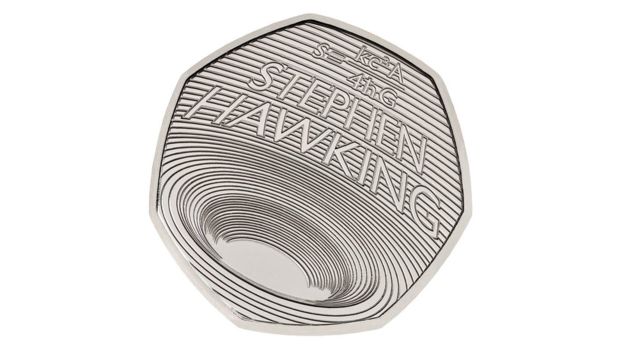
(14) THE HOLE TRUTH. “After 10 years of black hole science, Stephen Hawking is proven right” – NPR leads the cheers.
…On Sept. 14, 2015, physicists attained the long-sought goal of detecting gravitational waves, the shockwaves spewed out by such cataclysmic events as the violent merger of two black holes.
This huge breakthrough quickly garnered three of the effort’s key figures the physics Nobel Prize. In the 10 years since then, scientists have detected hundreds of black holes coming together, as well as other extreme cosmic events like neutron stars colliding and black holes merging with a neutron star.
Now, in the journal Physical Review Letters, researchers say their ability to analyze gravitational waves has improved so much over the past decade that they were recently able to verify a key idea about the growth of black holes — one put forth by Stephen Hawking back in 1971.
“There’s a very famous statement in physics that Stephen Hawking worked out, which is that the area, the surface area, of black holes can never decrease,” explains Maximiliano Isi, an astrophysicist with Columbia University and the Flatiron Institute.
And he says that’s just what scientists observed after analyzing gravitational waves detected earlier this year. On Jan. 14, detectors registered gravitational waves that came from two colliding black holes about 1.3 billion light-years away.
These black holes had masses 30 to 40 times that of our sun, so their collision was very similar to the one that led to the first gravitational wave detection back in 2015. Since that time, however, the pair of giant detectors run by LIGO, in Louisiana and Washington state, have been repeatedly upgraded.
“Because the detectors are so much better today, we can record the signal so much more clearly,” says Katerina Chatziioannou, a gravitational wave physicist at Caltech.
That allowed them to perform a new analysis showing that between the two of them, the initial black holes had a combined surface area of 240,000 square kilometers (roughly the size of Oregon). After they merged to form a single black hole, its area was about 400,000 square kilometers (roughly the size of California).
Hawking’s theory says that the final area of the black hole has to be bigger than the sum of the two initial areas, says Chatziioannou, “and this is what we demonstrated observationally with that signal.”…
(15) TIMES OF BLACK HOLES TO COME. [Item by Daniel Dern.] Does these means some of our college physics credits get revoked? “Imminent Black Hole Explosion Could Upend Physics & Rewrite History Of The Universe” at Hot Hardware.
Physicists at the University of Massachusetts Amherst have made a bold prediction: there is a more than 90% probability that our telescopes could witness a black hole explode within the next 10 years. If observed, this event would not only be a truly rare visual treat but could also provide unprecedented insight into the fundamental building blocks of reality and maybe even rewrite the history of the universe in the process.
The black hole in question isn’t a massive stellar-mass black hole left behind by a dying star. Instead, researchers are focused on primordial black holes (PBHs)—a theoretical class of black holes, first proposed by physicist Stephen Hawking, believed to have formed just a fraction of a second after the Big Bang approximately 13.8 billion years ago. Essentially, PBHs are far smaller and lighter than their stellar-mass counterparts.
According to Hawking, black holes are not truly black in the strictest sense. They slowly leak energy and particles, losing mass over time. The smaller a black hole is, the faster this evaporation process occurs, culminating in a final, explosive burst of radiation. While physicists have long theorized about this process, they believed the chance of seeing a primordial black hole explode today was astronomically small, estimating it would happen only once every 100,000 years.
However, the UMass Amherst team re-examined the theory using a “dark-QED toy model.” Their research, published in Physical Review Letters this week, suggests that if these tiny black holes were born with a small electric charge, they could be temporarily stabilized. This new model drastically changes the odds, increasing the probability of a final explosion from once every 100k years to every 10 years.
Observing such an event would be transformative in three major ways. First, it would provide the first direct evidence of a primordial black hole, confirming a key theory of the early universe. Second, it would be the first-ever direct detection of Hawking radiation that has eluded scientists for decades. And finally, the explosion itself would act as a kind of space census. As the black hole evaporates, it would release a definitive catalog of all fundamental particles in existence—including known particles like electrons and Higgs bosons, as well as the elusive particles that make up dark matter, and perhaps even entirely new particles yet to be discovered….
(16) VIDEO OF THE DAY. “Columbo Meets Batman” — The World’s Greatest Detective meets The World’s Greatest Detective.
[Thanks to Cat Eldridge, SF Concatenation’s Jonathan Cowie, Mark Roth-Whitworth, N., Lise Andreasen, Jo Van, Daniel Dern, Steven French, Kathy Sullivan, Mike Kennedy, Andrew Porter, John King Tarpinian, and Chris Barkley for some of these stories. Title credit belongs to File 770 contributing editor of the day Cat Eldridge.]