
Part 2: Why Do the Signals Affect Only Me and Not Others

Summary
In Part 0, I argued that it is more reasonable to consider that the various symptoms I experience are artificially induced. In Part 1, drawing on my own experiences, I discussed the possibility that this artificial induction is not caused by energy itself, but rather by the reception of “signals” that lead to the perception of individual symptoms.
In Part 2, I examine why, despite experiencing these symptoms even when outside or in face-to-face situations with others, no apparent effects are observed in the people around me. As possible explanations, I consider the existence of on–off signals, the simultaneous reception of multiple signals, individual differences in signal sensitivity arising from long-term stress, and irradiation from very close proximity.


1. Introduction
In Part 0 and Part 1, I explained why the numerous symptoms I have been experiencing for many years are not caused by illness, but are instead artificially induced.
Part 0: The Primary Cause of My Perceived Symptoms Is Artificial Induction
I also outlined the logical reasons for concluding that electromagnetic waves—or other forms of radiation—are being used not as “energy” but as signals to induce these symptoms.
Part 1: Not Energy, but Signals – New Edition
I sometimes perceive certain symptoms even when I am outside or interacting with other people.
This naturally raises an important question:
If these symptoms are triggered by signal-based irradiation, why do they affect only me, and not the people around me?
This article examines possible explanations for this.

2. Multiple Concurrent Signals
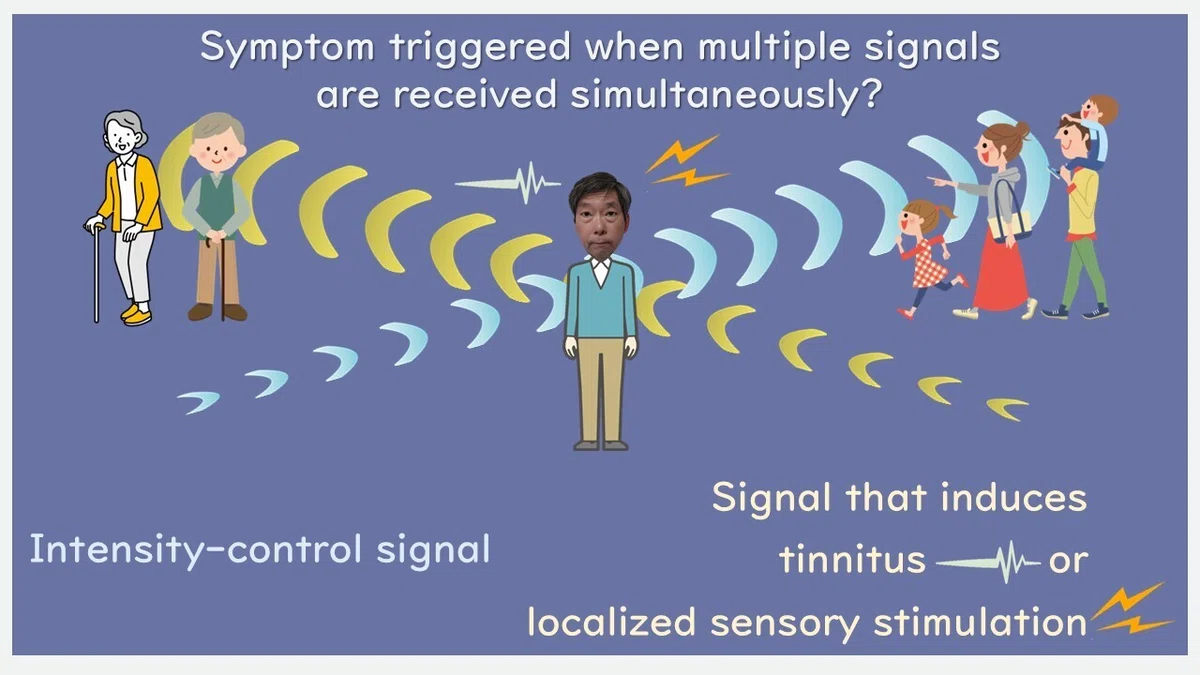
The first idea that came to mind was that inducing abnormal symptoms may require the simultaneous reception of multiple signals.
However, if this method alone were used, it would be difficult—if not impossible—to target only me in a crowded environment.

3. On–Off Signals (Signals That Maintain a Symptom for a Certain Duration)
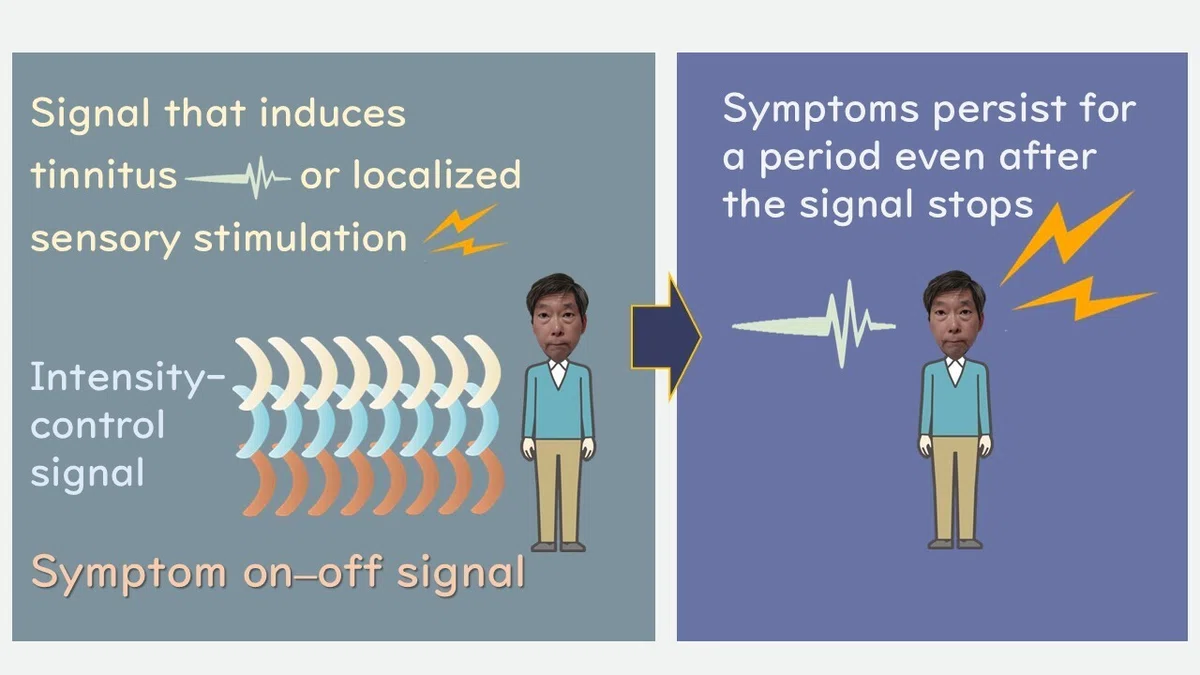
Another possibility is the existence of an “on–off signal.”
If I receive a signal that switches a particular symptom “on,” the symptom might remain active for a certain period of time.
If a separate intensity-control signal can reduce the perceived intensity to zero, then an independent “off signal” may not even be necessary.
In any case, this would mean that I do not need to be receiving signals continuously.

4. Heightened Signal Sensitivity
Given the extreme psychological pressure I have been subjected to for a prolonged period,
it is possible that:
I have been assigned a unique individual-identification signal that only I react to, and/or
my sensitivity to certain signals has been artificially heightened,
making me more susceptible than others to even weak signals.
In such a state, I may perceive symptoms that those around me do not notice at all.

5. Emission from Close Range
5-1 Small Devices Are Sufficient
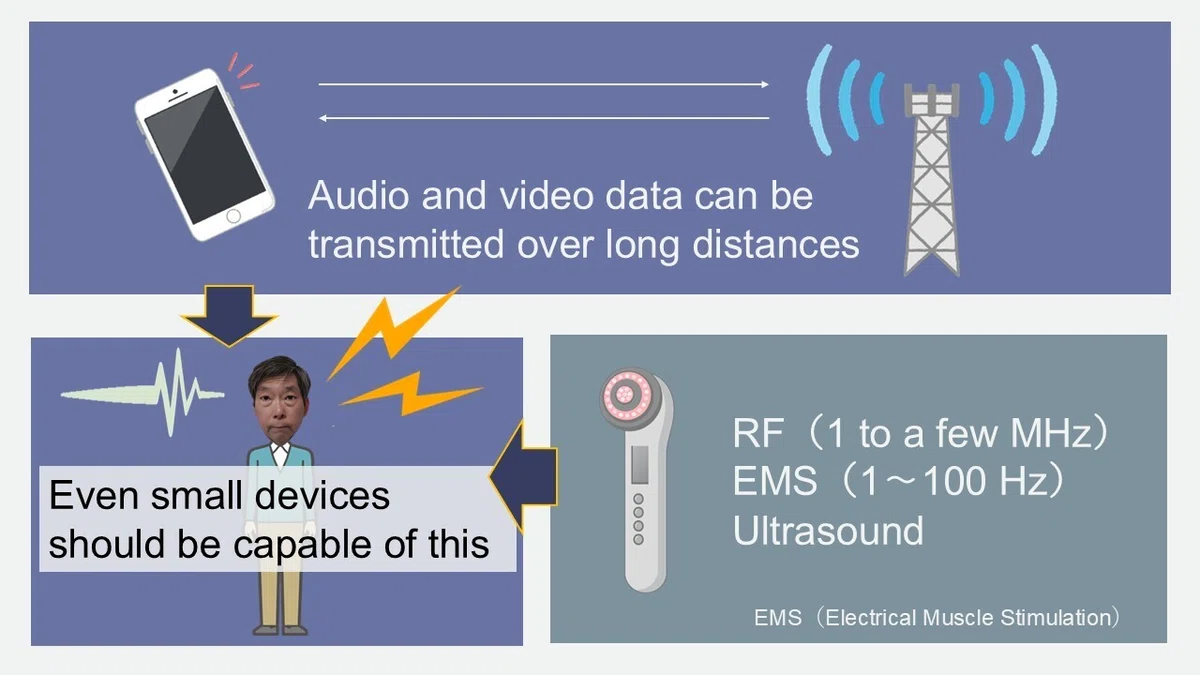
Smartphones are capable of sending and receiving audio and video data to and from base stations hundreds of meters away.
A handheld beauty device can emit radiofrequency waves, ultrasound, and even 1–100 Hz pulsed electrical currents.
Therefore, if my symptoms are being artificially induced by irradiating me with certain signals,
then a device no larger than a smartphone or a handheld beauty device would be sufficient to generate them.
On April 11, 2024, Japan’s Consumer Safety Investigation Commission (CSIC) issued a notice regarding a reported incident in which a user wearing a headphone-type EMS beauty device around the neck suddenly experienced dizziness, collapsed to the floor, and felt nauseous about ten seconds after activation.
PDF (Japanese): “Information on Accidents Related to Household EMS Beauty Devices”
Notably, the 1–100 Hz frequency range overlaps with brainwave frequencies.

5-2 Emission from Close Proximity Is Also Possible
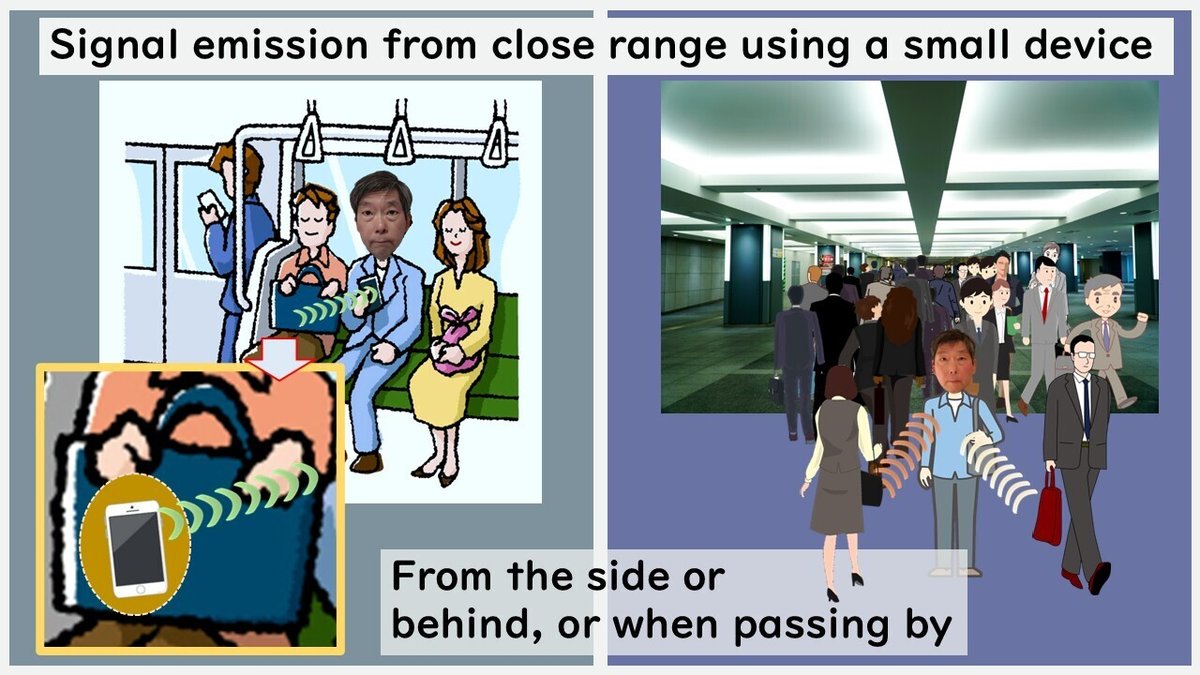
If someone carries a signal-emitting device inside a bag—or pretends to be using a smartphone—they could approach me and emit signals from close range, artificially inducing symptoms even in public spaces.
On December 5, 2024 and March 7, 2025, while walking through the underground concourse of Tokyo Station on my way to the Tokyo District Court for my second oral argument and to submit my appellate documents, I suddenly experienced extremely intense tinnitus in my left ear, far stronger than the already ongoing tinnitus-like attacks.
I believe this close-range method may have been used in those instances.

6. Summary
Based on how the symptoms manifest—and in comparison with cases where diseases are the cause—it is undeniably clear that my symptoms are artificially induced.
The absence of any visible devices around me, the lack of influence from physical obstructions, and the fact that symptoms continue even after I move to a different location all point toward signals, rather than energy-based irradiation like electromagnetic or ultrasonic waves, being used.
In this article, I explained:
The possibility of on–off signals capable of inducing and maintaining symptoms,
How small devices such as smartphones could generate signals sufficient to induce symptoms, and
How signals could be emitted from close range without affecting others nearby.
I am not a technical expert, but based on my symptoms and the surrounding circumstances, I have listed the methods that are conceivable at this point.
These possibilities are not limited to the ones described above.
There may be other methods capable of inducing symptoms in me alone without affecting others.
However, there is no doubt that the symptoms I am experiencing are artificially induced, and therefore,
some form of underlying method must exist.

6. Next Article Preview
Why has such a situation continued for so long—
targeting someone like me, who is not a public figure?
What is the true purpose of the organization that dominates the police, the television industry, and even large numbers of ordinary citizens, and continues to commit these inhumane acts?
In the next article, I will examine this question.
I posted Part 3 on December 23, 2025. (Added on the same day)

