
Tokyo High Court – First Appeal Oral Argument (Detailed Second Half)

On June 18, 2025, during the oral argument at the Tokyo High Court in my appeal trial, I experienced an abnormal incident that seemed to be related to the technology I have long been warning about. This post serves as the second half of my detailed record and analysis.
Introduction
I previously posted a summary on June 20, 2025, regarding the first oral argument in the eviction appeal trial (Appellant = Defendant in the original trial = myself), which took place on Wednesday, June 18.
I then posted the first half of a more detailed version on July 24.
At the end of the first half, I stated that there may be an ongoing development of terrifying technologies capable of remotely controlling brain activity, which could be behind the severe human rights violations I have continued to expose.
I also quoted past posts from X (Twitter) to briefly introduce the associated concerns.
In this second half, I focus on the incidents I personally experienced on the day of the oral argument that appear to be directly related to those concerns.
「目次」:Table of Contents
Click 「すべて表示」: “Show all” to expand the full table of contents.

During and After the Session
Abnormal Symptoms During the Session
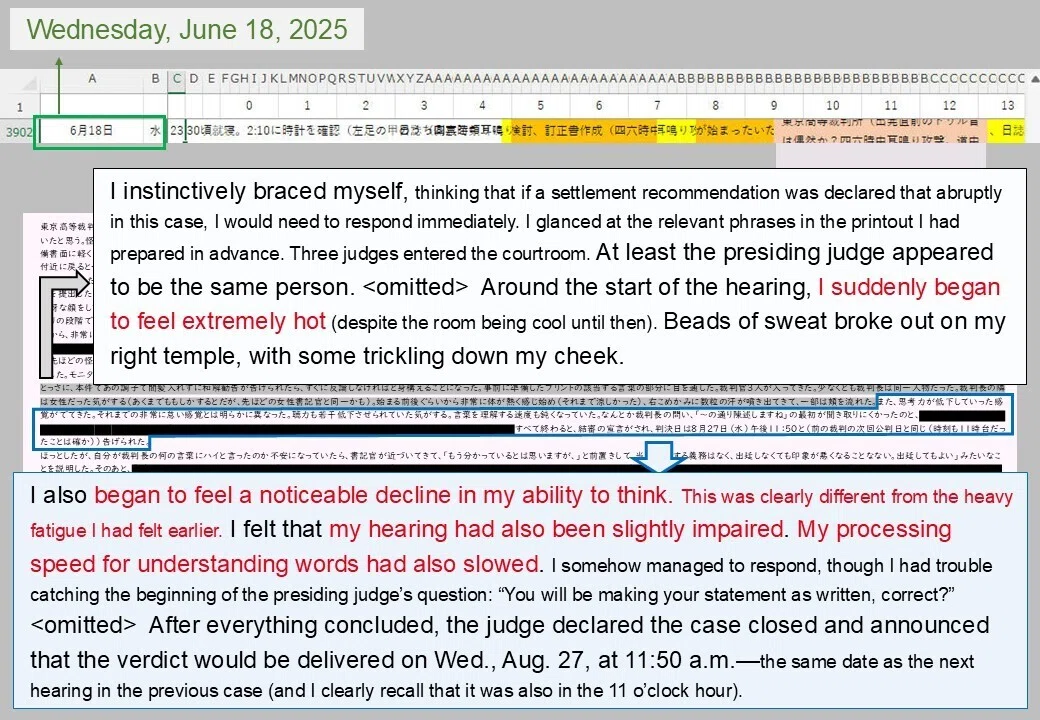
As mentioned in the first half, the oral argument for the previous case was significantly delayed and ended quickly with a declaration of "settlement recommendation." Observing this, I resolved to immediately object if a similar recommendation was made in my case.
When my case began, I recognized that the presiding judge was the same person as in the previous case.
While I could clearly hear the initial question, the voice soon became difficult to hear, my vision narrowed, and my body began to feel abnormally hot. Sweat visibly broke out on my right temple, with some trickling down my cheek.
Even so, I managed to respond, and I clearly heard the judge's final question: “You submitted a correction document, right?” No settlement recommendation was made, and the oral argument concluded. The verdict was scheduled for Wednesday, August 27, 2025, at 11:50 a.m.

About the Man and Woman in the Gallery

After the session, a court clerk approached me and, prefacing with “You may already know this,” explained that I was not obligated to appear on the verdict date. Taking this opportunity, I told him I had been feeling dazed and asked for confirmation of the judge's remarks.
As I left the courtroom, the woman in the gallery stared at me with a puzzled expression, remaining seated. Once in the corridor, the suspicious man who had been seated in the gallery was on the phone with a disgruntled expression and looked directly at me.
Seeing this, I inexplicably turned toward the opposite exit. A door opened, and a man who had been running seemed to confirm my presence before turning back.
After exiting the building, I realized I had come out in an entirely unfamiliar location on the east side. Since I couldn't go back, I asked a security guard for directions to the subway entrance, but he eventually seemed to grow suspicious of me. I believe I likely entered Kasumigaseki Station through Exit B1a rather than my usual A1.
There were several suspicious incidents in the station and on the return train, but I will omit them here.

Analysis
The Most Severe Interference I Have Experienced in Court
I experienced interference during all three oral arguments in the first trial, but this time it was far more intense. The abnormal fatigue from the moment I left home through the time I waited in the gallery, and the heat, hearing loss, narrowing vision, and cognitive decline during the session were unprecedented.
I also felt that the prior remote session running into the scheduled start time of my case was deliberate.
I also faced strong interference while accessing court records and submitting my written appeal statement. Taken together, these incidents suggest that this appeal is extremely inconvenient to the organizations or individuals involved in human experimentation.

About the Suspicious Individuals
In the gallery, the same suspicious man who had blocked my way in front of the bulletin board was seated near the center, while the nearly barefaced woman was sitting in the front row on my side.
After the session, the man glared at me while talking on the phone—just as "Man ④" did after I left the record-viewing room on April 17, 2025—so he may be a related party.
As for the woman, my first impression was that she might be a TV journalist, but because she continued to look at me suspiciously, I decided not to speak to her. She may also have been affiliated with another organization.

About the Attack During the Session
Although I experienced tinnitus attacks during the first trial as well, this was the first time multiple symptoms occurred simultaneously.
The fact that the symptoms subsided just before the session ended strongly suggests they were artificially induced.
The details of each symptom—heat, hearing loss, narrowing vision, cognitive decline—and related past experiences are too lengthy to cover here and will be omitted.

About the Method of Attack
It is almost certain that I was the only one targeted during the session. It is also clear that no large-scale device was used.
However, the attacker likely had knowledge of the court proceedings.
I plan to address the technical aspects in a separate article.

Technical Feasibility and Concerns
Here, I present how my own experience corresponds to the technical background. I believe that behind the unimaginable human rights violations I have continued to report lies the development of technology capable of remotely controlling brain activity.
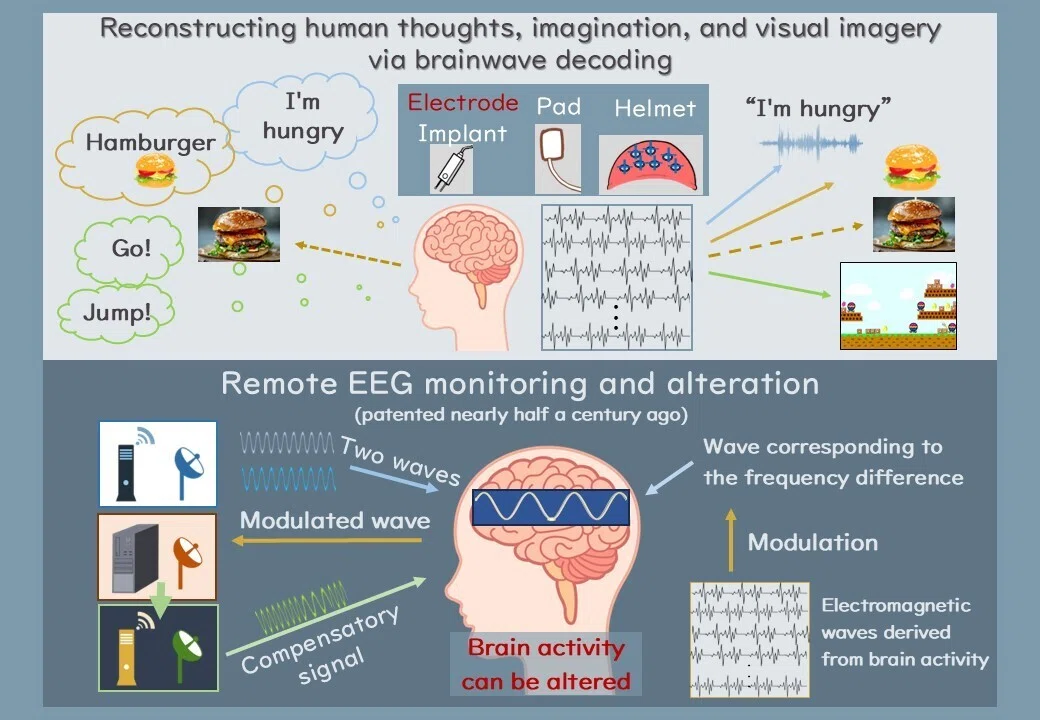
The upper portion of Figure 7 shows technologies that use implanted or surface-contact electrodes on the head. These methods have already been proven capable of decoding brain activity and reproducing a person's thoughts, imagination, or visual perceptions.
As for the lower portion, it is unclear to what extent technologies for remotely detecting and manipulating brain activity were proven at the time. However, the principles are certainly possible, and my own experience suggests such technologies may already be partially realized.
Figure 8 introduces a patent outlining how subliminal stimuli could affect the autonomic nervous system and cerebral cortex, potentially inducing drowsiness or fragmenting thought.

While I do not fully understand these technologies, including those shown in Figure 7, I have chosen to introduce them to explain how many of my symptoms—which only I perceive—can plausibly be artificially induced.
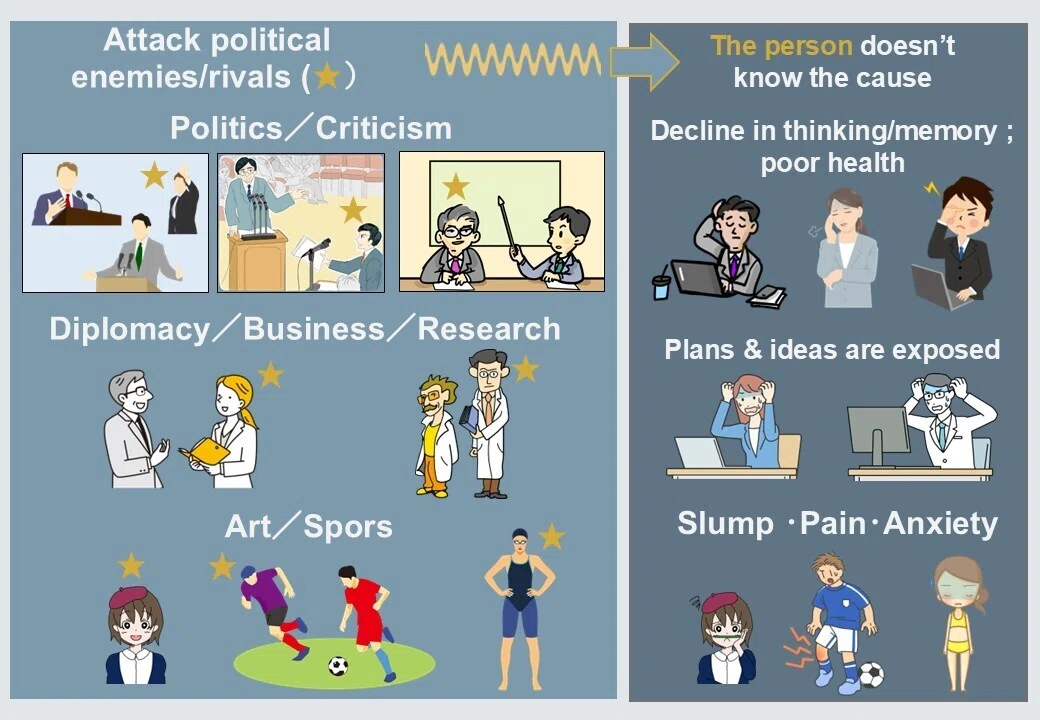
Figure 9 presents a simple summary of potential concerns if remote brain control technologies were to become widespread.

Conclusion
During this oral argument, I experienced firsthand what I had long feared.
The verdict is scheduled for Wednesday, August 27, 2025. I expect to receive the document around Friday, August 29.
On the latter part of page 5 of my June 16 appeal preparation statement, I wrote the following:
"In this sense, this case represents for the appellant a once-in-a-lifetime—and likely final—opportunity to expose the devastating life- and mind-destroying experiences endured over the years, as well as the horrifying technological developments and the organizational actors behind the suspected 'Anomalous Health Incidents (AHIs).'"

