
From Garden to Table: Summer Vegetable & Beef Sōmen (Shishito Series Vol. 8)

Hello, I'm Hoppi, the jackrabbit gardener. I'm not good with spicy food, but somehow spicy things grow really well in my garden — both red chili peppers and green ones.

For the past several years, my fellow gardener Racoon the raccoon and I have been growing shishito peppers — distant cousins of chili peppers — and we keep breaking our own bumper crop records.
Shishito peppers are sold in American supermarkets too, but since many people still don't know them, the bags usually come with an explanation, something like: "1 in 10 is spicy — an exciting, delicious pepper (a type of sweet pepper)."
A few years ago when I bought some, I saved the seeds and planted them, and they grew wonderfully. But the crop from the year before last got spicier and spicier as autumn went on, until eating them became a real ordeal.
Last year's crop was spicy from summer onward, too hot to use as-is in cooking. So I ended up splitting each pepper open one by one, scraping out the pith and seeds to tone down the heat before using them. I tried simmering them, grilling and marinating them, stir-frying them — this article is Part 4 of my ongoing attempt to enjoy even spicy shishitos deliciously. The earlier installments are probably buried somewhere in my Snapdish posts.
Well, this year I planted seeds from last year's peppers again, and several plants have grown lush and green in a few big pots, producing lots of glossy peppers without flinching even in the heat. I'm glad they grew so well, but I've got mixed feelings — if they're spicy again, that's a hassle. Since they need extra work before they're edible, I ended up leaving them alone for a while.
Then I noticed that more than half of the shishitos had turned completely red! They looked like plump little red chilis — honestly a bit scary. I know I have to eat what I harvest, but I kept thinking I probably couldn't. Yet if I left them any longer, they'd eventually rot.
Gritting my teeth and summoning my courage to cook, I went to the supermarket and found a type of eggplant called "Fairy Eggplant." It was so small and cute that I got the idea to combine it with the shishitos and ground beef to make a miso meat sauce for sōmen noodles.
Investigating Which Shishitos Are Spicy and Which Aren't
Not knowing whether what you've grown in the garden is spicy or not is a bit of a burden for the person growing it. After all, the plants worked hard and produced fruit in response to all the care I gave them. Eating them properly feels like keeping a promise. But how?
In any case, today I finally decided I had to use at least some of them, so I picked 40 peppers evenly from the four shishito plants.
First, I needed to figure out the ratio of spicy to non-spicy ones. And for that investigation, neither a kitchen scale nor a thermometer would be any use. The only tool I had was my own tongue.
I was pretty nervous, but I couldn't let the peppers my plants had worked so hard to produce go to waste. Working up my courage, I set out a glass of water, plucked the stem off the first shishito with my front paws, and popped it in my mouth.
Surprise! Not spicy.
Another one. Not spicy.
Another one. Huh! This one's not spicy either. I'd been holding my breath, and only then did I let it out.
No matter how many I ate, none were spicy. I couldn't believe it. Last year and the year before, it was like eating serrano chilis every time.
But after about 15 bites, there was one that was spicy.
"Whoa!"
I ended up spitting it right out of my mouth and gulping down water. My mouth got hot, painful, and went numb. I could no longer taste-test properly, so that's when I started writing this article.
Once feeling came back to my tongue, I went back to tasting.
In the end, out of 40, only one was spicy. It reminded me of a book by a certain monk titled something like "90% of Worries Never Happen." Sure enough, today there were hardly any spicy shishitos.
Even after making the meat sauce, I could really relax and enjoy eating it, and the sōmen tasted especially good.

Recipe: Ground Beef and Summer Vegetable Sōmen
Ingredients and Prep
Ground beef: 225g (approx. 1/2 lb)
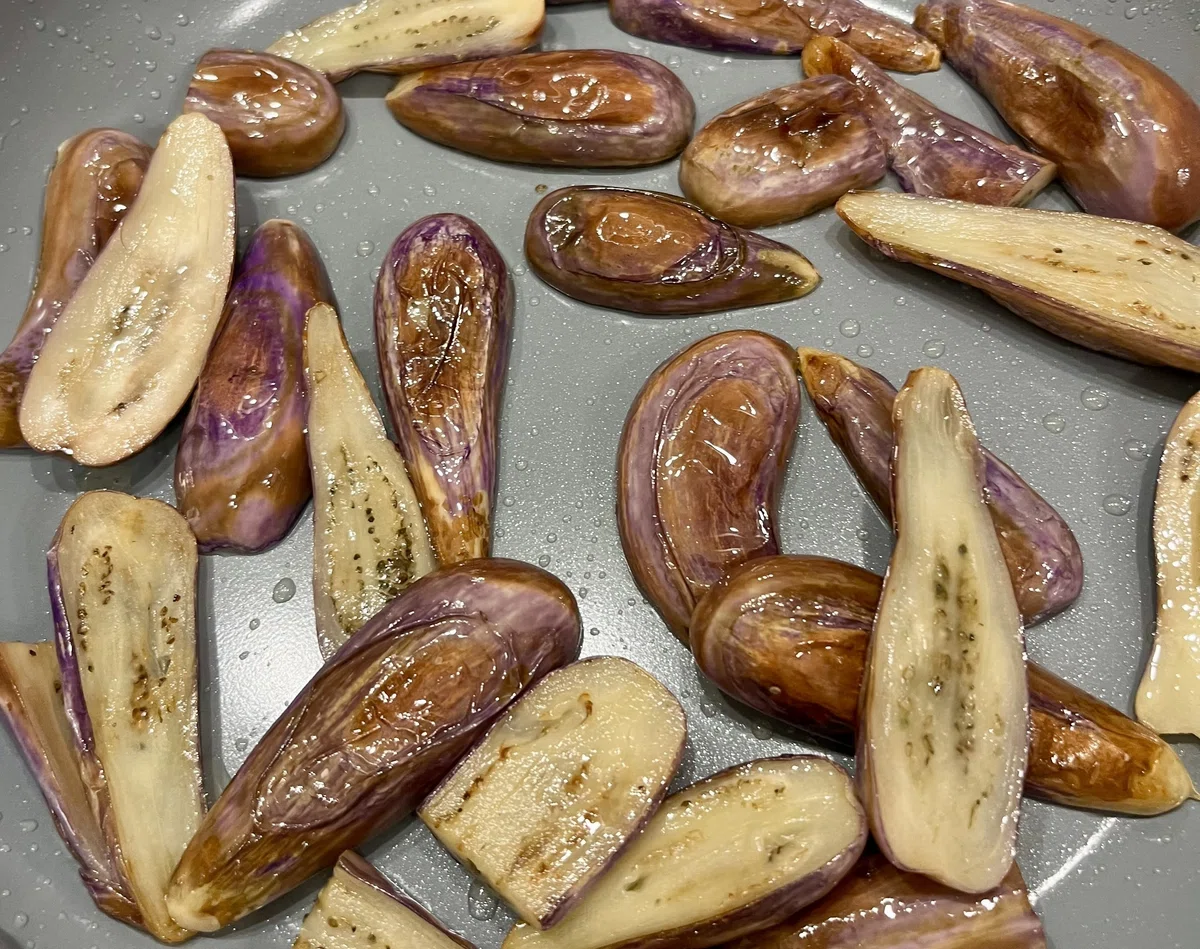
Fairy eggplant: 300g — smaller ones cut in half lengthwise, longer ones cut lengthwise and then crosswise into smaller pieces
Shishito peppers: 40 (approx. 150g), sliced into small rounds; (discard loose seeds)
Red chili pepper: a pinch (optional, only if the shishitos aren't spicy!)
Grated ginger: 1 tsp
Grated garlic: 1 tsp
Miso Sauce (mix in advance; taste and adjust to your liking — I actually ended up adding more as I went, so this is roughly the final amount I used)
Miso: 2.5 tbsp
Soy sauce: 1 tbsp
Sugar: 1 tbsp
Sake: 2 tbsp
Water: about 4 tbsp
Vegetable oil (I use half sesame oil, half a mild-flavored oil): 2–3 tbsp
Thickening slurry
Potato starch: 1 tbsp
Water (for the starch slurry): 2 tbsp
Sōmen noodles: 100–200g

Directions
Add about 2 tbsp of oil to a frying pan and cook the eggplant skin-side down. Once browned, flip and stir-fry until soft all over. Remove from the pan.
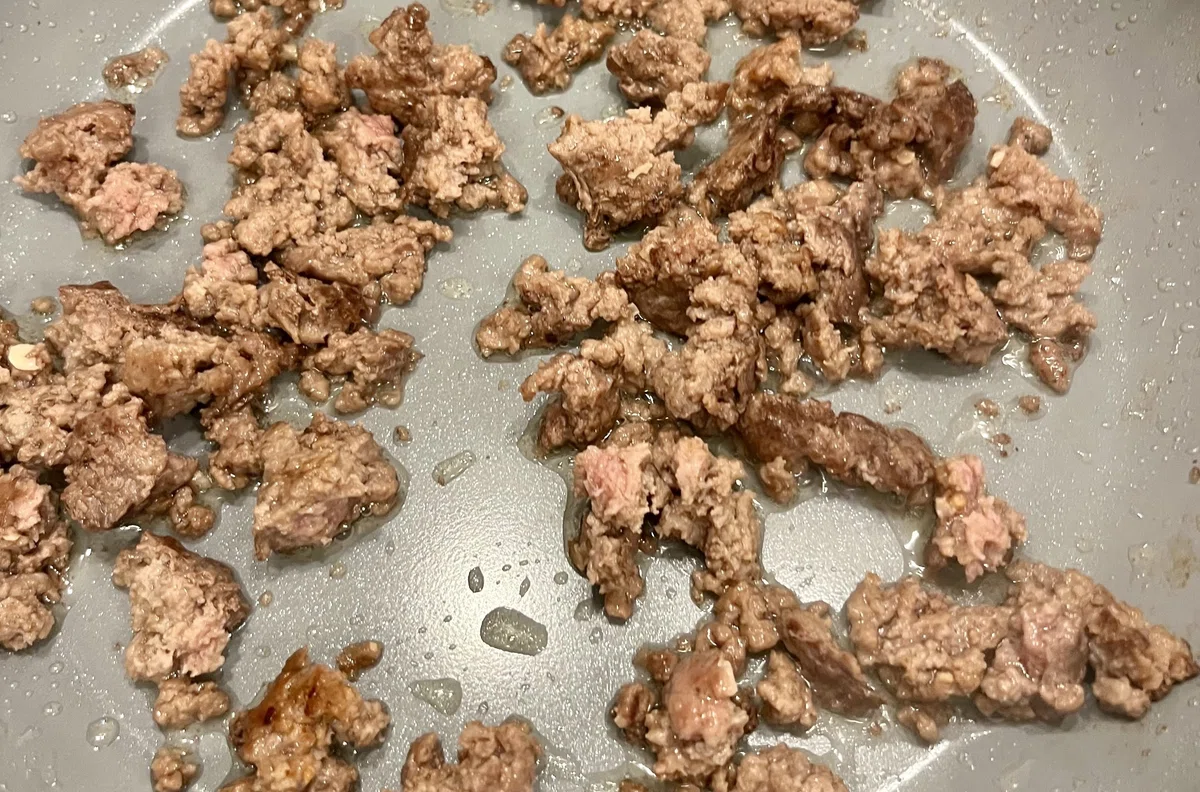
In the same pan, stir-fry the ground beef.
Once the meat is cooked through, add the shishitos and stir-fry.
Return the eggplant to the pan, add the miso sauce, and stir-fry for 2–3 minutes.
Add the potato starch slurry a little at a time to lightly thicken the sauce.
Rinse the sōmen in cold water and drain well.
Pile the meat sauce generously on top.


Hoppi's Reflections
Even someone like me enjoys a little spice now and then. I added a pinch of a dried chili I'm used to cooking with to the ingredients — that way I can control the heat myself. I also chopped up that one spicy shishito's leftover piece and mixed it into the meat mixture.
As a result, the meat mixture ended up with a surprising kick. I think it was that one spicy shishito — as if the plant had desperately concentrated all its capsaicin into a single fruit. Since it was originally such a small amount, it only gave me something like a runny nose, but even so, it packed real power.
Also, next time I want to try cutting the shishitos smaller and compare them with the 1-cm rounds I used this time.
As for the Fairy eggplant, it wasn't just cute-looking — it had almost no seeds, cooked through into a lovely soft texture quickly, and was really delicious. It's a bit pricey, but I'd like to use it again in a dish where it's eaten whole.
By the way, there's a member of my household who can't eat beef: Larry — or Rarii, as he's becoming Japanese — the Texas Longhorn. Next time I'm thinking of making a beef-free version with a bit more ginger.

Finally, about the miso sauce — the first batch I made wasn't enough because there were too many vegetables. I kept adding more as I went, and it eventually settled into roughly the recipe amount above. Running short on sauce is pretty disappointing, and since properly balancing a combined seasoning sauce takes a bit of time, it's easy to end up rushing — so I think it's better to make a little extra. That said, next time I'll be sure to calculate the salt content properly.
Hoppi's Side Note: Could I Sell Shishitos?
From here on, this is just a little aside from me as a gardener.
When I mention that my garden produces so many shishitos it's become a problem, acquaintances often say, "If you have that many, why not sell them at the local farmers market?"
Racoon and I just look at each other and sigh.
"Did you know shishitos are a little spicy?"
Everyone nods.
"Yeah, just a little, right?"
"Well, it's not that they're all mildly spicy — spicy ones are just scattered in among them."
"Like 1 or 2 in 10 are spicy?"
"Well, about that... but our shishitos last year were 10 out of 10 spicy."
"10 out of 10?! I've heard shishitos are like vegetable roulette, but that's basically a guaranteed hit every time."
"Right. Since customers wouldn't know what they're actually buying, we can't really charge money for them."
"Yeah, I guess so..."
Why Are Shishitos Sometimes Spicy and Sometimes Not?
Why is there such variation in how spicy shishitos are? I looked into this two years ago, back when I was really troubled by it.
Apparently, while the variety and genetic traits of the plant play a role, the growing environment can dramatically change how much capsaicin (the spicy compound) gets produced.
In particular, when peppers are exposed to strong sunlight, heat waves, or drought stress, or left on the branch too long, they may produce lots of capsaicin to protect themselves — something like "this is getting tough, gotta hang in there" — and become spicy.
They're sensitive to changes in their environment — such cute plants.
With the extreme heat we've had every year lately, it seemed like a lot of capsaicin would have been produced. This year in particular, these past few weeks have been the hottest in three years, with highs hovering around 35°C. So I figured capsaicin production should be in overdrive to fight the stress — but then why was only 1 out of 40 spicy today?
Actually, it turns out that when the heat is too intense day after day, shishito plants can get "worn out" and lose even the energy to produce capsaicin (in technical terms, capsaicin biosynthesis gets suppressed under extreme heat stress) — maybe that's what happened.
On the other hand, we've been getting frequent thunderstorms, so maybe the plants haven't been under water stress — but that's not unique to this year, so it doesn't fully explain things either.
Finally, I wondered if this might be a special condition unique to "our" shishitos. In my garden, I often grow vegetables from seeds or roots bought at the supermarket, creating a cycle of "store to table, table to our garden, garden to table, table to garden." Supermarket vegetables are often F1 hybrids (first-generation hybrids), meaning that plants grown from their saved seeds won't necessarily grow true to type, often expressing varied hidden genetic traits in subsequent generations.
These shishitos, too, may have originally been bred to have roughly a 1-in-10 “vegetable roulette" level of spiciness. But as I saved seeds and replanted them year after year — the second generation, then the third — other hidden genetic traits may have started to emerge.
Gardening is full of surprises since something different happens every year — lots of mysteries, and lots of fun too.
In the garden, the shishito plants have started blooming white flowers again. There are plenty of bright red shishitos, green ones, and baby shishitos too.
The lingering summer heat is still fierce, so I plan to water them well and keep watching over them.
Rakoon was scraping the seeds out of that one spicy pepper from earlier. Said we'd plant it again next year.
(Told by Hoppi)

For other ways to enjoy spicy shishitos, please check the link below. It's in Japanese for now. (The reason there's no Part 1 is explained in Part 2)
