アジアの医療諸体系
Asian medical systems : a comparative study, 1976
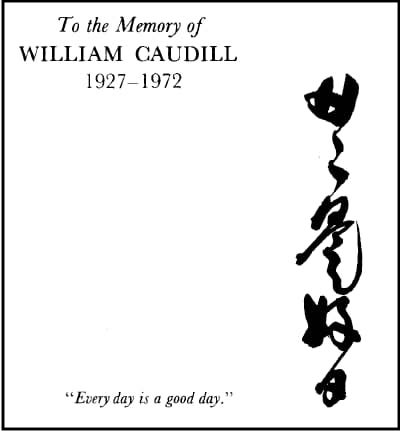
Dedication to William Caudill in Asian Medical Systems, 1976.
池田光穂
☆Asian Medical Systems
この本は、ウィリアム・アベル・コーディル(1927-1972)の思い出に捧げられている:Dedication to William Caudill in Asian Medical Systems, 1976.
| Asian medical systems : a
comparative study / edited by Charles Leslie, University of
California Press , 1976 |
『アジアの医療体系:比較研究』/チャールズ・レスリー編、カリフォルニア大学出版局、1976年 |
| List of Tables, ix List of Illustrations, xi List of Contributors, xii Introduction—CHARLES LESLIE 1 |
表一覧、ix 図版一覧、xi 寄稿者一覧、xii 序文――チャールズ・レスリー 1 |
| Part I THE GREAT TRADITIONS OF HINDU, ARABIC, AND CHINESE MEDICINE The Practice of Medicine in Ancient and Medieval India— A. L . BASHAM 18 Secular and Religious Features of Medieval Arabic Medicine— J . CHRISTOPH BURGEL 44 The Intellectual and Social Impulses Behind the Evolution of Traditional Chinese Medicine—MANFRED PORKERT 63 |
第1部 偉大な伝統 ヒンドゥー、アラビア、そして中国医学 古代および中世インドにおける医療の実践— A. L. バシャム 18 中世アラビア医学の世俗的・宗教的特徴— J. クリストフ・ブルゲル 44 伝統中国医学の進化の背景にある知的・社会的原動力――マンフレッド・ポルケルト 63 |
| Part II THE STRUCTURE AND CHARACTER OF COSMOPOLITAN MEDICINE The Modern Medical System : The Soviet Variant—MARK G . FIELD 82 The Sociology of Modern Medical Research—RENEE C. FOX 102 |
第2部 その構造と特徴 コスモポリタン医学 現代医療システム:ソビエト型――マーク・G・フィールド 82 現代医学研究の社会学――レニー・C・フォックス 102 |
| Part III THE ADAPTIVE SIGNIFICANCE OF MEDICAL TRADITIONS Disease, Morbidity, and Mortality in China, India, and the Arab World—IVAN POLUNIN 120 Traditional Asian Medicine and Cosmopolitan Medicine as Adaptive Systems—FREDERICK L. DUNN 133 The Cultural and Interpersonal Context of Everyday Health and Illness in Japan and America—WILLIAM CAUDILL 159 |
第III部 医療伝統の適応的意義 中国、インド、およびアラブ世界における疾病、罹患率、および死亡率 —イヴァン・ポルーニン 120 適応システムとしてのアジアの伝統医学とコスモポリタン医学 —フレデリック・L・ダン 133 日本とアメリカにおける日常の健康と疾病の文化的・対人関係的文脈 日本とアメリカにおける日常の健康と 病気の文化的・対人関係的文脈――ウィリアム・コーディル 159 |
| Part IV THE CULTURE OF PLURAL MEDICAL SYSTEMS Strategies of Resort to Curers in South India—ALAN R. BEALS 184 The Impact of Ayurvedic Ideas on the Culture and the Individual in S r i Lanka—GANANATH OBEYESEKERE 201 The Social Organization of Indigenous and Modern Medical Practices in Southwest Sumatra—M. A. JASPAN 227 Chinese Traditional Etiology and Methods of Cure in Hong Kong— MARJORIE TOPLEY 243 |
第4部 多元的医療システムの文化 南インドにおける治療者への依存戦略――アラン・R・ビールズ 184 スリランカにおけるアーユルヴェーダの思想が文化と個人に与えた影響――ガナナート・オベイエセケレ 201 南スマトラにおける先住民と近代医療の実践の社会組織――M・A・ジャスパン 227 南西スマトラにおける先住民医療と近代医療の実践の社会組織 —M. A. ジャスパン 227 香港における中国の伝統的な病因論と治療法— マージョリー・トプリー 243 |
| Part V THE ECOLOGY OF INDIGENOUS AND COSMOPOLITAN MEDICAL PRACTICE Systems and the Medical Practitioners of a Tamil Town— EDWARD MONTGOMERY 272 The Place of Indigenous Medical Practitioners in the Modernization of Health Services—CARL E. TAYLOR 285 The Social Organization and Ecology of Medical Practice in Taiwan—PAUL U. UNSCHULD 300 |
第5部 先住民的およびコスモポリタン的な 医療実践の生態学 タミル人居住地の医療システムと医療従事者―― エドワード・モンゴメリー 272 健康サービスの近代化における 先住民医療従事者の位置づけ――カール・E・テイラー 285 台湾における医療実践の社会組織と生態学 —ポール・U・ウンシュルド 300 |
| Part VI MEDICAL REVIVALISM Chinese Traditional Medicine in Japan—YASUO OTSUKA 322 The Ideology of Medical Revivalism in Modern China—RALPH C. CROIZIER 341 The Ambiguities of Medical Revivalism in Modern India— CHARLES LESLIE 356 Indigenous Medicine in Nineteenth- and Twentieth-Century Bengal— BRAHMANANDA GUPTA 368 |
第VI部 医療復興主義 日本における中国伝統医学――大塚康夫 322 近代中国における医療復興主義のイデオロギー――ラルフ C. クロイジエ 341 近代インドにおける医学復興主義の曖昧さ―― チャールズ・レスリー 356 19世紀および20世紀のベンガルにおける土着医学―― ブラフマナンダ・グプタ 368 |
| Part VII PERSPECTIVES World-Views and Asian Medical Systems: Some Suggestions for Further Study—W. T. JONES 383 |
第VII部 展望 世界観とアジアの医療体系:今後の研究に向けたいくつかの提言 —W. T. ジョーンズ 383 |
| List of Tables / List of
Illustrations |
表一覧 / 図一覧 |
| MARK G . FIELD 1. Total Labor Force and Health Workers, USA and USSR, 1930-1969 96 2. Physicians, USA and USSR, 1913-1970 97 3. Women in Medicine, USA and USSR, 1913-1970 96 4. Hospital Beds, USA and USSR, 1909-1970 98 5. Crude Birth Rate, Crude Death Rate, and Natural Increase of the Population, USA and USSR, 1910-1970 99 6. Infant Mortality, USA and USSR, by Sex, 1913-1970 100 7. Average Life Expectancy at Birth, USA and USSR. by Sex, 1920-1969 101 +++++++++++++ MARK G . FIELD Figure 1. Modalities of the medical system 83 Figure 2. Components of the medical system 84 Figure 3. Structural supports of the medical system 85 Figure 4. The medical system in the macrosociological context of competing systems 87 |
マーク・G・フィールド 1. 総労働力と健康従事者、米国およびソ連、1930-1969年 96 2. 医師、米国およびソ連、1913-1970年 97 3. 医療分野における女性、米国およびソ連、1913-1970年 96 4. 病院の病床数、米国およびソ連、1909-1970年 98 5. 粗出生率、粗死亡率、および人口の自然増加 、米国およびソ連、1910-1970年 99 6. 乳児死亡率、米国およびソ連、性別別、1913-1970年 100 7. 出生時平均余命、米国およびソ連。 性別別、1920-1969 101 +++++++++++++ マーク・G・フィールド 図1. 医療システムの様態 83 図2. 医療システムの構成要素 84 図3. 医療システムの構造的基盤 85 図4. 競合するシステムというマクロ社会学的 文脈における医療システム 87 |
| FREDERICK L . DUNN 1. A Classification of Diseases and Disorders as Determinants of Human Ill-Health and Death 135 2. A Comparison of Some Characteristics of Three Categories of Past and Present-Day Medical Systems 138 +++++++++++++ FREDERICK L . DUNN Figure 1. Health as a scalar quantity 134 |
フレデリック・L・ダン 1. 人間の健康障害および死の決定要因としての 疾病および障害の分類 135 2. 過去および現代の医療システムの3つのカテゴリーにおける いくつかの特徴の比較 138 +++++++++++++ フレデリック・L・ダン 図1. スカラー量としての健康 134 |
| ALAN R . BEALS 1. Rupees Spent on Medical Treatment of Critical Illness of Male Children of 19 Hindu Families in Gopalpur Village, Mysore State 193 |
アラン・R・ビールズ 1. マイソール州ゴパルプル村のヒンドゥー教徒19世帯の男子児童における重篤な疾病の治療費(ルピー) 193 |
| GANANATH OBEYESEKERE 1. Correspondences of Five Vowels, Elements, Directions, and Planets 205 2. Five Diseases Which Final-Year Students in the College of Ayurveda Believe Could Most Effectively Be Treated by Ayurvedic Medicine 218 3. Summary of 275 Cases Admitted to the Government Ayurvedic Hospital, Colombo 220 4. Six Major Diseases Treated in the Government Ayurvedic Hospital, Colombo 220 5. Types of Diseases For Which 13 Western-Trained Doctors in Kandy, Sri Lanka, Thought Ayurvedic Treatment Could Be Effective 221 6. Ten Most Popular Categories of Illness Used to Diagnose Over 63% of 112,693 Patient Visits in 1970 to Six Free Ayurvedic Clinics in Kandy, Sri Lanka 222 +++++++++++++ GANANATH OBEYESEKERE Figure 1. Sorcery image of enemy 204 Plate 1. The preparation of medicinal wines at the Gampaha Siddhayurveda College in Yakkala, Sri Lanka 214 Plate 2. A laboratory at the College of Ayurveda in Colombo, Sri Lanka 218 |
ガナナート・オベセケレ 1. 5つの母音、元素、方位、および惑星の対応関係 205 2. アーユルヴェーダ大学の最終学年生が アーユルヴェーダ医学によって最も効果的に治療できると考える5つの疾患 218 3. コロンボ政府アーユルヴェーダ 病院に入院した275例の概要 220 4. コロンボ政府アーユルヴェーダ 病院で治療された6つの主要疾患 220 5. スリランカ・キャンディの西洋医学訓練を受けた医師13名が、 アーユルヴェーダ治療が有効であると考えた疾患の種類 221 6. 1970年にスリランカ・キャンディの6つの無料アーユルヴェーダ診療所を訪れた 112,693人の患者のうち、63%以上が診断を受けた最も一般的な10の疾患カテゴリー 222 +++++++++++++ ガナナート・オベセケレ 図1. 敵の邪術的イメージ 204 図版1. スリランカ、ヤッカラにあるガンパハ シッダユルヴェーダ・カレッジでの薬用ワインの調製 214 図版2. スリランカ、コロンボにある アーユルヴェーダ・カレッジの実験室 218 |
| CARL E. TAYLOR 1. Apprenticeship Training of 59 Indigenous Practitioners 286 2. Nature of Physical Examination Conducted by 59 Indigenous Practitioners 287 3. Type of Medication Prescribed by 59 Indigenous Practitioners 287 4. Beliefs About Causes of Cholera 292 5. Beliefs About Causes of Leprosy 293 6. Beliefs About Causes of Diarrhea 294 7. Beliefs About Causes of Tuberculosis 295 8. Beliefs About Causes of Roundworms 296 9. Type of Practitioner Preferred for Treatment of Rheumatism 296 |
カール・E・テイラー 1. 59名の先住民医療従事者に対する見習い研修 286 2. 59名の先住民医療従事者による身体検査の内容 287 3. 59名の先住民医療従事者が処方した薬の種類 287 4. コレラの原因に関する信念 292 5. ハンセン病の原因に関する認識 293 6. 下痢の原因に関する認識 294 7. 結核の原因に関する認識 295 8. 回虫症の原因に関する認識 296 9. リウマチ治療に好まれる医療従事者の種類 296 |
| PAUL U . UNSCHULD 1. Resort to Western and Traditional Chinese Medical Systems Indicated By College Students, Workers and Peasants in Response to a Survey Questionnaire in Taiwan 312 |
ポール・U・ウンシュルト 1. 西洋医学および伝統中国医学への依存 台湾におけるアンケート調査への回答から見る 大学生、労働者、農民の状況 312 |
| YASUO OTSUKA 1. Number of Practitioners of Some Traditional Therapeutic Arts in Japan 338 +++++++++ YASUO OTSUKA Plate 1. A set of meridian charts drawn by Okamoto Ippo 324 Plate 2. Various symptoms of abdominal palpation illustrated by Momoi Antei 329 Plate 3. Title page from Kaitai shinsho (New Book of Anatomy) 332 Figure 1. The change in the number of publications on Kanpo medicine after the Meiji Restoration in 1868 336 |
大塚恭男 1. 日本におけるいくつかの伝統的治療術の施術者数 338 +++++++++ 大塚恭男 図版1. 岡本一甫による経絡図一式 324 図版2. 桃井安亭による腹部触診の様々な所見 329 図版3. 『解体新書』の題名頁 332 図1. 1868年の明治維新後の漢方 医学に関する出版物の数の推移 336 |
| MARJORIE TOPLEY Figure 1. Man in harmony with the cosmos 248 Figure 2. The Buddhist view of nature and the cosmos 251 Figure 3. Diagnoses of symptoms of ill-health 253 Plate 1. Taoist priest performing a ritual to cure a sick infant 256 Plate 2. Portrait of a Chinese bone-setter 261 |
マージョリー・トプリー 図1. 宇宙と調和する人間 248 図2. 仏教における自然と宇宙観 251 図3. 健康状態の症状の診断 253 図版1. 病気の幼児を治すための儀礼を行う道教の僧侶 256 図版2. 中国の整骨師の肖像 261 |
| EDWARD MONTGOMERY Figure 1. Advertisement for a course in homeopathic medicine 277 Figure 2. The system of medical practice 281 |
エドワード・モンゴメリー 図1. ホメオパシー医学講座の広告 277 図2. 医療実践の体系 281 |
| CHARLES LESLIE Figure 1. Model of a pluralistic South Asian medical system 361 Plate 1. The Committee on Indigenous Systems of Medicine appointed by the Government of India in 1946 364 Plate 2. An out-patient clinic at the College of Ayurveda affiliated with Poona University 366 |
チャールズ・レスリー 図1. 多元的な南アジアの医療システムのモデル 361 図版1. 1946年にインド政府によって任命された 先住民医療制度委員会 364 図版2. プネー大学付属アーユルヴェーダ・カレッジの 外来診療所 366 |
| List of Contributors |
寄稿者一覧 |
| ARTHUR LLEWELLYN BASHAM,
Professor and Chairman of the Department of Asian Civilizations, Australian National University, Canberra. |
アーサー・ルウェリン・バシャム、オーストラリア国立大学(キャンベラ)アジア文明学科教授兼学科長。 |
| ALAN R . BEALS, Professor and
Chairman, Department of Anthropology, University of California at Riverside. |
アラン・R・ビールズ、カリフォルニア大学リバーサイド校人類学部教授兼学部長。 |
| J. CHRISTOPH BÜRGEL, Ordinarius fur Islamwissenschaft in Bern, Switzerland. | J. クリストフ・ビュルゲル、スイス・ベルン大学イスラム学教授。 |
| WILLIAM
CAUDILL at the time of
his death in 1972 was Chief, Section on Personality and Environment,
Laboratory of Socio-Environmental Studies, National Institute of Mental
Health, Bethesda, Maryland. |
ウィリアム・コーディルは、1972年に死去した当時、メリーランド州ベセスダにある国立精神衛生研究所(NIMH)社会環境研究室の「人格・環境部門」の部長を務めていた。 |
| RALPH C. CROIZIER, Associate
Professor of History, Department of History, University of Rochester, New York. |
ラルフ・C・クロイジエ、ニューヨーク州ロチェスター大学歴史学部准教授。 |
| FREDERICK
L. DUNN, M . D . ,
Professor of Epidemiology and Anthropology in the Department of
International Health and the George Williams Hooper Foundation,
University of California, San Francisco. |
フレデリック・L・ダン医学博士。カリフォルニア大学サンフランシスコ校(UCSF)国際健康学科およびジョージ・ウィリアムズ・フーパー財団所属、疫学・人類学教授。 |
| MARK G. FIELD, Professor of
Sociology at Boston University and Associate, Russian Research Center at Harvard University. |
マーク・G・フィールド。ボストン大学社会学教授、ハーバード大学ロシア研究センター研究員。 |
| RENÉE C. FOX, Professor and
Chairman of the Department of Sociology, University of Pennsylvania. |
レネー・C・フォックス、ペンシルベニア大学社会学部教授兼学部長。 |
| BRAHMANANDA
GUPTA, Lecturer in
Sanskrit at the Rabindra Bharati University, Calcutta, and Honorary
Lecturer in Charaka at the Shymadas Vaidya Sastra Pith, Calcutta. |
ブラフマナンダ・グプタ。カルカッタのラビンドラ・バラティ大学サンスクリット語講師、およびカルカッタのシーマダス・ヴァイディヤ・サストラ・ピスのチャラカ学名誉講師。 |
| MERVYN A. JASPAN, at the time of his death in 1975 was Professor of South-East Asian Sociology and Director of the Centre for South-East Asian Studies, The University of Hull, England. | マーヴィン・A・ジャスパンは、1975年に死去した当時、英国ハル大学の東南アジア社会学教授であり、同大学東南アジア研究センターの所長を務めていた。 |
| W. T.JONES, Professor of
Philosophy at the California Institute of Technology. |
W. T.ジョーンズ、カリフォルニア工科大学哲学教授。 |
| EDWARD MONTGOMERY, Assistant
Professor of Anthropology at Washington University, St Louis. |
エドワード・モンゴメリー、セントルイス・ワシントン大学人類学准教授。 |
| GANANATH OBEYESEKERE, Professor
of Anthropology, University of California at San Diego. |
ガナナート・オベイエセケレ、カリフォルニア大学サンディエゴ校人類学教授。 |
| YASUO OTSUKA, M. D., Instructor
in Pharmacology at Yokohama City University Medical School, and Director of the Japanese Society for Oriental Medicine. |
大塚恭男 医学博士。横浜市立大学医学部薬理学講師、日本東洋医学学会理事。 |
| IVAN POLUNIN, M.D., Reader,
Department of Social Medicine and Public Health, Faculty of Medicine, University of Singapore. |
イヴァン・ポルーニン医学博士、シンガポール大学医学部社会医学・公衆衛生学科准教授。 |
| MANFRED PORKERT,
Universitatdozent, Philosophische Fakultat I I of the University of Munich. |
マンフレート・ポルカート、ミュンヘン大学第1哲学学部准教授。 |
| CARL
E. TAYLOR, M.D., Professor
and Chairman of the Department of International Health, The Johns
Hopkins School of Hygiene and Public Health, Baltimore, Maryland. |
カール・E・テイラー医学博士、メリーランド州ボルチモア、ジョンズ・ホプキンス大学衛生・公衆衛生大学院 国際保健学科 教授兼学科長。 |
| MARJORIE TOPLEY, Research Fellow
of the Centre of Asian Studies, University of Hong Kong. |
マージョリー・トプリー、香港大学アジア研究センター研究員。 |
| PAUL U . UNSCHULD, Fellow ( 1 9
7 3 - 7 4 ) in the Department of International Medicine, The Johns Hopkins School of Hygiene and Public Health. Dr.
Unschuld holds graduate degrees in Sinology and in Pharmaceutical Chemistry, Botany and Physics from the University of Munich. |
ポール・U・ウンシュルト。ジョンズ・ホプキンス大学衛生・公衆衛生大学院国際医学部門のフェロー(1973年~1974年)。ウンシュルト博士は、ミュンヘン大学にて中国学、薬学、植物学、物理学の各分野で修士号および博士号を取得している。 |
| CHARLES LESLIE, Professor of Anthropology at New York University, New York City. | チャールズ・レスリー、ニューヨーク大学(ニューヨーク市)人類学教授。 |
★Paths
to Asian medical knowledge, edited by Charles Leslie and Allan Young.
University of California Press c1992 Comparative studies of health
systems and medical care.
| ACKNOWLEDGMENTS / ix |
謝辞 |
| Introduction Charles Leslie and Allan Young / 1 |
はじめに チャールズ・レスリーとアラン・ヤング / 1 |
| PART I • CHINESE MEDICINE,
COSMOPOLITAN MEDICINE, AND OTHER TRADITIONS IN EAST ASIA |
第1部 • 東アジアにおける中医学、コスモポリタン医学、およびその他の伝統 |
| 1. Between Mind and Eye:
Japanese Anatomy in the Eighteenth Century Shigehisa Kuriyama / 21 |
1. 心と眼の間:18世紀の日本の解剖学 栗山茂久 / 21 |
| 2. Epistemologica! Issues and
Changing Legitimation: Traditional Chinese Medicine in the Twentieth Century Paul U. Unschuld / 44 |
2. 認識論的課題と正当性の変容:20世紀の伝統中国医学 ポール・U・ウンシュルト / 44 |
| 3. Time and Text: Approaching
Chinese Medical Practice through Analysis of a Published Case Judith Farquhar / 62 |
3. 時間とテキスト:公表された症例分析を通じた中国医学の実践へのアプローチ ジュディス・ファーカー / 62 |
| 4. Winds, Waters, Seeds, and
Souls: Folk Concepts of Physiology and Etiology in Chinese Geomancy Gary Seaman / 74 |
4. 風、水、種、そして魂:中国風水における生理学と病因論の民間概念 ゲイリー・シーマン / 74 |
| 5. The Fragile Japanese Family:
Narratives about Individualism and the Postmodern State Margaret Lock / 98 |
5. 脆い日本の家族:個人主義とポストモダン国家をめぐる物語 マーガレット・ロック / 98 |
| PART II • AYURVEDA, COSMOPOLITAN
MEDICINE, AND OTHER TRADITIONS IN SOUTH ASIA |
第2部 • アーユルヴェーダ、コスモポリタン・メディシン、および南アジアのその他の伝統 |
| 6. Death and Nurturance in
Indian Systems of Healing Margaret Trawick / 129 |
6. インドの癒しの体系における死と養育 マーガレット・トラウィック / 129 |
| 7. Science, Experimentation, and
Clinical Practice in Ayurveda Gananath Obeyesekere / 160 |
7. アーユルヴェーダにおける科学、実験、および臨床実践 ガナナート・オベイエセケレ / 160 |
| 8. Interpretations of Illness:
Syncretism in Modern Ayurveda Charles Leslie / 177 |
8. 病気の解釈:現代アーユルヴェーダにおける融合主義 チャールズ・レスリー / 177 |
| 9. Gentle Purge: The Flower
Power of Ayurveda Francis Zimmermann / 209 |
9. 穏やかな浄化:アーユルヴェーダのフラワーパワー フランシス・ツィマーマン / 209 |
| 10. Of Ticks, Kings, Spirits,
and the Promise of Vaccines Mark Nichter / 224 |
10. ダニ、王、精霊、そしてワクチンの希望 マーク・ニクター / 224 |
| PART III • ISLAMIC HUMORAL
TRADITIONS |
第3部 • イスラムのユーモアの伝統 |
| 11. The Comparative Study of
Greco-Islamic Medicine: The Integration of Medical Knowledge into Local Symbolic Contexts Byron Good and Mary-Jo Del Vecchio Good / 257 |
11. ギリシャ・イスラム医学の比較研究:医学的知識の地域的象徴的文脈への統合 バイロン・グッド、メアリー=ジョー・デル・ヴェッキオ・グッド / 257 |
| 12. A Welcoming Soil: Islamic
Humoralism on the Malay Peninsula Carol Laderman / 272 |
12. 受け入れる土壌:マレー半島におけるイスラム体液説 キャロル・ラダーマン / 272 |
| CONTRIBUTORS / 289 |
寄稿者 / 289 |
| Judith B. Farquhar is Associate
Professor of Anthropology at the University of North Carolina, Chapel Hill. |
ジュディス・B・ファーカーは、ノースカロライナ大学チャペルヒル校の人類学准教授である。 |
| Byron
J. Good is Associate
Professor of Medical Anthropology in the Department of Social Medicine
and Health Policy, Harvard Medical School, and Editor-in-Chief of
Culture, Medicine and Psychiatry. |
バイロン・J・グッドは、ハーバード大学医学部社会医学・健康政策学科の医療人類学准教授であり、『Culture, Medicine and Psychiatry』誌の編集長を務めている。 |
| Mary-Jo
DelVecchio Good is
Associate Professor of Medical Sociology in the Department of Social
Medicine and Health Policy, Harvard Medical School, and Associate
Editor of Culture, Medicine and Psychiatry. |
メアリー=ジョー・デルヴェッキオ・グッドは、ハーバード大学医学部社会医学・健康政策学科の医療社会学准教授であり、『Culture, Medicine and Psychiatry』誌の副編集長を務めている。 |
| Shigehisa Kuriyama is Assistant
Professor of the History of Science in the Institute of the Liberal Arts at Emory University, Atlanta. |
栗山茂久は、アトランタのエモリー大学リベラルアーツ研究所の科学史の助教授である。 |
| Carol Laderman is Professor and
Chair of the Department of Anthropology at City College of the City University of New York. |
キャロル・レイダーマンは、ニューヨーク市立大学シティカレッジの人類学部の教授兼学科長である。 |
| Charles Leslie is Emeritus
Professor of Anthropology in the Center for Science and Culture at the University of Delaware, Newark. |
チャールズ・レスリーは、ニューアークにあるデラウェア大学科学文化センターの人類学名誉教授である。 |
| Margaret Lock is Professor of Anthropology in the Department of the Humanities and Social Studies in Medicine and the Department of Anthropology, McGill University, Montreal.s | マーガレット・ロックは、モントリオールのマギル大学において、医学人文社会科学科および人類学科の人類学教授を務めている。 |
| Mark
A. Nichter is Associate Professor in the Department of Anthropology and
the Department of Family and Community Medicine, University of Arizona,
Tucson. |
マーク・A・ニクターは、アリゾナ大学ツーソン校の人類学部および家庭・地域医療学部の准教授である。 |
| Gananath Obeyesekere is Professor of Anthropology at Princeton University, Princeton, New Jersey. |
ガナナート・オベイセケレは、ニュージャージー州プリンストンにあるプリンストン大学の人類学教授である。 |
| Gary Seaman is Associate Professor of Anthropology at the University of Southern California, Los Angeles. |
ゲイリー・シーマンは、ロサンゼルスの南カリフォルニア大学の人類学准教授である。 |
| Margaret Trawick is Professor and Chair, Department of Social Anthropology, Massey University, New Zealand. |
マーガレット・トラウィックは、ニュージーランドのマッセイ大学社会人類学部の教授兼学科長である。 |
| Paul U. Unschuld is Professor and Director of the Institute for the History of Medicine, Munich University, Munich. |
ポール・U・ウンシュルトは、ミュンヘン大学医学史研究所の教授兼所長である。 |
| Allan
Young is Professor of Anthropology in the Department of the Humanities
and Social Studies in Medicine and the Department of Anthropology,
McGill University, Montreal. |
アラン・ヤングは、モントリオールのマギル大学において、医学人文社会科学科および人類学科の人類学教授を務めている。 |
| Francis
Zimmermann is a Director of Studies in South Asian Anthropology and the
History of Science, School of Advanced Studies in the Social Sciences,
Paris. |
フランシス・ツィマーマンは、パリ社会科学高等研究院(EHESS)において、南アジア人類学および科学史の研究部長を務めている。 |
★
| 医療人類学者のユートピア:東アジアの仲間と
ともに歩む |
A Medical Anthropologist’s
Utopia: Walking alongside Colleagues in East Asia |
| 北米で1970年代に形成された医療人類学という学問的パラダイムは、
現在では「普遍的な知」として、世界の研究者を魅了している。医療人類学は、それぞれの社会に埋め込まれた医療やヘルスに関わる文化現象を人類学的観点か
ら対象化し、ヘルスと人間の関係の多様性のあり方を記述する学問である。北米ではこの領域に関心をもつ人類学と医学の双方の研究者が共通の議論の場を形成
したのである。 |
The academic paradigm of medical
anthropology, which took shape in North America in the 1970s, now
captivates researchers worldwide as a form of “universal knowledge.”
Medical anthropology is a discipline that examines cultural phenomena
related to medicine and health embedded in various societies from an
anthropological perspective, describing the diversity of relationships
between health and human beings. In North America, researchers from
both anthropology and medicine who shared an interest in this field
established a common forum for discussion. |
| アジアでの医療人類学研究のブリッジを果たした偉大な研究者は言うまで もなくCharles Miller Leslie(1923-2009)である。彼の貢献は、公民権運動の支持者にみられるようなリベラルな心の持ち主であり、アジアの医療体系の豊かさと奥 深さを北米の同僚に紹介し、その研究を促した。レスリーの貢献により第二次大戦中から急激に発展したアジアの地域研究とりわけ敵占領地域の土着情報科学か ら、文化人類学の研究対象としてのアジアの医療が研究対象として新たな器に移されたのである。 | The great scholar who served as a bridge for medical anthropology research in Asia was, without a doubt, Charles Miller Leslie (1923–2009). A man of liberal sensibilities, much like the supporters of the civil rights movement, he introduced the richness and depth of Asian medical systems to his North American colleagues and encouraged their study. Thanks to Leslie’s contributions, Asian medicine—which had been a subject of regional studies that developed rapidly during World War II, particularly indigenous medical knowledge in enemy-occupied territories—was transferred to a new framework as a subject of cultural anthropological research. |
| William Caudill
の記憶に捧げられたレスリーらのAsian Medical
Systems(1976)というプロジェクトは知識の新植民地主義にも、また伝統医療理解のオリエンタリズムにもならず、医療的多元論研究の沃野を切り
拓いた。現在我々が東アジアでの医療人類学研究者のネットワークが可能なのも、人類学的研究がもっている政治的エートスともいえるリベラルでデモクラティ
クなマインドセットによるものだ。東洋には「古きを訪ねて新しきを知る」という表現がある。EAMAN(East Asian Medical
Anthropology Network)はレスリーらがアジアにもたらした光のもとで、次の第二歩を歩み出す。 |
Leslie and his colleagues’
project "Asian Medical Systems" (1976), dedicated to the memory of
William Caudill, avoided both the neo-colonialism of knowledge and the
Orientalism inherent in the understanding of traditional medicine,
thereby opening up a fertile field for research on medical pluralism.
The fact that we now have a network of medical anthropologists in East
Asia is due to the liberal and democratic mindset that can be described
as the political ethos of anthropological research. There is an
expression in the East: “Seek the old to understand the new.” Under the
light that Leslie and his colleagues brought to Asia, EAMAN (East Asian
Medical Anthropology Network) is taking its next step forward. |
☆編者:チャールズ・ミラー・レスリー(Charles Miller Leslie, 1923-2009)のこと


☆ チャールズ・ミラー・レスリー[Charles Miller Leslie]((1923-2009)は、アメリカの医 療人類学者であり、人類学の分野で出版された著作の熱心な貢献者であった。レスリーのキャリアは、医療人類学の形成に大きな影響を与えた。彼の著作は、他 の医療人類学者にさらなる研究を促し、医療多元主義、治療管理の社会的関係、国家と医療制度の関係、健康談話などの人類学的概念を普及させたからである
| Charles
Miller Leslie (1923-2009) was an American medical anthropologist,
who
was an avid contributor of published works in his branch of
anthropology. Leslie’s career was influential to the shaping of medical
anthropology, as his works have inspired other medical anthropologists
to further research and popularize anthropological concepts which
includes medical pluralism, social relations of therapy management, the
relationship between state and medical systems, and health
discourse.[1] Leslie’s main focus within medical anthropology has been
the study of Asian medical systems, specifically Ayurvedic, Unani, and
Chinese medicine. |
チャールズ・ミラー・レスリー[Charles
Miller Leslie](1923-2009)は、アメリカの医
療人類学者であり、人類学の分野で出版された著作の熱心な貢献者であった。レスリーのキャリアは、医療人類学の形成に大きな影響を与えた。彼の著作は、他
の医療人類学者にさらなる研究を促し、医療多元主義、治療管理の社会的関係、国家と医療制度の関係、健康談話などの人類学的概念を普及させたからである
[1] 。 |
| Life and education Leslie served in the American Army Air Corps as a pilot during the Second World War.[2] Following his service in the army, Leslie pursued a degree in the Bachelor of Arts, Master's degree, and finally earning a doctorate degree from the University of Chicago. While in Chicago, Leslie met his future wife, Zelda, and wed in 1946.[3] The marriage produced two sons, and a daughter. |
生涯と教育 レスリーは第二次世界大戦中、アメリカ陸軍航空隊にパイロットとして従軍した[2]。 兵役後、レスリーはシカゴ大学で文学士号、修士号、博士号を取得。シカゴ滞在中、レスリーは後に妻となるゼルダと出会い、1946年に結婚した[3]。 |
| Focal point as an anthropologist With a career spanning over forty years, Leslie had the opportunity to research many fields within anthropology, but found his calling in the sub-field of medical anthropology. Within medical anthropology, Leslie focused most of his time and resources on studying the concept of medical pluralism, and Asian medical systems. Because of Leslie’s deep interest in Asian medical systems, it allowed for him to travel to many Oceanic and Asian countries, which is where most of his research on medical pluralism takes place. “The structural reasons that medical pluralism is a prominent feature of medical care throughout the world are that biomedicine, like Ayurveda and every other therapeutics, fails to help many patients. Every system generates discontent with its limitations and a search for alternative therapies...Ayurveda, biomedicine, and other traditions of medicine provide different rhetorics or responsibility and different meanings of suffering”. -Leslie on medical pluralism from his book Paths to Asian Medical Knowledge[4] One of Leslie’s most famous works was his book Asian Medical Systems (1976). In Asian Medical Systems, Leslie draws attention to modernizing movements and their effects on lost medical traditions. In the introduction of Asian Medical Systems, Leslie describes Asian medical systems as “formulated from generic physiological and cosmological concepts”, and “...great medical traditions were relatively independent, they evolved in similar ways. They all became professional branches of scientific learning in the millennium between the fifth century B.C. and the fifth century A.D.”.[5] Arguably, what can be considered Leslie's greatest accomplishment as an anthropologist, is his work. Which has been credited as the inspiration for work done by other anthropologists in the field, this can be seen no clearer than in the 2002 festschrift, New Horizons in Medical Anthropology: Essays in Honour of Charles Leslie, written in his honour by peers and former students who have been influenced by his work. This ripple-effect that his work has started can be best seen when comparing current work traditional and alternative medical systems and Leslie’s. |
人類学者としての焦点 40年以上のキャリアを持つレスリーは、人類学のさまざまな分野を研究する機会に恵まれたが、医療人類学という副分野に自分の天職を見出した。 医療人類学の中で、レスリーは医療多元主義の概念とアジアの医療システムの研究に、ほとんどの時間と資源を集中させた。レスリーはアジアの医療制度に深い 関心を抱いていたため、多くのオセアニアやアジアの国々を訪れることができた。 「医療多元主義が世界中の医療で顕著な特徴となっている構造的な理由は、アーユルヴェーダや他のあらゆる治療法のように、生物医学が多くの患者を救うこと ができないからである。アーユルヴェーダ、生物医学、そして他の伝統的な医学は、それぞれ異なるレトリックや責任、そして苦しみの意味を提供する。-レス リーは、著書『アジア医学知識への道』[4]から、医学の多元主義について述べている。 レスリーの最も有名な著作のひとつが、著書『アジアの医療システム』(1976年)である。レスリーは『アジア医学体系』の中で、近代化の動きと、それが 失われた医学の伝統に及ぼす影響に注目している。 レスリーは『アジア医学体系』の序文で、アジアの医学体系を「一般的な生理学的・宇宙論的概念から定式化されたもの」とし、「...偉大な医学の伝統は比 較的独立したものであったが、それらは同じような方法で発展した。それらはすべて、紀元前5世紀から紀元後5世紀にかけての千年の間に、科学的な学問の専 門分野となった」と述べている[5]。 間違いなく、人類学者としてのレスリーの最大の功績といえるのは、彼の仕事である。レスリーは、この分野の他の人類学者の研究にインスピレーションを与え たとされており、このことは、2002年に出版された祝典『New Horizons in Medical Anthropology: Essays in Honour of Charles Leslie』(チャールズ・レスリーを讃えるエッセイ集)には、彼の研究に影響を受けた同僚やかつての教え子たちが、彼の栄誉を称えて執筆している。彼 の研究がもたらしたこの波及効果は、現在行われている伝統医療や代替医療とレスリーの研究を比較したときに最もよくわかる。 |
| Career in academia Leslie has worked as a professor for many international post-secondary institutions throughout his career. Permanent positions:[6] Pomona College (1956–66) Case Western Reserve (1966–67) New York University (1967–76) University of Delaware, where he achieved the position of Emeritus Professor (1976–91) Visiting positions:[7] University of Washington (Seattle) University of California, Berkeley Harvard University McGill University University of London- School of Oriental and Asian Studies Peer-nominated career achievements Distinguished Service Award from the American Anthropological Association Career achievement Award from the Society for Medical Anthropology[8] New Horizons in Medical Anthropology: Essays in Honour of Charles Leslie (2002), a festschrift by former co-workers and students.[9] Publications by Leslie Books[10] Now We Are Civilized: A study of the world view of the Zapotec Indians of Mitla, Oaxaca (1960) Anthropology of Folk Religion (1960) Uomo a mito nelle culture primitive (1965) Asian Medical Systems: A comparative study (1976) Reprint of Now We Are Civilized (1980) Paths to Asian Medical Knowledge (1992) Indian edition of Paths to Asian Medical Knowledge (1993) Indian edition of Asian Medical Systems: A comparative study (1998) Articles[11] “The Rhetoric of the Ayurvedic Revival in Modern India”, MAN (1963) “Professional, and Popular Health Cultures in South Asia”, Understanding Science and Technology in India and Pakistan (1967) “The Professionalization of Ayurvedic and Unani Medicine”, Transactions of the New York Academy of Sciences (1968) “Asian Medicine”, Medical Anthropology Newsletter (1972) “Asian Medical Systems: A Symposium on the Role of Comparative Sociology in Improving Health Care”, Social Science & Medicine (1973) “Scientific Medicine in a Secular Society”, Religion and Medicine (1974) “Medical pluralism in world perspective”, Medical Pluralism (1980) “Medicine in Asia”, Encyclopedia of Asian History (1987) “Social research and health care planning in South Asia”, Bulletin of the History of Medicine (1988) “Magic and Curing in Thailand”, Reviews in Anthropology (1989) “India’s Community Health Workers Scheme: A Sociological Analysis”, Ancient Science of Life (1989) As an Editor[12] Asian Medical Studies: A Comparative Study (1976) Medical Pluralism (1980) Editor for Social Science & Medicine |
アカデミアでのキャリア レスリーは、そのキャリアを通じて、多くの国際的な中等後教育機関で教授として働いてきた。 常任職:[6] ポモナ・カレッジ(1956-66年) ケース・ウェスタン・リザーブ(1966-67年) ニューヨーク大学(1967-76年) デラウェア大学名誉教授(1976-91年) 客員職:[7] ワシントン大学(シアトル) カリフォルニア大学バークレー校 ハーバード大学 マギル大学 ロンドン大学東洋アジア研究学院 同業者から推薦された業績 アメリカ人類学会特別功労賞 医療人類学会よりキャリア功労賞を受賞[8]。 医療人類学の新たな地平 Essays in Honour of Charles Leslie(チャールズ・レスリーを讃えるエッセイ)』(2002年)は、かつての同僚や学生による記念論文集[9]。 レスリーの出版物 書籍[10] Now We Are Civilized: オアハカ州ミトラのサポテカ・インディアンの世界観に関する研究(1960年) 民間宗教の人類学 (1960) 原始文化における人間(1965年) アジアの医療制度: 比較研究(1976年) 『いま私たちは文明人である』(1980年)の再版 アジア医学知識への道 (1992) インド版アジア医学知識への道 (1993) インド版『アジアの医療システム』(1993年 比較研究(1998年) 論文[11] 「現代インドにおけるアーユルヴェーダ復興の修辞学」MAN (1963) 南アジアにおける専門職と大衆の健康文化」、『インドとパキスタンの科学技術を理解する』(1967年) アーユルヴェーダとユナニ医学の専門化」『ニューヨーク科学アカデミー紀要』(1968年) 「アジアの医学」医学人類学ニュースレター(1972年) 「アジアの医療システム 医療改善における比較社会学の役割に関するシンポジウム」『社会科学と医学』(1973年) 「世俗社会における科学的医学」宗教と医学(1974年) 「世界から見た医療多元主義」医療多元主義(1980年) アジアの医学」『アジア史事典』(1987年) 南アジアにおける社会調査と医療計画」『医学史紀要』(1988年) 「タイにおける呪術と治療」人類学評論 (1989) 「インドの地域保健ワーカー制度: 社会学的分析」『古代生命の科学』(1989年) 編集者として[12] アジア医学研究 比較研究(1976年) 医療多元主義(1980年) 社会科学と医学』編集委員 |
| Bibliography Leslie, Charles, 1992 Paths to Asian medical knowledge. Interpretations of Illness: Syncretism in Modern Ayurveda. Berkeley: University of California Press. pp. 177–208. Lock, Margaret and Mark Nichter, 2002, New Horizons in Medical Anthropology: Essays in Honour of Charles Leslie. pp. 297–300. Madan, T.N., 2010, Charles Miller Leslie, 1923–2009. Contributions to Indian Sociology. Retrieved 23 January 2012 from < http://cis.sagepub.com/content/44/3/395.full.pdf> Nathan Butler Funeral Home,2009, Charles Miller Leslie. Retrieved 23 January 2012 from, <http://www.forevercare.org/Obituaries/2009_Aug-Oct/Charles_Leslie.htm[permanent dead link]> Nichter, Mark and Sjaak van der Geest, 2010, Obituary Charles Leslie (1923–2009). Medische Antropologie, Vol. 2. pp. 305–306. Retrieved 23 January 2012 from, < http://www.sjaakvandergeest.socsci.uva.nl/pdf/varia/Charles_Leslie_ob.pdf> University of Delaware, 2009, In Memoriam: Charles Leslie. Accessed on 23 January 2012 from, <http://www.udel.edu/udaily/2010/aug/leslie082809.html> ++++++++++++++++++++++++++++++++ References 1. Lock and Nichter, p.iii 2. Madan, p.2 3. Madan, p.2 4. Leslie, p.205 5. Madan, p.4 6. Madan, p.2 7. Madan, p.2 8. University of Delaware, 2009 9. Madan, p.6 10. Lock and Nichter, p.297 11. Lock and Nichter, p.297 12. Lock and Nichter, p.297 |
参考文献 レスリー, チャールズ, 1992 『アジアの医学的知への道――病の解釈:現代アーユルヴェーダにおける融合主義』. バークレー:カリフォルニア大学出版局. pp. 177–208. ロック, マーガレット および マーク・ニクター, 2002, 『医療人類学の新たな地平:チャールズ・レスリーへの敬意を込めて』. pp. 297–300. マダン, T.N., 2010, 『チャールズ・ミラー・レスリー, 1923–2009. インド社会学への貢献』. 2012年1月23日に < http://cis.sagepub.com/content/44/3/395.full.pdf> から取得 ネイサン・バトラー葬儀社, 2009, 『チャールズ・ミラー・レスリー』. 2012年1月23日、<http://www.forevercare.org/Obituaries/2009_Aug- Oct/Charles_Leslie.htm[リンク切れ]> から取得。Nichter, Mark and Sjaak van der Geest, 2010, Obituary Charles Leslie (1923–2009). 『Medische Antropologie』第2巻、305–306ページ。2012年1月23日に < http://www.sjaakvandergeest.socsci.uva.nl/pdf/varia/Charles_Leslie_ob.pdf> から取得。 デラウェア大学、2009年、「追悼:チャールズ・レスリー」。2012年1月23日に <http://www.udel.edu/udaily/2010/aug/leslie082809.html> からアクセス。 ++++++++++++++++++++++++++++++++ 参考文献 1. Lock and Nichter, p.iii 2. Madan, p.2 3. Madan, p.2 4. Leslie, p.205 5. Madan, p.4 6. Madan, p.2 7. Madan, p.2 8. デラウェア大学, 2009 9. Madan, p.6 10. Lock and Nichter, p.297 11. Lock and Nichter, p.297 12. Lock and Nichter, p.297 |
| https://en.wikipedia.org/wiki/Charles_Miller_Leslie |
|
| Obituary Charles Leslie
(1923-2009) Charles Miller Leslie, one of the architects of contemporary medical anthropology and recipient of last year’s Society for Medical Anthropology Career Achievement Award, died on August 15, 2009 at the age of 85. Charles played a pivotal role in building a transnational community of medical anthropologists through his efforts as editor of Social Science & Medicine and of the University of California medical anthropology book series. He organized historic conferences on Asian Medicine which led to prominent edited volumes among which the pioneering Asian medical systems (1976) and Paths to Asian medical knowledge (1992, co-edited with Allan Young). He was tireless in his efforts to engage scholars from anthropology and allied disciplines in North America, Europe, Asia, and Australia in dialogue about subjects such as local medical traditions and medical pluralism. Charles was the co-founder and Secretary General of the International Association for the Study of Traditional Asian Medicine (which offers an annual award in his name) and served as president of the Society for Medical Anthropology. In 1992 he received the Distinguished Service Award from the American Anthropological Association. Charles was born in Arkansas and served as a pilot in the US Army Air Corps during WW II. Following the war, he went on to receive his B.A., M.A. and Ph.D. degrees from the University of Chicago. During his academic career, he taught at University of Minnesota (1954-55), Pomona College (1956-65), Case Western Reserve (1966-67), New York University (1967-1976) and University of Delaware from 1976 until his retirement in 1991. Charles helped mentor scores of young anthropologists and was a visiting professor at several universities. Following retirement, Charles moved to Bloomington, Indiana where he became an adjunct professor at the University of Indiana. In 1990, he wrote an editorial in Social Science & Medicine that debunked a in his view racist article in the same journal by J. Philippe Rushton and Anthony F. Bogaert on sexual behaviour and HIV incidence. Criticizing co-editors of his own journal for publishing this article was politically risky, but a stand Charles felt was called for by anthropologists. Silence was not an option. Charles’ fieldwork and major publications address the worldview of Zapotec villagers in Oaxaca, Mexico, comparative Asian medical systems, medical practitioners’ responses to biomedicine, and the biopolitics of Ayurveda in colonial and contemporary India. During his retirement he handed over his research materials on Ayurvedic medicines to Maarten Bode from the University of Amsterdam who wrote his dissertation on the production and commodification of these medicines. Charles became an adviser to this project. The gesture was typical for Charles’ collegial sense of scholarship. In the last years of his life, Charles wrote a book about his friendship and correspondence with Donald Ray Wallace, an inmate on Indiana’s death row. The letters provide a shocking picture of the spiritual and social void in American prisons. He wrote: “They demonstrate the way our justice system may incarcerate a confused twenty-one year old and, some twenty years later, execute a very different man.” Charles is survived by his wife Zelda, his sons Mario and Sam, his daughter Mira, and four grandchildren. For those who want to learn more about Charles’ extraordinary work in medical anthropology, a Festschrift was published in his honour in 2002, edited by Mark Nichter and Margaret Lock: New horizons in medical anthropology. Charles will be remembered for his invaluable contribution to medical anthropology but also for his generosity, kindness, intellectual engagement, and attentiveness to social justice. He was always the gentleman, but stood up for what he believed in, be it in the summer of 1964 when he worked in the civil rights movement in Mississippi, or when he confronted racism masquerading as science. By Mark Nichter and Sjaak van der Geest Nichter, Mark and Sjaak van der Geest, 2010, Obituary Charles Leslie (1923–2009). Medische Antropologie, Vol. 2. pp. 305–306. Retrieved 23 January 2012 from, < |
訃報 チャールズ・レスリー(1923-2009) 現代の医療人類学の立役者の一人であり、昨年度の医療人類学会キャリア功労賞を受賞したチャールズ・ミラー・レスリーが、2009年8月15日に85歳で 死去した。チャールズは、Social Science & Medicine誌やカリフォルニア大学医療人類学書籍シリーズの編集者としての努力を通じて、医療人類学者の国境を越えたコミュニティの構築に極めて重 要な役割を果たした。アジア医学に関する歴史的な会議を主催し、先駆的な『Asian medical systems』(1976年)、『Paths to Asian medical knowledge』(1992年、アラン・ヤングとの共編著)などの著名な編著書を生み出した。また、北米、ヨーロッパ、アジア、オーストラリアの人類 学および関連分野の学者を巻き込み、地域の医療伝統や医療多元主義などのテーマについて対話する努力を精力的に行った。チャールズは、国際アジア伝統医学 研究協会(International Association for the Study of Traditional Asian Medicine)の共同設立者兼事務局長であり(同協会は、チャールズの名を冠した賞を毎年授与している)、医療人類学会(Society for Medical Anthropology)の会長も務めた。1992年にはアメリカ人類学会の特別功労賞を受賞。 チャールズはアーカンソー州で生まれ、第二次世界大戦中はアメリカ陸軍航空隊でパイロットを務めた。戦後、シカゴ大学で学士号、修士号、博士号を取得。学 究的なキャリアの中で、ミネソタ大学(1954-55年)、ポモナ・カレッジ(1956-65年)、ケース・ウェスタン・リザーブ大学(1966-67 年)、ニューヨーク大学(1967-1976年)、そして1976年から1991年に引退するまでデラウェア大学で教鞭をとった。チャールズは多くの若手 人類学者の指導に当たり、複数の大学で客員教授を務めた。退職後、インディアナ州ブルーミントンに移り、インディアナ大学の非常勤教授となる。 1990年、彼は『Social Science & Medicine』誌に論説を寄稿し、同誌に掲載されたJ・フィリップ・ラシュトンとアンソニー・F・ボガートによる性行動とHIV感染率に関する人種差 別的な論文を論破した。この論文を掲載した自分の雑誌の共同編集者を批判することは、政治的に危険なことであったが、チャールズは人類学者に求められてい ると感じていた。沈黙という選択肢はなかった。 チャールズのフィールドワークと主な出版物は、メキシコ・オアハカのサポテカ族の村人の世界観、アジアの比較医療制度、生物医学に対する医療従事者の反 応、植民地時代と現代インドにおけるアーユルヴェーダの生政治などを扱っている。引退後は、アムステルダム大学のマールテン・ボーデにアーユルヴェーダ薬 に関する研究資料を譲り、彼はアーユルヴェーダ薬の生産と商品化に関する論文を執筆した。チャールズはこのプロジェクトのアドバイザーとなった。この行為 は、チャールズの学問に対する同僚意識に典型的なものであった。 チャールズは晩年、インディアナ州の死刑囚ドナルド・レイ・ウォレスとの友情と手紙のやり取りを本にした。その手紙は、アメリカの刑務所における精神的、 社会的空白の衝撃的な姿を描き出している。彼は次のように書いている「私たちの司法制度が、混乱した21歳の少年を収監し、20年後、まったく別の男を処 刑する可能性を示しているのです」。 チャールズには妻ゼルダ、息子のマリオとサム、娘のミラ、そして4人の孫がいる。医療人類学におけるチャールズの並外れた業績についてもっと知りたい人の ために、マーク・ニヒターとマーガレット・ロックが編集した記念論文集が2002年に出版された: New horizons in medical anthropology. チャールズは、医療人類学への計り知れない貢献だけでなく、その寛大さ、優しさ、知的関与、社会正義への気配りでも記憶されるだろう。1964年夏、ミシ シッピで公民権運動に参加したときも、科学の仮面をかぶった人種差別に立ち向かったときも、彼は常に紳士であったが、自分の信じるもののために立ち上がっ た。 マーク・ニヒター、スジャーク・ファン・デル・ゲスト による Nichter, Mark and Sjaak van der Geest, 2010, Obituary Charles Leslie (1923–2009). Medische Antropologie, Vol. 2. pp. 305–306. Retrieved 23 January 2012 from, < |
| Obituary Charles Leslie (1923-2009) | http://www.sjaakvandergeest.socsci.uva.nl/pdf/varia/Charles_Leslie_ob.pdf |
| Noel Joseph Terence Montgomery Needham, The grand titration : science and society in East and West. |
文明の滴定 : 科学技術と中国の社会 / ジョゼフ・ニーダム [著] ; 橋本敬造訳, 東京 : 法政大学出版局 , 1974.6. - (叢書・ウニベルシタス ; 50) |
| Introduction page II I. Poverties and Triumphs of the Chinese Scientific Tradition I4 2. Science and China's Influence on the World 55 3. On Science and Social Change I23 4. Science and Society in Ancient China I54 5. Thoughts on the Social Relations of Science and Technology in China I77 6. Science and Society in East and West I90 7. Time and Eastern Man 218 8. Human Law and the Laws of Nature 299 CHRONOLOGY OF CHINA 332 INDEX 335 PLATES between pages 128-9 |
第1章 中国科学の伝統における貧困と勝利 第2章 中国科学の世界への影響 第3章 科学と社会の変化について 第4章 古代中国における科学と社会 第5章 中国における科学技術と社会の関係 第6章 東と西の科学と社会 第7章 時間と東洋人 第8章 人間の法と自然の法則 |
リ ンク
文 献
そ の他の情報
Copyleft, CC, Mitzub'ixi Quq Chi'j, 1996-2099

☆
 ☆
☆
