Erwin
Panofsky, 1892-1968


パノフキーとシャルトル大聖堂(Chartres
Cathedral)
エルウィン・パノフスキー
Erwin
Panofsky, 1892-1968
パノフキーとシャルトル大聖堂(Chartres
Cathedral)
池田光穂
■エルヴィン[またはアーウィン]・パノフスキー(Erwin Panofsky, 1892-1968)[英語風にアーウィン・パノフスキーとも表現される]は、ドイツ系ユダヤ人の美術史家である。その業績は、図像学の近代的学術研究における頂点を示すもので、特に『西洋美術にお けるルネサンスとルネサンス』や画期的な『初期ネーデルラント絵画』など、極めて影響力のある著作を残した。[2] パノフスキーの思想は、知的歴史全般において非常に影響力があった[3]。特に、歴史的概念を用いて芸術作品を解釈し、またその逆を行う手法が顕著であ る。彼の著作の多くは現在も刊行されており、『図像学研究:ルネサンス美術における人文主義的テーマ』(1939年)、『視覚芸術における意味』 (1955年)、1943年の研究書『アルブレヒト・デューラーの生涯と芸術』などが含まれる。ナチス政権の台頭後、彼の学術的活動は主にアメリカで展開 された(→「パノフスキー『ゴシック建築とスコラ学』研究」)。
| Erwin Panofsky (March
30, 1892 – March 14, 1968)[1] was a German-Jewish art historian whose
work represents a high point in the modern academic study of
iconography, including his hugely influential Renaissance and
Renascences in Western Art and his seminal Early Netherlandish
Painting.[2] Panofsky's ideas were highly influential in intellectual history in general,[3] particularly in his use of historical ideas to interpret artworks and vice versa. Many of his books are still in print, including Studies in Iconology: Humanist Themes in the Art of the Renaissance (1939), Meaning in the Visual Arts (1955), and his 1943 study The Life and Art of Albrecht Dürer. His academic career was pursued mostly in the U.S. after the rise of the Nazi regime. |
エルヴィン[またはアーウィン]・パノフスキー(1892年3月30日 -
1968年3月14日)[1]は、ドイツ系ユダヤ人の美術史家である。その業績は、図像学の近代的学術研究における頂点を示すもので、特に『西洋美術にお
けるルネサンスとルネサンス』や画期的な『初期ネーデルラント絵画』など、極めて影響力のある著作を残した。[2] パノフスキーの思想は、知的歴史全般において非常に影響力があった[3]。特に、歴史的概念を用いて芸術作品を解釈し、またその逆を行う手法が顕著であ る。彼の著作の多くは現在も刊行されており、『図像学研究:ルネサンス美術における人文主義的テーマ』(1939年)、『視覚芸術における意味』 (1955年)、1943年の研究書『アルブレヒト・デューラーの生涯と芸術』などが含まれる。ナチス政権の台頭後、彼の学術的活動は主にアメリカで展開 された。 |
| Early life in Germany Early life Panofsky was born on 30 March 1892 in Hanover.[4] His parents, Arnold and Caecilie (Solling) Panofsky, were a rentier mining family from Upper Silesia.[5] Panofsky's cultured Jewish family played a significant role in shaping his career as an art historian. He was immersed in an environment that valued education and cultural refinement from a young age, and was exposed to classical music and literature such as Dante's Divine Comedy, Shakespeare’s sonnets and the works of Johann Wolfgang von Goethe and Gotthold Ephraim Lessing. He did not observe Jewish religious customs as an adult, but he remained proud of his heritage, sharing stories of his grandfather, a renowned Talmud scholar.[6] |
ドイツでの幼少期 幼少期 パノフスキーは1892年3月30日、ハノーファーで生まれた。[4] 両親のアーノルドとツェーツィーリエ(旧姓ゾーリング)・パノフスキーは、上シレジア出身の鉱山所有者で、地代収入で生計を立てていた。[5] パノフスキーの教養あるユダヤ人家庭は、美術史家としての彼のキャリア形成に重要な役割を果たした。彼は幼い頃から教育と文化的教養を重んじる環境に浸 り、ダンテの『神曲』、シェイクスピアのソネット、ヨハン・ヴォルフガング・フォン・ゲーテやゴットホルト・エフライム・レッシングの作品といった古典音 楽や文学に触れた。成人後はユダヤ教の宗教的慣習を守らなかったが、著名なタルムード学者であった祖父の話を共有するなど、自らのルーツを誇りに思ってい た。[6] |
| College life He received his Abitur in 1910 at the Joachimsthal Gymnasium.[7] These years were particularly influential, as he believed the humanistic education he received there was fundamental to his scholarly achievements.[6] He entered Berlin University as a law student.[8] During his first semester, he attended a lecture by Wilhelm Vöge on Albrecht Dürer and discovered an interest in art history.[9] During his studies, he attended courses by the art historians Heinrich Wölfflin, Edmund Hildebrandt, Karl Voll, Carl Frey, Werner Weisbach and Adolph Goldschmidt.[10] When he was 19, he joined a competition held by the Grimm Foundation and won an award from it.[8] The subject had been set by Wölfflin and Goldschmidt, who assessed the work submitted. Panofsky's essay was entitled Dürer's Theory of Art, Primarily as it Relates to Italian Theory. A part of the paper was submitted as his doctoral dissertation at the University of Freiburg.[10] The dissertation was published in 1915 as Die theoretische Kunstlehre Albrecht Dürers (Dürer's Art Theory).[11] After a riding accident, Panofsky was exempted from military service during World War I. In the spring of 1917, he was considered fit for duty on the home front and was assigned government positions in Kassel and then Berlin, where he was responsible for distributing coal to civilians. He was demobilized in January 1919.[12] |
大学生活 彼は1910年にヨアヒムスタール・ギムナジウムでアビトゥアを取得した。[7] この時期は特に影響が深く、そこで受けた人文教育が自身の学術的業績の基盤となったと彼は考えていた。[6] 彼はベルリン大学に法学の学生として入学した。[8] 最初の学期に、ヴィルヘルム・フェーゲによるアルブレヒト・デューラーに関する講義を受講し、美術史への興味を見出した。[9] 在学中、彼は美術史家ハインリヒ・ヴェルフリン、エドムント・ヒルデブラント、カール・フォル、カール・フライ、ヴェルナー・ヴァイスバッハ、アドルフ・ ゴルドシュミットの講義を受講した。[10] 19歳の時、グリム財団主催のコンクールに参加し、同財団から賞を受賞した。[8] 課題はヴェルフリンとゴルドシュミットによって設定され、提出作品は両者によって審査された。パノフスキーの論文題目は『デューラーの芸術理論、主にイタ リア理論との関係において』であった。この論文の一部はフライブルク大学での博士論文として提出された[10]。博士論文は1915年に『アルブレヒト・ デューラーの芸術理論』として出版された。[11] 乗馬事故の後、パノフスキーは第一次世界大戦中の兵役を免除された。1917年春、彼は国内勤務に適格と認められ、カッセル、次いでベルリンで政府職に就 いた。ベルリンでは民間人への石炭配給を担当した。1919年1月に復員した。[12] |
| Teaching in German In December 1918, while working in Berlin, Panofsky applied for habilitation at the University of Heidelberg, proposing to submit either his 1915 expanded Dürers Kunsttheorie vornehmlich in ihrem Verhältnis zur Kunsttheorie der Italiener or Der Westbau des Doms zu Minden.[12][13] He withdrew the application in March 1919 due to unexplained circumstances. By August 1919, he shifted focus to the University of Tübingen but never finalized the thesis. Following Gustav Pauli's invitation in December 1919 to teach art history at the University of Hamburg, Panofsky agreed on the condition of simultaneously pursuing habilitation. By March 11, 1920, he formally submitted the completed first section of his study on Michelangelo’s stylistic development to the university’s Faculty of Philosophy and later, he will complete the second part at the end of the year. Pauli, reviewing the thesis by March 20, privately advised Panofsky to secure housing in Hamburg, anticipating a favorable outcome. Despite Panofsky’s concerns over a three-month administrative silence, the evaluation process advanced: Pauli submitted his endorsement to the habilitation committee on May 10, 1920, and by June 3, committee members Max Lenz, Ernst Cassirer and Otto Lauffer had unanimously approved the application. The Faculty of Philosophy ratified the decision on June 19, scheduling Panofsky's Probevorlesung [de] (″trial lecture″) for July 3, 1920. Titled Die Entwicklung der Proportionslehre als Abbild der Stilentwicklung,[14] the lecture successfully concluded his habilitation, granting him the venia legendi and securing his position at Hamburg.[12]During this period, one of his early works was Idea: Ein Beitrag zur Begriffsgeschichte der älteren Kunstheorie (1924; translated into English as Idea: A Concept in Art Theory),[15] based on the ideas of Ernst Cassirer.[16] However, shortly after his successful habilitation in July 1920, the manuscript vanished under unclear circumstances. Though on July 3, 1920, based on letter to Dora Panofsky, his wife at that time revealed plans to revise the text suggesting the work was still in his possession. Yet, by 1964, when Egon Verheyen inquired about the thesis after encountering its citation in an article by Gert van der Osten, Panofsky confirmed its loss, stating, “The original manuscript is lost”.[12] It is assumed that the manuscript was lost after he moved his remaining belongings from Germany in 1943/44. Gerda Panofsky was unable to locate it, possibly because Ludwig Heinrich Heydenreich, who had studied under Panofsky, was in possession of the manuscript from 1946 to 1970, and brought it to Zentralinstitut für Kunstgeschichte, where the manuscript was found in its basement.[17] In the Süddeutsche Zeitung, Willibald Sauerländer shed some light on the question of whether Heydenreich shared his recovery of the manuscript or not: "Panofsky has historically distanced himself from his early writings on Michelangelo, as he tired of the subject, and," according to Sauerländer "developed a professional conflict with Austro-Hungarian art historian Johannes Wilde, who accused Panofsky of not crediting him with ideas gleaned from a conversation they had about Michelangelo drawings. Perhaps Panofsky didn't care about the whereabouts of his lost work and Heydenreich was not malicious in keeping it a secret ... but questions still remain."[18] Then, the original 1920 manuscript of Panofsky's Habilitationsschrift, his second dissertation, which is titled Die Gestaltungsprinzipien Michelangelos, besonders in ihrem Verhältnis zu denen Raffaels ("The Composition Principles of Michelangelo, particularly in their relation to those of Raphael"), was found in August 2012 by art historian Stephan Klingen.[17][19] The manuscript is published as book on 2014 with Gerda as the editor.[20] |
ドイツでの教育 1918年12月、ベルリンで勤務中、パノフスキーはハイデルベルク大学にハビリテーション申請を行った。提出論文として、1915年に拡張した『デュー ラーの芸術理論、特にイタリア人芸術理論との関係において』か『ミンデン大聖堂の西翼』のいずれかを提案した[12][13]。彼は1919年3月、説明 のない事情により申請を取り下げた。1919年8月までに、彼はチュービンゲン大学に焦点を移したが、論文は完成しなかった。1919年12月、グスタ フ・パウリからハンブルク大学で美術史を教えるよう招かれたパノフスキーは、ハビリテーションを同時に進める条件で承諾した。1920年3月11日まで に、ミケランジェロの様式的発展に関する研究の第1部を正式に同大学哲学部に提出し、第2部は年末までに完成させる予定だった。パウリは3月20日までに 論文を審査し、好結果を予期してパノフスキーにハンブルクでの住居確保を私的に助言した。パノフスキーが3ヶ月間の行政上の沈黙を懸念したにもかかわら ず、審査は進展した。パウリは1920年5月10日にハビリタツィオン委員会へ推薦書を提出し、6月3日までに委員のマックス・レンツ、エルンスト・カッ シラー、オットー・ラウファーが満場一致で申請を承認した。哲学学部は6月19日にこの決定を承認し、パノフスキーの試講 (Probevorlesung)を1920年7月3日に設定した。題名『比例論の発展としての様式発展の反映』(Die Entwicklung der Proportionslehre als Abbild der Stilentwicklung)[14]とされたこの講義は、彼のハビリタツィオンを成功裏に終結させ、教鞭許可(venia legendi)を授与するとともにハンブルクでの地位を確固たるものとした。[12]この時期に彼が執筆した初期著作の一つが『イデア:古代美術理論の 概念史への一考察』(1924年、英訳題『Idea: A Concept in Art Theory』)[15]であり、これはエルンスト・カッシラーの思想に基づいていた[16]。 しかし1920年7月のハビリタツィオン成功直後、原稿は不明な状況下で消失した。1920年7月3日付のドーラ・パノフスキー宛ての手紙によれば、当時 の妻は原稿を所持していることを示唆する改訂計画を明かしていた。しかし1964年、エゴン・フェルヘイエンがゲルト・ファン・デル・オーステンの論文で 引用された本論文について問い合わせた際、パノフスキーは「原稿は紛失した」と確認している。[12] 原稿は1943/44年にドイツから残存財産を移送した後に紛失したと推測される。ゲルダ・パノフスキーは原稿を発見できなかったが、これはパノフスキー の教え子であったルートヴィヒ・ハインリヒ・ハイデンライヒが1946年から1970年まで原稿を所持し、中央美術史研究所 (Zentralinstitut für Kunstgeschichte)に持ち込んだためである。同研究所の地下室で原稿は発見された。[17] 『南ドイツ新聞』において、ヴィリバルト・ザウアーレンダーは、ハイデンライヒが原稿発見の事実を共有したかどうかについて、次のように述べている: 「パノフスキーはミケランジェロに関する初期の著作から歴史的に距離を置いていた。彼はこの主題に飽きていたのだ」とザウアーレンダーは述べ、「オースト リア=ハンガリー帝国の美術史家ヨハネス・ヴィルデとの専門的な対立が生じた。ヴィルデはパノフスキーが、ミケランジェロの素描について交わした会話から 得たアイデアを自分に帰属させていないと非難したのだ」と続けた。 |
| Teaching in United States Period before permanently moved to United States Panofsky has already expressed interest in visiting America as early as 1929 on his correspondence with Fritz Saxl, and in 1930, he was invited by New York University (NYU) to serve as a Visiting Professor by recommendation from Goldschmidt . At that time, NYU's College of Fine Arts, which would later become the Institute of Fine Arts, was in the process of establishing America's first graduate department for art-historical research. By his participation, he helped Richard Offner and Walter William Spencer Cook to shape the department. Then, Panofsky was scheduled to teach during the Fall term of 1931-32, offering graduate-level courses along with a series of public lectures, all delivered in English.[21] During this first visit, Panofsky immersed himself in the scholarly environment of the East Coast, strengthening and expanding his American connections. He reconnected with Paul Sachs at Harvard delivering a lecture at the Fogg Museum. Panofsky had previously met Sachs in 1927 when Sachs visited Hamburg to inspect Aby Warburg’s Institute. He also visited Charles Rufus Morey, Alfred Barr, William J. Ivins and was introduced by Edward Warburg to a wealthy New York elite. Panofsky usually gave lectures at weekly salons hosted by Josephine Porter Boardman Crane which acquainted him with prominent figures such as the Rockefellers and the Straus family of Macy’s Department Store. This network will be beneficial when he later lost his position in Hamburg. [21] Following the success of his initial visit, Panofsky was considered for a return to the College of Fine Arts at NYU the following year. He managed to secure two additional twelve-week lecture courses for the spring of 1933 at the Metropolitan Museum of Art. Upon his return to America, Panofsky worked as an itinerant art historian, delivering lectures across the East Coast. With Adolf Hitler's appointment as Chancellor shortly after his arrival in New York, Panofsky expressed to Margaret Scolari Barr his relief at being in America, rather than witnessing the unfolding political crisis in Germany.[22] Although initially allowed to spend alternate terms in Hamburg and New York City, Panofsky’s appointment in Hamburg was terminated in 1933 after the Nazis came to power.[23] This dismissal was due to his Jewish background.[24] Panofsky faced limited employment opportunities outside of Germany, and the College of Fine Arts, due to a lack of funds, had not planned to invite him back after his spring lectureship. Cook could only offer Panofsky a single lecture course for the following year. With no immediate job prospects in America, Panofsky returned to his family in Hamburg, where conditions remained relatively safe at the time. Without teaching duties, he concentrated on his research and traveled to Belgium and France, including a visit to Henri Focillon, to explore future employment possibilities. Panofsky returned to New York in January 1934 to fulfill a temporary commitment to Cook and NYU, while Dora and their two young sons stayed in Hamburg.[25] Overwhelmed by his teaching and administrative duties at NYU, Panofsky lamented the lack of time for his own research and the prioritization of monetary concerns over scholarly pursuits. He expressed frustration to Margaret Barr about his extensive workload, including organizing syllabi, correcting test papers, and conducting numerous lectures and consultations. Although he appreciated Walter Cook's efforts in securing his position, he was critical of Cook's scholarly status and uncomfortable relying on financial support from New York's high society. Panofsky's dissatisfaction was further highlighted in a letter to Gertrud Bing, where he criticized the use of his seminar for NYU's publicity without his consent. Panofsky's first choice after 1933 was not to settle in America but to secure a position with the Warburg Library in London, which was central to his humanistic scholarship. Despite his efforts, those involved with the Library decided to help more disadvantaged exiled scholars.[26] His early visits were financially motivated, as his NYU salary sustained his family’s rent in Hamburg—a fact he disclosed to Walter Friedländer. In a letter to Margaret Barr, he criticized American life as culturally “sterile” and critiqued U.S. academia: while he praised some Princeton graduate students, he derided NYU students as “stupid and ignorant.” During his 1934 return to NYU, his lectures were simplified for a paying public audience, leaving him feeling like a “workhorse.”[27] NYU and Princeton University collaborated to provide him with paid work for two years. Cook secure a two-year Visiting Professorship for Panofsky at NYU in the fall of 1934 with a salary of $6000, while Morey arranged housing and schooling for Panofsky's family in Princeton in exchange for his teaching in the Department of Art and Archaeology. By this point, Panofsky had resolved never to return to Germany and was committed to establishing a permanent life in the United States.[28]He finally secured a permanent position at the Institute for Advanced Study (IAS) in April 1935. The IAS, founded by Abraham Flexner in 1930, was unique in its mission to emphasize research and advanced teaching without the burden of administrative duties or introductory teaching responsibilities, which aligned with Panofsky's needs. Panofsky was recommended for a faculty position by Morey. Flexner offered Panofsky a generous salary of $10,000, allowing him to continue his collaboration with Morey at Princeton and utilize Morey's established Index of Christian Art.[29] During his stay in America, he became part of the Kahler-Kreis which consisted of Erich Kahler acquaintances,[30] American Academy of Arts and Sciences,[31] the American Philosophical Society,[32] the British Academy. In 1936 he was awarded his first Honorary Doctorate, by Utrecht University in the Netherlands, which was facilitated by his friendship with the Utrecht professor Willem Vogelsang.[citation needed] In 1954 he became foreign member of the Royal Netherlands Academy of Arts and Sciences.[33] In 1962 he received the Haskins Medal of The Medieval Academy of America. In 1947–1948 Panofsky was the Charles Eliot Norton professor at Harvard University; the lectures later became Early Netherlandish Painting.  Panofsky in 1950 He became particularly well known for his studies of symbols and iconography in art. First in a 1934 article, then in his Early Netherlandish Painting (1953), Panofsky was the first to interpret Jan van Eyck's Arnolfini Portrait (1934) as not only a depiction of a wedding ceremony, but also a visual contract testifying to the act of marriage. Panofsky identifies a plethora of hidden symbols that all point to the sacrament of marriage. In recent years, this conclusion has been challenged, but Panofsky's work with what he called "hidden" or "disguised" symbolism is still very much influential in the study and understanding of Northern Renaissance art. Similarly, in his monograph on Dürer, Panofsky gives lengthy "symbolic" analyses of the prints Knight, Death, and the Devil and Melencolia I, the former based on Erasmus's Handbook of a Christian Knight. Panofsky was known to be a friend with physicists Wolfgang Pauli and Albert Einstein. His younger son, Wolfgang K. H. Panofsky, became a renowned physicist who specialized in particle accelerators. His elder son, Hans A. Panofsky, was "an atmospheric scientist who taught at Pennsylvania State University for 30 years and who was credited with several advances in the study of meteorology".[34] As Wolfgang Panofsky related, his father used to call his sons "meine beiden Klempner" ("my two plumbers"). William S. Heckscher was a student, fellow emigre, and close friend. In 1973 he was succeeded at Princeton by Irving Lavin. Erwin Panofsky has been recognized as both a "highly distinguished" professor at the Institute for Advanced Study, Princeton, New Jersey, and in Jeffrey Chipps' biography of the subject as "the most influential art historian of the twentieth century".[35] In 1999, the new "Panofsky Lane", in that Institute's faculty housing complex, was named in his honor.[36] |
アメリカでの教職 アメリカへの永住移住前の時期 パノフスキーは1929年、フリッツ・ザクスルとの書簡で早くもアメリカ訪問への関心を示しており、1930年にはゴールドシュミットの推薦によりニュー ヨーク大学(NYU)から客員教授として招かれた。当時、後に美術研究所となるNYU美術学部は、アメリカ初の美術史研究大学院課程を設立する過程にあっ た。パノフスキーの参加により、リチャード・オフナーとウォルター・ウィリアム・スペンサー・クックは同学科の基盤整備を進めた。その後パノフスキーは 1931-32年秋学期に教鞭を執る予定で、大学院レベル講座と一般向け公開講義シリーズを英語で担当した[21]。 この初訪問でパノフスキーは東海岸の学術環境に没頭し、アメリカでの人脈を強化・拡大した。ハーバード大学フォッグ美術館での講演でポール・ザックスと再 会している。パノフスキーは1927年、アビー・ヴァールブルク研究所視察のためハンブルクを訪れたザックスと既に面識があった。またチャールズ・ルー ファス・モリー、アルフレッド・バー、ウィリアム・J・アイヴィンスを訪問し、エドワード・ヴァールブルクを通じてニューヨークの富裕層エリートにも紹介 された。パノフスキーは通常、ジョセフィン・ポーター・ボードマン・クレインが主催する週例サロンで講演を行い、そこでロックフェラー家やメイシーズ百貨 店のストラウス家といった著名人と知り合った。この人脈は、後にハンブルクでの職を失った際に役立つことになる。[21] 初訪問の成功を受けて、パノフスキーは翌年ニューヨーク大学美術学部への復帰が検討された。彼は1933年春、メトロポリタン美術館でさらに2つの12週 間講義コースを確保することに成功した。アメリカ帰国後、パノフスキーは巡回美術史家として東海岸各地で講演を行った。ニューヨーク到着直後にアドルフ・ ヒトラーが首相に任命されると、パノフスキーはマーガレット・スコラリ・バーに対し、ドイツで政治危機が進行するのを目撃せずにアメリカにいられる安堵を 表明した。[22] 当初はハンブルクとニューヨークを交互に過ごすことが認められていたが、ナチス政権発足後の1933年、パノフスキーのハンブルクでの職は解雇された [23]。この解雇は彼のユダヤ人としての出自が原因であった[24]。パノフスキーはドイツ国外での就職機会が限られており、美術大学も資金不足のた め、春の講義終了後の再招聘を計画していなかった。クックは翌年度、パノフスキーに単発講義コースしか提供できなかった。アメリカでの就職の見通しが立た なかったため、パノフスキーは当時比較的安全だったハンブルクの家族のもとへ戻った。教職から解放された彼は研究に専念し、ベルギーやフランスへ渡り、ア ンリ・フォシヨンを訪ねるなどして将来の就職先を探った。パノフスキーは1934年1月、クックとNYUへの一時的な約束を果たすためニューヨークに戻っ た。一方、ドーラと二人の幼い息子はハンブルクに残った。[25] NYUでの教育と管理業務に圧倒されたパノフスキーは、自身の研究に割く時間の不足と、学術的追求よりも金銭的懸念が優先される現状を嘆いた。彼はマーガ レット・バーに対し、シラバスの作成、試験問題の添削、数多くの講義や相談対応など膨大な業務量への不満を吐露した。ウォルター・クックが自身の職を得た 努力には感謝しつつも、クックの学問的地位には批判的であり、ニューヨーク上流社会からの経済的支援に依存することに違和感を抱いていた。パノフスキーの 不満はゲルトルート・ビング宛ての手紙でさらに顕著になった。彼は自身の許可なくNYUの宣伝に自身のセミナーが利用されたことを批判したのである。 1933年以降のパノフスキーの第一希望はアメリカに定住することではなく、彼の人文主義的学問の中核をなすロンドン・ウォーバーグ図書館での職を得るこ とだった。彼の努力にもかかわらず、図書館関係者はより不利な立場の亡命学者たちを助けることを決めた。[26] 初期の渡米は経済的動機によるもので、NYUの給与がハンブルクでの家族の家賃を支えていた——この事実を彼はウォルター・フリードレンダーに明かしてい る。マーガレット・バーへの書簡では、アメリカの生活を文化的に「不毛」と批判し、米国学界を糾弾した。プリンストン大学の大学院生を称賛する一方で、 NYUの学生を「愚かで無知」と嘲笑したのである。1934年にNYUに戻った際、彼の講義は有料の一般聴衆向けに簡略化され、彼は「働き馬」のように感 じた[27]。NYUとプリンストン大学は協力し、彼に2年間の有給職を提供した。クックは1934年秋、パノフスキーにNYUでの2年間の客員教授職 (年俸6000ドル)を確保した。一方モレイは、パノフスキーが美術考古学部で教鞭をとる見返りとして、プリンストンでの家族向け住居と教育を手配した。 この時点でパノフスキーはドイツへの帰国を決して望まず、米国での永住を固く決意していた。[28]彼はついに1935年4月、高等研究所(IAS)での 常勤職を獲得した。1930年にアブラハム・フレクナーが設立したIASは、管理業務や初等教育の負担なく研究と高度な教育を重視するという使命において 特異であり、パノフスキーの必要性に合致していた。パノフスキーはモレイの推薦で教員職を得た。フレクナーは年俸1万ドルという高給を提示し、これにより パノフスキーはプリンストン大学でモレイとの共同研究を継続し、モレイが構築した『キリスト教美術索引』を活用することが可能となった。[29] アメリカ滞在中、彼はエーリッヒ・カーラーの知人らで構成されるカーラー・クライス[30]、アメリカ芸術科学アカデミー[31]、アメリカ哲学会 [32]、英国学士院の活動に参加した。1936年にはオランダのユトレヒト大学から初の名誉博士号を授与された。これはユトレヒト大学のウィレム・フォ ゲルサング教授との親交が契機となった。[出典必要] 1954年にはオランダ王立芸術科学アカデミーの外国人会員となった[33]。1962年にはアメリカ中世学会のハスキンズ・メダルを受賞した。1947 年から1948年にかけて、パノフスキーはハーバード大学のチャールズ・エリオット・ノートン教授を務め、その講義は後に『初期ネーデルラント絵画』とし て出版された。 パノフスキー(1950) 彼は特に美術における象徴と図像学の研究で広く知られるようになった。1934年の論文で初めて、そして1953年の『初期ネーデルラント絵画』におい て、パノフスキーはヤン・ファン・エイクの『アルノルフィーニの肖像』(1934年)を単なる結婚式の描写ではなく、婚姻行為を証明する視覚的契約として 解釈した最初の人物である。パノフスキーは結婚の秘跡を指し示す数多くの隠された象徴を特定した。近年この結論は疑問視されているが、彼が「隠された」あ るいは「偽装された」象徴主義と呼んだ手法は、北欧ルネサンス美術の研究と理解において今なお非常に影響力を持っている。同様に、デューラーに関する単行 本において、パノフスキーは版画『騎士、死、悪魔』と『メランコリアI』について長大な「象徴的」分析を行っている。前者はエラスムスの『キリスト教騎士 の手引書』に基づいている。 パノフスキーは物理学者ヴォルフガング・パウリやアルバート・アインシュタインと親交があったことで知られている。彼の次男ヴォルフガング・K・H・パノ フスキーは粒子加速器を専門とする著名な物理学者となった。長男ハンス・A・パノフスキーは「ペンシルベニア州立大学で30年間教鞭を執った大気科学者で あり、気象学研究における数々の進歩に貢献したと評価されている」。[34] ヴォルフガング・パノフスキーが語ったところでは、父は息子たちを「マイネ・バイデン・クレンプナー(私の二人の配管工)」と呼んでいた。ウィリアム・ S・ヘックスチャーは弟子であり、同じ亡命者であり、親しい友人であった。1973年、プリンストン大学の後任にはアーヴィング・ラヴィンが就任した。 アーウィン・パノフスキーは、ニュージャージー州プリンストンにある高等研究所において「極めて著名な」教授として、またジェフリー・チップスによる伝記 では「20世紀で最も影響力のある美術史家」として認められている。[35] 1999年、同研究所の教員住宅団地に新設された「パノフスキー・レーン」は、彼の名誉を称えて命名された。[36] |
| Iconology Panofsky was the most eminent representative of iconology, a method of studying the history of art created by Aby Warburg and his disciples at the Warburg Institute in Hamburg. There, a personal and professional friendship linked him to Fritz Saxl in collaboration with whom he produced a large part of his work.  Panofsky made important contributions to the study of iconography and iconology, including his interpretation of Jan van Eyck's Arnolfini Portrait (1434). Three strata of subject matter or meaning In his book Studies in Iconology, first published in 1939, he details his idea of three levels of art-historical understanding:[37] Primary or natural subject matter: The most basic level of understanding, this stratum consists of perception of the work's pure form. Take, for example, a painting of the Last Supper. If we stopped at this first stratum, such a picture could only be perceived as a painting of 13 men seated at a table. This first level is the most basic understanding of a work, devoid of any added cultural knowledge. Secondary or conventional subject matter (iconography): This stratum goes a step further and brings to the comparison of cultural and iconographic knowledge. For example, a Western viewer would understand that the painting of 13 men around a table would represent the Last Supper. Similarly, a representation of a haloed man with a lion could be interpreted as a depiction of St. Mark. Tertiary or intrinsic meaning or content (iconology): This level takes into account personal, technical, and cultural history into the understanding of a work. It looks at art not as an isolated incident, but as the product of an historical environment. Working in this stratum, the art historian can ask questions like "why did the artist choose to represent The Last Supper in this way?" or "Why was St. Mark such an important saint to the patron of this work?" Essentially, this last stratum is a synthesis; it is the art historian asking "what does it all mean?" For Panofsky, it was important to consider all three strata as one examines Renaissance art. Irving Lavin says "it was this insistence on, and search for, meaning — especially in places where no one suspected there was any — that led Panofsky to understand art, as no previous historian had, as an intellectual endeavor on a par with the traditional liberal arts."[38] The method of iconology, which had developed following Erwin Panofsky, has been critically discussed since the mid-1950s, in part also strongly (Otto Pächt, Svetlana Alpers). However, among the critics, no one has found a model of interpretation that could completely replace that of Panofsky.[39] As regards the interpretation of Christian art, that Panofsky researched throughout his life, the iconographic interest in texts as possible sources remains important, because the meaning of Christian images and architecture is closely linked to the content of biblical, liturgical and theological texts, which were usually considered authoritative by most patrons, artists and viewers.[40] Style and the Film Medium In his 1936 essay "Style and Medium in the Motion Pictures",[41] republished by Lavin in 1995 (Three Essays on Style), Panofsky seeks to describe the visual symptoms endemic" to the medium of film.[42] |
図像学(イコノロジー) パノフスキーは図像学の最も著名な代表者であった。図像学とは、アビー・ヴァールブルクとその弟子たちがハンブルクのヴァールブルク研究所で創始した美術 史研究の方法である。同研究所において、パノフスキーはフリッツ・ザクスルと個人的かつ職業的な友情で結ばれ、共同で研究を進め、その業績の大半を生み出 した。 パノフスキーは、ヤン・ファン・エイクの『アルノルフィーニの肖像』(1434年)の解釈を含め、図像学と図像論の研究に重要な貢献をした。 主題または意味の三つの層 1939年に初版が刊行された著書『図像論研究』において、彼は美術史的理解の三つのレベルに関する自身の考えを詳述している: [37] 一次的または自然主題:最も基礎的な理解層であり、作品の純粋な形態の知覚から成る。例えば『最後の晩餐』の絵画を考えよう。この第一層で止まれば、その 絵は単に食卓を囲む13人の男たちの絵画としてしか認識されない。この第一層は文化的知識を一切加味しない、作品に対する最も基礎的な理解である。 二次的または慣習的な主題(図像学):この層では一歩進んで、文化的・図像学的知識の比較が行われる。例えば西洋の鑑賞者は、食卓を囲む13人の男たちの 絵が「最後の晩餐」を表していると理解する。同様に、光輪を戴いた男と獅子の描写は聖マルコの表現と解釈されうる。 第三層:内在の意味・内容(図像学):この層では、作品の理解に個人的・技術的・文化的背景を考慮する。芸術を孤立した事象ではなく、歴史的環境の産物と して捉えるのだ。この層で活動する美術史家は、「なぜ芸術家は最後の晩餐をこの方法で表現したのか?」や「なぜこの作品の依頼主にとって聖マルコがそれほ ど重要な聖人だったのか?」といった問いを投げかける。本質的に、この最上層は統合であり、美術史家が「全体として何を意味するのか?」と問う段階であ る。 パノフスキーにとって、ルネサンス美術を考察する際にはこれら三つの層を全て考慮することが重要であった。アーヴィング・ラヴィンは「特に誰も意味の存在 を疑わなかった領域において、意味への執着と探求こそが、パノフスキーを従来の歴史家とは異なり、美術を伝統的な教養学問と同等の知的営みとして理解する に至らせた」と述べている[38]。 エルヴィン・パノフスキーに続いて発展した図像学の方法論は、1950年代半ば以降、批判的に議論されてきた。その批判は時に激しいものもあった(オッ トー・ペヒト、スヴェトラーナ・アルパーズ)。しかし、批判者たちの間でも、パノフスキーの解釈モデルを完全に置き換え得る新たな解釈モデルを見出した者 はいない。[39] パノフスキーが生涯をかけて研究したキリスト教美術の解釈に関しては、テキストを潜在的な情報源として捉える図像学的関心は依然として重要である。なぜな らキリスト教美術や建築の意味は、聖書・典礼・神学のテキストの内容と密接に結びついており、それらのテキストは通常、ほとんどのパトロン・芸術家・鑑賞 者によって権威あるものと見なされていたからだ。[40] 様式と映画媒体 1936年の論文「映画における様式と媒体」[41](ラヴィンにより1995年に再刊『様式に関する三つの論文』所収)において、パノフスキーは映画媒 体に固有の視覚的症状を記述しようとしている。[42] |
| Legacy In 2016, the Zentralinstitut für Kunstgeschichte (Central Institute for Art History) in Munich founded the "Panofsky-Professur" (Panofsky Professorship). The first professors have been Victor Stoichita (2016), Gauvin Alexander Bailey (2017), Caroline van Eck (2018), and Olivier Bonfait (2019).[43] His work has greatly influenced the theory of taste developed by French sociologist Pierre Bourdieu, in books such as The Rules of Art and Distinction. In particular, Bourdieu first adapted his notion of habitus from Panofsky's Gothic Architecture and Scholasticism,[3][44] having earlier translated the work into French. |
遺産 2016年、ミュンヘンのZentralinstitut für Kunstgeschichte(中央美術史研究所)は「Panofsky-Professur」(パノフスキー教授職)を設立した。最初の教授は、ヴィ クトル・ストイチタ(2016年)、ゴーヴァン・アレクサンダー・ベイリー(2017年)、キャロライン・ヴァン・エック(2018年)、オリヴィエ・ボ ンフェ(2019年)である。[43] 彼の研究は、フランスの社会学者ピエール・ブルデューが『芸術の法則』や『区別』などの著書で展開した趣味の理論に大きな影響を与えた。特に、ブルデュー は、パノフスキーの『ゴシック建築とスコラ哲学』からハビトゥスの概念を初めて採用した[3][44]。彼は以前、この著作をフランス語に翻訳していた。 |
| Works A first comprehensive bibliography on the writings of Erwin Panofsky was published in the Festschrift edited by Millard Meiss in 1961.[45] Almost all texts are accessible online, see references. Idea: A Concept in Art Theory (1924)[46] Perspective as Symbolic Form (1927).[47] Lectures held at the Warburg Institute in Hamburg, 1924–25. Studies in Iconology (1939)[48] The Life and Art of Albrecht Dürer (1943)[49] Abbot Suger on the Abbey Church of St.-Denis and Its Art Treasures, edited, translated, and annotated by Erwin Panofsky (1946).[50] Based on the Norman Wait Harris lectures delivered at Northwestern University in 1938. Updated 2nd edition by Gerda Panofsky-Soergel (1979)[51] Gothic Architecture and Scholasticism (1951)[52] Early Netherlandish Painting: Its Origins and Character (1953).[53] Based on the 1947–48 Charles Eliot Norton Lectures. Meaning in the Visual Arts. Papers in and on Art History (1955)[54] Pandora's Box: the Changing Aspects of a Mythical Symbol (1956), with Dora Panofsky[55] Renaissance and Renascences in Western Art (1960)[56] Tomb Sculpture: Its Changing Aspects from Ancient Egypt to Bernini (1964), with H. W. Janson[57] Saturn and Melancholy: Studies in the History of Natural Philosophy, Religion, and Art (1964), with Raymond Klibansky and Fritz Saxl[58] Problems in Titian, Mostly Iconographic (1969)[59] The Wrightsman Lectures of the New York University Institute of Fine Arts delivered at the Metropolitan Museum of Art. Posthumous Three Essays on Style (1995):[60] "What Is Baroque?" (prev. unpubl.), "Style and Medium in the Motion Pictures" (1936, as "On Movies", rev. in 1947), "The Ideological Antecedents of the Rolls-Royce Radiator" (1963). Edited and introduced by Irving Lavin, with a memoir by William S. Heckscher. "The Mouse That Michelangelo Failed to Carve" (1964)[61] "Carmina Latina" (2018), edited with introduction and short annotations by Gereon Becht-Jördens[62] |
著作 エルヴィン・パノフスキーの著作に関する最初の包括的な書誌は、1961年にミラード・マイスが編集した記念論文集で発表された。[45] ほぼ全てのテキストはオンラインで閲覧可能である。参考文献を参照のこと。 『観念:美術理論における概念』(1924年) [46] 象徴形式としての遠近法(1927年)。[47] 1924年から1925年にかけて、ハンブルクのウォーバーグ研究所で行われた講義。 図像学の研究(1939年)[48] アルブレヒト・デューラーの生涯と芸術(1943年) [49] 『サン・ドニ修道院教会とその美術品について、シュジェ修道院長』アーウィン・パノフスキー編集、翻訳、注釈(1946年)。[50] 1938年にノースウェスタン大学で行われたノーマン・ウェイト・ハリスの講義に基づく。 ゲルダ・パノフスキー・ゼルゲルによる第2版更新(1979年) [51] ゴシック建築とスコラ哲学(1951年)[52] 初期ネーデルラント絵画:その起源と特徴(1953年)。[53] 1947年から1948年にかけてのチャールズ・エリオット・ノートン講義に基づく。 視覚芸術における意味。美術史に関する論文(1955年)[54] パンドラの箱:神話的象徴の変遷(1956年)、ドーラ・パノフスキーとの共著[55] 西洋美術におけるルネサンスと再生(1960年)[56] 墓碑彫刻:古代エジプトからベルニーニまでの変遷(1964年)、H・W・ヤンソンとの共著[57] 『サターンと憂鬱:自然哲学・宗教・美術史の研究』(1964年)、レイモンド・クリバンスキー、フリッツ・ザクスと共著[58] 『ティツィアーノに関する諸問題、主に図像学的な観点から』(1969年)[59]ニューヨーク大学美術研究所ライトマン記念講演(メトロポリタン美術館 にて発表) 死後刊行 『様式に関する三つの論考』(1995年)[60]:「バロックとは何か?」(未発表原稿)、「映画における様式と媒体」(1936年「映画について」と して発表、1947年改訂)、「ロールスロイス・ラジエーターのイデオロギー的先駆者たち」 (1963年)。アーヴィング・ラヴィンによる編集・序文、ウィリアム・S・ヘックスチャーによる追悼文付き。 「ミケランジェロが彫刻に失敗したネズミ」(1964年)[61] 「カルミナ・ラティーナ」(2018年)、ゲレオン・ベヒト=ヨルデンスによる編集・序文・短注釈付き[62] |
| References Notes 01. "Erwin Panofsky – Dictionary of Art Historians". arthistorians.info. Archived from the original on March 3, 2020. Retrieved March 25, 2016. Shone, Richard and Stonard, John-Paul, eds. The Books That Shaped Art History, chapter 7. London: Thames & Hudson, 2013. Chartier, Roger. Cultural History, pp. 23–24 (from Intellectual History and the History of ″Mentalités″). Ithaca: Cornell University Press, 1988 Gombrich, Ernst H. (1968). "Erwin Panofsky (30th March 1892–14th March 1968)". The Burlington Magazine. 110 (783): 356–360. ISSN 0007-6287. JSTOR 875619. Wakeman, John (1980). "Erwin Panofsky". World Authors, 1970–1975. New York: H. W. Wilson. p. 626. ISBN 978-0-8242-0641-3. Keenan, Daniel (2014). Kultur and Acculturation: Erwin Panofsky in the United States of America (PDF). University of Glasgow. p. 30. Kraus, Elisabeth (1999). Die Familie Mosse: deutsch-jüdisches Bürgertum im 19. und 20. Jahrhundert (in German). C. H. Beck. p. 553. ISBN 978-3-406-44694-8. Waal, Henri van de (1972). In Memoriam Erwin Panofsky: March 30, 1892 – March 14, 1968 (PDF) (in Dutch). Noord-Hollandsche Uitgevers Maatschappij. 10. Landauer, Carl Hollis (1984). The Survival of Antiquity: The German Years of the Warburg Institute (dissertation). Yale University. p. 229. Panofsky, Erwin (2020). Michelangelo's Design Principles, Particularly in Relation to Those of Raphael. Princeton University Press. pp. XLIII–XLLIVI. ISBN 978-0-691-16526-4. Freedberg, David; Wedepohl, Claudia (April 1, 2024). Aby Warburg 150: Work, Legacy, Promise. Walter de Gruyter. p. 260. ISBN 978-3-11-072577-3. Nitschke-Joseph, Uta (June 11, 2013). "A Fortuitous Discovery – An Early Manuscript by Erwin Panofsky Reappears in Munich". Princeton: Institute for Advanced Study. Retrieved January 18, 2025. Panofsky, Erwin (2018) [1920 (Reprint 1968)], Koetschau, Karl (ed.), "Der Westbau des Doms zu Minden", Repertorium für Kunstwissenschaft (in German), vol. 42, Berlin/Leipzig: De Gruyter, pp. 51–77, ISBN 978-3-11-144242-6, retrieved January 23, 2025 Panofsky, Erwin (1921). "Die Entwicklung der Proportionslehre als Abbild der Stilentwicklung". Monatshefte für Kunstwissenschaft. 14 (2): 188–219. ISSN 0863-5811. JSTOR 24496352. Panofsky, Erwin (1924). Idea: ein Beitrag zur Begriffsgeschichte der älteren Kunsttheorie (PDF) (in German). Teubner. Diebitz, Stefan (January 8, 2009). "Ernst Cassirer: Eidos und Eidolon. Das Problem des Schönen und der Kunst in Platons Dialogen. Erwin Panofsky: Idea. Ein Beitrag zur Begriffsgeschichte der älteren Kunsttheorie. Hrsg. und mit einem Nachwort von John Michael Krois. Philo-Fine-Arts" (Review). Portal Kunstgeschichte (in German). Retrieved February 9, 2025. Voss, Julia (August 31, 2012). "Sensationelle Entdeckung in München: Der Fund im Panzerschrank". FAZ.NET (in German). Archived from the original on November 23, 2012. Retrieved January 31, 2025. "International News Digest". Artforum. September 26, 2012. Archived from the original on November 30, 2012. Retrieved January 26, 2025. "Entdecker der Panofsky-Schrift im Gespräch: "Die jüngsten Funde haben unser Wissen bereichert"" (in German). Frankfurter Allgemeine Zeitung. August 31, 2012. Retrieved January 27, 2025. 20. Panofsky, Erwin (2014). Panofsky, Gerda (ed.). Die Gestaltungsprincipien Michelangelos, besonders in ihrem Verhältnis zu denen Raffaels: Aus dem Nachlass (in German). De Gruyter. doi:10.1515/9783110310474. ISBN 978-3-11-031047-4. Keenan 2014, p. 50. Keenan 2014, p. 52-53. A Commemorative Gathering for Erwin Panofsky at the Institute of Fine Arts New York University... New York university Institute of fine arts. 1968. p. 5. Keenan 2014, p. 2. Keenan 2014, p. 53-54. Keenan 2014, p. 56-58. Keenan 2014, p. 54-55. Keenan 2014, p. 58-60. Keenan 2014, p. 62-65. 30. Furlan, Stefano (2024). "The Smile of Mnemosyne: John Wheeler between the History of Science and Arts". Scientia. Rivista della Società Italiana di Storia della Scienza: 41. doi:10.61010/2974-9433-202301-004. "Erwin Panofsky". American Academy of Arts & Sciences. February 9, 2023. Retrieved April 14, 2023. "APS Member History". search.amphilsoc.org. Retrieved April 14, 2023. "Erwin Panofsky (1892–1968)". Royal Netherlands Academy of Arts and Sciences. Archived from the original on March 3, 2020. Retrieved July 26, 2015. "Hans A. Panofsky, 70, Scientist". New York Times. March 11, 1988. Retrieved January 25, 2017. Jeffrey Chipps Smith, Introduction in Erwin Panofsky "The Life and Art of Albrecht Durer", Princeton University Press, Princeton, 2005, p.XXVII) "Streets at the Institute". Institute for Advanced Study. Retrieved January 25, 2017. Panofsky, Erwin. Studies in Iconology: Humanistic Themes in the Art of the Renaissance. New York: Harper & Row, 1972. pp. 5–9. Lavin, Irving. "Panofsky's History of Art" in Meaning in the Visual Arts: Views from the Outside. Princeton: Institute for Advanced Study, 1995. p. 6. Dieter Wuttke (2017). "Erwin Panofsky (1892–1968)". In: Colum Hourihane (ed.). The Routledge Companion to Medieval Iconography, London/New York: Routledge, pp. 105–122, here p. 119. 40. Ralf van Bühren, and Maciej Jan Jasiński (2024). The invisible divine in the history of art. Is Erwin Panofsky (1892–1968) still relevant for decoding Christian iconography?, in Church, Communication and Culture 9, pp. 1-36, here pp. 1-4, 9, 23, 28. "Style and Medium in the Motion Pictures" online (PDF) on Monoskop.org, or doi:10.5040/9781628928983.CH-004. Lavin, Irving (1995). Introduction. Three Essays on Style. By Panofsky, Erwin. Irving Lavin (ed.). Cambridge, Massachusetts: The MIT Press. p. 3. ISBN 978-0262661034. "Panofsky Lecture — Zentralinstitut für Kunstgeschichte". Review Archived April 9, 2009, at the Wayback Machine of Holsinger, The Premodern Condition, in Bryn Mawr Review of Comparative Literature 6:1 (Winter 2007). Meiss, Millard, ed. (1961). Essays in Honor of Erwin Panofsky. De artibus opuscula. Vol. XL.I (of 2). New York University Press. pp. XIII–XXI. Panofsky, Erwin (1968). Idea: A Concept in Art Theory. Harper & Row. ISBN 9780064300490. Panofsky, Erwin (1991). Perspective as Symbolic Form (PDF). Translated by Christopher S. Wood. Zone Books. ISBN 9780942299526. Panofsky, Erwin (1939). Studies in Iconology. New York: Oxford University Press. ISBN 978-0-06-430025-4. Erwin Panofsky (1955) [1943]. The Life and Art of Albrecht Dürer (PDF). Princeton, NJ: Princeton University Press. ISBN 0-691-00303-3. 50. Suger (1946). Panofsky, Erwin (ed.). Abbot Suger on the Abbey Church of St.-Denis and Its Art Treasures. Princeton University Press. Gerda Panofsky-Soergel; Erwin Panofsky, eds. (1979). Abbot Suger on the Abbey Church of St.-Denis and Its Art Treasures (2nd, updated ed.). Princeton University Press. ISBN 0-691-00314-9. This revised edition incorporates the additions and corrections recorded by Erwin Panofsky until the time of his death in 1968. Gerda Panofsky-Soergel has updated the commentary in the light of new material, and the bibliography that she has prepared reflects the scholarship on St.-Denis in the last three decades. She has obtained some additional and more recent photographs, and the illustrations include a new ground plan and a new section of the chevet of the Abbey Church, both drawn under the supervision of Sumner McKnight Crosby. Panofsky, Erwin (1957) [1951]. Gothic Architecture and Scholasticism. New York: Meridian Books. ISBN 978-0-529-02092-5. Panofsky, Erwin (1958) [1953]. Early Netherlandish Painting, Its Origins and Character: Text. Harvard University Press. Panofsky, Erwin (1955). Meaning in the Visual Arts. Doubleday. ISBN 9780226645513. Panofsky, Dora; Panofsky, Erwin (1956). Pandora's Box: The Changing Aspects of a Mythical Symbol. Pantheon Books. ISBN 9780691018249. Panofsky, Erwin (1965) [1960]. Renaissance and Renascences in Western Art. Uppsala: Almqvist & Wiksell. Panofsky, Erwin; Janson, Horst W. (1964). Tomb Sculpture: Four Lectures on Its Changing Aspects from Ancient Egypt to Bernini. Abrams. Klinbansky, Raymond; Panofsky, Erwin; Saxl, Fritz (1979) [1964]. Saturn and Melancholy: Studies in the History of Natural Philosophy, Religion, and Art. Nedeln, Liechtenstein: Kraus Reprint. Panofsky, Erwin (1969). Problems in Titian, mostly iconographic. New York University Press. ISBN 9780714813257. 60. Panofsky, Erwin (1995). Irving Lavin (ed.). Three Essays on Style. Cambridge (Mass.) and London: MIT Press. ISBN 0-262-16151-6. "The Mouse That Michelangelo Failed to Carve" (PDF). Essays in Memory of Karl Lehmann. New York: Institute of Fine Arts, New York University. 1964. pp. 242–255. 62. In: Gereon Becht-Jördens (Ed.): Ewig die Liebe allein. Erwin Panofsky, der sich auch Pan nennt. Lateinische Gedichte gesammelt, revidiert, berichtigt und mit einigen knappen Anmerkungen versehen. Mit Einleitung in lateinischer und deutscher Sprache sowie deutschen Versübertragungen. Königshausn & Neumann, ISBN 978-3-8260-6260-5 (in Latin and German). Bibliographical sources |
参考文献 注記 01. 「アーウィン・パノフスキー – 美術史家辞典」. arthistorians.info. 2020年3月3日時点のオリジナルからアーカイブ. 2016年3月25日閲覧. ショーン、リチャードとストーナード、ジョン=ポール編『美術史を形作った本』第7章。ロンドン:テムズ&ハドソン、2013年。 シャルティエ、ロジェ『文化史』23-24頁(『知の歴史と「メンタリティ」の歴史』より)。イサカ:コーネル大学出版局、1988年 ゴンブリッチ、エルンスト H. (1968). 「アーウィン・パノフスキー (1892年3月30日 - 1968年3月14日)」. バーリントン・マガジン. 110 (783): 356–360. ISSN 0007-6287. JSTOR 875619. ウェイクマン、ジョン (1980). 「アーウィン・パノフスキー」. 『世界の作家、1970-1975』. ニューヨーク: H. W. ウィルソン. p. 626. ISBN 978-0-8242-0641-3. キーナン、ダニエル (2014). 『文化と文化の同化:アメリカ合衆国におけるアーウィン・パノフスキー』 (PDF). グラスゴー大学. p. 30. クラウス、エリザベート (1999). 『モッセ家:19 世紀および 20 世紀のドイツ系ユダヤ人ブルジョアジー』 (ドイツ語). C. H. ベック. p. 553. ISBN 978-3-406-44694-8. ワール、ヘンリ・ファン・デ(1972年)。『追悼 エルヴィン・パノフスキー:1892年3月30日 – 1968年3月14日』(PDF)(オランダ語)。ノールド・ホラント出版社。 10. ランダウアー、カール・ホリス(1984)。『古代の存続:ヴァールブルク研究所のドイツ時代』(博士論文)。イェール大学。229頁。 パノフスキー、エルヴィン(2020)。『ミケランジェロのデザイン原理、特にラファエロのそれとの関係において』。プリンストン大学出版局。 XLIII–XLLIVI頁。ISBN 978-0-691-16526-4。 フリードバーグ、デイヴィッド;ヴェデポール、クラウディア(2024年4月1日)。『アビー・ヴァールブルク150:業績、遺産、約束』。ヴァルター・ デ・グリュイター。p. 260。ISBN 978-3-11-072577-3。 ニッチケ=ヨーゼフ、ウタ(2013年6月11日)。「偶然の発見 ― ミュンヘンで再発見されたエルヴィン・パノフスキーの初期原稿」。プリンストン:高等研究所。2025年1月18日閲覧。 パノフスキー、エルヴィン(2018年)[1920年(1968年再版)]、ケーチャウ、カール(編)、「ミンデン大聖堂の西棟」、『美術科学レパートリ ウム』(ドイツ語)、第42巻、ベルリン/ライプツィヒ:デ・グリュイター、51–77頁、 ISBN 978-3-11-144242-6, 2025年1月23日閲覧 パノフスキー, エルヴィン (1921). 「比例論の発展としての様式発展の反映」. 『月刊美術科学』. 14 (2): 188–219. ISSN 0863-5811. JSTOR 24496352. パノフスキー, エルヴィン (1924). 『イデア:古代美術理論の概念史への一考察』(PDF) (ドイツ語). テューブナー社. ディビッツ, シュテファン (2009年1月8日). 「エルンスト・カッシラー:イードスとエイドロン。プラトン対話篇における美と芸術の問題。エルヴィン・パノフスキー:イデア。古代美術理論の概念史への 一考察。ジョン・マイケル・クロイス編、あとがき付。フィロ・ファイン・アーツ」(書評)。『Portal Kunstgeschichte』(ドイツ語)。2025年2月9日閲覧。 フォス、ユリア(2012年8月31日)。「ミュンヘンでのセンセーショナルな発見:金庫室での発見」。FAZ.NET(ドイツ語)。2012年11月 23日にオリジナルからアーカイブ。2025年1月31日に閲覧。 「国際ニュースダイジェスト」。アートフォーラム。2012年9月26日。2012年11月30日にオリジナルからアーカイブされた。2025年1月26 日に取得。 「パノフスキー文書発見者との対話:『最近の発見は我々の知識を豊かにした』」(ドイツ語)。フランクフルター・アルゲマイネ・ツァイトゥング。2012 年8月31日。2025年1月27日に取得。 20. パノフスキー, エルヴィン (2014). パノフスキー, ゲルダ (編). 『ミケランジェロの構成原理、特にラファエロのそれとの関係について:遺稿より』(ドイツ語). デ・グリュイター. doi:10.1515/9783110310474. ISBN 978-3-11-031047-4. キーナン 2014, p. 50. キーナン 2014, p. 52-53. ニューヨーク大学美術研究所におけるエルヴィン・パノフスキー記念集会... ニューヨーク大学美術研究所. 1968. p. 5. キーナン 2014, p. 2. キーナン 2014, p. 53-54. キーナン 2014, p. 56-58. キーナン 2014, p. 54-55. キーナン 2014, p. 58-60. キーナン 2014, p. 62-65. 30. フルラン, ステファノ (2024). 「ムネモシュネの微笑み:科学史と芸術の狭間におけるジョン・ウィーラー」. Scientia. Rivista della Società Italiana di Storia della Scienza: 41. doi:10.61010/2974-9433-202301-004. 「アーウィン・パノフスキー」. アメリカ芸術科学アカデミー. 2023年2月9日. 2023年4月14日閲覧. 「APS会員歴」. search.amphilsoc.org. 2023年4月14日閲覧. 「アーウィン・パノフスキー(1892–1968)」。オランダ王立芸術科学アカデミー。2020年3月3日時点のオリジナルからアーカイブ。2015年 7月26日閲覧。 「ハンス・A・パノフスキー、70歳、科学者」。ニューヨーク・タイムズ紙。1988年3月11日。2017年1月25日閲覧。 ジェフリー・チップス・スミス、序文『エルヴィン・パノフスキー「アルブレヒト・デューラーの生涯と芸術」』プリンストン大学出版局、プリンストン、 2005年、p.XXVII) 「研究所内の通り」。高等研究所。2017年1月25日閲覧。 パノフスキー、アーウィン。『図像学研究:ルネサンス美術における人文主義的テーマ』。ニューヨーク:ハーパー&ロウ、1972年。5-9頁。 ラヴィン、アーヴィング。「パノフスキーの美術史」『視覚芸術における意味:外部からの視点』所収。プリンストン:高等研究所、1995年。6頁。 ディーター・ヴットケ(2017)。「エルヴィン・パノフスキー(1892–1968)」。『中世図像学のラウトリッジ・コンパニオン』所収、コロン・ホ ウリヘイン編。ロンドン/ニューヨーク:ラウトリッジ、105–122頁、ここでは119頁。 40. ラルフ・ファン・ビューレン、マチェイ・ヤン・ヤシンスキ(2024)。『美術史における不可視の神性。キリスト教図像学の解読においてエルヴィン・パノ フスキー(1892–1968)は依然として関連性を持つか?』、『教会、コミュニケーション、文化』第9号、pp. 1-36、ここではpp. 1-4, 9, 23, 28。 「映画における様式と媒体」オンライン版(PDF)Monoskop.org 掲載、または doi:10.5040/9781628928983.CH-004。 ラヴィン、アーヴィング(1995)。序文。『様式に関する三つの論考』。エルヴィン・パノフスキー著。アーヴィング・ラヴィン編。マサチューセッツ州ケ ンブリッジ:MITプレス。p. 3. ISBN 978-0262661034. 「パノフスキー記念講演 — 中央美術史研究所」 レビュー(2009年4月9日ウェイバックマシンにアーカイブ)ホルシンガー『前近代的状況』に対する批評、『ブリンマー比較文学レビュー』6:1 (2007年冬号)。 マイス、ミラード編(1961)。『エルヴィン・パノフスキーに捧げる論文集』。デ・アルティブス・オプスクラ。第XL巻第I部(全2巻)。ニューヨーク 大学出版局。pp. XIII–XXI。 パノフスキー、アーウィン(1968)。『イデア:美術理論における概念』。ハーパー&ロウ。ISBN 9780064300490。 パノフスキー、アーウィン(1991)。『象徴的形式としての遠近法』(PDF)。クリストファー・S・ウッド訳。ゾーン・ブックス。ISBN 9780942299526。 パノフスキー、エルヴィン(1939)。『図像学研究』。ニューヨーク:オックスフォード大学出版局。ISBN 978-0-06-430025-4。 エルヴィン・パノフスキー(1955)[1943]。『アルブレヒト・デューラーの生涯と芸術』(PDF)。ニュージャージー州プリンストン:プリンスト ン大学出版局。ISBN 0-691-00303-3。 50. シュジェ (1946). パノフスキー, エルヴィン (編). 『シュジェ修道院長によるサン=ドニ修道院教会とその美術品について』. プリンストン大学出版局. ゲルダ・パノフスキー=ゼルゲル; エルヴィン・パノフスキー, 編 (1979). 『シュジェ修道院長によるサン=ドニ修道院教会とその美術品』(第2版、改訂版)。プリンストン大学出版局。ISBN 0-691-00314-9。この改訂版には、エルヴィン・パノフスキーが1968年に死去するまでに記録した追加事項と修正が盛り込まれている。ゲル ダ・パノフスキー=ゼルゲルは新たな資料に基づき解説を更新し、彼女が作成した参考文献リストは過去30年間のサン=ドニに関する学術研究を反映してい る。彼女は追加のより新しい写真を入手し、図版には新たな平面図と聖堂後陣の新たな断面図が含まれており、いずれもサムナー・マックナイト・クロスビーの 監修のもとで描かれたものである。 パノフスキー、エルヴィン(1957年)[1951年]。『ゴシック建築とスコラ哲学』ニューヨーク:メリディアン・ブックス。ISBN 978-0-529-02092-5。 パノフスキー、エルヴィン(1958年)[1953年]。『初期ネーデルラント絵画、その起源と特徴:テキスト』ハーバード大学出版局。 パノフスキー、アーウィン(1955年)。『視覚芸術における意味』。ダブデイル社。ISBN 9780226645513。 パノフスキー、ドーラ;パノフスキー、アーウィン(1956年)。『パンドラの箱:神話的象徴の変容する様相』。パンテオン・ブックス。ISBN 9780691018249。 パノフスキー、エルヴィン(1965)[1960]。『西洋美術におけるルネサンスと再生』。ウプサラ:アルムクヴィスト&ヴィクセル。 パノフスキー、エルヴィン;ヤンソン、ホルスト・W.(1964)。墓碑彫刻:古代エジプトからベルニーニまでの変遷に関する四つの講義。エイブラムス 社。 クリンバンスキー、レイモンド;パノフスキー、エルヴィン;ザックスル、フリッツ(1979年)[1964年]。土星と憂鬱:自然哲学、宗教、芸術の歴史 に関する研究。ネデルン、リヒテンシュタイン:クラウス・リプリント社。 パノフスキー、アーウィン (1969)。『ティツィアーノの問題、主に図像学に関するもの』。ニューヨーク大学出版。ISBN 9780714813257。 60. パノフスキー、アーウィン (1995)。アーヴィング・ラヴィン (編)。『様式に関する三つのエッセイ』。ケンブリッジ (マサチューセッツ州) およびロンドン:MIT 出版。ISBN 0-262-16151-6。 「ミケランジェロが彫刻に失敗したネズミ」 (PDF)。カール・レーマンを追悼するエッセイ。ニューヨーク:ニューヨーク大学美術研究所。1964年。242-255 ページ。 62. ゲレオン・ベクト=ヨルデンス (編):『永遠の愛だけ』。アーウィン・パノフスキー、別名パン。ラテン語の詩を収集、改訂、修正し、いくつかの簡潔な注釈を付記。ラテン語とドイツ語に よる序文、およびドイツ語訳を付記。ケーニヒスハウス&ノイマン、ISBN 978-3-8260-6260-5(ラテン語およびドイツ語)。 |
| Bibliographical sources Bühren, Ralf van, and Maciej Jan Jasiński, The invisible divine in the history of art. Is Erwin Panofsky (1892–1968) still relevant for decoding Christian iconography?. In Church, Communication and Culture 9 (2024), pp. 1–36. DOI:10.1080/23753234.2024.2322546. Holly, Michael Ann, Panofsky and the Foundations of Art History, Ithaca, Cornell University Press, (1985) Ferretti, Sylvia, Cassirer, Panofsky, Warburg: Symbol, Art, and History, New Haven, Yale University Press, (1989) Lavin, Irving, editor, Meaning in the Visual Arts: View from the Outside. A Centennial Commemoration of Erwin Panofsky (1892–1968), Princeton, Institute for Advanced Study, (1995) Panofsky, Erwin, and Irving Lavin (Ed.), Three essays on style, Cambridge, MA, MIT Press, (1995) Panofsky, Erwin. Archived March 3, 2020, at the Wayback Machine in the Dictionary of Art Historians, Lee Sorensen, ed. Wuttke, Dieter (Ed.), Erwin Panofsky. Korrespondenz, Wiesbaden, Harrassowitz, (2001–2011) |
参考文献 ビューレン、ラルフ・ファン、マチェイ・ヤン・ヤシンスキー著『美術史における不可視の神性。エルヴィン・パノフスキー(1892–1968)はキリスト 教図像学の解読に今なお有用か?』『教会、コミュニケーション、文化』第9号(2024年)、1–36頁。DOI: 10.1080/23753234.2024.2322546. ホリー、マイケル・アン著『パノフスキーと美術史の基礎』コーネル大学出版局、イサカ、(1985) フェレッティ、シルヴィア著『カッシラー、パノフスキー、ヴァールブルク:象徴、芸術、歴史』イェール大学出版局、ニューヘイブン、 (1989) ラヴィン、アーヴィング編、『視覚芸術における意味:外部からの視点。エルヴィン・パノフスキー(1892–1968)生誕100周年記念』、プリンスト ン、高等研究所、(1995) パノフスキー、エルヴィン、アーヴィング・ラヴィン編、『様式に関する三つの論文』、マサチューセッツ州ケンブリッジ、MIT出版局、 (1995) パノフスキー、アーウィン。2020年3月3日ウェイバックマシンにアーカイブ。美術史家辞典、リー・ソレンセン編。 ヴットケ、ディーター(編)、アーウィン・パノフスキー。書簡集、ヴィースバーデン、ハラソヴィッツ、(2001–2011) |
| https://en.wikipedia.org/wiki/Erwin_Panofsky |
■パノフスキー(Erwin Panofsky, 1892-1968)略歴
1892 ドイツ・ハノーファーの wealthy Jewish Silesian mining familyに生まれる
1910 receiving his Abitur in 1910 at the Joachimsthalsches Gymnasium
1910-1914 he studied
law, philosophy, philology, and art history in Freiburg, Munich, and
Berlin, where he heard lectures by the art historian Margarete Bieber,
who was filling in for Georg Loeschcke.
1914 フライブルグ大学より哲学博士号
While Panofsky was
taking courses at Freiburg University, a slightly older student, Kurt
Badt, took him to hear a lecture by the founder of the art history
department, Wilhelm Vöge, under whom he wrote his dissertation in 1914.
His topic, Dürer's artistic theory Dürers Kunsttheorie: vornehmlich in
ihrem Verhaltnis zur Kunsttheorie der Italiener was published the
following year in Berlin as Die Theoretische Kunstlehre Albrecht
Dürers. Because of a horse-riding accident, Panofsky was exempted from
military service during World War I, using the time to attend the
seminars of the medievalist Adolph Goldschmidt in Berlin.
1919 息子、ヴォルフガング・クルト・ヘルマ
ン・パノフスキー(Wolfgang
Kurt Hermann Panofsky, 1919-2007)生まれる。
1923 『デューラーのメランコリア:起源と類型 の史的考察』(F・ザクスルとの共著)
1924 『イデア』——『イデア:美と芸術の理論
のために』 伊藤博明・富松保文訳、平凡社ライブラリー、2004年
1926 ハンブルク大学で美術史の正教授。エルン スト・カッシーラ(Ernst Cassirer, 1874-1945)やアビ・ワーブルグ[ヴァールブルク、他にウォーバーグなど](Aby Moritz Warburg, 1866-1929)との親交を深める。
1927 『〈象徴形式〉としての遠近法』 木田元監訳、哲学書房、1993年 新装版2003年/筑摩書房〈ちくま学芸文庫〉、2009年
1931 ニューヨーク大学の客員教授
1933 ユダヤ人公職追放を機にアメリカの市民権 獲得を決意
1934 プリンストン高等研究所
1939 『イコノロジー研究』(→"Iconology")
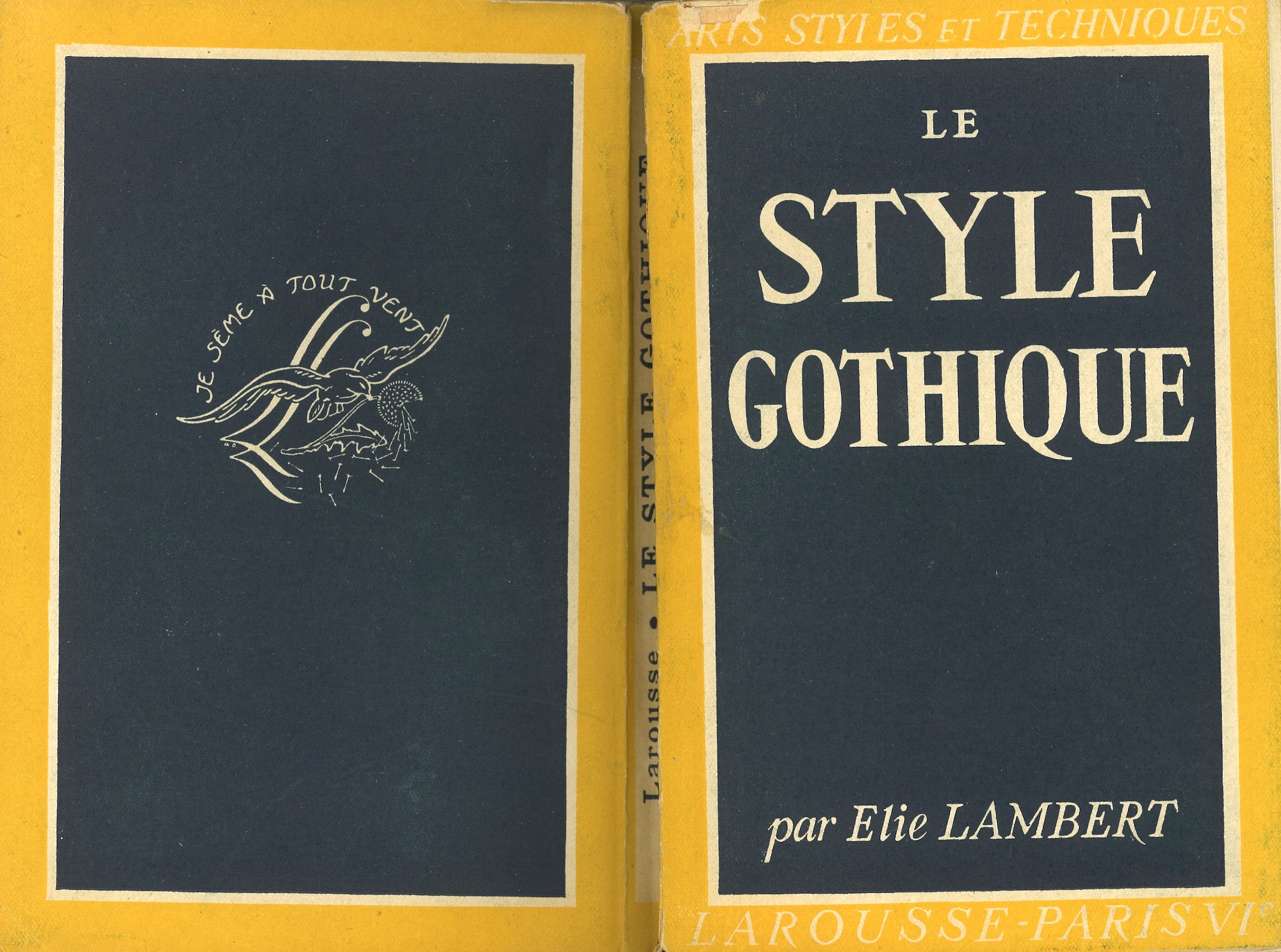
1943 『アルブレヒト・デューラー』/エリー・ ランベール(エミール・ベルラの偽名にて)『ゴシック美術』ラルース発行
1951 『ゴシック建築とスコラ哲学』
1953 『初 期ネーデルラント絵画』Early Netherlandish painting : its origins and character
1958 ジャン・ジェンペル『カテドラルを建てた
人びと』Les batisseurs de cathédrales, per Jean Gimpel, 1958
1964 プリンストン高等研究所退所
1964 『墓の彫刻
古代エジプトからベルニーニに至る変遷』
1968 プリンストンで死去。
***(afterlife of his works)***
1971 『視覚芸術の意味』 中森義宗ほか訳、岩崎美術社〈美術名著選書〉、1971年、新版1981年/『イコノロジー研究 ルネサンス美術における人文主義の諸テーマ』 浅野徹・阿天坊耀ほか2名訳、美術出版社、1971年、新版1987年/筑摩書房〈ちくま学芸文庫〉(上下)、2002年
1973 『ルネサンスの春』 中森義宗・清水忠訳、思索社、1973年、新版1984年、新思索社(新装版)、2006年
1975 『パンドラの箱 — 神話の一象徴の変貌』 ドラ・パノフスキーと共著、阿天坊耀ほか訳、美術出版社、1975年/『パンドラの函 − 変貌する一神話的象徴をめぐって』 尾崎彰宏ほか訳、法政大学出版局・叢書ウニベルシタス、2002年
1984 『アルブレヒト・デューラー 生涯と芸 術』 中森義宗ほか訳、日貿出版社、1984年
1987 『ゴシック建築とスコラ哲学』 前川道郎訳、平凡社〈ヴァールブルクコレクション〉、1987年/筑摩書房〈ちくま学芸文庫〉、2001年
1991 『土星とメランコリー』 田中英道監訳、晶文社、1991年。フリッツ・ザクスル/レイモンド・クリバンスキーとの共著
1993 『〈象徴形式〉としての遠近法』 木田元監訳、哲学書房、1993年 新装版2003年/筑摩書房〈ちくま学芸文庫〉、2009年
1994 『芸術学の根本問題』 細井雄介訳、中央公論美術出版、1994年
1996 『墓の彫刻 — 死にたち向かった精神の様態』 若桑みどり監訳、哲学書房、1996年
2001 『初期ネーデルラント絵画 — その起源と性格』 勝國興ほか訳、中央公論美術出版、2001年
2005 『ティツィアーノの諸問題 −
純粋絵画とイコノロジーへの眺望』 織田春樹訳、言叢社、2005年
【用語集】
章立て:パノフスキー、アーウィン『ゴシック建築 とスコラ学』——各章にはタイトルがなくローマ数字の番号のみ。
テクスト:パノフス キー、アーウィン(Erwin Panofsky)『ゴシック建築 とスコラ学』前川道郎訳、平凡社、1971年(ちくま学芸文庫版あり)(Gothic architecture and scholasticism / by Erwin Panofsky, New York : Meridian Books , 1957[Panofsky_Gothic_1957.pdf])
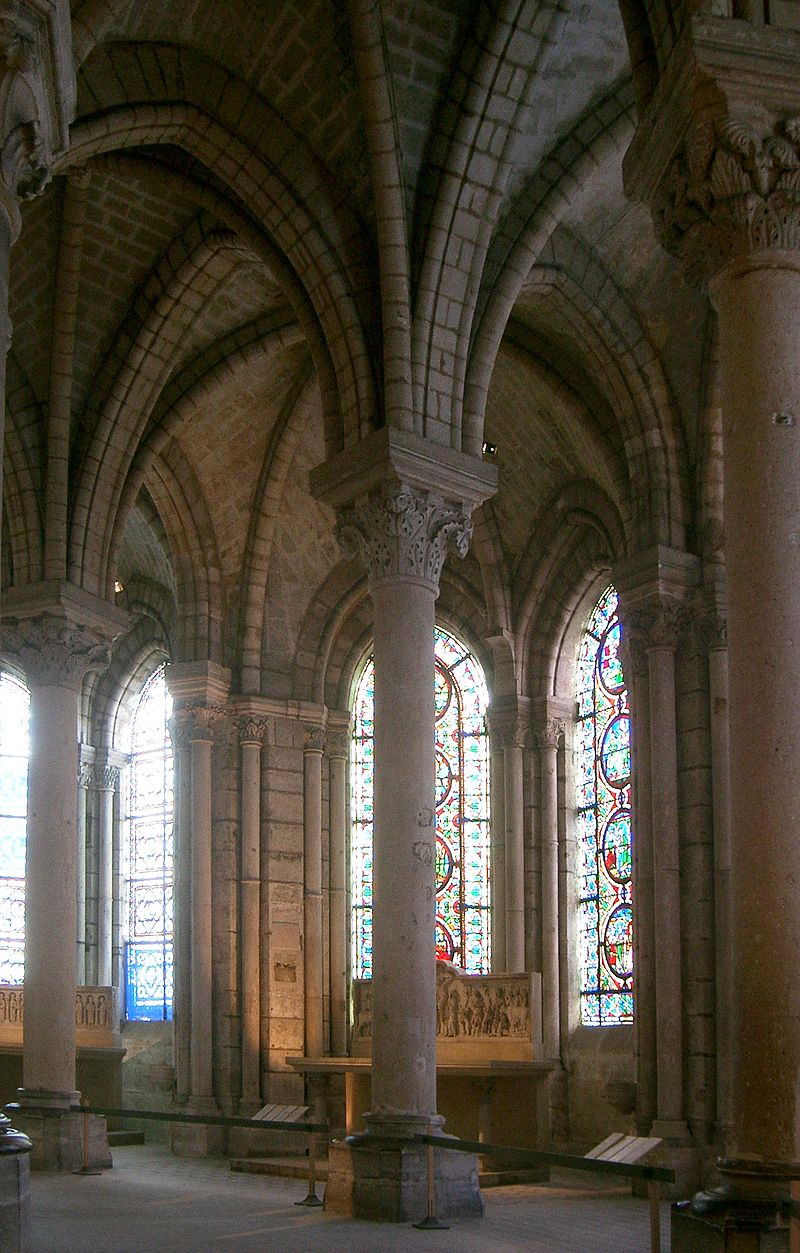
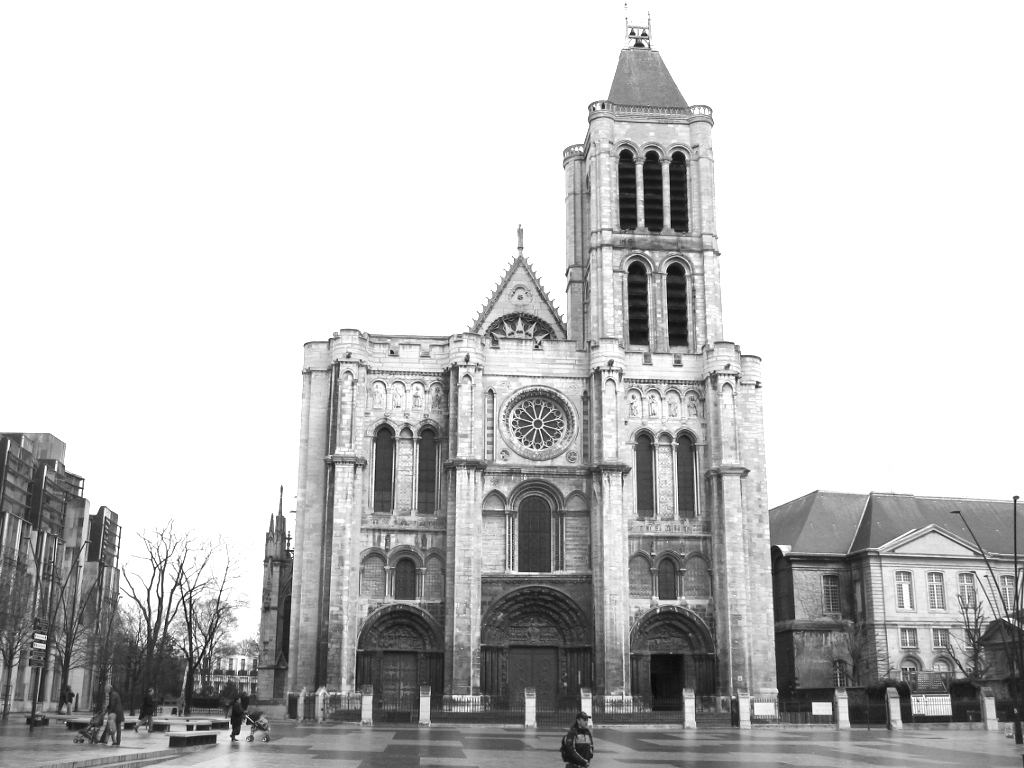
「ゴシックと いう言葉は本来「ゴート人の、ゴート風の」という意味で、12世紀後半から15世紀にかけてのアルプス以北の建築様式であるゴシック建築から来ている。ル ネサンス期のイタリアの文化人が北方の教会建築様式を侮蔑的な意味合いを込めてそう呼んだのが始まりで、その後、中世風の様式を意味する言葉として使われ た。このようなゴシックの定義は初めから曖昧さをはらんだものであり、そのことが後世にゴシックが再解釈され意味が拡大していった要因になったとの指摘も ある」ゴシック)
「建築は「すべての原理をみずからに従属せしめ、これにモニュメンタルな様式を課す」のであ る」(ランベール 1965:15).
「エミール・マール(Émile Mâle, 1862-1954)が象牙彫刻について語ったつぎの言葉は、程度の差こそあれ、ゴシック美術のあらゆる種類の作家たちについてあてはまるといえよう。「彼らの創造した様式は、彼らが生きていた時代の様式にほかならない。彼らは、大芸術(建築)の すべての技法、習慣を忠実に模倣していたにすぎないのだ」」(ランベール 1965:15-16).
関連情報
クリ フォード・ギアーツのコメント
「北フランスのシャルトルの聖堂は石とガラスででき ている。しかしたんなる石とガラスではなく、それはゴシック建築の大寺院である。しかもたんなる大寺院ではなく、特定の時代に特定の社会の特定の構成員に よって建てられた特定の大寺院である。その意味するところを理解し、それが何であるかを認識するためには、石やガラスの属性以上に、また大寺院に共通なも のより以上に知らねばならぬことがある。すなわち、私の意見では最も重要な点であるが、神・人間・建物の関係に関する特殊な概念もまた理解する必要があ る。それらの概念が寺院の建設を統御したのだから、その結果、寺院がそれらの概念を具体的に表現しているのである。人間についても同様であ り、人間もまた 一人残らず文化的所産なのである」(文化の解釈学(I)86- 87)。
"Chartres is made of
stone and glass. But it is not just stone and glass; it is a cathedral,
and not only a cathedral, but a particular cathedral built at a
particular time by certain members of a particular society. To
understand what it means, to perceive it for what it is, you need to
know rather more than the generic properties of stone and glass and
rather more than what is common to all cathedrals. You need to
understand also --- and, in my opinion, most critically --- the
specific concepts of the relations among God, man, and architecture
hat, since they have governed its creation, it consequently
embodies.
It is no different with men: they,
too, every last one of them, are
cultural artifacts"(Geertz 1973:50-51).
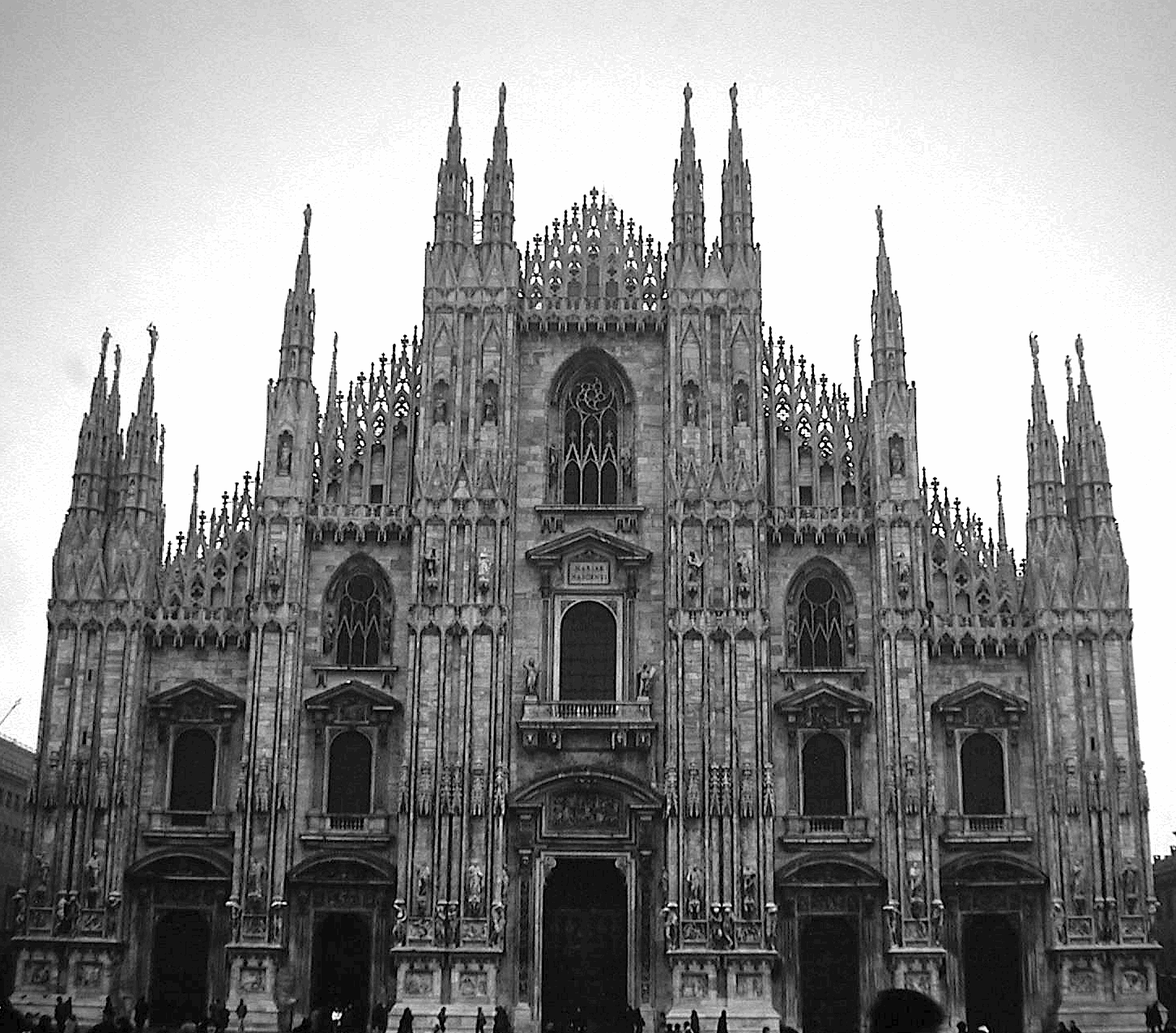
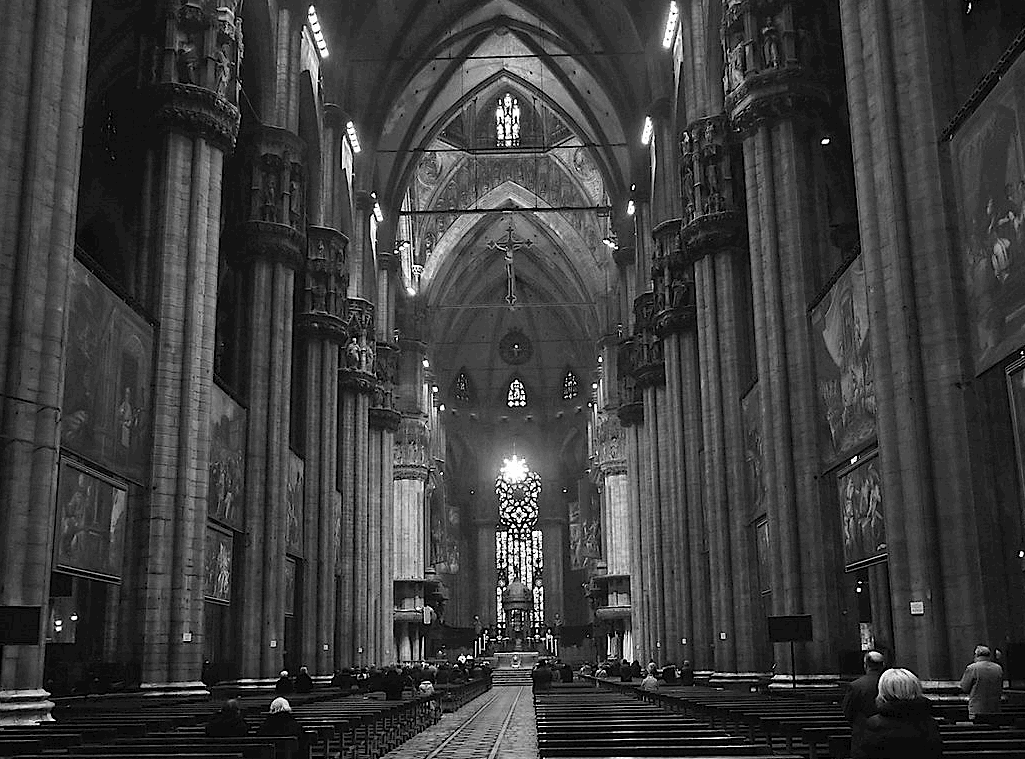
ゴシック(ゴチック)建築で著名なミラノ大聖堂(Duomo di Milano)
リンク
文献
Do not paste, but [re]think this message for all undergraduate students!!!
アミアン大聖堂のプラン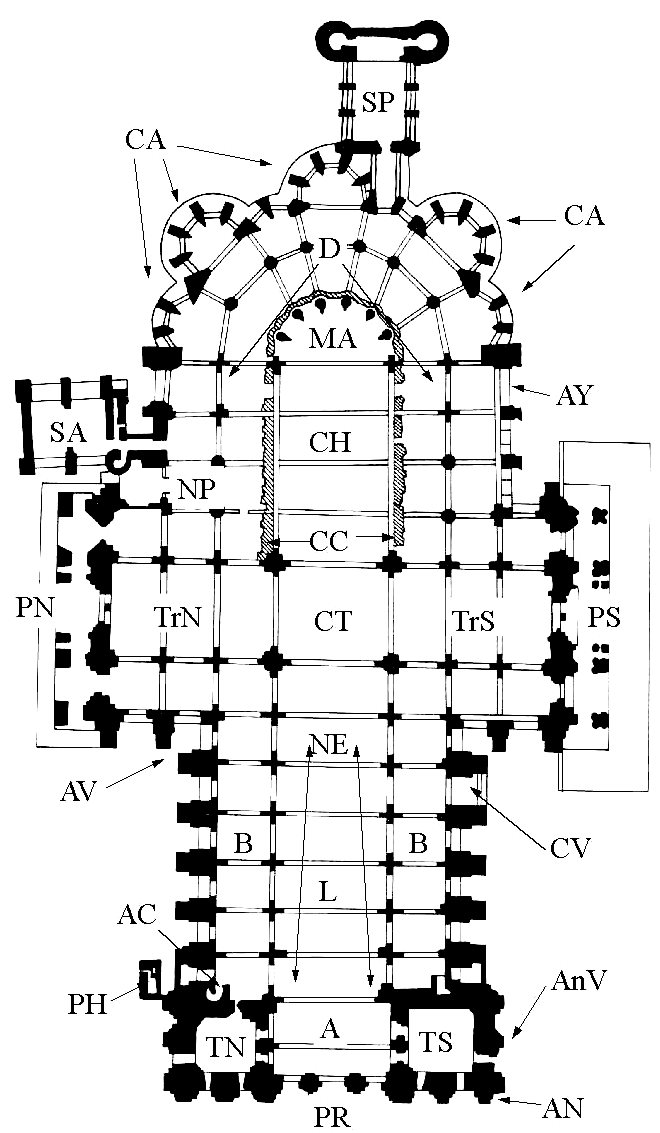
CA:放射状祭室(訳語は辻佐保子による)(ランベール 1965:15)
D:周歩廊
MA:内陣
CH:側進側
TrN:翼
PS:南外陣
PN:北外陣
CT:交叉部
PR:西正面
++
Copyleft,
CC, Mitzub'ixi Quq Chi'j, 1996-2099
