モースとユーベル「呪術の一般理論」ノート
Notes on "A General Theory of Magic," by Marcel Mauss and Henri Humbert, 1902
モースとユーベル「呪術の一般理論」ノート
Notes on "A General Theory of Magic," by Marcel Mauss and Henri Humbert, 1902
「呪術の一般理論の素描」は、マルセル・モース(Marcel Mauss,
1872-1950)とアンリ・ユーベル(Henri Humbert)の共著の論文で、に『社会学年報』1902-1903年号で発表された。
概要:"First written by Marcel Mauss and Henri Humbert in 1902, A General Theory of Magic gained a wide new readership when republished by Mauss in 1950. As a study of magic in 'primitive' societies and its survival today in our thoughts and social actions, it represents what Claude Lévi-Strauss called, in an introduction to that edition, the astonishing modernity of the mind of one of the century's greatest thinkers. The book offers a fascinating snapshot of magic throughout various cultures as well as deep sociological and religious insights still very much relevant today. At a period when art, magic and science appear to be crossing paths once again, A General Theory of Magic presents itself as a classic for our times." - A General Theory of Magic. (ESQUISSE D'UNE THEORIE GENERALE DE LA MAGIE[pdf with password]"
「1902年にマルセル・モースとアンリ・アンベー ルによって執筆された『呪術の一般理論』は、1950年にモースによって再刊された際、新たな多くの読者を獲得した。「原始」社会における呪術と、それが 今日の私たちの思考や社会的行動の中にいかに生き残っているかを考察した本書は、その版の序文でクロード・レヴィ=ストロースが述べたように、20世紀を 代表する偉大な思想家の一人の精神が持つ驚くべき現代性を体現している。本書は、様々な文化における呪術の魅力的な一断面を示すだけでなく、今日において もなお極めて重要な、深い社会学的・宗教的洞察を提供している。芸術、呪術、科学が再び交差しようとしているこの時期に、『呪術の一般理論』は、現代にお ける古典としての地位を確立している。」
★呪術の一般理論の素描
第一章 沿革と資料 47
第二章 呪術の定義 55
第三章 呪術の諸要素 64
1 呪術師 64
1.1. 呪術師の資質 66
1.2.入社式、呪術結社 84
2 行為 89
2.1 儀礼の諸条件 90
2.2 儀礼の性格 97
2.2.1 手の儀礼 97
2.2.2 口の儀礼 101
3. 表象 110
3.1 抽象的な非人格的表象、すなわち呪術の法則 114
3.2 具体的な非人格的表象 128
3.3 人格的表象、すなわち霊鬼崇拝 134
4 概観 142
第四章 呪術の分析と解釈 148
1. 信念 148
2. 呪術現象の分析——儀礼の効験についての理念的解釈の分析 156
3. マナ 168
4. 集合状態と集合力
第五章 結論 209
★呪術一般についてのウィキペディアの解説
| Magic,
sometimes spelled magick,[1] is the application of beliefs, rituals or
actions employed with the intent to manipulate natural or supernatural
beings and forces.[2] It is a category into which have been placed
various beliefs and practices sometimes considered separate from both
religion and science.[2] Connotations have varied from positive to negative at times throughout history.[3] Within Western culture, magic has been linked to ideas of the Other,[4] foreignness,[5] and primitivism;[6] indicating that it is "a powerful marker of cultural difference"[7] and likewise, a non-modern phenomenon.[8] During the late nineteenth and early twentieth centuries, Western intellectuals perceived the practice of magic to be a sign of a fantasy-prone mentality and also commonly attributed it to marginalised groups of people.[7] |
呪術(magic、magickとも表記される[1])とは、自然界や超自然界の存在や力を操ることを意図して用いられる、信念、儀礼、あるいは行為のことである[2]。これは、宗教や科学とは別物と見なされることもある、様々な信念や実践が分類される範疇である。[2] 歴史を通じて、その含意は肯定的から否定的なものへと時折変化してきた。[3] 西洋文化において、呪術は「他者」[4]、「異質性」[5]、そして「原始主義」[6]といった概念と結びつけられてきた。これは、呪術が「文化的差異を 示す強力な指標」[7]であり、同様に非近代的な現象であることを示唆している。[8] 19世紀後半から20世紀初頭にかけて、西洋の知識人たちは、呪術の実践を空想に傾きやすい精神状態の表れと見なし、また一般的に、社会的に疎外された集 団に帰属させる傾向があった。[7] |
Etymology One of the earliest surviving accounts of the Persian mágoi was provided by the Greek historian Herodotus. The English words magic, mage and magician come from the Latin term magus, through the Greek μάγος, which is from the Old Persian maguš. (𐎶𐎦𐎢𐏁|𐎶𐎦𐎢𐏁, magician).[9] The Old Persian magu- is derived from the Proto-Indo-European megʰ-*magh (be able). The Persian term may have led to the Old Sinitic *Mγag (mage or shaman).[10] The Old Persian form seems to have permeated ancient Semitic languages as the Jewish Babylonian Aramaic magosh, the Aramaic amgusha (magician), and the Chaldean maghdim (wisdom and philosophy); from the first century BCE onwards, Syrian magusai gained notoriety as magicians and soothsayers.[11] During the late-sixth and early-fifth centuries BCE, the term goetia found its way into ancient Greek, where it was used with negative connotations to apply to rites that were regarded as fraudulent, unconventional, and dangerous;[12] in particular they dedicate themselves to the evocation and invocation of daimons (lesser divinities or spirits) to control and acquire powers. This concept remained pervasive throughout the Hellenistic period, when Hellenistic authors categorised a diverse range of practices—such as enchantment, witchcraft, incantations, divination, necromancy, and astrology—under the label "magic".[13] The Latin language adopted this meaning of the term in the first century BCE. Via Latin, the concept became incorporated into Christian theology during the first century CE. Early Christians associated magic with demons, and thus regarded it as against Christian religion. In early modern Europe, Protestants often claimed that Roman Catholicism was magic rather than religion, and as Christian Europeans began colonizing other parts of the world in the sixteenth century, they labelled the non-Christian beliefs they encountered as magical. In that same period, Italian humanists reinterpreted the term in a positive sense to express the idea of natural magic. Both negative and positive understandings of the term recurred in Western culture over the following centuries.[citation needed] Since the nineteenth century, academics in various disciplines have employed the term magic but have defined it in different ways and used it in reference to different things. One approach, associated with the anthropologists Edward Tylor (1832–1917) and James G. Frazer (1854–1941), uses the term to describe beliefs in hidden sympathies between objects that allow one to influence the other. Defined in this way, magic is portrayed as the opposite to science. An alternative approach, associated with the sociologist Marcel Mauss (1872–1950) and his uncle Émile Durkheim (1858–1917), employs the term to describe private rites and ceremonies and contrasts it with religion, which it defines as a communal and organised activity. By the 1990s many scholars were rejecting the term's utility for scholarship. They argued that the label drew arbitrary lines between similar beliefs and practices that were alternatively considered religious, and that it constituted ethnocentric to apply the connotations of magic—rooted in Western and Christian history—to other cultures.[citation needed] |
語源 ペルシアの「マゴイ」に関する現存する最古の記述の一つは、ギリシャの歴史家ヘロドトスによるものである。 英語の「magic」、「mage」、「magician」は、ラテン語の「magus」に由来し、これはギリシャ語の「μάγος」を経由したもので、 さらにその語源は古ペルシア語の「maguš」にある。(𐎶𐎦𐎢𐏁|𐎶𐎦𐎢𐏁, 魔術師)。[9] 古ペルシア語の magu- は、印欧祖語の megʰ-*magh(~できる)に由来する。このペルシア語の語は、上古中国語の *Mγag(魔術師またはシャーマン)へとつながった可能性がある。[10] 古ペルシア語の形態は、ユダヤ・バビロニア・アラム語の magosh、アラム語の amgusha(魔術師)、カルデア語の maghdim(知恵と哲学)として、古代セム語群に浸透したようだ。紀元前1世紀以降、シリアの magusai は魔術師や占い師として悪名高くなった。[11] 紀元前6世紀後半から5世紀初頭にかけて、「ゴエティア(goetia)」という用語が古代ギリシャ語に取り入れられ、そこで詐欺的、非伝統的、かつ危険 と見なされた儀式を指す否定的な意味合いで用いられた[12]。特に、彼らは力を制御し獲得するために、ダイモン(下位の神々や精霊)の召喚と招請に専念 していた。この概念はヘレニズム時代を通じて広く浸透し続け、当時のヘレニズムの著述家たちは、呪術、妖術、呪文、占術、死霊術、占星術といった多様な実 践を「呪術」というラベルの下に分類した。[13] ラテン語はこの用語の意味を紀元前1世紀に採用した。ラテン語を通じて、この概念は紀元1世紀にキリスト教神学に取り入れられた。初期のキリスト教徒は呪 術を悪魔と結びつけ、したがってキリスト教の教えに反するものとして見なした。近世ヨーロッパでは、プロテスタントはしばしばローマ・カトリック教を宗教 ではなく呪術であると主張し、16世紀にキリスト教徒のヨーロッパ人が世界の他の地域への植民地化を開始すると、彼らは遭遇した非キリスト教の信仰を呪術 的であるとレッテルを貼った。同時期に、イタリアの人文主義者たちはこの用語を肯定的な意味で再解釈し、「自然呪術」という概念を表現した。この用語に対 する否定的および肯定的な理解は、その後の数世紀にわたって西洋文化の中で繰り返し現れた。[出典必要] 19世紀以降、様々な学問分野の研究者が「呪術」という用語を用いるようになったが、その定義は異なるし、指す対象も様々である。人類学者のエドワード・ タイラー(1832–1917)やジェームズ・G・フレイザー(1854–1941)に関連する一つのアプローチでは、この用語を用いて、ある物体が別の 物体に影響を及ぼすことを可能にする、物体間の隠れた共鳴に対する信仰を記述している。このように定義された「呪術」は、科学の対極として描かれる。社会 学者マルセル・モース(1872–1950)とその叔父エミール・デュルケーム(1858–1917)に関連する別のアプローチでは、この用語を用いて私 的な儀式や儀礼を記述し、共同体的かつ組織化された活動として定義される「宗教」と対比させている。1990年代までに、多くの学者が学術研究におけるこ の用語の有用性を否定するようになった。彼らは、このラベルが、宗教的と見なされることもある類似した信仰や慣習の間に恣意的な境界線を引いていると主張 し、西洋およびキリスト教の歴史に根ざした「呪術」の含意を他の文化に適用することは、自民族中心的(エスノセントリズム)に当たるとした。[出典必要] |
| Branches or types High and low Historians and anthropologists have distinguished between practitioners who engage in high magic, and those who engage in low magic.[14] High magic, also known as theurgy and ceremonial or ritual magic, is more complex, involving lengthy and detailed rituals as well as sophisticated, sometimes expensive, paraphernalia.[14] Low magic and natural magic are associated with peasants and folklore[15] with simpler rituals such as brief, spoken spells.[14] Low magic is also closely associated with sorcery and witchcraft.[16] Anthropologist Susan Greenwood writes that "Since the Renaissance, high magic has been concerned with drawing down forces and energies from heaven" and achieving unity with divinity.[17] High magic is usually performed indoors while witchcraft is often performed outdoors.[18] White, gray and black Main articles: White magic, Gray magic, and Black magic Historian Owen Davies says the term "white witch" was rarely used before the 20th century.[19] White magic is understood as the use of magic for selfless or helpful purposes, while black magic was used for selfish, harmful or evil purposes.[20] Black magic is the malicious counterpart of the benevolent white magic. There is no consensus as to what constitutes white, gray or black magic, as Phil Hine says, "like many other aspects of occultism, what is termed to be 'black magic' depends very much on who is doing the defining."[21] Gray magic, also called "neutral magic", is magic that is not performed for specifically benevolent reasons, but is also not focused towards completely hostile practices.[citation needed] Witchcraft Main article: Witchcraft The historian Ronald Hutton notes the presence of four distinct meanings of the term witchcraft in the English language. Historically, the term primarily referred to the practice of causing harm to others through supernatural or magical means. This remains, according to Hutton, "the most widespread and frequent" understanding of the term.[22] Moreover, Hutton also notes three other definitions in current usage; to refer to anyone who conducts magical acts, for benevolent or malevolent intent; for practitioners of the modern Pagan religion of Wicca; or as a symbol of women resisting male authority and asserting an independent female authority.[23] Belief in witchcraft is often present within societies and groups whose cultural framework includes a magical world view.[24] Those regarded as being magicians have often faced suspicion from other members of their society.[25] This is particularly the case if these perceived magicians have been associated with social groups already considered morally suspect in a particular society, such as foreigners, women, or the lower classes.[26] In contrast to these negative associations, many practitioners of activities that have been labelled magical have emphasised that their actions are benevolent and beneficial.[27] This conflicted with the common Christian view that all activities categorised as being forms of magic were intrinsically bad regardless of the intent of the magician, because all magical actions relied on the aid of demons.[28] There could be conflicting attitudes regarding the practices of a magician; in European history, authorities often believed that cunning folk and traditional healers were harmful because their practices were regarded as magical and thus stemming from contact with demons, whereas a local community might value and respect these individuals because their skills and services were deemed beneficial.[29] In Western societies, the practice of magic, especially when harmful, was usually associated with women.[30] For instance, during the witch trials of the early modern period, around three quarters of those executed as witches were female, to only a quarter who were men.[31] That women were more likely to be accused and convicted of witchcraft in this period might have been because their position was more legally vulnerable, with women having little or no legal standing that was independent of their male relatives.[31] The conceptual link between women and magic in Western culture may be because many of the activities regarded as magical—from rites to encourage fertility to potions to induce abortions—were associated with the female sphere.[32] It might also be connected to the fact that many cultures portrayed women as being inferior to men on an intellectual, moral, spiritual, and physical level.[33] |
分派や種類 ハイ・呪術とロー・呪術 歴史学者や人類学者は、ハイ・呪術を行う実践者と、ロー・呪術を行う実践者とを区別してきた。[14] ハイ・呪術は、テウルギーや儀礼魔術とも呼ばれ、より複雑で、長時間にわたる詳細な儀式や、洗練された、時には高価な道具類を伴う。[14] 低位呪術や自然呪術は、農民や民俗学と関連付けられており[15]、簡潔な口頭呪文のような、より単純な儀礼を伴う。[14] 低位呪術は、邪術や妖術とも密接に関連している。[16] 人類学者のスーザン・グリーンウッドは、「ルネサンス以来、高位呪術は天界からの力やエネルギーを引き下ろすこと」と、神性との合一を達成することに注力 してきたと記している。[17] 高位呪術は通常屋内で行われるのに対し、妖術はしばしば屋外で行われる。[18] 白、灰、黒 主な記事:白魔術、灰魔術、黒魔術 歴史家のオーウェン・デイヴィスは、「白妖術師」という用語が20世紀以前にはほとんど使われていなかったと述べている。[19] 白魔術は、利他的または有益な目的のための呪術の使用と理解される一方、黒魔術は利己的、有害、あるいは邪悪な目的のために用いられた。[20] 黒魔術は、慈悲深い白魔術の悪意ある対極にあるものである。白呪術、灰呪術、黒呪術の定義については合意が得られていない。フィル・ハインが言うように、 「オカルティズムの他の多くの側面と同様、『黒呪術』と呼ばれるものは、誰が定義するかによって大きく異なる」からである。[21] 灰呪術は「中立呪術」とも呼ばれ、特に善意を目的として行われるわけではないが、完全に敵対的な行為に焦点を当てているわけでもない呪術である。[出典必 要] 妖術 本記事:妖術 歴史家のロナルド・ハットンは、英語における「妖術(witchcraft)」という用語に4つの異なる意味が存在することを指摘している。歴史的に、こ の用語は主に、超自然的または呪術的な手段を通じて他者に害を及ぼす行為を指していた。ハットンによれば、これは依然として同用語の「最も広範かつ頻繁 な」理解である。[22] さらにハットンは、現在の用法において他に3つの定義があるとも指摘している。それは、善意または悪意を問わず呪術的行為を行う者を指す場合、現代の異教 (ペイガン)宗教であるウィッカの実践者を指す場合、あるいは男性の権威に抵抗し、独立した女性の権威を主張する女性の象徴として用いられる場合である。 [23] 妖術への信仰は、文化的枠組みに呪術的な世界観を含む社会や集団においてしばしば見られる。[24] 呪術師と見なされる人々は、しばしば社会内の他の構成員から疑いの目を向けられてきた。[25] これは特に、そうした呪術師と見なされた人々が、外国人、女性、あるいは下層階級など、特定の社会においてすでに道徳的に疑わしいと見なされている社会集 団と結びついている場合に顕著である。[26] こうした否定的な連想とは対照的に、呪術的とレッテルを貼られた活動を行う多くの実践者は、自らの行為が善意に基づく有益なものであると強調してきた。 [27] これは、あらゆる呪術的行為が悪魔の助けに依存している以上、呪術師の意図にかかわらず、呪術に分類されるすべての活動は本質的に悪であるとする一般的な キリスト教的見解と対立していた。[28] 呪術師の行為に対しては相反する態度が見られた。ヨーロッパの歴史において、権力者はしばしば「狡猾な民」や伝統的治療者を有害であると見なした。彼らの 行為は呪術的であり、したがって悪魔との接触に由来すると考えられたからである。一方、地域社会は、彼らの技能や奉仕が有益であるとみなされたため、こう した個人を尊重し、重んじた。[29] 西洋社会において、呪術の実践、特に有害なものは、通常、女性と結びつけられていた。[30] 例えば、近世初期の妖術師裁判において、妖術師として処刑された者の約4分の3は女性であり、男性はわずか4分の1に過ぎなかった。[31] この時期に女性が妖術師として告発され有罪判決を受ける可能性が高かったのは、女性の法的立場がより脆弱であったためかもしれない。当時、女性は男性の親 族から独立した法的地位をほとんど、あるいは全く持っていなかったからだ。[31] 西洋文化において女性と呪術が概念的に結びつけられるのは、豊穣を祈る儀式から堕胎を誘発する薬に至るまで、呪術的活動の多くが女性の領域と関連付けられ ていたためかもしれない。[32] また、多くの文化において、女性は知的、道徳的、精神的、そして身体的な面で男性より劣っていると描かれていたという事実とも関連している可能性がある。 [33] |
| https://en.wikipedia.org/wiki/Magic_(supernatural) |
|
| History | 続きは「呪術の歴史」へ |
| Anthropology of Magic ; A Graphic Guide 091 |
一般的な解説は「呪術の人類学」へ |
Magicians The Magician card from a 15th-century tarot deck Many of the practices which have been labelled magic can be performed by anyone.[246] For instance, some charms can be recited by individuals with no specialist knowledge nor any claim to having a specific power.[247] Others require specialised training in order to perform them.[246] Some of the individuals who performed magical acts on a more than occasional basis came to be identified as magicians, or with related concepts like sorcerers/sorceresses, witches, or cunning folk.[247] Identities as a magician can stem from an individual's own claims about themselves, or it can be a label placed upon them by others.[247] In the latter case, an individual could embrace such a label, or they could reject it, sometimes vehemently.[247] Economic incentives can encourage individuals to identify as magicians.[149] In the cases of various forms of traditional healers, as well as the later stage magicians or illusionists, the label of magician could become a job description.[247] Others claim such an identity out of a genuinely held belief that they have specific unusual powers or talents.[248] Different societies have different social regulations regarding who can take on such a role; for instance, it may be a question of familial heredity, or there may be gender restrictions on who is allowed to engage in such practices.[249] A variety of personal traits may be credited with giving magical power, and frequently they are associated with an unusual birth into the world.[250] For instance, in Hungary it was believed that a táltos would be born with teeth or an additional finger.[251] In various parts of Europe, it was believed that being born with a caul would associate the child with supernatural abilities.[251] In some cases, a ritual initiation is required before taking on a role as a specialist in such practices, and in others it is expected that an individual will receive a mentorship from another specialist.[252] Davies noted that it was possible to "crudely divide magic specialists into religious and lay categories".[253] He noted for instance that Roman Catholic priests, with their rites of exorcism, and access to holy water and blessed herbs, could be conceived as being magical practitioners.[254] Traditionally, the most common method of identifying, differentiating, and establishing magical practitioners from common people is by initiation. By means of rites the magician's relationship to the supernatural and his entry into a closed professional class is established (often through rituals that simulate death and rebirth into a new life).[255] However, Berger and Ezzy explain that since the rise of Neopaganism, "As there is no central bureaucracy or dogma to determine authenticity, an individual's self-determination as a Witch, Wiccan, Pagan or Neopagan is usually taken at face value".[256] Ezzy argues that practitioners' worldviews have been neglected in many sociological and anthropological studies and that this is because of "a culturally narrow understanding of science that devalues magical beliefs".[257] Mauss argues that the powers of both specialist and common magicians are determined by culturally accepted standards of the sources and the breadth of magic: a magician cannot simply invent or claim new magic. In practice, the magician is only as powerful as his peers believe him to be.[258] Throughout recorded history, magicians have often faced skepticism regarding their purported powers and abilities.[259] For instance, in sixteenth-century England, the writer Reginald Scot wrote The Discoverie of Witchcraft, in which he argued that many of those accused of witchcraft or otherwise claiming magical capabilities were fooling people using illusionism.[260] |
呪術師 15世紀のタロットデッキに描かれた「呪術師」のカード 「呪術」と称されてきた実践の多くは、誰にでも行えるものである。[246] 例えば、特定の知識も持たず、特別な力があるとも主張しない個人であっても、ある種の呪文を唱えることはできる。[247] 一方で、実行するために専門的な訓練を必要とするものもある。[246] 時折以上の頻度で呪術的な行為を行っていた人々のうち、一部は魔術師、あるいは邪術師/妖術師、魔女、あるいは「狡猾な民(cunning folk)」といった関連する概念と同一視されるようになった。[247] 魔術師としてのアイデンティティは、本人自身の主張に由来する場合もあれば、他者によって付けられたレッテルである場合もある。[247] 後者の場合、その個人はそのようなレッテルを受け入れることもあれば、時には激しく拒絶することもある。[247] 経済的インセンティブは、個人が自身を魔術師と自認するよう促すことがある。[149] 様々な形態の伝統的治療者や、後の時代の魔術師・イリュージョニストの場合、魔術師というレッテルは職務記述書となることもあった。[247] 他方、特定の非凡な力や才能を真に有していると信じていることから、そのようなアイデンティティを主張する者もいる。[248] 誰がそのような役割を担えるかについては、社会によって異なる社会的規範が存在する。例えば、それは家系の遺伝によるものだったり、そのような実践に従事 することを許される者にジェンダーによる制限があったりする。[249] 呪術的力を与える要因として様々な個人的特性が挙げられ、それらはしばしば、世に生まれる際の特異な状況と結びつけられる。[250] 例えば、ハンガリーでは、タルトスは歯が生えているか、あるいは指が一つ多い状態で生まれると信じられていた。[251] ヨーロッパの様々な地域では、胎膜をまとったまま生まれることは、その子供を超自然的な能力と結びつけると信じられていた。[251] 場合によっては、そのような実践の専門家としての役割を担う前に儀礼的な入門が必要とされることもあれば、別の専門家から指導を受けることが期待されるこ ともある。[252] デイヴィスは、「呪術の専門家を大まかに宗教的カテゴリーと世俗的カテゴリーに分類することは可能である」と指摘した。[253] 例えば、彼は、悪魔祓いの儀式を行い、聖水や祝福されたハーブを利用できるローマ・カトリックの司祭は、呪術の実践者と見なすことができると述べた。 [254] 伝統的に、呪術の実践者を一般の人々から識別し、区別し、確立する最も一般的な方法は、イニシエーションである。儀礼を通じて、魔術師と超自然界との関 係、および閉鎖的な専門職階級への参入が確立される(多くの場合、死と新たな生への再生を模倣する儀礼を通じて)。[255] しかし、バーガーとエジーは、ネオパガニズムの台頭以来、「真正性を決定する中央官僚機構や教義が存在しないため、妖術師、ウィッカ、異教徒、あるいはネ オパガニストとしての個人の自己決定は、通常、そのまま受け止められる」と説明している。[256] エジーは、多くの社会学的・人類学的研究において実践者の世界観が軽視されてきたと論じ、その理由は「呪術的信念を軽視する、文化的に狭隘な科学観」にあ ると指摘する。[257] モースは、専門の呪術師も一般の呪術師も、その力は呪術の源泉や範囲に関する文化的に受け入れられた基準によって決定されると論じている。呪術師は単に新 しい呪術を考案したり、主張したりすることはできない。実際には、呪術師の力は、同輩が彼をそう信じている限りにおいてのみ発揮されるのだ。[258] 記録に残る歴史を通じて、魔術師たちは自らの持つとされる力や能力について、しばしば懐疑的な目で見られてきた。[259] 例えば、16世紀のイングランドでは、作家レジナルド・スコットが『妖術の解明』を著し、その中で、妖術の罪に問われた者や、その他の方法で呪術的能力を 主張する者の多くは、イリュージョニズムを用いて人々を欺いていると論じた。[260] |
| 246. Davies 2012, p. 82; Bailey 2018, p. 85. Bailey 2018, p. 85. Bailey 2018, p. 105. Davies 2012, p. 90. 250. Glucklich, Ariel (1997). The End of Magic. New York: Oxford University Press. p. 87. ISBN 978-0-19-535523-9. Davies 2012, p. 92. Davies 2012, p. 93. Davies 2012, p. 88. Davies 2012, p. 89. Mauss, Bain & Pocock 2007, pp. 41–44. Berger & Ezzy 2007, pp. 24–25. Blain, Ezzy & Harvey 2004, p. 120. Mauss, Bain & Pocock 2007, pp. 33, 40. Davies 2012, p. 49. 260 Davies 2012, p. 51. |
246. デイヴィス 2012, p. 82; ベイリー 2018, p. 85. ベイリー 2018, p. 85. ベイリー 2018, p. 105. デイヴィス 2012, p. 90. 250. グルックリッヒ、アリエル(1997)。『呪術の終焉』。ニューヨーク:オックスフォード大学出版局。p. 87。ISBN 978-0-19-535523-9。 デイヴィス 2012, p. 92。 デイヴィス 2012, p. 93。 Davies 2012, p. 88. Davies 2012, p. 89. Mauss, Bain & Pocock 2007, pp. 41–44. Berger & Ezzy 2007, pp. 24–25. Blain, Ezzy & Harvey 2004, p. 120. モー、ベイン、ポコック 2007, pp. 33, 40. デイヴィス 2012, p. 49. 260 デイヴィス 2012, p. 51. |
| Works cited & Further reading |
文献リストはhttps://en.wikipedia.org/wiki/Magic_(supernatural) |
★呪術の一般理論の素描(再掲)
第一章 沿革と資料 47
第二章 呪術の定義 55
第三章 呪術の諸要素 64
1 呪術師 64
1.1. 呪術師の資質 66
1.2.入社式、呪術結社 84
2 行為 89
2.1 儀礼の諸条件 90
2.2 儀礼の性格 97
2.2.1 手の儀礼 97
2.2.2 口の儀礼 101
3. 表象 110
3.1 抽象的な非人格的表象、すなわち呪術の法則 114
3.2 具体的な非人格的表象 128
3.3 人格的表象、すなわち霊鬼崇拝 134
4 概観 142
第四章 呪術の分析と解釈 148
1. 信念 148
2. 呪術現象の分析——儀礼の効験についての理念的解釈の分析 156
3. マナ 168
4. 集合状態と集合力
第五章 結論 209
● Fanuel distributes magial apples to the
sick and injured; with his right hand, his wipong the knife on his left
thigh.-- Blake
Guttのpdf資料より
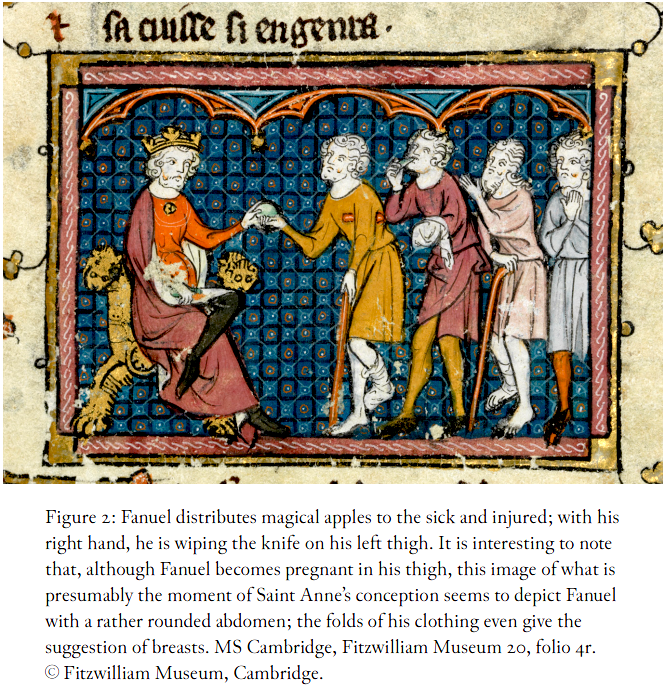
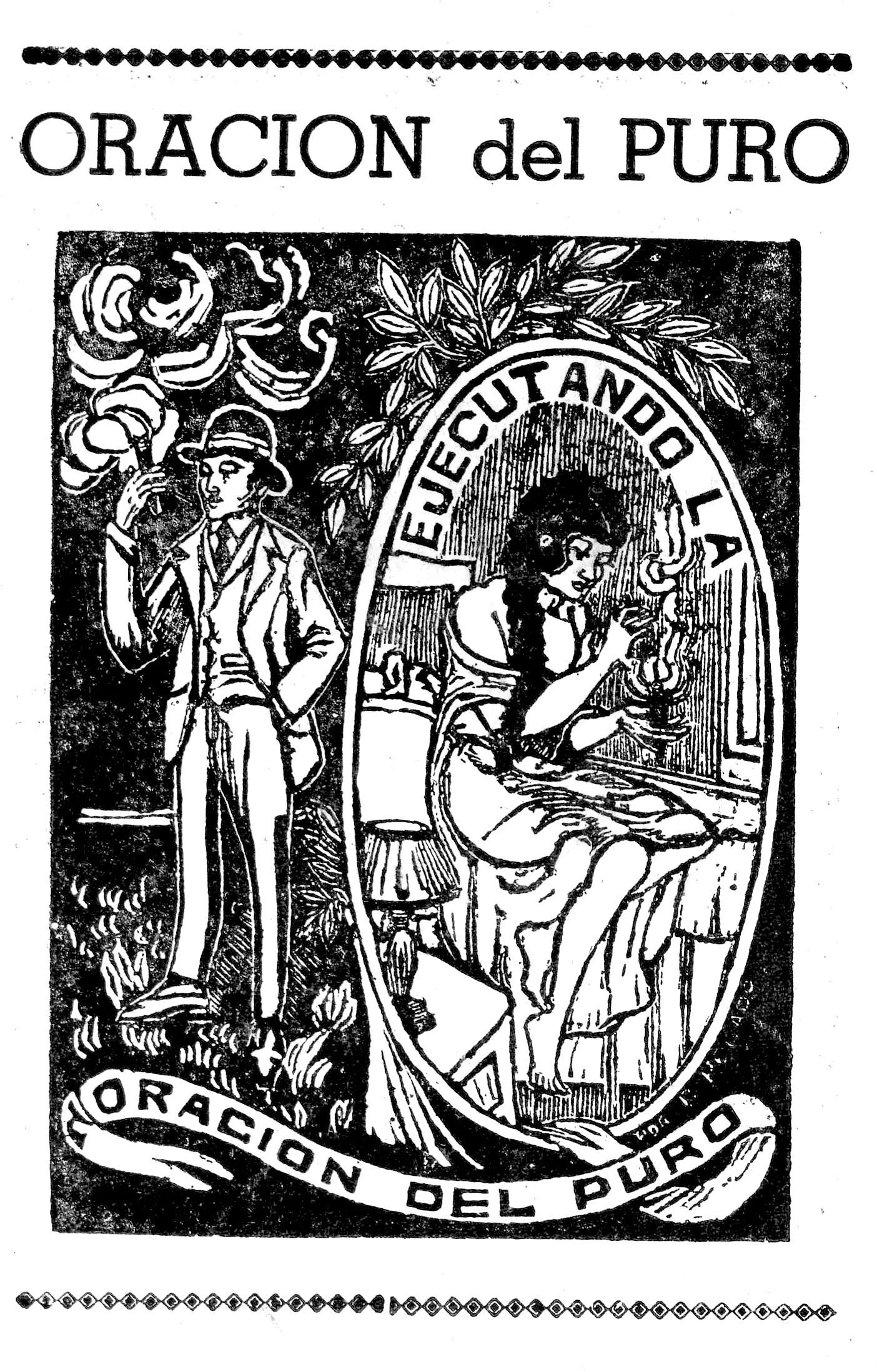
ファヌエルは、旧約聖書外典「第1エノク書」などに 言及されている天使。「ウリエル(Uriel)」や「ラグエル(Raguel)」、「ラミエル(Ramiel)」などと同一視される。名前は「神の御前」 を意味し、神の御前の天使の中でもとくに重要な4天使の一人とされることもある(『神魔精妖名辞典』 より)/ 葉巻の呪文とは、キリスト教会の圏域外(つまり異端 的文脈)で、使われる「愛の呪縛呪文である」。呪文において男女をとわず自分の愛人・恋人・不倫相手などを、自分の元に引き寄せ、また惚れさせ、無形の愛 のほかに、有形の財産や貨幣を貢がせる呪術である。邪悪な儀礼と考えられているので、日本の丑の刻参りのように、完全秘密の文脈のなかで行われる.
リンク
文献
その他の情報
Copyleft, CC, Mitzub'ixi Quq Chi'j, 1996-2099
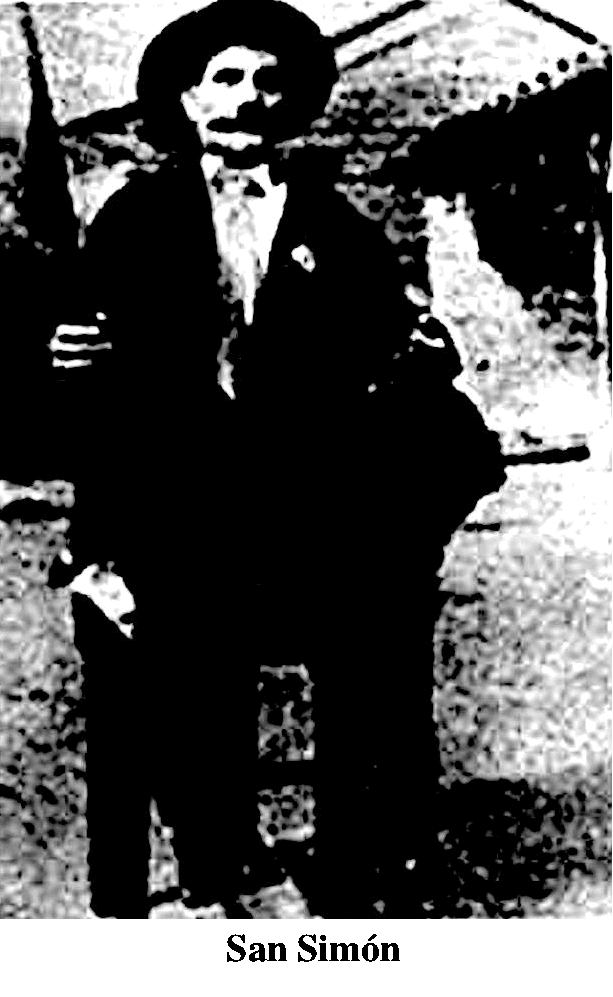
San Simon moderno y San Simon artistica....// St. Simon, by Peter
Paul Rubens (c. 1611), from his Twelve Apostles series at the Museo del
Prado, Madrid
++
Copyleft,
CC, Mitzub'ixi Quq Chi'j, 1996-2099
