(1) ASTERISK NEWS. SFWA’s March 27 press release “More on the Nebulas: Past, Present, and Future Conversations” included this note —
We are still waiting to hear back from Bradbury and Game finalists on award acceptance and their responses to the LLM question. Those entries are marked as provisional on the ballot.
Only one of the seven finalists originally flagged, Murderbot, has had the asterisk removed so far. The other Game Writing and five Dramatic Presentation finalists are still “provisional”.
(2) FOR THE COMPULSIVELY HONEST. Camestros Felapton offers authors who want to make their situation absolutely clear to the world a ten-level taxonomy of progressively increased use of generative AI: “Rating an absence of AI”.
….There are a bunch of other edge cases that I see people make about their work, including using AI for research but not for writing. A trickier issue is the degree to which these services are becoming embedded in web searches, web browsers and operating systems. This makes it easier for people to casually use AIs like Microsoft’s Copilot without really being aware of it.
I think it would be good if people were clear about their usage. So here is a draft of a sort of level of disclaimer/AI usage policy. This isn’t a linear scale….
… I think Levels 6 to 10 have a broad consensus of being bad. Personally, I think levels 3 and 4 are where people stumble into greater AI usage and are likely to find themselves at level 5 without really thinking about it. Level 5 is a terrible spot to sit, because it is where people who say that they don’t use AI (and sort of mean it) but ended up publishing something that does include AI…
(3) MEMORIES OF THE FUTURE. At the New Museum in New York City – “New Humans: Memories of the Future”.
New Humans explores how technological developments have inspired evolving definitions of the “human.”
New Humans: Memories of the Future will inaugurate the New Museum’s expanded building with an exploration of artists’ enduring preoccupation with what it means to be human in the face of sweeping technological changes. New Humans will trace a diagonal history of the twentieth and twenty-first centuries through the work of more than 150 international artists, writers, scientists, architects, and filmmakers, highlighting key moments when dramatic technological and social changes spurred new conceptions of humanity and new visions for its possible futures….
…New Humans illuminates artists’ evolving visions of the future. The exhibition surveys the myriad shapes that humanity might take, from robots and cyborgs to haunting, seemingly alien life forms, and moves beyond the field of art by bringing together utopian architects, sci-fi filmmakers, and eccentric writers who imagine physical, virtual, and even post-human worlds….

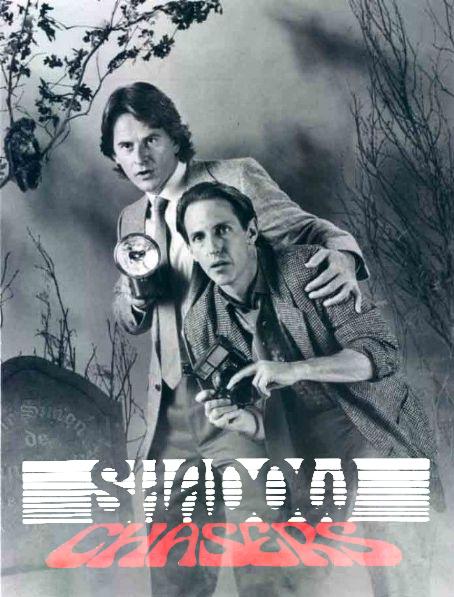
(4) FLOCK OFF. The Sheep Detectives with Hugh Jackman comes to theaters May 8.
George Hardy, a shepherd who loves his sheep and raises them only for their wool. Every night he reads aloud a murder mystery, pretending his sheep can understand, never suspecting that not only can they understand, but they argue for hours afterwards about whodunnit. When George is found dead under mysterious circumstances, the sheep realise at once that it was a murder and think they know everything about how to go about solving it. The local cop Tim Derry, on the other hand, has never solved a serious crime in his life, so the sheep conclude they will have to solve it themselves, even if it means leaving their meadow for the first time and facing the fact that the human world isn’t as simple as it appears in books.
(5) JAMES TOLKAN (1931-2026). Actor James Tolan died March 26 at the age of 94. In the Back to the Future trilogy he played principal Mr. Strickland in the first and second films, and returned as the grandfather of his character for the third. The Back to the Future™ website profiled his career:
…After a short Navy career during the Korean War, and stints at three colleges, he got on a bus for New York City with $75.00 in his pocket and found a cold water flat where the rent equaled his VA check. He went to work on the docks and enrolled with both Stella Adler and Lee Strasburg to learn the art of acting. He spent 25 years in New York theater, from off off Broadway to the great White Way. Notably, he was a member of the original ensemble cast of “Glengarry Glen Ross.”
Tolkan did several movie roles while still based in New York City including “Prince of the City” (1981) for director Sidney Lumet, but moved his career to California and Canada in 1983 when he was cast in “War Games.” His most memorable film roles were as Mr. Strickland in “Back to the Future” (1985) for director Robert Zemeckis, and as Tom Cruises’s CO “Stinger” in “Top Gun” (1986). He had a dual role in Woody Allen’s “Love and Death,” and appeared in numerous films and TV shows through 2011.
Tolkan is survived by his wife of 54 years, Parmelee, and three nieces in Des Moines, IA….

(6) TODAY’S BIRTHDAY.
[Written by Cat Eldridge.]
March 28, 1912 — A. Bertram Chandler. (Died 1984.)
A. Bertram Chandler, my favorite Australian writer.
Did you ever hear of space opera? Of course you have. Well, the universe of Chandler’s character John Grimes is such. A very good place to start is the Baen Books omnibus To The Galactic Rim which contains three novels and seven stories. If there’s a counterpart to him, it’d be I think Dominic Flandry who appeared in Anderson’s Technic History series. (My opinion, yours may differ.) Oh, and I’ve revisited both to see if the Suck Fairy had dropped by. She hadn’t. If fact she likes him a lot. Good girl.
Connected to the Grimes stories are the Rim World works of which The Deep Reaches of Space is the prime work. The main story is set in an earlier period of the same future timeline as Grimes, a period in which ships are the magnetic Gaussjammers, recalled with some nostalgia in Grimes’ time. They don’t say what happened to them.
But that’s hardly all that he wrote. I remember fondly The Alternate Martians, a novella that he did. A space expedition to Mars finds themselves in the worlds of H.G. Wells, Edgar Rice Burroughs and Otis Adelbert Kline. Why he chose the latter I know not as I’d never heard of him. It’s a great story well told. And fun to boot. It was first published as an Ace Double, The Alternate Martians / Empress of Outer Space. Gateway has released it as a separate epub for a mere buck ninety nine at the usual suspects.
He wrote a reasonably large number of stand-alone-alones, so what did I like? For a bit of nicely done horror, you can’t beat The Star Beasts — yes, I know that there’s nothing terribly original there but it’s entertaining to read; Glory Planet has a watery Venus occupied by anti-machine theocracy opposed by a high-tech city-state fascinating; and finally I liked The Coils of Time in which a scientist has created a Time Machine but now needs a guinea pig, errr, a volunteer to go back through time and see what’s there — did it go as planned? Oh guess.
I see that he’s written but a handful of short stories, none of which I’ve read other than the ones in To The Galactic Rim. So who here has?
He’s won five Ditmars and The Giant Killer novel was nominated for a Retro Hugo.
All in all, I like him a lot. . Bertram Chandler, my favorite Australian writer.

(7) COMICS SECTION.
- BirdBrains recommends an added ingredient.
- Free Range plays a 13th century practical joke.
- Non Sequitur finds tropes blocking the road.
- The Argyle Sweater has a versatile signal light.
(8) PUBLISHER TRIES TO DEFEND USE OF AI ART IN COMIC. Bleeding Cool’s Rich Johnston quotes the claims from The Moons on Mars press release followed by his own comment: “Daniel Peacock’s Comic, The Moons On Mars, Launches, Created With A.I.”
“This is where the saga begins — a universe of mystery, rebellion, and cosmic destiny… The Moons on Mars is built on a foundation of respect — respect for artists, respect for storytelling, and respect for the creative process. For 18 months, we actively sought to collaborate with several human artists to bring Daniel Peacock’s brilliant and profound story to life. Despite our best efforts, we were unable to secure the right artistic partnership in time. Rather than place this extraordinary narrative on indefinite hold, we were fortunate to meet and work with Wayne Jackson, whose vision and guidance helped us explore ethical, transparent, and responsible uses of AI to move the project forward. Our use of AI is not a shortcut and it is certainly not a replacement for human creativity. It is a tool — one we use with intention, accountability, and deep appreciation for the artistic community. …This is not an anti‑artist project. It is a pro‑storytelling project. It exists because we refused to let a powerful, meaningful story be lost to circumstance. AI allowed us to keep the momentum alive while continuing to honour the craft, the creators, and the community that inspires us. The Moons on Mars stands as an example of how AI can be used ethically — not to replace artists, but to empower stories, expand opportunities, and invite more people into the creative universe we are building.”
Says Johnston:
I am not sure that anyone reading this is going to buy that. Generative AI, especially such visual creation, is built on artwork scraped and stolen without permission from many thousands of artists, without credit or compensation. Vanguard Comics has given no reason why it is not the case in this issue.
(9) ARE SPACECRAFT CONTAMINATING MARS? [Item by SF Concatenation’s Jonathan Cowie.] Any transfer of life-forms from Earth to Mars would complicate searches for life on the red planet or could damage any undiscovered sensitive ecosystem. Spacecraft are prepared in cleanrooms but still carry some hardy microorganisms such as bacterial spores. Bischof et al. modelled the survival of microorganisms on and within 14 spacecraft that reached the Mars surface. They found that ultraviolet solar radiation effectively sterilizes the exterior shell of each spacecraft inflight. Exposed surfaces of landers and rovers are similarly decontaminated within days to months after landing. However, any unheated spacecraft interiors could retain viable spores for decades.
Primary research here.
(10) DARK MATTER IS A SINGING GROUP? “Scientists Are Pretty Sure They Found a Portal to the Fifth Dimension” at Popular Mechanics.
Scientists say they can explain dark matter by positing a particle that links to a fifth dimension.
While the “warped extra dimension” (WED) is a trademark of a popular physics model first introduced in 1999, research published in The European Physical Journal C in 2021 is the first to cohesively use the theory to explain the long-lasting dark matter problem within particle physics.Our knowledge of the physical universe relies on the idea of dark matter, which takes up the vast majority of matter in the universe. Dark matter is a kind of pinch hitter that helps scientists explain how gravity works, because a lot of features would dissolve or fall apart without an “x factor” of dark matter. Even so, dark matter doesn’t disrupt the particles we do see and “feel,” meaning it must have other special properties as well….
… The study seeks to explain the presence of dark matter using a WED model. The scientists studied fermion masses, which they believe could be communicated into the fifth dimension through portals, creating dark matter relics and “fermionic dark matter” within the fifth dimension….
(11) SCIENCE EXPERIMENT FOR FILERS. [Item by SF Concatenation’s Jonathan Cowie.] This time with chocolate. Now, there is no particular reason for you to be interested in what passes for my pedestrian life. One dimension is that I try to keep in touch with old friends lest they be lost in the mists of time or even the Twilight Zone. (An aside – by the way, Rod Serling says, ‘Hi’.)
One group are a handful of my old college mates (worryingly, now from a disturbing near half-century ago!). These are from my alma mater’s old SF group Hatfield PSIFA (now Hertfordshire University PSIFA) and in-between annual reunions we keep in contact. Because Hatfield specialised in engineering and science, it is no surprise we were all STEM students and semi-regularly e-mail each other, over this and that, especially science. And, being SF fans, often topics that tickle straddle the two: science fact and science fiction. This month’s topic is SFnal-adjacent in that it concerns whether communication faster than the speed of light is possible? At this point some Filers may well be having a Spock eyebrow moment, but not every physicist is a strict Einstein adherent. Such ardent Einstein-philes may draw upon light cones and say that FTL means you can travel back in time and so negate causality… While this is true in the broad light-cone sense, once you accept that we live in a universe where time has a one-direction arrow, then half the light-cone diagram goes. (This is ‘preferred slicing’ and is an accepted technique used in analysing things like the cosmic background radiation.) Once you have done that, it is then easy – even I can do it – to mathematically prove that you cannot go back in time using faster than light even if to observers two people travelling at different speeds see time passing at different rates: time dilation.) And so with this consideration FTL is possible without a threat to causality.
Our seasonal topic was prompted by Sabine Hossenfelder’s latest offering at her YouTube Channel where this month she has rallied against group-think physicists (that’s nearly all of them) in a 19-minute video. She is known for being outspoken but has not uttered this heresy so vehemently until now. (She fears that an AI unbounded by group-think will give physicists a clue as to FTL possibilities in the coming decade and so wants to nail her flag to the mast.) Now, my friends do find her full argument a little heavy going (especially since we lost our physicist colleague [and SF² Concatenation co-founder] Graham Connor, and I particularly find it hard work as I’m an environmental scientist [into human ecology, climate change and Earth system science] who finds calculus and high maths a tad impossible despite my legs like a gazelle and bionic blood).
However, along the way in our e-mail exchanges we often get side-tracked down intriguing, and even fun, avenues. Here, one of these may interest Filers, especially those with kids with whom they wish to nurture an interest in science… You can measure the speed of light in your kitchen using a microwave and some chocolate. The great thing is that you can eat your results after! (Well, I am all for keeping science biological.) There is a YouTube video on this. (Thanks to Old Age PSIFAn, mega-mathematician, master real-ale brewer, squaxx dek Thargo and Chair Shoestringcon 1: Polycon John W.) It is only three-and-a-half minutes long, so enjoy (and perhaps you may be tempted to do the experiment with your kids).
The video is below. (Remember, good science is much better than bad SF.) Let’s tread boldly…
[Thanks to Andrew Porter, John King Tarpinian, Cat Eldridge, Ersatz Culture, SF Concatenation’s Jonathan Cowie, Mark Roth-Whitworth, Kathy Sullivan, Steven French, and Mike Kennedy for some of these stories. Title credit belongs to File 770 contributing editor of the day Cat Eldridge.]