aka Twenty Thousand Comments About the Controversy by Jules Verne
Stampeding into this roundup are Kate Paulk, John Carlton, Nick Mamatas, Tom Knighton, Adam-Troy Castro, Brian Lowe, Max Florschutz, Rich Horton, Lou Antonelli , Amanda S. Green, Steve Davidson, William Reichard, embrodski, Lis Carey, Joe Sherry, Elisa Bergslien, Brian Niemeier, R.P.L. Johnson, Katya Czaja, Mary Robinette Kowal, “Orange Mike” Lowrey, Alexandra Erin and ULTRAGOTHA. (Title credit belongs to File 770 contributing editors of the day Jim Henley and Soon Lee.)
Kate Paulk on Mad Genius Club
“So What Is Hugo-Worthy Anyway?” – May 28
So. What I look for when judging quality in narrative fiction (this mostly doesn’t apply to poetry and non-fiction and it sure as heck doesn’t apply to art) is this (in approximate order, even):
- Early immersion – I read a hell of a lot, and I find it very easy to become immersed in a piece. The earlier it drags me in, the better. If I don’t get the immersion, the interplay of the technical factors (prose quality, characterization, plotting, foreshadowing, etc.) isn’t handled well enough to do it. I’ve read pieces where I liked the premise and characters, but the craft wasn’t good enough to generate immersion. I’ve also read pieces that I hated but were well enough done to hold me despite that.
- Immersion is maintained until the last word – This is important: if something throws me out of immersion, it’s a serious technical flaw (because, yes, I’ve actually analyzed this. It could be a plot flaw that runs the piece into a bridge abutment. It could be something that breaks a character. It could also be prose so damned obtuse it sends me running for a dictionary – and I read Stephen Donaldson’s Thomas Covenant series without needing one…..
John Carlton on The Arts Mechanical
Eric Flint Owes Brad Torgeson And The Rest Of The Puppies A Huge Apology
This has gotten too long, Eric and I’m leave it with this. WHAT WERE YOU THINKING!!! Before I knew what your relationship with Brad was, your posts were just more of the kind of crap we have been seeing all over. Not only excusing the nuclear strike of hate, but seemingly justifying it. Most of us thought you just weren’t aware of the whole story. That was before how well you knew Brad. Then you came into my thread [on Facebook] and acted like a perfect jackass. Beating up on me, well ok, I’m a big boy, and I’ve been beaten on by better than you. Supposedly you are Brad’s friend, though. Yet you didn’t hesitate to demonstrate true douchery by taking a hit at him. All the while he’s formatting that hit piece on himself for you before going on deployment. A true friend indeed.
I’m sure you are aware of the Alinsky tactic of isolating the target and setting it up for destruction. You also know that that’s exactly the time when friends need to stand together. Yet there you were with the rest of the mob. I’m asking myself why? Couldn’t you just for once set aside your politics and support a friend who needs it? With all the voices turned against them the puppies and Brad could have used another voice in support. Even if you saw the screams of racism and misogyny you KNEW that it all had to be a lie. Yet you not did not call out the lies, you amplified them and did not speak out against them even when the CHORFs were attacking YOU. And that’s why you owe Brad and the rest of the puppies a HUGE apology.
Nick Mamatas on Storify
“Engagement and Popularity in Science Fiction – Sad Puppies Are Sad” – May 28
[Numbers 10 and 11 of 17 tweets]
Tom Knighton
“Sad Puppies, Noah Ward, and the abusive husband” – May 28
How, pray tell, did we screw any work, magazine or other entity over by nominating them? First, that presumes that we not only sought to have everything on the slate nominated but also knew that the reaction would be to No Award everything we nominated.
Make no mistake, the decision to No Award the works on the Sad Puppy slate lies on you who have decided to judge a work by its fans.
Claiming that we “screwed over” a work because we nominated it is like an abusive husband smacking his wife because another guy said she was pretty, then turning to the other guy and saying, “See what you made me do?”
We didn’t make you do anything. It is your decision to No Award works, not ours. Just like the abusive husband trying to pin responsibility on the other man, you’re responsible for your own decisions. We’re not forcing you to vote anything below No Award. That’s been your call from the start.
Those of us on the Sad Puppy side just wanted to nominate things we like. We didn’t like what had been winning, so we stepped up and nominated different stuff. You act like we’ve committed an unspeakable sin because we didn’t do it the way you guys have been doing it. We did it a different way.
Adam-Troy Castro
“Conniption Fodder” – May 28
[Ordinarily I avoid quoting entire posts – but this is, after all, only three sentences long…]
Any political differences I might have with the Puppies, any feelings of dismay I might have about the racism and homophobia and sheer unpleasantness displayed by some of them, are secondary.
What really infuriates me most is eighty years — eighty goddamned years — of SF writers and fans trying to persuade a skeptical and often contemptuous world that this is not a field of crap, jumped-up “Buck Rogers stuff,” as it’s so often been called, but a field of literature, material that was stylistically and thematically and conceptually ignored at the world’s tremendous loss, a fight that was led on the page by Campbell, for God’s sake, by Bradbury, for God’s sake, by Heinlein, for God’s sake, by Pohl for God’s sake, even from time to time by Harry Harrison for God’s sake, and in popular culture by Serling and Roddenberry for God’s sake, all that before we got to the likes of Vonnegut and Ellison and LeGuin and Silverberg and Russ and Malzberg and Tiptree and Brunner and Delany, with the occasional cruelly overlooked master like Kit Reed, and others, for God’s sake, all of them hammering hard at the limits of what this field was allowed to do, and what it was allowed to say, all of them breaking barriers and shattering ceilings, often in the face of tremendous opposition, while permitting the grand old adventure stuff to continue to flourish, until we have room for both Neal Stephenson and Neil Gaiman, for everything from Kim Stanley Robinson to China Mieville, for Nalo Hopkinson and N.K. Jemisin, all those good folks, after which we not only enter the zeitgeist but take it over, decades later, whereupon the Puppies come along and say, “NO! IT WAS NEVER ANY OF THAT GOOD STUFF! IT WAS ALWAYS *JUST* ROCKETSHIPS AND DRAGONS! IT WAS NEVER ANYTHING BUT PLAIN FICTION FOR PLAIN FOLKS! ANY PRETENSIONS OF ANYTHING ELSE ARE JUST AN ABERRATION OF THE LAST FEW YEARS!”
*That* is conniption fodder.
Max Florschutz on Unusual Things
“Battle of the Lone-Star Reviews” – May 28
A very vocal anti-puppy commented that simply because he was an outspoken anti-puppy, his books had been one-star bombed by the Sad Puppy supporters, and it was wrong. Except when the anti-puppies did it (yes, he actually claimed this in the same comment), because as long as they believed the were morally right, then they had a good reason to. Also, he dared more people to leave one star reviews on his book because all that proved was that they didn’t have a leg to—yeah, I started skimming it. It got ridiculous.
Point is, I checked him on Amazon, and indeed, he does have a very large number of unreasonable one-star reviews. He also had a few very well-thought out and explained one-star reviews to go along with them. I went along and did the helpful/not-helpful boxes as I browsed through them, because heck, even if the guy is loud and annoying to me, a scummy review is still a scummy review.
So, here’s what we have: individuals on both sides appear to be leaving one-star reviews for books of authors they don’t like. And at least one prominent individual on one of the sides has encouraged such actions as a “take that!” to which supporters on the other have responded in kind.
I don’t approve of either. In fact, if you’re encouraging this or engaging in it, you’re part of the problem.
Rich Horton on Black Gate
“A Modest Proposal to Improve the Hugos” – May 28
Though, I ask myself, why do I use the word “problem?” Surely it is a feature, not a bug, that there are so many stories published each year that are worthy of our attention? Indeed it is, but a result of that, I feel, is that if we want the Hugos to represent the very best stories of the year, we are failing, in the sense that it’s easier than before for a great story to slip under the radar.
The problem is exacerbated by the fact that for a story to reach the final ballot it must receive 5% of the nominating ballots. That requirement is obsolete in a situation where so many more stories are plausible contenders. (Three times in the past five years the Hugo Short Story ballot has had fewer than 5 entries due to this rule, and in 2013 there were only three stories on the final ballot.)
Is there a way to solve this? I have a very simple suggestion. Change the rules as follows: instead of choosing the top 5 nominated stories for the final ballot, choose the top 10. (However, any individual nominator would still only be allowed to nominate 5 items in a category.) Also, lower the percentage threshold of total nominating ballots to be eligible for the final ballot to 3% (or, possibly, eliminate the lower threshold altogether). I’m not sure this change is needed in all categories – in some categories (Dramatic Presentation, Long Form, for one example) it’s been my impression that getting to 10 reasonable nominees in a given year might be a stretch.
Lou Antonelli on This Way to Texas
“Kansas City chronicles – ConQuest 46” – May 28
One of the practical things I did while at the convention was upgrade my membership for SasQuan from supporting to attending. They offered a $20 discount if it was done at the con. I also had a nice chat with the people at the table. I told them of my belief, because of the mob mentality being fostered by some people against the Pupps, that they should just announce the winners and forget the dinner. But they are aware of the possibility of unpleasantness and plan to keep a tight rein on things. I wish them luck. I hope I get out of Spokane in one piece.
One person I ran into at the con said he has suggested that, to prevent catcalls, boos and jeering, that the Hugo committee announce in advance which categories will not have an award this year, and the ceremony only deal with the presentations to winners. That sounds like a good idea, also.
Amanda S. Green on Nocturnal Lives
“Five days and counting” – May 28
As for today, well, it is difficult to find a topic to blog that doesn’t take me back to Sad Puppies and the Hugos. That is especially true when one author keeps turning up on my Facebook feed with his daily anti-puppy rant. Now, I’m a big believer in everyone is entitled to their own opinions but it is hard to not respond, either on his page — which would get me banned — or here. That’s especially true because he consistently misconstrues what SP3 stands for.
You see, by nature I’m a battler. I’m a brawler and I fight dirty. But I have learned over the years that there are some fights that just aren’t worth fighting. This fight, with this particular author is one of them. He is never going to change his stance, no matter what sort of evidence, anecdotal and concrete alike, he is presented with. He has written the history of the industry in the way he wants it to be remembered and to hell with everyone else. Taking the battle to him would serve no purpose except to prove, in his point of view, he is right.
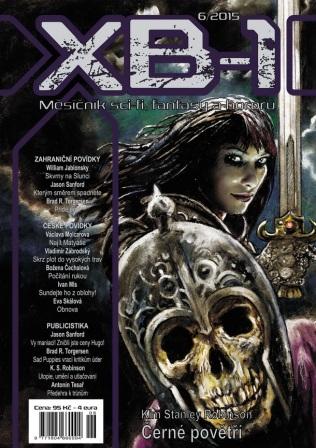
[A Czech-language SF magazine presents both sides of the controversy. Jason Sanford’s article, according to Google Translate, is titled “You maniacs ! You destroyed Hugo Award !” while Brad Torgersen’s is called “Sad Puppies critics strike back.” Each author also has a story in the issue.]
Steve Davidson on Amazing Stories
“On Politics and Fandom” – May 28
Yesterday I sent out a general press release concerning the appointment of Judges to the Gernsback Science Fiction Short Story Contest (you can see a post here).
I received an email from one of the usual press outlets I send such things to, asking to be removed from our PR mailing list.
The name of the venue is unimportant.
What is important is that the request for removal from the list represents fallout from the 2015 Hugo Kerfuffle, otherwise known as Puppygate.
William Reichard
“What hope gets you today (puppy sadness)” – May 28
But that’s what earnestness gets you. Earnestness is a crime in our world. Even daring to try to believe in something hopeful and un-ironic wins you scorn. It gets you lectured. And this is one of the nuances that makes me able to understand some of the “puppies” in the Hugo debate. I tend toward cynicism and irony myself, but when someone tells me I can’t be hopeful, that it’s bad taste to be hopeful, that earnestness is corny per se, my hackles are raised and I think, well I’m going to be hopeful, then. I don’t even think I’m uncritical of hopefulness itself–I could name plenty of ostensibly “hopeful” works that weren’t much more than jingoistic rose-colored welding glasses. But Interstellar wasn’t that, and it seems facile–a critical trope of its own–to say it was.
embrodski on Death Is Bad
“SF/F Review – The Three-Body Problem” – May 28
Puppy Note: This book was not on the Puppy Slate. When I thought to myself “How did this book make it onto the Hugo Ballot?” my first thought was the same uncharitable thought that the Puppies normally have. I thought “This is cultural inclusiveness being taken too far. The liberal thought-leaders want to show they are racially/culturally diverse, and they know that this book is CRAZY popular in China! For it to be so popular among so many readers, it must be fantastic! So let’s make sure it gets a nomination regardless of its merits.” Thus a type of affirmative action – signaling your awesome cultural acceptance and diversity at the cost of nominating a book that would have been much more deserving of the Hugo on its merits.
Except that the Puppy Leaders have come forward to say that they love this book, and would have put it on their slate if they’d known about it!! And I’m like… WHAT THE HELL is going on?? OK, we all already suspect that the Puppies don’t have great taste in SF lit, but if they think this book deserves a nomination on its merits, than perhaps *I* am being a giant, insensitive dick by assuming that only someone with a hidden liberal agenda would nominate this. Obviously people must actually like it. And if I am lumping in the Sad/Rabid Puppies with their hated “SJW” nemesis for picking crap for political reasons, maybe that’s a big flashing sign that says “There is no such thing as the political-reasons voter, and the Puppies were even more wrong that I thought from the very beginning.” Seriously, if I can’t tell you apart from your political rivals based on book selection, I think you’re grasping at straws.
Second, apparently Puppy-approved books can be nominated without the Puppy’s help. In fact, despite their efforts in this case. If the liberal conspiracy you claim is keeping good works down keeps nominating things you like (much like they nominated Correia and Torgerson in the past…) then it might not actually exist.
Lis Carey on Lis Carey’s Library
“Saga (Collected Editions #3), by Brian K. Vaughan (writer), Fiona Staples (artist)” – May 28
In the end, though, I think too much of the background needed for the story to make sense is just not here. It’s likely in the two earlier volumes, but it’s not here in Volume 3, which is what I’m being asked to judge. I suspect I would like this a good deal better if I’d read the earlier volumes. As is, though? Art, very nice. Story, meh.
Joe Sherry on Adventures In Reading
“Thoughts on the Hugo Award Nominees: Graphic Story” – May 28
Time will bear this out, or not, but I think I will have had a much more difficult time ranking the nominees for Graphic Story than I will for any other Hugo category this year. There is just so much excellence here and the comics are all great in very different ways. I will, however, hold to this ranking and this vote and live with it. But ask me tomorrow and I could reorder the whole thing and be equally comfortable with that order. I choose to draw the line today.
Elisa Bergslien
“More Hugo’s reading: Related Works … voted category most likely to make you completely bewildered” – May 28
My conclusion ? I have no idea what the nominators were thinking with these selections. I just can’t find the redeeming value that would make any of this years items award winning.
Brian Niemeier on Superversive SF
“Transhuman and Subhuman Part VII: The Glory Game” – May 28
Today I’m reviewing John C. Wright’s review of Keith Laumer’s short novel The Glory Game.
“The novel is well crafted, concise, without a wasted scene or word,” says Wright, “and therefore has the clearest and most trenchant point of any tale I have ever read that is actually a tale and not a tract.”
Indeed, the book’s twist ending is incisively delivered in its last four words. Since The Glory Game was first published in 1973, this review will discuss the plot under the reasonable assumption that little risk remains of spoiling the final twist for long time sci-if fans. For those who are newly come to the fold, it’s recommended that you read the novel before continuing with this post.
Of the book’s characters, Wright notes that they are, “…rough sketches, painted in broad, energetic strokes, as befits an adventure yarn.” Yet the story’s driving conflict is moral; not military–the dilemma of a principled man told to violate his principles.
Adult Onset Atheist
“SNARL: Best Dramatic Presentation, Short Form” – May 28
I am not, in general, a big fan of TV. However, almost everything I watch, or want to watch, is on this list. My reviews for the Best Dramatic Presentation Short Form category will be short. They will be short enough that I can fit them all together on this one post. I present them in the same order in which they appear on the Hugo nominations list.
R.P.L. Johnson
“A Hugo Post – The Short Stories” – May 28
So what’s the final verdict? Totalled is the standout favourite for me so I’ll be voting as follows:
Totalled
A Single Samurai
Turncoat
No Award
Kristin on SciFi With A Dash of Paprika
“The Goblin Emperor by Katherine Addison” – May 28
Overall, a solid absorbing read with beautiful world building and solid character development.
Katya Czaja
“Hugo Award: Related Work” – May 28
Ranking Another race for the bottom. Difficult to figure out which was worse, the word-salad that was Transhuman and Subhuman or the not-a-book that was Wisdom From My Internet. In the end, Wright lost because he put words together in a form that can be described as essay and not just random, unrelated scribblings. Neither “The Hot Equation” nor “Why Science is Never Settled” were important enough to rise above No Award, but “The Hot Equation” came closest.
1) No Award
2) “The Hot Equation” by Ken Burnside
3) “Why Science is Never Settled” by Tedd Roberts
4) Letters from Garnder by Lou Antonelli
5) Transhuman and Subhuman by John C. Wright
6) Wisdom From My Internet by Michael Z. Williamson
Mary Robinette Kowal
“Talk with me about being a fan of science fiction and fantasy” – April 11
[I linked to Kowal’s post before, but John Hertz would be deeply gratified if I injected “Orange Mike” Lowrey’s comment and her reply into the ongoing discussion and I am happy to do so.]
Definition of Terms (You can tell that I was on the debate team in high school, yes?)
- Fandom – The community of fans who regularly attend fan run conventions.
As a historian, I do want to clarify one thing. Historically, SF fandom was centered in the fanzines, constantly refreshed by names culled from the letter columns of the prozines. Conventions were rare and widely scattered, whereas a letter cost less than a dime to mail, and fanzines could easily be printed and mailed for much less than a quarter-dollar. If you lived in a big enough town, this was bolstered and enlarged by local SF clubs, at least one (LASFS) still extant today.
Starting in the 1960s, and more in the 1970s, conventions became more common, but these sprang from the local fandoms (both club and fanzine), and carried on the same conversation, with many of the same participants still around. This conversation in turn (for those unable or unwilling to attend conventions in the flesh, or just wanting more doses of that fannish pleasure) shifted gradually from paper fanzines to online venues, from Usenet and e-mail lists to LiveJournal (and individual blogs) to Facebook. But all these were carrying on the same conversation, and some of the participants remained the same or were the spiritual heirs of the same conversants. We are all the heirs of Bob Tucker, of Forrest J Ackerman, of Jan Howard Finder, of Rusty Hevelin and Lee Hoffman, of Robert Bloch and Morojo, of John Boardman and Harry Warner, Jr., of Terry Carr and Russ Chauvenet and Vin¢ Clarke and Bob Shaw and Jan Howard Finder and Ross Pavlac and Ken Moore and Dean Grennell, of Samuel Edward Konkin III and Steig Larsson (yes, he was One of Us), of Judith Merril and Sam Moskovitz and Ray Palmer, of Frederik Pohl, of Tom Reamy and Bill Rotsler, of Damon Knight and Julie Schwartz, of Donald A. Wollheim. Some of them became pros; some remained “only” fans. But every time you argue about Hugo selection, or use the term “space opera”, or deprecate the use of the horrible neologism “sci-fi” or otherwise celebrate this wonderful thing we enjoy, you ARE part of that conversation, whether you ever get to a con or not. And you are part of science fiction fandom.
Oh! Excllent point about the fanzines. My fault for forgetting because I joined fandom after the internet had already started to reshape things.
Alexandra Erin on Blue Author Is About To Write
“Sad Puppies Review Books: GOODNIGHT MOON” – May 28
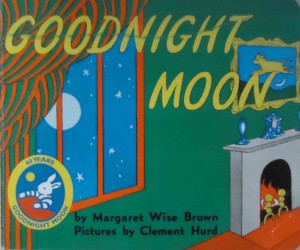
Reviewed by John Z. Upjohn, USMC (aspired)
I suppose this book is supposed to be clever in that literary way that SJWs are so fond of, but I found it to be a confusing and unholy mess. It was very hard to follow. The prose was far too clunky and the signaling was all wrong. Good stories use signaling to tell you what kind of story they are, so you will know how the story goes and not be thrown out of it when something happens that you do not expect.
ULTRAGOTHA in a comment on File 770
Hwaet! The Great-Danes’ want glory through dubious achievements
The god-voice former infamy we have heard of,
How puppies displayed then their prowess-in-prose.
Theodore, their mighty king, in honor of whom they are often called Teddys.
From many a people their chrome-rockets tore.
Since first they found themselves rocketless and wretched,
The puppies had sadness: no comfort they got for it,
Waxed ’neath the woe, word-honor hungered for
Till all the fans o’er sea were compelled to
Bow to their bidding and bring them their nominations: