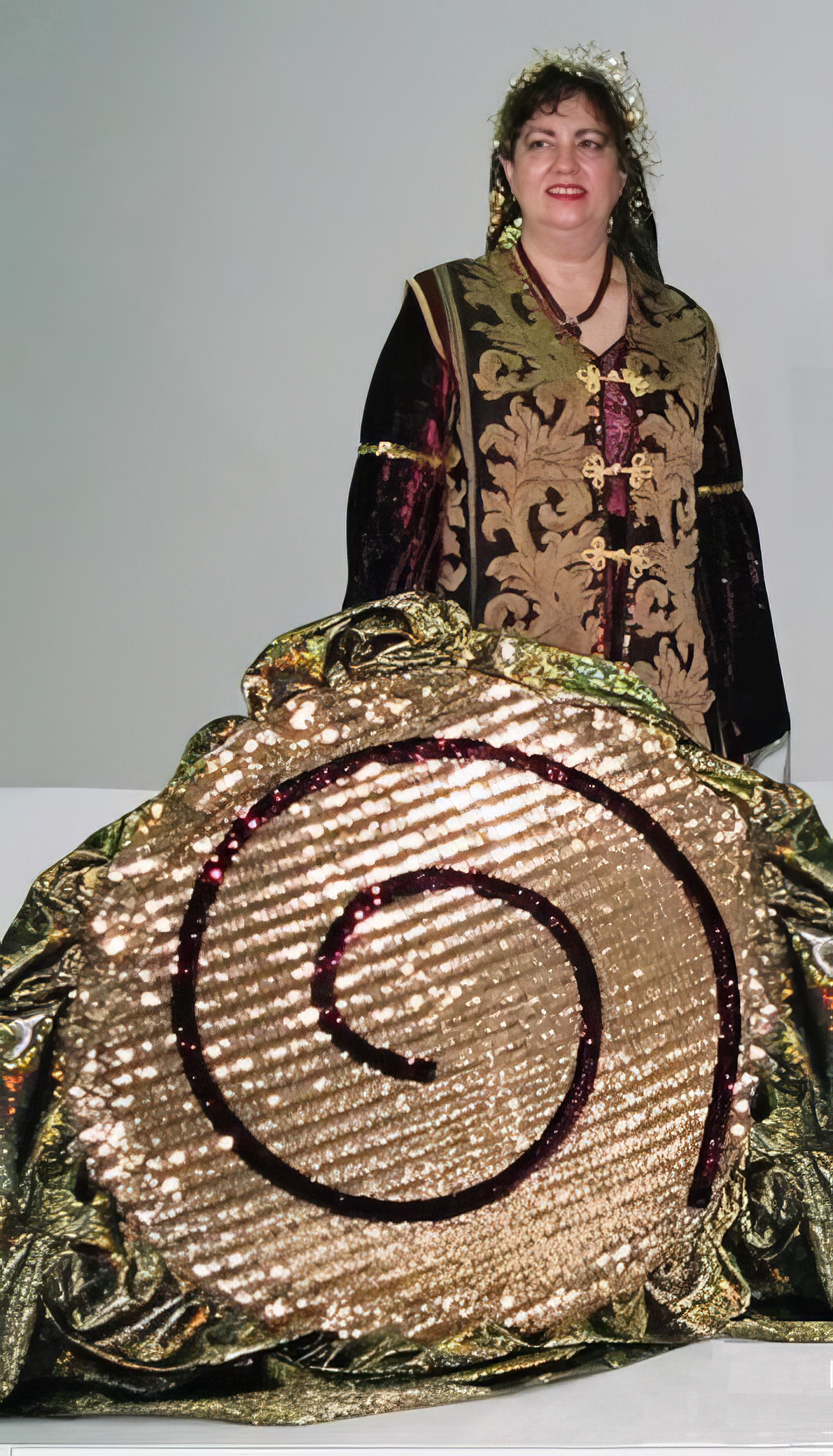
(0) * From Louisa May Alcott’s Little Women, of course.
(1) THE PUBLISHING GRIND. Nick Mamatas tells how the sausage gets made in “How Publishing Actually Works” at The Republic of Letters. Here are a couple of excerpts.
…Doomscrollers and restackers, here is what you need to understand: publishing is a nineteenth-century production-driven manufacturing industry, not unlike the Big Three automakers, but the writers and compilers of books are artisanal creators. This contradiction is the cause of many of the anxieties and confusions experienced by aspiring novelists and even working professionals.
A production-driven industry is one that is less concerned with tailoring products toward a market and more about manufacturing large numbers of products (both units and product types), and then selling those products to another set of sellers. Those retailers are in the business of meeting the customer. The publishing industry—even leaving aside self-published ebooks—generates hundreds of thousands of books a year across all categories. This despite there being only five big publishers that do this sort of thing, and perhaps as many big retail outlets to sell the books to individual consumers.
Furthermore, publishers spend a lot of money up-front bringing books to print, but get their profits back in dribs and drabs. Booksellers sell the books, and return the ones that do not sell for a full refund. The books don’t even need to be in good shape when they return to the warehouse either. Most get Dumpstered or incinerated. (And no, “the poor” don’t want those books either, even for free.)…
… Nobody would patronize a best-seller–only shopping mall kiosk called We Bet We Have That Book You Want, even though best-sellers are most of what anyone buys. People want to walk into stores with lots of books which they have no interest in even looking at. Amazon uses the same strategy—it launched in 1994 with its slogan “Earth’s Biggest Bookstore.” Amazon claimed to have millions of books in its warehouses, while the two big chains at the time had a couple hundred thousand. Attracted by the promise of endless possibilities, tons of readers made accounts and bought…Harry Potter titles and Who Moved My Cheese?, which they could have gotten anywhere else.
Ironically, it is thus not true that all publishers want is best-sellers. There is one major benefit in the best-seller: as print runs go up, per-unit costs go down, but that’s not enough. The Big Five want wallpaper, which they use to make you buy their best-sellers….
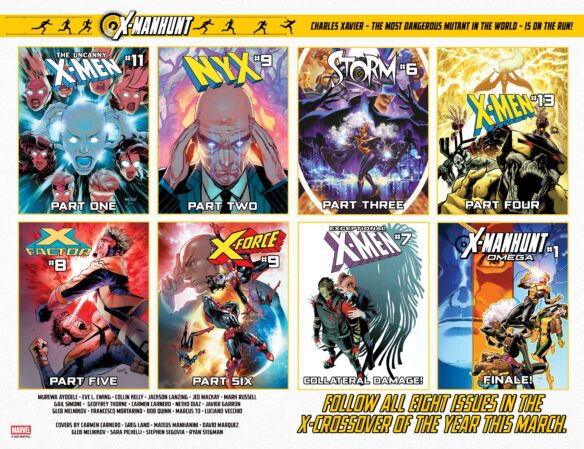
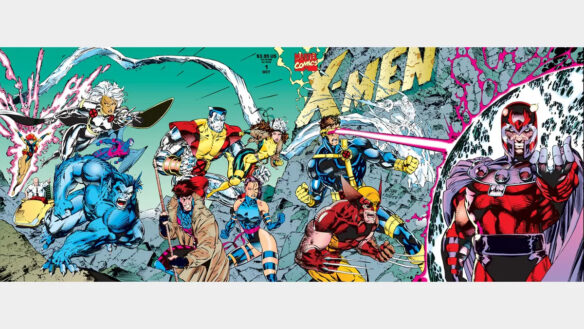
(2) YOU’RE FROM THE SIXTIES! Camestros Felapton’s series about robots in sff discusses The Doom Patrol and X-Men comics. “An Aside About the X-Men (and others)”. Here’s an excerpt:
…In earlier issues, it had been shown that the X-Men felt they needed to hide their identities as society wasn’t ready to understand them, from issue 14 the relationship with wider society becomes more fraught. Trask’s annoucement leads to a press campaign whipping up hatred of mutants, with lurid fears of a mutant take over. Having said that, Magneto had genuinely attempted to take over a country a few issues earlier with an illusionary Nazi-like army.
This is still a 1960s comic, so it is as goofy as hell. Professor Xavier arranges a TV debate with Trask. However, Xavier’s TV appearance does more harm than good. When he suggests that anybody might end up having mutant children, people take offence. On live TV Trask also reveals his solution to mutant problem: ROBOTS! Specifically, Sentinels, superpowered robots designed to protect humanity from mutants. However, as soon as Trask explains that the robots are under his command, the leader of the Sentinels explains that as their brains are superior THEY are in command. The story line doesn’t mess about: it is introduction to full on robot uprising in four panels.
It takes several issues for the X-Men to defeat the Sentinels, but once done the public reputation of mutants is somewhat improved and Professor Xavier’s advocacy is vindicated….
(3) THE WORST. James Davis Nicoll, having discussed good sff mentors, does a 180 to give us “Five Terrible or Useless Mentors in SF and Fantasy” at Reactor.
As recently discussed, many fictional protagonists have benefited from talented, inspirational mentors. However, there is another variety of mentor that, while perhaps not as useful, can be just as inspirational… or at least extremely memorable. This is the terrible mentor, the pontificator whose advice is invariably incorrect, when it is not actively harmful….
Here’s one of his picks:
Qifrey — Kamome Shirahama’s Witch Hat Atelier
No sooner did Coco discover that anyone with the right tools can perform magic than she accidentally killed her mother with a runaway spell. Under witch law, any non-witch who learns magic should have their memory erased. Instead, kindly Qifrey offers Coco the chance to study magic.
Qifrey does not spare Coco because he is benevolent. He spares her because he believes her memory holds clues that will allow him to successfully pursue a vendetta against those who hurt him. Erasing her memory would erase those clues.
In fact, the series establishes clearly that Qifrey is adept at presenting himself as a sincere friend and protector, when in fact he is coldly pragmatic about pursuing his goals. His close friend Olruggio could attest to this—if Qifrey weren’t in the habit of erasing Olruggio’s memory whenever Olruggio learns too much.
(4) POLITICAL SCIENCE. [Item by Steven French.] How Newtonian physics directly influenced American independence: “The American Revolution’s Overlooked Influence? Physics. How ‘Common Sense’ Spelled Out Astronomical Expectations for a New Nation” in The Smithsonian Magazine.
In politics, as in nature, tensions can take years to build, but it takes just one stone to unleash an avalanche, one spark to ignite a wildfire. For many historians of the American Revolution, that spark was a pamphlet of fewer than 100 pages written by a newly arrived English immigrant named Thomas Paine. Throughout 1775, violent clashes between British troops and colonist rebels protesting onerous taxes inspired little talk of outright revolution. Most rebels aimed to force better terms with Britain, not sever the link. Then, in January 1776, Paine changed everything with Common Sense, a manifesto so radical that at first he didn’t even dare to sign it. It was an immediate sensation, selling 120,000 copies in three months, in Paine’s estimation, in a colonial population of just two and a half million—and that was not counting handwritten copies and knockoff editions that swept not only through America but all over Europe.
In his plea for American independence from Britain, Paine made vivid appeals to nature. Strikingly, he envisioned global politics as an astronomical system, arguing that America, rather than orbiting the central sun of England, was large and mature enough to provide its own center of gravity. “In no instance hath nature made the satellite larger than its primary planet,” he wrote, “and as England and America, with respect to each other, reverse the common order of nature, it is evident that they belong to different systems.” He described the “gravitating” force binding Americans, urging them to work together to determine their own fate. “We have it in our power,” he wrote, “to begin the world over again.”
Paine’s astronomical vision was taken further that April in a remarkable response published in the weekly newspaper the Pennsylvania Ledger. The writer, whose identity is lost to time, imagined taking a trip with Paine into outer space. Leaving the solar system and the “dull beaten tracks of monarchy” far behind, the space travelers discovered a vast cosmos not ruled by one dominant sun but studded with innumerable suns. The universe thus revealed the blueprint for a different kind of nation: “a republic amidst the stars.”…
(5) ON STAGE. Asian Pirate Musical is “a queer time travel musical set on Southeast Asian seas, with a genre-devouring soundtrack melding traditional instruments, 21st century Asian pop, and diasporic musical influences. Drawing on the real histories of 14th century Muslim navigator Zheng He and 19th century pirate queen Sek Yeong, alongside the imagined futures of 21st century climate survivors and 23rd century space revolutionaries, Asian Pirate Musical is a new legend on the high seas.”
Being staged Upstairs At The Gatehouse in North London from July 28-August 2. Tickets available here.

(6) PLAYSTATION ADDITONS. [Item by Steven French.] Keza MacDonald reviews a selection of new games for the PlayStation – including Wolverine, Tomb Raider and God of War – in this week’s Guardian’s “Pushing Buttons” newsletter: “From God of War to Until Dawn – seven reveals from last night’s PlayStation event”.
PlayStation’s future has looked a little uncertain these past few years. Although the PS5 has sold well and been very profitable, the brand is far from the runaway market leader it was in the PS2 days. Earlier this week, Game File dug into Sony’s most recent earnings reports to illustrate how PlayStation has been selling fewer and fewer of its own flagship games since a peak during the pandemic. About 54.1m copies of games either developed or published by Sony were sold in the 2018 financial year; in 2025, it sold 32.1m.
Sony has put out some great homegrown games since the PS5 was released in 2020, from Astro Bot to Ghost of Yōtei, but it has also had some expensive and very public failures and cancellations; PlayStation boss Jim Ryan, who retired in 2024, placed big bets on live-service games and only a few panned out (hello, Helldivers). Sony also seems to have rolled back on releasing its single-player PS5 games on PC after a polite interval of time, suggesting it wants to preserve what advantage and exclusivity it has.
Meanwhile, its longtime console rival Xbox may have faded into the background as a sales competitor – the PS5 has outsold the Xbox Series S/X by approximately three to one – but it has become a strong publishing competitor, having bought up tens of development studios alongside Activision and Bethesda. Then there’s Nintendo, whose exclusive games for the Switch and Switch 2 consoles have performed significantly better than Sony’s over the last decade. (The top-selling Sony-developed PS4 game was Spider-Man, at 22.68m. The top-selling Nintendo-developed Switch game was Mario Kart 8 Deluxe at … 71m.)
So what is Sony going to do in the next few years, as we enter a later stage of the PS5 lifecycle? Will it play safe, or diversify? Perhaps revive some older games for nostalgic millennials? Thanks to a State of Play live-stream last night, we now have some answers….
(7) GORDON EKLUND Q&A. Fanac.org has posted a YouTube video of “Gordon Eklund, interviewed by Andrew Hooper”.
Gordon Eklund found science fiction at 12, fandom at 15 and made his first professional sale less than 10 years later. In this charming interview, fan historian Andy Hooper, himself a long time Seattle fan, elicits stories of both the Nebula-award winning author and of the young man who stepped into Seattle’s legendary fan group, “The Nameless” before he could drive. This is a “bonus” interview, as Gordon was to have participated in a panel on the history of Seattle fandom (November 2025), but was prevented by technical difficulties. As a result, we are fortunate to have this dedicated interview, and hear about Gordon’s experiences as a young, and not so young fan, and as an accomplished professional. FYI: during this interview, there were some momentary network disruptions and the recording has been edited to remove them.
Gordon Eklund discovered fandom through the ads in the back of the science fiction magazines. That led to fanzines, including “Cry of the Nameless” and soon to his first club meeting of the Nameless Ones in 1960, in the room above Bill Austin’s much loved bookstore. In this recording, Gordon tells his origin story, tales of the Nameless Ones, and of Seacon 1961, his first convention and first Worldcon. Anecdotes include the pro who wanted to show everyone how he could light matches with his feet, the hospitality of Robert Heinlein and how Harlan shot craps with the bellhops to make his carfare to Hollywood. You’ll hear about Gordon’s evolution to award-winning author, and how the Nebula nomination for his first published story led to the sale of his first novel, as well as how he came to collaborate with E.E. “Doc” Smith. This entertaining interview runs the gamut from serious discussions about Gordon’s work to fannish topics such as which APAs are more boring. It’s a window on the fandom of the early 60s, as well as what came after. Finally, it’s great fun and strongly recommended.
(8) TODAY’S BIRTHDAY.
[Written by Paul Weimer.]
June 4, 1960 — Kristine Kathryn Rusch, 66.
By Paul Weimer: Kristine Kathryn Rusch is an author I found, and then lost and then found again. She in the meantime had been writing prolifically, in multiple genres and fields, but had fallen off of my radar for a good long while.
It all started in the 1990s when I picked up The Sacrifice, the first of her Fey novels. The high concept drew me immediately. A world-conquering empire of Elves sweeping everyone before them…and then they run into the speedbump of Blue Isle, which has a power to resist the Fey that they themselves don’t even quite suspect. Suddenly the easy conquest is not so easy and over the next several books, Rusch explored this conflict from multiple vantage points and perspectives.
And then, someone Rusch fell off of my personal radar. Too many other new authors, perhaps. Or I didn’t follow her into mysteries and other subgenres such as media-tie ins, of which she has written or coauthored a fair number of, in multiple universes, and often under other names as well, ranging from Star Trek to Roswell.
It wasn’t until my early official reviewer days that I picked up Rusch again, as she helped vitalize the xenoarchaeology novel subgenre with the Wreck series. I was offered a review copy of Diving into the Wreck, and my fond memories of The Fey stood me in good stead as I dug into Boss’ story.
Since then I’ve been following Rusch on her blog and Patreon, where she has fearlessly and openly discussed and educated on the craft and business of writing. Anyone seriously interested in either should follow and read what Rusch has to say.

(9) COMICS SECTION.
- Close to Home shares the bad use of a time machine.
- Dinosaur Comics keeps finding time loops.
- Ink Pen has a new definition of action figure.
- Loose Parts found where it all starts.
- Non Sequitur seeks writing inspiration.
- Speed Bump envisions an author signing.
- The Argyle Sweater lists heroes’ power foods.
(10) DARK HORSE UNIONIZATION SUCCEEDS. “Dark Horse Voluntarily Recognizes Staff Union” reports Publishers Weekly.
Dark Horse Comics has voluntarily recognized Dark Horse Workers United as a collective bargaining representative under standards established by the National Labor Relations Board (NLRB), per a statement from interim CEO Jay Komas, and has reached out to the union’s attorney to initiate the appropriate next steps in the bargaining process.
The announcement comes just over a week since employees of the comics publisher and its retail arm, Things From Another World, announced their intent to unionize with Communications Workers of America (CWA), Local 7901….
(11) INDIE COMICS PUBLISHER CLEARS OUT THE COMICS VAULT FOR 90 DAYS. Silverline Comics is running a sale.

A lot of comic book publishers were negatively impacted by the collapse of Diamond Comics, the insane legal aftermath of its bankruptcy and the disruption of the industry. To recoup some of its losses and to give fans a boost, indie publisher Silverline Comics is having a summer sale.
“This is a really good opportunity for fans to catch up on a missed issue or two, or get a whole series,” said CEO/Founder and Editor-In-Chief Roland Mann. “The comics are all printed and ready to go with each order.” This includes Mann’s own title, Cat & Mouse, which recently launched a new mini-series for its 30th anniversary.
According to Silverline’s CFO, Barb Kaalberg (creator of Divinity), “It’s not just comics. A lot of our artists have donated some fantastic original art to the sale. Others are doing commissions on our behalf.” The publisher also has graphic novels, promotional items, posters, and special editions available as well.
The Silverline Summer Spectacular Sale is on here. The sale will last through early August.
Silverline’s current comics are crowdfunded, and also distributed traditionally to retail shops by PhilBo Distribution.
(12) THE MONTH IN STREAMING. JustWatch has released the top 10 charts for movie and TV streaming in the month of May. [Click for larger images.]


[Thanks to Steven French, Mike Kennedy, Andrew Porter, Paul Weimer, John King Tarpinian, Cat Eldridge, SF Concatenation’s Jonathan Cowie, Chris Barkley, Mark Roth-Whitworth, and Kathy Sullivan for some of these stories. Title credit belongs to File 770 contributing editor of the day Daniel Dern.]