(1) SUCH STINKERS! Cora Buhlert has announced who’s getting “The 2025 Darth Vader Parenthood Award for Outstandingly Horrible Fictional Parents”.
It’s almost the end of the year, so we are proud to present to you, live from the Multiversal Nexus Ballroom, the 44th Annual Darth Vader Parenthood Award for Outstandingly Horrible Fictional Parents….
Here’s one of the contenders (but not the winner):
… The latest incarnation of Superman was not something I expected to end up on the shortlist for the Darth Vader Parenthood Award, considering our sister award for good fictional parents is named after Superman’s adoptive parents. And indeed, Jonathan and Martha Kent are as lovely and supportive as ever in James Gunn’s take on Superman. However, Clark’s biological parents Jor-El and Lara Lor-Von are quite spectacularly revealed to be evil in this version of the story, when Lex Luthor and Angela Spica a.k.a. The Engineer (who really deserves better) break into the Fortress of Solitude and steal an incomplete message recorded by Jor-El and Lara, restore it and broadcast it to the world. In the message, Jor-El and Lara urge their son to use his superhuman powers to conquer Earth, take many wives to single-handedly (or single-penisly) restore the Kryptonian people and make Krypton great again. This revelation does wonders for Superman’s public image – not.
In the audience, Superman – dressed in his familiar suit and cape – looks rather embarassed and crest-fallen, though I’m sure some of Martha Kent’s famous apple pie will soon soothe those wounds….
By the way, Cora got to take a second bite of the poisoned apple by also reaching into the past for a character to give the 2025 Retro Darth Vader Parenthood Award for Outstandingly Horrible Fictional Parents.
And don’t touch that dial! Cora’s companion prize, the Jonathan and Martha Kent Award for the Fictional Parent of the Year will be handed out tomorrow.
(2) OVERWHELMING DEMAND. So maybe you aren’t watching Stranger Things just now? Variety reports “Netflix Down: Crashes as Stranger Things 5 Finale Releases”.
Vecna has struck again!
Netflix crashed for some users Wednesday night as the series finale of “Stranger Things” premiered. The streamer also experienced technical problems a few weeks ago during the Season 5 premiere on Nov. 26.
The streamer crashed right at 5 p.m. PT, coinciding with the drop time for the “Stranger Things 5” finale. The crash lasted roughly a minute and was fixed after a few refreshes. As was the case last time, users encountering the error were met with an image from “Nailed It!” with the caption: “Something went wrong. Sorry, we’re having trouble with your request. You’ll find lots to explore on the home page.”…
(3) GET READY FOR SELF-PUBLISHED FANTASY BLOG-OFF 11. Sponsor Mark Lawrence has announced that Self-Published Fantasy Blog-Off 11 opens to entries at 11:00 a.m. GMT January 3, 2026. The link to the sign-up page will be published on the Official Self-Published Fantasy Blog-Off homepage and on Lawrence’s multiple social media.
You don’t need to rush – the gates will stay open for 24 hours.
If we get more than 300 entries – 300 will be randomly selected.
If you tried last year and weren’t in the 300 – you can try again.
(4) HOW MANY PEOPLE ARE ACTUALLY USING AI IN IRELAND? [Item by James Bacon.] Following the discussion regarding the use of AI in nonfiction or artistic endeavors in the realms of the SF community, here on File 770, I was quite surprised to see that is reported that there are over one million weekly users of Open AI’s ChatGPT in Ireland.
A report on The Irish Times following a freedom of information request, had the headline: “Fewer Irish people using ChatGPT than in other countries, OpenAI told Taoiseach”, while noting that Ms Friar, The Open AI CFO, originally from Northern, met Micheál Martin, the Taoiseach [the head of government in the Republic of Ireland].
Ms Friar is reported as saying, “28 per cent of the population in Ireland is using ChatGPT weekly, compared to 50 per cent in the best countries”.
The Irish Times noted that when asked, “OpenAI did not set out countries where 50 per cent of the population use ChatGPT weekly.”
OpenAI gave The Irish Times a statement which said: “With over one million ChatGPT users now in Ireland…”
Which caught my attention especially in a country of 5.38 million people. Open AI have their European HQ in Dublin.
This is juxtaposed with an article from national broadcaster RTE from earlier in the month headlined “Worker usage of AI tools remains low – survey”.
Price Waterhouse Cooper’s Survey noted “that just 10% of workers here are using generative AI every day. This is below the global figure of 14%.”
The article shared views of workers, and continues to say note that ” The survey does show that 43% of Irish workers had used AI for their role in the past month, suggesting that many had tried the technology but not seen enough of a benefit to make it a regular habit.”
It is interesting how reportage can vary on the same subject, but I was really surprised with the Open AI info, but smiled at the number of people who had a go, and obviously determined it was a bit shite and left it.
Which countries with 50% of the population using Chat GPT is a fascinating question.
Links (Behind Paywall)
- “Fewer Irish people using ChatGPT than in other countries, OpenAI told Taoiseach” – The Irish Times
- “Irish Workforce Hopes and Fears Survey 2025 — Press Release” – PwC Ireland
(5) MAGAZINE RETRENCHMENT. This news came out a month ago, but we haven’t covered it yet. “What’s next for Psychopomp” and Fantasy Magazine.
Sean Markey, here, publisher of Psychopomp (and The Deadlands and Fantasy Magazine) with a post about the end of things.
But not EVERY thing.
I’ll rip the Bandaid off quickly, and then expand a bit below:
1 – We will no longer be publishing novellas at Psychopomp.
2 – We will no longer publish novelettes on Psychopomp.
3 – Publishing nonfiction on Psychopomp is on hiatus.
4 – Fantasy Magazine is going on hiatus after our December issue.
(6) ALL OVER BUT THE SHOUTING. A Deep Look by Dave Hook sifts “’The Beast That Shouted Love at the Heart of the World’, Harlan Ellison collection, 1969 Avon”.
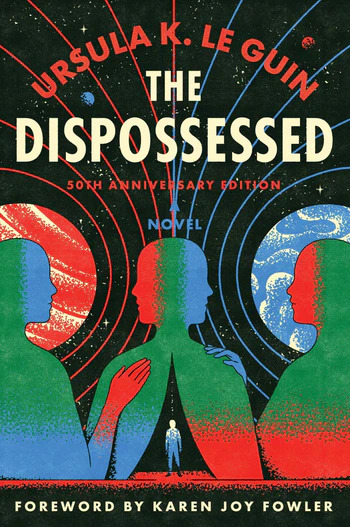
The Short: I read the Harlan Ellison collection The Beast That Shouted Love at the Heart of the World, 1969 Avon, recently when I wanted to read his story “White on White“. Although horrifying, the best story here is unsurprisingly the superlative “A Boy and His Dog“, a Vic and Blood novella, New Worlds April 1969. Harlan’s Introduction “The Waves in Rio” is interesting and worth reading. Although this collection is very uneven, I like the psychedelic cover by Diane and Leo Dillon. My average rating for the stories is 3.52/5, or “Good”. Recommended only to Ellison completists.
(7) IN TIMES THAT WERE TO COME. “What did 2026 look like in 1926? Here are some predictions that appeared in the New York Times”: “Looking at 2026 Through the Eyes of 1926” (behind a paywall).
“Canada will ultimately join the United States,” The New York Times quoted a London editor as saying in 1926. Though whether such a unification would be beneficial or disastrous, the editor said, “it is impossible to say.”
Similar articles from 100 years ago echo some of the same debates — and hopes — people have going into 2026. The next generation will heed the lessons of war and believe in peace. Some deadly diseases will come to an end. Economies can be prosperous indefinitely.
The year 1926 was full of predictions amid giant technological advancements and transformative cultural moments, so we took a deep dive into The Times’s archives to see what the future looked like a century ago, and what actually came to pass.
In addition to the debate about America expanding north (which hasn’t happened — yet), articles in The Times asked if perhaps jazz music was dying (it certainly was not — John Coltrane and Miles Davis, future icons of the art form, would both be born in 1926).
A scientist from M.I.T. predicted that a dire global food shortage would occur over the next century, positing that reindeer and caribou might become important sources of sustenance unless more efficient methods for food production and preservation were developed (luckily, they were)….
(8) TODAY’S BIRTHDAY.
[Written by Paul Weimer.]
December 31, 1949 — Ellen Datlow, 76
By Paul Weimer: Ellen Datlow is an Empress of short fiction editing.
Although I didn’t pay attention to it at the time, I’ve been reading fiction edited by Datlow for most of my science fiction reading life. That is to say, Omni Magazine. Datlow was the Omni Magazine (and later Omni Online) fiction editor. So the stories I enjoyed in those early halcyon days of short fiction reading were under her editorial hand — Omni was the first SF magazine I read and for a while was the only one before I transitioned into magazines like Asimov’s and Analog. So some of my early favorite SF stories, like “The Infinite Plane” by Paul Nahin, were thanks to her editorial direction. But young me didn’t even think of looking up editors in those halcyon days.
After her stint in Omni, and more famously, Datlow’s short fiction editing transitioned to a goodly number of anthologies. And this, friends, is where Datlow as a name came to my reading attention. Her editorial work on many volumes of books like The Year’s Best Fantasy and Horror, The Best Horror of the Year and others have been staples of my reading for years. Datlow has also won a number of Hugo and World Fantasy awards for her short fiction and for some of her one-off anthologies, such as the fantastic The Green Man.
Datlow also co-hosts the speculative fiction reading series held on the second Wednesday of every month at the KGB Bar in Manhattan.

(9) COMICS SECTION.
- Saturday Morning Breakfast Cereal doubts these classes should be combined.
- xkcd knows where time travelers gather.
- Brewster Rockit runs afoul of a fad.
- Dinosaur Comics discovers fan fiction.
- Jerry King has a printer problem.
- Speed Bump puzzles credentials.
- Wallace the Brave finds time for art.
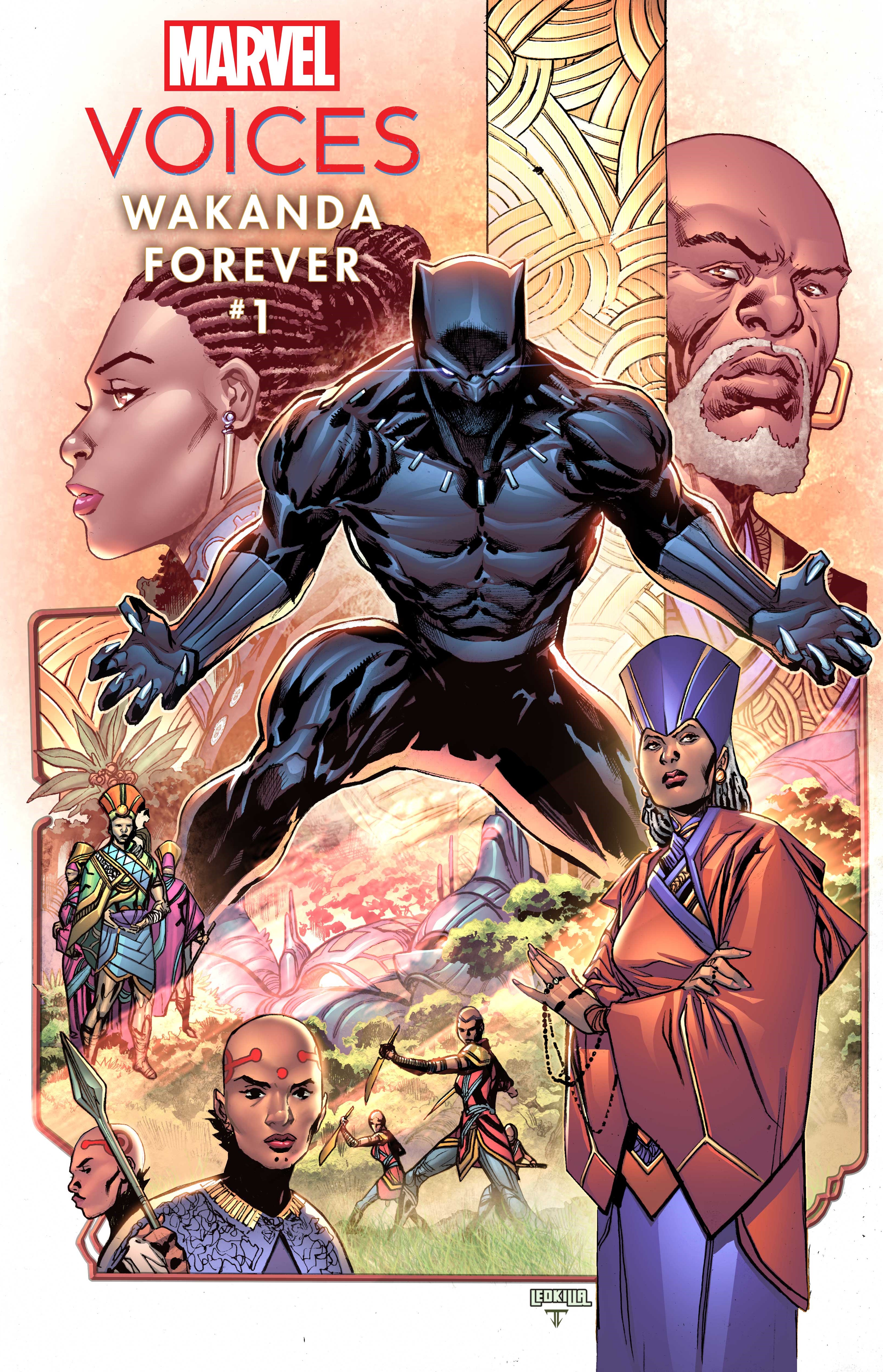
(10) IF CHADWICK BOSEMAN HAD LIVED. Variety took notes on a podcast where “Ryan Coogler Details ‘Black Panther 2’ Script Before Boseman’s Death”.
…Marvel fans wondering what Coogler originally planned for Boseman’s return finally have an answer as Coogler told “Happy Sad Confused” podcast host Josh Horowitz that his original “Black Panther 2” script focused on an adventure between Boseman’s T’Challa and the character’s 8-year-old son. Namor, played by Tenoch Huerta in “Wakanda Forever,” was still the main villain.
“The big thing with the script was a thing called the Ritual of 8 where a prince is 8 years old, he must spend 8 days in the bush with his father,” Coogler said. “The rule is for those 8 days the prince can ask the father any question and the father must answer. In the course of those 8 days, Namor launches an attack… he had to deal with someone who’s insanely dangerous but because of this ritual, his son had to be joined at his hip the whole time or else they’d violate this ritual that had never been broken. It was insane. Chadwick was going to kill it, but life goes as it goes.”….
(11) SOUND FAMILIAR? [Item by Steven French.] As we all knew already, the three-body problem is indeed a thing: “Before we build on the moon, we have to master the commute” at Phys.org.
Even most rocket scientists would rather avoid hard math when they don’t have to do it. So when it comes to figuring out orbits in complex three-body systems, like those in cis-lunar space, which is between Earth and the moon, they’d rather someone else do the work for them.
Luckily, some scientists at Lawrence Livermore National Laboratory seem to have a masochistic streak—or enough of an altruistic one that it overwhelmed the unpleasantness of doing the hard math—to come up with an open-source dataset and software package that maps out 1,000,000 cis-lunar orbits. The work is published on the arXiv preprint server.
Note that the last paragraph didn’t say stable cis-lunar orbits. In fact, only 9.7% of them were “stable” over the three years the simulation was run. Others resulted in a satellite either crashing into the moon, burning up in Earth’s atmosphere, or being ejected from the system entirely. So why is it so difficult to stay in orbit between Earth and the moon?The Three-Body Problem is a popular Netflix series, based on a popular sci-fi book series, that references an actual problem in physics. Systems where there are three bodies, each of which is both exerting gravity on, and being influenced by the gravity of, the other two bodies, are known as being “chaotic.” Even one tiny change in the starting conditions of such a system or a slight deviation, such as getting hit by a solar storm, can cause massive and almost unpredictable changes in the orbital path of a satellite.
Because of that chaos, it’s been difficult to develop orbital paths for moon missions. That is precisely what the new dataset/software is intended to solve. It provides a “Gold Standard” that can be used to prove/disprove navigational software or orbital planning systems on satellites. Those will become increasingly important as more and more organizations strive to use the space near the moon to establish permanent bases and “Gateways” as the human presence in the system expands….
(12) TRIVIAL TRIVIA. Happy 70th anniversary to Michigan J. Frog who debuted on this date in 1955.

(13) SCIENCE 2050. [Item by SF Concatenation’s Jonathan Cowie.] Nature online takes a look at the possible science in the year 2050. “Science in 2050: the future breakthroughs that will shape our world — and beyond”.
The Roman sage Marcus Aurelius said we should never let the future disturb us. But then he never had a conversation with the futurologist Nick Bostrom about the state of the world in 2050.
There’s a good likelihood that by 2050, all scientific research will be done by superintelligent AI rather than human researchers,” Bostrom said in an e-mail. “Some humans might do science as a hobby, but they wouldn’t be making any useful contributions.”
Well, I have always warned that the machines are taking over….
Hot times
You should probably brace yourself before opening the door. “It will be worse than we had anticipated in terms of climate change,” says Guy Brasseur, a modeller at the Max Planck Institute for Meteorology in Hamburg, Germany.
Future shock
Shades of John Brunner’s The Shockwave Rider …
The vast gulf between these two possible scenarios illustrates the dilemma for futurologists and others who try to map progress and pitfalls beyond the next election cycle. How much can the future be projected from current trends? To what extent will it be driven by disruptive events and inventions that seem unlikely or haven’t been conceived yet? And at which point do predictions become, well, just a bit silly?
Futurology — the systematic, interdisciplinary study of future trends — is best placed to imagine a time 10—15 years away, suggests Richard Watson, co-author of The Children’s Book of the Future (2024) and a former futurist in residence at Imperial College London and the University of Cambridge, UK.
“Under five years, you just get the gravitational pull of the present and you end up talking about next Tuesday,” he says. “Over about 20 years, it gets very sci-fi very quickly. I’ve run workshops for banks, and the minute you go to the 2050s you invariably get aliens living on the Moon.”
Rise of the machines
Have I said that I have always thought that the machines are taking over?
Any vision of the future has to try to account for the continuing ascent of artificial intelligence. But at what pace?
Nick Bostrom, who is based in Oxford, UK, and authored ‘Superintelligence: Paths, Dangers, Strategies’ (2014), expects artificial general intelligence to arrive by 2050, and with it the capacity to answer “most of the questions that we are currently interested in, and that can in principle be answered by science”.
Even without a superintelligence takeover, AI could make the process of science look very different by 2050. Combined with robotic experimenters, autonomous systems driven by algorithms will increasingly pursue biotechnology problems 24–7 in dedicated “lights out labs”, Alex Ayad (co-founder of the London research and foresight company Outsmart Insight ) says — so named because no people would be involved.
OK Mike – that’s me for 2025.

[Thanks to SF Concatenation’s Jonathan Cowie, Mark Roth-Whitworth, Kathy Sullivan, James Bacon, Steven French, Mike Kennedy, Andrew Porter, John King Tarpinian, and Cat Eldridge for some of these stories. Title credit belongs to File 770 contributing editor of the day Cat Eldridge.]