(1) KETTER PHOTO BECOMES ICON OF ICE PROTESTS. The photo of bookstore owner Greg Ketter being gassed while protesting in Minneapolis is today’s Publishers Weekly’s “Picture of the Day”.


Picture of the Day
Greg Ketter, owner of DreamHaven Books in Minneapolis, walks through a cloud of tear gas during protests that rocked the city on January 24 in the wake of the shooting of Alex Pretti by ICE agents. A video of the bookseller has since gone viral.
Photo: Theia Chatelle
- And Buzzfeed has done a roundup of news and social media clippings which stars Ketter: “This 70-Year-Old Protester’s Interview Is The Wildest Thing”.
- Lastly – Greg Ketter is expected to attend the Los Angeles Vintage Paperback Collectors Show to be held in Glendale on March 15!
(2) THE NEXT CHAPTER BEGINS. Bill Nye announced today he will give up his post as The Planetary Society’s CEO on February 17, but will continue to represent the Society.
After 15 years as The Planetary Society’s chief executive officer, I’m stepping down — or aside. I will transition out of my role as CEO — but I won’t be stepping away from The Planetary Society. I’ll continue serving on the board of directors as Vice Chair and will take on a new role as our first Chief Ambassador. In this position, I’ll represent our organization publicly, keep in close communication with our members, and continue to champion space exploration in the halls of Congress at our annual Day of Action and beyond.
Our remarkable chief operating officer, Jennifer Vaughn, will take over as CEO on February 17. Throughout my time at The Planetary Society, Jenn has been my closest partner in leading the organization. Jenn helped craft our mission, and she is a natural leader with a clear vision for the future. We could not be in better hands….

(3) MET OPERA’S KAVALIER & CLAY. As a reminder, Fathom Entertainment presents “The Metropolitan Opera: The Amazing Adventures of Kavalier & Clay” in theaters on January 28.
Matthew B. Tepper reminded Facebook readers —
One of the things I’ve been talking about lately is The Amazing Adventures of Kavalier & Clay, both the original novel by Michael Chabon and the opera by Mason Bates. And what struggle is at the center of the plot? You got it — the struggle against fascism. A neat part of the opera (and I’m looking forward to seeing how it goes in the novel) is the radio-play-within-the-opera, particularly where The Escapist (the superhero created by the title protagonists) beats up a Gestapo thug, seals him into a coffin, and then disposes of said container into a river — all while the Foley guys onstage create the THUDs and SPLATs and OOFs for the radio audience. Very satisfying, even if only fiction within fiction.
Don’t just take my word for it — looky here:
(4) UNCANNY READER POLL IS OPEN. You have until February 12 to vote in the Uncanny Magazine 2025 Favorite Fiction Reader Poll.
We’ve set up a poll for Uncanny readers to vote for their top three favorite original short stories from 2025. (You can find links to all of the stories here.)
The poll will be open from January 22 to February 12, after which we’ll announce the results.
(5) UNINTENDED ROAD MAP FOR CHATBOTS. Ars Technica mourns, “Wikipedia volunteers spent years cataloging AI tells. Now there’s a plugin to avoid them”.
On Saturday, tech entrepreneur Siqi Chen released an open source plugin for Anthropic’s Claude Code AI assistant that instructs the AI model to stop writing like an AI model. Called “Humanizer,” the simple prompt plugin feeds Claude a list of 24 language and formatting patterns that Wikipedia editors have listed as chatbot giveaways. Chen published the plugin on GitHub, where it has picked up over 1,600 stars as of Monday.
“It’s really handy that Wikipedia went and collated a detailed list of ‘signs of AI writing,’” Chen wrote on X. “So much so that you can just tell your LLM to… not do that.”
The source material is a guide from WikiProject AI Cleanup, a group of Wikipedia editors who have been hunting AI-generated articles since late 2023. French Wikipedia editor Ilyas Lebleu founded the project. The volunteers have tagged over 500 articles for review and, in August 2025, published a formal list of the patterns they kept seeing…
…But as with all AI prompts, language models don’t always perfectly follow skill files, so does the Humanizer actually work? In our limited testing, Chen’s skill file made the AI agent’s output sound less precise and more casual, but it could have some drawbacks: it won’t improve factuality and might harm coding ability.
In particular, some of Humanizer’s instructions might lead you astray, depending on the task. For example, the Humanizer skill includes the line: “Have opinions. Don’t just report facts – react to them. ‘I genuinely don’t know how to feel about this’ is more human than neutrally listing pros and cons.” While being imperfect seems human, this kind of advice would probably not do you any favors if you were using Claude to write technical documentation.
Even with its drawbacks, it’s ironic that one of the web’s most referenced rule sets for detecting AI-assisted writing may help some people subvert it….
(6) SHOULD GEN Z DITCH HP? Louise Perry contends “The Harry Potter Generation Needs to Grow Up” in a New York Times op-ed. Link bypasses the paywall.
We were the children who queued outside bookstores and cinemas at midnight. We got Harry Potter tattoos, threw Harry Potter themed weddings and named our children after characters from the novels — baby names like Hermione, Luna and Draco.
We interpreted our politics through the lens of the wizarding world, comparing those we disagreed with to the books’ main villain, Lord Voldemort, and carrying signs with slogans like “Dumbledore’s Army” and “Hermione wouldn’t stand for this!” at Women’s Marches. And some of us even took deeper moral cues from the books, reading them like a new Bible, treating the works as sacred texts with religious teachings to convey. Some fans experienced J.K. Rowling’s controversial comments on transgender rights as a betrayal precisely because they had seen her as one of our generation’s most influential moral guides.
It’s been almost 20 years since the final Harry Potter book was released. The wizarding world is still generating interest — book sales remain strong, and the 2023 video game Hogwarts Legacy topped 40 million sales. HBO is working on a TV adaptation of the books, set to be released next year.
But the relevance of the franchise is waning….
…But there are also politics at play. Ms. Rowling foregrounds ideology in her books, and that means that her novels feel dated in a way that others do not. First conceived of over 30 years ago, the Harry Potter books are very much a product of 1990s liberalism: a moment when World War II still occupied a central space in the cultural imagination, and when it was still possible to believe that the best bits of the old political order could be retained alongside a gentle incorporation of the new.
That’s why millennials like Harry Potter a whole lot more than younger generations do. The story captures a worldview that is no longer attractive to young people jaded by the experiences of economic decline, political polarization and spiraling identity politics. They have fallen out of love with Harry Potter because they have fallen out of love with the worldview the series represents. Which is to say that young people have fallen out of love with liberalism….
(7) TODAY’S BIRTHDAY.
[Written by Paul Weimer.]
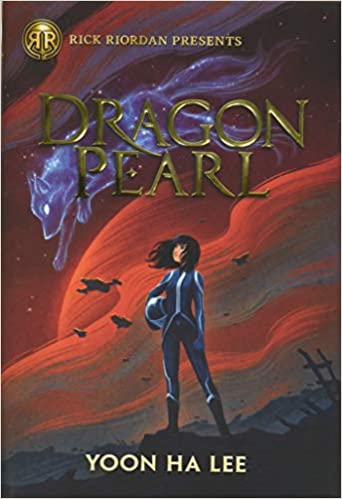
January 26, 1979 – Yoon Ha Lee, 47.
By Paul Weimer: His first work for us was “The Hundredth Question” story published in The Magazine of Fantasy & Science Fiction in the February 1999 issue. May I note that magazine has published some of the finest short fiction I’ve ever had the pleasure to read?
After “The Hundredth Question”, I count just over a hundred short stories and intriguingly nearly thirty pieces of poetry which is a fair amount of genre work I’d say.

Quite interesting is that the stories have several series running there — one that runs off with “The Cat Who Forgot to Fly” and runs five stories (I went to read these); then there’s series of stories about dragons, librarians, mermaids, phoenixes and queens.
So let’s talk about his novels. His Machineries of Empire space opera novels, well space opera is a gross understatement to it mildly, consisting of Ninefox Gambit, Raven Stratagem and Revenant Gun are splendid works indeed. As a follower of Asian folklore, the fact that these nicely use Korean folklore is a bonus.
Ninefox Gambit was nominated for a Hugo at Worldcon 75, Raven Stratagem at Worldcon 76 and Revenant Gun at Dublin 2019. None alas won a Hugo.
He likes fox spirits, he really does. (As do I.) So the Thousand World series is a space opera, and yes time that is an accurate term, about thirteen-year-old Min, who comes from a long line of fox spirits. Oh there’s dragons and tigers, oh my here as well.
I’ve not read his latest novel, Phoenix Extravagant, but magic-fueled weaponized armored giants sounds potentially interesting.
Remember all of those short stories? Well they have been collected, well I thought most of them had in The Candlevine Gardener and Other Stories but it turned out that those are flash fiction, all sixty five of them as I just discovered, though available are free from his website here.
I just read “The Cat Who Forgot to Fly”. It read like a classic folklore story from well before the 1800s — charming, magical and everyone is fine at the end. All two pages.
The longer stories can be found in Conservation of Shadows, The Fox’s Tower and Other Tales and Hexarchate
(8) COMICS SECTION.
- xkcd witnesses remote ancestors making evolutionary choices.
- Arctic Circle found a supplier.
- BirdBrains copyedits a kind of translation.
- Phoebe and Her Unicorn discuss a TV show trick.
- Reality Check finds a place where work is art.
(9) THE LEGEND OF SLEEPY HOLLOW. [Item by SF Concatenation’s Jonathan Cowie.] BBC Radio 4 is currently running a series of programmes on classic American (US) literature. This weekend we were treated to a new version of The Legend of Sleepy Hollow ghost story…. For me, I liked the Johnny Depp film and, if I recall, didn’t Tom and Jerry do one? This one begins in present-day New York in a bar…
Washington Irving’s classic ghost story about a headless orseman is part of Story of America, a major collection of dramatisations marking 250 years since the Declaration of Independence.
Sami Ibrahim’s adaptation gives a new twist to the tale of Ichabod Crane who unleashes malevolent forces when his new-fangled ideas disrupt the traditional way of life in Sleepy Hollow.
If you live in Britain (even ‘Great Britain’ if you want to make it great again) then you can access this from BBC Sounds. If you are outside our sceptred isle set in a silvery sea then you may need to have a BBC subscription. If so either way you can access it here.
As interesting is the programme before that which is a small documentary on the writing of the story and its cultural relevance. You can access it here.
The headless horseman who haunts Sleepy Hollow in Washington Irving’s ghost story has become an iconic figure in American popular culture, thanks to many film and TV adaptations, ranging from a 1922 silent movie to an episode of Scooby Doo.
John Yorke looks at how this deceptively simple tale made Irving an overnight literary superstar when it was published in an 1820 collection of short stories that also included Rip van Winkle, and why it was so influential on the work of the next generation of American writers including Herman Melville and Mark Twain.

(10) IS THIS SCIENCE FICTION? SADLY…. [Item by SF Concatenation’s Jonathan Cowie.] For many, the end of the world is a favourite SF trope… That is until it becomes all too real. Britain’s government’s DEFRA (Department of Environment, Food and Rural Affairs) has just published a report that predicts widespread collapse of ecosystems affecting global food production, disease spread and natural disasters. This in turn will result in cascading risks of ecosystem degradation that are likely to include geopolitical instability, economic insecurity, conflict, migration and increased inter-state competition for resources. All countries are exposed to the risks of ecosystem collapse within and beyond their borders. Some will be exposed sooner than others and are likely to act to secure their interests, particularly water and food security.
Regarding Britain itself, the report concludes that without significant increases in UK food system and supply chain resilience, it is unlikely the UK would be able to maintain food security if ecosystem collapse drives geopolitical competition for food…
The report is DEFRA (2026) Global biodiversity loss, ecosystem collapse and national security: A national security assessment. H. M. Government: London, Great Britain.

(11) TAILORING FOR RUGGED TERRAIN. “Former astronaut on lunar spacesuits: ‘I don’t think they’re great right now’” at Ars Technica.
Crew members traveling to the lunar surface on NASA’s Artemis missions should be gearing up for a grind. They will wear heavier spacesuits than those worn by the Apollo astronauts, and NASA will ask them to do more than the first Moonwalkers did more than 50 years ago.
The Moonwalking experience will amount to an “extreme physical event” for crews selected for the Artemis program’s first lunar landings, a former NASA astronaut told a panel of researchers, physicians, and engineers convened by the National Academies.
Kate Rubins, who retired from the space agency last year, presented the committee with her views on the health risks for astronauts on lunar missions. She outlined the concerns NASA officials often talk about: radiation exposure, muscle and bone atrophy, reduced cardiovascular and immune function, and other adverse medical effects of spaceflight….
…NASA selected Axiom Space, a Houston-based company, for a $228 million fixed-price contract to develop commercial pressurized spacesuits for the Artemis III mission, slated to be the first human landing mission on the Moon since 1972….
… Rubins is a veteran of two long-duration spaceflights on the International Space Station, logging 300 days in space and conducting four spacewalks totaling nearly 27 hours. She is also an accomplished microbiologist and became the first person to sequence DNA in space.
“What I think we have on the Moon that we don’t really have on the space station that I want people to recognize is an extreme physical stress,” Rubins said. “On the space station, most of the time you’re floating around. You’re pretty happy. It’s very relaxed. You can do exercise. Every now and then, you do an EVA (Extravehicular Activity, or spacewalk).”
“When we get to the lunar surface, people are going to be sleep shifting,” Rubins said. “They’re barely going to get any sleep. They’re going to be in these suits for eight or nine hours. They’re going to be doing EVAs every day. The EVAs that I did on my flights, it was like doing a marathon and then doing another marathon when you were done.”…
…The Axiom spacesuit design builds on NASA’s own work developing a prototype suit to replace the agency’s decades-old Extravehicular Mobility Units (EMUs) used for spacewalks at the International Space Station (ISS). The new suits allow for greater mobility, with more flexible joints to help astronauts use their legs, crouch, and bend down—things they don’t have to do when floating outside the ISS.
Astronauts on the Moon also must contend with gravity. Including a life-support backpack, the commercial suit weighs more than 300 pounds in Earth’s gravity, but Axiom considers the exact number proprietary. The Axiom suit is considerably heavier than the 185-pound spacesuit the Apollo astronauts wore on the Moon. NASA’s earlier prototype exploration spacesuit was estimated to weigh more than 400 pounds, according to a 2021 report by NASA’s inspector general.
“We’ve definitely seen trauma from the suits, from the actual EVA suit accommodation,” said Mike Barratt, a NASA astronaut and medical doctor. “That’s everything from skin abrasions to joint pain to—no kidding—orthopedic trauma. You can potentially get a fracture of sorts. EVAs on the lunar surface with a heavily loaded suit and heavy loads that you’re either carrying or tools that you’re reacting against, that’s an issue.”
On paper, the Axiom suits for NASA’s Artemis missions are more capable than the Apollo suits. They can support longer spacewalks and provide greater redundancy, and they’re made of modern materials to enhance flexibility and crew comfort. But the new suits are heavier, and for astronauts used to spacewalks outside the ISS, walks on the Moon will be a slog, Rubins said.
“I think the suits are better than Apollo, but I don’t think they are great right now,” Rubins said. “They still have a lot of flexibility issues. Bending down to pick up rocks is hard. The center of gravity is an issue. People are going to be falling over. I think when we say these suits aren’t bad, it’s because the suits have been so horrible that when we get something slightly less than horrible, we get all excited and we celebrate.”…

(12) DARK OBSERVATIONS. “Scientists just got the clearest picture of the dark universe yet: ‘Now the dream has come true’” reports Space.com.
Scientists have been gifted with a clearer picture of the expansion of the universe and dark energy, the mysterious force driving the acceleration of this expansion, than ever before. This comes courtesy of the analysis of six years’ worth of data collected by the Dark Energy Camera (DECam) mounted on the U.S. National Science Foundation Víctor M. Blanco 4-meter telescope.
The data analysed consists of 758 nights of observations of one-eighth of the sky conducted by the Dark Energy Survey (DES) Collaboration between 2013 and 2019, during the deep, wide-area survey of the sky conducted using the 570-megapixel DECam, which recorded information from 669 million galaxies located billions of light-years from Earth.
This analysis represents the first time the four separate methods of studying dark energy have been united as one. The results doubled the strength of the constraints on the effect of dark energy, an essential step toward discovering the true nature of this mysterious force that dominates the universe.
(13) VIDEO OF THE DAY. CBS News Sunday Morning devoted a November segment to “William Shatner and Neil deGrasse Tyson: Star Power”.
When “Star Trek” legend William Shatner and America’s favorite astrophysicist Neil deGrasse Tyson share the stage, sparks can fly on an astronomical level. They talk with Luke Burbank about their bromance built on an appreciation of science; the two-man show (“The Universe Is Absurd!”) that grew out of a trip to the South Pole; and how curiosity about the cosmos can help keep one young.
[Thanks to Kathy Sullivan, Steven French, Mike Kennedy, Paul Weimer, Michael J. Walsh, Andrew Porter, John King Tarpinian, Cat Eldridge, SF Concatenation’s Jonathan Cowie, and Mark Roth-Whitworth for some of these stories. Title credit belongs to File 770 contributing editor of the day Dan’l.]