































“The world is not just different; the very structure of the international order is undergoing a profound transformation. American nationalism, the rise of China, the saga of Brexit and the rebalancing of the global economy are often cited as the more dramatic examples of change. In fact, the phenomenon is far more pervasive than just these illustrations. We have seen a return of old empires like Russia, Iran or Turkey through greater energy and influence in proximate regions. West Asia is in ferment, even by its exceptionally volatile standards. The centrality of ASEAN to Asia is not what it used to be….”
“When India decided to look more to the East a quarter of a century ago, it was the beginning of a profound correction in its foreign policy…” S. Jaishankar, External Affairs Minister of India, in his book entitled: The India Way: Strategies for An Uncertain World, p. 71 and p. 160, first published in India in 2020.
Five years after the seminal book was first published by Indian External Affairs Minister S. Jaishankar, a 10-day visit by this writer to India reflects the optimism and confidence about the rise of India and its emerging role in Asia and beyond.
At the Confederation of Indian Industry (CII) in New Delhi, we were reminded that India’s goal is to become a developed nation by 2047, or a century after it gained independence from Great Britain.
The world’s most populous nation is already the fifth largest economy, and is poised to become Number 4 when it replaces Japan. With that comes “the burgeoning middle class,” said a speaker who directed our attention to a graphic containing a projection by the World Economic Forum that with the current pace of economic growth, India will have 44 percent of its households categorised as upper middle class, or 168 million households, by the year 2030, or five years from now, while the percentage of the poor household will be reduced to 15 percent, or 55 million households – if the annual growth rate holds at 7.5 percent.
As it is, Indian tourists are already among the Top 3 foreign tourists to Thailand and the fastest growing group among the Top 10 nations.
Thailand had a total of 24,115,328 foreign tourists arrive in the country from January 1 – September 30, according to the latest Thai government figures as reported on Khaosod English on Saturday, October 4, 2025.
The top 10 foreign tourist markets visiting Thailand in the first nine months of 2025 are:
- Malaysia 3.47 million people (down 7.05 percent)
- China 3.41 million people (down 34.97 percent)
- India 1.77 million people (up 15.28 percent)
- Russia 1.27 million people (up 9.71 percent)
- South Korea 1.13 million people (down 17.7 percent)
- Japan 800,000 (up 5.39 percent)
- United Kingdom 750,000 (up 13.66 percent)
- United States 740,000 (up 5.59 percent)
- Taiwan 730,000 (down 9.14 percent)
- Singapore 680,000 (down 1.65 percent)
Given the proximity of air travel between India and Thailand (less than four hours between Bangkok and New Delhi, or Bengaluru), there is no reason why many more newly affluent Indians cannot travel to Thailand, or eventually become the largest group of foreign tourists to Thailand in the years ahead.
In fact, it might be accurate to say Indians are in a honeymoon phase when it comes to Thailand – Thailand is relatively affordable, not too far, with some dishes favourably received by Indians (green curry and tom yam were common at a 5-star hotel buffet in New Delhi where we stayed).
In the southern city of Bengaluru (Bangalore) the fascination among some Indians regarding Bangkok was reflected in an article on the Hindustan Times which partly stated recently on September 27, 2025:
“Bengaluru woman compares Koramangala Friday night to Bangkok in viral post, netizens agree. The post highlights how Koramangala has increasingly become a nightlife hotspot in Bengaluru…”
The headline followed this post on X.
“Sometimes you can just take a walk in Koramangala on a Friday night and suddenly be in Bangkok,” wrote Aditi Srivastava (@adviosa on X) on Sep 26, 2025.
With India’s median age at 29.8 years, (2024 estimate), according to The CIA World Factbook 2025-2026, more newly affluent Indians can be expected to visit Thailand and Southeast Asia. (Thai median age is 41.5, BTW.)
At an upscale supermarket in Bengaluru, this writer noted a decent selection of Thai consumer goods, although some Thai sauces were actually made in Malaysia. On my flight back to Bangkok from Bengaluru, the Air Asia flight on late Thursday night last week was nearly full, with many who look like Indian tourists.
As for Air India, the airline is already flying from two Indian cities to Bangkok – New Delhi and Mumbai. Meanwhile, Air India Express flies between Lucknow, Pune, and Surat to Bangkok. And we are not counting Thai Airways, Air Asia and more.
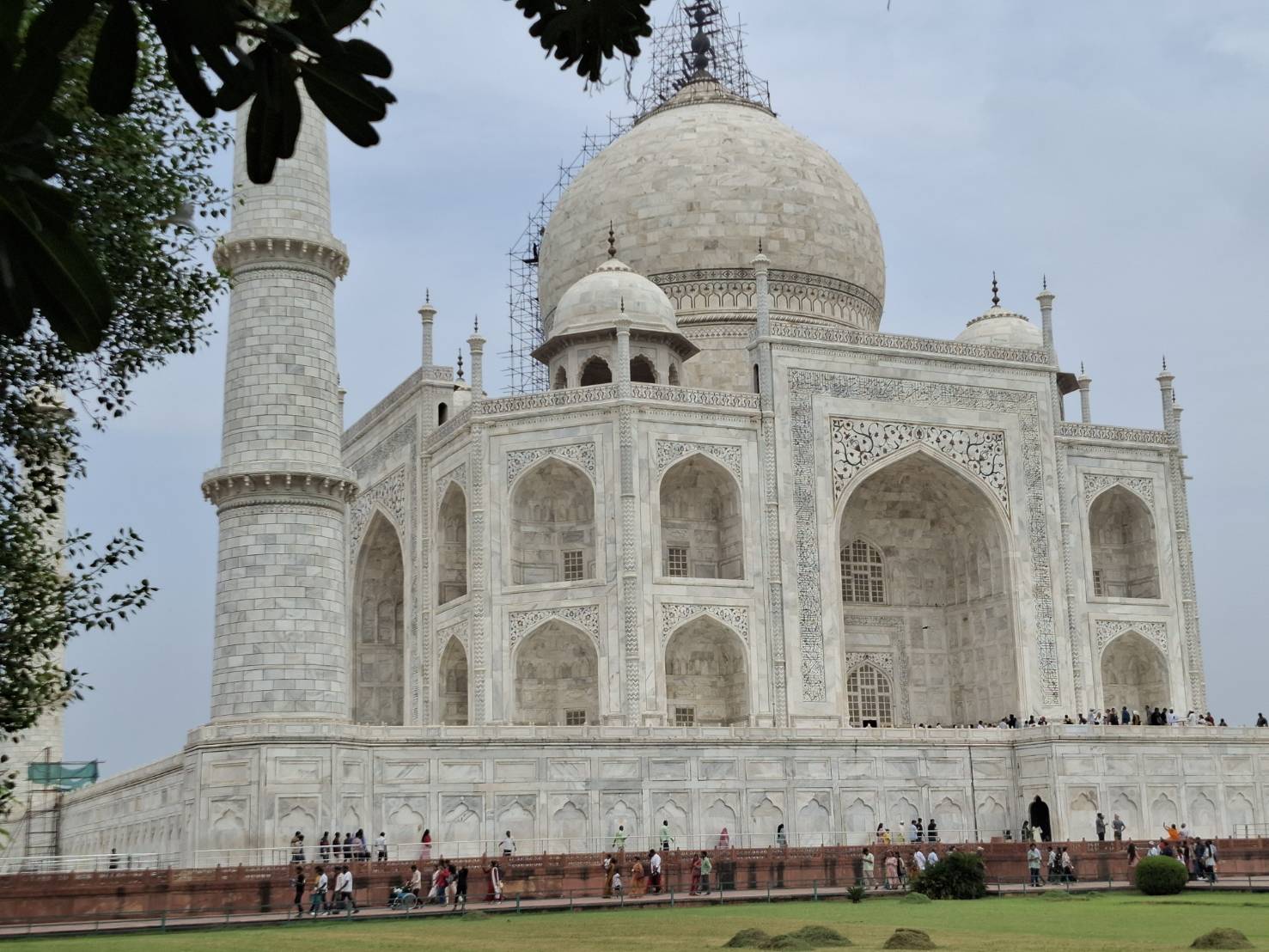
This should not be a one-way street, however. The Indian government will have to try harder to promote tourism in India to Thais and others in Southeast Asia. The potential is there as India offers some of the most beautiful buildings and palaces in the world, including the Taj Mahal, Jama Masjid, and much more beyond the holy sites of Buddhism such as Bodhgaya. Its culinary richness will take many visits to fully appreciate and visiting India is a sensory journey although one must be mindful of possible health impact from food poisoning and somewhat chaotic traffic and infrastructure. All in all, it is a relatively safe country to visit and people are friendly, if not very friendly.
We were told they are improving on the tourism experience, including pink police booths for female tourists, and better infrastructure. The relatively new Terminal 2 in Bengaluru, for example, is clean, modern and full of real plants that would put many airports in Southeast Asia, including Don Mueang, to shame.
Beyond tourism, an executive at CII said Thailand can serve as a base for Indian pharmaceutical industry to explore the rest of Southeast Asia.
At another meeting, Dr Rajiv Dahl, a director general at the Indian Council for Medical Research (ICMR) was asked by an American journalist during our meeting in New Delhi if the goal of seeing India becoming a developed nation by 2047 is realistic. Dahl’s answer reflected the determination and confidence of leading Indian officials today that I would hear time and again during our 10-day stay in India.
“We will become a developed country. We’re definitely going to get there.”
Dahl, who worked for the World Health Organization (WHO) prior to joining the Indian government, later added: “Vision needs to be set. Vision is set to be achieved. If we never think like that, we will never be [a developed nation].”
Whether India becomes a developed nation by the year 2047 or not (its current literacy rate is still 74.4 percent, according to the same CIA Factbook), we cannot discount the fact that India is also a major power, the most populous nation on earth, the world’s largest democracy, and a juggernaut in Asia (the word juggernaut is befittingly of Indian origin).
India’s strong presence in Southeast Asia is already multifaceted although the country may have been too busy to make it explicitly known until this trip for foreign journalists, including those from most ASEAN member states.
Here are a few examples:
Road connectivity from Northeast India through Myanmar to Thailand’s western province of Tak is being constructed, hopefully it will link India all the way to Vietnam by road. (The completion is partly pending on the political solution in Myanmar, however.)
India for nearly two decades has been assisting ASEAN member states such as Cambodia, Vietnam, Laos and Myanmar in restoring and conserving their major historical sites, including Angkor Wat and Bagan. An MOU to help conserve Indonesia’s Prambanan Temple Complex is about to be signed.
Executives at Indian Space Research Organisation (ISRO), told us that they are now among the world’s Top 6 in terms of space exploration. Its goal is to have its own space station in 2035. In August 2023, Chandrayaan-3 “became the first mission in the world to have successfully landed near the Moon’s south pole, making a historic milestone for space exploration,” according to a printed manuscript handed to us while visiting ISRO.
India has also established a ground station in Vietnam and is training ASEAN officials on using the data for agricultural and weather forecasting purposes. We should see more co-operation in the area as India, according to the CIA Factbook, “has one of the world’s largest space programs; designs, builds, launches, operates, and tracks the full spectrum of satellites, including communications, navigation, remote sensing (RS)…”
Hosting Indian Ocean Information Centre just outside New Delhi, with 82 countries participating, including Thailand, Indis helps monitor sea safety on the Indian Ocean all the way east to the Straite of Melacca.
India is able to produce domestically-made light fighter jets, known as Tejas, and sold some to Malaysia already.
India’s top institutes, such as the Indian Institute of Sciences (IISc), the National Law University in Bengaluru, and the Indian Institute of Management Bengaluru (IIMB) are already among top-rated schools in Asia, although it will have to try harder to promote their brands in order to attract top students from Southeast Asia. (IIMB, for example, admitted only one student from Southeast Asia, or from Singapore, last year.)
At the Office of Research and Information System for Developing Countries (RIS) our group were told that India is one of the most adversely affected countries when it comes to Trump’s tariff, with a lot of layoffs occurring.
“Trump talks like a hooligan,” an Indian speaker told us. “Some say India and the US are not friends anymore.”
The solution? Diversifying into other markets. “We want a multipolar Asia at the end of the day,” said, Atul Kaushik, an Indian speaker at RIS.
At RIS, we were told that India is a “genuine leader in pharmaceutical sector.” This is an area where Thailand can deepen the relationship, particularly given that medicines from India are generally more affordable than those from the West.
Conclusion: As India is looking East, Thailand, and not just its government but the Thai people, should look West to India as well, not just for more Indian tourists, and economic interests, but to balance the power between the US and China in Thailand.
What’s more, Thais would do well to discover parts of their cultural roots – Buddhism, Hinduism, and the language, that can be traced back to India. These will potentially have a profound positive impact on Thai culture and society in the future.
_________
Note: Pravit Rojanaphruk was in India on the invitation of India’s Ministry of External Affairs and would like to thank the Ministry, including the Embassy of India in Bangkok, for its kind hospitality.