




























BANGKOK — 3 April 2026, more than 80% of Thais lack confidence in the government’s ability to handle the economy if a prolonged Middle East conflict drives up energy costs, according to a survey by the King Prajadhipok’s Institute.
The poll, titled “Public Voices on the New Government’s Handling of the Energy and Economic Crisis”, was conducted between 27 and 30 March 2026 among 2,000 respondents aged 18 and over nationwide.
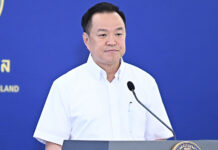
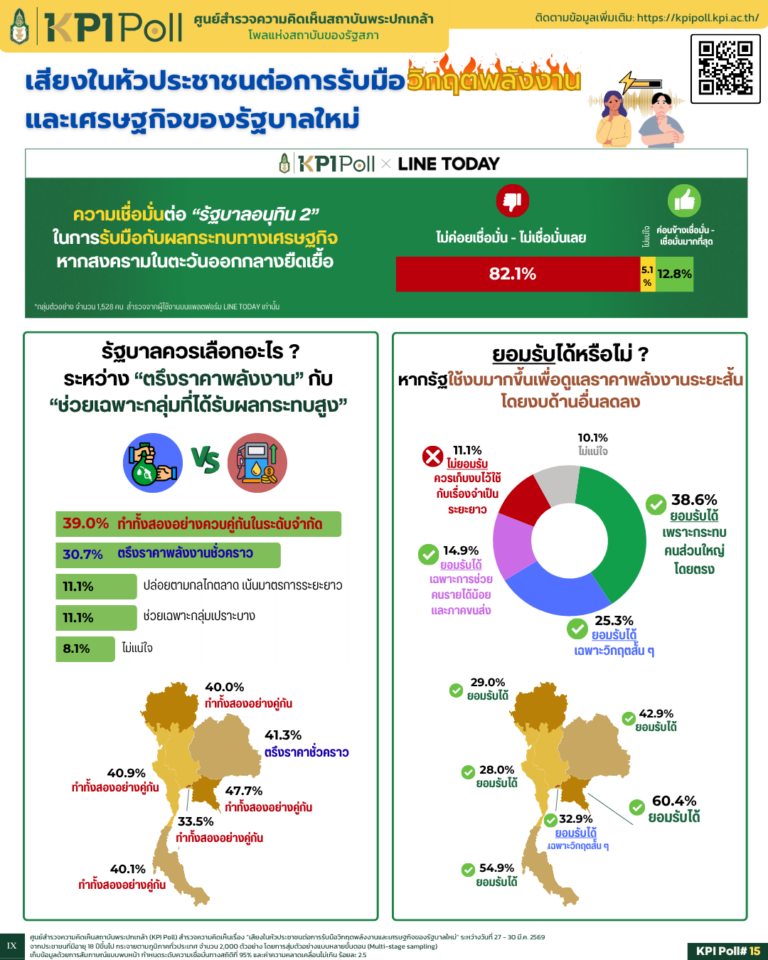
Results released by Issara Sereewattanawut, secretary-general of the institute and director of KPI Poll, showed that 82.1% of respondents had little or no confidence that the new administration, dubbed “Anutin 2”, could manage the economy if the conflict in the Middle East drags on. Only 12.8% expressed confidence, while 5.1% were unsure.
The survey also found that three in four respondents were highly concerned about economic stability, citing the rapid rise in energy prices. Many said the government had yet to introduce clear measures to cushion the impact of external shocks stemming from the conflict.
At the same time, public opinion was more divided over the use of state funds to subsidise energy prices. Some 38.6% said they would accept significant government spending in the short term, even if it meant less funding for other policies this year, as energy costs directly affect most people.
A further 25.3% said such spending would be acceptable only during a short-term crisis, while 14.9% supported targeted assistance limited to low-income groups and the transport sector.
However, 11.1% opposed the approach, arguing that public funds should be reserved for long-term priorities, and 10.1% said they were undecided.