




































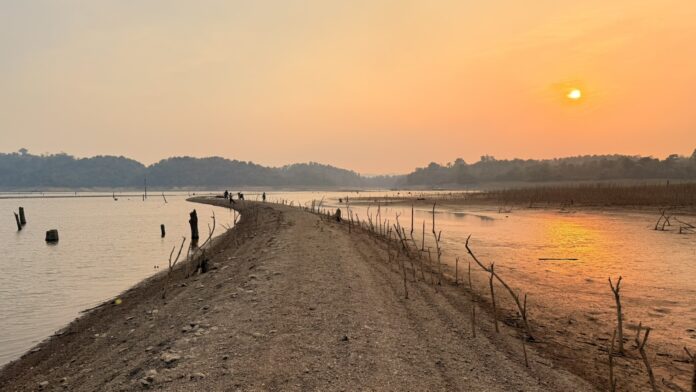
KANCHANABURI — Sections of the World War II-era “Death Railway” have re-emerged in Thailand’s Rantee River for the first time in 42 years, after water levels dropped significantly due to dam maintenance, drawing widespread attention online.
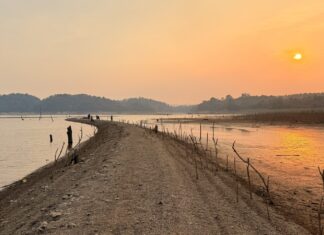
The resurfaced structures were discovered near Sangkhlaburi district following the release of water from the Vajiralongkorn Dam, exposing parts of the historic railway route that had long been submerged.
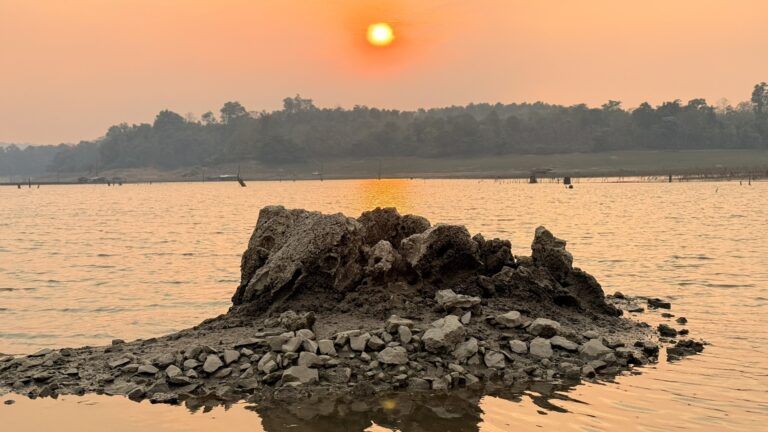
Local resident Kitti, 47, said he and a group of friends had been exploring the area when they found remnants of the railway stretching roughly eight kilometres from Rantee Bridge to a junction in Sangkhlaburi. The remains include a laterite roadbed about four metres wide and a 10-by-10-metre concrete water structure rising from the river, believed to have been used to refill steam locomotives in the past.
The phenomenon marks the first time since 1984, when the dam was completed, that such features have become visible. Authorities say the site may remain accessible only between April and June, depending on water levels.
Kitti encouraged visitors to visit the area during the Songkran holiday to experience the site and learn about its historical significance.
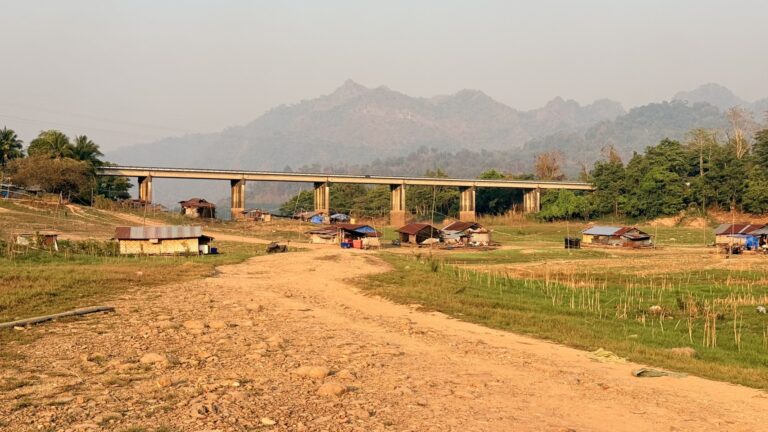
The so-called Death Railway was constructed by Japanese forces during World War II between October 1942 and October 1943 as a strategic supply route linking Thailand and Myanmar. The project relied heavily on forced labour, including Allied prisoners of war and Asian workers, many of whom died due to harsh conditions, disease and malnutrition.
After the war, parts of the railway were dismantled, while others were submerged following the construction of the dam. Today, the route remains a stark memorial to the human cost of the conflict and one of Southeast Asia’s most significant wartime legacies.