

































Thailand is advancing its ambition to become a regional hub for advanced electronics and AI-driven industries, as a new collaboration between Lumentum, national research institutions, and academia gains strong policy endorsement from the Ministry of Higher Education, Science, Research and Innovation (MHESI).
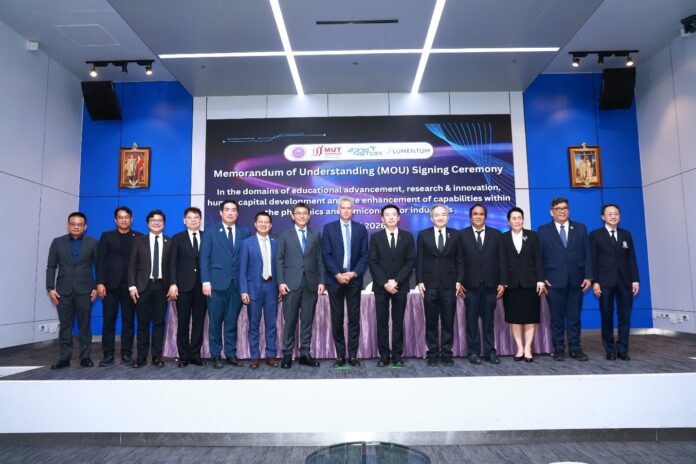
The partnership, formalized through a memorandum of understanding with Lumentum, Mahanakorn University of Technology (MUT) and the Thai Microelectronics Center (TMEC), reflects a coordinated national push to align industrial investment with education reform and workforce development. The initiative has received strong backing from Prof. Dr. Yodchanan Wongsawat, Minister of Higher Education, Science, Research and Innovation, underscoring the government’s commitment to positioning Thailand at the forefront of emerging technology sectors.
Framed within Thailand’s broader economic transition, the collaboration places particular emphasis on photonics, a critical technology underpinning AI systems and hyperscale data centers. As global demand for high-speed, energy-efficient data transmission accelerates, photonics is increasingly seen as a foundational layer of the digital economy.
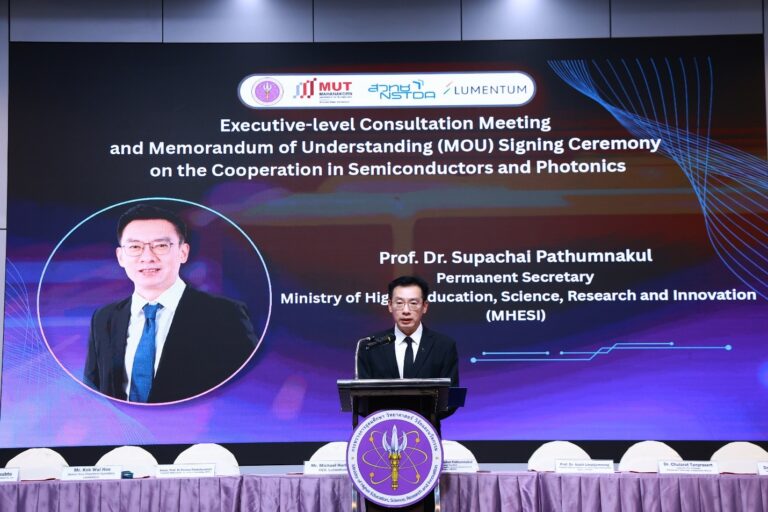
Prof. Dr. Supachai Pathumnakul, Permanent Secretary of MHESI, said the partnership reflects a strategic alignment between global industry leaders and Thailand’s long-term development goals. “This collaboration highlights Thailand’s readiness to strengthen its competitiveness by building a robust ecosystem that integrates education, research, and industry,” he said, pointing to semiconductors and photonics as key drivers of future economic growth.
Beyond signaling investor confidence, the initiative addresses a structural challenge in Thailand’s high-tech ambitions: the shortage of specialized research and development talent. While the country has a strong base in manufacturing, the transition toward advanced technology sectors requires a significant expansion of skilled human capital. Industry estimates suggest demand could reach approximately 12,000 professionals annually.
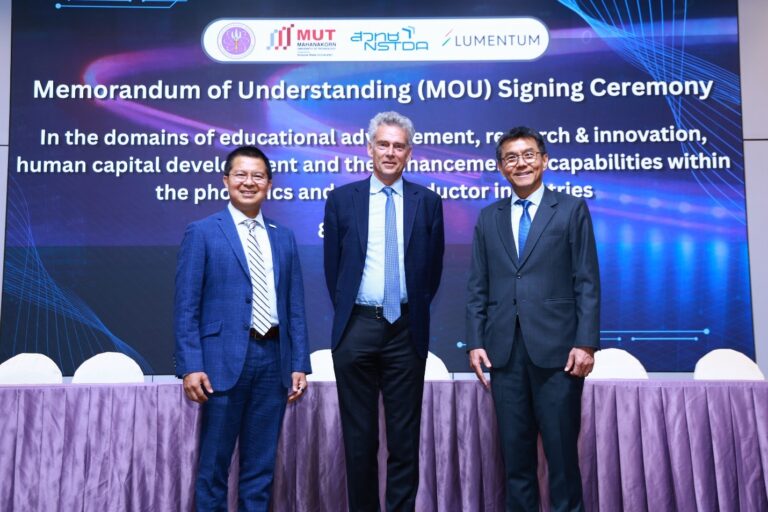
Mr. Michael Hurlston, President and Chief Executive Officer of Lumentum, described Thailand as an increasingly central node in the company’s global strategy. “Thailand has become a center of gravity for our operations. Our commitment goes beyond manufacturing, we are investing in R&D, talent development, and long-term collaboration with both academia and policymakers,” he said.
Mr. Kok Wai Hoo Senior Vice President Operation of Lumentum, added that the company is prepared to engage at a systemic level, including contributing to policy direction and academic programs. “We aim to help shape both the workforce and the policy landscape, supporting Thailand’s goal of becoming a leading AI player in Southeast Asia,” he noted.
A defining feature of the initiative is its integrated approach to education and industry. Lumentum will support curriculum co-development, provide advanced laboratory equipment, and enable hands-on training through dedicated photonics labs. This model is designed to ensure that graduates are equipped with industry-relevant skills and can contribute immediately to high-tech sectors.
Dr. Adisorn Tuantranont, Director of the Thai Microelectronics Center, emphasized the strategic importance of building domestic expertise in emerging technologies. “Developing photonics capabilities requires not only infrastructure but also a continuous pipeline of skilled personnel. This collaboration creates a national platform for advancing both,” he said.

From the academic side, the partnership marks a shift toward application-oriented research and innovation. Prof. Dr. Panavy Pookaiyaudom, President of Mahanakorn University of Technology, said the university is repositioning itself to bridge the gap between research and industrial deployment. “Our goal is to transform research into real-world applications, enabling innovation to move from the laboratory to commercial production,” she said.
Structured as a five-year framework, the agreement outlines long-term collaboration in talent development, infrastructure investment, and research commercialization. It also reflects a broader policy direction to foster deeper integration between public institutions and private sector leaders.
From a public policy perspective, the strong involvement of MHESI signals a shift toward more proactive state facilitation in high-tech industry development. By aligning educational reform with industrial demand and global technology trends, Thailand is seeking to strengthen its position within the global electronics and semiconductor value chain.
As competition intensifies across the region, the success of this initiative will depend on Thailand’s ability to translate policy support and industry collaboration into scalable outcomes. If effectively implemented, the partnership could serve as a model for how emerging economies build competitive advantage in next-generation technologies.