
薬物依存は病気ではない
Drug addiction is not a disease
☆How to explain Andrew Weil''s The Natural Mind: A Revolutionary Approach to the Drug Problem, 2004 ?
★アンドルー・ワイルの『ナチュラル・マインド:薬物問題への革新的なアプローチ』(2004年)は、薬物の使用と意識について独自の視点を提供している。
| Andrew Weil's "The Natural Mind: A Revolutionary Approach to the Drug Problem" (2004) offers a unique perspective on the use of drugs and consciousness. Here’s a detailed explanation of the book's key themes and arguments: | El
libro de Andrew Weil «The Natural Mind: A Revolutionary Approach to the
Drug Problem» (2004) ofrece una perspectiva única sobre el consumo de
drogas y la conciencia. A continuación te explico con detalle los temas
y argumentos principales del libro: | アンドルー・ワイルの『ナチュラル・マインド:薬物問題への革新的なアプローチ』(2004年)は、薬物の使用と意識について独自の視点を提供している。本書の主要なテーマと論点について、以下に詳しく解説する。 |
| 1. Natural States of Consciousness |
1. Estados naturales de conciencia | 1. 意識の自然な状態 |
| Concept of
Natural Mind: Weil argues that humans possess a natural state of
consciousness that can be accessed without drugs. He emphasizes that
this state can be achieved through methods like meditation, physical
activity, and creative expression. |
El
concepto de la mente natural: Weil sostiene que los seres humanos
poseen un estado natural de conciencia al que se puede acceder sin
necesidad de drogas. Destaca que este estado se puede alcanzar mediante
métodos como la meditación, la actividad física y la expresión creativa. | 「自然の心」の概念:ワイルは、人間には薬物を使わなくても到達できる自然な意識状態があると主張する。彼は、瞑想や身体活動、創造的な表現といった方法を通じて、この状態に達することができると強調している。 |
| Critique of
Drug Use: The book suggests that many people turn to drugs to alter
their consciousness because they are unaware of or unable to access
their natural states. |
Crítica
al consumo de drogas: El libro sugiere que muchas personas recurren a
las drogas para alterar su conciencia porque desconocen sus estados
naturales o no son capaces de acceder a ellos. | 薬物使用への批判:本書は、多くの人々が自らの自然な状態に気づいていないか、あるいはその状態にアクセスできないために、意識を変えるために薬物に手を出すと示唆している。 |
| 2. Cultural and Social Context of Drug Use |
2. Contexto cultural y social del consumo de drogas | 2. 薬物使用の文化的・社会的背景 |
| Historical
Perspective: Weil examines the historical use of drugs across various
cultures, noting that substances have often played significant roles in
rituals and social interactions. |
Perspectiva
histórica: Weil analiza el uso histórico de las drogas en diversas
culturas y señala que estas sustancias han desempeñado a menudo un
papel importante en los rituales y las interacciones sociales. | 歴史的視点:ワイルは、さまざまな文化における薬物の歴史的な使用について考察し、物質が儀礼や社会的交流においてしばしば重要な役割を果たしてきたと指摘している。 |
| Social Influences: He highlights how societal pressures and cultural norms shape attitudes toward drug use, making it a complex issue beyond individual choice. | Influencias
sociales: Destaca cómo las presiones sociales y las normas culturales
determinan las actitudes hacia el consumo de drogas, lo que lo
convierte en un tema complejo que va más allá de la elección individual. | 社会的影響:彼は、社会的圧力や文化的規範が薬物使用に対する態度をどのように形成し、それが個人の選択を超えた複雑な問題となっているかを強調している。 |
| 3. Understanding Addiction |
3. Entender la adicción | 3. 依存症の理解 |
| Addiction as
a Phenomenon: Weil reframes addiction not merely as a disease but as a
complex interplay of psychological, social, and environmental factors. |
La
adicción como fenómeno: Weil replantea la adicción no solo como una
enfermedad, sino como una compleja interacción de factores
psicológicos, sociales y ambientales. | 「依存症という現象」:ワイルは、依存症を単なる病気としてではなく、心理的、社会的、環境的要因が複雑に絡み合ったものとして再定義している。 |
| Healing and
Support: He advocates for a holistic approach to overcoming addiction,
emphasizing the importance of personal exploration and community
support rather than solely medical treatment. |
Sanación
y apoyo: Aboga por un enfoque holístico para superar la adicción,
haciendo hincapié en la importancia de la reflexión personal y el apoyo
de la comunidad, en lugar de limitarse únicamente al tratamiento médico. | 癒しと支援:彼は、依存症を克服するための包括的なアプローチを提唱しており、単なる医療的治療だけでなく、個人的な自己探求と地域社会の支援の重要性を強調している。 |
| 4. Legalization and Regulation |
4. Legalización y regulación |
4. 合法化と規制 |
| Advocacy for Change: Weil
discusses the need for re-evaluating drug policies, suggesting that
legalization and proper regulation could lead to more effective
management of drug-related issues. |
Abogando por el cambio: Weil
habla de la necesidad de replantearse las políticas sobre drogas y
sugiere que la legalización y una regulación adecuada podrían llevar a
una gestión más eficaz de los problemas relacionados con las drogas. |
変革を求める提言:ワイルは薬物政策の再評価の必要性を論じ、合法化と適切な規制によって薬物関連の問題をより効果的に管理できると示唆している。 |
| Focus on Education: He argues
for an educational approach that informs individuals about the risks
and benefits of drug use, promoting informed decision-making. |
Enfoque educativo: Aboga por un
enfoque educativo que informe a las personas sobre los riesgos y
beneficios del consumo de drogas, promoviendo la toma de decisiones
informadas. |
教育への焦点:彼は、薬物使用のリスクとメリットについて個人に情報を提供し、十分な情報に基づいた意思決定を促すような教育アプローチを提唱している。 |
| 5. Expanding Consciousness and Self-Discovery | 5. La expansión de la conciencia y el autodescubrimiento |
5. 意識の拡大と自己発見 |
| Personal Growth: The book highlights the importance of expanding consciousness for personal development and self-understanding. |
Crecimiento personal: El libro
destaca la importancia de ampliar la conciencia para el desarrollo
personal y el autoconocimiento. |
個人的成長:本書は、自己啓発と自己理解のために意識を広げる重要性を強調している。 |
| Alternative Practices: Weil
presents various non-drug methods for achieving altered states of
consciousness, such as mindfulness practices, yoga, and artistic
endeavors. |
Prácticas alternativas: Weil
presenta varios métodos sin drogas para alcanzar estados alterados de
conciencia, como las prácticas de atención plena, el yoga y las
actividades artísticas. |
代替的な実践法:ワイルは、マインドフルネスの実践、ヨガ、芸術活動など、意識変容状態を達成するためのさまざまな非薬物療法を紹介している。 |
| Conclusion "The Natural Mind" challenges conventional views on drug use and addiction, advocating for a more nuanced understanding of consciousness and the human experience. Weil’s insights encourage readers to explore natural methods of enhancing awareness and to reconsider societal attitudes towards drugs, ultimately promoting healthier and more informed approaches to consciousness and well-being. |
Conclusión «The Natural Mind» cuestiona las opiniones convencionales sobre el consumo de drogas y la adicción, y aboga por una comprensión más matizada de la conciencia y la experiencia humana. Las ideas de Weil animan a los lectores a explorar métodos naturales para mejorar la conciencia y a replantearse las actitudes sociales hacia las drogas, promoviendo en última instancia enfoques más saludables y mejor informados sobre la conciencia y el bienestar. |
結論 『The Natural Mind』は、薬物使用や依存症に関する従来の見方に異を唱え、意識や人間の経験について、より多角的な理解を提唱している。ウェイルの洞察は、読者に意 識を高める自然な方法を模索し、薬物に対する社会の態度を再考するよう促し、最終的には意識とウェルビーイングに対する、より健全で知識に基づいたアプ ローチを推進するものである。 |
| Monica AI |
☆ナチュラル・マインド : ドラッグと意識にたいする新しい見方 / アンドルー・ワイル著 ; 名谷一郎訳, 草思社 , 1977
| 1.本書の意図するところ | What This Book Is About |
|
| 2.人はなぜドラッグを用いるのか |
Why People Take Drugs |
・セットとセッティング |
| 3.何がまちがっているのか |
Is Anything Wrong with It? |
・対症療法(アロパシー)に対する批判 |
| 4. マリファナについて誰もが知りたがらないこと |
What No One Wants to Know about Marihuana |
|
| 5. アマゾンからの手がかり |
Clues from the Amazon |
・アヤワスカ(115) |
| 6. ストレート思考の世界 |
The Topography of Straightland | ・ストレート思考/ストーンド思考 ・アロパシー ・カスタネダ(→ドンファンの教え) |
| 7. ストーンド思考の世界への旅=トリップ |
A Trip to Stonesville |
|
| 8. ドラッグ問題を解決する唯一の道 |
The Only Solution to the Drug Problem |
・ドラッグ濫用の社会的抑制政策のまちがい(200) ・シナノン |
| 9. これからとるべき道 |
Where to Go from Here |
・伝統社会のドラッグ利用から学び、その利用の哲学や精神性を尊重する方向に世間の考え方を導いてゆく。 |
| 後記 |
Acknowledgments Afterword Works Cited Suggested Reading Index |
・通常の内科医や精神科医の反応 1)対症療法(アロパシー)に対するワイルの批判は過激すぎる 2)ドラッグの利用の有無にかかわらず夭折する人も長命する人もいる。ドラッグを含めて医療には死という課題をどう包摂していくのかが重要 3)ヘロインの禁断治療は深刻なので、ワイルがいうように「大したものではない」という主張に対する違和感 4)子どもの新奇性への関心や冒険を人間のドラッグ利用とワイルは関連づけているが、(誰もが新しいドラッグ)経験を求めるというワイルの主張は正しいか? |
☆知覚の扉 ; 天国と地獄 / オルダス・ハックスレー著 ; 今村光一訳, 東京 : 河出書房新社 , 1976.3/The Doors of Perception, 1954
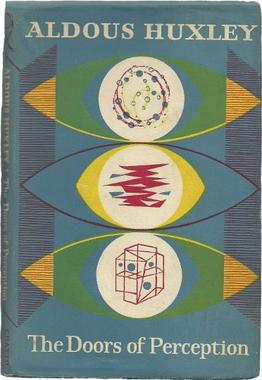
| The Doors of
Perception is an autobiographical book written by Aldous Huxley.
Published in 1954, it elaborates on his psychedelic experience under
the influence of mescaline in May 1953. Huxley recalls the insights he
experienced, ranging from the "purely aesthetic" to "sacramental
vision",[1] and reflects on their philosophical and psychological
implications. In 1956, he published Heaven and Hell, another essay
which elaborates these reflections further. The two works have since
often been published together as one book; the titles of both come from
William Blake's 1793 book The Marriage of Heaven and Hell.[2][3] The Doors of Perception provoked strong reactions for its evaluation of psychedelic drugs as facilitators of mystical insight with great potential benefits for science, art, and religion. While many found the argument compelling, others including German writer Thomas Mann, Vedantic monk Swami Prabhavananda, Jewish philosopher Martin Buber, and Orientalist scholar Robert Charles Zaehner countered that the effects of mescaline are subjective and should not be conflated with objective religious mysticism. Huxley himself continued to take psychedelics for the rest of his life, and the understanding he gained from them influenced his final novel Island, published in 1962. |
『知覚の扉』は、オルダス・ハクスリーによる自伝的著作である。
1954年に出版された本書は、1953年5月にメスカリンの影響下で彼が体験したサイケデリック体験について詳述している。ハクスリーは、「純粋に審美
的な」ものから「聖餐的な幻視」[1]に至るまで、自身が体験した洞察を回想し、それらの哲学的・心理的意味合いについて考察している。1956年には、
これらの考察をさらに掘り下げたエッセイ『天国と地獄』を出版した。以来、この2作品はしばしば1冊の本として併刊されており、両書のタイトルはウィリア
ム・ブレイクが1793年に著した『天国と地獄の結婚』に由来している[2][3]。 『知覚の扉』は、サイケデリック薬物を、科学、芸術、宗教にとって大きな恩恵をもたらす可能性を秘めた神秘的洞察の促進剤として評価した点で、強い反響を 呼んだ。多くの人がその主張に説得力を感じた一方で、ドイツの作家トーマス・マン、ヴェーダーンタの僧スワミ・プラバヴァナンダ、ユダヤ人哲学者マルティ ン・ブーバー、オリエンタリズム学者ロバート・チャールズ・ゼーナーらを含む一部の人々は、メスカリンの作用は主観的なものであり、客観的な宗教的ミス ティシズムと混同すべきではないと反論した。ハクスリー自身は生涯を通じてサイケデリック薬物を摂取し続け、そこから得た理解は、1962年に出版された 彼の最後の小説『アイランド』に影響を与えた。 |
| Background William Blake William Blake (1757–1827), who inspired the book's title and writing style, was an influential English artist most notable for his paintings and poetry. The "doors of perception" was originally a metaphor written by Blake in his 1790 book, The Marriage of Heaven and Hell. The metaphor was used to represent Blake's feelings about mankind's limited perception of the reality around them: If the doors of perception were cleansed every thing would appear to man as it is, Infinite. For man has closed himself up, till he sees all things thro' narrow chinks of his cavern.[4] Mescaline Main article: Mescaline Mescaline is the principal active psychedelic agent of the peyote cactus, which has been used in Native American religious ceremonies for thousands of years.[5] A German pharmacologist, Arthur Heffter, isolated the alkaloids in the peyote cactus in 1897. These included mescaline, which he showed through a combination of animal and self-experiments was the compound responsible for the psychoactive properties of the plant. In 1919, Ernst Späth, an Austrian chemist, synthesised the drug.[6] Although personal accounts of taking the cactus had been written by psychologists such as Weir Mitchell in the US and Havelock Ellis in the UK during the 1890s, the German-American Heinrich Klüver was the first to systematically study its psychological effects in a small book called Mescal and Mechanisms of Hallucinations published in 1928. The book stated that the drug could be used to research the unconscious mind.  Close up of a peyote cactus growing in the wild. A peyote cactus, from which mescaline is derived. In the 1930s, an American anthropologist Weston La Barre, published The Peyote Cult, the first study of the ritual use of peyote as an entheogen drug amongst the Huichol people of western Mexico. La Barre noted that the Native American users of the cactus took it to obtain visions for prophecy, healing and inner strength.[7] Most psychiatric research projects into the drug in the 1930s and early 1940s tended to look at the role of the drug in mimicking psychosis.[8] In 1947 however, the US Navy undertook Project Chatter, which examined the potential for the drug as a truth revealing agent. In the early 1950s, when Huxley wrote his book, mescaline was still regarded as a research chemical rather than a drug and was listed in the Parke-Davis catalogue with no controls.[9] Mescaline also played a paramount part in influencing the beat generation of poets and writers of the later 1940s to the early 1960s. Most notable, William S. Burroughs,[10] Jack Kerouac,[11] and Allen Ginsberg[12]—all of whom were respected contemporary beat artists[13] of their generation. Theirs and many other contemporary artists' works were heavily influenced by over-the-counter forms of mescaline during this time, due to its potency and attainability. Huxley had been interested in spiritual matters and had used alternative therapies for some time. In 1936 he told TS Eliot that he was starting to meditate,[14] and he used other therapies too; the Alexander Technique and the Bates method of seeing had particular importance in guiding him through personal crises.[15] In the late 1930s he had become interested in the spiritual teaching of Vedanta and in 1945 he published The Perennial Philosophy, which set out a philosophy that he believed was found amongst mystics of all religions. He had known for some time of visionary experience achieved by taking drugs in certain religions. |
背景 ウィリアム・ブレイク 本書のタイトルと文体に影響を与えたウィリアム・ブレイク(1757–1827)は、絵画と詩で最もよく知られる、影響力のある英国の芸術家である。「知 覚の扉」とは、もともとブレイクが1790年の著書『天国と地獄の結婚』の中で用いた比喩である。この比喩は、人間が周囲の現実に対して持つ知覚が限られ ていることに対するブレイクの思いを表現するために用いられたものである: もし知覚の扉が清められれば、万物は本来の姿、すなわち無限のものとして人の目に映るだろう。なぜなら、人は自らを閉じ込め、洞窟の狭い隙間を通してのみ万物を見るようになっているからだ。[4] メスカリン 本記事:メスカリン メスカリンはペヨーテサボテンの主要な活性幻覚成分であり、数千年にわたりネイティブ・アメリカンの宗教儀式で使用されてきた。[5] ドイツの薬理学者アーサー・ヘフターは、1897年にペヨーテサボテンのアルカロイドを単離した。その中にはメスカリンが含まれており、彼は動物実験と自 己実験を組み合わせることで、メスカリンこそがこの植物の精神作用を引き起こす化合物であることを実証した。1919年、オーストリアの化学者エルンス ト・シュペートがこの薬物を合成した。[6] 1890年代には、米国のウィアー・ミッチェルや英国のハヴロック・エリスといった心理学者によって、このサボテンを摂取した個人的な体験記が記されてい たが、その心理的効果を体系的に研究したのは、ドイツ系アメリカ人のハインリヒ・クリューヴァーが1928年に出版した小著『メスカルと幻覚のメカニズ ム』において初めてであった。同書では、この薬物が無意識の研究に利用できると述べられていた。 野生で生育するペヨーテサボテンのクローズアップ。 メスカリンの原料となるペヨーテサボテン。 1930年代、アメリカの人類学者ウェストン・ラ・バレは『ペヨーテの儀式(The Peyote Cult)』を出版した。これは、メキシコ西部のウィチョール族の間で、ペヨーテがエンセオジェン(精神変容薬)として儀式的に使用されていることを扱っ た最初の研究である。ラ・バレは、このサボテンを使用するネイティブアメリカンたちが、予言、癒やし、そして内なる力を得るための幻視を得るためにこれを 摂取していると指摘した。[7] 1930年代から1940年代初頭にかけて行われたこの薬物に関する精神医学的研究の多くは、精神病を模倣する役割に焦点を当てた傾向があった。[8] しかし1947年、米海軍は「プロジェクト・チャッター」を実施し、この薬物が真実を吐露させる薬剤としての可能性を調査した。1950年代初頭、ハクス リーが著書を執筆した当時、メスカリンは依然として薬物というよりは研究用化学物質と見なされており、パーク・デイビス社のカタログには規制なしとして掲 載されていた。[9] また、メスカリンは1940年代後半から1960年代初頭にかけてのビート・ジェネレーションの詩人や作家たちに多大な影響を与えた。特に注目すべきは、 ウィリアム・S・バロウズ[10]、ジャック・ケルアック[11]、アレン・ギンズバーグ[12]であり、彼らは皆、同世代において尊敬を集めた現代の ビート・アーティスト[13]であった。当時、メスカリンはその強力な作用と入手しやすさから、彼らや他の多くの現代アーティストの作品に多大な影響を与 えた。 ハクスリーは以前から精神的な事柄に関心を持ち、代替療法を長らく実践していた。1936年にはT・S・エリオットに対し、瞑想を始めたと語っており [14]、他にも様々な療法を取り入れていた。中でもアレクサンダー・テクニックとベイツ視法は、彼が個人的な危機を乗り越える上で特に重要な役割を果た した。[15] 1930年代後半にはヴェーダーンタの精神的な教えに関心を寄せるようになり、1945年には『永遠の哲学』を出版した。この著作では、あらゆる宗教の神 秘家たちの中に共通して見出されるという彼の哲学が展開されている。彼は以前から、特定の宗教において薬物摂取によって得られる幻視体験の存在を知ってい た。 |
| Research by Humphry Osmond Huxley had first heard of peyote use in ceremonies of the Native American Church in New Mexico, soon after coming to the United States in 1937.[16] He first became aware of the cactus's active ingredient, mescaline, after reading an academic paper written by Humphry Osmond, a British psychiatrist working at Weyburn Mental Hospital, Saskatchewan, in early 1952. Osmond's paper set out results from his research into schizophrenia, using mescaline that he had been undertaking with colleagues, doctors Abram Hoffer and John Smythies.[17][18] In the epilogue to his novel The Devils of Loudun, published earlier that year, Huxley had written that drugs were "toxic short cuts to self-transcendence".[19] For the Canadian writer George Woodcock, Huxley had changed his opinion because mescaline was not addictive and appeared to be without unpleasant physical or mental side-effects. Further, he had found that hypnosis, autohypnosis and meditation had apparently failed to produce the results he wanted.[20] |
ハンフリー・オズモンドによる研究 ハクスリーは、1937年にアメリカに渡った直後、ニューメキシコ州のネイティブ・アメリカン・チャーチ(NAC)の儀式におけるペヨーテの使用について 初めて耳にした。[16] 彼がこのサボテンの有効成分であるメスカリンの存在を初めて知ったのは、1952年初頭、サスカチュワン州のウェイバーン精神病院に勤務していた英国人精 神科医ハンフリー・オズモンドが執筆した学術論文を読んだ後のことだった。オズモンドの論文は、同僚であるアブラム・ホッファー医師およびジョン・スミ シーズ医師と共に進めていた、メスカリンを用いた統合失調症に関する研究結果をまとめたものであった。[17] [18] その年の初めに出版された小説『ラウドンの悪魔たち』のエピローグで、ハクスリーは薬物を「自己超越への有害な近道」であると記していた。[19] カナダの作家ジョージ・ウッドコックによれば、ハクスリーが考えを変えたのは、メスカリンには依存性がなく、不快な身体的・精神的な副作用もないように見 えたからであった。さらに、催眠、自己催眠、瞑想では、彼が望んでいた結果が得られなかったことも判明していた。[20] |
| Huxley's experience with mescaline After reading Osmond's paper, Huxley sent him a letter on Thursday, 10 April 1952, expressing interest in the research and putting himself forward as an experimental subject. His letter explained his motivations as being rooted in an idea that the brain is a reducing valve that restricts consciousness, and hoping mescaline might help access a greater degree of awareness (an idea he later included in the book).[21] Reflecting on his stated motivations, Woodcock wrote that Huxley had realised that the ways to enlightenment were many, including prayer and meditation. He hoped drugs might also break down the barriers of the ego, and both draw him closer to spiritual enlightenment and satisfy his quest as a seeker of knowledge.[22] In a second letter on Saturday, 19 April, Huxley invited Osmond to stay while he was visiting Los Angeles to attend the American Psychiatric Association convention.[23] He also wrote that he looked forward to the mescaline experience and reassured Osmond that his doctor did not object to his taking it.[21] Huxley had invited his friend, the writer Gerald Heard, to participate in the experiment; although Heard was too busy this time, he did join him for a session in November of that year.[24] |
ハクスリーのメスカリン体験 オズモンドの論文を読んだ後、ハクスリーは1952年4月10日(木)に彼に手紙を送り、その研究に関心を示し、自ら実験被験者となることを申し出た。そ の手紙の中で、彼は自身の動機について、脳は意識を制限する「減圧弁」であるという考えに根ざしており、メスカリンがより高い次元の意識へのアクセスを助 けてくれることを期待していると説明した(この考えは後に彼の著書にも盛り込まれている)。[21] 彼が述べた動機を振り返り、ウッドコックは、ハクスリーが祈りや瞑想を含め、悟りへの道は多岐にわたることを認識していたと記している。彼は、薬物が自我 の障壁を打ち破り、精神的な悟りに近づくと同時に、知識を求める探求者としての自身の探求も満たしてくれることを望んでいた。[22] 4月19日(土)の2通目の手紙で、ハクスリーは、米国精神医学会の大会に出席するためにロサンゼルスを訪れる間、オズモンドに滞在するよう招待した。 [23] また、彼はメスカリン体験を楽しみにしていると書き、主治医が摂取に反対していないことをオズモンドに保証した。[21] ハクスリーは友人の作家ジェラルド・ハードを実験に参加するよう誘っていた。ハードは今回は多忙であったが、その年の11月に行われたセッションには参加 した。[24] |
| Day of the experiment Osmond arrived at Huxley's house in West Hollywood on Sunday, 3 May 1953, and recorded his impressions of the famous author as a tolerant and kind man, although he had expected otherwise. The psychiatrist had misgivings about giving the drug to Huxley, and wrote, "I did not relish the possibility, however remote, of being the man who drove Aldous Huxley mad," but instead found him an ideal subject. Huxley was "shrewd, matter-of-fact and to the point" and his wife Maria "eminently sensible".[25] Overall, they all liked each other, which was very important when administering the drug. The mescaline was slow to take effect, but Osmond saw that after two and a half hours the drug was working and after three hours Huxley was responding well.[26] The experience lasted eight hours and both Osmond and Maria remained with him throughout.[27] The experience started in Huxley's study before the party made a seven block trip to The Owl Drug (Rexall) store, known as World's Biggest Drugstore, at the corner of Beverly and La Cienega Boulevards. Huxley was particularly fond of the shop and the large variety of products available there (in stark contrast to the much smaller selection in English chemist's shops). There he considered a variety of paintings in art books. For one of his friends, Huxley's poor eyesight manifested in both a great desire to see and a strong interest in painting, which influenced the strong visual and artistic nature of his experience.[28] After returning home to listen to music, eat, and walk in the garden, a friend drove the threesome to the hills overlooking the city. Photographs show Huxley standing, alternately arms on hips and outstretched with a grin on his face. Finally, they returned home and to ordinary consciousness.[29] One of Huxley's friends who met him on the day said that despite writing about wearing flannel trousers, he was actually wearing blue jeans. Huxley admitted to having changed the fabric as Maria thought he should be better dressed for his readers.[30] Osmond later said he had a photo of the day that showed Huxley wearing flannels.[31] |
実験当日 1953年5月3日(日)、オズモンドはウェスト・ハリウッドにあるハクスリーの自宅を訪れ、当初は別の印象を抱いていたものの、この著名な作家を寛容で 親切な人物だと感じたことを記録している。精神科医はハクスリーに薬物を投与することに懸念を抱いており、「たとえその可能性がどれほど低くとも、アルド ス・ハクスリーを狂気に追いやる人物になるかもしれないという事態を、私は快く思わなかった」と記しているが、実際には彼こそが理想的な被験者であると判 断した。ハクスリーは「聡明で、現実的かつ要点を押さえた人物」であり、妻のマリアは「極めて分別のある女性」であった。[25] 全体として、彼らは互いに好感を抱いており、これは薬物を投与する上で非常に重要なことだった。メスカリンの効き目は遅かったが、オズモンドは2時間半後 に薬が効き始め、3時間後にはハクスリーが良好な反応を示しているのを確認した。[26] 体験は8時間続き、オズモンドとマリアは終始ハクスリーのそばに付き添った。[27] 体験はハクスリーの書斎で始まり、その後一行は7ブロック先にある「世界最大のドラッグストア」として知られる『The Owl Drug(レキソール)』店(ビバリー・ブールバードとラ・シエネガ・ブールバードの角)へと向かった。ハクスリーはこの店と、そこで扱われている多種多 様な商品を特に気に入っていた(英国の薬局の品揃えがはるかに少ないこととは対照的だった)。そこで彼は、美術書に掲載された様々な絵画を鑑賞した。友人 たちの一人が指摘したように、ハクスリーの視力の弱さは、物を見たいという強い欲求と絵画への深い関心の両方に表れており、それが彼の体験に強く視覚的か つ芸術的な性質をもたらした。[28] 帰宅して音楽を聴き、食事をし、庭を散歩した後、友人が3人を車で街を見下ろす丘へと連れて行った。写真には、ハクスリーが立ち、片手を腰に当てたり、両 手を広げたりしながら、ニヤリと笑っている姿が写っている。やがて彼らは家に戻り、通常の意識状態に戻った。[29] 当日ハクスリーと会った友人の一人は、彼がフランネルのズボンを履いていたと記述していたにもかかわらず、実際にはブルージーンズを履いていたと語った。 ハクスリーは、マリアが読者のために彼にはもっときちんとした服装をすべきだと考えたため、生地を変えたことを認めた。[30] オズモンドは後に、ハクスリーがフランネルを履いている様子を写した当日の写真を持っていると述べた。[31] |
Compilation of the book One of the copies of William Blake's unique hand painted editions, created for the original printing of the poem. The line from which Huxley draws the title is in the second to last stanza. This image represents Copy H, Plate 14 of The Marriage of Heaven and Hell which is currently held at The Fitzwilliam Museum.[32] After Osmond's departure, Huxley and Maria left to go on a three-week, 5,000-mile (8,000-kilometre) car trip around the national parks of the North West of the US. After returning to Los Angeles, he took a month to write the book.[33] The Doors of Perception was the first book Huxley dedicated to his wife Maria.[34] Harold Raymond, at his publisher Chatto and Windus, said of the manuscript, "You are the most articulate guinea pig that any scientist could hope to engage."[31] The title was taken from William Blake's poem The Marriage of Heaven and Hell: If the doors of perception were cleansed every thing would appear to man as it is: Infinite. For man has closed himself up, till he sees all things thro' narrow chinks of his cavern.[35] Huxley had used Blake's metaphor in The Doors of Perception while discussing the paintings of Vermeer and the Nain brothers, and previously in The Perennial Philosophy, once in relation to the use of mortification as a means to remove persistent spiritual myopia and secondly to refer to the absence of separation in spiritual vision.[36] Blake had a resounding impact on Huxley, who shared many of Blake's earlier revelations and interests in art and literature.[37] In the early 1950s, Huxley had suffered a debilitating attack of the eye condition iritis. This increased his concern for his already poor eyesight and much of his work in the early part of the decade had featured metaphors of vision and sight.[38] |
本書の編纂 この詩の初版のために制作された、ウィリアム・ブレイクによる唯一無二の手描き版の一冊。ハクスリーがタイトルを引用した一節は、最後から2番目の連にあ る。この画像は、現在フィッツウィリアム美術館に所蔵されている『天国と地獄の結婚』の「H」版、第14版画を表している。[32] オズモンドが去った後、ハクスリーとマリアは、米国北西部の国立公園を巡る3週間、5,000マイル(8,000キロメートル)の自動車旅行に出発した。 ロサンゼルスに戻った後、彼は1ヶ月をかけて本書を執筆した。[33]『知覚の扉』は、ハクスリーが妻マリアに捧げた最初の著書であった。[34] 出版社のチャット・アンド・ウィンダス社に勤めるハロルド・レイモンドは、この原稿について「あなたは、科学者が望む限り最も雄弁な実験台だ」と述べた。 [31] タイトルはウィリアム・ブレイクの詩『天国と地獄の結婚』から引用されたものである: もし知覚の扉が清められれば、万物は人間にありのままの姿、すなわち無限として現れるだろう。なぜなら、人間は自らを閉じ込め、洞窟の狭い隙間を通してのみ万物を見るようになっているからだ。[35] ハクスリーは『知覚の扉』の中でフェルメールやネイン兄弟の絵画について論じる際に、またそれ以前の『永遠の哲学』においても、ブレイクのこの比喩を用い ていた。前者は、根深い霊的近視を取り除く手段としての「苦行」の活用に関連して、後者は霊的視覚における分離の不在を指してである。[36] ブレイクはハクスリーに多大な影響を与えた。ハクスリーは、芸術や文学に対するブレイクの初期の啓示や関心の多くを共有していたのである。[37] 1950年代初頭、ハクスリーは眼疾患である虹彩炎の激しい発作に見舞われた。これにより、もともと悪かった視力への懸念がさらに強まり、1950年代前 半の彼の作品の多くは、視覚や視力に関する比喩を特徴としていた。[38] |
| Synopsis After a brief overview of research into mescaline, Huxley recounts that he was given 4/10 of a gram at 11:00 am one day in May 1953. Huxley writes that he hoped to gain insight into extraordinary states of mind and expected to see brightly coloured visionary landscapes. When he only sees lights and shapes, he puts this down to being a bad visualiser; however, he experiences a great change in his perception of the external world.[39] By 12:30 pm, a vase of flowers becomes the "miracle, moment by moment, of naked existence". The experience, he asserts, is neither agreeable nor disagreeable, but simply "is". He likens it to Meister Eckhart's "istigkeit" or "is-ness", and Plato's "Being" but not separated from "Becoming". He feels he understands the Hindu concept of Satchitananda, as well as the Zen koan that, "the dharma body of the Buddha is in the hedge" and Buddhist suchness. In this state, Huxley explains that he did not have an "I", but instead a "not-I". Meaning and existence, pattern and colour become more significant than spatial relationships and time. Duration is replaced by a perpetual present.[40] Reflecting on the experience afterwards, Huxley finds himself in agreement with philosopher C. D. Broad that to enable us to live, the brain and nervous system eliminate unessential information from the totality of the 'Mind at Large'.[41] (It was however noted in a 2023 paper that Huxley's citation of a passage from C. D. Broad's 1949 paper "The Relevance of Psychical Research to Philosophy"[42] omitted two words and changed one other, thus altering the sense and accuracy of Broad's reference to the philosophy of time and memory proposed by philosopher Henri Bergson.[43])  Vermeer's The Milkmaid. The Milkmaid by Johannes Vermeer. "That mysterious artist was truly gifted with the vision that perceives the Dharma-Body as the hedge at the bottom of the garden", reflected Huxley. In summary, Huxley writes that the ability to think straight is not reduced while under the influence of mescaline, visual impressions are intensified, and the human experimenter will see no reason for action because the experience is so fascinating.[44] Temporarily leaving the chronological flow, he mentions that four or five hours into the experience he was taken to the World's Biggest Drug Store (WBDS), where he was presented with books on art. In one book, the dress in Botticelli's Judith provokes a reflection on drapery as a major artistic theme as it allows painters to include the abstract in representational art, to create mood, and also to represent the mystery of pure being.[45] Huxley feels that human affairs are somewhat irrelevant whilst on mescaline and attempts to shed light on this by reflecting on paintings featuring people.[46] Cézanne's Self-portrait with a straw hat seems incredibly pretentious, while Vermeer's human still lifes (also, the Le Nain brothers and Vuillard) are the nearest to reflecting this not-self state.[47] For Huxley, the reconciliation of these cleansed perceptions with humanity reflects the age old debate between active and contemplative life, known as the way of Martha and the way of Mary. As Huxley believes that contemplation should also include action and charity, he concludes that the experience represents contemplation at its height, but not its fullness. Correct behaviour and alertness are needed. Nonetheless, Huxley maintains that even quietistic contemplation has an ethical value, because it is concerned with negative virtues and acts to channel the transcendent into the world.[48] |
概要 メスカリンに関する研究の概要を簡単に述べた後、ハクスリーは、1953年5月のある日の午前11時に0.4グラムのメスカリンを投与されたことを記して いる。ハクスリーは、非凡な精神状態についての洞察を得たいと願っており、鮮やかな色彩の幻想的な風景が見られることを期待していたと書いている。しか し、目に入ってきたのが光や形だけだったため、彼はそれを「自分が視覚化が下手なだけだ」と片付けた。とはいえ、外界に対する知覚には大きな変化が生じて いた。[39] 午後12時30分頃には、花瓶の花が「裸の存在の、瞬間ごとの奇跡」へと変容する。この体験は、快でも不快でもなく、単に「ある」だけのものであると彼は 主張する。彼はこれを、マイスター・エックハルトの「イストイヒカイト(istigkeit)」、すなわち「あること(is-ness)」や、プラトンの 「存在(Being)」に例えるが、それは「生成(Becoming)」から切り離されたものではない。彼は、ヒンドゥー教の「サッチタナンダ」の概念 や、「仏の法身は生垣の中にある」という禅の公案、そして仏教の「如(じょ)」を理解したと感じた。この状態において、ハクスリーは自分には「私」はな く、代わりに「非私」があったと説明する。意味と存在、模様と色彩が、空間的な関係や時間よりも重要になる。持続は、絶え間ない現在に取って代わられる。 [40] その体験を事後に振り返り、ハクスリーは、私たちが生きるために、脳と神経系が「大いなる心」の全体性から不必要な情報を排除するという哲学者C. D. ブロードの説に同意するに至った。[41] (ただし、2023年の論文において、ハクスリーがC・D・ブロードの1949年の論文『哲学における心霊研究の関連性』[42]から引用した一節には、 2語が省略され、別の1語が変更されていたため、哲学者アンリ・ベルクソンが提唱した時間と記憶の哲学に関するブロードの言及の意味と正確性が歪められて いたことが指摘されている。[43]) フェルメールの『牛乳を注ぐ女』。 ヨハネス・フェルメール作『牛乳を注ぐ女』。ハクスリーはこう回想している。「あの謎めいた芸術家は、まさに『法身』を庭の奥の生垣として捉える洞察力を天賦の才として備えていたのだ」。 要約すると、 ハクスリーは、メスカリンの影響下にあっても論理的思考能力は低下せず、視覚的印象は強まり、その体験があまりにも魅力的であるため、実験者は行動する理由を見出せなくなると記している。[44] 時系列の流れから一時的に離れて、彼は体験開始から4、5時間後に「世界最大のドラッグストア(WBDS)」へと連れて行かれ、そこで美術に関する本を提 示されたと述べている。ある本の中で、ボッティチェリの『ユディト』に描かれた衣装は、画家たちが具象芸術の中に抽象を取り入れ、雰囲気を醸し出し、さら には純粋な存在の神秘を表現することを可能にするという点で、主要な芸術的テーマとしてのドレープについて考察を促すものである。[45] ハクスリーは、メスカリンの影響下にある間は人間的な事柄がどこか無関係に感じられると感じており、人物を描いた絵画について考察することで、この点を解 き明かそうとする。[46] セザンヌの『麦わら帽子の自画像』は信じられないほど気取ったものに映る一方で、フェルメールの人物を描いた静物画(また、ル・ネアン兄弟やヴイヤールも 同様)こそが、この「非自己」の状態を最もよく反映している。[47] ハクスリーにとって、こうした浄化された知覚と人間性との調和は、活動的な生活と瞑想的な生活、すなわち「マルタの道」と「マリアの道」として知られる古 くからの論争を反映している。ハクスリーは、瞑想には行動や慈善も含まれるべきだと考えているため、この体験は瞑想の頂点ではあるが、その完全な姿ではな いと結論づける。正しい行動と警戒心が必要である。それにもかかわらず、ハクスリーは、静観的な瞑想でさえも倫理的価値を持つと主張する。なぜなら、それ は「否定的な美徳」に関わり、超越的なものをこの世へと導く働きをするからである。[48] |
 Red Hot Poker or Kniphofia flowers. The Red Hot Poker flowers in Huxley's garden were "so passionately alive that they seemed to be standing on the very brink of utterance". After listening to Mozart's C-Minor Piano Concerto, Gesualdo's madrigals and Alban Berg's Lyric Suite,[49] Huxley heads into the garden. Outside, the garden chairs take on such an immense intensity that he fears being overwhelmed; this gives him an insight into madness. He reflects that spiritual literature, including the works of Jakob Böhme, William Law and the Tibetan Book of the Dead, talks of these pains and terrors. Huxley speculates that schizophrenia is the inability to escape from this reality into the world of common sense and thus help would be essential.[50] After lunch and the drive to the WBDS he returns home and to his ordinary state of mind. His final insight is taken from Buddhist scripture: that within sameness there is difference, although that difference is not different from sameness.[51] The book finishes with Huxley's final reflections on the meaning of his experience. Firstly, the urge to transcend one's self is universal through times and cultures (and was characterised by H. G. Wells as The Door in the Wall).[52] He reasons that better, healthier "doors" are needed than alcohol and tobacco. Mescaline has the advantage of not provoking violence in takers, but its effects last an inconveniently long time and some users can have negative reactions. Ideally, self-transcendence would be found in religion, but Huxley feels that it is unlikely that this will ever happen. Christianity and mescaline seem well-suited for each other; the Native American Church for instance uses the drug as a sacrament, where its use combines religious feeling with decorum.[53] Huxley concludes that mescaline is neither divine illumination nor beatific vision, but a "gratuitous grace" (a term taken from Thomas Aquinas' Summa Theologica).[54] It is not necessary but helpful, especially so for the intellectual, who can become the victim of words and symbols. Although systematic reasoning is important, direct perception has intrinsic value too. Finally, Huxley maintains that the person who has this experience will be transformed for the better. |
レッド・ホット・ポーカー、あるいはニシキギの花。 ハクスリーの庭にあるレッド・ホット・ポーカーの花は、「あまりにも情熱的に生き生きとしていて、今にも言葉を放ちそうなほどだった」。 モーツァルトのハ短調ピアノ協奏曲、ジェズアルドのマドリガル、そしてアルバン・ベルクの『叙情組曲』[49]を聴き終えた後、ハクスリーは庭へと向か う。外に出ると、庭の椅子たちがあまりにも強烈な存在感を放ち、彼は圧倒されそうになる。この体験が、彼に狂気への洞察をもたらした。彼は、ヤコブ・ベー メ、ウィリアム・ロー、そして『チベット死者の書』を含む霊性文学が、こうした苦痛や恐怖について語っていることを思い返す。ハクスリーは、統合失調症と は、この現実から常識の世界へと逃れることができない状態であり、したがって助けが不可欠であると推測する。[50] 昼食とWBDSへのドライブの後、彼は自宅に戻り、平常の精神状態を取り戻す。彼の最終的な洞察は仏教経典に由来するものである。すなわち、「同一性の中に差異があり、その差異は同一性と異なるものではない」というものである。[51] 本書は、ハクスリーが自身の体験の意味について述べた最終的な考察で締めくくられている。第一に、自己を超越したいという衝動は、時代や文化を超えて普遍 的なものである(H・G・ウェルズはこれを『壁の扉』と表現した)。[52] 彼は、アルコールやタバコよりも、より良質で健全な「扉」が必要であると論じている。メスカリンには、摂取者に暴力を引き起こさないという利点があるが、 その効果は不便なほど長く続き、一部の使用者には悪影響が出る場合もある。理想的には、自己超越は宗教の中に見出されるべきだが、ハクスリーはそれが実現 する可能性は低いと感じている。キリスト教とメスカリンは互いに相性が良さそうだ。例えば、ネイティブ・アメリカン・チャーチでは、この薬物を聖餐として 用いており、その使用は宗教的感情と礼儀作法を結びつけている。[53] ハクスリーは、メスカリンは神の啓示でも至福の幻視でもなく、「無償の恩寵」(トマス・アクィナスの『神学大全』から借用した用語)であると結論づけてい る。[54] それは必須ではないが有益であり、特に言葉や象徴の犠牲になりがちな知識人にとってはそうである。体系的な推論は重要だが、直接的な知覚にも固有の価値が ある。最後に、ハクスリーは、この体験をした人はより良い方向に変容すると主張している。 |
| Reception The book met with a variety of responses, both positive and negative,[23] from writers in the fields of literature, psychiatry, philosophy and religion. These included a symposium published in The Saturday Review magazine with the unlikely title of, Mescalin – An Answer to Cigarettes, including contributions from Huxley; J.S. Slotkin, a professor of anthropology; and a physician, Dr. W.C. Cutting.[55] Literature For the Scottish poet Edwin Muir, "Mr. Huxley's experiment is extraordinary, and is beautifully described".[56] Thomas Mann, the author and friend of Huxley, believed the book demonstrated Huxley's escapism. He thought that while escapism found in mysticism might be honourable, drugs were not. Huxley's 'aesthetic self-indulgence' and indifference to humanity would lead to suffering or stupidity; Mann concluded the book was irresponsible, if not quite immoral, to encourage young people to try the drug mescaline.[57] For Huxley's biographer and friend, the author Sybille Bedford, the book combined sincerity with simplicity, passion with detachment.[58] "It reflects the heart and mind open to meet the given, ready, even longing, to accept the wonderful. The Doors is a quiet book. It is also one that postulates a goodwill – the choice once more of the nobler hypothesis. It turned out, for certain temperaments, a seductive book".[59] For biographer David King Dunaway, The Doors of Perception, along with The Art of Seeing, can be seen as the closest Huxley ever came to autobiographical writing.[60] Psychiatry William Sargant, the controversial British psychiatrist, reviewed the book for The British Medical Journal and particularly focused on Huxley's reflections on schizophrenia. He wrote that the book brought to life the mental suffering of schizophrenics, which should make psychiatrists uneasy about their failure to relieve this. Also, he hoped that the book would encourage the investigation of the physiological, rather than psychological, aspects of psychiatry.[61] Other medical researchers questioned the validity of Huxley's account. According to Roland Fisher, the book contained "99 percent Aldous Huxley and only one half gram mescaline".[62] Joost A.M. Meerloo found Huxley's reactions "not necessarily the same as... other people's experiences."[63] For Steven J. Novak, The Doors of Perception and Heaven and Hell redefined taking mescaline as a mystical experience with possible psychotherapeutic benefits, where physicians had previously thought of the drug in terms of mimicking a psychotic episode, known as psychotomimetic.[64] The popularity of the book also affected research into these drugs, because researchers needed a random sample of subjects with no preconceptions about the drug to conduct experiments, and these became very difficult to find.[65] |
反響 この本は、文学、精神医学、哲学、宗教の各分野の作家たちから、肯定的・否定的な両方の多様な反応を呼んだ[23]。その中には、雑誌『ザ・サタデー・レ ビュー』に掲載された、意外な題名『メスカリン――タバコへの答え』と題されたシンポジウム記事も含まれており、ハクスリーのほか、人類学教授のJ.S. スロットキン、そして医師のW.C.カッティング博士らが寄稿していた。[55] 文学 スコットランドの詩人エドウィン・ミューアは、「ハクスリー氏の実験は並外れており、見事に描写されている」と評した。[56] 作家でありハクスリーの友人でもあったトーマス・マンは、この本がハクスリーの現実逃避を露呈していると考えた。彼は、神秘主義に見られる現実逃避は尊い ものかもしれないが、薬物によるものはそうではないと考えた。ハクスリーの「審美的な自己陶酔」と人類への無関心は、苦しみや愚かさを招くだろう。マン は、若者にメスカリンという薬物を試すよう促す本書は、不道徳とまでは言わなくとも、無責任であると結論付けた。[57] ハクスリーの伝記作家であり友人でもある作家シビル・ベッドフォードにとって、この本は誠実さと素朴さ、情熱と超然さを兼ね備えていた。[58] 「それは、与えられたものを受け入れるために開かれた心と精神を反映しており、素晴らしいものを受け入れる準備ができており、さらにはそれを切望さえして いる。『知覚の扉』は静謐な書である。同時に、善意を前提とした書でもあり――再び、より高貴な仮説を選択した書である。特定の気質を持つ人々にとって は、魅惑的な書となった」。[59] 伝記作家デヴィッド・キング・ダナウェイによれば、『知覚の扉』は『見る技術』と共に、ハクスリーが自伝的執筆に最も近づいた作品と見なすことができる。 [60] 精神医学 物議を醸した英国の精神科医ウィリアム・サーガントは、『ブリティッシュ・メディカル・ジャーナル』誌で本書を評し、特にハクスリーの統合失調症に関する 考察に焦点を当てた。彼は、本書が統合失調症患者の精神的苦痛を生き生きと描き出しており、精神科医はこれを和らげられない自らの無力さに不安を覚えるべ きだと記した。また、本書が精神医学における心理学的側面ではなく、生理学的側面の研究を促進することを期待した。[61] 他の医学研究者たちは、ハクスリーの記述の妥当性に疑問を呈した。ローランド・フィッシャーによれば、本書には「99パーセントがアルドウス・ハクスリー であり、メスカリンはわずか0.5グラムしか含まれていない」という。[62] ヨスト・A・M・メールローは、ハクスリーの反応が「必ずしも……他の人々の体験と同じとは限らない」と指摘した。[63] スティーブン・J・ノヴァクによれば、『知覚の扉』と『天国と地獄』は、メスカリンの摂取を、心理療法的効果の可能性を秘めた神秘体験として再定義した。 それまでは、医師たちはこの薬物を、精神病エピソードを模倣するもの、すなわち「精神病模倣薬」として捉えていた。[64] この本の人気は、これらの薬物に関する研究にも影響を及ぼした。なぜなら、研究者が実験を行うには、その薬物について先入観を持たない被験者の無作為抽出 が必要であったが、そのような被験者を見つけることが非常に困難になったからである。[65] |
| Philosophy and religion Huxley's friend and spiritual mentor, the Vedantic monk Swami Prabhavananda, thought that mescaline was an illegitimate path to enlightenment, a "deadly heresy" as Christopher Isherwood put it.[31] Other thinkers[who?] expressed similar apprehensions. Martin Buber Martin Buber, the Jewish religious philosopher, attacked Huxley's notion that mescaline allowed a person to participate in "common being", and held that the drug ushered users "merely into a strictly private sphere". Buber believed the drug experiences to be holidays "from the person participating in the community of logos and cosmos—holidays from the very uncomfortable reminder to verify oneself as such a person." For Buber man must master, withstand and alter his situation, or even leave it, "but the fugitive flight out of the claim of the situation into situationlessness is no legitimate affair of man."[66] Robert Charles Zaehner Robert Charles Zaehner, a professor at Oxford University, formed one of the fullest and earliest critiques of The Doors of Perception from a religious and philosophical perspective. In 1954, Zaehner published an article called The Menace of Mescaline, in which he asserted that "artificial interference with consciousness" could have nothing to do with the Christian "Beatific Vision".[67] Zaehner expanded on these criticisms in his book Mysticism Sacred and Profane (1957), which also acts as a theistic riposte to what he sees as the monism of Huxley's The Perennial Philosophy. Although he acknowledged the importance of The Doors of Perception as a challenge to people interested in religious experience,[68] he pointed out what he saw as inconsistencies and self-contradictions.[69] Zaehner concludes that Huxley's apprehensions under mescaline are affected by his deep familiarity with Vedanta and Mahayana Buddhism. So the experience may not be the same for others who take the drug and do not have this background, although they will undoubtedly experience a transformation of sensation.[70] Zaehner himself was a convert to Catholicism. That the longing to transcend oneself is "one of the principal appetites of the soul"[71] is questioned by Zaehner. There are still people who do not feel this desire to escape themselves,[72] and religion itself need not mean escaping from the ego.[73] Zaehner criticises what he sees as Huxley's apparent call for all religious people to use drugs (including alcohol) as part of their practices.[74] Quoting St Paul's proscriptions against drunkenness in church, in 1 Corinthians xi, Zaehner makes the point that artificial ecstatic states and spiritual union with God are not the same.[69] Holding that there are similarities between the experience on mescaline, the mania in a manic-depressive psychosis and the visions of God of a mystical saint suggests, for Zaehner, that the saint's visions must be the same as those of a lunatic.[75] The personality is dissipated into the world, for Huxley on mescaline and people in a manic state, which is similar to the experience of nature mystics.[76] However, this experience is different from the theistic mystic who is absorbed into a God, who is quite different from the objective world. The appendices to Mysticism Sacred and Profane include three accounts of mescaline experiences, including those of Zaehner himself. He writes that he was transported into a world of farcical meaninglessness and that the experience was interesting and funny, but not religious. Soon after the publication of his book, Huxley wrote to Harold Raymond at Chatto and Windus that he thought it strange that when Hilaire Belloc and G. K. Chesterton wrote the praises of alcohol they were still considered good Christians, while anyone who suggested other routes to self-transcendence was accused of being a drug addict and perverter of mankind.[77] Later Huxley responded to Zaehner in an article published in 1961: "For most of those to whom the experiences have been vouchsafed, their value is self-evident. By Dr. Zaehner, the author of Mysticism, Sacred and Profane, their deliberate induction is regarded as immoral. To which his colleague, Professor Price, retorts in effect, 'Speak for yourself!'".[78] Huston Smith Professor of religion and philosophy Huston Smith argued that Mysticism Sacred and Profane had not fully examined and refuted Huxley's claims made in The Doors of Perception.[79] Smith claims that consciousness-changing substances have been linked with religion both throughout history and across the world, and further it is possible that many religious perspectives had their origins in them, which were later forgotten. Acknowledging that personality, preparation and environment all play a role in the effects of the drugs, Huston Smith draws attention to evidence that suggests that a religious outcome of the experience may not be restricted to one of Huxley's temperament. Further, because Zaehner's experience was not religious, does not prove that none will be. Contrary to Zaehner, Huston Smith draws attention to evidence suggesting that these drugs can facilitate theistic mystical experience.[79] As the descriptions of naturally occurring and drug-stimulated mystical experiences cannot be distinguished phenomenologically, Huston Smith regards Zaehner's position in Mysticism Sacred and Profane, as a product of the conflict between science and religion – that religion tends to ignore the findings of science. Nonetheless, although these drugs may produce a religious experience, they need not produce a religious life, unless set within a context of faith and discipline. Finally, he concludes that psychedelic drugs should not be forgotten in relation to religion because the phenomenon of religious awe, or the encounter with the holy, is declining and religion cannot survive long in its absence.[79] |
哲学と宗教 ハクスリーの友人であり精神的指導者であったヴェーダーンタの僧侶、スワミ・プラバヴァナンダは、メスカリンを悟りへの正当な道ではないと考え、クリスト ファー・アイシャーウッドの言葉を借りれば「致命的な異端」であると見なしていた[31]。他の思想家たち[誰?]も同様の懸念を表明した。 マルティン・ブーバー ユダヤ教の宗教哲学者マルティン・ブーバーは、メスカリンによって人が「共通の存在」に参加できるというハクスリーの考えを批判し、この薬物は使用者を 「あくまで厳密に私的な領域へと導くに過ぎない」と主張した。ブーバーは、薬物体験を「ロゴスとコスモスの共同体に参加する人間としての自分」から、つま り「そのような人間であることを自ら確認しなければならないという極めて不快な想起」からの「休暇」であると見なしていた。ブーバーによれば、人間は自ら の状況を掌握し、耐え抜き、変容させ、あるいはそこから離脱さえしなければならないが、「状況の要求から逃れ、状況なき状態へと逃亡することは、人間に とって正当な行為ではない」[66]。 ロバート・チャールズ・ゼーナー オックスフォード大学の教授であるロバート・チャールズ・ゼーナーは、宗教的・哲学的観点から『知覚の扉』に対する最も包括的かつ初期の批判の一つを展開 した。1954年、ゼーナーは『メスカリンの脅威』と題する論文を発表し、その中で「意識への人為的な干渉」はキリスト教の「至福の視覚」とは何の関係も ないと主張した。[67] ゼーナーは著書『神聖と俗なる神秘主義』(1957年)において、これらの批判をさらに展開した。同書は、彼がハクスリーの『永遠の哲学』に見出す一元論 に対する、有神論的な反論としての役割も果たしている。彼は『知覚の扉』が宗教的体験に関心を持つ人々への挑戦として重要であることを認めつつも [68]、そこに不整合や自己矛盾があると指摘した。[69] ツァーナーは、メスカリン下でのハクスリーの体験は、ヴェーダーンタや大乗仏教に対する彼の深い造詣に影響されていると結論づけている。したがって、この 薬物を摂取してもそのような背景を持たない人々にとっては、感覚の変容を間違いなく経験するとはいえ、その体験は同じものではないかもしれない。[70] ツァーナー自身はカトリックに改宗した人物であった。 自己を超越したいという渇望が「魂の主要な欲求の一つ」[71]であるという見解に対し、ツァーナーは疑問を呈している。依然として、自己から逃れたいと いうこの欲望を感じない人々も存在する[72]し、宗教そのものが必ずしも自我からの逃避を意味するわけではない[73]。ツァーナーは、ハクスリーがす べての宗教的信者に対し、実践の一環として薬物(アルコールを含む)を使用するよう求めているように見える点を批判している。[74] ツェーナーは、コリントの信徒への手紙第一11章にある、教会内での酩酊を禁じる聖パウロの戒めを引用し、人為的な恍惚状態と神との霊的合一は同一ではな いと論じている。[69] メスカリンによる体験、躁うつ病の躁状態、そして神秘主義的な聖人の神の幻視の間に類似点があると主張することは、ザエナーにとって、聖人の幻視が狂人の それと同じでなければならないことを示唆している[75]。メスカリンを摂取したハクスリーや躁状態にある人々にとって、人格は世界へと拡散するが、これ は自然神秘主義者の体験と類似している。[76] しかし、この体験は、客観的世界とは全く異なる神の中に没入する有神論的神秘主義者の体験とは異なる。『神聖と俗なる神秘主義』の付録には、ザエナー自身 を含む3つのメスカリン体験記が収録されている。彼は、滑稽な無意味さの世界へと連れ去られ、その体験は興味深く滑稽ではあったが、宗教的なものではな かったと記している。 著書の出版直後、ハクスリーはチャット・アンド・ウィンダスのハロルド・レイモンド宛ての手紙の中で、ヒレア・ベロックやG・K・チェスタトンがアルコー ルを称賛した際には依然として良きキリスト教徒と見なされていたのに、自己超越への他の道を提案する者は誰でも麻薬中毒者や人類の堕落者だと非難されるの は奇妙だと述べた。[77] その後、ハクスリーは1961年に発表された記事の中でザエナーに対し次のように反論した。「その体験を授かった者の大半にとって、その価値は自明であ る。『神聖と俗なる神秘主義』の著者であるザエナー博士は、意図的な誘導を不道徳と見なしている。これに対し、彼の同僚であるプライス教授は、実質的に 『自分のことだけ言え!』と反論している。」 [78] ヒューストン・スミス 宗教学・哲学教授のヒューストン・スミスは、『神聖と俗なる神秘主義』が、ハクスリーの『知覚の扉』における主張を十分に検証・反駁していないと論じた。 [79] スミスは、意識を変える物質は歴史を通じて、また世界中で宗教と結びついてきたと主張し、さらに多くの宗教的視点がその物質に起源を持ち、後に忘れ去られ た可能性があると述べている。ヒューストン・スミスは、薬物の効果には性格、準備、環境のすべてが影響することを認めつつも、その体験による宗教的な結果 がハクスリーのような気質の人々に限定されないことを示唆する証拠に注目している。さらに、ザエナーの体験が宗教的なものでなかったからといって、そのよ うな体験が決して起こらないことを証明するものではない。ザエナーとは対照的に、ヒューストン・スミスは、これらの薬物が有神論的な神秘体験を促進し得る ことを示唆する証拠に注目している。[79] 自然発生的な神秘体験と薬物によって誘発された神秘体験の記述は、現象学的には区別できないため、ヒューストン・スミスは『神聖と俗なる神秘主義』におけ るザエナーの立場を、科学と宗教の対立の産物――すなわち、宗教は科学の知見を無視しがちであるという対立の産物――と見なしている。とはいえ、これらの 薬物が宗教的体験を生み出す可能性はあるものの、信仰と規律という文脈の中に置かれない限り、宗教的な生活を生み出すとは限らない。最後に、彼は、宗教的 畏敬の念、すなわち聖なるものとの出会いの現象が衰退しつつあり、それがなければ宗教は長く存続し得ないため、宗教との関係においてサイケデリック薬物を 忘れてはならないと結論づけている。[79] |
Later experience Photograph of Aldous Huxley. Huxley later wrote that the "things which had entirely filled my attention on that first occasion [chronicled in The Doors of Perception], I now perceived to be temptations – temptations to escape from the central reality into false, or at least imperfect and partial Nirvanas of beauty and mere knowledge." Huxley continued to take these substances several times a year until his death,[80] but with a serious and temperate frame of mind.[81] He refused to talk about the substances outside scientific meetings,[82] turned down an invitation to talk about them on TV[83] and refused the leadership of a foundation devoted to the study of psychedelics, explaining that they were only one of his diverse number of interests.[84] For Philip Thody, a professor of French literature, Huxley's revelations made him conscious of the objections that had been put forward to his theory of mysticism set out in Eyeless in Gaza and Grey Eminence, and consequently Island reveals a more humane philosophy.[85] However, this change in perspective may lie elsewhere. In October 1955, Huxley had an experience while on mescaline that he considered more profound than those detailed in The Doors of Perception. He decided his previous experiments, the ones detailed in Doors and Heaven and Hell, had been "temptations to escape from the central reality into false, or at least imperfect and partial Nirvanas of beauty and mere knowledge."[86] He wrote in a letter to Humphry Osmond, that he experienced "the direct, total awareness, from the inside, so to say, of Love as the primary and fundamental cosmic fact. ... I was this fact; or perhaps it would be more accurate to say that this fact occupied the place where I had been."[87] The experience made its way into the final chapter of Island.[88] This raised a troublesome point. Was it better to pursue a course of careful psychological experimentation.... or was the real value of these drugs to "stimulate the most basic kind of religious ecstasy"?[86] |
その後の体験 アルドス・ハクスリーの写真。 ハクスリーは後に、次のように記している。「(『知覚の扉』に記された)あの最初の体験で私の注意を完全に占めていたものたちは、今となっては誘惑であっ たと気づいた――中心的な現実から逃れ、美や単なる知識という、虚偽の、あるいは少なくとも不完全で部分的な涅槃へと逃げ込もうとする誘惑であったの だ。」 ハクスリーは死に至るまで年に数回、これらの物質を摂取し続けた[80]が、その姿勢は真剣かつ節度あるものであった[81]。彼は科学会議以外での物質 に関する発言を拒み[82]、テレビでの出演依頼も断り[83]、サイケデリック薬物の研究を目的とした財団の代表就任も拒否した。その理由として、それ らは自身の多岐にわたる関心事の一つに過ぎないと説明した。[84] フランス文学教授のフィリップ・トーディによれば、ハクスリーの啓示は、彼に『ガザの盲人』や『灰色の権威』で提示された自身の神秘主義理論に対する異論 を自覚させ、その結果、『島』はより人間味あふれる哲学を明らかにしているという。[85] しかし、この視点の変化は別の要因にあるのかもしれない。1955年10月、ハクスリーはメスカリンを摂取中に、『知覚の扉』で詳述された体験よりも深遠 だと考える体験をした。彼は、『知覚の扉』や『天国と地獄』で詳述されたこれまでの実験は、「中心的な現実から逃れ、美や単なる知識という、虚偽の、ある いは少なくとも不完全で部分的な涅槃へと逃げ込もうとする誘惑」であったと結論づけた。[86] 彼はハンフリー・オズモンドへの手紙の中で、次のように記している。「愛こそが第一の、そして根本的な宇宙的事実であるという、いわば内側からくる直接的 かつ完全な気づきを経験した。…… 私はこの事実そのものであった。あるいは、この事実が、かつて私がいた場所に居座っていた、と言う方がより正確かもしれない。」[87] この体験は『アイランド』の最終章に盛り込まれた。[88] これにより、厄介な疑問が生じた。慎重な心理学的実験の道を追求する方が良いのか……それとも、これらの薬物の真の価値は「最も根源的な宗教的恍惚を刺激 すること」にあるのか?[86] |
| Influence A variety of influences have been claimed for the book. The psychedelic proselytiser Timothy Leary was given the book by a colleague soon after returning from Mexico where he had first taken psilocybin mushrooms in the summer of 1960. He found that The Doors of Perception corroborated what he had experienced 'and more too'.[89] Leary soon set up a meeting with Huxley and the two became friendly. The book can also be seen as a part of the history of entheogenic model of understanding these drugs, that sees them within a spiritual context.[90][91][92] This book was the influence behind Jim Morrison naming his band The Doors in 1965.[93][94] In popular culture In the 2016 film Doctor Strange, Stan Lee's character is seen reading the book, calling it, "hilarious."[95] |
影響 この本には様々な影響が指摘されている。サイケデリック運動の提唱者ティモシー・リアリーは、1960年の夏にメキシコで初めてサイロシビン含有キノコを 摂取した後、帰国して間もなく同僚からこの本を贈られた。彼は『知覚の扉』が自身の体験を裏付けるものであり、「それ以上のもの」でもあると感じた。 [89] リアリーはすぐにハクスリーとの面会を設定し、二人は親しくなった。また、本書は、これらの薬物を精神的な文脈の中で捉える「エンセオジェニック(神性体 験誘発的)モデル」の歴史の一環と見なすこともできる。[90][91][92] この本は、1965年にジム・モリソンが自身のバンド名を「ザ・ドアーズ」と名付けるきっかけとなった。[93][94] 大衆文化における影響 2016年の映画『ドクター・ストレンジ』では、スタン・リー演じるキャラクターがこの本を読んでいる場面があり、彼はこの本を「最高に面白い」と評している。[95] |
| Publication history The Doors of Perception is usually published in a combined volume with Huxley's essay Heaven and Hell (1956) The Doors of Perception and Heaven and Hell, 1954, 1956, Harper & Brothers 1977 Harpercollins (UK), mass market paperback: ISBN 0-586-04437-X 1990 Harper Perennial edition: ISBN 0-06-090007-5 2004 Harper Modern Classics edition: ISBN 0-06-059518-3 2004 Sagebrush library binding: ISBN 1-4176-2859-6 2009 First Harper Perennial Modern Classics edition: ISBN 978-0-06-172907-2 The Doors of Perception, unabridged audio cassette, Audio Partners 1998, ISBN 1-57270-065-3 |
出版履歴 『知覚の扉』は通常、ハクスリーのエッセイ『天国と地獄』(1956年)と合本として出版されている 『知覚の扉』および『天国と地獄』、1954年、1956年、ハーパー・アンド・ブラザーズ 1977年 ハーパーコリンズ(英国)、大衆向けペーパーバック:ISBN 0-586-04437-X 1990年 ハーパー・ペレニアル版:ISBN 0-06-090007-5 2004年 ハーパー・モダン・クラシックス版:ISBN 0-06-059518-3 2004年 セージブラッシュ・ライブラリー装丁版:ISBN 1-4176-2859-6 2009年 初版ハーパー・ペレニアル・モダン・クラシックス版:ISBN 978-0-06-172907-2 『知覚の扉』、完全版オーディオカセット、オーディオ・パートナーズ 1998年、ISBN 1-57270-065-3 |
| List of psychedelic literature |
サイケデリック文学の一覧(List of psychedelic literature) |
| References This article needs more complete citations for verification. Please help add missing citation information so that sources are clearly identifiable. (April 2024) (Learn how and when to remove this message) 01. Huxley, Aldous (1954) The Doors of Perception, Chatto and Windus, p. 15 "If the doors of perception were cleansed every thing would appear to man as it is, Infinite. For man has closed himself up, till he sees all things thro' narrow chinks of his cavern.” William Blake, The Marriage of Heaven and Hell Aldous Huxley - The Doors of Perception.pdf (archive.org) Blake, William (1790). The Marriage of Heaven and Hell. Lower Pecos and Coahuila peyote: new radiocarbon dates. Terry M, Steelman KL, Guilderson T, Dering P, Rowe MW. J Archaeological Science. 2006;33:1017–1021. About Dr. Arthur Heffter Archived 18 September 2010 at the Wayback Machine Hefter Research Institute Site Powell, Simon G Mescaline, An Overview Archived 5 December 2010 at the Wayback Machine Grob, Charles S. Psychiatric Research with Hallucinogens: What have we learned? | The Psychotomimetic Model Yearbook for Ethnomedicine and the Study of Consciousness, Issue 3, 1994 Jay, Mike (2010) High Society: The Central Role of Mind-Altering Drugs in History, Science, and Culture p. 103 Park Street Press, ISBN 1-59477-393-9 10. "American National Biography Online: Burroughs, William S." www.anb.org. Retrieved 25 October 2016. "Jack Kerouac". www.poetryfoundation.org. Retrieved 25 October 2016. "Allen Ginsberg". www.poetryfoundation.org. Retrieved 25 October 2016. "Beat Art - the-artists.org". the-artists.org. Retrieved 25 October 2016. Letter to T.S. Eliot, 8 July 1936; Smith, Letters of Aldous Huxley, pp. 405–6 Dunaway, David King, p. 133 Woodcock, George (1972) Dawn and the Darkest Hour: A study of Aldous Huxley, p. 274, Faber & Faber, ISBN 0-571-08939-9 "smythies". www.hofmann.org. Retrieved 17 May 2016. Bedford, Sybille (1974) Aldous Huxley: A Biography, Volume Two: 1939–1963 p. 144, Chatto & Windus, ISBN 0-00-216006-4 Huxley, Aldous (1952), The Devils of Loudun, Chatto & Windus 20. Woodcock (1972) p. 275 Bedford (1974) p. 144 Woodcock (1972) p. 274 Bedford (1974) p. 142 Murray, Nicholas (2003) Aldous Huxley, p. 399, Abacus ISBN 0-349-11348-3 Bedford(1974) p. 145 Murray (2003) p. 399 Bedford (1974) p. 145 Peggy Kiskadden in Dunaway, David King (1998) Aldous Huxley recollected: an oral history, p. 97 Rowman Altamira ISBN 0-7619-9065-8 Dunaway, David King (1989), pp. 228–300 30. Bedford (1974) p. 163 Murray (2003) p. 401 Morris Eaves; Robert N. Essick; Joseph Viscomi (eds.). "The Marriage of Heaven and Hell, object 14 (Bentley 14, Erdman 14, Keynes 14)". William Blake Archive. Retrieved 10 June 2014. Bedford (1974) p. 146 Murray (2003) p. 400 Blake, William (1790) The Marriage of Heaven and Hell Plate 14 Huxley, Aldous (1990) The Perennial Philosophy, pp. 107, 189, Perennial, ISBN 0-06-090191-8 m. Williams, Nicholas (1 April 2009). "'The Sciences of Life': Living Form in William Blake and Aldous Huxley". Romanticism. 15 (1): 41–53. doi:10.3366/E1354991X09000506. ISSN 1354-991X. Dunaway, David King (1989) p. 283 Huxley (1954) p. 11 40. Huxley (1954) p. 15 Huxley (1954) pp. 16–7 Broad, C. D. (1949). "The Relevance of Psychical Research to Philosophy". Philosophy. 24 (91): 291–309. doi:10.1017/S0031819100007452. ISSN 0031-8191. Webb, Adrian (27 November 2023). "Nested hermeneutics: Mind at Large as a curated trope of psychedelic experience". Interdisciplinary Science Reviews. 48 (5): 768–787. Bibcode:2023ISRv...48..768W. doi:10.1080/03080188.2023.2249208. Huxley (1954) p. 19 Huxley (1954) pp. 21–25 Huxley (1954) p. 27 Huxley (1954) pp. 29–33 Huxley (1954) p. 33 Huxley (1954) pp. 39–40 50. Huxley (1954) pp. 41–46 Huxley (1954) p. 48 Huxley (1954) p. 49 Huxley (1954) pp. 55–58 Huxley (1954) p. 63 LaBarre, Weston "Twenty Years of Peyote Studies", Current Anthropology, Vol. 1, No. 1, (Jan. 1960) pp. 45–60 Huxley, Aldous (1954) Dust Jacket Mann, Thomas (2013). "Thomas Mann on the Doors of Perception, March 1954". In Watt, Donald (ed.). Aldous Huxley. Routledge. pp. 394–395. ISBN 978-1-136-20969-7. Bedford (1974) p. 155 Bedford, Sybille (1974) p. 156 60. Dunaway, David King (1989) p. 297 Sargant, William "Chemical Mysticism", British Medical Journal, Vol. 1, No. 4869 (1 May 1954), p. 1024 Roland Fisher, quoted in Louis Cholden, ed. Lysergic Acid Diethylamide and Mescaline in Experimental Psychiatry, p. 67, Grune and Stratton, 1956 Meerloo, Joost A.M. Medication into Submission: The Danger of Therapeutic Coercion, Journal of Nervous and Mental Diseases, 1955, 122: 353–360 Novak, Steven J. LSD before Leary: Sidney Cohen's Critique of 1950s Psychedelic Drug Research, Isis, Vol. 88, No. 1 (Mar. 1997), pp. 87–110 Novak, Steven J. (1997) Buber, Martin (1965) The Knowledge of Man: Selected Essays ed Maurice S. Friedman, Harper & Row Richards, William A. "Entheogens in the Study of Religious Experiences: Current Status", Journal of Religion and Health, Vol. 44, No. 4 (Winter, 2005), pp. 377–389 Zaehner, RC (1957) Mysticism Sacred and Profane, Clarendon Press, p. 3 Zaehner p. 25 70. Zaehner p. 3 Huxley, Aldous (1955), The Doors of Perception, p. 49 Zaehner p. 18 Zaehner, p. 26 Zaehner p. 19 Zaehner, Introduction p.xi Zaehner p. 28 Murray (2003) p. 403 Huxley, Aldous, Eds. Horowitz, Michael and Palmer, Cynthia Moksha: Aldous Huxley's Classic Writings on Psychedelics and the Visionary Experience, p. 214. Park Street Press, ISBN 0-89281-758-5 Huston Smith (1964) Do Drugs Have Religious Import? The Journal of Philosophy, 61, 18 80. Dunaway, David King (1989) p. 300 Dunaway, David King (1989) p. 327 Dunaway, David King (1989) p. 298 Dunaway, David King (1989) p. 330 Dunaway, David King (1989) p. 369 Thody, Philip (1973) Aldous Huxley Leaders of Modern Thought, Studio Vista, ISBN 0-289-70189-9 Stevens, Jay (1998) Storming Heaven: LSD and the American Dream, pp. 56–57, Grove Press, ISBN 0-8021-3587-0 Letter to Humphry Osmond, 24 October 1955. in Achera Huxley, Laura (1969) This Timeless Moment. p. 139, Chatto & Windus Achera Huxley, p. 146 Leary, Timothy (1968) High Priest, New World Publishing 90. Richard, William A. "Entheogens in the Study of Religious Experiences: Current Status", Journal of Religion and Health, Vol. 44, No. 4 (Winter, 2005), pp. 377–389 Pollan, Michael (24 December 2018). "How Does a Writer Put a Drug Trip into Words?". The New York Times. ISSN 0362-4331. Archived from the original on 4 January 2019. Retrieved 13 January 2024. "Is psychedelics research closer to theology than to science? Caves all the way down". Aeon. Retrieved 13 January 2024. Simmonds, Jeremy (2008). The Encyclopedia of Dead Rock Stars: Heroin, Handguns, and Ham Sandwiches. Chicago: Chicago Review Press. p. 45. ISBN 978-1-55652-754-8. Kaye, Griffin. (June 5, 2022), "The Doors On Ed Sullivan: Music's Greatest Act Of Rebellion", Lace 'Em Up (Retrieved: August 9, 2022) 95. "11 Doctor Strange Easter eggs you might have missed". Digital Spy. 29 October 2016. Retrieved 8 November 2016. |
参考文献 この記事には、内容を確認するためのより完全な出典情報が必要です。出典が明確に特定できるよう、不足している出典情報を追加してください。(2024年4月)(このメッセージを削除する方法とタイミングについて) 01. ハクスリー、オルダス(1954)『知覚の扉』、チャット・アンド・ウィンダス、15ページ 「もし知覚の扉が清められたならば、万物は人間にそのありのままの姿、すなわち無限のものとして現れるだろう。なぜなら、人間は自らを閉じ込め、洞窟の狭い隙間を通してのみ万物を見るようになっているからだ。」ウィリアム・ブレイク、『天国と地獄の結婚』 オルダス・ハクスリー - 『知覚の扉』.pdf (archive.org) ブレイク、ウィリアム (1790). 『天国と地獄の結婚』。 ローワー・ペコスおよびコアウイラ産のペヨーテ:新たな放射性炭素年代測定結果。テリー・M、スティールマン・KL、ギルダーソン・T、デリング・P、ロ ウ・MW。『考古学科学誌(J Archaeological Science)』。2006;33:1017–1021. アーサー・ヘフター博士について 2010年9月18日ウェイバックマシンにアーカイブ ヘフター研究所サイト パウエル、サイモン・G 『メスカリン、概説』 2010年12月5日ウェイバックマシンにアーカイブ グロブ、チャールズ・S. 『幻覚剤を用いた精神医学研究:我々は何を学んだか?』 | 精神病様モデル 『民族医学と意識研究年報』第3号、1994年 ジェイ、マイク (2010) 『ハイ・ソサエティ:歴史、科学、文化における精神作用薬の中心的役割』 p. 103 パーク・ストリート・プレス、ISBN 1-59477-393-9 10. 「アメリカン・ナショナル・バイオグラフィー・オンライン:ウィリアム・S・バロウズ」 www.anb.org. 2016年10月25日閲覧。 「ジャック・ケルアック」 www.poetryfoundation.org. 2016年10月25日閲覧。 「アレン・ギンズバーグ」 www.poetryfoundation.org. 2016年10月25日閲覧。 「ビート・アート - the-artists.org」。the-artists.org。2016年10月25日閲覧。 T.S. エリオットへの手紙、1936年7月8日;スミス編『アルドス・ハクスリー書簡集』、405–6頁 ダナウェイ、デヴィッド・キング、133頁 ウッドコック、ジョージ(1972)『夜明けと最も暗い時間:アルドス・ハクスリー研究』、274頁、Faber & Faber、ISBN 0-571-08939-9 「smythies」。www.hofmann.org。2016年5月17日閲覧。 ベッドフォード、シビル(1974)『アルドス・ハクスリー:伝記』第2巻:1939–1963年、p. 144、チャット&ウィンダス、ISBN 0-00-216006-4 ハクスリー、オルダス(1952年)、『ラウドンの悪魔』、チャット・アンド・ウィンダス 20. ウッドコック(1972年)p. 275 ベッドフォード(1974年)p. 144 ウッドコック(1972年)p. 274 ベッドフォード(1974年)p. 142 マレー、ニコラス(2003)『アルドウス・ハクスリー』、p. 399、アバカス ISBN 0-349-11348-3 ベッドフォード(1974)p. 145 マレー(2003)p. 399 ベッドフォード(1974)p. 145 ペギー・キスカデン、ダナウェイ、デビッド・キング(1998)『アルドス・ハクスリー回想録:オーラル・ヒストリー』p. 97 ローマン・アルタミラ ISBN 0-7619-9065-8 ダナウェイ、デビッド・キング(1989)、pp. 228–300 30. ベッドフォード(1974)p. 163 マレー(2003)p. 401 モリス・イブス、ロバート・N・エシック、ジョセフ・ヴィスコミ(編)。「『天国と地獄の結婚』、オブジェクト14(ベントレー14、アードマン14、ケインズ14)」。ウィリアム・ブレイク・アーカイブ。2014年6月10日閲覧。 ベッドフォード (1974) p. 146 マレー (2003) p. 400 ブレイク、ウィリアム (1790) 『天国と地獄の結婚』 版画14 ハクスリー、オルダス (1990) 『永遠の哲学』, pp. 107, 189, ペレニアル社, ISBN 0-06-090191-8 m. ウィリアムズ、ニコラス(2009年4月1日)。「『生命の科学』:ウィリアム・ブレイクとオルダス・ハクスリーにおける生命形態」。『ロマンティシズ ム』。15 (1): 41–53. doi:10.3366/E1354991X09000506. ISSN 1354-991X. ダナウェイ、デビッド・キング(1989)p. 283 ハクスリー(1954)p. 11 40. ハクスリー(1954)p. 15 ハクスリー(1954)pp. 16–7 ブロード、C. D.(1949)。「哲学における心霊研究の意義」。Philosophy. 24 (91): 291–309. doi:10.1017/S0031819100007452. ISSN 0031-8191. Webb, Adrian (2023年11月27日). 「Nested hermeneutics: Mind at Large as a curated trope of psychedelic experience」. 『Interdisciplinary Science Reviews』. 48 (5): 768–787. Bibcode:2023ISRv...48..768W. doi:10.1080/03080188.2023.2249208. ハクスリー (1954) p. 19 ハクスリー (1954) pp. 21–25 ハクスリー (1954) p. 27 ハクスリー (1954) pp. 29–33 ハクスリー (1954) p. 33 ハクスリー (1954) pp. 39–40 50. ハクスリー (1954) pp. 41–46 ハクスリー (1954) p. 48 ハクスリー (1954) p. 49 ハクスリー (1954) pp. 55–58 ハクスリー (1954) p. 63 ラバール、ウェストン「ペヨーテ研究の20年」、『カレント・アンソロポロジー』第1巻第1号(1960年1月)pp. 45–60 ハクスリー、オルダス(1954) カバー マン、トーマス(2013)。「『知覚の扉』に関するトーマス・マンの考察、1954年3月」。ドナルド・ワット編『アルドウス・ハクスリー』ラウトリッジ、pp. 394–395。ISBN 978-1-136-20969-7。 ベッドフォード (1974) p. 155 ベッドフォード、シビル (1974) p. 156 60. ダナウェイ、デビッド・キング(1989)p. 297 サージェント、ウィリアム「化学的ミスティシズム」、『ブリティッシュ・メディカル・ジャーナル』第1巻第4869号(1954年5月1日)、p. 1024 ローランド・フィッシャー、ルイス・チョルデン編『実験精神医学におけるリゼルグ酸ジエチルアミドとメスカリン』p. 67、Grune and Stratton、1956年 メールロー、ヨスト・A・M. 『服従への薬物投与:治療的強制の危険性』、『神経・精神疾患ジャーナル』、1955年、122: 353–360 ノヴァク、スティーヴン・J. 『リアリー以前のLSD:1950年代のサイケデリック薬物研究に対するシドニー・コーエンの批判』、『イシス』、第88巻第1号(1997年3月)、pp. 87–110 ノヴァク、スティーヴン・J. (1997) ブーバー、マーティン (1965) 『人間の知識:選集』 編:モーリス・S・フリードマン、ハーパー&ロウ リチャーズ、ウィリアム・A. 「宗教的体験の研究におけるエンセオジェン:現状」、『Journal of Religion and Health』、第44巻、第4号(2005年冬)、pp. 377–389 ザエナー、R.C. (1957) 『神聖と俗なる神秘主義』、クラレンドン・プレス、p. 3 ザエナー p. 25 70. ザエナー p. 3 ハクスリー、オルダス (1955)、『知覚の扉』、p. 49 ザエナー p. 18 ザエナー、p. 26 ザエナー p. 19 ザエナー、序文 p.xi ザエナー p. 28 マレー (2003) p. 403 ハクスリー、オルダス、編:ホロウィッツ、マイケルおよびパーマー、シンシア 『モクシャ:オルダス・ハクスリーのサイケデリックスと幻視体験に関する古典的著作』、p. 214。パーク・ストリート・プレス、 ISBN 0-89281-758-5 ヒューストン・スミス (1964) 『薬物には宗教的意義があるのか?』 『哲学ジャーナル』, 61, 18 80. ダナウェイ、デビッド・キング (1989) p. 300 ダナウェイ、デビッド・キング (1989) p. 327 ダナウェイ、デビッド・キング(1989)p. 298 ダナウェイ、デビッド・キング(1989)p. 330 ダナウェイ、デビッド・キング(1989)p. 369 トーディ、フィリップ(1973)『アルドウス・ハクスリー:現代思想の指導者たち』、スタジオ・ヴィスタ、ISBN 0-289-70189-9 スティーブンス、ジェイ(1998)『天を襲う:LSDとアメリカン・ドリーム』pp. 56–57、グローブ・プレス、ISBN 0-8021-3587-0 ハンフリー・オズモンドへの手紙、1955年10月24日。アチェラ・ハクスリー、ローラ(1969)『この時を超えた瞬間』p. 139、チャット&ウィンダス アチェラ・ハクスリー、p. 146 リアリー、ティモシー(1968)『ハイ・プリースト』、ニュー・ワールド・パブリッシング 90. リチャード、ウィリアム・A. 「宗教的体験の研究におけるエンセオジェン:現状」、『Journal of Religion and Health』、第44巻、第4号(2005年冬)、pp. 377–389 ポラン、マイケル(2018年12月24日)。「作家はドラッグ体験をどのように言葉にするのか?」。『ニューヨーク・タイムズ』。ISSN 0362-4331。2019年1月4日にオリジナルからアーカイブ。2024年1月13日閲覧。 「サイケデリック研究は科学よりも神学に近いのか? 底なしの洞窟」。Aeon. 2024年1月13日閲覧。 シモンズ、ジェレミー(2008年)。『死んだロックスターの百科事典:ヘロイン、拳銃、そしてハムサンドイッチ』。シカゴ:シカゴ・レビュー・プレス。45頁。ISBN 978-1-55652-754-8。 ケイ、グリフィン。(2022年6月5日)、「エド・サリヴァン・ショーに出演したドアーズ:音楽史上最大の反逆行為」、Lace 'Em Up(2022年8月9日閲覧) 95. 「見逃していたかもしれない『ドクター・ストレンジ』のイースターエッグ11選」。Digital Spy。2016年10月29日。2016年11月8日閲覧。 |
| The Doors of Perception, text |
 |
| https://en.wikipedia.org/wiki/The_Doors_of_Perception |
★幻覚剤の利用とその効果に関するデイヴィッド・ナットのテーゼ(ナット 2024)
背景文化の違いが幻覚の内容に影響を与える(254)
信仰の厚い人の幻覚体験は宗教的になりやすい(256)
脳の制御を切り神秘的体験に導き意識を変える(258)
+
リ ンク
文 献
そ の他の情報
CC
Copyleft,
CC, Mitzub'ixi Quq Chi'j, 1996-2099
