(1) GROUNDHOG DAY. Reactor is a fan of these “13 Excellent Groundhog Day-Style Time Loops”.
The now-classic Groundhog Day flirts with (and breaks) the rules of multiple movie genres: romantic comedy, time travel narrative, small town dramedy, spiritual redemption tale—and it’s also given birth to an entire subgenre of its own. The “Groundhog Day episode” is a mainstay of many television series, and the plot even pops up in films, novels, and short fiction. It’s a fun way to play with established characters, putting your faves through the emotional wringer while trying to solve a murder or stop a crime. And it can be an equally effective tool for riffing on entire genre tropes; mixing in high school drama, slasher horror, or other well-worn genres can lead to some fascinating mashups. And in (almost) all cases, the protagonist stuck in the time loop comes out on the other side all the better.
We’ve compiled a list of our favorite Groundhog Day riffs and the most memorable time loops in SFF. Take a break from listening to “I Got You Babe” for the millionth time and check out these thirteen recursive tales.
Here’s one of their picks:
Stargate SG-1: “Window of Opportunity”
On a mission to a planet experiencing strange solar activity, the SG-1 team has a run-in with an archaeologist who seems a tad unbalanced. Following a geomagnetic disturbance, Jack O’Neill and Teal’c both find themselves trapped in a time loop of this day over and over. They attempt to explain this to Daniel Jackson, Sam Carter, and General Hammond with varying levels of success as the loop plays out, but fail to prevent numerous iterations over the course of many months. Because Daniel (their resident linguist, archaeologist, and anthropologist) is not a part of the time loop, Jack and Teal’c are forced to learn and memorize the alien language on the solar-wobbly planet in an effort to break the loop. Daniel also points out that a time loop allows them to do what they want without consequences, however, which leads to a series of antics on their part—they play golf through the Stargate, Jack rides a bike through the SGC, they both learn to juggle. Eventually they find out that the archaeologist they encountered on their mission is attempting to use incomplete time travel technology of the Ancients, trying to get more time with his dead wife. Jack, who lost his son some years back, appeals to the man to get him to shut down the loop. —Emmet
(2) KETTER NEWS. DreamHaven Books’ Greg Ketter gave Facebook followers an update today.
I love you all! Thank you for the thousands of emails, phone calls and book orders in the past week. It is immensely gratifying, humbling and…exhausting. My poor staff, joined by several former employees, has been moving at lightspeed processing your orders. We’re still behind but we’re working on it. We appreciate your patience and if you are waiting to place an order with us, please be a little more patient. We’ll have a slightly better idea of where we’re at in the next day or two.
About those thousands of messages: I wish I could respond to you all. I’m trying to read every one but fear I may fail at even that. We’re so flooded with sincere well-wishes that I’m on the verge of hysteria constantly, crying along with the people who burst into tears on the phone or here in person at the store. We had more than 500 people visit the store on Saturday and it was a madhouse – in the best possible way. Our biggest sales day ever and the biggest outpouring of love and respect we could ever know.
I want to say one last thing – Renee Good and Alex Pretti should still be here, living the good life in Minnesota. But they are not. ICE HAS GOT TO GO – NOW !
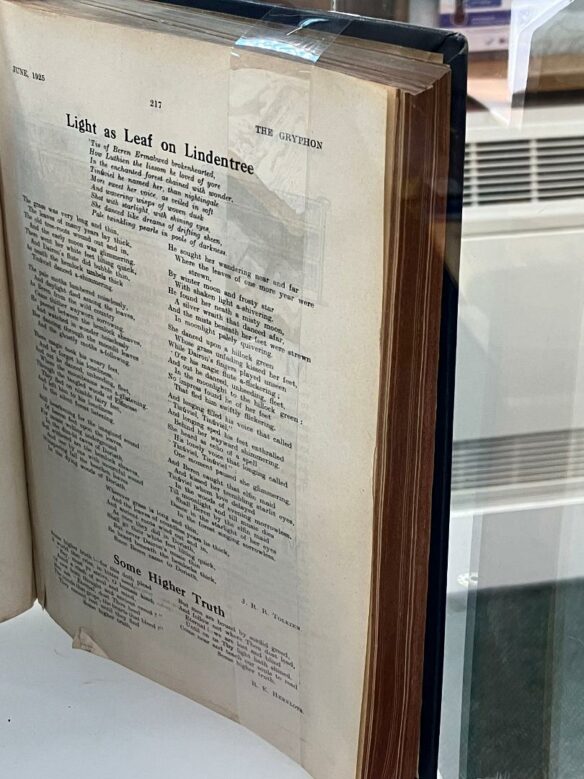
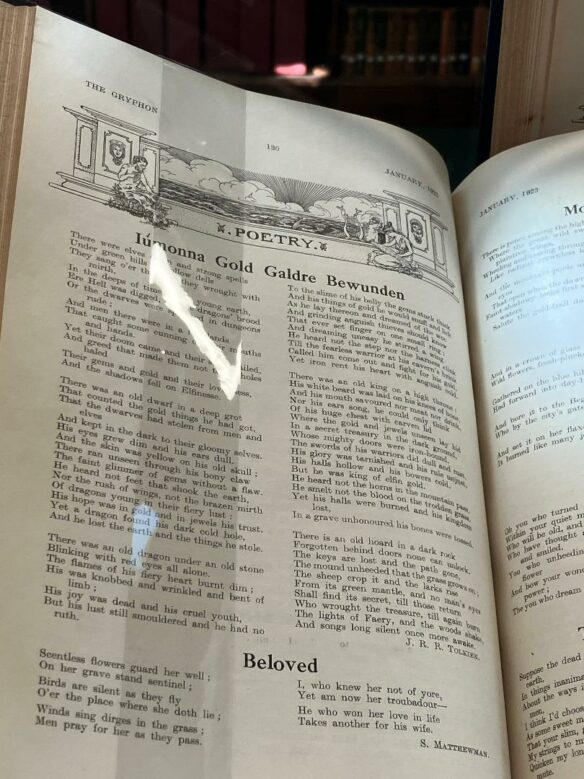
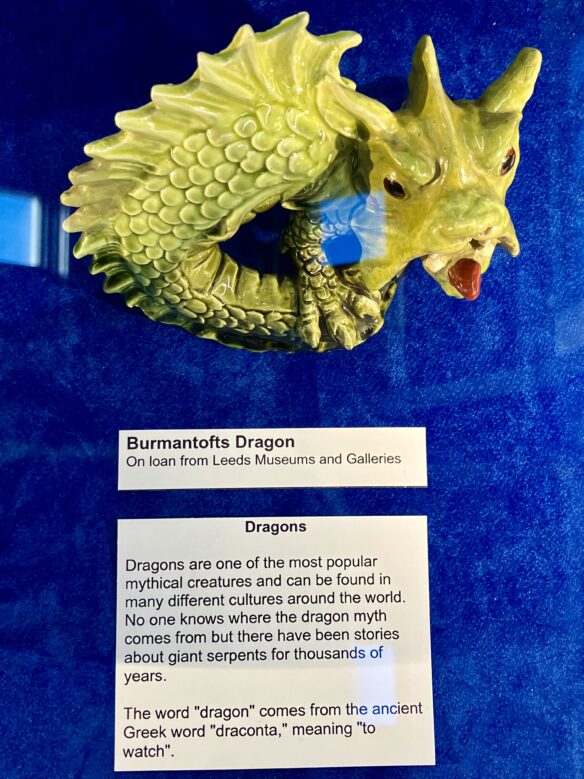
(3) DRAGON TAXONOMY. [Item by Jim Janney.] This guy takes a more expansive view than Tolkien’s. “There is No Proto-Dragon: The Illusion of Fictional Taxonomy” by Alex Conroy at Typebar Magazine.
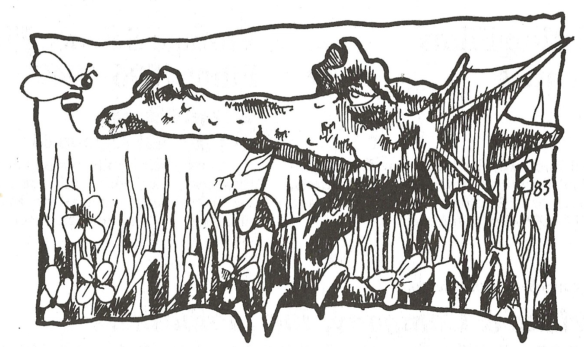
When I was twelve years old, I went to my public library in search of the answer to a question: What was the first dragon? Now, I was a pretty naive kid, but I wasn’t that naive. I didn’t actually believe in dragons, at least, not at that point. But I wanted to know where the idea of them originated. There is a pretty common theory that you’ve probably heard of, that early people found dinosaur bones and called them dragons. But, while that might not be a wholly incorrect interpretation, that’s not actually the answer I was looking for.
I wanted to know, in fiction or in myth, what was the first thing that was represented as a dragon? I wanted to know because, if I could find out what the original was, I could identify the “core traits” of a dragon, as opposed to adaptations to the central premise, and thus I would know what a “true” dragon really should be, a topic that was somehow extremely important to 12 year old me….
… What I found in my fledgling research was even more confusing. There were far more categories of dragon than simply Eastern and Western. Dragons appear, in one form or another, in cultures all across the world. There is, of course, the classic western dragon, the great scaled beast with massive bat wings, the type that may have been put down by Sir Gawain. About as recognizable is the majestic eastern dragon, the huge elemental serpents that are tantamount to gods and often appear in traditional parades and festivals. There are countless other dragons besides: Meso-American dragons, from the feathered snake Kukulkan to an aspect of the deity Quetzalcoatl, African dragons in the form of lwas and other primordial beings, and a veritable wellspring of dragon myths arise when you look towards the Pacific. A cursory look at the wikipedia entry for “list of dragons in folklore” makes it seem like draconic myths hail from literally every corner of the earth.
And yet, none of them seemed to be the “first” one….
(4) NONSENSE AND SENSIBILITY. In “Starfleet Academy, Episode 4: What Nobody’s Talking About!”, Erin Underwood says a big mistake was made in how the first season’s story was ordered. Beware spoilers.
… So, with Star Trek’s Starfleet Academy you’re either going to like it or not. This isn’t a traditional review of episode 4, but rather a breakdown that separates the writing from the storytelling because I think that “bad writing” is a generic term that gets used when viewers can’t quite explain why a TV series feels off to them. What’s great about episode 4 is that when we break it down into its core pieces, we get a clear picture of what’s working and broken in the series itself.
This all boils down to one thing: the first four episodes should have been five episodes. That change ruined so much, and here’s why…
…This moment, finding the anomaly is when Lt. Rork suggested it could be a good training opportunity. Now, that decision makes so much more sense, because she’s not making it on Orientation Day (even though that’s when it was aired). As originally written and filmed, she’s making that call during a training mission to the nebula that Chancellor Ake is talking about in Episode 4.
The editing and restructuring choices of the first five episodes, smashing them ineffectively into four episodes, not only broke the narrative structure but also created a cascade of scenes that didn’t have a natural continuity. Worse, they also made both Lt. Rork and Chancellor Ake look ineffective and irresponsible in a series of bad decisions that all revolved around an ill-informed choice to stop and investigate a spatial anomaly before the students were even finished being processed.
That is how you undermine a series and kill it before it even has a chance to get going….
(5) NITPICKING AND FLYSPECKING. Camestros Felapton agrees that the series has a flaw, but it’s not the same one Erin is complaining about: “Trek Tuesday: Starfleet Academy s1e4: Vox in Excelso”.
This is the strongest episode yet of the new Trek show. It retains the core flaw in the show i.e. the whole genre of kids at wizarding school but as that is the core premise of the show it is like complaining about there being aliens in it.
By way of example of the inherent-flaws, we have that annoying thing where a supposedly large school revolves around a small social circle of students….
(6) CASTING DIVERSITY ANALYZED. A study commissioned by the broadcaster says “BBC Must Avoid ‘Clunky’ Color-Blind Casting In Shows like ‘Doctor Who’” reports Deadline.
The BBC has been urged to rethink color-blind casting “tokenism” and “preachy” storylines about the UK’s colonial history in scripted series, according to a major study commissioned by the broadcaster.
Conducted by former BAFTA chair Anne Morrison and ex-Ofcom executive Chris Banatvala, the thematic review of “portrayal and representation” across BBC output found that “clunky” depictions of race can cause more harm than good.
The 80-page report revealed audience complaints about Doctor Who casting Nathaniel Curtis as Sir Isaac Newton in the 60th anniversary special “Wild Blue Yonder,” as well as the 2023 Agatha Christie series Murder Is Easy, which featured an allegory on colonialism.
The review noted that color-blind casting was a matter of controversy for commentators and some viewers. Urging commissioners to “consider their choices carefully,” the report said that good intentions to increase diverisity can lead to inauthentic outcomes — outcomes that can sometimes be damaging to the communities they are attempting to serve.
“In depicting an anachronistic historical world in which people of colour are able to rise to the top of society as scientists, artists, courtiers and Lords of the Realm, there may be the unintended consequence of erasing the past exclusion and oppression of ethnic minorities and breeding complacency about their former opportunities,” the review said.
“What needs to be avoided is ethnic diversity which looks forced and tick box, and we found our interviewees of colour as emphatic on this point as those who were white.”…
… Though Doctor Who was referenced, the report raised an eyebrow about the specific concerns regarding Curtis, saying that a mixed-race Newton “seems much less of a stretch” in a universe in which the central character is a time-travelling extra-terrestrial, who regenerates into different actors….
(7) GO ASK ALICE. Something I heard about for the first time today. The Klingon language transation of Alice In Wonderland.

Alice in Wonderland has been translated into Klingon in 2021.
…On July 1st, 2021, Lieven L. Litaer announced his Klingon translation of the book. Its Klingon title is QelIS boqHarmey, literally “Alice’s wonders”. The book was published on November 3rd 2021, the Kindle ebook edition followed on November 8th….
…This translation by Klingon teacher Lieven L. Litaer is not just a pure translation, it conveys the wordplays into Klingon, creating all new jokes based on that language. The book is bilingual and comes with an entirely new English backtranslation, providing a better understanding of the Klingon text. A detailed appendix focuses on several translation steps and explains new words created for this project by Klingon inventor Marc Okrand….
(8) NEW TYSON BOOK. “Jonathan Karp Announces Inaugural Simon Six Title” reports Publishers Weekly. It will be by Neil deGrasse Tyson.

Outgoing Simon & Schuster CEO Jonathan Karp announced this Saturday on Instagram that Take Me to Your Leader: Perspectives on Your First Alien Encounter by Neil deGrasse Tyson will be the first title published by Simon Six, the new imprint he is launching at S&S. The book is scheduled for publication in May.
“By reading about aliens, you’re actually learning a lot about humanity and human nature,” Karp said. “In a world where a lot of things are going wrong right here on Earth, I wanted to think about something bigger and something more magnificent.”
Karp praised Tyson as “one of the most entertaining writers on science alive” and said the book examines “the practical, scientific aspects of what alien visitation would look like.” He described the title as “a book that enlarged me, and it gave me hope.”…
(9) JIM BUTCHER IS NUMBER ONE. Publishers Weekly says Jim Butcher leads the list of “This Week’s Bestsellers: February 2, 2026”.
Twelve Months, Jim Butcher’s 18th urban fantasy featuring professional wizard Harry Dresden, is #1 on our hardcover fiction list. Our review notes that the author shifts gears in this installment, “focusing on the character’s struggles, over the course of one year, to come to terms with recent devastating events.” The result is a “more intimate, and ultimately more optimistic, outing.” Stops on Butcher’s book tour included a sold-out event at Mysterious Galaxy in San Diego and an appearance at Powell’s in Portland, Ore., where Bridget Schuch and Travis Brueckner, the creators behind the Bricksonian social media accounts, presented Butcher with a custom-made Harry Dresden Lego mosaic.
(10) MEMORY LANE.
[Written by Cat Eldridge.]
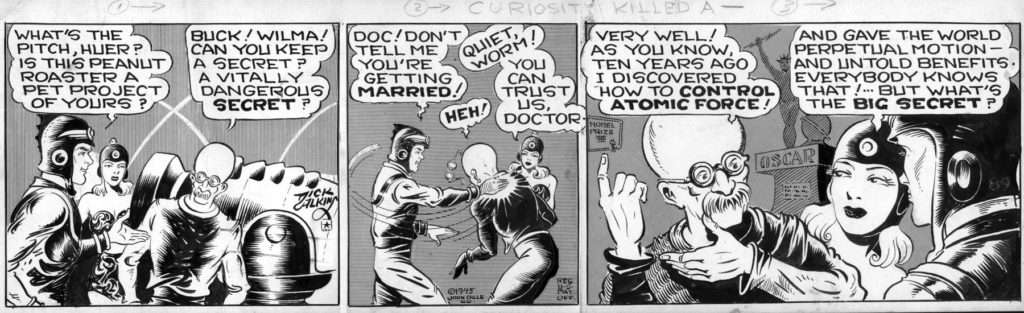
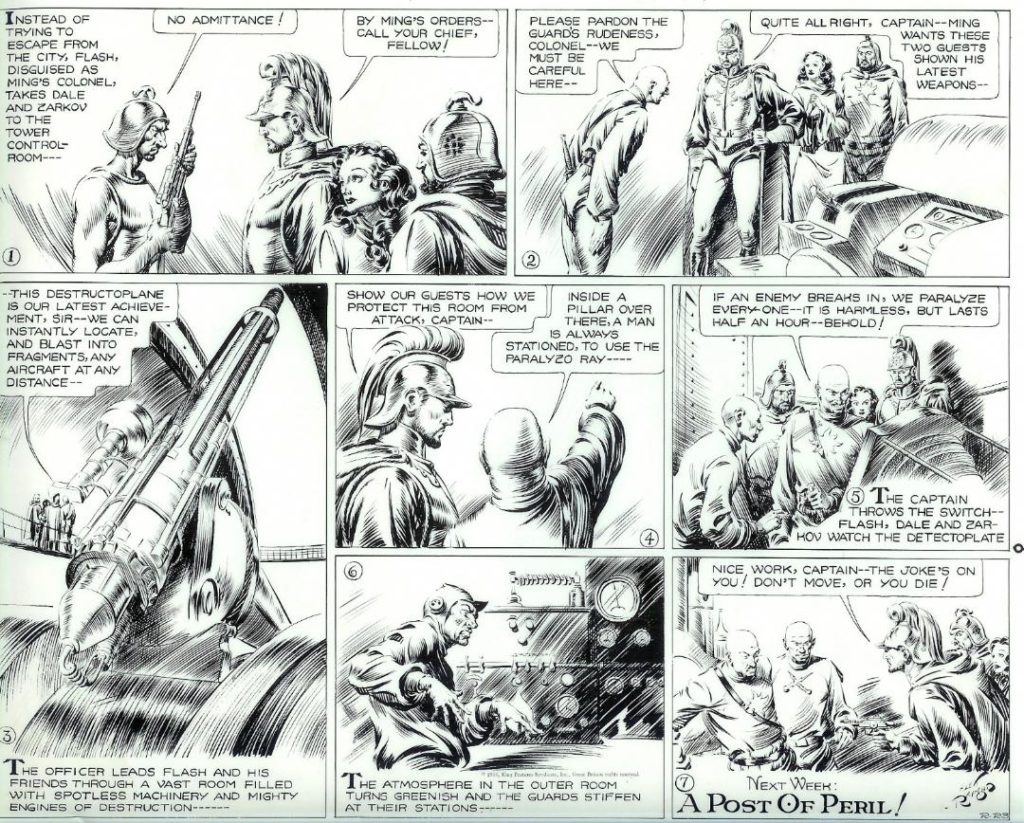
Buck Rogers serial (1939)
Eighty-seven years ago, the Buck Rogers serial, produced by Universal Pictures, debuted. It starred Buster Crabbe (who had previously played the title character in two Flash Gordon serials and would return for a third.) Buster was sometimes billed as Larry Crabbe as well as you will note in the poster below.

I don’t think I need to say that it’s is based on the Buck Rogers character as y’all know that as created by Philip Francis Nowlan but for the sake of the few Filers who will nitpick if I don’t I will.
It was directed by Ford Beebe was Saul A. Goodkind as written by Norman S. Hall, Ray Trampe and Dick Calkins. It would run for twelve chapters of roughly twenty minutes each. Typical for the time
As I said Buck Roger was Larry “Buster” Crabbe with Constance Moore as Wilma Deering, and Jackie Moran as “Buddy” Wade, an original character who was based on the Sunday strip character Buddy Deering.
It had a really small budget and re-used film footage from the futuristic Thirties musical Just Imagine.
In 1953, it was edited into the film Planet Outlaws and twelve years it was edited again into Destination Saturn, not to stop there, the late Seventies saw the latter release of the latter as Buck Rogers. All three were feature films.
Not surprisingly, you can watch it online — here is the first chapter.
(11) COMICS SECTION.
- The Argyle Sweater illustrates an origin story.
- xkcd registered the shift in meaning.
(12) MAKING MONEY WITH MAGIC. “Lawsuit Claims Hasbro Misled Investors Regarding Sales of Controversial Magic: the Gathering Anniversary Set” – IGN has the story.
A new lawsuit filed by shareholders of Hasbro against the company and its directors alleges that company leadership has mismanaged Magic: The Gathering by overprinting sets of cards, thereby devaluing existing ones. It also, quite notably, claims that Hasbro leadership “concealed the true reason” that its widely-criticized, incredibly expensive Magic: The Gathering 30th Anniversary Set was pulled from sale within an hour of its initial release.
The lawsuit, filed in Rhode Island earlier this week, is filed by shareholders Joseph Crocono and Ultan McGlone against Hasbro CEO Christian Cocks, a number of fellow company directors, and Hasbro itself. The lawsuit alleges breaches of fiduciary duty, unjust enrichment, waste of corporate assets, gross mismanagement, abuse of control, and violations of the Exchange Act.
Specifically, the shareholder plaintiffs claim that, under Cocks’ leadership, Hasbro has been printing far too many Magic: The Gathering sets, thereby reducing the value of existing sets. This complaint probably sounds familiar to avid Magic players, as Wizards of the Coast has been printing significantly more sets per year than it used to….
… Regardless of how you count them, it is true that the card release volume has gone up lately, as anyone who’s grouchy about the number of Universes Beyond collaborations in 2026 will tell you. But the issue the shareholders have is that the volume, they claim, is exceeding consumer demand, and that Hasbro leadership is only releasing this many to get quick cash to cover up shortfalls elsewhere in the Hasbro business.
The lawsuit itself is 76 pages long, but there are two major accusations that stand out. One is an allegation that Hasbro management used something called the “Parachute Strategy.” Allegedly, leadership plotted to “parachute in” new Magic sets whenever there was a shortfall somewhere else in Hasbro. These parachute sets initially consisted of “Masters” sets – largely reprints with low production costs. However, as it grew, more sets got involved, including the aforementioned Secret Lair collaborations and the Commander Legends: Battle for Baldur’s Gate set. Per the lawsuit, “As such, the explosive growth in the Magic business noted just prior to and during the Relevant Period [September 2021 – October 2023] was in fact the result of the Parachute Strategy. Notably, in 2022 such ‘parachute’ Magic sets accounted for 46% of all Magic releases.”
The second, and perhaps even spicier, accusation is the allegation that Hasbro management essentially faked being out of stock of the controversial, extremely expensive Magic 30th Anniversary Set in order to encourage demand….
(13) DIE ANOTHER DAY. [Item by Steven French.] The Guardian’s Stuart Heritage gives Darren Aronofsky’s On This Day … 1776 the thrashing it so clearly deserves: “Requiem for a film-maker: Darren Aronofsky’s AI revolutionary war series is a horror”.
If you happen to find yourself stumbling through Time magazine’s YouTube account, perhaps because you are a time traveller from the 1970s who doesn’t fully understand how the present works yet – then you will be presented with something that many believe represents the vanguard of entertainment as we know it.
On This Day… 1776 is a series of short videos depicting America’s revolutionary war. What makes On This Day notable is that it was made by Darren Aronofsky’s studio Primordial Soup. What also makes it interesting is that it was created with AI. The third thing that makes it interesting is that it is terrible….
…It is, as you might expect, as ugly as sin. It’s the sort of thing that looks like it was shooting for photorealism, but then either chickened out or blew up along the way. In the very first shot, King George’s hair looks like someone melted down and hardened a plastic badger. And this is a shame because, like so much generative AI at the moment, an awful lot of the episode consists of shots where we see the characters from behind. This is, after all, because the back of an AI-generated head is far less likely to send people into screaming fits of trauma than an AI-generated face, and Aronofsky is a humanist…
(14) ISSUES FACING DIRECTORS GUILD. Variety profiles “Christopher Nolan on Netflix-Warner Bros., AI and Being DGA President”.
Christopher Nolan is a busy man.
When he’s not working on “The Odyssey,” his sprawling adaptation of Homer’s epic, he is tackling all the other challenges facing Hollywood as the new president of the Directors Guild of America.
The union’s 20,000 members are dealing with a sharp decline in jobs, the rise of artificial intelligence, and the absorption of Warner Bros. into either Netflix or Paramount — which portends consolidation in streaming and a threat to the future of moviegoing….
… Netflix’s proposed acquisition of Warner Bros., which still must clear regulatory hurdles, raises concerns across the board. Filmmakers fear the loss of a major distributor, while those in TV face the potential consolidation of HBO Max into the largest streaming platform.
(15) HISTORY OF AN EVOLVING FIELD. [Item by Steven French.] From the History newsletter of the American Institute of Physics: “Special issue spotlight: Shaping a multi-messenger universe” at AIP.org.
When astronomers detected gravitational waves for the first time in 2016, and then in 2017 they observed both gravitational waves and electromagnetic radiation from a neutron star merger, they hailed it as the start of a new era for their field. “Multi-messenger” astronomy—the coordinated observation of electromagnetic, particle, and gravitational signals—had come into its own.
These discoveries have also captivated historians and philosophers of science, who are asking: What does it mean to observe the universe through multiple “messengers”? How did this approach emerge from earlier traditions of multi-wavelength astronomy, neutrino detection, and gravitational-wave research? And perhaps most intriguingly, is multi-messenger astronomy truly a revolutionary break from the past, or is it simply the latest iteration of practices that astronomers have employed for over a century?
In this historiographical boom, scholars are racing to document and interpret this rapidly evolving field before its early history fades from view. A new, open-access special issueof Centaurus, “Shaping a multi-messenger universe,” explores multi-messenger astronomy’s emergence, bringing together historians, philosophers, and scientists to examine both continuities and transformations in astronomical practices.
Edited by Luisa Bonolis, Roberto Lalli, and Adele La Rana, this collection tackles fundamental questions about what multi-messenger astronomy actually is—a surprisingly contested issue, even among practitioners—and how it relates to the constellation of disciplines it encompasses. The collection’s seven articles span from the dawn of telescopic astronomy to 21st-century black hole imaging, revealing how new observational windows have repeatedly reshaped astronomical work….
(16) VIDEO OF THE DAY. How It Should Have Ended brings us – “How Stranger Things Should Have Ended”.
[Thanks to Mark Roth-Whitworth, Kathy Sullivan, Steven French, Jim Janney, James Bacon, Daniel Dern, Mike Kennedy, Andrew Porter, John King Tarpinian, Cat Eldridge, and SF Concatenation’s Jonathan Cowie for some of these stories. Title credit belongs to File 770 contributing editor of the day Chris R.]