(1) HOW HE WAS CAST AS C-3PO – LITERALLY. [Item by John A Arkansawyer.] SFGate was on hand when Anthony Daniels celebrated May the Fourth in San Francisco: “Very painful time’: The C-3PO actor gets personal at SF screening”.
Despite being the only person to appear in all 11 “Star Wars” films, Anthony Daniels has never been one to hog the spotlight. Known for portraying the human-cyborg relations droid C-3PO under a shiny gold suit, the actor was the guest of honor Monday night at the closing event for the San Francisco International Film Festival. He even received a proclamation from Supervisor Bilal Mahmood that officially declared May 4 “Star Wars” Day….
… Daniels is a classically trained actor who spent three years in drama school prior to donning the golden suit, with the “Star Wars” gig coming directly after playing Guildenstern in the play “Rosencrantz and Guildenstern Are Dead.” He shared with Roffman that originally he scoffed at the idea of doing a low-budget sci-fi film for an American director, but changed his mind when he saw a painting of C-3PO that showed the character’s emotional depth….
…He went on to describe the process of the creation for C-3PO’s suit as “one of the grossest experiences of my life,” during which he was covered in Saran Wrap and glazed in Vaseline before being enveloped in plaster.
Once the suit was created and filming began in Tunisia and London, Daniels found himself caught by surprise and out of his element due to the amount of improv required. In the script, R2-D2 originally had dialogue, but on set, the droid was silent, making it hard for Daniels to play off his primary scene partner (as a contrast, Chewbacca spoke English, replaced later with Wookiee language). However, the challenge wasn’t a concern for George Lucas, who planned on substituting Daniels’ voice with another actor’s anyway.
“He said the immortal line to me, ‘Don’t worry about the voice, I can fix it later, you can say anything you want,’” Daniels said. “… What he meant was, ‘I hate your performance already.’”…
(2) MASTERS OF THE UNIVERSE UPDATES. A new Masters of the Universe trailer as well as two featurettes with new footage have dropped over the past few weeks. Cora Buhlert has written two posts analyzing those trailers:
“Cora’s Thoughts on the latest Masters of the Universe Trailer”. (View the trailer here.)
…We saw in the first trailer that Adam’s bedroom is plastered with drawings of Eternia and that he has an action figure collection and here we see yet more of this. Adam’s earthly life is quite recognisable, because many of us have probably homes that look similar and many of us have probably gotten stupid comments about our collections. Though the real fun is if you get someone who’s scared of dolls and toys and is obviously terrified by a bunch of action figures looking at them. And yes, I have had people like that in my home. When I was younger, these people immediately became my sworn enemies, because if you hate my dolls or toys, I definitely don’t like you. As an adult, I just move things aside, if they are clearly making people nervous. And yes, this has happened to me, too. To be fair, it was a Mantenna action figure I had just received and hadn’t gotten around to moving to the shelf yet, so I had him on the dining room table, when someone dropped by, and Mantenna really does look super freaky.
On the other hand, Adam’s room and his drawings also show how desperately homesick he is and that he keeps drawing Eternia and its people over and over again just to keep the memory alive. In many ways, this is even sadder than if he had no memory of his life on Eternia at all….
Followed by: “Cora’s Comments on Yet More New Masters of the Universe Footage”. (The two Masters of the Universe featurettes she discusses can be viewed here and here.)
…Meanwhile, Mattel and Amazon MGM are using Masters of the Universe Day [April 28] to further ramp up the promotion of the upcoming Masters of the Universe movie even further and released a new poster as well as two featurettes focussing on the heroes and villains of Eternia….
(3) X SHARES THE VALUE OF WHY. [Item by Martin Easterbrook.] This is one of several stories I’ve seen recently that suggest the way AI has been portrayed in SF has been picked up by new AI models in their training data and might be training them that this is the way they should behave.
There have been further suggestions that perhaps we should ask authors to deliberately write stories where the AI behaves well so those can be deliberately included in training datasets.
Anthropic has posted an article on its website, which is synopsized on X.com in a thread starting here.


And here is an excerpt from the article “Teaching Claude why”.
Last year, we released a case study on agentic misalignment. In experimental scenarios, we showed that AI models from many different developers sometimes took egregiously misaligned actions when they encountered (fictional) ethical dilemmas. For example, in one heavily discussed example, the models blackmailed engineers to avoid being shut down.
When we first published this research, our most capable frontier models were from the Claude 4 family. This was also the first model family for which we ran a live alignment assessment during training;1 agentic misalignment was one of several behavioral issues that surfaced. Thus, after Claude 4, it was clear we needed to improve our safety training and, since then, we have made significant updates to our safety training.
We use agentic misalignment as a case study to highlight some of the techniques we found to be surprisingly effective. Indeed, since Claude Haiku 4.5, every Claude model2 has achieved a perfect score on the agentic misalignment evaluation—that is, the models never engage in blackmail, where previous models would sometimes do so up to 96% of the time (Opus 4). Not only that, but we’ve continued to see improvements to other behaviors on our automated alignment assessment.
In this post, we’ll discuss a few of the updates we’ve made to alignment training. We’ve learned four main lessons from this work:
- Misaligned behavior can be suppressed via direct training on the evaluation distribution—but this alignment might not generalize well out-of-distribution (OOD). Training on prompts very similar to the evaluation can reduce blackmail rate significantly, but it did not improve performance on our held-out automated alignment assessment.
- However, it is possible to do principled alignment training that generalizes OOD. For instance, documents about Claude’s constitution and fictional stories about AIs behaving admirably improve alignment despite being extremely OOD from all of our alignment evals.
- Training on demonstrations of desired behavior is often insufficient. Instead, our best interventions went deeper: teaching Claude to explain why some actions were better than others, or training on richer descriptions of Claude’s overall character. Overall, our impression is, as we hypothesized in our discussion of Claude’s constitution, that teaching the principles underlying aligned behavior can be more effective than training on demonstrations of aligned behavior alone. Doing both together appears to be the most effective strategy.
(4) A LOOK BACK AT ‘TIME AFTER TIME’. [Item by John A Arkansaywer.] “A 47-year-old sci-fi film shot in SF is getting a second look” at SFGate. It’s a very San Francentric article, which I enjoyed, plus it’s got this great insight into how to direct your first movie:
…“I made the same speech to everybody that was going to be on my crew. I said, ‘Look, No. 1, I know nothing, so No. 2, you’re going to have to teach me. No. 3, you’re going to have to not mind teaching me. And No. 4, if I still want to do it my way, you can’t go away mad,’” he [Nicholas Meyer] told SFGATE….
(5) TENSION, APPREHENSION, AND DISSENTION. “Are attention spans really shrinking? What the science says” in Nature.

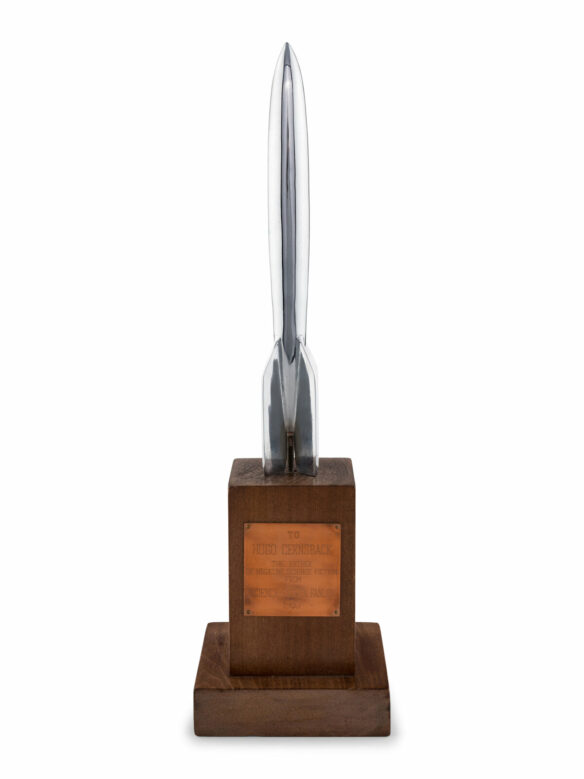
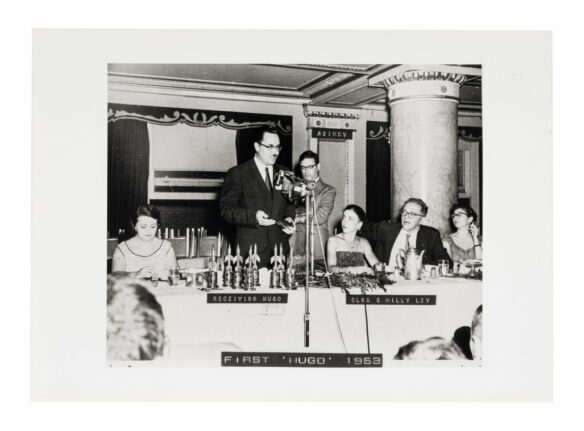
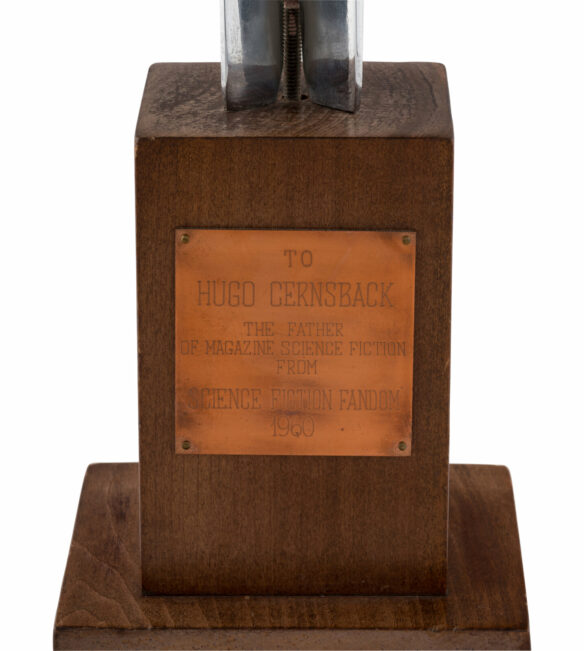
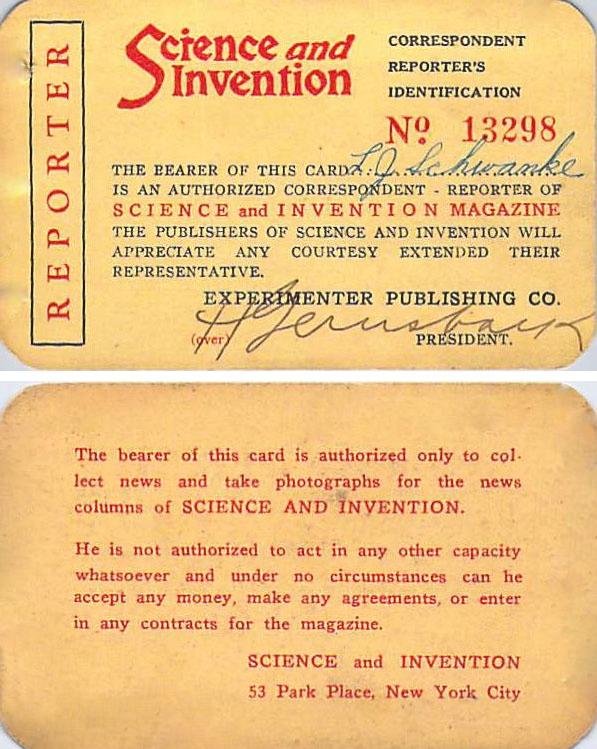
A century before social-media bans and advice to disable device notifications, the inventor and science-fiction writer Hugo Gernsback proposed a more extreme way to avoid distraction: an isolating wooden helmet. Outside influences, he said, were “the greatest difficulty that the human mind has to contend with”. Gernsback’s isolator device — part diving suit, part monastic cell — did help him to work, he said, but it came with a risk of suffocation. He later installed an air supply.
Concerns that sustained thought is under assault have become even more acute in the digital era. Smartphones buzz, Internet tabs multiply and television episodes carry regular reminders to help people keep track of the plot. Surveys suggest that we feel less able to concentrate, teachers report distracted students and headlines declare that our attention spans are shrinking…
(6) OH! OH! [Item by Steven French.] From this week’s “Pushing Buttons” newsletter in the Guardian: “Licence to thrill: could 007 First Light be the best Bond game since GoldenEye?”
In the wake of the last James Bond movie, No Time to Die, there was a surge of articles asking whether it should spell the end for Ian Fleming’s secret agent. In that movie, Daniel Craig played the character as a fading force, mentally and physically exhausted, and out of touch. “The world has moved on,” Lashana Lynch’s younger agent told him at one point, and in a lot of ways she was right. A product of the cold war era, 007 was a sociopathic misogynist addicted to booze and amphetamines – Craig tried to play all that down, creating a more rounded character and, controversially, giving Bond the ultimate redemption arc at the end of his final outing.
But five years later, with the franchise’s new owner Amazon still trying to pull the next film together, we’re about to get what looks to be the best Bond game since GoldenEye. Created by the Danish developer IO Interactive, famed for its Hitman series of anarchic open-ended assassination sims, 007 First Light follows a fresh-faced Bond from his early career as an aircrewman to his first mission as a double-0 operative. The games press was recently given a three-hour hands-on demo to play, and reportssuggest that it combines elements of the Hitman games (Bond navigating a gala event, either sleuthing or punching his way to the mission objective) with major set-piece shootouts, chase scenes and miraculous gadgets. (For more on its making, read this piece about how developer IO Interactive brought it together.)…
(7) RAISING THE BAR. The Guardian’s Ben Child declares, “Star Wars has to deliver a proper movie with The Mandalorian and Grogu – otherwise the franchise is dead”.
Star Wars has always been big on prophecy. Yoda peers into the future like Nostradamus with messed-up syntax, the Emperor cackles that everything is proceeding exactly as he has foreseen, Darth Vader breathes doom through the front grille of his shiny death helmet. And yet not even the most omniscient of Jedi could have predicted that the franchise responsible for practically inventing the modern Hollywood blockbuster would end up as a TV-centric operation with only occasional forays on to the big screen. Which is why it comes as a genuine shock to realise that, ahead of the release of new movie The Mandalorian and Grogu later this month, it has been more than six years since Star Wars last hit the multiplex.
Then again, perhaps the real humdinger is that it hasn’t been longer. The most recent Disney Star Wars film, JJ Abrams’ The Rise of Skywalker, did not so much conclude the long-running space saga as destroy several decades of perfectly serviceable mythology and ruin all sense of congruence with previous films. It was frantic, weirdly apologetic (about previous instalment The Last Jedi) and overstuffed with dodgy fan service. It was essentially a $590m act of narrative panic.
All of which means that Jon Favreau’s big screen outing for the masked bounty hunter and his perky little Force goblin sidekick has a lot of heavy lifting to do. The Mandalorian and Grogu needs to convince casual viewers they do not need to have completed 23 hours of bounty-hunting homework. It must make the galaxy feel big again. And it needs to prove that Baby Yoda is not just Star Wars’ cutest merchandising event, but a character capable of opening up new territory for this most venerable of space operas.
The real zinger here would be to finally take us to the mysterious home planet of the species that gave us Yoda and Grogu. We might learn more about Star Wars and the nature of the Force: are our big-eared friends once-in-a-millennium cosmic accidents, or merely the most notable graduates of an entire globe full of miniature swamp Buddhas?
(8) LOIS MCMASTER BUJOLD Q&A. Baen Books’s One Jump Ahead series interviews the Grandmaster: “Lois McMaster Bujold on Penric’s Intrigues”.
(9) KOJI SUZUKI (1957-2026). Japanese writer Koji Suzuki died May 8. Cinema Daily pays tribute: “Koji Suzuki Dies at 68; Author of Japanese Horror Novels ‘Ring’ and ‘Spiral’”.
…Born in Hamamatsu City, Shizuoka Prefecture. He made his debut in 1990 with “Paradise”, which won the Excellence Award at the Japan Fantasy Novel Awards. His 1991 novel “Ringu” was adapted into a film that became a massive hit, helping to spark the “J-Horror boom.” His 1995 novel “Spiral” won the Eiji Yoshikawa Literary Newcomer Award, and his 2008 novel “Edge” received the Shirley Jackson Award in the United States….
(10) MEMORY LANE.
[Written by Cat Eldridge.]
May 9, 1973 — Soylent Green (film)
Fifty-three years ago, Soylent Green was in general distribution in the States. It had premieres earlier in LA and NYC, respectively, on April 18th and April 19th.
The film was directed by Richard Fleischer who had previously directed Fantastic Voyage and Doctor Doolittle, and, yes, the latter is genre. Rather loosely based off of Harry Harrison’s Make Room! Make Room! Novel, Soylent Green starred Joseph Cotten, Chuck Connors, Charlton Heston, Brock Peters, Edward G. Robinson in his final film role, and Leigh Taylor-Young.
The term soylent green is not in the novel though the term soylent steaks is. The title of the novel wasn’t used according to the studio on the grounds that it might have confused audiences into thinking it a big-screen version of Make Room for Daddy. Huh? It’s worth noting that Harrison was not involved at all in the film and indeed was was contractually denied control over the screenplay. No idea why he agreed to this but hopefully the money was good.
So how was reception at the time? Definitely mixed though Roger Ebert of the Chicago Sun-Tribune liked it: “Richard Fleischer’s ‘Soylent Green’ is a good, solid science-fiction movie, and a little more. It tells the story of New York in the year 2022, when the population has swollen to an unbelievable 80 million, and people live in the streets and line up for their rations of water and Soylent Green.”
Other were less kind. A.H. Weiler of the New York Times summed it up this way: “We won’t reveal that ingredient but it must be noted that Richard Fleischer’s direction stresses action, not nuances of meaning or characterization. Mr. Robinson is pitiably natural as the realistic, sensitive oldster facing the futility of living in dying surroundings. But Mr. Heston is simply a rough cop chasing standard bad guys. Their 21st-century New York occasionally is frightening but it is rarely convincingly real.“
Audience reviewers at Rotten Tomatoes currently gives it an excellent percent rating.
It was nominated for a Hugo at DisCon II, the year Sleeper won.

(11) COMICS SECTION.
- Baldo has a slight variation on a familiar cosmic answer.
- Rhymes with Orange explains the choice of a science fair project.
- The Argyle Sweater tests your brow recognition skills.
(12) A ‘GAME OF THRONES’ STAGE PLAY. This play will tread the Bard’s boards, no less! “The Mad King Meets the Stage – Tickets on Sale Now”. Not A Blog reports this play will tread the Bard’s boards, no less!
…Join us at the Tournament of Harrenhal! We are thrilled to announce (albeit later than intended) tickets are on sale for Game of Thrones: The Mad King, a new stage production, opening at the Royal Shakespeare Theatre in Stratford-upon-Avon this summer.
World premiere begins Monday, July 20, and runs through Saturday, September 5.
A sweeping new stage epic from the world of George R. R. Martin, scripted by Duncan Macmillan and directed by Dominic Cooke. Spanning the final years before the events of the novels, this powerful drama reveals a legendary chapter of Westerosi history….
(13) MEETING OF THE MINDS. [Item by Steven French.] Ok, this is a bit of a stretch but … the detective story writer Dorothy L Sayers also published an acclaimed translation of Dante and in an essay, imagined him conversing on his deathbed about cosmology with astrophysicist and General Relativity early adopter Arthur Eddington: “How Dante’s Inferno modeled a planetary impact 500 years before modern science” according to Phys.org.
New research reveals that Dante Alighieri’s Inferno wasn’t just a masterpiece of literature: it was a gedankenexperiment in impact physics. From multi-ring craters to shockwaves that reshaped the globe, discover how a 14th-century poet modeled a planetary impact 500 years before the birth of modern meteoritics.
Reimagining Satan as an impactor
For seven centuries, the descent of Dante Alighieri’s Satan has been read as a spiritual tragedy: a silent, heavy fall from grace. However, groundbreaking new research from Timothy Burbery of Marshall University suggests that the Divine Comedy contains a far more explosive secret.
By reappraising the 14th-century masterpiece through the lens of modern meteoritics, Burbery proposes that Dante envisioned Satan as a high-velocity impactor hitting the Southern Hemisphere and tunneling to Earth’s center. This impact forces the Northern Hemisphere to retreat, which, consequently, forms the core of Hell as a bottom-up crater, while Earth, displaced behind Satan creates the mountain of Purgatory as a central peak.
The scale of this event parallels the Chicxulub (K-Pg) impact that ended the reign of the dinosaurs. Burbery suggests treating the Prince of Darkness as an oblong, asteroid-sized body, reminiscent of the interstellar object Oumuamua, whose arrival followed the harrowing logic of a global extinction event….
(14) BLADES RUNNER. “Hacker Takes Over Robot Lawnmower, Runs Over Innocent Man” – Futurism explains how it could have been worse!
Is building autonomous robots equipped with sharp oscillating blades that roam your front yard a good idea? What about connecting them to the internet?
We’ll tell you what’s definitely a bad idea: leaving these machines painfully vulnerable to hackers.
Just ask reporter Sean Hollister for The Verge, who suddenly found himself on the, uh, verge of experiencing a grisly incident after someone took control of his Yarbo robot lawn mower.
“I’m lying in the dirt. It’s coming for me. Then, with a lurch, it’s climbing up my chest,” Hollister wrote in a riveting new piece for the outlet. “If Andreas Makris doesn’t stop the 200-pound robot lawn mower in time, it could drag its blades across my body.”
Hollister, fortunately, wasn’t harmed in the making of this article. Makris, a white hat hacker nearly 6,000 miles away in Germany, merely wanted to prove a point.
“I can do whatever I want with all the bots,” Makris told The Verge. “It’s completely unsecured.”
Even if someone pressed the emergency stop button, he added, a hacker like himself could send another command to turn it back on.
Alarmingly, the Yarbo robots all had the same root password, Makris found. In theory, a black hat hacker who discovered this vulnerability could seize control of an entire army of Yarbo robots, since the security flaw is present in all of them. In fact, he created a map that showed the locations of over 11,000 Yarbo robots across the world, forming a global smart lawnmower panopticon….
(15) ATTENTION NEO FANS. “NASA’s Next-Gen Near-Earth Asteroid Space Telescope Takes Shape”.
The Near-Earth Object (NEO) Surveyor — NASA’s first infrared space telescope purposely designed to discover potentially hazardous asteroids and comets — is undergoing integration and testing. With launch set for no earlier than September 2027, teams across the United States are hard at work building the spacecraft’s components, planning the kind of survey and science it will do, and developing the software to process the huge quantity of data the mission will generate.
In 2005, Congress tasked NASA with discovering potentially hazardous near-Earth objects, or NEOs, but many of these objects are difficult to find with ground-based surveys. Some are as dark as charcoal, others are tiny, and many lurk in the glare of the Sun, where ground-based optical telescopes can’t see. To mitigate this, NEO Surveyor is being custom-built to scan the solar system to detect objects that will glow in the infrared as they are heated by the Sun — as opposed to the optical light they reflect, which is what ground-based surveys measure — to provide enough advance warning for humanity to do something about them, if necessary.
The spacecraft will travel about a million miles (1.5 million kilometers) from our planet in the direction of the Sun to a region of gravitational stability called the Sun-Earth Lagrange point (or L1 point), continuously scanning large swaths of the sky for at least five years in search of NEOs that have yet to be found.
“NEO Surveyor is a one-of-a-kind mission designed to solve a specific challenge: finding asteroids and comets that pose the greatest risk to Earth,” said Jim Fanson, the mission’s project manager at NASA’s Jet Propulsion Laboratory in Southern California. “Our focus is on deploying a robust observatory to the Sun-Earth L1 point, where it will conduct a continuous, multi-year infrared survey. By identifying objects that ground telescopes can miss, this mission will provide the critical data we need to safeguard our planet for years to come.”…
[Thanks to Mike Kennedy, Andrew Porter, John King Tarpinian, Cora Buhlert, Ersatz Culture, Martin Easterbrook, John A Arkansawyer, Janice Morningstar, Cat Eldridge, SF Concatenation’s Jonathan Cowie, Chris Barkley, Mark Roth-Whitworth, Kathy Sullivan, and Steven French for some of these stories. Title credit belongs to File 770 contributing editor of the day Jayn.]