(1) ALONG THE AUTOBAHN. Cora Buhlert tells about “The First Road Trip of the Year: Walsrode and Hildesheim in the Snow” on her blog. The objective of the trip was to purchase action figures, however, there was a great deal to see on the way.
… I was here to visit a monument to another much venerated figure from the Second German Empire, namely the Walsrode Bismarck Tower.
I have written about the Second German Empire’s tendency to engage in nation building via putting monuments on mountain tops before. The Bismarck Towers are one example of this. Count Otto von Bismarck, prime minister of Prussia and later chancellor of the Second German Empire from 1871 to 1890, was much venerated as the uniter of Germany, which is also why there are a lot of monuments dedicated to him all over the place. Pretty much every larger city in Germany has a Bismarck statue somewhere – Bremen’s depicts Bismarck on horseback and stands next to the cathedral. Hamburg has a giant Bismarck statue which holds a giant sword and stands on a pedestal held up by muscular naked young men who are supposed to represent the various German states, but it’s kind of obvious that the artist just liked depicting naked muscular men and that this is a very gay Bismarck monument. Hamburg’s Bismarck monument is badly neglected, half hidden by trees and covered in graffiti and some people would like to see it gone altogether, because they view Bismarck as a promoter of colonialism. That’s not quite true – Bismarck was sceptical of colonialism and would have preferred to focus on Germany, but Emperor Wilhelm II and some wealthy merchants wanted colonies, so Bismarck yielded. Also, whether you like Bismarck or not, he is an important part of our history and we shouldn’t just throw out history we don’t like. Besides, the Hamburg Bismarck monument is interesting from an artistic POV, so it should absolutely be restored.
And then there are the Bismarck Towers. Once upon a time, there were 243 Bismarck Towers all over Germany, neighbouring countries and even overseas. 173 of them survive, 146 of them in present-day Germany. Here is a website, which has information and photos of all of them, both surviving and destroyed.
North Germany never had all that many Bismarck Towers, probably because we lack the mountain tops to put them on top of. And of the few we had, many were destroyed over the years. The closest surviving Bismarck Tower to me is actually the one in Walsrode, which I had planned to visit for a while now. Because I find Bismarck Towers and the quasi-religious veneration of Count Otto von Bismarck they represent fascinating. Many Bismarck Towers were even topped with a metal bowl for lighting fires in memory of Bismarck, though these fire bowls are mostly gone now, even from the surviving towers.
According to Google Maps, the Walsrode Bismarck Tower was supposed to be on the edge of town. So I parked on the parking lot of a supermarket. Opposite the supermarket a path should lead to the Bismarck Tower, at least in theory. For in practice, there was no path. Nor was there any signpost, but then there rarely are signposts for Bismarck Towers, because many towns that have one find them kind of embarassing….
(2) THEY CAN REMEMBER IT FOR YOU. Charlie Jane Anders would like to tell you about “The Most Surprising Book Trend Right Now: Memory-Sharing” at Happy Dancing.
If you asked someone to name the main trends in genre book publishing from the past year or two, they’d probably mention romantasy, cozy fiction, horror and a few other things. But I’ve been blown away by a sleeper trend lately: novels about people storing their memories remotely, gaining access to someone else’s memories, or sharing a memory with another person. In general, memory seems to be on a lot of people’s minds lately….
… To find out more about this topic, I talked to four authors of recent books that deal with this concept in various fascinating ways. (I also reviewed some books on this theme a while back for the Washington Post.)
One of my favorite books of 2025 was The Antidote, the long-awaited new novel by Karen Russell. The Antidote is the sobriquet of a prairie witch in dustbowl-era Nebraska, who acts as a sort of bank vault for people to store their unpleasant memories — with the promise that you can retrieve the memory later when you need it. But after a catastrophic dust storm, the Antidote and other prairie witches find their vaults cleaned out, all the stored memories gone forever.
The Antidote turns into an examination of buried historical trauma, especially the attempted genocide of Native Americans — thanks in part to a New Deal photographer’s magical camera that takes pictures of the past and future.
In writing The Antidote, Russell says, “I was interested in what happens when people are unable or unwilling to reckon with the past, in the exiling of memories from our waking consciousness and from our public histories, those things that many of us must continuously forget or suppress in order to go on living as we do, and how that ‘collapse of memory’ harms us individually and collectively.”
Russell adds, “I do think that whatever else a memory might be, it’s never the fullness of what happened. It’s always a (re)creation, never static or inert.” And that “these secrets that can feel so private and so personal, can become, in aggregate, something like a mass denial. Who and what we exclude from our family stories and collective histories has tremendous consequences, for all of us.”…
(3) SEATTLE WRITING CAMP OFFERED. Clarion West’s 2026 Teen Writing Camp is taking registrations. Full details and prices at the link. It will be an in-person camp in Seattle.

This is a ten-day, in-person camp for teens geared toward students 13 – 18 who are interested in creative writing and learning more about writing speculative fiction (science fiction, fantasy, supernatural, horror, etc). Participants will explore Seattle art spaces and museums as a means of inspiration while they write.
Camp hours are 10 a.m. to 2 p.m., Monday through Friday. This is a small-group camp for up to 10 students, highly focused on individual attention and developing friendships!
Taught by professional author and writing instructor, Tara Campbell, this camp will include readings and discussions of published work, as well as prompts and writing time for students to work on their own stories. Writing days will alternate between Hugo House as our base and field trips to art spaces throughout the city, such as the Museum of Popular Culture (MoPop), Seattle Art Museum, and others, drawing upon Seattle as a creative muse. In addition, special guest instructors will join us to discuss other industries that rely on writers!
Participants will be introduced to workshop methods for giving and receiving feedback and hone their presentation skills for a capstone reading with an audience of their peers at the end of the program.
Topics to be covered include worldbuilding, defamiliarization, science fiction, urban fantasy, the supernatural, horror, and hermit crab fiction (stories told in unusual formats like transcripts and reports). Our subject matter will range from the depths of the ocean to the outer reaches of space, technological advances, and life beyond death….
(4) AN EARLIER ‘ACADEMY’ IDEA. “Inside the Lost ‘Star Trek’ Movie That Would Have Rebooted Kirk and Spock at Starfleet Academy” at Yahoo!
In the aftermath of 1989’s Star Trek V: The Final Frontier, producer Harve Bennett found himself confronting a problem that had shadowed the Star Trek franchise since its move to the big screen a decade earlier: how long could the original cast realistically continue? The answer he proposed was radical for its time—a feature-film prequel titled Starfleet Academy (also known as The Academy Years and no relation to the new series premiering on January 15), focused on how Kirk, Spock and McCoy first met as cadets.
As screenwriter David Loughery puts it, “Every time they were going to make one of these Star Trek movies, the producers and the studio always ran into the same problem in getting the original cast together. The reasons for that were money, power, creative differences, ego, health, unavailability… all of those things.”
The concept itself originated with producer Ralph Winter, who recalls pitching the idea directly to Bennett. “We’d just demonstrated with Star Trek III that we could do a young Spock,” Winter explains. “We should see how these guys meet the first time… build something that would be a reboot of this with younger characters to pick up with when these older characters don’t want to do this as much.”…
… Set over a single year at Starfleet Academy in Huntsville, Alabama, the script introduced a cocky, reckless young Kirk, an emotionally conflicted Spock who has left Vulcan against his father’s wishes, and a medical student McCoy trying to find his place. “They begin as rivals and end up as friends and comrades,” Loughery explains, “and in the final scene… we’re able to see the legends that they are going to grow up to become.”…
… Fan reaction was equally volatile. “We were really caught off guard,” Loughery admits. “Somehow they conceived it as a sort of spoof or a takeoff.” Rumors circulated that the film would resemble “a cross between Police Academy and The Jetsons,” a perception Loughery attributes to misinformation—possibly fueled by fears within the cast that long-standing roles and convention income were being threatened….
(5) COMICS WRITER WILL SPEAK IN LA. The Los Angeles Breakfast Club presents “DC Comics with Geoff Johns!” on January 14. Tickets at the link.
Geoff Johns is one of the most prolific and popular contemporary comic book writers. He has written highly acclaimed stories starring Superman, Green Lantern, the Flash, Teen Titans, and Justice Society of America. He is the author of The New York Times best-selling graphic novels GREEN LANTERN: RAGE OF THE RED LANTERNS, GREEN LANTERN: SINESTRO CORPS WAR, JUSTICE SOCIETY OF AMERICA: THY KINGDOM COME, SUPERMAN: BRAINIAC and BLACKEST NIGHT.
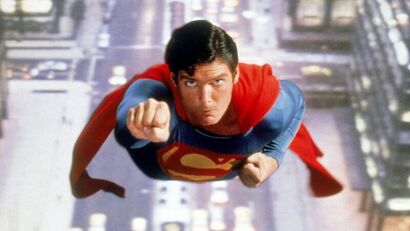
Johns was born in Detroit and studied media arts, screenwriting, film production and film theory at Michigan State University. After moving to Los Angeles, he worked as an intern and later an assistant for film director Richard Donner, whose credits include Superman: The Movie, Lethal Weapon 4 and Conspiracy Theory.
Johns began his comics career writing STARS AND S.T.R.I.P.E. and creating Stargirl for DC Comics. He received the Wizard Fan Award for Breakout Talent of 2002 and Writer of the Year for 2005, 2006, 2007 and 2008 as well as the CBG Writer of the Year 2003 through 2005 and 2007 and 2008, and CBG Best Comic Book Series for JSA 2001 through 2005.
After acclaimed runs on THE FLASH, TEEN TITANS, and the best-selling INFINITE CRISIS miniseries, Johns co-wrote a run on ACTION COMICS with his mentor Donner. In 2006, he co-wrote 52: an ambitious weekly comic book series set in real time, with Grant Morrison, Greg Rucka and Mark Waid. Johns has also written for various other media, including the acclaimed “Legion” episode of SMALLVILLE and the fourth season of ROBOT CHICKEN.

(6) ERICH VON DÄNIKEN (1935-2026). Remember Chariots of the Gods? “Erich von Däniken, Who Claimed Aliens Visited Earth, Dies at 90” reports the New York Times. (Behind a paywall.) This is definitely not a “say nothing ill about the dead” obituary.
Erich von Däniken, the best-selling Swiss author and self-styled maverick archaeologist who propagated the theory that thousands of years ago an advanced alien species visited Earth, mated with ancient humans and gave them the technology, and the intelligence, to erect such marvels as the Great Pyramids, died on Saturday in Switzerland. He was 90.
His death was announced on his website.
Mr. von Däniken was 32 and managing a hotel in Davos, Switzerland, when he published his first and by far most popular book, “Chariots of the Gods,” in 1968. In breathless prose, saturated with exclamation points and folksy interjections such as “Hey, presto!” Mr. von Däniken posited that virtually the sum of human knowledge and ability had been bestowed by extraterrestrials.
With little evidence and a lot of innuendo, he proclaimed that the Egyptian pyramids could have been built only with alien expertise. (“Is it really a coincidence that the height of the pyramid of Cheops multiplied by a thousand million — 98,000,000 miles — corresponds approximately to the distance between the earth and sun?” he wrote.)
The birdman cult of Easter Island, Mr. von Däniken declared, developed as a way to honor the supreme beings who had flitted down from the outer atmosphere to land on that remote spot in the Pacific, off the coast of South America.
Because an iron rod in a temple in Delhi, India, appeared impervious to rust, it must have been made from a celestial alloy, he insisted. Similarly, he said, when viewed from the air, the geoglyphs of Nazca, Peru, are obvious landing strips for spaceships. And artwork on a Mayan sarcophagus depicts not a king descending into the underworld, he concluded, but an astronaut-god piloting a spaceship.
Critics were unsparing. “Chariots of the Gods,” one anthropologist wrote, was “a warped parody of reasoning, argumentation, as well as a vigorous exercise in selective quotation, misrepresentation and error based on ignorance.”
The astrophysicist Carl Sagan said of Mr. von Däniken: “Every time he sees something he can’t understand, he attributes it to extraterrestrial intelligence, and since he understands almost nothing, he sees evidence of extraterrestrial intelligence all over the planet.” …
(7) TODAY’S BIRTHDAY.
[Written by Cat Eldridge.]
January 11, 1961 — Jasper Fforde, 65.
I, like most folk I suspect, first discovered the somewhat eccentric charms of Jasper Fforde in the Eyre Affair, the first of his novels with Tuesday Next, the Special Operation Network, Literary Detectives (SO-27) who could literally enter the great and not so great works of English literature.
Bidder and Stoughton published it twenty-three years ago. I’d like to say the Eyre Affair was a much desired literary property but he says there were seventy-six publishers that he sent his manuscript to. I’m surprised there were that many publishers in the U.K. that would have been interested, so it’s rather possible that number is, errr, made up.
There would be six in the series in all — this novel followed by Lost in a Good Book, The Well of Lost Plots, Something Rotten, First Among Sequels, One of our Thursdays Is Missing and The Woman Who Died a Lot. I won’t say that they were consistently great as they weren’t and the humor sometimes wore more than a bit thin, but overall I like the series considerably.
Next up, and I wasn’t eggspecting to like it, yes I know bad pun there, is The Big Over Easy which is set in the same universe as the Thursday Next novels though I don’t remember any overlapping character twenty years after reading them. It reworks his first written novel, which absolutely failed to find any publisher whatsoever.
Its original title was Who Killed Humpty Dumpty? Errr, wasn’t there a novel involving a rabbit by almost that name? It had a sequel of sorts in The Fourth Bear. Both are quite more than bearably good.
I have not read his dystopian novel Shades of Grey: The Road to High Saffron which is about a future Britain where everyone there is judged by how they perceive colors. Suspect someone with color blindness like myself wouldn’t be welcome there. A friend who did read it liked it a lot.
His Dragonslayer series, also known as The Chronicles of Kazam, are a YA affair and a great deal of fun indeed.

(8) MEMORY LANE.
[Written by Cat Eldridge.]
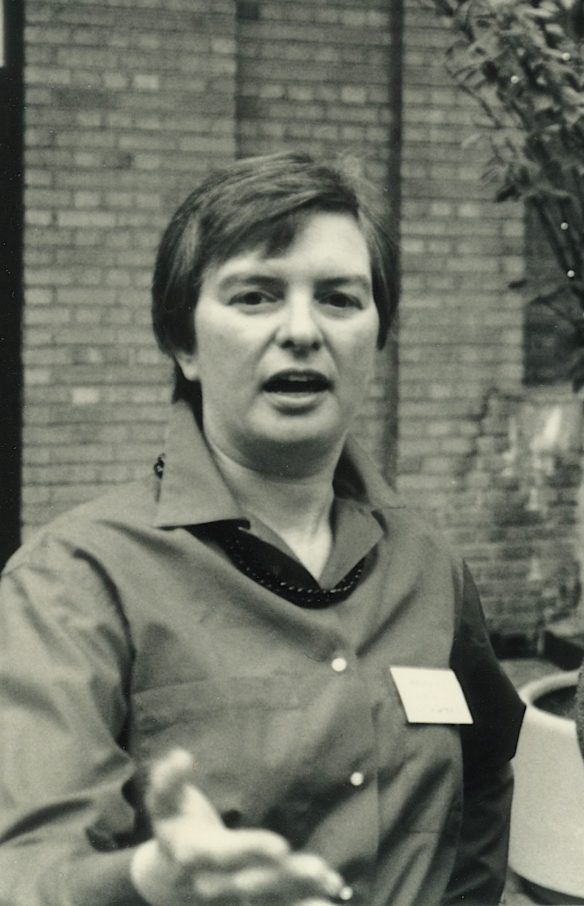
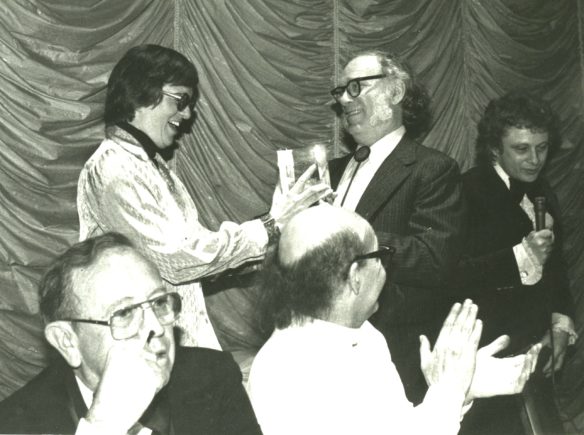
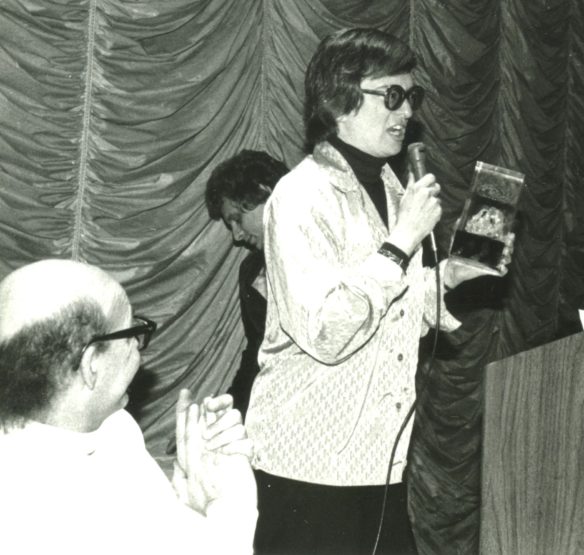
Ursula K. Le Guin’s Tehanu: The Last Book of Earthsea (1990)
The 1991 Nebula Award for Best Novel went to Ursula K. Le Guin’s Tehanu: The Last Book of Earthsea, the fourth novel of the Earthsea sequence. The first three novels — beginning with A Wizard of Earthsea and finishing off with The Tombs of Atuan and The Farthest Shore, which were published between 1968 and 1972. These novels did win any awards which really, really surprised me.

Tehanu was published by Atheneum in 1990. As I noted above, it’d had been twenty years since the last Earthsea novel was published. It would be not the last novel, despite the subtitle, as The Other Wind would follow twenty years later. It would also win the Locus Award for Best Fantasy Novel.
So what is Tehanu about?
SPOILERS SORT OF.
Years before, they had escaped together from the Tombs of Atuan—she, an young priestess by the name of Tenar and he, Ged, a wizard. Now she is just a farmer’s widow. And he is a just old man, stripped of his immense abilities.
A lifetime ago, they helped each other at a time of darkness and danger. Now they must join forces again, to help another — Tehanu, a physically and very deeply emotionally scarred child whose destiny remains to be revealed.
COME BACK NOW. I PROMISE I WON’T GIVE ANYTHING AWAY.
So did I like it? Yeah I did. I think Le Guin in the time between the writing of original Earthsea trilogy and this novel did mature quite a bit as a writer and it shows here. Tehanu is more complex, deeper and thoughtful novel that those earlier works are.
(9) COMICS SECTION.
- Bagley Cartoon in the Salt Lake Tribune is captioned “Something Wicked This Way Comes”.
- Alley Oop seems to be missing plot armor.
- F Minus points out the problem with every advance in clothing.
- Non Sequitur lost the visitors.
- Pearls Before Swine wants a gratuity.
- Speed Bump adds true choices.
- Wumo tries extreme gardening.
- Zack Hill traces a famous saying.
(10) BOW – WOW! “Dogs Build Their Vocabularies Like Toddlers” says the New York Times. (Behind a paywall.)
Basket the Border collie seems to have a way with words. The 7-year-old dog, who resides on the Upper West Side of Manhattan, knows the names of at least 150 toys — “froggy,” “crayon box” and “Pop-Tart,” among them — and can retrieve them on command.
Basket built her vocabulary thanks to the dedicated efforts of one of her owners, Elle Baumgartel-Austin. She began the language lessons when Basket was a puppy. “I would play with her, say the name of the toy — say the name of the toy a lot of times,” Ms. Baumgartel-Austin said. She started with 10 toys, adding more as Basket mastered them.
“There never seemed to be a limit,” she said. “It’s basically like, how many toys could I feasibly store in my tiny apartment?”
Now, in a new study, scientists have found that Basket, and other dogs that share her advanced word-learning ability, have a skill that puts them functionally on par with 18-month-old children: They can learn the names of new toys not only through direct instruction but also by eavesdropping on the conversations of their owners.
Such sophisticated word learning appears to be rare among dogs, and recognizing the labels for specific objects is a far cry from acquiring language. But the study’s findings add to evidence that the cognitive and social abilities that underpin certain kinds of language learning are not limited to humans — and highlight just how adept dogs are at reading human signals.
“They’re very good at picking up on these cues,” said Shany Dror, a postdoctoral researcher at the University of Veterinary Medicine, Vienna, and an author of the study. “They’re so good that they can pick up on them equally well when the cues are directed to the dog or when they’re directed to someone else.”
The study, which Dr. Dror conducted at Eötvös Loránd University in Budapest, was published in the journal Science on Thursday.
Although many dogs can understand simple commands, like “sit” or “stay,” picking up the names of specific objects — a skill known as label learning — appears to be a much tougher task. Scientists do not fully understand why.
But over the past two decades or so, scientists have identified a handful of outliers, canine prodigies that know the names for dozens or even hundreds of toys and can remember such labels for years. “They accumulate these huge vocabularies,” Dr. Dror said….
(11) NASA BRINGING HOME SICK ISS CREW MEMBER. [Item by Mike Kennedy.] Global News reports “NASA to return ISS crew to Earth months early due to astronaut’s illness”. NASA has announced they’re indeed bringing the subject crew home early, but have not announced the exact time. They also said they’re investigating sending the next crew earlier than had been planned but made no commitment.
NASA will bring Crew 11 back to Earth months ahead of schedule after an astronaut on the International Space Station (ISS) experienced a medical issue, the aeronautics agency said Thursday.
The ill crew member, who is currently living and working aboard the orbital laboratory, has not been identified by NASA, but is said to be in stable condition and will be returned to Earth with the rest of the crew.
A medical diagnosis has not been shared, though NASA’s Chief Health and Medical Officer, Dr. James D. Polk, said he and a team of experts deemed it necessary to bring the astronaut home in order to complete more comprehensive testing.
“We have a very robust suite of medical hardware on board the International Space Station, but we don’t have the hardware we would have in the emergency department to complete a workup of a patient,” he said….
(12) VIDEOS OF THE DAY. From The Late Show with Stephen Colbert on May 16, 2018: “Deadpool Takes Over Stephen’s Monologue”.
Then, this duo took over the Jimmy Kimmel Show on July 25, 2024: “Guest Hosts Ryan Reynolds & Hugh Jackman Interview Each Other”.
[Thanks to Steven French, Mike Kennedy, Andrew Porter, Daniel Dern, Cora Buhlert, John King Tarpinian, Cat Eldridge, SF Concatenation’s Jonathan Cowie, Mark Roth-Whitworth, and Kathy Sullivan for some of these stories. Title credit belongs to File 770 contributing editor of the day StephenfromOttawa.]