



























For many months now, whenever I have had the chance to visit Bangkok’s Chinatown, I have anxiously checked on the well-being of a big fish—a giant grouper some 80 centimetres long named Uan, or ‘Fatty’ in Thai, to be exact. Inside a fish tank, I pray that it is still alive and has not been ordered by diners to be cooked for a feast. I have become slightly fixated, and I think there is something about it that can shed light on how many of us pick one side over the other in this messy war waged against Iran by the US and Israel, and Iran’s retaliations against the two countries and its Gulf neighbours.
Allow me to switch to the Middle East before going back to Fatty.
Israel
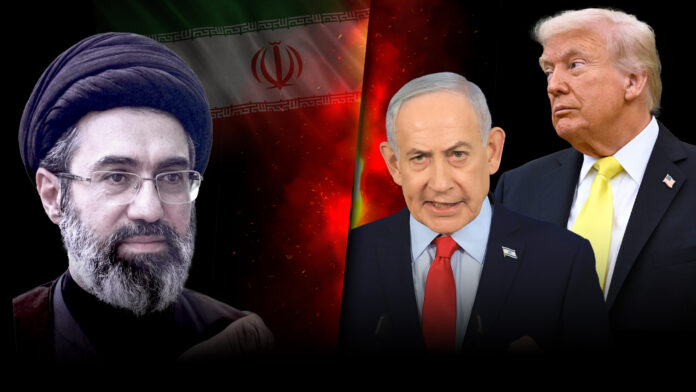
Earlier this week, Israeli Prime Minister Benjamin Netanyahu alerted the international community by speaking to the press in English about Iran’s use of cluster bombs against civilians in Israel, although no one has yet been killed, he noted. Netanyahu does not dwell on the de facto occupation of southern Lebanon or the killing of three Lebanese journalists by Israeli Defense Forces, however—at least one of whom Israel described as a “terrorist” in disguise.
This comes despite the United Nations humanitarian chief this week asking the UN Security Council (UNSC) “what it is prepared to do to protect civilians in Lebanon as Israel pushes ahead with its ground invasion and bombardment of the country,” according to Al Jazeera.
“Speaking during an emergency UNSC session on Tuesday, Tom Fletcher noted that the question is critical given recent comments from Israeli ministers about Israel’s aims in Lebanon as well as its genocidal war against Palestinians in the Gaza Strip.”
Meanwhile, in another news item—this time from AFP, Spanish Prime Minister Pedro Sánchez on Tuesday condemned Israel for moving “a step closer to apartheid” by passing a bill that would allow for the execution of Palestinians convicted on terror charges for deadly attacks.
”It is an asymmetric measure that would not apply to Israelis who committed the same crimes. Same crime, different punishment. That is not justice. It is a step closer to apartheid,” the Spanish PM wrote on X.
Meanwhile, Amnesty International posted a message on its Facebook page before mid-March stating:
“According to UNICEF and latest reports, over 270 children across #MENA have been killed since 28 February, with most children killed in #Iran and #Lebanon. These figures are staggering and escalating. They are a stark testament to the toll that conflict is taking on children. Civilians must be protected 📢”
USA
President Donald Trump, meanwhile, has continued to portray America as the protagonist while urging allies to help secure the Strait of Hormuz—before lashing out at their reluctance to contribute military support and suggesting that countries reliant on Gulf oil should take responsibility themselves.
Nothing has been heard for a while now from Trump or the US government regarding the Tomahawk missile attack on a girls’ elementary school in Minab city, southern Iran, where about 160 elementary school girls were reportedly killed by what was almost certainly an American missile.
Iran
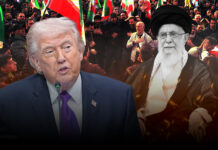
Here in Bangkok, the Iranian Embassy last Saturday put up a large banner denouncing the attack against the elementary school in Minab. On the same day, a group of twenty-something Iranians based in Thailand staged a noisy protest outside the embassy denouncing the killings of thousands of Iranian anti-government pro-democracy demonstrators over the past few months prior to the attacks by the US and Israel on Iran. The demonstrators called for the downfall of the Islamic Revolutionary regime and the restoration of the monarchy but said nothing about the Minab schoolgirls killed by the American missile, while thanking America for attacking the repressive Islamic Republic regime in their own country.
So which side to take?
Criteria for favouritism in the Middle East war
Religion: Many who are Islamophobic naturally gravitate towards the US and Israel. If you are mildly antisemitic, or suffering from it in an advanced stage, then rooting for Iran makes ‘absolute sense’. There are also some American Christian evangelists who believe more attacks on Iran will hasten Armageddon and precipitate the return of Jesus Christ.
Vendetta: Some support Iran because of what Israel has been doing over the decades in the occupied West Bank and Palestine. Others, including some Thais, blame Iran for being partially responsible for the deaths of dozens of Thai workers killed by Hamas in 2023, and the most recent attacks on the Thai-flagged cargo ship “Mayuree Naree”, where three crew members are still missing and increasingly likely to be dead.
The Underdog: Some support Iran because they see it as the underdog, able to resist the world’s mightiest armed forces (plus Israel) even after a month of heavy air bombardment which killed its Supreme Leader and many others.
Domestic Politics: Some Iranians are against the Islamic Republic due to its repression of dissent, while some Americans are against the war because they are against Trump. If your fondness for Trump is the most important factor, then you will almost certainly support what the US and Israel are doing against Iran.
For me, while I acknowledge the repressive nature of the Islamic Republic, what the US and Israel are doing is, essentially, against international law. This is the most important criterion for this writer. This does not mean I turn a blind eye to domestic repression in Iran or its support of militant groups, including Hamas and Hezbollah; however, it is a reminder that we are dealing with a complex situation that is neither black nor white, involving many parties. Anything done to push the international community towards a peaceful resolution should be supported.
Perhaps we should embrace the irony and contradictions and call a spade a spade. Prominent Thai artist Vasan Sitthiket denounced Russia at a demonstration four years ago for invading Ukraine (and still does), and last Friday, he denounced the US and Israel, even though Ukraine is against the Iranian regime.
Favouritism for or bias against one side or the other is understandable, but being conscious of it may hopefully help us to be fairer when addressing many issues, including the conflict in the Middle East.
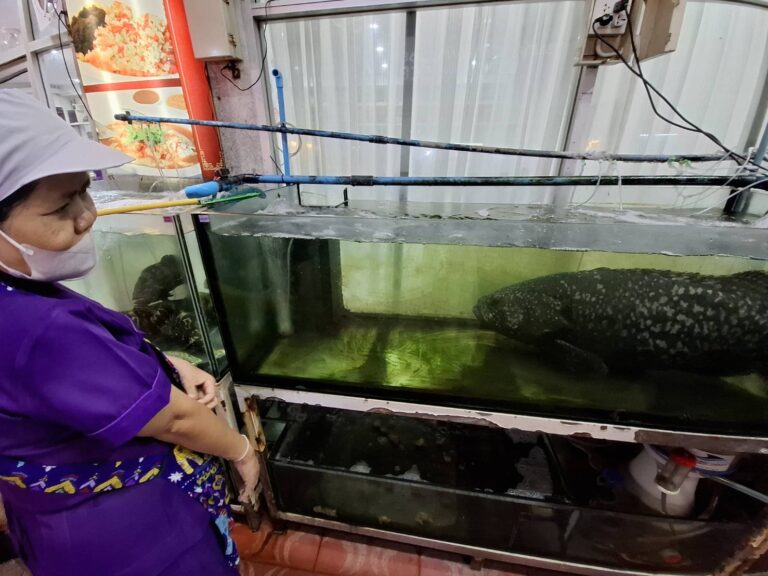
Back to Uan
Now, back to Fatty, the big fish in Chinatown. I realised that I am particularly attached to the fish because of its size, which makes it more expressive and animated—at least to me. One of the restaurant’s staff told me its name is Uan, or ‘Fatty’ in Thai, was given by the staff. She told me the fish weighed around 27 kilograms when it arrived a year ago and is now over 40 kilograms.
A female staff member played with him on Sunday, when I was there, by teasing the fish right next to the glass tank that separates them. I told her they should spare the life of Fatty, if only for good luck. Fatty seems to recognise her and becomes playful.
I feel sorry for the much smaller fish in the next tank too, but due to their size, I am not emotionally attached. And they have no name. This is unfair to the much smaller groupers in the adjacent tank, not to mention the live mantis shrimps inhabiting the same tank as the smaller fish, waiting to be ordered, slaughtered, and cooked.