(1) HUGO HISTORY. Nicholas Whyte has a rundown of what was disqualified from the category over the years in “Best Related Work eligibility for the Hugo Awards” at From the Heart of Europe. Here’s a brief excerpt from his commentary:
… I don’t know of any other case in the regular Hugos, but in 2020 we disqualified The Book of Thoth, by Aleister Crowley, from the 1945 Retro Hugos, on the grounds that it was not sufficiently related to the field of science fiction, fantasy, or fandom to be eligible in this category. It had only six nominating votes and was bottom of the EPH count (just as Writers of the Future XVII was at the bottom in 2002); removing it allowed Leigh Brackett’s The Science Fiction Field onto the ballot, and indeed that actually won the award….
(2) LUCAS MUSEUM PREVIEW. Vogue takes us “Inside the Otherworldly Lucas Museum of Narrative Art in Los Angeles”. This is a fascinating article. Photos by Annie Leibovitz.
…The structure where we find ourselves is towering with rich wood paneling and almost entirely devoid of right angles. Its ceiling sweeps down; its grand staircases twist. A set of central elevators are threaded through glass tubes. The museum’s façade—its carapace, really—was designed using a process called parametric modeling, which enables its shape to be molded like Play-Doh. It was assembled around an internal skeleton from 1,500 school-bus-size fiberglass panels, each fitted into place, like three-dimensional puzzle pieces, by human crews. “It’s a piece of modern architecture so of its time that you couldn’t have built it 15 years ago,” Michael Siegel, a principal at Stantec architecture and a leader of the project on site, tells me. Yet the effect is classically Californian in its balance of tech futurism and organicity, bringing to mind the designs of Apple’s heyday: openness and compactness, something cool and something warm. The building looks as if it might stretch and lumber off at any moment, like one of Lucas’s fantastical creatures.
In the press, the museum has been described as a gift to the city of Los Angeles, a euphemistic way of saying that Lucas and Hobson are not just designing but paying for it, at a bill of around a billion dollars. Their friends describe the financial outlay as the least of their commitments. “ I know a lot of people who create—I guess the main part of my life has been with people who are creating—but I’ve not really worked with people who have created something to this scale,” says the designer Stella McCartney, who has known both Hobson and Lucas for years. “ I wouldn’t even call it a project, because that’s just not big enough a word. It’s like another limb for them.”
Lucas likens the museum to film production. “It’s like making a movie—exactly the same thing,” he says. Sir Lewis Hamilton, the Formula 1 driver, who knows the couple very well—Lucas is his pancake-eating and movie-watching companion on some mornings when he isn’t racing—describes the museum’s elegant, irregular interior as “like walking through George’s brain.”
On the way to the first gallery, we dip into the gift shop, an irresistible-looking space with glowing shelves and tubular glass cases, which will sell T-shirts, books, and toys that tie into the collection. (Lucas, who may be in better touch with the discerning eight-year-old within than many of us, tells me, “We’re only going to do stuff that’s good—I want to look at it and say, ‘That’s a great toy!’ ”) Most museum gift shops, they were surprised to find, lose money. Lucas thought he could do better. “I know about licensing and merchandising,” he tells me in confidential tones, as if it were a secret. Alongside items tied to the museum collection, the shop will sell Star Wars merchandise. The museum’s attitude toward the famous franchise might be called pragmatic: It is emphatically not a Star Wars museum, but neither does it avoid what might get people in the door to discover, say, the 20th-century illustrator Maxfield Parrish. An exhibition in one gallery will include vehicles and models used in the movies. (“I’m like, That’s the section I’m going to be spending all my time in,” says Hamilton, who, at 41, is building a Lego Millennium Falcon and hopes to build a Lego Death Star soon.) The shop is meant to have something for kids of all backgrounds—a priority for Hobson, who, before making it to Princeton and eventually the helm of Ariel Investments, America’s best-known minority-owned value-investing firm, was reared as one of six children by a struggling single mother in Chicago….
… Unusually for a museum collection, Lucas and Hobson’s centers on illustration: 1,200 pieces of storytelling art that Lucas himself picked from a pool of 40,000 items. There are well-known oil works, such as those by Parrish and Norman Rockwell, made for magazines and advertisers. But there are also comic strips, manga, movie art, and fantasy scenes of dragons and kings. The exceptional range reflects the owners’ particular taste. Lucas began collecting in college, when he discovered he could afford original drawings for comic strips he loved. “It was an underground thing—none of the auction houses handled that kind of stuff,” he says. “It was fanboys, and I could get a little Alley Oop for $35.”…

(3) BACK ABOVE GROUND. The BBC quotes a collector: “Our hobby was outlawed, now it’s making a comeback”. (Subscription required for readers outside the UK.)
Collectors of cinema reels and other film spools are celebrating the 50th anniversary of their annual convention.
The first British Film Collectors Convention (BFCC) was held in 1976, with the next event taking place in Oxted, Surrey on Saturday.
Mark Stuckey from charitable trust Film is Fabulous said the hobby was once outlawed, but is now growing in popularity.
“If we go back just a couple of decades or so, a private collector owning particularly a 35mm print would have been in prison, because technically that print was not owned by him,” he told the BBC.
“If he had acquired it, he had technically stolen it and therefore a lot of collectors for many years went underground,” said the 70-year-old from Cromer, Norfolk.
“The result was that early silent film, which was part of our social history, has gone forever.”
The BFCC allows collectors to sell or trade films, ranging from 35mm to Super 8 gauges, and to view projected cinema.
Convention-goers can trade in and watch various types of film
Convention organiser John Clancy said it “looked like the convention was killed” by the Covid-19 pandemic.
“We brought it back for one event in 2023… I started to think that film was fashionable once more,” he told the BBC.
Film is Fabulous was set up after that 2023 event and has since helped recover film believed to be lost.
Clancy, from Wiltshire, said collectors had heard about families of elderly collectors who had died “quite often just putting the collections into skips”, and this set “alarm bells ringing”….
(4) TODAY’S BIRTHDAY.
[Written by Paul Weimer.]
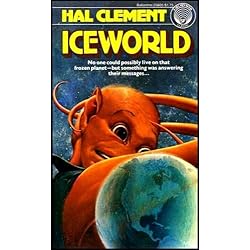
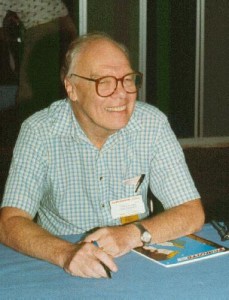
May 30, 1922 — Hal Clement. (Died 2003.)
By Paul Weimer: If hard science and physics could be considered “characters” in science fiction, Hal Clement is certainly the person who was able to make them so. Mission of Gravity is the premier look at this, giving an extremely weird and strange, and yet possible high gravity world. Do the characters he populates this world with work as individual characters? Not really, but what you read Clement for is the puzzles and the logic behind the hard science that makes a high gravity-distorted world like Mesklin (the planet of Mission of Gravity) possible in the first place.

Another novel in this vein that doesn’t get much play or notice, but I ironically read before Mission of Gravity, is The Nitrogen Fix. In this book, Earth’s atmosphere has changed, radically, with the free nitrogen and oxygen in the atmosphere having combined into a toxic and unbreathable mix of nitrogen oxides, carbon dioxide and water. Did the aliens who have come to Earth change and terraform Earth for their own purposes? In the end, the transformation of Earth’s atmosphere is a puzzle that is solved, and makes sense, with a big heaping sense of irony to it all.
Although shared worlds are not a big thing anymore, back in the 1980’s, they were all the rage. I didn’t mention it back when I wrote on Ellison (way too much to write about him) but even Harlan Ellison did a shared world, Medea. His shared planet had a bunch of writers very interested in building a realistic planet and solar system. Clement not only provided an essay on worldbuilding the astrophysics of Medea in the book, but also contributed a story.
Once again, hard science as a character in Clement’s work. That’s what it means to me.
(5) COMICS SECTION.
- Saturday Morning Breakfast Cereal is deceptive for a reason.
- Wumo has unusual neighbors.
(6) RUN FOR YOUR LIFE. [Item by Steven French.] How the game Zombies, Run! helped Dominik Diamond get into shape for a marathon: “If you want to run your first marathon in your 50s, it helps to be chased by zombies” says the Guardian.
At 56, I am running my first marathon, an old, fat, bald dad surrounded by millennials in body-hugging Lycra and smiles that look AI-generated. But I am ahead of them. For they are only competing for positions and personal bests, and I am being chased by zombies.
The black dog of depression hit me around the time of my last birthday. I didn’t feel I had achieved anything of note for an eternity. I used to work out but, for years, work kept getting in the way. I decided to kill two circling, carcass-sniffing vultures with one stone and run my first marathon.
I started off accompanied by audiobooks, but when Ben Elton’s autobiography got a bit whiny, I remembered Zombies, Run! – an interactive running game for smartphones that came out years ago. That became my running companion.
You start in the ruins of a shot-down chopper, with the voice in your ears trying to guide you to safety through the ranks of the undead. The interaction comes via short sections where you are told to run fast rather than lope. This is a challenge because sprinting is on that list of things you just can’t or won’t do in your mid-50s, along with sleeping all night without getting up for a pee, waiting in line at funfairs and anything to do with kale…
(7) SETBACK. “Blue Origin rocket explodes on the launchpad during an engine-firing test” – NBC News tells what we know.
Blue Origin said its New Glenn rocket exploded during an engine-firing test being conducted ahead of a satellite launch planned for next week. No one was hurt, according to officials at Cape Canaveral Space Force Station.
“It’s too early to know the root cause but we’re already working to find it,” Bezos said via X. “Very rough day, but we’ll rebuild whatever needs rebuilding and get back to flying. It’s worth it.”
The massive New Glenn was grounded in April after it left a satellite in the wrong orbit because of engine failure. It was only the third flight of the rocket that Blue Origin intends to use to launch landers to the moon for NASA, including the landers that will take astronauts to the lunar surface.
The company had been on track to launch a prototype lunar lander to the moon on a flight test this fall. Earlier this week, the space agency awarded Blue Origin a contract worth hundreds of millions of dollars to launch a pair of moon buggies in the next few years as part of the Artemis program….
(8) EXOPLANET CENSUS. Space Daily remembers: “In 1992, the number of confirmed planets outside our solar system was zero — and as of this year, NASA’s exoplanet archive lists more than 6,000 of them, with the lead scientist on the archive predicting the number could hit 100,000 within the next seven years”.
The official tally of confirmed planets outside our solar system, maintained by NASA’s Exoplanet Science Institute at Caltech, has passed 6,000. The agency announced the milestone through the Jet Propulsion Laboratory on 17 September 2025, noting that confirmed planets are added on a rolling basis by researchers around the world, so no single discovery is the 6,000th entry. More than 8,000 additional candidate planets are sitting in the queue awaiting confirmation.
The number that gets more attention from the people running the archive is not 6,000. It is 100,000. Jessie Christiansen, the archive’s chief scientist, has told Scientific American that the catalogue could reach roughly that figure within six to seven years, depending on when the Nancy Grace Roman Space Telescope launches and how the data from ESA’s Gaia mission flows through. Her team has spent the past year rewriting the archive’s software to handle that scale. As she put it to the magazine, they have been “madly redesigning” the system because it was built to hold a few thousand entries, not a hundred thousand….
[Thanks to Cat Eldridge, SF Concatenation’s Jonathan Cowie, Chris Barkley, Mark Roth-Whitworth, Kathy Sullivan, Steven French, Mike Kennedy, Andrew Porter, and John King Tarpinian for some of these stories. Title credit belongs to File 770 contributing editor of the day Kip Williams.]