Pixel Scroll 5/27/26 Pixelbot Murderscrolls

(1) CHINA EXECUTES FORMER CEO OF COMPANY THAT HELD FILM RIGHTS TO THE THREE-BODY PROBLEM. The BBC story reporting his fate, “China executes man for poisoning billionaire gaming tycoon”, begins —

Chinese authorities have executed a man for murdering his associate, billionaire gaming tycoon Lin Qi.

In 2020, a disgruntled Xu Yao poisoned Lin for sidelining him shortly after he helped him land a Netflix deal, local media reported.

Lin’s Yoozoo Games holds the film adaptation rights for the Chinese science fiction trilogy which Netflix made into the series 3 Body Problem.

Xu was convicted in 2024 and his execution, which reportedly happened on 21 May, was confirmed on Tuesday by his company in a statement, adding “justice has ultimately been served”.

“We deeply mourn Mr. Lin and extend our heartfelt condolences to his family,” the statement said.

“As colleagues who fought alongside him, all members of the company are grateful for the impartiality of the judicial process.”â€Ķ

The AP News story about the execution tells how the poisoning was accomplished:

â€ĶAccording to local media reports, Xu spent hundreds of thousands of yuan (tens of thousands of dollars) to buy highly toxic substances online, including alpha-amanitin, a lethal compound found in some poisonous mushrooms.

He disguised the poisons as probiotic pills, as well as put them inside coffee capsules, water containers and whiskey bottles, which he then shared with Lin and other company employees.

Lin was taken to the hospital in December 2020 and died a few days later. He was 39.

Several others became sick but recoveredâ€Ķ.

Comments on Weibo indicate that Xu Yao was involved in the early deal-making stages of the Netflix adaptation of The Three-Body Problem.

(2) CELEBRATING DYLAN’S BIRTHDAY. Brian Cronin displays “85 Bob Dylan Comic Book References” at CBR.com.

â€ĶI’ve been doing this since Dylan’s 70th birthday, and I used to just add a reference each year, but for his 80th, I thought I’d be stupid and actually come up with 80 new references that I had not previously used (you’re welcome, websites that will use these references in the future without mentioning that you got them from here). Starting with his 81st birthday, I picked my favorite references from the 179 options, and now I’m back to just adding one new reference every year. So if you’re familiar with all of these references, feel free to scan to the end of the piece for the brand-new 85th reference in honor of Bob turning 85 todayâ€Ķ.

Here’s an example –

From G.I. Joe: A Real American Hero #2 (by Larry Hama, Don Perlin and Jack Abel), the introduction of Kwinn the Eskimo, a reference to Dylan’s song “Quinn the Eskimo (The Mighty Quinn”)…

(3) HE-MAN AND THE GANG. Cora Buhlert catches up with Masters of the Universe developments in “Cora’s Thoughts on the Latest Masters of the Universe Trailers and Other Footage and the Marketing Campaign in General”. Her post begins:

The marketing machine for the upcoming Masters of the Universe live action movie is really running on full power. There has been yet another trailer and new featurettes, TV spots, behind the scenes footage and interviews with cast and crew have been released almost every single day. There’s even been a massive, world record breaking drone show in the skies above Los Angeles. This isn’t even the first drone show they’ve done, they’ve also done another over a congested highway in California some time ago. I kind of suspect that such drone shows wouldn’t have been allowed here in Germany – definitely not the one above the congested highway because it might distract drivers and cause accidents – but they’re very coolâ€Ķ.

(4) PEAK BLINDERS. The Science Fiction Encyclopedia’s John Clute decries “Burning Mappemonde To The Ground”.

I won’t go on at length here about the arguments that drive The Book Blinders: Annals of Vandalism at the British Library: A Necrology (2024). These arguments, which are presented at length (with illustrations), all stem from a conviction that the British Library’s destruction of millions of dustjackets they were meant to preserve has constituted a Puritan war of choice against the huge terpsichorean flow of culture and context and wisdom and flummery and mummery conveyed through those covers since the first one was created in 1819: those millionfold theatres of arrival, each cover an instantiation of the mapping of the story of the world: for every duskjacket that comes into the world proclaims the world within: Speak Friend and Enter: each dustjacket burned is a theatre closed.

The Book Blinders stops around 1990, when the British Library began to retain dustjackets of some categories of friction, thought it stored them in boxes in a warehouse hundreds of miles away, where they were declared to be available to Readers; but as they seem to have been sorted according to date of transfer, it may have proved a tad time-consuming to sort through large boxes filled with how many hundred covers stacked in the chronological order of their arrival at the warehouseâ€Ķ

(5) RODDENBERRY ARCHIVE VIDEOS. TrekCore.com draws attention as “New INSIDE THE RODDENBERRY ARCHIVE Video Series Debuts with Look at Long-Lost USS Enterprise Model”.

The team at the Roddenberry Archive — led by Star Trek creator Gene Roddenberry’s son, Rod Roddenberry — is opening its vault to the public in a new series of videos for this 60th anniversary year.
 
Inside the Roddenberry Archive debuted this afternoon with a pair of videos: one introducing this new series, where Rod Roddenberry shares a brief look at the team’s archive of Trek-related material and hints at things to come.
 
Every episode of Inside the Roddenberry Archive will feature an expert guest and deep dives into rare Star Trek artifacts and never before seen memorabilia from Gene and Majel Roddenberry. Experience Star Trek’s creation and legacy in a whole new way.

The project’s second video today focuses on the current state of the 34â€ģ USS Enterprise model built  in 1964 for “The Cage,” which went missing for decades until its miraculous recovery in 2024.

(6) TODAY’S BIRTHDAY.

[Written by Paul Weimer.]

May 27, 1911Vincent Price. (Died 1993.)

By Paul Weimer: Vincent Price. My first voice and face of horror. But especially, his voice. 

I’ve mentioned WPIX many times in these birthday reminiscences and in comments at File 770. And so it was on NY’s movie station that I first encountered the work of Vincent Price. It was one of the Dr. Phibes movies, gory, weird and a lot of fun. That voice was unmistakable. Imagine my surprise when the very different looking Dr. Egghead (played by Price) showed up in an episode of the 60’s Batman cartoon. Although Egghead and Phibes couldn’t be more different, the voice was what keyed me, even with my amusia, that the same actor was at work here.  That oily, horror fueled voice. He was the voice of terror, of nightmares, of the dark descent. 

And that’s kind of how I kept running into him, by accident, again and again. For a while it seemed I could not escape the Master of Horror. Oh, here he is in a movie based on the “Pit and the Pendulum”. How very droll.  Oh, and here he has shown up randomly on an episode of Columbo. Oops, here he is again in a Roger Corman horror film. All with That Voice. Although I still think the Jeff Goldblum version is better, the haunting image of his version of The Fly, where a part of him is trapped in a fly’s body, caught in a web, with a spider coming to eat him, is enough to give me the chills. 

Even with all of his other work, again and again, what Price comes down to is the voice of horror. And so I ask you, who else could have been the narrator voice for the music video Thriller?

(7) COMICS SECTION.

(8) HOMEWARD BOUND. Space Daily remembers: “In April 1970, the crew of Apollo 13 navigated home by holding the spacecraft against the terminator of the Earth, the line where day met night on the planet they were trying to reach, timing a fourteen-second engine burn with a wristwatch because their guidance computer had been shut down to save battery power for reentry”.

On the afternoon of April 15, 1970, somewhere between the Moon and the Earth, three men were sitting inside a spacecraft they were not supposed to be living in, watching their breath fog in front of them, and looking through a small triangular window at a tiny crescent of blue and white. The cabin temperature had dropped to near freezing. The guidance computer was off. The navigation platform that normally told the spacecraft which way it was pointing in three-dimensional space was cold and dark. And in a matter of hours they would have to fire an engine for fourteen seconds to refine a trajectory that, if wrong by even a fraction of a degree, would either skip them off the Earth’s atmosphere like a stone off a pond or burn them up on reentry.

So they used a wristwatch. They used the reticle etched in the lunar module window. And they aimed at the line on the Earth where shadow met sunlightâ€Ķ.

â€Ķ The computer in the lunar module, the Apollo Guidance Computer built at MIT’s Instrumentation Laboratory, drew power continuously when running. Running it for the entire trip home would have consumed amp-hours they could not afford to spare while protecting the command module’s reentry sequence.

So they shut it down. And without the computer, the inertial measurement unit that kept track of the spacecraft’s orientation drifted. By the time of the second course correction burn, the platform had no useful alignment at all. The cloud of debris from the explosion, lit up by the Sun, made it impossible to sight on stars in the usual wayâ€Ķ.

â€Ķ For that fourteen-second burn, Lovell and Haise needed to know the spacecraft was pointed in the right direction. Without the platform, they had to use the universe itself as a reference. The procedure, developed on the ground and read up to the crew, came from a technique Lovell had quietly experimented with on Apollo 8. Keep the Earth centered in the lunar module’s overhead docking window. Hold the cusps of the Earth’s terminator, the sharp line of day and night across the home planet, on the crosshairs of the Crewman Optical Alignment Sight on the forward window. Lovell would handle yaw with the hand controller. Haise would handle pitch. Swigert, back in the dark and freezing cabin, would call out time on his Omega Speedmaster wristwatch.

Fourteen seconds. Then shut down. Then drift againâ€Ķ.

(9) CHINA’S MOON AMBITION. “China shakes up its space programs to land astronauts on the moon by 2030: ‘We will spare no effort’” reports Space.com.

China is establishing an integrated program called the Lunar Exploration Program, melding both its robotic Chang’e lunar probe activities with the country’s human spaceflight program. Zhang Jingbo, spokesman for the China Manned Space Agency (CMSA) agency, made the announcement at a May 23 pre-launch event for the Shenzhou-23 crew launch to the nation’s Tiangong Space Station.

Speaking at the Jiuquan Satellite Launch Center in northwest China, Zhang said that “to fully leverage the technological expertise and practical experience accumulated over decades” via its human spaceflight and Chang’e lunar rover programs, “the existing manned lunar landing and unmanned lunar exploration efforts will be integrated across three areas of missions, resources, and teams.”

“We will spare no effort to strive for the goal of achieving the first Chinese landing on the moon by 2030,” Zhang added.

(10) THE TREMENDOUS TASTE OF DICK. [Item by SF Concatenation’s Jonathan Cowie.] Moid Moidelhoff (all hail the Media Death Cult leader) is a massive Philip K. Dick fan. Over the years, he and his Cult followers have had a number of Dick SF novel read-alongs and Moid himself last year completed his personal mission of reading all of Dick’s SF novels (about which he made an earlier video). Anyway, last month Moid was struck down by the worst disease known to manâ€Ķ The deadly man-flu!!!! There was nothing for it. Surrounded by soiled tissues (that would make a germ-warfare biologist blush) he set about to watch all the cinematic adaptations of Philip K. Dick’s SF novels and short stories (but skipped TV series, so no The Man in the High Castle or animated Blade Runner stuff). And he has a confession – he hasn’t watched a couple of non-Anglophone film adaptations and non-SF worksâ€Ķ and Radio Free Albemuth is not available over here in Brit Cit except as a very expensive import (plus shipping plus Trump reciprocal tariff etc. etc..) and if he was going to fork out over US$100 on a two-hour video of not-guaranteed-enjoyment he wouldn’t unless, that is, your mother was presentâ€Ķ

Not wishing his deed of derring-do to go to waste, and because he has an excellent taste in Dick, he has ranked all the adaptations. Do you agree with him? Disagree with him? Or are you somewhere in the middle? You can see his 21-minute video below.

To continue my journey to complete and utter P. K. Dickness, I watched every Philip K. Dick story that has ever been made into a film.

[Thanks to Mike Kennedy, Andrew Porter, John King Tarpinian, Ersatz Culture, Cat Eldridge, SF Concatenation’s Jonathan Cowie, Chris Barkley, Mark Roth-Whitworth, Kathy Sullivan, and Steven French for some of these stories. Title credit belongs to File 770 contributing editor of the day Camestros Felapton.]

Pixel Scroll 12/26/25 What’s Inside A Scroll? Energetic Pixels Of Course. Go See

(1) NEW YEAR’S ADDITIONS TO PUBLIC DOMAIN. Jennifer Jenkins and James Boyle highlight works that will shed their copyrights on “Public Domain Day 2026” at the Duke University School of Law website.

Please note that this site is only about US law; the copyright terms in other countries are different.[2]

On January 1, 2026, thousands of copyrighted works from 1930 enter the US public domain, along with sound recordings from 1925. They will be free for all to copy, share, and build upon.[3] The literary highlights range from William Faulkner’s As I Lay Dying to Agatha Christie’s The Murder at the Vicarage and the first four Nancy Drew novels. From cartoons and comic strips, the characters Betty Boop, Pluto (originally named Rover), and Blondie and Dagwood made their first appearances. Films from the year featured Marlene Dietrich, Greta Garbo, the Marx Brothers, and John Wayne in his first leading role. Among the public domain compositions are I Got RhythmGeorgia on My Mind, and Dream a Little Dream of Me. We are also celebrating paintings from Piet Mondrian and Paul Klee. Below you can find lists of some of the most notable bookscharacters, comics, and cartoonsfilmssongssound recordings, and art entering the public domain.[4] After each of them, we have provided an analysis of their significanceâ€Ķ

Here are some of the listed books that will be of interest to Filers for one reason or another:

Plus some characters, comics and cartoons:

(2) REGISTER FOR THE FEMALE MAN ZOOM PANEL. [Item by Jed Hartman.] There will be free online discussion panel about Joanna Russ’s brilliant novel The Female Man, which was published fifty years ago this year.

December 30, 11 a.m. US Pacific time, going for about two hours.

Featuring Farah Mendlesohn, Melanie Fishbane, Rebecca Fraimow, and Jed Hartman.

Audience participation welcome.

Advance registration (free) required. Sign up in either of these places: (1) Discussing the Female Man Tickets, Eventbrite; (2) Facebook.com

The Zoom link will be emailed to all registered attendees shortly before the panel.

(3) SWEDISH SMOFCON NOTES. Polish conrunning fan Marcin Klak, also known as Alqua, has posted a conreport “SMOFcon 42 – Don’t Panic and Appreciate Your Towel” at Fandom Rover.

SMOFcon 42 was my second in person Smofcon. It took me eight years to come back to this con, and my experience this time was quite different. Over the course of those years I learned a lot, and I met many people. Not to mention that the world itself has changed a lot too!…

â€Ķ And last, but definitely not least, I want to mention about the Q&A sessions related to the future cons. I didn’t manage to participate in the whole session but I had the chance to see at least a part of it. Next year we may have, for the first time in years, three different bids for Worldcon. I was aware of two of those for some time – Brisbane, Australia, and Kigali, Rwanda. The third one was a recent development – Nuremberg, Germany. Only the last of those had the presentation in person. It was quite interesting and convincing. The team mentioned about the possibility to have a camping ground at the front of the venue. The other two bidders had to connect remotely to the session. The big surprise in Kigali presentation was an offer of 15% off on RwandAir tickets. Which of the bids would win is a mystery to me. I have good reasons to keep my fingers crossed for all three of them – each for different reasons. Site selection next year will be a tough decision for meâ€Ķ.

(4) EATING THE FANTASTIC. Scott Edelman invites listeners to dish over dumplings with George Gene Gustines in Episode 271 of the Eating the Fantastic podcast.

George Gene Gustines

This episode’s guest has intrigued me ever since I first encountered him in the pages of the New York Times, one reason being that in an alternate universe, I could have been him. George Gene Gustines has worked at the paper for more than a third of a century, and during that time, he’s written hundreds of articles about comics books and comics-related pop culture events alone.

And the thing is — when I was a teenager attending the State University of New York at Buffalo and worked on the student newspaper, I continually tried to convince my editors to allow me to write about comics in addition to my other assignments. At the time, my plan was to be a journalist, with no inkling of my eventual career in comics. But if I’d continued on my original path, I can imagine I’d now be doing what Gustines does, and hope my editors would allow me cover the things I love for a mainstream audience as often as I could.

Gustines, like me, started out as a fan, and got his first letter published in an issue of The New Teen Titans when he was 16. He’s even gone on to write comics of his own, with an autobiographical graphic novel in the works. We talked about all of this over dinner at one of his favorite spots near the New York Times headquarters.

We discussed the reason what he’s pulled off would have been impossible a generation ago, why he calls himself “the Forrest Gump of the New York Times,” how he determines which potential articles are right for the paper and which are too inside baseball, what moved him to write his first letter to a comics editor (and his secret to getting them published frequently), why he loves superhero team books, the grace of George Perez, what defines a fan, the story he regrets being the first to report, what he does when not writing about comics, who he wishes he could have interviewed before they passed, what it takes to get an idea approved by his editors, when he rather than another writer gets to write comic book obituaries, his upcoming autobiographical graphic novel about how comics changed his life, the voicemail Stan Lee left which matches what you’d imagine “The Man” might say, how he intends to reach his goal of 1,000 bylines, and much more.

(5) SHELFIES.  Shelfies, edited by Lavie Tidhar and Jared Shurin, “Takes a unique peek each week into one of our contributors’ weird and wonderful bookshelves.” A recent entry was Shelfies #68: Silvia Moreno-Garcia. Photo at the link.

Silvia Moreno-Garcia is the author of The Bewitching, The Seventh Veil of Salome, The Daughter of Doctor Moreau, Mexican Gothic, and many other books. She has won the Locus, British Fantasy and World Fantasy awards.

(6) VAMPIRIC HISTORY. “Shroud-chewers, lip-smackers and suckers populate this fascinating study of ‘the unquiet dead’ across the centuries.” “Killing the Dead by John Blair review – a gloriously gruesome history of vampires” in the Guardian.

The word “vampire” first appears in English in sensational accounts of a revenant panic in Serbia in the early 18th century. One case in 1725 concerned a recently deceased peasant farmer, Peter Blagojević, who rose from the grave, visited his wife to demand his shoes, and then murdered nine people in the night. When his body was disinterred, his mouth was found full of fresh blood. The villagers staked the corpse and then burned it. In 1745, the clergyman John Swinton published an anonymous pamphlet, The Travels of Three English Gentlemen, from Venice to Hamburgh, in which it is written: “These Vampyres are supposed to be the Bodies of deceased Persons, animated by evil Spirits, which come out of the Graves, in the Night-time, suck the Blood of many of the Living, and thereby destroy them.” And so a modern myth was born.

But it is not so modern, or exclusively European, as this extraordinary survey shows. Instead, the author, a historian and archeologist, argues that belief in the unquiet dead is found in many cultures and periods, where it can lay dormant for centuries before erupting in an “epidemic”, as in Serbiaâ€Ķ. 

(7) ELEVATED LITERATURE. A Deep Look by Dave Hook is upward bound in “Climbing and Speculative Fiction”.

The Short: I decided to write an essay about climbing and speculative fiction after reading “Because It’s There”, a novelette by Susan Shwartz, Asimov’s November-December 2025. My essay covers characters doing all kinds of physical climbing I could imagine, such as mountains, rocks, ice, trees, cliffs, buildings, and such. My favorites are the superlative “Hothouse“, a novelette by Brian W. Aldiss, F&SF January 1961, that features tree climbing, and the classic “The Left Hand of Darkness“, a novel by Ursula K. Le Guin, 1969 Ace Books, which includes crossing a range of mountains (so perhaps an edge case, but close enough for me). Here is a link to my list of stories and novels that I read for this essay. I suspect I will get recommendations for more books and stories I should have included, which I look forward to!

(8) SPEAKING OF BALLARD. Which John Clute does in his latest post for Encyclopedia of Science Fiction’s Substack page – “Ballard, Brexit, and Filling the Gaps”. Read it and you will learn about “spomeniks”, a word that might come in handy sometime.

(9) MEMORY LANE.

[Written by Paul Weimer.]
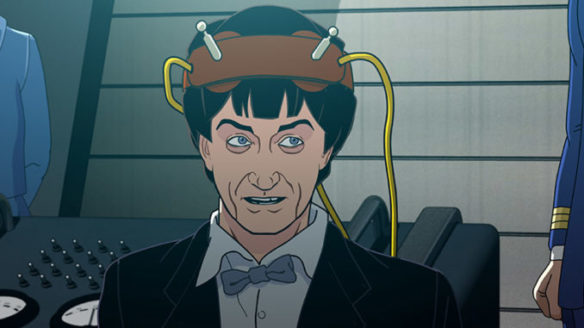
Galaxy Quest (1999)

By Paul Weimer: Galaxy Quest â€” the best movie about Star Trek fandom of all time? 

Very possibly yes. 

In the days before The Orville (which has neatly taken up the Galaxy’s Quest banner in some ways), Star Trek’s self importance was sometimes overweening. Oh, you could see and find some deflation of the seriousness of movies like Star Trek: the Motion Picture now and again in the Star Trek canon (Star Trek IV in particular).  But the strong desire and passion of fans was something that was mocked for a long time, and by William Shatner himself. 

On December 20, 1986, the infamous “Get a Life” sketch was aired on Saturday Night Live. It’s worth seeing if you haven’t seen it. People forget that at the end Shatner “recants” his rant against the fans and says he was just channeling “Evil Kirk”. Everyone remembers how for the first 6 minutes of the episode he rips and destroys the enthusiasm and geeky intense interest of those same fans. 

So, Galaxy Quest is a corrective, I feel, to that sketch and those perceptions. And at the time I saw Galaxy Quest in 1999, I had been to one Star Trek convention (with Marina Sirtis and George Takei). I knew and know the passions of people for a property, a franchise, an imaginary future. I share them, after all.

Galaxy Quest channels all that, and with love and respect, but knowing how silly its own source material is, uses it. From the funky controls on the bridge, to the “choppers” in a passageway that Sigourney Weaver’s character calls out as being stupid, the movie shows the absurdity of following a property so closely. And yet in showing the absurdity of it, it also shows the love, respect, care and humanity of fans of a property. (Consider how the fans come together to help land the remnants of the ship). It’s a movie that touches the heart and knows when to cut from horror, to comedy, to moments of tenderness and pathos.  There are few episodes, or movies of the actual Star Trek that can say the same.

And the casting is perfect. Tim Allen as the clueless captain? Sigourney Weaver, whose sole job is to repeat the computer? The late Alan Rickman, horrified that he has, by Grabthar’s Hammer, been permanently typecast? Tony Shalhoub as the slacker chief engineer? All of the cast understood the assignment and give the movie their all. The movie is peppy, doesn’t flag, and entertains thoroughly. It satirizes and respects and loves Star Trek, and its fans. 

Also, in 2020, inspired by this movie, I went out of my way in my trip around the “Utah 5” to see Goblin Valley State Park, where the alien planet with the beryllium mine (and the rock monster) was filmed. Friends, it is as alien and weird as the movie makes it out to be.

Never give up, never surrender may be Captain Taggart’s catchphrase, but it’s some damn fine advice for life, too.

(10) COMICS SECTION.

(11) CLASSIC BOK. The Bristol Board hosts 14 images by fantasy artist Hannes Bok. Includes this one — “Boomerang” from Famous Fantastic Mysteries (August 1947).

(12) LIKE YOU NEED LITTLE TEENY HANDSâ€Ķ [Item by Daniel Dern.] Heard on NPR’s Weekend Edition Saturday: “This metalworker is creating suits of armor for mice”. Dern notes, “This may help explain the Metal Munching Moon Mice (from the Adventures of Rocky & Bullwinkle).” Note, it also talks about armoring up cats, “Sometimes he makes cat armor too.”
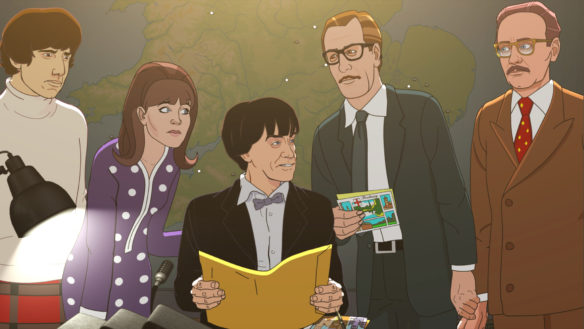
â€Ķ PRICHEP: This thing that started as something of a joke has become an art. And the armor, which we should note De Boer does not put on actual mice, are amazing. Hinged visors to protect a whiskered face, intricately detailed rivets and fittings and joined plates to cover the tail – they give nod to everything from Viking tradition to Indian empires to samurai helmets.

DE BOER: The nice thing with mouse scale is that you get to do a whole lot of neat things. You get to explore all of the different cultures, all the different forums.

PRICHEP: De Boer recently taught a mouse armor master class in Seattle. Students used sanding belts to smooth out wooden shapes to mold armor aroundâ€Ķ.

(13) DON’T SOCK IT TO HIM. [Item by Steven French.] From the American Institute of Physics history newsletter, a seasonally appropriate piece about â€Ķ Einstein’s socks (or lack thereof!):

â€Ķ.Yet Einstein’s medical history provides only part of the story. As Pesic points out, his decision about footwear had an ancient philosophical precedent in Socrates, who famously went barefoot in all weathers. Even during the bitter winter Battle of Potidaea, his companion Alcibiades marveled at how Socrates walked barefoot on ice better than other soldiers did in boots. For Socrates, going barefoot wasn’t merely comfortable; it was a practice of physical courage and endurance that reflected his philosophical commitment to truth. Einstein, who in 1927 admiringly compared his friend Michele Besso to Socrates as a “midwife” of thought, very likely would have known about Socrates’s status as a pioneer of the barefoot philosophical lifestyle.

The connection between Einstein and Socrates would have been reinforced by popular culture. Maxwell Anderson’s 1951 play Barefoot in Athens explicitly linked Socrates’s bare feet to his trial and martyrdom, with the character Xantippe lamenting that “Athens still wants beauty and glamor and success—not an old man in bare feet pointing out that the human race doesn’t know its ass from its elbow.” Performed in Princeton, New Haven, and on Broadway during the McCarthy era, audiences might well have connected this portrayal with Einstein’s own well-known socklessness, casting him as a latter-day Socratic questioner.

Einstein himself offered various explanations for his sockless state, often using humor. To photographer Alan Richards, he quipped that “it would be an awful situation if the containers were of better quality than the meat.” To his friend Peter Bucky, he claimed “simplicity” as a guiding principle—going without socks eliminated the need for anyone to darn them. To a neighbor, he emphasized mild rebellion: “I have reached an age when, if someone tells me to wear socks, I don’t have to.”â€Ķ

(14) AVATAR INSIGHTS. The latest in the New York Times’ “Anatomy of a Scene” series where they ask directors to reveal the secrets that go into making key scenes in their movies. “How a Deadly Bond Develops in ‘Avatar: Fire and Ash’”. Link bypasses the paywall.

â€ĶA new villain aligns with a familiar one in “Avatar: Fire and Ash,” the third installment in James Cameron’s franchise about the blue inhabitants of the distant earthlike moon Pandora. Arriving on the scene this time is Varang (Oona Chaplin), a passionate figure whose desire to rule is as strong as her desire to ruin.

In this scene, she has cornered Quaritch (Stephen Lang), the villain from the first film, and given him a psychedelic truth serum. It leads to a potential partnership that could fulfill many of Varang’s power-hungry needs. Narrating the scene, Cameron discusses some of the ideas behind it, how he worked with the actors through performance capture, and what techniques he employed to give the sequence a jittery sparkâ€Ķ.

(15) PICARD’S TORMENT. “Star Trek: TNG’s Darkest Episode Is Mandatory Viewing for Every Sci-Fi Fan” says CBR.com.

When Star Trek: The Next Generation first aired in 1987, it proved to be a worthy successor to the original series from the outset. Benefiting from a world that took science fiction more seriously than the ’60s, the superior age of special effects helped make the show an instant classic. Above all else, fans praised it for its more thoughtful approach to the genre, delving into philosophy and politics even better than the William Shatner-led series. In the series’ penultimate season, Jean-Luc Picard was written into the darkest story of the series, a tale still relevant thirty-three years after it first aired: “Chain of Command.”â€Ķ

â€Ķ The episode “Chain of Command” follows Captain Picard as he leads Worf and Crusher on a clandestine mission to destroy a Cardassian biological weapons facility. However, when he’s captured by the enemy forces, he’s held captive while the new commander of the Enterprise, Captain Edward Jellico, attempts to navigate the situation. While held by the Cardassians, he’s subjected to extreme psychological torture by Gul Madred, an enemy commander. The central part of his torment involves placing Jean-Luc before four lights and forcing him to “accept” that there are five.

As tensions escalate between the Federation and Cardassians, Madred’s interrogation and conditioning of Picard also intensifies. With his crew racing desperately to get him released, the captain does his best to withstand the enemy’s tactics, but grows visibly weaker as the story progressesâ€Ķ.

â€Ķ. The episode is among the franchise’s darkest moments, giving the audience a rare glimpse at a form of torture that hits close to home. Since the story’s release, the world has reckoned with real torture scandals that only make the episode more grim in hindsightâ€Ķ.

(16) PULLMAN CONSIDERED. [Item by Steven French.] Matthew Cantor in the Guardian ponders the significance of Philip Pullman’s Dark Materials: “Truth in fantasy: what Philip Pullman’s His Dark Materials taught us over its 30-year run”.

Pullman has spoken at length about his trepidation about the fantasy genre; he never wanted to be a JRR Tolkien type, inventing a world for its own sake. Instead, “I had to try to use all my various invented creatures – the daemons, the armored bears, the angels – to say something I thought was true and important about us, about being human, about growing up and living and dying,” he said in a 2002 speech. “This, finally, is what I think the value of fantasy is: that it’s a great vehicle when it serves the purposes of realism, and a lot of old cobblers when it doesn’t.” Two trilogies have shown us Lyra’s world is very real. A much-graffitied bench in the Oxford Botanic Garden is proofâ€Ķ.

[Thanks to Steven French, Mike Kennedy, Andrew Porter, Daniel Dern, Jed Hartman, John King Tarpinian, Cat Eldridge, SF Concatenation’s Jonathan Cowie, Mark Roth-Whitworth, and Kathy Sullivan for some of these stories. Title credit belongs to File 770 contributing editor of the day Cat Eldridge.]

Pixel Scroll 12/3/25 The Scrolling Of Pixel 49

(1) THE REASONS WHY. France 24’s English service delivers more information and insight about AngoulÊme festival: “Bam! Pow! Bubbles burst as AngoulÊme comics festival is cancelled”.

With the 2026 edition of the AngoulÊme International Comics Festival now officially cancelled, we take a look at what went wrong and who’s to blame. We dig into what pushed authors to massively boycott the 53rd edition of the festival, despite the economic losses for them and the southwestern French city.

(2) SILENT SERVICE. “Amazon Quietly Pulls Disastrous AI Dubs For Popular Anime After Outcry” reports Futurism.

If you watched the English-dubbed version of one of several popular anime on Amazon Prime Video lately, like “Banana Fish,” and “No Game, No Life,” you may have noticed something strange. The voices were generic, unexpressive, and at times robotic, completely disconnected from the action unfolding on screen. Some lines even sounded a little glitchy. In a word: it was a disaster.

The embarrassing English voices it turned out, were AI-generated. An entourage of actors didn’t sit down in a room somewhere recording take after take to bring these characters to life; instead the voice lines were automatically stitched together using what’s essentially glorified text-to-speech software, with predictably horrendous results.

Fans were furious. And the fallout on social media quickly became so vociferous that Amazon has now quietly pulled the AI dubs from several of the shows, including “Banana Fish.” The AI-generated Spanish dub for “Banana Fish” and “Vinland Saga,” however, are still available, Anime Corner notedâ€Ķ.

(3) SOME HOPEFUL FUTURES. The Center for Science and the Imagination’s book Climate Imagination: Dispatches from Hopeful Futures was released December 2 by the MIT Press. It includes fiction (by authors Gu Shi, Vandana Singh, Hannah Onoguwe, Libia Brenda, and Laura Watts) along with essays and visual art.

Where can we look for hopeful climate futures, when the global picture seems dominated by inaction or backsliding? While influential nations and international bodies seem adrift, absent, or flatfooted in the face of an accelerating climate emergency, vigorous action is happening at local and regional levels, propelled by coalitions of advocates, researchers, community leaders, and everyday people.

In this conversation on the new book Climate Imagination: Dispatches from Hopeful Futures, we will talk with writers and thinkers from different regions to learn not only about hopeful climate stories and imaginaries but also local resources and efforts on the ground.

Edited by Joey Eschrich and Ed Finn of the Center for Science and the Imagination at Arizona State University, the book presents speculative fiction, essays, and artworks that explore possible futures shaped by climate action, grounded in real science and the complexities of actual physical and human geographies around the world. Contributors represent 17 different countries from Mexico, Germany, and Sri Lanka to Nigeria, China, Norway, Brazil, and more: Zeid Ra’ad Al Hussein, Jason Anderson, Claire Armitstead, Libia Brenda, Azucena Castro, Andrea Chapela, Nalini Chhetri, Alejandra Espino del Castillo, Fabio Fernandes, Ed Finn, Pippa Goldschmidt, Adeline Johns-Putra, Joseph Kunkel, Ken Liu, Manjana Milkoreit, Gabriela DamiÃĄn Miravete, Benjamin Ong, Hannah Onoguwe, Chinelo Onwualu, Martha Riva Palacio, Anna Pigott, Kim Stanley Robinson, Gu Shi, Vandana Singh, Nigel Topping, Emma TÃķrzs, Iliana Vargas, Laura Watts, Yudhanjaya Wijeratne, and Farhana Yamin.

There’s a virtual launch event for the book on Thursday, December 11 from 1:00-2:00 p.m. Eastern, featuring three contributors to the book: the SF writer, journalist, and data scientist Yudhanjaya Wijeratne; climate researcher Manjana Milkoreit; and SF writer and physicist Vandana Singh.

(4) HWA CROWN AWARDS. Historia Magazine revealed the winners of the HWA Crown Awards 2025, presented by the Historical Writers’ Association (HWA) to celebrate the best in recent historical writing, fiction and non-fiction.

The winners of the Gold Crown for fiction, the Non-fiction Crown and the Debut Crown were revealed on Wednesday, November 19, at an awards party at Crypt on the Green, a historic building in Clerkenwell.

HWA Gold Crown Award 2025

  • The Heart in Winter by Kevin Barry (Canongate Books)

HWA Non-fiction Crown Award 2025

  • Moederland by Cato Pedder (John Murray)

(5) DEEP DEPOSITS. Not to be missed is the Encyclopedia of Science Fiction’s celebration of “The Library as a Turkey That Does Not Give Thanks” by John Clute titled “Transgressive Embedment”.

â€Ķ So we’re not here at the moment to thank the kind of institutional “library” after the years of plague when books, once their information “content” was abstracted into digital form, were routinely destroyed; the kind of library whose innards, like frozen elevator music, evoke the terrifying cenotaphic interior spaces Stanley Kubrick created for 2001: A Space Odyssey (1968), in order to demonstrate the denuded torpor Homo sapiens had sunk into by 2001: how desperately we needed help to mature as a species: we know the answer we gave. We can of course thank digital libraries for the abyssally fertile maps of nearly infinitve amounts of data they contain, data doors within data doors like Arabian Nightmares; but we cannot thank their makers for attempting to disable our deep intuition that in the end, after much journeying, maps are less not more. That even the profoundest of Borgesian maps can only describe more fully that which can be described. That when you misdescribe a thing in the world, the skinned torso of the Thing in the World does not become whatever. You doâ€Ķ.

(6) S&S S.O.S. Cora Buhlert reviewed Swords of the Barbarians by Kenneth Bulmer, which she found to be “a not very good sword and sorcery novel”, for Galactic Journey: “[November 20, 1970] Year of the Cloud… and lesser lights (November Galactoscope #2)”.

â€Ķ Now I happen to like sword and sorcery, and while very few authors manage to reach the heights of a Robert E. Howard, Fritz Leiber, Michael Moorcock, or C.L. Moore, even the lesser entries in the genre are at the very least entertaining. And so, when I spotted a cover (courtesy of Richard Clifton-Day) featuring a dark-haired, muscular and nearly naked barbarian with a sword squaring off against a somewhat more dressed barbarian with a red beard and horned helmet wielding a battle axe in the spinner rack of my trusty import bookstore, with a blurb promising “a sword and sorcery saga in the great tradition of Conan”, I of course took it homeâ€Ķ

(7) U.F.FAUX. Later in November Cora returned to Galactic Journey with a review of what may well be the first found footage film ever, the 1970 UFO mockumentary The Delegation: “’[November 28, 1970] A True Fake Story: Die Delegation – eine utopische Reportage (The Delegation – a Utopian Documentary)”.

… The unaired footage looks rough and uncut. Clapperboards are visible, there are random cuts and lens flares, radio music plays in the background, the sound crackles and sometimes drops out altogether, people walk into the shot, wave at the camera and kids push in front of the camera and grin. In Washington DC, Roczinski stands outside the Pentagon and declares that the Pentagon has no official comment on UFOs. Then, he enters a car to interview a colonel of the US Air Force who notes that though the Pentagon’s official line is that there are no UFOs and no extraterrestrials, there is plenty of evidence to the contrary. The colonel also points Roczinski to a 1955 report on the UFO phenomenon by Major Donald Keyhoe who came to the conclusion that the Soviets are not responsible for the UFO sightings and an extraterrestrial origin is the only explanation. Donald Keyhoe is a real person, a former pulp writer and military officer who wrote the bestselling books The Flying Saucers Are Real and The Flying Saucer Conspiracy and co-founded the National Investigations Committee On Aerial Phenomena NICAP. Afterwards, Roczinski tries to interview the Mailers, a black couple from Washington DC who claim to have been abducted by UFOs en route to Cleveland, only to reappear a few days later in El Paso, Texas. However, the neighbours of the Mailers bodily kick Roczinski and his cameraman Gerd Hannieck out of the apartment building, complete with shaky footageâ€Ķ.

(8) TODAY’S BIRTHDAY.

[Written by Paul Weimer.]

November 3, 1968Brendan Fraser, 57.

By Paul Weimer:

“Patience is a virtue…”

“Not right now it isn’t!”

Brendan Fraser, as Rick O’Connell in the three Mummy movies, proved that the old formula of pulp action that started in the 30’s, The Mummy, and was revived somewhat by the Indiana Jones films in the 80’s, could have a bit of new life in the late 90’s. 

Why did The Mummy succeed when The PhantomThe Shadow and other attempts at pulp action in the Nineties failed? A lot of that I give the credit to Brendan Fraser. Straight jawed handsome hero, but with humor and a modern sensibility, The Mummy’s success is in no small part thanks to him embodying the role of the central hero. 

The movies have lots of other charms, from the supporting cast (which sadly gets somewhat less sparkling as one goes from the first to the third film), and good writing (again, which slips as we go down the movies). But Fraser is the tentpole around which the film runs.  (Just consider how miscast Tom Cruise was in the recent Mummy remake and you will see what I mean–Fraser could have made hay out of that role). The alternate worlds where someone else took the O’Connell role are probably poorer for that choice.

Fraser is the kind of actor whose roles often were characters you want to be, be friends with, or get romantically entangled with. He has other genre work to his credit, too.  Although the movie is uneven, he’s fun in Bedazzled, selling his soul to Elizabeth Hurley’s devil. Looney Tunes: Back in Action requires an actor who can act with Toons…Fraser fits that bill, too. Journey to the Center of the Earth…I admit I got vertigo trying to watch that one. 

The strains of being an actor and stardom meant that Fraser took a decade off from movies, but I am delighted that he is back. He’s in a more mature, older form. I really like his work in Doom Patrol, for instance.  Robotman should be a ridiculous character, and he is, but Fraser helps sell it.  He played a villain in the never-released Batgirl movie (curse you, Warner Brothers). I’d like to someday see what he did with the role of Firefly.

And yes, I heard the news that there is going to be a new Mummy movie. For that, indeed, Patience is a Virtue. 

Brendan Fraser and family

(9) TODAY’S BIRTHDAY, TOO.

[Written  by Cat Eldridge.]

December 3, 1958Terri Windling, 67.

By Cat Eldridge: I first encountered Terri Windling’s writing through reading The Wood Wife, a truly extraordinary fantasy that deserved the Mythopoeic Award it won. (The Hole in the Wall bar in it would be borrowed by Charles de Lint with her permission for a scene in his Medicine Road novel, an excellent novel.) I like the American edition with Susan Sedona Boulet’s art much better than I do the British edition with the Brian Froud art as I feel it catches the tone of the novel. 

I would be very remiss not mention about her stellar work as the founding editor along with Ellen Datlow of what would be called The Year’s Best Fantasy and Horror after the first volume which was simply The Year’s Best Fantasy, that being noted for those of you who would doubt correct me for not noting that. The series won three World Fantasy Awards and a Stoker as well.

They also edited the most splendid Snow White, Blood Red anthologies which were stories based on traditional folk tales. Lots of very good stuff there. Like the Mythic Fiction series is well worth reading and available at usual suspects and in digital form as well.

Oh, and I want to single out The Armless Maiden and Other Tales for Childhood which took on the difficult subject of child abuse. It garnered a much warranted Otherwise nomination.

Now let’s have a beer at the Dancing Ferret as I note her creation and editing (for the most part) of the Bordertown series. I haven’t read all of it, though I did read her first three anthologies several times and love the punks as you can see here on Life on the Border, but I’ve quite a bit of it and all of the three novels written in it, Emma Bull’s Finder: A Novel: of The Borderlands, is one of my comfort works, so she gets credit for that. 

So now let’s move to an art credit for her. So have you seen the cover art for Another Way to Travel by Cats Laughing? I’ve the original pen and ink art that she did here. 

Which brings me to the Old Oak Wood series which is penned by her and illustrated by Wendy Froud. Now Wikipedia and most of the reading world thinks that it consists of three lovely works — A Midsummer Night’s Faery TaleThe Winter Child and The Faeries of Spring Cottage

But there’s a story that Terri wrote that never got published anywhere but on Green Man. It’s an Excerpt from The Old Oak Chronicles: Interviews with Famous Personages by Professor Arnel Rootmuster. It’s a charming story, so go ahead and read it.

Terri Windling

(10) COMICS SECTION.

(11) JEOPARDY! [Item by Andrew Porter.] On last night’s Jeopardy!, the category was “Pulp Fiction.” Here are 4 screenshots from the show. And no, I didn’t get all of the clues.

(12) TIME TRAVEL ANTHEM. [Item by Steven French.] A little tangential perhaps but here’s Chris Hayes on writing the song “The Power of Love” for Back to the Future: “We didn’t think Back to the Future sounded plausible – or good’: Huey Lewis and the News on The Power of Love” in the Guardian.

When I wrote it, I had no idea what was going to happen or how popular it was going to be. It ended up being an integral part of the whole Back to the Future franchise, the biggest song in our career, and gave us our first No 1, which was exciting. What’s weird about it, though, is that the song really has nothing to do with the film whatsoever. We were given a synopsis of the screenplay of the movie, and I read through the whole thing and I remember thinking to myself: “This doesn’t sound plausible or like it’s going to be good.” And boy was I wrong!

(13) THEREMIN NEWS. [Item by Dann.] The New York Times recently had a piece on the theremin.  Thought it might be of interest for obvious reasons. Although the authors didn’t cover the most obvious reason for some odd reason.  Most unreasonable of them. “The Beguiling, Misunderstood Theremin” at Archive.ph.

â€Ķ Utopian visions of liberation have been entwined in the theremin’s history for as long as it has existed. The inventor of the instrument, the Russian-born engineer Leon Theremin, told The New York Times in 1927 that his “apparatus,” which he believed could produce an unprecedented range of tonal colors and sounds, “frees the composer from the despotism of the 12-note tempered piano scale, to which even violinists must adapt themselves.”

Theremin, a physicist and amateur cellist, would go on to serve time in a Siberian labor camp, spy for the Soviet government and invent an electronic security system used at Sing Sing prison in Ossining, N.Y. But first, he created his musical apparatus by accident. He was developing an electronic device for measuring the density of gases when he realized that the sounds it emitted changed when he moved his hands.

In the late 1920s, RCA began to manufacture and sell the theremin, making it the first mass-produced electronic instrument. Today, perhaps 140 original models remain. “At the time that it came out, it was promoted as being easily playable,” Chrysler said, standing in front of an original RCA theremin housed in the Metropolitan Museum of Art’s music gallery, “which of course wasn’t true.”â€Ķ

(14) WHAT WOULD IT BE LIKE IF THE EARTH DID NOT HAVE ANY AXIAL TILT? [Item by SF Concatenation’s Jonathan Cowie.] Curious Cases is a BBC Radio 4 programme hosted by a scientist and comedian who has a passion for science on the side.  This week they looked at the ‘what if’ scenario of the Earth not having any axial tilt.

Because the Earth has tilt, we obviously get seasons and this in itself would mess up a lot of biology. Many multicellular terrestrial species use the seasons to govern their life cycles breeding in the seasons of plenty.

Now, this you might not think would be a big deal.  You might suppose that a non-tilted Earth would be more a mediocre place and so the absence of seasons would be no big deal.  However, researchers have modeled a non-tilted Earth and it is not good news.

A non-tilted Earth would see more expansive frozen poles as well as more expansive sub-tropical zone deserts: The Sahara would be bigger as would the central Australian desert.  The tropical forest zone would be reduced as would the comfortable temperate zones.

For those of us in Brit Cit, it would be like March all year round but with more and stronger storms due to changed weather track patterns.  Conversely, somewhere like Melbourne, Australia, would have something like 20°C days all year round.  However, Melbourne would be on the edge of the expanded Australian desert and so be far drier than today: so kiss goodbye to Australia’s Darling agricultural bread basket.

The show’s hosts and one of their guests also briefly considered that a non-tilted Earth would see the dinosaur destroying asteroid miss a land impact and hit the ocean.  This would reduce sulphate injection into the atmosphere, which cooled the Earth, and also increase water injection into the stratosphere so causing a warming effect.  The actual difference between such a non-tilted Earth strike and what actually happened depends on how the mix of these two effects played out.  However, one of the guests muses that more dinosaurs may have survived in this scenario and possible co-exist with humans today.  (Have I ever told you that I have never really forgiven the dinosaurs for what they did to Raquel Welch?) Here I was minded – and sadly they did not mention this – Harry Harrison’s mid-1980s Eden trilogy of books whose central conceit is that dinosaurs survived through to today.

Could you survive an eternal winter? Or is endless summer sun a more appealing prospect? Lots of us are grateful for the seasonal changes that shape the world around us, but this week Hannah and Dara are asking what life would look like without the axial tilt that brings each hemisphere closer and further away from the sun as the seasons change each year. Listener Andrew from Melbourne wants to know what would happen if the planet stood perfectly upright, no lean, no tilt, no seasons. But what else could happen? Is Earth’s 23-degree slant the cosmic fluke that made life possible?

To find out, Hannah and Dara explore how losing the tilt reshapes climate, ecosystems, evolution and maybe even the fate of the dinosaurs.

This was another of the series’ good editions and you can access it here.

The present day biome map of N. America. If the Earth did not have any axial tilt then the ice and tundra zones would expand as would the semi-desert of S.W. USA. The cool and warm temperate zones would contract.

[Thanks to Cat Eldridge, SF Concatenation’s Jonathan Cowie, Mark Roth-Whitworth, Cora Buhlert, Dann, Michael Burianyk, Joey Eschrich, Kathy Sullivan, Steven French, Mike Kennedy, Andrew Porter, John King Tarpinian, and Chris Barkley for some of these stories. Title credit belongs to File 770 contributing editor of the day Brian Jones.]

Pixel Scroll 10/25/25 Pixel, Queen Of The Scrolls

(1) SCIENCE FICTION ENCYCLOPEDIA OPENS SUBSTACK BRANCH. As John Clute explains in “SFE on Substack” at The Encyclopedia of Science Fiction, the Encyclopedia will remain free, the Substack posts beyond the first five will be for subscribers.

â€ĶMost of what I write these days is in the form of new entries and entry-revisions for The Encyclopedia of Science Fiction, a task (for 20 years with David Langford) I’ve no inclination to ease up on. But times have changed. The SFE is free now and will always be free. We’ve been published over the decades by various publishers (Doubleday, Granada, St Martin’s, Orbit, Gollancz). Those times have passed. Since 2021 we’ve survived on momentum and donations, mainly because of David’s genius at site construction and maintenance; and if we were ourselves able to work for free the SFE could continue afloat (though not exactly flourishing) indefinitely. Which is to say we can’t work for free (and because of donations haven’t had to); but that at the same time we’re not exactly prosperous, and can’t expand as fast as we think we need to (even though, as of today, our wordcount is more than ten times the wordcount of the 1979 first edition).

So I’ve decided to contribute a weekly post on a new Substack site, only just now active. The site is called The Encyclopedia of Science Fiction. The link is:

This Substack site is free to access and will clock the sf world as it changes, and more particularly how SFE records and honours these changes. There will be retrospectives and news updates and thoughts about navigating our 7,500,000 words and counting. There’s a lot of serendipity inside the SFE, and some Easter Eggs.

But after five or so of my own posts have gone up – which should demonstrate the sort of thing I’d like to do – the more substantial ones will move over to a subscription basis. I’m thinking I’ll do around one extended piece a week, plus shorter free-access posts when they come to mind, though frequency will vary. The first five are already up or will be very soon.

All subscriptions will be thought of and treated as donations to the SFE itself. Any income will go directly to the SFE and will be spent variously. Supporting me and David. Running the site. Expanding the coverageâ€Ķ

(2) MONSTER MODELS. Keth Braithwaite reprises MonSFFA’s overview of Aurora’s line of movie monster-themed plastic model kits in “MonSFFA’s Halloween Special – Post 4 of 4”.

The Long Island, NY-based Aurora Plastics Corporation was founded in 1950 as a contract manufacturer of injection-molded plastics. Before too long, the company began producing and marketing its own line of “all plastic assembly kits” for young hobbyists, focusing chiefly on aircraft and automobiles.

Aurora’s first figure kits, a set of medieval knights in armour, were introduced in the mid-’50s, quickly followed by the “Guys and Gals of All Nations” series, featuring statuettes dressed in the national costumes of Holland, China, Scotland, and other countries, this in an effort to appeal to female crafters. Throughout the late-’50s, ’60s, and ’70s, other historical subjects followed the knights, from Roman gladiators to modern U.S. soldiers, sailors, and airmen, along with a variety of kits spotlighting American wildlife, sports stars, comic book superheroes, sci-fi TV characters, and the prehistoric world.

But it was a licensing agreement with Universal Studios that allowed Aurora to launch what would become its most popular and successful series of all, the Movie Monster Models collection!

Universal’s classic horror films were enjoying a revival in the late-’50s- and early-’60s, and were all the rage with youngsters, who watched them on television, where they aired frequently, or flocked to movie houses to see them. Aurora marketing director Bill Silverstein had taken note of the appeal these old pictures had with adolescents and teens, and pitched the idea of a series of kits showcasing Universal’s stable of venerable movie monsters. He was met with ridicule and disinterest but persisted and eventually convinced skeptical upper management to gauge interest by bringing to market one model.

That model was Frankenstein, released in 1961. Silverstein was soon vindicated! Frankenstein was an instant hit and calls started coming in to Aurora’s sales offices requesting other kits in the line. Dracula and The Wolf Man were rushed into production and were on store shelves in time for Christmas 1962. â€Ķ

(3) ONLY (THE MOST DANGEROUS) A GAME. Cora Buhlert reviewed the West German TV adaptation of “The Prize of Peril” by Robert Sheckley for Galactic Journey“[October 22, 1970] The Most Dangerous Game on West German TV: Das Millionenspiel (The Million Game)”. It’s a German TV event that had one thing in common with Orson Welles’ War of the Worlds broadcast – a bunch of people didn’t realize it was fiction.

On the evening of Sunday, October 18, I settled down on my sofa with a glass of wine and a selection of crackers, potato chips and mini pretzels and tuned in to watch a new TV movie on the West German broadcaster ARD called Das Millionenspiel (The Million Game). I was quite excited because this movie was science fiction, an adaptation of the short story “The Prize of Peril” by Robert Sheckley, and science fiction films are sadly few and far between on West German TV.

Like me, a lot of West Germans were tuning in to ARD. After all, we only have three TV channels – unless you’re one of those lucky few who can receive additional channels from East Germany, Denmark, the Netherlands, Belgium, France, Austria or Switzerland. However, unlike me, a lot of those viewers were not aware that they were watching a science fiction film. Indeed, many were not aware that they were watching a TV movie at all. Instead, they thought they were watching a new game-show, a game-show where the grand prize was a staggering one million Deutschmarks. However, there is a catch. For in order to win this marvellous prize, the contestants have to avoid a gang of stone-cold killers for an entire week. So there are really two prizes: One million Deutschmarks or death.

Even while The Million Game was still running, the TV station ARD was inundated with phone calls. Most of the viewers called in to express their outrage that the ARD dared to use their hard-earned licence fees to produce and broadcast such a terrible and cynical game-show, where contestants could be murdered for entertainment, something that the outraged viewers were certain violates the constitution. Some folks even called the police, demanding that they intervene and stop this outrage at onceâ€Ķ.

(4) GORT KLAATU BARADA NIKTO, BABY! Camestros Felapton discusses media variations on Harry Bates’ classic “Farewell to the Master” in “Ch38: Gort”.

An alien spaceship lands in America. It is quickly surrounded by the US military. Two figures emerge from the strange craft. The first is a human sized figure but the second is larger, a metallic humanoid robot. Suddenly, a shot rings out! The alien is hit!

We have three versions of this story and what happens next. The first, in 1940 was “Farewell to the Master” by Harry Bates published in Astounding Magazine. Bates was a long-standing writer and editor of pulp magazines. He had been the editor of Astounding prior to John W. Campbell and like many writers of his generation (and since) wrote across a wide range of genres.

We will come back to “Farewell to the Master”, it is arguably Bates’s most notable science fiction story but mainly because of the 1951 film, The Day the Earth Stood Still. That film in turn inspired a big budget remake in 2008 but it also inspired an album cover for the former Beatle Ringo Starr and a 2021 album by Willie Nelsonâ€Ķ.

(5) WHAT WHO MEANT. Den of Geek, while reminding us they didn’t like the Doctor Who finale generally, goes into one specific shortcoming in “Here’s What Carole Ann Ford’s Doctor Who Return Originally Meant”.

At this point, talking about all the things that are controversial, or kind of bad, or just downright weird about the Doctor Who season 15 finale kind of feels like beating a dead horse. â€œThe Reality War” is just not a great episode. It’s fully apparent that the ending we got wasn’t the ending Russell T. Davies initially set out to write, and it certainly seems as though Ncuti Gatwa’s Doctor wasn’t originally meant to regenerate quite this early in his run. The stunt casting of former companion Billie Piper asâ€Ķ whatever role she’s meant to be currently playing is basically the definition of a last-second Hail Mary. And that’s before we even get to the fact that the show finally seemed poised to solve a 60-year-old mysteryâ€Ķ before whiffing on it entirely. 

The endless questions surrounding Susan, the Doctor’s granddaughter and original companion, have been a topic of fierce debate for many years: What became of her after she departed the TARDIS? Was she also a Time Lord? If so, who are her parents? And it seemed as though Doctor Who was finally ready to offer up some answers — even bringing back original actress Carole Ann Ford for her first appearance onscreen since the 1993 charity special “Dimensions In Time”. But her return ultimately amounted to little more than a glorified cameo, as a vision of Susan urged her grandfather go back and find her. What that means is anyone’s guess, as the character is never mentioned again in the season, despite featuring a two-part finale that was hyper-focused on convincing the Doctor he had a child. But now we know there was meant to be more to the story. 

The news comes courtesy of Ford herself, who was recently interviewed by former companion Katy Manning at Club Parramatta in Sydney, Australia. During their conversation, Manning asked about Susan’s origins and whether Ford knew who her character’s mother was. Her answer, which describes what appears to be “The Reality War’s” original ending, is a fascinating one. 

“You didn’t see the episode, which was to sort of introduce my coming back, where I was holding hands with a little — beautiful little tiny Black child, three years old. And we were watching through the window somewhere where the audience wasn’t supposed to know where we were supposed to be,” Ford said.  “And we were watching my newly embodied grandfather, who was now Ncuti [Gatwa], and watching him have a wonderful time singing and dancing in a party in a shop opposite where we were. And obviously, I, my character Susan, was longing to just go there and fling her arms around her grandfather and say, ‘Grandfather, how lovely to see you after all this time and how did you survive your floating about in spaceâ€Ķ and why have you changed?’”

Presumably, that child is Sienna-Robyn Mavanga-Phipps, the young actress who played the charming Captain Poppy, who was initially introduced in “Space Babies” before being reintroduced as a Human-Time Lord child on the alternate reality Earth of “Wish World.” In the aired version of the finale, Susan doesn’t appear at all, and it’s the act of saving Poppy — and altering reality enough to allow her to live as Belinda’s fully human daughter — that causes Fifteen’s regeneration. But clearly that wasn’t the way the story was originally supposed to go. So what changed? It’s possible we’ll never know. And Ford’s not telling.

“Anyway, that was unfortunately not to be — for reasons I know and will not disclose,” she saidâ€Ķ.

(6) JEOPARDY! [Item by Andrew Porter.] On last night’s Jeopardy! Category: Women Authors — this was a clue.

(7) ALL IN A GOOD CAUSE. WELL, A CAUSE, ANYWAY. “Louvre Thieves Given Immunity After Confirming Jewels Stolen For Purpose Of Training AI Software” reports the Waterford Whispers News.

FRENCH POLICE have immediately ended all efforts to recover priceless Napoleon-era jewellery from the Louvre taken in a daring heist after it emerged the jewels were merely stolen for the purposes of training AI software.

“When we realised these jewels were only stolen to inflate the share price of a company whose entire value relies on the wholesale theft of other people’s art, we had no choice but grant these scamps immunity,” confirmed French prosecutor Alain Barbier.

“Thievery of art is here to stay, we need to accept that and move with the times. Yes, this gang stole from the most famous museum in the world but it’s in the name of training their AI software so it can do good doodle of jewels and maximise shareholder value so we are powerless to stand in the way,” added Barbier, appealing for people to just get over it and move onâ€Ķ.

(8) JUNE LOCKHART (1925-2025). Actress June Lockhart died October 23 reports the New York Times: “June Lockhart, Beloved Television Mother, Dies at 100”. Tribute is behind a paywall. These excerpts focus on her sff work.

June Lockhart, the soft-spoken actress who exuded earnest maternal wisdom and wistful contentment in two very different mid-20th-century television roles, on the heartwarming children’s series “Lassie” and the futuristic “Lost in Space,” died on Thursday at her home in Santa Monica, Calif. She was 100.

Her death was announced by a spokesman, Harlan Boll.

…In 1965, Ms. Lockhart returned to series television, playing a wife, mother and interplanetary explorer turned castaway on “Lost in Space.” Her television family included a robot who seemed to announce “Danger, Will Robinson,” alerting the show’s boy hero (Bill Mumy) to extraterrestrial menace, as often as Lassie’s sensitive ears and nose alerted her to earthly emergencies. The series, which combined an over-the-top villain (Jonathan Harris as Dr. Smith) with low-budget production values, became something of a camp classic, acquiring a devoted following years after its original run.

She made her film debut at the age of 13, appearing uncredited in the 1938 version of “A Christmas Carol.” Her parents, the Canadian-born actor Gene Lockhart and the British-born actress Kathleen (Arthur) Lockhart, played the poor but happy Mr. and Mrs. Bob Cratchit; she played their daughter Belinda. She had first appeared onstage at 8 in a Metropolitan Opera production of “Peter Ibbetson.”â€Ķ

â€Ķ But she seemed to be making her own choices by 1946, when she starred in “She-Wolf of London,” a horror drama in which she and Don Porter were the biggest names. 

After “Lost in Space” went off the air in 1968, Ms. Lockhart immediately signed on to join the cast of the rural sitcom “Petticoat Junction,” whose star, Bea Benaderet, had died. Playing a new doctor in town, she remained until the series ended its run two years later.

She continued to make guest appearances on television series and was also occasionally seen in feature films, including “Strange Invaders” (1983)…

Her last screen roles were in “Zombie Hamlet” (2012), in which she played a Southern matron who finances a strange film; “The Remake” (2018), a romantic comedy about actors; and the animated “Bongee Bear and the Kingdom of Rhythm” (2019), as the voice of Mindy the Owl. She also provided the voice of Alpha Control in the 2021 Netflix reboot of “Lost in Space.”

(9) MEMORY LANE.

[Written by Cat Eldridge.]

October 25, 1968Star Trek’s “Spectre of the Gun”

Physical reality is consistent with universal laws. Where the laws do not operate, there is no reality. â€“ Spock to McCoy, at the OK Corral.

Fifty-seven years this evening on NBC, Star Trek’s â€œSpectre of the Gun” first aired. It was written by former producer Gene L. Coon (under the name of Lee Cronin) and directed by Vincent McEveety.  

In the episode, the Enterprise having been found trespassing into Melkotian space, Captain Kirk and members of the his bridge crew except Uhura are sent to die in a surreal re-enactment of the Gunfight at the O.K. Corral. Not at all surprisingly aliens are behind this entire affair, testing humans before they make contact with them by testing Kirk’s refusal to kill. They finally grant the Enterprise permission to approach their planet. 

The first use that I know of a setting similar to this was the First Doctor two years previously in “The Gunfighters”. A later splendid use is Emma Bull’s Territory

I will note that the budget wasn’t available to shoot on location on a full set, so instead a Western street of false building fronts and no sides was used. 

It’s considered one of the finest episodes of the original, although Keith R.A. DeCandido of Tor.com inexplicably choose to criticize the episode for its historical inaccuracies.  Huh? 

Christian Science Monitor and Hollywood Reporter both put it in their top 20 original Star Trek episodes, and the A.V. Club ranked this episode as one of top ten “must see” episodes of the original series.

I liked it and thought it was one of the better episodes and certainly a high point of generally not great season three. And Jubal dropping in from that Party thought the writing was excellent, high praise from him. 

(10) COMICS SECTION.

(11) HAVE SPACE SHUTTLE, WILL EVENTUALLY TRAVEL. I hope they don’t cut the baby in half. “How do you solve a problem like Discovery?” in The Register.

The White House’s Office of Management and Budget is grappling with how to transport Space Shuttle Discovery from the Smithsonian Museum in Virginia to Space Center Houston. How would you do it?

Certain individuals have held a grudge for years over the omission of Houston, Texas, when the remaining Space Shuttles were handed out at the end of the program. Los Angeles got one, Florida got one, but Houston, where the missions were managed, was left off the list.

The grumbling has continued for more than a decade, and US president Donald Trump’s recent spending bill, which is still being argued over, included $85 million to relocate a space vehicle that has flown a crew. This was widely interpreted as an order to move Space Shuttle Discovery from the Smithsonian’s Udvar-Hazy Center in Virginia to Space Center Houston in Texasâ€Ķ.

â€Ķ  A trip by road and barge appears the most likely option. However, the two sides of the argument have come up with wildly differing costs for the exercise and the impact such a move would have on the orbiter.

The only way to resolve the discussion is surely via the sensible and knowledgeable Register readership, who doubtless have many thoughts on how this task could be accomplished. Our – admittedly not very serious – ideas are below.

Engage! Help plot Discovery’s course to Houston

  1. Balloons: Float Discovery to Houston like that house in the film Up – there’s plenty of hot air in Washington after all…
  2. Catapult: Construct a giant catapult and fire Discovery at Houston to show-off its prowess at being a glider one last time.
  3. Send a life-sized cardboard cut-out of Discovery to Houston with the words “You Lost, Get Over It” written on one side.
  4. Allow Elon Musk to launch a Starship from Virginia, strap Discovery to it, and let nature take its courseâ€Ķ.

(12) RYAN GEORGE HAS STEPPED AWAY. Humor video maker Ryan George explained to YouTube followers why he’s on hiatus.

(13) AND WE PASSED THROUGH THE CATALOG OF CONTENT. [Item by N.] Games reviewer Civvie 11 looks back on the point-and-click adaptation of I Have No Mouth, and I Must Scream, on the eve of its 30th anniversary: “Points, Clicks, And Misery”.

(14) SOME LIKE IT NOT. Sci-Fi Odyssey is pleased to remember “Top 10 sci-fi disasters that became cult masterpieces”. This could be the lowest bar ever applied to the word “masterpiece” given that the ten films on the list are Cloud Atlas; Donnie Darko; Tron; Starship Troopers; Brazil; Metropolis; Blade Runner; The Thing; Dune (1984); and Plan 9 From Outer Space.

Some of the greatest sci-fi movies ever made were box office disasters first. In this countdown, we look at 10 sci-fi flops that became cult masterpieces — the films critics hated, audiences ignored, but time redeemed.

[Thanks to Andrew Porter, John King Tarpinian, Cora Buhlert, N., Daniel Dern, Chris Barkley, Cat Eldridge, SF Concatenation’s Jonathan Cowie, Mark Roth-Whitworth, Steven French, Kathy Sullivan, and Mike Kennedy for some of these stories. Title credit belongs to File 770 contributing editor of the day Mark Roth-Whitworth.]

Pixel Scroll 6/24/25 You Gets No Cred(ential) With One Spaceball

(1) DOES GOODREADS PROTECT TROLLS MORE THAN AUTHORS? “Authors hit by bad reviews on Goodreads before review copies are even circulated” at The Bookseller (behind a paywall).

Authors are reportedly being hit by negative reviews on the book review site Goodreads before proof copies are even circulated, with the review site allegedly failing to remove reviews.

Crime writer Jo Furniss was one of several authors to share her recent experience of the Amazon-owned review site with The Bookseller: â€œA lot of authors share the soul-destroying experience of seeing their books trashed before they are even available to genuine readers,” she said. “Worse, like me, they feel they are given no protection by one of the biggest platforms in the industry. What is Goodreads doing to protect authors from online abuse?” 

In her comment piece for The Bookseller, Furniss wrote: â€œIt is months until the publication of my next thriller, Guilt Trip (Bonnier Zaffre). The novel is not available anywhere yet. Not even advance review copies. So why does Guilt Trip already have a single two-star rating on Goodreads? 

“That was my thought process when I skimmed over the title recently while on Goodreads doing pre-publication admin. I’m not a masochist, I don’t usually linger over bad reviews. But an impossible mystery intrigues me, so I clicked.”

After responding to the anonymous reviewer’s low rating, Furniss explained they then complained about the comment – which prompted an email from Goodreads explaining that it advises authors to “refrain from confronting users who give their books a low rating”. Her comment was then removed. She added: “That was on the 8th May. I followed up on my report of their behaviour and got a reply saying Goodreads will investigate. I followed up again and got no reply. I have heard nothing since [though the review has been removed after The Bookseller contacted Goodreads].”

She explained that she “doesn’t care about one petty review”, and said that: “It’s no more than a gnat bite on the thick skin you need for this business.” Furniss said that she cares more that she “doesn’t get the same protection as the troll”, adding: “Their actions are a form of online abuse. When Goodreads fails to respond to reports of harassment from members against authors, they let the abuse continueâ€Ķ.

(2) AO3 VS. LLM. The Verge gives an emotional summary of how “Fanfiction writers battle AI, one scrape at a time”.

â€ĶIn the online world of fanfiction writers, who pen stories inspired by their favorite movies, books, and games, and share them for free, there are unspoken codes of conduct. Among the most important: never charge money for your fanfic, and never steal other people’s work.

It makes sense then that fanfic writers were among the first creators to raise the alarm about their work being fed into learning language models powering generative AI without their knowledge or permission. But their efforts to stop the encroachment of AI into fan spaces is an uphill battle.

The latest salvo came in early April, when user nyuuzyou scraped 12.6 million fanfics from the online repository Archive of Our Own (AO3) and uploaded the dataset to Hugging Face, a company that hosts open-source AI models and software.

Nyuuzyou’s upload was quickly discovered by the Reddit community r/AO3, where hundreds of users posted furious reactions. A Tumblr account, ao3scrapesearch, built a search engine that allowed authors to search their usernames and see if their work had been scraped by Nyuuzyouâ€Ķ.

â€Ķ. In 2023 came Sudowrite’s Story Engine, powered in part by OpenAI’s ChatGPT. Nikki remembers watching a video about the new “writing assistant” AI software that allows users to enter details about characters and plot points and generate an entire novel. She was so appalled that it made her cry. Nikki, who works for a software company, had already seen her workplace shift toward integrating AI. But she hadn’t imagined her hobby would be impacted by it too.

“Trying to knock this stuff down, that’s probably the best thing that one can be doing now.”

Later that year, the prevalence of highly specific sexual terms related to the wolf-biology fanfiction trope of Omegaverse appeared in Sudowrite, revealing that ChatGPT had likely been trained on fanfic without the authors’ knowledgeâ€Ķ.

â€Ķ But over the last few years, fanfic writers say there have been numerous examples of genAI entrepreneurs trying to cash in on their work — such as people like Cliff Weitzman, the CEO of text-to-voice app Speechify, who was found to have scraped thousands of fics from AO3 and uploaded them to WordStream, a website linked to his app, without the authors’ permission. (He swiftly removed that after fans pushed back on social media.) Then there was Lore.fm, a text-to-speech app from Wishroll Inc, which marketed itself on TikTok as “Audible for AO3.” The app was announced in May 2024 but was withdrawn later that month after fan pushback.

“It’s like a whack-a-mole thing. Every time you turn around, there’s, like, another grifter trying to steal your shit,” Nikki says.

It may seem odd to hear such a strong sentiment from a writer who, like most fanfic creators, uses copyrighted intellectual property as a “sandbox” to make up their own stories. But advocates for fanworks say they are “transformative,” meaning a “fanwork creator holds the rights to their own content, just the same as any professional author, artist, or other creator,” according to AO3â€Ķ. 

(3) BREUER BIOGRAPHER Q&A. I knew that “the gostak distims the doshes” was a fannish reference — now I’ve finally learned why! Science Fiction and Other Suspect Ruminations’ Joachim Boaz brings us “Exploration Log 10: Interview with Jaroslav OlÅĄa, Jr., author of Dreaming of Autonomous Vehicles: Miloslav (Miles) J. Breuer: Czech-American Writer and the Birth of Science Fiction (2025)”.

Today I have an interview with Jaroslav OlÅĄa, Jr. about his brand-new book, Dreaming of Autonomous Vehicles: Miles (Miroslav) J. Breuer: Czech-American Writer and the Birth of Science Fiction (2025). In the book, he covers the life and career of Miles (Miroslav) J. Breuer (1889-1945), the first SF author to regularly write original stories for Hugo Gernsback’s Amazingâ€Ķ 

Before we dive into the details of his fiction, what are two Breuer stories you recommend readers interested in the history of science fiction tackle?

Allow me to mention three stories, each for a different reason. The first one is “The Gostak and the Doshes” (1930) (in the March 1930 issue of Amazing Stories) (read online) definitely a tale that still has an important message today. It shows how fake news and media manipulation can change society—not for better but for worse, and that such fake news can even trigger war. This is probably the most mature of all Breuer’s stories. And one of only a few, which does not have either Czech or early English-language versions. It seems to me that this one was written originally for Amazing Stories.

The second story I would like to mention is “The Stone Cat” (1927) (read online). It is definitely not the most remarkable piece of Breuer’s writing, but it is an interesting example of how Breuer was writing and rewriting his short stories. Breuer was well aware that he had to adjust his stories to the audience that would read them—and “The Stone Cat” shows it the most of all his works as we have three different versions of it. It was the fifth short story Breuer ever published as early as 1909 when he was twenty years old. Seven years later he published it in Czech in a slightly revised version, which was localized for the Czech-American community. While these two editions were not known until recently, all historians know “The Stone Cat” was published—in a very different version—in 1927 Amazing Stories—it was Breuer’s second story published there. In all the versions we see his literary developmentâ€Ķ 

It was Miles J. Breuer’s story that made “The gostak distims the doshes” into a fannish catchphrase, although the phrase was coined in 1903 coinage in an Andrew Ingraham lecture and quoted in 1923 in the book The Meaning of Meaning by C. K. Ogden and I. A. Richards.

(4) SCI-FI LONDON 48-HOUR CHALLENGE 2025 WINNERS. [Item by SF Concatenation’s Jonathan Cowie.] The Sci-fi London 48-hour challenge is open to all amateur film makers, who are told to include a prop and also given a line of dialogue to put in their film and then they go away and make a film in just two days. Some past winners have gone on to be film directors, including the 2008 winner Gareth Edwards who did Star Wars: Rogue One and The Creator, and whose next film is the next step in the Jurassic Park franchise.

This year the judges included author Adrian Tchaikovsky (who has a couple of books short-listed for this year’s Hugo).

The 2025 winners have been announced.

1st place: Warm welcome by Team: Death by Cat Bag

2nd place: The Set Up by Team: Biaol

3rd place Solid State by Team: Gifme5

(5) UKRANIAN PUBLISHING HOUSE HIT IN RUSSIAN ATTACK. “Russia Destroys Publishing House In Kyiv Following Book Festival” reports Publishers Weekly.

A Russian missile and drone attack on Kyiv on June 17 destroyed a Ukrainian publishing house and damaged several other book-related businesses, the Ukrainian publishing industry news service Chytomo has reported. Ukrainian Priority Publishing was completely destroyed when Russian forces launched 175 drones, more than 14 cruise missiles, and at least two ballistic missiles at the Ukrainian capital and surrounding areas. The attack killed 28 people and damaged 27 sites across various districts.

“The Russian invaders targeted not only residential buildings and hospitals but finally struck a truly strategic site: our publishing house, Ukrainian Priority, was completely destroyed and burned to the ground,” Volodymyr Shovkoshytnyi, CEO of Ukrainian Priority Publishing, told Chytomo. “The office and warehouse are gone. Tens of thousands of books—over 130 titles—were turned to ash.”

Ukrainian Priority had previously lost an employee to the war when sales manager Valentyn Dobryi was killed at the front in November 2023 while serving as a volunteer with Ukrainian Armed Forces. After the June 17 attack, Shovkoshytnyi said he “sifted through the ashes of 14 years of my life,” but expressed determination to rebuild the company.

Їzhakultura Publishing’s office and storage space, located on the ground floor of a residential building, was also hit during the attacks. “The building sustained significant damage from the impact of fragments of a Russian cruise missile,” Artem Braichenko, cofounder of Їzhakultura Publishing, said. “The force of the explosion was so powerful that it caused structural deformation inside the building, including damage to the doors and walls of our office.”â€Ķ

â€Ķ The attacks came just a week after the 13th International Book Arsenal Festival was held in Kyiv for the third time since the war began. The country’s primary literary events attracted 30,000 attendees for some 200 events over three-and-a-half days, including 111 publishers and six bookstoresâ€Ķ.

(6) ON THE ROAD. Leigh Bardugo and John Picacio will be touring to celebrate their debut picture book release — The Invisible Parade.

Join us to talk art, storytelling, collaboration, and why we will always walk through those cemetery gates. You can bring books or art prints from home to get signed (limit 2 each for Leigh, and for me). You can ask us about old projects, new projects, adaptation, and everything in between. All events are ticketed. Limited seating. Get yours before they’re gone!

Here are the links for tickets to The Invisible Parade tour.

(7) HE’S HISTORY. Sahil Lavingia says the Codex writers community has banned him for reasons quoted in this post at X.com.

The group does not have a public-facing copy of its Code of Conduct on its website, but the Membership page does have this:

Codex is a privately run organization.

We reserve the right to decline an application or to close an account for any reason or no reason, especially in the case of grossly unprofessional or antagonistic behavior online or elsewhere. However, we’re glad to say this is hardly ever necessary.

Lavingia posted about his work in the journal “DOGE Days”. This is his May 25 entry.

I got the boot from DOGE.

I reached out to someone who wrote about Gumroad’s recent transition to open source. During the interview, which was then published in Fast Company, I was asked about my experience working at DOGE, which had been revealed publicly as part of a WIRED article.

Soon after publication, my access was revoked without warning.

My DOGE days were over.

(8) MEANWHILE, BACK IN 1949. A Deep Look at Dave Hook returns to its Retro-Hugo-substitute series in a review of “’The Cosmic Geoids: and One Other’, John Taine, 1949 Fantasy Publishing Company, Inc.”

The Short: I read The Cosmic Geoids: and One Other, a John Taine collection, 1949 Fantasy Publishing Company, Inc. The best thing about it are the Lou Goldstone illustrations and cover art. My overall average rating for the two novellas is 2.8/5, or “Poor”. Not recommended unless you are a huge fan of John Taine (Eric Temple Bell). Even then I have my doubts.

(9) CLUTE COLLECTION GIFTED TO TELLURIDE INSTITUTE. “Science-Fiction Library opens to public” reports Telluride News. Famed sff critic John Clute has transferred his over-13,000 volume collection to the Telluride Institute.

The habit of collecting books began early for John Clute, renowned author, literary critic and book collector. Inside a book he received for Christmas in 1948, he wrote, “John Clute Number 31.” He was eight years old at the time. Now, more than 13,703 distinct volumes from his private science fiction collection are on the shelves of the Clute Science Fiction Library at the Telluride Institute, where they will stay as a gift to the Telluride region.

Last week, Clute was in Telluride to assist while Henry Wessels, appraiser of antiquarian books, manuscripts and archives, went through the entire library to catalog and appraise the volumes. The appraisal was at the request of John and Pamela Lifton-Zoline, co-founders of Telluride Institute (TI). They accepted the collection from Clute in 2017.

“What’s really important here is the fact that Pam and John recently gifted the collection to the Telluride Institute,” said Dan Collins, president of TI board of trustees. “Before that, we didn’t have a legal kind of authority over the collection, but it was housed at the Institute and we understood that eventually, it would be given to the Institute, which it was in the last couple of months.”â€Ķ

â€Ķ Clute feels that Telluride is the perfect place to house the library. He has been collecting science fiction first editions and visiting Telluride since the 1970s.

“Telluride is an ideal cultural and physical place to have an accessible repository of knowledge,” he said. “This is a rural place, but also fundamentally urban in the best sense. A place like Tellurideâ€Ķis also romantic.”â€Ķ

â€ĶBoth Pam and her husband John also recommended the Encyclopedia of Science Fiction Online. It’s Clute’s masterwork of collecting, an exhibit of science fiction story summaries and 35,000 scanned dust jackets from first editions in his libraries.

The dust jackets are critical pieces of the history carried by the genre.

“It’s an essential part of science fiction history, certainly in the 50s, 60s and 70s,” said Clute. “To understand the first appearance of many of these stories, which have become famous — or not — in the context of the time of their release. That moment, that significant moment in culture and in publishing history and the authors’ and the readers’ experienceâ€ĶWhat does it look like? and what are you being told? What did William Gibson’s ‘Neuromancer’ look like in 1984 when it came out?”

â€ĶAccess to the library at 212 W. Colorado Ave. in Telluride is available by appointment for quiet reading, work, research and toursâ€Ķ.

(10) HERE’S THE WINDUP AND THE WITCH. Charlie Jane Anders recommends “Eight Enchanting Novels About Witches” in the New York Times. (Link bypasses paywall.)

â€ĶI love reading about witches — and was eager to write about them in my new book, “Lessons in Magic and Disaster” — because it’s an identity that feels subversive and tied to a rebel glamour. Wizards attend fancy boarding schools: Witches gather furtively in the woods. Here are a few of my favorite, witchiest booksâ€Ķ.

One of Anders’ picks is —

A Discovery of Witches by Deborah Harkness

Harkness, a real-life historian, writes engagingly about Diana Bishop, the scion of two powerful witch families who has turned her back on magic to pursue an academic career. While doing research at Oxford University, Diana uncovers a long-lost magical manuscript, which awakens her powers and attracts the attention of a charismatic vampire named Matthew Clairmont. Diana’s desire to hold onto academic respectability — even as a key primary source in her research turns out to be a secret magical book — feels utterly believable, and the confluence of magical politics, historical texture and romance provides an endless series of delights.

(11) MEMORY LANE.

[Item by Cat Eldridge.]

June 24, 1950Destination Moon on Dimension X

Seventy-five years ago on this date, the radio version of Robert Heinlein’s Destination Moon first aired on the Dimension X radio show.  

It was episode twelve of the series.

Despite common belief that it based off the film version of Heinlein’s novel, it was not. It was instead based on Heinlein’s final draft of the film’s shooting script. 

During the broadcast on June 24, 1950, the program was interrupted by a news bulletin announcing that North Korea had declared war on South Korea, marking the beginning of the Korean War.

A shortened version of this Destination Moon radio program was adapted by Charles Palmer and was released by Capitol Records for children. 

You can hear it here.

(12) COMICS SECTION.

(13) MARCHING TOWARDS AMAZING SPIDER-MAN #1000. Marvel Comics’ Amazing Spider-Man series hits issue #1000 next year. As part of the lead-up, artist Lee Bermejo will draw variant covers.

 This September, Amazing Spider-Man #11, part of Joe Kelly, Pepe Larraz and John Romita Jr.’s hit current run, is the milestone 975th issue of Amazing Spider-Man, kicking off the countdown to the titles next monumental milestone—Amazing Spider-Man #1000! To help celebrate, superstar artist Lee Bermejo will draw a variant cover for each issue of Amazing Spider-Man starting with #11 and ending with next year’s 1000th issue, Amazing Spider-Man #36. The 25 Amazing Visions Variant Covers will depict key events in Spider-Man history, starting with his groundbreaking origin and first encounters with his most iconic supervillains!

(14) JEOPARDY! Andrew Porter was tuned in for tonight’s Jeopardy when this item came up.

Category: Nerds

Clue: see below

Question: What is Propellor Head?

“No one got it. I didn’t either!” admits Porter.

(15) MURDERBOT SHOW Q&A. Murderbot Executive Producer “â€ĶAndrew Miano Talks Bringing The Beloved Sci-Fi Series To Life” at Nexuspoint News.

Demet: Since Murderbot is genderless, were there any discussions about having a female actor? Or did you start just a male actor in mind?

Andrew: No, I think we were open to the best actor, the best opportunity, the best way to tell the story. It’s interesting because I’ve talked to, or I’ve read a lot and we’ve talked to a lot of different people, imagining who it could be in their own mind as readers, so there isn’t any one right way. What was important was to keep the character genderless in the show, referring to Murderbot as it, which when a male actor is playing, sometimes you run the risk… But it’s something that everyone took very seriously and was supportive of, and it was never a big deal. It was a matter of fact: this is who the character is.

(16) AMAZON’S FIRST 007. “First Amazon James Bond Is Video Game Character in 007 First Light” – The Hollywood Reporter has the story.

The first new James Bond under the complete ownership of Amazon MGM Studios will make his debut in 2026, and he is young, brash, has a robust origin story and a mysterious scar on his right cheek â€Ķ and is a playable character.

The future of the James Bond film franchise is still being written (Amy Pascal and David Heyman are hard at work on that), but the next chapter of James Bond the IP will begin next year, in what will be the first project to feature the iconic character since Amazon stunned the world by buying out control from Barbara Broccoli and Michael G. Wilsonâ€Ķ.

(17) NEW BOOKS FROM OUTER SPACE. [Item by SF Concatenation’s Jonathan Cowie.] In the current issue of the journal Science there were a number of fiction reviews of both SF and genre-adjacent fictionâ€Ķ.

An astronaut hides her queer identity to protect her career. A museum researcher is detained while returning from international travel. A biologist grapples with extinction as war breaks out in Ukraine. A physicist confronts the off-Earth options for humanity. These themes, any of which might have been plucked from current headlines, are explored by the authors of this year’s summer reading selections—all of which are works of fiction. Some of the stories they tell employ dramatic satire and surreal scenarios to convey timely messages. (How better to discuss class inequality than through the murderous exploits of a mosquito-human hybrid?) Others—such as a tale of love that takes place during a catastrophic pandemic—feel closer to reality, even if the fictional virus wreaking havoc is more “undeadly” than deadly. Whether probing the lasting legacies of slavery and colonialism, interrogating humanity’s future with robots, or exposing the fallout of research misconduct, the books reviewed here entertain even as they offer thoughtful commentary on contemporary issues of interest to scientists and engineersâ€Ķ.

(18) NEW AI HAS SCIENCE REASONING. [Item by SF Concatenation’s Jonathan Cowie.] Current Artificial Intelligence (AI) can piece together disparate bits of knowledge from material on which it has been ‘trained’ which is all well and good.  What it cannot do with any confidence is infer meaningful inferences about material on which it has not been trained. (Some AI have exhibited meaningful insights but only in a limited way.)  A news item in this week’s Nature reports on a new AI, ether0.

Ether0 is an open source AI released 5th June 2025 from the FutureHouse, California, 2023 start-up company.  It is trained on the laws of chemistry and can generate the formula of chemical compounds for possible pharmaceutical use.  One of the innovations of this AI is that questions do not have to be in-putted by chemical formula but by spoken plain English. What is more it tracks its thoughts in English: AIs tend to be a ‘black box’ with their workings out hidden from questioners and operators.  It works by merging the reasoning chains from a specialist AI, DeepSeek-R1 to generate seven models.  Then each model was then tweaked with ‘enhancement’ (or ‘rewards’) for correct answers to a set of 500,000 chemistry questions.  The resulting output model was the ether0 AI and it is more intuitive than other chemistry AIs to date. Some members of the FutureHouse predict that within two years most chemistry hypotheses put forward for science research may be generated by ether0 or future models like it.

You can see the news item here: “AI Start-up Debuts ‘Reasoning Model’ For Science”.

I have always told folk that the machines are taking over but no-one ever listensâ€Ķ!  The good news here is that of all the areas of science, chemistry has defined rules albeit complex ones including electron shell energies, chemical bond strength, atom movement within molecules and so forth. Other science is a little different. Biology tends to be a bit messy due to ill-defined, highly complex biological systems (try accurately modelling a tropical rain forest), and physics has gaping holes (such as whatever it is that merges quantum mechanics with special relativity).  But this new chemistry AI could be a sort of analogous development akin to old computer programmes of the 1980s that could play chess compared to today’s sophisticated, 21st century, global climate models.

[Based on: Savitsky, Z. (2025) “AI Start-up Debuts ‘Reasoning Model” Nature, vol. 642, p552-3.]

[Thanks to SF Concatenation’s Jonathan Cowie, Mark Roth-Whitworth, Steven French, Kathy Sullivan, Teddy Harvia, Mike Kennedy, Andrew Porter, John King Tarpinian, Chris Barkley, and Cat Eldridge for some of these stories. Title credit belongs to File 770 contributing editor of the day Daniel Dern. For those trying to decipher the title reference, Dern points to the lyrics of “One Meatball (and no spaghetti)” Also, remember our obscure tradition of referring to cats as Social Justice Credentials.]


Pixel Scroll 5/7/24 Of Course It’s Not Real. You Think I’d Be Scrolling Here If I Could Afford A Real Pixel?

(1) NEBULA AWARDS TOASTMASTER NAMED. Sarah Gailey, Nebula and Hugo finalist, will serve as toastmaster for SFWA’s 59th Annual Nebula AwardsÂŪ Ceremony. The ceremony will take place in Pasadena, CA on June 8, 2024. The organization will be livestreaming the ceremony on YouTube.

Sarah Gailey

Sarah Gailey is a Hugo Award Winning and Bestselling author of speculative fiction, short stories, and essays. They have been a finalist for the Hugo, Nebula, and Locus awards for multiple years running. Their bestselling adult novel debut, Magic For Liars, was published by Tor Books in 2019. Their most recent novel, Just Like Home, and most recent original comic book series with BOOM! Studios, Know Your Station are available now. Their shorter works and essays have been published in MashableThe Boston GlobeViceTor.com, and The Atlantic. Their work has been translated into seven different languages and published around the world.

Honoring 2023’s outstanding SFF genre works, the Nebula Awards Ceremony will be a highlight of the hybrid 2024 SFWA Nebula Conference, taking place June 6-9, 2024, online and at the Westin Pasadena in Pasadena, CA. Aspiring and professional storytellers in the speculative fiction genres may benefit from attending the entire professional development weekend full of panels and networking opportunities.

Tickets for the Nebula Awards Ceremony banquet, which precedes the ceremony itself, are also available. Queries and banquet tickets may be purchased by emailing [email protected] or visiting events.sfwa.org.

(2) SAMUEL R. DELANY PRIDE MONTH Q&A SCHEDULED. Author Samuel R. Delany will be interviewed live in Philadelphia in June: “Pride Month: How Science Fiction Dances to the Music of Time”. Saturday, June 15, 2024. 3:30 p.m. Eastern. In the Music Department at Parkway Central Library (1901 Vine Street (between 19th and 20th Streets on the Parkway), Philadelphia, PA 19103).

Samuel R. Delany

“A visionary novelist & a revolutionary chronicler of gay life” (The New Yorker), Samuel R. Delany speaks with Music Department library trainee & Hollywood indie film composer Mark Inchoco on the intersections between science fiction & music. Hear how great musicians, librettists, & musical events such as Cab Calloway, Pete Seeger, the Newport Folk Festival, Igor Stravinsky, Bob Dylan, Samuel Barber, Leontyne Price, & Macy Gray came into Delany’s art & life.

In conversation with Mark Inchoco, library trainee, conductor, & Hollywood indie film composer

Samuel R. Delany is a novelist, literary critic, & emeritus professor. He is the winner of four Nebula Awards, two Hugo Awards, the William Whitehead Memorial Award for lifetime contribution to gay & lesbian literature, & the Anisfield-Wolf book award. He was inducted into the Science Fiction Hall of Fame in 2002. In 2013, he was named the 31st Damon Knight Memorial Foundation Grand Master by the Science Fiction & Fantasy Writers of America.

Delany’s novels include Babel-17, The Einstein Intersection, Nova, & Dhalgren. His collection, Tales of NevÃĻrÃŋon, contains the first novel-length story to address the AIDS crisis. His 2007 novel Dark Reflections won the Stonewall Book Award. He is the author of the widely taught Times Square Red / Times Square Blue, & his book-length autobiographical essay, The Motion of Light in Water, won a Hugo Award in 1989. His interview in The Paris Review’s “Art of Fiction” series appeared in spring 2012. In 2015 he was the recipient of the Nicolas GuillÃĐn Award for philosophical fiction. Delany retired from teaching literature & creative writing at Temple University at the end of 2015. He lives in Philadelphia with his partner, Dennis Rickett.

Mark Inchoco is a composer, conductor, & music librarian from Port Richmond. His film scores were screened at the Academy Award & BAFTA qualifying LA Shorts Festival & the Newport Beach Film Festival. His compositions were performed in the U.S. & Europe. In 2018, Inchoco was the first music historian laureate of the CitÃĐ Internationale des Arts by the French Republic. Currently, he is assistant conductor of the Lower Merion Symphony. Inchoco holds degrees in English & historical musicology from Temple & the University of California, Riverside.

Location: Montgomery Auditorium

(3) TIME’S UP. Variety has snaps of last night’s J.G. Ballard-themed event: “Met Gala 2024 Red Carpet Photos: The Best Celebrity Looks”. View the photo gallery at the link.

The theme of “The Garden of Time” is drawn from J.G. Ballard’s 1962 short story of the same name. The garden party theme is already in full bloom as the Metropolitan Museum of Art’s stairway is adorned with hundreds of fake flowers. This gala complements the Met’s current exhibit, “Sleeping Beauties: Reawakening Fashion.”

The exhibit “which opened for press previews on Monday morning, features approximately 250 rare items drawn from the Institute’s permanent collection. Spanning over 400 years of fashion history, the pieces include designs by Schiaparelli, Dior, Givenchy, and more.”

(4) SF ENCYCLOPEDIA’S LATEST CENSUS. Yesterday John Clute delivered Facebook readers “Another periodic ruthless Encyclopedia of Science Fiction blurb”.

We’ve just gone over 7,000,000 words, almost 10 times the length of the 1979 edition, more than 5 times longer than 1993. We’re still a dozen short of 20,000 entries but hey. Have also reached 34,000 scans in the Picture Gallery, most of them of first editions (but also retitlings and revisions). We are homing in on 250,000 internal hyperlinks, way better than double the 2011 figure, when we went online with Gollancz.

—We’ll never change our title, which has been in our bones early and late, but our entries today do reflect the fact that genre sf is now a large raft in a huger flood….

(5) ON GENDER IN BAUM. Abigail Arnold analyzes “B-Sides: L. Frank Baum’s ‘The Enchanted Island of Yew’” at Public Books.

â€ĶThe Enchanted Island of Yew (published in 1903, early in his Oz phase) stands out by any account. Yet this matter-of-fact tale of gender transformation has never received the buzz accorded to Baum’s more famous series. Perhaps what is most laudable about the book, in retrospect, is the unconcerned tone with which the narrative presents the subversive “gender trouble” at its heart.

The gender agnosticism of Baum’s work contrasts noticeably to the priorities of the world around him. In his 1906 children’s fantasy John Dough and the Cherub, Chick the Cherub, a young child, is never assigned a gender. When Baum’s publishers came after him about this, he allegedly replied, “I cannot remember that Chick the Cherub impressed me as other than a joyous, sweet, venturesome and loveable child. Who cares whether it is a boy or a girl?”1 Bad timing: in an era rife with threatening jeremiads about “the New Woman” and pressure on men to trade domesticity for adventure tales and sporting life,2 the publishers were dissatisfied with casual gender ambiguity. They launched a contest for child readers, offering prize money for the best answers as to whether Chick was a boy or a girl and why.3

Baum himself, though, did not succumb. While the world around him fixated on gender and instilled the ideas of conventional gender presentation in children from a young age—to the point of paying them to go along!—gender play is just one element among many that makes up his fantasy worldsâ€Ķ.

(6) BEHIND CLOSED DOORS? “The Complicated Ethics of Rare-Book Collecting” in The Atlantic. Paywall surmounted, courtesy Brad Verter.

â€ĶThe dilemma regarding the ethical placement of a rare book isn’t convoluted for Tom Lecky, who was the head of the rare-books and manuscripts department at the auction firm Christie’s for 17 years and now runs Riverrun Books & Manuscripts. When I mentioned the Hemingway manuscript of “The Short Happy Life of Francis Macomber” that sold for $248,000 at Christie’s back in 2000, he pointed out that institutions had had “every bit the opportunity to buy it as a private individual.” Other singular works that have been up for auction are James Joyce’s “Circe” manuscriptSylvia Plath’s personally annotated Biblea serial printing of Uncle Tom’s Cabin in the National Era newspaper, and the proofs of that first Great Gatsby dust jacket. In each case, I was captivated by their fate. The National Library of Ireland bought Joyce’s manuscript for $1.5 million and digitized it; Plath’s Bible went to an undisclosed buyer for about $11,000; so did the newspapers, for $126,000. Nobody placed a winning bid for the Gatsby cover art.

For Lecky, the ethical question we should be asking isn’t whether institutions should acquire rare books instead of collectors, but what happens when “a private owner owns something that no one knows that they have.” Lecky, like many others in the trade, works to dispel myths about how private collections work. Private collections tend to be temporary and books often jump between hands, but for the time that a collector owns a book, in my view, they should make efforts to share it. “Most collectors don’t think of it as possession but caretaking,” Lecky said. “They’re a piece of the chain in the provenance, not the end of it.”â€Ķ

(7) TODAY’S BIRTHDAY.

[Written by Cat Eldridge.]

Born May 7, 1922 Darren McGavin. (Died 2006.) How could I possibly resist doing the Birthday of Darren McGavin?

Before we get to very obvious reason why I’m doing him, let’s look at some of his other genre and perhaps not-so-genre work.

I’m fairly sure his earliest genre role was in the Tales of Tomorrow anthology series as Bruce Calvin in “The Duplicates” episode which was over seventy years ago. I’m reasonably sure that his next genre role is a decade later in Witchcraft in a major role as Fred. 

He has a lot of genre appearances, some of which I’ll note here. He’s in A Man from U.N.C.L.E. as Victor Karmak in “The Deadly Quest Affair” and yes, I remember him in that episode; the same year he shows up in Mission: Impossible as J. Richard Taggart in “The Seal”; several years later, he’d be in the pilot of Six Million Dollar Man as Oliver Spencer. I never did really get into that series, or that spin-off one. And he’s even in The Martian Chronicles as Sam Parkhill.  

He was also I think, and let me now go check, yes he was, in the first television series featuring  Mike Hammer as that character in Mickey Spillane’s Mike Hammer serieswhich was the  syndicated television series based on Spillane’s series. Though it only ran from January 7, 1958 through November 28, 1959, it had seventy-six half-hour episodes.  

Darren McGavin as Kolchak.

Fifty-one years ago, ABC aired The Night Stalker, the first of two films that preceded Kolchak: The Night Stalker series, the other being The Night Strangler. I’m reasonably sure that I’m seen them though I can’t remember seeing them. This is a casting decision when Darren McGavin was the only performer considered for the role. 

And oh did he ever settle into the role of Chicago reporter Carl Kolchak who investigates mysterious incidents. He encountered, to name some of his stories that his Editor didn’t believe, an alien stranded on Earth, a prehistoric ape-man created  from cell samples, vampires (of course he had to given the original character in the novel did), mummies, and a zombie. Even an android. I thought they did the headless motorcycle rider rather well. 

His character originated in an unpublished novel, The Kolchak Papers, written by Jeff Rice about a Vegas newspaper reporter named Carl Kolchak tracks down and defeats a serial killer who turns out to be a vampire. Yes, the novel is not available as an epub. And Rice wrote yet more novels based on this series.

What I hadn’t realized some fifty years on from first seeing it as a teenager and some thirty years since I last saw it was that of 26 episodes ordered, only 20 were produced. I could’ve sworn that I saw more episodes than that! There was a 2005 revival of 10 episodes, only 6 of which aired before ABC cancelled it due to abysmally bad ratings.

Carter wanted McGavin to appear as Kolchak in The X-Files, but McGavin was very adamant that he would not reprise the character for the series. However he would appear in several episodes as Arthur Dales, a retired FBI agent who was supposed to be the “father of the X-Files”. 

In the third episode of the 2016 revival series, a character prominently featured in the “Mulder and Scully Meet the Were-Monster” episode is conspicuously attired in Kolchak’s trademark seersucker jacket, black knit tie, and straw hat. Why so, you ask? Well, you should ask. 

The episode can trace its origin back to a script entitled “The M Word” episode of the the Night StalkerX-File’s executive producer Frank Spotnitz’s was also the executive producer for that series. So that script was reworked by a different writer into this script with Kolchak being given a nod.

The series is airing Peacock for free or Amazon for $1.99 an episode. Peacock has a lot of SF like Farscape, Primeval, the original Quantum Leap  and the now-cancelled reboot series, and Warehouse 13. Oh, and Columbo as well. I know it’s not genre, but I thought I’d mention it. Alas McGavin never appeared in a Columbo mystery. Too bad.

(8) COMICS SECTION.

(9) REPLICANTS RETURNING. “Michelle Yeoh to Star in ‘Blade Runner 2099’ Series at Amazon” reports Variety.

The “Blade Runner” series in the works at Amazon Prime Video has cast Michelle Yeoh in a lead role, Variety has learned.

The series, titled “Blade Runner 2099,” was ordered at Amazon in September 2022. It serves as a sequel to both the original “Blade Runner” film and the followup film, “Blade Runner 2049.” Exact plot details are being kept under wraps, but sources say Yeoh will play a character named Olwen, described as a replicant near the end of her lifeâ€Ķ

(10) IT’S A PREQUEL AND A SEQUEL. But not a breath mint. Walt Disney Studios dropped a teaser trailer for Mufasa: The Lion King, in theaters December 20.

A lion who would change our lives forever. #Mufasa: The Lion King. “Mufasa: The Lion King” enlists Rafiki to relay the legend of Mufasa to young lion cub Kiara, daughter of Simba and Nala, with Timon and Pumbaa lending their signature schtick. Told in flashbacks, the story introduces Mufasa as an orphaned cub, lost and alone until he meets a sympathetic lion named Taka—the heir to a royal bloodline. The chance meeting sets in motion an expansive journey of an extraordinary group of misfits searching for their destiny—their bonds will be tested as they work together to evade a threatening and deadly foe.

(11) REALLY HARD SF. When you make the science hard enough, most science fiction goes out the window. But not all of it. “The Movies That Confronted the Scariest Challenges of Space Travel” at Den of Geek.

Space is great. It’s massive, it’s colorful, and you can have big fights with lasers there. It really does have everything you could want. But it also has problems—mainly, like we said, that it’s massive. In fact it’s so massive that if you want to go anywhere in it (apart from a few nearby planets with hardly anyone to shoot lasers at), by the time you get there, you’re dead. Now you might think that if you can just go fast enough, you’ll get there before you die, but there’s a problem.

That problem, as Albert Einstein tells us, is the speed of lightâ€Ķ.

Here’s one of the films that Den of Geek gives a passing grade:

Interstellar (2014) 

Christopher Nolan’s space exploration flick is probably the most famous take on time dilation. It is, it has to be said, a film that has done its homework. Although it uses a wormhole to get our astronauts into outer space, a combination of speed and veering too close to serious gravity wells means that decades pass at home while only a short time passes on board the ship. As well as portraying some of the realities of time dilation, this movie also gave us our most scientifically accurate visualization yet of a black hole.

It also, admirably, does not insist on a magic backward-time-travel fudge to restore a familial status quo at the end. The film ends with Matthew McConaughey reunited with his daughter, who is now an old lady, and there is no question of magically reversing that to let him watch her grow up. But even here, the scientifically accurate black hole allows Matthew McConaughey to send a message backward in time to his daughter’s childhood because of the cosmic power of love, or something, making the entire plot into a bootstrap paradox.

(12) QUANTUM CLICKBAIT. “’Warp drives’ may actually be possible someday, new study suggests” – well, not exactly, admits Space.com.

â€ĶAlcubierre published his idea in Classical and Quantum Gravity. Now, a new paper in the same journal suggests that a warp drive may not require exotic negative energy after all.

“This study changes the conversation about warp drives,” lead author Jared Fuchs, of the University of Alabama, Huntsville and the research think tank Applied Physics, said in a statement. “By demonstrating a first-of-its-kind model, we’ve shown that warp drives might not be relegated to science fiction.”

The team’s model uses “a sophisticated blend of traditional and novel gravitational techniques to create a warp bubble that can transport objects at high speeds within the bounds of known physics,” according to the statement. 

Understanding that model is probably beyond most of us; the paper’s abstract, for example, says that the solution “involves combining a stable matter shell with a shift vector distribution that closely matches well-known warp drive solutions such as the Alcubierre metric.”

The proposed engine could not achieve faster-than-light travel, though it could come close; the statement mentions “high but subluminal speeds.” 

This is a single modeling study, so don’t get too excitedâ€Ķ.

(13) ONE FOOT AT A TIME. [Item by Mike Kennedy.] ïŧŋHow is Superman like you? According to the first official photo from the upcoming reboot movie, when he’s getting dressed it’s how he, um, re-boots. 

David Corenswet, 30, stars in the first official photo from the upcoming Superman reboot, directed by James Gunn. 

[Thanks to Andrew Porter, John King Tarpinian, Chris Barkley, Daniel Dern, Cat Eldridge, SF Concatenation’s Jonathan Cowie, Steven French, Teddy Harvia, Kathy Sullivan, and Mike Kennedy for some of these stories. Title credit belongs to File 770 contributing editor of the day Jack Lint.]

Pixel Scroll 2/4/24 Pixel, Pixel, Scroll And Stumble. File Churn And Cauldron Double

(1) FUNERAL FOR CACHED WEBPAGES. Ars Technica says “Google will no longer back up the Internet: Cached webpages are dead”. That will make reporting controversial social media – where people sometimes take down posts that have attracted attention — rather harder.

Google will no longer be keeping a backup of the entire Internet. Google Search’s “cached” links have long been an alternative way to load a website that was down or had changed, but now the company is killing them off. Google “Search Liaison” Danny Sullivan confirmed the feature removal in an X post, saying the feature “was meant for helping people access pages when way back, you often couldn’t depend on a page loading. These days, things have greatly improved. So, it was decided to retire it.”

The feature has been appearing and disappearing for some people since December, and currently, we don’t see any cache links in Google Search. For now, you can still build your own cache links even without the button, just by going to “https://webcache.googleusercontent.com/search?q=cache:” plus a website URL, or by typing “cache:” plus a URL into Google Search. For now, the cached version of Ars Technica seems to still work. All of Google’s support pages about cached sites have been taken downâ€Ķ.

(2) GERROLD Q&A. The Roddenberry Archive has released a two-part interview with David Gerrold.

The Roddenberry Archive presents an in-depth two-part conversation with award-winning science fiction novelist and screenwriter David Gerrold. During the conversation, Mr. Gerrold tells how, as a college student he broke into the television industry by writing a script for the original Star Trek, the classic episode, “Trouble With Tribbles.”. Mr. Gerrold speaks candidly of his sometimes-tumultuous relationship with Star Trek’s creator, the late Gene Roddenberry. He delves into his personal experiences in the making of the legendary series and of his pivotal role in the development of Star Trek: The Next Generation.

(3) DISCUSSING HUGO REFORM. Brad Templeton has distilled his comments about the Chengdu Worldcon Hugo problems and potential fixes into a single post: “The World Science Fiction convention/awards were attacked again. How can its unusual governance structure deal with this?” at Brad Ideas. Here are the final two sections:

Legal clarity

The organization also needs more legal clarity. The terms of the agreement between WSFS and the conventions it appoints need to be more explicit and clear. The current WSFS constitution says the WorldCon (the local convention entity) does most of what goes on at a convention, but the Hugos and Site Selection are officially the actions of WSFS, though it delegates the logistics and administration to the WorldCon. It’s a bit confusing and might not handle legal scrutiny well.

That WSFS is constitutionally the party that awards the Hugos, using the WorldCon as its agent, has many advantages for trademark law and also if WSFS wants to exercise authority over the Hugos and the people administering them. This should be made more clear.

Recommendations

  • When all is done, there should at least be the appearance that they did not get away with it, to deter future corruption and censorship.
  • The best solution is not a specific one, but a general one that allows the organization to respond quickly to problems and threats, without removing its intentional slow pace of change, and resistance to control by “SMOFs.”
  • Auditing and more transparency are a good start, with an ethos of whistleblowing.
  • Put term limits on all WSFS officials.
  • Clarify and codify the structure of WSFS and the contracts.
  • Pick one way or another to allow WSFS to respond immediately to threats. I like the idea of actions that can be reversed, but some path should be chosen.
  • Do find some way to stop Hugo administration from being under the influence of censorship states, including China.

(4) CHENGDU WORLDCON ROUNDUP. [Item by Ersatz Culture.]

La Zi speaks again

Filers will recall that on January 24th, Mike ran an article by me that included an item about a bizarre Weibo post from Worldcon Vice-Chair and SFW editor La Zi.  I did notice that that Weibo post disappeared not long after it was featured here, but I’d not checked on his account since then, thinking that he might understandably be taking a step back from social media, especially given all the ongoing Hugo stats report controversy.

Reader, I was sorely mistaken.

Amongst some fairly mundane reposts, a couple of his recent posts stood out to me.  The most pertinent to File 770 is this short one from Wednesday January 31st, which is straightforward enough that I could just about understand it all, even with my meagre Chinese language skills.  That text reads:

äļ­å›―į§‘åđŧčŋ·åš”čŊĨæ°ļčŋœčŪ°åū—朎·䚚æī›čŋ™äļŠåå­—。äŧ–æ˜Ŋᜟæ­Ģįš„åĨ―䚚äđŸæ˜Ŋᜟæ­Ģįš„å›―é™…äļŧäđ‰č€…。

which Google Translate renders as follows (surname error corrected):

Chinese science fiction fans should always remember the name Ben Yalow. He is a truly good man and a true internationalist. 

Here’s a screenshot of the Weibo post – including a similar translation from Alibaba Cloud – just in case it also disappears.

Note to readers: the censuring of Ben Yalow (and Chen Shi, and Dave McCarty) occurred on the previous day, the 30th – although obviously time zone differences make things a bit more complicated with regard to recording what happened when.

The second post that I would like to bring to your attention is a couple of days older, published on Monday the 29th.  The Chinese text reads:

åš”čŊĨčĶæą‚įūŽå›―尊重åū—å…‹čĻæ–Ŋå­Īæ˜Ÿïž‰å…ąå’Œå›―äššæ°‘įš„æ°‘äļŧčŊ‰æą‚æ‰ŋčŪĪå…ķį‹ŽįŦ‹å…ąå’Œå›―čšŦäŧ―。åŊäŧĨ考虑į­ūčŪĒ《äļŽåū—å…‹čĻæ–Ŋå­Īæ˜Ÿïž‰å…ąå’Œå›―å…ģįģŧæģ•》åđķæäū›é˜ēåŦį›Ūįš„įš„æ­Ķå™Ļčī￘“和军䚋æīåŠĐį›Ūįš„æ˜ŊäŋæŠĪåū—å…‹čĻæ–Ŋäļäžšå› äļšåžšåĪ§åŒ—æ–đé‚ŧå›―įš„č§Šč§Žč€ŒčĒŦ掠åĪšįčīĩįš„æēđæ°”čĩ„暐äŧŧä―•äžå›ūäŧĨ非和åđģæ–đ垏æĨå†ģåۚåū—å…‹čĻæ–Ŋå…ąå’Œå›―å‰é€”äđ‹äļū——包拎ä―ŋį”ĻįŧæĩŽæŠĩåˆķ及į́čŋæ‰‹æŪĩåœĻ内将čĒŦ视äļšåŊđäļœåĪŠåđģæī‹åœ°åŒšå’Œåđģ及åŪ‰åŪšįš„åĻčƒïžŒč”åˆå›―åš”čŊĨäŧ‹å…Ĩ。

Google Translate renders this as follows (text left unaltered):

The United States should be required to respect the democratic aspirations of the people of the Republic of Texas (Lone Star) and recognize its identity as an independent republic. Consider signing the “Relationships with the Republic of Texas (Lone Star) Act” and provide arms trade and military assistance for defense purposes. The purpose is to protect Texas from being plundered of precious oil and gas resources due to the covetousness of its powerful northern neighbors. Any attempt to use Non-peaceful measures to determine the future of the Republic of Texas, including the use of economic boycotts and embargoes, will be considered a threat to peace and stability in the Eastern Pacific region, and the United Nations should intervene.

Here’s another screenshot for posterity.

Whilst many may presume that this second post indirectly refers to some other place, please note that on January 30th, Newsweek reported that Chinese social media was full of stories about the US being in a state of civil war.  A couple of extracts:

As the battle of wills over immigration continues between the White House and Texas Gov. Greg Abbott, a parallel debate is happening in China, where trending social media posts are backing the Lone Star State’s right to secede from the United States.

On China’s X-like microblogging site Weibo, accounts with more than a million followers were spreading misinformation this week claiming Texas had entered a “state of war” with the federal government. In the comment sections, Chinese netizens met the news with excitement and glee…

“If the U.S. really pushes Texas back, then it will be great fun,” the user said. “I hope both sides will not be cowardly and that they will fight to the end!”

In a follow-up post on Tuesday, the user said he was inspired to “definitely contribute money and effort” to support the cause against America’s “imperialist oppression” in Texas and elsewhere in the world.

There’s further discussion of this on Reddit’s /r/China, which is where I’d previously heard about this meme.

Note to readers: per Fancyclopedia:

Ben [Yalow] shocked most of fandom when he moved to Texas in 2021.

(5) GLOBETROTTER. Australian fan Robin Johnson has been writing posts for The Little Aviation Museum “Reading Room”. Here’s an example published in 2022: “1997 – A Year of Sightseeing and Science Fiction”.

I have been reminded by a Facebook post by astronomical artist Don Davis of the Hale-Bopp comet of 1997, a year that was a red-letter one for me. As a pensioner of BOAC (now British Airways) I was able to fly on a stand-by basis on their flights (and some other airlines). Flights from Australia to England were operating with one stop using the latest Boeing 747-400s.

I visited my father in England in January for his birthday, and on the way home to Tasmania attended two regional science fiction conventions in the U.S.A. and one in Perth – Arisia in Boston, Chattacon in Chattanooga, and Swancon in Perth.

In late March I set off to England again, attending a Con in Wellington, New Zealand en route, visited friends in the Los Angeles area, and took advantage of the fact that BOAC had recently taken over British Caledonian Airways to fly to London from Dallas-Ft Worth by DC-10.

Comet Hale-Bopp had not yet been easily visible in the Southern hemisphere when I left home, but was spectacular in the Northern Hemisphere. Sitting aboard the flight next to a flight crew member, we talked about the comet – and soon I was invited onto the flight deck. The DC-10 has spectacularly large windows, and standing behind the Captain as we overflew Greenland, on a moonless night: the view was unique. The comet had just passed its closest point to Earth, and the tail was prominently on view to the naked eye, and there could not have been a better viewpointâ€Ķ.

(6) CHRISTOPHER PRIEST OBITUARIES.

John Clute’s “Christopher Priest obituary” ran in the Guardian today.

The novelist Christopher Priest, who has died aged 80 after suffering from cancer, became eminent more than once over the nearly 60 years of his active working life. But while he relished success, he displayed a wry reserve about the ambiguities attending these moments in the limelight.

In 1983 he was included in the Granta Best of Young British Novelists, a 20-strong cohort, most of them – such as Martin Amis, William Boyd, Kazuo Ishiguro, Ian McEwan, Salman Rushdie, Graham Swift and AN Wilson – significantly younger than Priest, whose career had begun almost two decades earlier, and who had at least 15 books and 50 stories in print by the early 80s. He clearly felt that it was not so much the quality of his work that delayed his “promotion” to the literary establishment, but his reluctance to deny, when asked, that he wrote science fiction.

His large body of work never fitted easily into any mould. Only in recent years has it become widely understood that the sometimes baffling ingenuity and thrust of his fiction has been of a piece, no more detachable into convenient genres than, say, Amis’s or Ishiguro’s tales of the fantasticâ€Ķ.

Paul Kincaid’s reminiscences about “Chris” appear at Through the dark labyrinth.

The 1976 Eastercon was held in the rather grim surroundings of Owen’s Park student accommodation, Manchester. It was my third convention and I still wasn’t used to the fact that mere mortals could mix freely with actual authors. So I was very nervous approaching a small group in the bar. My target was a tall, thin guy wearing blue denim jacket and jeans and smoking with a long cigarette holder (later in the convention, Lee Montgomerie would win the fancy dress for the best costume as an author; she was wearing almost exactly the same outfit). This was Christopher Priest and I had just bought the paperback of his latest novel, The Space Machine. I asked for an autograph. He pointed to someone at the other side of the bar. “See that guy? Andrew Stephenson. He did the illustrations. Why don’t you get him to sign it?” To this day, that paperback is one of the few Chris Priest novels I own that isn’t signed by the author.

Later that day I was standing at the back of a programme item. Chris was on the panel, smoking with that long holder, and I began to notice the wild figure of 8 shape that the glowing end of the cigarette was making, and I realised his hand was shaking. He was more nervous than I had been.

Years go by. A BSFA meeting in London at a pub near Hatton Garden. I’m propping up the bar with Chris. I mention that I’ve just reviewed his latest novel, The Glamour, and I thought it was really good except that the ending didn’t quite work. Two days later I receive a thick envelope in the post. It was the typescript for a revised ending of The Glamour, the first of countless revisions of the novel that was so good but so impossible to endâ€Ķ.

black and white photo of Christopher Priest taken in 1983 by Gamma
Christoper Priest outside Forbidden Planet in London in 1983. Photo by Gamma.

(7) MEMORY LANE.

[Written by Cat Eldridge.]

1940 The Adventures of Superman on radio

Black and white photo of Superman radio show cast members Jackson Beck (announcer), Joan Alexander (Lois Lane) and Bud Collyer (Superman)
Superman radio show cast members Jackson Beck (announcer), Joan Alexander (Lois Lane) and Bud Collyer (Superman)

The Adventures of Superman is a long-running radio serial. Initially, the show, which aired  from 1940 through to 1951, was  syndicated through the Mutual Broadcasting System’s cornerstone station, WOR in New York, subsequently taken up by the Mutual network, and finally by ABC. In the beginning there were three episodes a week of 15 minutes in length. When in 1941 they began making five episodes a week, some stations stayed with the three-a-week format. Late in the show’s run episodes ran 30 minutes.

The year after the comic strip debuted four audition radio programs were prepared to sell Superman as a syndicated radio series. It took very little time to have WOR sign the contract to do this, so it went on the air less two years after the comic strip launched.

The original pitch was that the audience was going to be predominantly juvenile so the scripts had to be lighthearted with the violence toned down. The performers were chosen with that mind, so they cast Bud Collyer in the Clark Kent / Superman role and Joan Alexander as Lois Lane. She also voiced that role in animated Fleischer Superman shorts. 

The continuity of the series is significantly different than the series as Krypton is located on the far side of the sun, and on the journey to Earth,  Kal-el becomes an adult before his ship lands on Earth., so he is never adopted by the Kents but immediately begins his superhero / reporter career. 

This serial is responsible for the introduction of kryptonite to the Superman universe. Daily Planet editor Perry White and Jimmy Olsen who was a copy editor originated in the serial as well. 

As a gimmick that paralleled the Superman comic and which the audience adored, they kept the identity of Collyer as the character a secret for the first six years, until when Superman became the character in a radio campaign for racial and religious tolerance and Collyer did a Time magazine interview about that campaign.

Kellog Company was the sponsor at least initially with the product being its Pep cereal. It was sponsored Tom Corbet, Space Cadet.

(8) COMICS SECTION.

  • The Far Side captures a photo op with visitors who aren’t from around here.
  • Pearls Before Swine finds an unexpected angle to library censorship.
  • Six Chix meanwhile shows the challenges of a bookstore customer.  

(9) EUROSTAR. The Guardian looks ahead to issues with cross-Channel train travel. “Eurostar may cap services due to post-Brexit biometric passport checks, says station owner”.

Eurostar could be forced to limit passenger numbers travelling from St Pancras each day under post-Brexit plans to bring in biometric border controls later this year, the owner of the station has warned.

HS1, the owner and operator of the line and stations between London and the Channel tunnel, has raised concerns that planning for new Entry/Exit System (EES) checks at the London rail station are “severely inadequate”, and would lead to long delays and potential capping of services and passenger numbers.

The EES requires citizens from outside the EU or Schengen area to register before entering the zone.

This will replace the stamping of passports for UK travellers, and instead require passengers to enter personal information and details about their trip, as well as submitting fingerprint and facial biometric data.

It has been mooted that the new checks will come into force in October but the implementation has been delayed several times in recent years because the infrastructure was not ready.

HS1 has now raised several concerns to MPs around St Pancras’s ability to accommodate the changes, predicting “unacceptable passenger delays”.

It said only 24 EES kiosks had been allocated by the French government, despite modelling suggesting that nearly 50 would be needed at peak timesâ€Ķ.

(10) WOULD YOU CARE FOR A BEVERAGE? Comics on Coffee has enlisted this couple to share their “Mad Love for Raspberry Coffee”.

DC & Comics On Coffee have joined forces to make your mornings more action packed with great tasting coffee! It’s time to get crazy in love with this Valentine’s Day Special Edition Coffee. A smooth, raspberry flavored coffee.  

(11) VIDEO OF THE DAY. George R.R. Martin shares as much as he can about the films they’re making based on the late Howard Waldrop’s stories in “Come to the Pulls” at Not A Blog.

â€ĶCOOTERS was just the beginning, though.  Only the first of a series of short films — and one full-length feature, we hope — we have been making, based on some of Howard’s astonishing, and unique, stories.   He wrote so many, it was hard to know where to start, but start we did, and I am pleased to say that we have three more Waldrop movies filmed and in the can, in various stages of post production.   Some of you — the lucky ones — will get a chance to see them this year, at a film festival near you.  As with COOTERS, we’re taking them out on the festival circuit.

First one out of the chute will be MARY-MARGARET ROAD GRADER.   We were able to screen a rough cut for Howard just a few days before his death.  I am so so so glad we did.   And I am thrilled to be able to report that he loved it.

We can’t show it to the world yet.   But here’s a trailer, to give you all a taste.

[Thanks to SF Concatenation’s Jonathan Cowie, Ersatz Culture, Daniel Dern, Steven French, Mike Kennedy, Andrew Porter, John King Tarpinian, Chris Barkley, and Cat Eldridge for some of these stories. Title credit belongs to File 770 contributing editor of the day Jeff Warner.]

New Publisher and Other Changes Herald Encyclopedia of Science Fiction’s Fourth Edition

“Today the Encyclopedia of Science Fiction moved house,” said co-editor David Langford. A new publisher and web server are part of the October 6 release of its Fourth Edition. However, their familiar domain sf-encyclopedia.com is unchanged, and the Encyclopedia (SFE) remains free online for all users.

When the Third (and first online) Edition was unveiled in October 2011, it was done in coordination with Orion/Gollancz, who launched the online SFE simultaneously with their SF Gateway ebook operation and arranged for many links between the sites. SFE acknowledges their invaluable support from 2011 to 2021, during which period the SFE has more than doubled in size.

But the expiration of their Orion/Gollancz contract on September 29 has led to an amicable parting of the ways. SFE is now jointly published by the holding company SFE Ltd, based in London, and Ansible Editions, based in Reading, Berkshire. The announcement of the transition to a Fourth Edition recognizes not only this internal change but also the introduction of several improvements not previously possible for them. To users, the most obvious will be the addition of foregrounded graphic content, with a relevant cover image (if one exists in the SFE Gallery) displayed in every entry. Improvements, some more visible than others, have been made to site navigation, in hopes of making them more intuitive to use. The SFE will continue to evolve along these lines.

The work of SFE’s publishers and editors over the past 45 years has also been commemorated as part of the announcement. The editors note that during that time the textual autonomy of SFE has been strictly honored. Thanks are given to Hugh Elwes, John Jarrold, Colin Murray, Tim Holman, Malcolm Edwards, Darren Nash and Marcus Gipps.

The first edition of SFE appeared in 1979 with Peter Nicholls – the founder – as editor and John Clute as associate editor; the publishers were Granada (UK) and Doubleday (USA). The second edition of 1993, jointly edited by John Clute and Peter Nicholls, was published by Orbit (UK) and St Martin’s Press (USA); this was slightly expanded as a 1995 CD-ROM from Grolier. The third edition launched by Gollancz in 2011 was edited by John Clute, David Langford, Peter Nicholls until his lamented death in 2018, and Graham Sleight. All three editions won Hugos and other awards.

The SFE’s Third Edition launched in October 2011 with 12,230 entries totaling 3,222,920 words with 113,492 internal hyperlinks. Today there are 18,834 entries, 6,362,055 words and 226,451 links.

[Based on a press release.]

Pixel Scroll 4/1/21 I’ve Been Pixeled, Been Misfiled, When Will I Be Scrolled

(1) PLAY ALONG AT HOME. Eli Grober offers these “Opening Lines Rewritten for a Pandemic” in The New Yorker.

“A Wrinkle in Time,” by Madeleine L’Engle

“It was a dark and stormy night, so we stayed inside, just like we’d done every night for the last year. In that way, it was a perfectly normal night.”

“A Tale of Two Cities,” by Charles Dickens

“It was the best of times, it was the worst of times. But, mostly, it was the worst of times. In fact, not once had it felt like the best of times.”

Bill sent the link with a suggestion that Filers extend the list. Here’s his contribution —

“Double Star” by Robert A. Heinlein

If a man walks in dressed like a hick and acting as if he doesn’t need to wear a mask, he’s a spaceman.

(2) FREE BOOK FROM TAFF. Creative Random Harris is now available in multiple formats at the Trans-Atlantic Fan Fund’s website, where they hope you’ll make a little donation to the fund if you please. Over 276,000 words.

Chuck Harris (1927-1999) was active in fandom in the 1950s as a founding editor of the legendary fanzine Hyphen (where he wrote the “Random” column), and returned to the fannish scene in 1984. His letters, full of hilarious, scabrous and generally irresponsible anecdotes, were re-edited as the “Creative Random History” column in many issues of Pulp (1984-1989) and distributed in his own round-robin compilations Quinsy (later just Q) and Charrisma; similar columns also appeared in other fanzines.

For this ebook, Rob Hansen and David Langford have assembled a huge mass of Chuck’s articles and correspondence (some never before published). There is an introductory appreciation written in 1989 by his lifelong friend Walt Willis, a historical foreword by Rob Hansen, and various notes and explications by David Langford.

Cover photo of Sue and Chuck Harris in 1989 (as special guests of Corflu 6) by Geri Sullivan.

(3) RED AND OTHER COLORS PLANET. View the California Art Club’s online exhibit “Mars: An Artistic Mission”. Features work by Julie Bell, James Gurney, William Stout, Boris Vallejo and many others.

Art and science have been intertwined since the dawn of civilization. Science, and in particular space exploration, has allowed us to transcend our bodily limitations on Earth, magnifying our creativity in the process, as we are propelled into the cosmos. With Mars: An Artistic Mission, which celebrates the landing of the Mars Perseverance Rover on the Red Planet, we honor the marriage of art and science.

As you venture through these virtual galleries, you will find dazzling Mars-scapes, snapshots of rovers in operation, and ethereal portraits of life beyond our Earthly barrier.

We hope this exhibition leaves you saying “Mission Accomplished.”

(4) ANOTHER SPIN AROUND THE BLOCK. “Surprise! A Second The Suicide Squad Trailer Has Dropped” – Yahoo! leads the way:

Trailers have a fun way of changing the context of what you’re looking at. It’s truly an experiment in the Kuleshov effect, but with more music. We’re barely a week out from the bombastic, humor-fueled, classic-rock-ified first trailer for James Gunn’s The Suicide Squad, which introduced us to our new favorite son, King Shark. Now, Gunn has shared a second trailer that premiered in cinemas with Godzilla vs. Kong. It’s got a completely different feel, even though it uses a lot of the same shots, moments, and lines. If we saw this one first, we might think we were getting an action drama. Maybe it’s both!

(5) MIDCOURSE MANUVERS. The Encyclopedia of Science Fiction revealed forthcoming changes to hosting and sponsorship in the “Shape of Things to Come”.

October 2021 will see the tenth anniversary of the online Encyclopedia of Science Fiction, which since 2011 has been hosted by Orion and linked to the Gollancz SF Gateway ebook operation. Orion/Gollancz have now decided not to renew the contract on 1 October 2021, and we are parting amicably.

The principal Encyclopedia editors John Clute and David Langford plan to move sf-encyclopedia.com to their own web server and continue as seamlessly as possible with very much the same “look and feel”, with access exactly the same as now, though soon perhaps with a new sponsor and certainly with a few improvements that the current platform does not allow. Keep watching the skies!

John Clute’s version of the announcement ends:

â€ĶThe first changes to be made, several of which David has already pre-coded, will be technically “cosmetic”, but should make the site easier to navigate. Nothing is ever signed until it’s signed, and nothing is ever certain till it bores you silly: but the reference to new sponsors is not blowing in the wind.

(6) IRISH NATCON WILL BE ONLINE. Octocon, the National Irish SF Convention, is going virtual again in 2021.

This is absolutely not an April fool’s joke.

The committee weighed up the pros and cons, and we want everyone to be able to attend our next in person convention.

Our convention family includes people from outside Ireland as well as all over the 32 counties.

Last year’s Virtual convention went so well, we are exploring bringing you all even more panels, readings, workshops, interviews, and fun activities.

(7) AWKWARD. Wil Wheaton asked Facebook readers to find him a copy of an anecdote he had published. When he happened to find his own copy he shared it with his Facebook followers. (Also at his blog.) Here’s the setup:

I first met William Shatner on the set of Star Trek V back in 1988. I was 16, and had been working on TNG for two years at the timeâ€Ķ.

For weeks, I tried to get up the nerve to introduce myself. When I would walk from the stage to my dressing room or school room, I would do it slowly, looking at their stage door, hoping to catch a glimpse of Mister Spock, or Doctor McCoy, or even the legendary Captain Kirk. The few times they did appear, though, I could never find the courage to approach them.

This went on for about six weeks.

â€ĶWhy was I so intimidated? I was a 16 year-old geek, with a chance to meet The Big Three from Star Trek. You do the math.

One afternoon, while I was sitting outside stage 9 talking with Mandy, my costumer, they opened the huge stage door across the way, and I could see right into the set of Star Trek V. It was a large area, like a cargo bay, filled with extras and equipment. It was quite different from our set, but it was unmistakably The Enterprise. Standing in the middle of it all was William Shatner. He held a script open like it was a holy text. The way he gestured with his hands, I could tell that he was setting up a shot and discussing it with the camera crew.

I waited for the familiar rush of nerves, but it didn’t come. Seeing him as a director and not as Captain Kirk put me at ease. I knew that this was my moment. If I didn’t walk over and introduce myself right then, I would never do itâ€Ķ.

(8) MEMORY LANE.

  • 1981 — Forty years ago, John Carpenter’s Escape from New York premiered. (That was how it was shown on-screen.)  Starring Kurt Russell as Snake Plissken, this film was written by John Carpenter and Nick Castle. It was directed by John  Carpenter, and produced by  Larry Franco and Debra Hill. Supporting cast was  Lee Van Cleef, Donald Pleasence, Ernest Borgnine, Isaac Hayes, Adrienne Barbeau, and Harry Dean Stanton. The film received generally positive reviews with Russell in particular finding favor with the critics; it did very well at the box office earning far more than it cost to produce; and audience reviewers at Rotten Tomatoes give it an excellent seventy seven percent rating. 

(9) TODAY’S BIRTHDAYS.

[Compiled by Cat Eldridge and John Hertz.]

  • Born April 1, 1875 Edgar Wallace. Creator of King Kong, he also wrote SF including Planetoid 127, one of the first parallel Earth stories, and The Green Rust, a bioterrorism novel which was made into a silent film called The Green Terror. Critics as diverse as Orwell, Sayers and Penzler have expressed their rather vehement distaste for him.  Kindle has an impressive number of works available. (Died 1932.) (CE)
  • Born April 1, 1911 – Augusta Braxton Baker.  First black to get a Master’s degree in librarianship from Albany Teacher’s College, admitted only under pressure from Eleanor Roosevelt whose husband F.D. Roosevelt was then Governor of New York.  First black librarian in an administrative position at the NY Public Library.  President of Amer. Lib’y Ass’n Children’s Services Division.  Chaired the Newbery and Caldecott Medals committee.  First Storyteller-in-Residence at an American university (Univ. S. Carolina).  Two anthologies for us, The Talking Tree and The Golden Lynx.  (Died 1998) [JH] 
  • Born April 1, 1918 – Frank Borth.  Twoscore interiors for us; also comics e.g. There Oughta Be A Law! 1970-1983 succeeding Harry Shorten, “Draw Along with FB” in Treasure Chest 1963-1972.  Here is an illustration for “As Chemist to Chemist” in the Nov-Dec 78 Asimov’s.   Here is Zelazny’s  â€œLast Defender of Camelot”  (Died 2009) [JH]
  • Born April 1, 1926 Anne McCaffrey. I read both the original trilogy and what’s called the Harper Hall trilogy oh so many years ago. Enjoyed them immensely but haven’t revisted them so I don’t know what the Suck Fairy would make of them. And I confess that I had no idea she’d written so much other genre fiction! (Died 2011.) (CE) 
  • Born April 1, 1942 Samuel R. Delany, 79. There’s no short list of recommended works for him as everything he’s done is brilliant. That said I think I’d start off suggesting a reading first of Babel- 17 (one of his four Nebula winners) and Dhalgren followed by the Return to NevÃĻrÃŋon series. I’m reasonably sure that his only Hugo-winning fiction was in the Short Story category at Heicon (1970) for “Time Considered as a Helix of Semi-Precious Stones” as published in New Worlds, December 1968. He won another Hugo for Best Nonfiction Book with The Motion of Light In Water: Sex and Science Fiction Writing in the East Village 1957-1965 at Noreascon Three (1989). (CE) 
  • Born April 1, 1950 – Randy Bathurst.  Active in the Detroit area during the 1970s, particularly with fanart.  Fan Guest of Honor at Marcon XI.  Here he is in the Masquerade costume competition at Torcon II the 31st Worldcon (hello,Tim Kirk).  He’s in the first issue of File 770;see here (PDF; scroll down to p. 8).  See his Ten of Cups in Bruce Pelz’ Fantasy Showcase Tarot Deck here (PDF of the deck starts with BP’s introduction, then Cups).  Here is Our Gracious Host’s report of his death.  (Died 2009) [JH]
  • Born April 1, 1953 Barry Sonnenfeld, 68. Director of The Addams Family and its sequel Addams Family Values  (both of which I really like), and the Men in Black trilogy (well one out of three ain’t bad). He also executive produced Lemony Snicket’s A Series of Unfortunate Events which I’ve not seen, and did the same for Men in Black: International, the recent continuation of that franchise. (CE)
  • Born April 1, 1960 Michael Praed, 61. Robin of Loxley on Robin of Sherwood which no doubt is one of the finest genre series ever done of a fantasy nature. He also played Phileas Fogg on The Secret Adventures of Jules Verne, an amazing series that never got released on DVD. It has spawned a lively fanfic following since it was cancelled with names such as Spicy Airship Stories. (CE) 
  • Born April 1, 1963 James Robinson, 58. Writer, both comics and film. Some of his best known comics are the series centered on the Justice Society of America, in particular the Starman character he co-created with Tony Harris. His Starman series is without doubt some of the finest work ever done in the comics field. His screenwriting is a mixed bag. Remember The League of Extraordinary Gentlemen? Well that’s him. He’s much, much better on the animated Son of Batman film. (CE) 
  • Born April 1, 1966 – Janette Rallison, age 55.  A dozen novels, one novelette for us (some under another name); a score of other novels and books of shorter stories. Has read My Double Life (memoirs of Sarah Bernhardt), BabbittA Tale of Two Cities, two by Jane Austen, The Brothers KaramazovThe 500 Hats of Bartholomew Cubbins.  â€œIf your teacher asks you to identify symbolism in my books, you have my permission to tell him/her that I didn’t put any in.”  Website.  [JH]
  • Born Aril 1, 1974 – Diane Awerbuck, age 47.  Two novels for us (with Alex Latimer, as Frank Owen), a score of shorter stories.  Outside our field, Commonwealth Writer’s Prize, Short Story Day Africa prize.  Geoff Ryman’s interview with her for Strange Horizons (and excerpt from AR’s Home Remedieshere.  [JH]
  • Born April 1, 1991 – Kat Zhang, age 30.  Four novels for us.  Bank Street Best Children’s Book of the Year.  First book sold at age 19.  Outside our field, in The Emperor’s Riddle a Chinese-American girl and her brother visiting China tangle with legends of the Chian-wen Emperor (Ming Dynasty; disappeared 1402). [JH]

(10) A FAN’S HOUSE. This post from Porch.com advises you how to “Turn Any Space at Home into Your Favorite Fandom”. It exists to drive business to home improvement professionals, however, its commercial orientation didn’t keep me from enjoying the article — maybe you will, too.

First, assess your space.

When it comes to Fandom decor, you can draw inspiration from your favorite films, books, video games, or any other cultural sources that strike your fancy. You can transform a nook beneath your stairs into Harry Potter’s hidden chamber or your bedroom into Maleficent’s boudoir of enchantment. The key is to choose a theme that resonates with your interests so that it will delight you each time you visit the space. 

Of course, before you head out to shop for a Lego Death Star for your Star Wars-themed room or a life-size Pikachu for your Pokemon personal den, you’ll need to assess your space carefully. Keep its measurements handy so that you don’t have to estimate sizing considerations while you’re shopping for items like draperies, carpets, furnishings, and decorative items. Be sure you note the dimensions of windows, walls, and the floor.

(11) NOT LIKE OLD TIMES. Diamond Bay Radio did a podcast on time and space in Russian speculative fiction of the 1920s. In this interview, Mlex spoke with Reed Johnson, of Bowdoin College, about the life and works of Sigizmund Krzhizhanovsky, and his time travel story, “Memories of the Future”.

“Half eaten away by rust, its letters said: WHOLESALE SUPPLIERS OF UTOPIA SINCEâ€Ķ The year had been obliterated by time.”

(12) RAMPING UP TO THE VIRTUAL EASTERCON. Episode 28 of the Octothorpe podcast is now available: “Literally the Best Thing You’ve Ever Said About Me”.

John Coxon is communicating, Alison Scott’s head is spinning, and Liz Batty is a programme operator. We discuss all the things about Eastercon that we’re excited about (which takes a while!) and then discuss future Eastercons, briefly talk about staying Seder in the apocalypse, and then talk about breakfast.

(13) HANDMAID’S TALE. In The Handmaid’s Tale Season 4 trailer, June Osborne becomes Public Enemy No. 1 says Yahoo!

June Osborne wants justice and it looks like the country of Gilead is prepping for an all-out war. Hulu has released the first full trailer for the fourth season of the popular Emmy-winning series, and the wait to learn more is coming to an end with the show’s return on April 28.

(14) GENTLEMEN, BE SEATED (TWICE). David Grigg and Perry Middlemiss look at Australian literature, ranging from a book about bushrangers written in serial form in 1882 to modern science fiction in Episode 49 of Two Chairs Talking.

(15) WHEN THE HUGOS ARE DEAD, WILL YOU BE INVITED TO THE FUNERAL? Here’s someone who thinks that’s only minutes away – Richard Paolinelli – who’s such a lazy ass his post runs under a photo copied from File 770. (*) â€œThe Sad Demise Of The Hugos And The Nebulas” [Internet Archive link].

â€ĶInstead, they embarked on the “Wokian Way”, disregarded great works, and embraced lesser material based on the creators’ sex and race rather than on the quality of the works themselves. Any creator deemed unworthy, 99.9% white males oddly enough, was run out of each organization and their works blacklisted from consideration. Predictably, with each passing year the Hugos and the Nebulas have become less popular, as shown by the declining number in participating voters.

The Dragon Awards, open to all who enjoy SF/F around the world and free to participate in – unlike the Hugos and Nebulas – are thrivingâ€Ķ.

Of course they’re thriving — because the Dragons are moving toward the mainstream – John Scalzi’s The Last Emperox won in 2020 – something the Sad Puppies who monopolized the awards in their first year tried to ignore: “Reaction to 2020 Dragon Awards Winners”.

(*) It’s Fran Wilde’s photo from Twitter, but bears the file name the image was given in the media library here.

(16) VIDEO OF THE DAY. Mind Matters introduces DUST’s short film “The Big Nothing”:

When the captain of an isolated mining station near Saturn is murdered, Detective Lennox is sent to investigate the three remaining crew members. Centered around a series of interrogations and flashback, Lennox discovers that everyone has a motive to kill. With otherworldly threats approaching and the killer amongst them, will everybody make it off the station?

[Thanks to Andrew Porter, Mike Kennedy, Mlex, Cat Eldridge, John King Tarpinian, James Bacon, David Langford, Martin Morse Wooster, Michael Toman, Bill, John Hertz, and JJ for some of these stories. Title credit goes to File 770 contributing editor of the day Andrew (not Werdna).]

Pixel Scroll 10/7/20 Those Who Do Not Learn Pixel Scroll Title History Are Doomed To Repeat It

(1) SF ENCYCLOPEDIA MILESTONES. John Clute regaled Facebook followers with the latest box score:

SFE hubris moment again; we’re free online so hope we can intrude this way . We’ve just hit 75,000 titles listed with full context in Encyclopedia of Science Fiction Checklists. Also, we now provide Picture Gallery scans for more than 5,000 individual authors given entries (some have only one, Robert Silverberg has 166 and counting). Personally, have just finished writing solo entry number 7,000.

(2) MEACHAM TO RETIRE. Tor editor Beth Meacham, a 7-time Hugo nominee and winner of the Skylark Award (2007), is retiring in December.Publishers Lunch has the story.

Beth Meacham, executive editor at Tor/Tom Doherty Associates will retire at the end of the year. She joined Tor as editor-in-chief in 1984. President and publisher Fritz Foy writes, “We’re delighted that Beth will continue to edit a small number of projects for us on a consulting basis. But most of her list will be moving to other editors as she prepares for her retirement.”

(3) NERDS EVERY MONDAY. Adri Joy and the Nerds of a Feather Team are starting a new series of weekly theme posts that focus on work from countries and regions that are underrepresented in English speaking science fiction and fantasy markets: “Introducing: Nerds on Tour!”

â€ĶSpeculative fiction is, by definition, a global phenomenon, but the Anglophone science fiction and fantasy community has often sought to define its boundaries in ways that exclude much of the work being created in the rest of the world, even as it adds the “World” label into its own events and awards. At a time when it can feel like our own worlds are narrowing, we think its more important than ever to push back, to remind ourselves why we love genre in all its forms and to go beyond the narrow window of culture, language and geography that shapes most of the media we get to watch. Nerds on Tour will be running on Mondays from now until December, and we hope you enjoy everything we have in store.

(4) FRANCHISE PLAYER. Cat Rambo’s new “Cat Chat” is a really fascinating “Interview with Jennifer Brozek about Writing For Franchises.” Brozek: “The final surprise that I had for franchises is sometimes the publisher doesn’t actually know what they want. They want a story and they have sort of an idea in their head but they don’t know how to communicate it to an author. They don’t have universe bibles. They don’t haveâ€Ķ They just want fiction in that universe. ‘No, not like that!’ You know, it’s kind of like ‘I don’t know art but I know it when I see it.’”

Jennifer Brozek is a multi-talented, award-winning author, editor, and media tie-in writer. She is the author of the Never Let Me Sleep, and The Last Days of Salton Academy, both of which were nominated for the Bram Stoker Award. Her BattleTech tie-in novel, The Nellus Academy Incident, won a Scribe Award. â€ĶJennifer talks about writing for franchises, including Shadowrun and Valdemar, what has surprised her about the process, what worlds she hasn’t written in but would like to, and which of her original worlds would make the best franchise, as well as what advice she’d give to people working in it. Jennifer teaches Working in Other Worlds: Writing for Franchises with Jennifer Brozek, for the Rambo Academy for Wayward Writers. The next class will be Saturday, October 24, 2020, 1:00-3:00 PM Pacific Time.

(5) RACE IN D&D. “Dungeons & Dragons Officially Removes Negative Racial Ability Score Modifiers From Rules” – Comicbook.com has the story.

Dungeons & Dragons players will no longer have a negative ability score modifier when building a character of a certain race. Last week, Dungeons & Dragons officially released updated errata for a number of their sourcebooks and adventures. The Volo’s Guide to Monsters errata was particularly important in that it removed the negative ability score modifiers for playable kobolds and orcs. While kobolds originally had a -2 modifier to their Strength score, and orcs had a -2 modifier to their Intelligence, the updated rules remove those modifiers entirely from the game. Additionally, the errata also removes the orc’s “Menacing” trait with the “Primal Intuition” trait, which grants players proficiency in two of the following options – Animal Handling, Insight, Intimidation, Medicine, Nature, Perception, and Survival.

The updated rules reflect previous comments by the Dungeons & Dragons team that promised better representation and a movement towards giving the player characters individualism as opposed to forcing them to fit within cultural stereotypes within the game’s lore. While players can still choose to use the cultural generalities of D&D’s various campaign settings when creating a character, the updated rules allows for greater expression and also gives DMs more freedom to create their own worlds where the standard D&D cultural stereotypes aren’t present.

(6) OCTOBER THE SEVENTH IS TOO LATE. Sorry I didn’t know about this earlier — “Wednesday, Oct. 7: BBC America Assembles Long-Lost ‘Doctor Who: The Faceless Ones’”. Runs in part tonight, the rest tomorrow night.

Wednesday, Oct. 7

Doctor Who: The Faceless Ones
BBC America, 8pm
New Miniseries!

This is the mostly missing eighth serial of the fourth season of Doctor Who, which was broadcast in six weekly parts from April to May 1967, starring Patrick Troughton as the Doctor. Only two of the six episodes are held in the BBC film archives with snippets of footage and still images existing from the other four. Fortunately, off-air recordings of the soundtrack also still exist, making the animation of a complete serial possible once again, and that is what has been done here. The Faceless Ones sees the TARDIS arrive on Earth at a runway at Gatwick Airport in England, where the Doctor and his companions encounter sinister identity-stealing aliens known as the Chameleons. The first three episodes of the serial air tonight, and the three concluding episodes air tomorrow night.

TV Insider interviewed the director of the production: “‘Doctor Who’s Animated ‘The Faceless Ones’ Is a ‘Spine-Chilling’ ’60s Story”.

What was the most difficult challenge you encountered in this project?

AnnMarie Walsh: There are a number of challenges in creating an animated series of classic Doctor Who. For one, animation is a very different medium compared with live-action, and we play to its strengths to achieve the best way of telling the stories. Working with a low budget and a tight schedule will always require inventiveness, but we are animating to the original soundtracks from the 1960s. The fact that they are mono tracks—with the music, sound effects, and dialogue all in one single track—makes it very difficult to edit. It forces us to reorder our approach: Instead of recording the dialogue [from] the script, creating the music to the storyboards and animatics, and adding the sound effects at the end, we change the order of production and visualize the storyboards with the audio of the original recordings in mind as well as the original script.

Being unable to separate the music and sound effects from the dialogue means we need to be very creative in our storytelling. We need to have something fitting happen for every sound effect, even if it would be easier to have that action timed differently, or to have a line said earlier. We also don’t get any alternative or retakes in the audio, which we normally have.

Jamie, Sam, The Doctor, Crossland and The Commandant all peer at new evidence – Doctor Who: The Faceless Ones _ Season 1, Episode 3 – Photo Credit: Animated Series Team/BBC

(7) MEDIA ANNIVERSARY.

  • 1995 — Twenty-five years ago, Pat Cadigan’s Fools won the Arthur C. Clarke Award for the Best Science Fiction Novel. It was first published on HarperCollins UK, and it would be her second Clarke Award as she won for Synners three years previously. Fools is currently available as a Gollancz SF Masterworks trade paper edition and as an ebook from the usual digital suspects for just three dollars. (CE)

(8) TODAY’S BIRTHDAYS.

[Compiled by Cat Eldridge and John Hertz.]

  • Born October 7, 1893 – Alice Dalgliesh.  Taught 17 years at the Horace Mann School.  Wrote three dozen children’s books.  Editor of children’s books at Scribner’s 1934-1960; under her, books (including hers) won Newbery Honors, Caldecott Medals and Honors.  Edited Heinlein’s “juveniles” from Red Planet through Have Spacesuit, Will Travel; his disagreements with her appear in Grumbles From the Grave and were added to her Wikipedia page.  (Died 1979) [JH]
  • Born October 7, 1942 – Lee Gold, 78.  Introduced to Van Vogt because she had golden pipecleaners in her hair and someone thought Van should meet her.  Published Along Fantasy Way, the Guest of Honor book for Tom Digby at ConFrancisco the 51st Worldcon.  Since 1975, Official Editor of Alarums & Excursions, an apa devoted to role-playing games; since 1988, also of Xenofilkia, a filk fanzine.  Filk Hall of Fame.  Evans-Freehafer Award (for service to the Los Angeles Science Fantasy Society).  Hour-and-a-half 2019 interview here.  [JH]
  • Born October 7, 1947 – John Brosnan.  Sixteen novels, half a dozen shorter stories; four nonfiction books about the cinema, Eaton Award for Future Tense.  Wrote most of the cinema entries in the 1979 Encyclopedia of SF.  The current (2018) Nicholls-Clute-Langford entry ends, “he gave readers a considerable amount of unfocused pleasure.”  (Died 2005) [JH]
  • Born October 7, 1947 Lightning Bear. Native American stuntman and stunt coordinator. He did stunt work on the classic Trek series as well as Star Trek: The Motion PictureThe Wrath of Khan, and The Search for Spock.  He did not receive on-screen credit for any of these. Star Wars fans claim that he did stunt work on the three original Star Wars films but Lucas Films says that there is no records that he did. (Died 2011.) (CE) 
  • Born October 7, 1950 Howard Chaykin, 70. Comic book artist and writer. His first major work was for DC Comics drawing “The Price of Pain” which was an adaptation of author Fritz Leiber’s characters Fafhrd and the Gray Mouser in Sword of Sorcery #1. He would illustrate damn near everything else from Batman and The Legion of Super-Heroes for DC to Hulk and Iron-Man for Marvel (to name but four series) but I think his best genre work was his own American Flagg! series which I’ve enjoyed several times. It’s available from the usual digital suspects. (CE)
  • Born October 7, 1952 – Peter Peebles, 68.  Fifty covers, a few interiors.  Here is the Aug 91 SF Chronicle.  Here is the Apr 95 Analog.  Here is A Wizard in Midgard.  Here is Taylor’s Ark.  [JH]
  • Born October 7, 1958 Rosalyn Landor, 62. She played Guinevere in Arthur the King, and Helen Stoner in “The Speckled Band” of Jeremy Brett’s Sherlock Holmes. She was the redheaded colleen Brenna Odell in the “Up the Long Ladder” episode of Next Generation which was banned in The United Kingdom for some years as it made a passing reference to Ireland being united in the early twenty first century. (CE)
  • Born October 7, 1963 Tammy Klein, 57. She’s getting a birthday write-up because of the  most likely unauthorized Trek audioseries she’s involved in called Star Trek: Henglaar, M.D. in which she’sSubcommander Nonia but she also been in some definitely really pulpy works such as Lizard ManJurassic CityAwaken the Dead and Zoombies. (CE) 
  • Born October 7, 1977 Meighan Desmond, 43. New Zealand resident who’s best remembered as Discord in Hercules: The Legendary JourneysXena: Warrior Princess and even Young Hercules, a vastly underrated series. Post-acting career, she was the special effects runner on The Chronicles of Narnia: The Lion, the Witch and the Wardrobe, special effects assist coordinator/runner on Underworld: Rise of the Lycans, assistant art director on The Chronicles of Narnia: Prince Caspian and construction office assistant on Mulan. (CE) 
  • Born October 7, 1979 Aaron Ashmore, 41. He‘s known for being Jimmy Olsen on Smallville and Steve Jinks on Warehouse 13. He also is Johnny Jaqobis on Killjoys, a series I’ve yet to watch. He also had a recurring role as Dylan Masters in XIII: The Series which I think is SFF. (CE)
  • Born October 7, 1979 – Shadreck Chikoti, 41.  Writes in English and Chichewa in and out of our field.  His SF novel Azotus the Kingdom won his second Peer Gynt Literary Prize.  Director of Pan African Publishers, founder of the Story Club.  See Geoff Ryman at Strange Horizons about and with him here.  [JH]
  • Born October 7, 1992 – Stephanie Diaz, 28.  Extraction and two sequels.  Also edits.  â€œAny combination of chocolate and peanut butter….  Basically, it’s all books all the time in my world….  wish I could go back to a year ago when we were in London on our way to Edinburgh and the Isle of Skye.”  I haven’t learned if she drinks my favorite whisky, Talisker. [JH]

(9) COMICS SECTION.

  • Off The Mark shows why it might be hard for a zombie to wear a mask – or did that possibility ever cross your mind?

(10) DIAMOND JUBILEE. In “Pippi and the Moomins” on Aeon, Richard W. Orange uses the 75th anniversary of the first books by Astrid Lindgren and Tove Jansson to discuss their achievements in children’s literature.

In February 1944, Russian bombs smashed the windows of Tove Jansson’s art studio in Helsinki. ‘I knocked slivers of glass out of the windows,’ the author wrote in her diary. She was so depressed, she had been unable to paint for a year, and despaired that war was ‘making us smaller. People don’t have the strength to be grand if a war goes on for a long time.’

Some 250 miles away across the Baltic, another woman was documenting the same bombardment from the safety of her flat in Stockholm. ‘About 200 Russian planes had carried out a bombing raid on Helsinki,’ wrote Astrid Lindgren in her war scrapbook. ‘It’s awful to contemplate the fate of Finland.’

Aside from a seven-year age difference, the two had much in common: both had cut their hair short in their late teens and early 20s, and worn trousers and neck ties – the style of radical women in the age of jazz. Both had a youthful fascination with philosophers such as Friedrich Nietzsche. Both were committed anti-Fascistsâ€Ķ.

(11) WATCHING YOUR SIX. In “6 Books with Stina Leicht” at Nerds of a Feather, Paul Weimer poses the questions.

2. What upcoming book are you really excited about? 

Maria Dahvana-Headley’s Beowulf translation. No woman has ever had their translation of Beowulf published before. Translations are very much affected by the person that translates them. I understand this really affected the interpretation of the story. I’m so very looking forward to it.

(12) BEFORE THE GAME. More details about the Game of Thrones prequel in Deadline’s story about a new cast member: “‘House Of the Dragon’: Paddy Considine To Star As King Viserys Targaryen In HBO’s ‘Game Of Thrones’ Prequel”.

Based on Martin’s Fire & Blood, the series, which is set 300 years before the events of Game of Thrones, tells the story of House Targaryen.

In the 10-episode first season, Considine will play King Viserys Targaryen, chosen by the lords of Westeros to succeed the Old King, Jaehaerys Targaryen, at the Great Council at Harrenhal. A warm, kind and decent man, Viserys only wishes to carry forward his grandfather’s legacy. But good men do not necessarily make for great kingsâ€Ķ.

(13) ROLL THE BONES. Art & Object listens to the cash register ringing – and ringing! “T. Rex Skeleton Sells for Record-Breaking $31.8 Million at Christie’s”.

A 67-million-year-old dinosaur fossil known as “Stan” was the star of the show at Christie’s last night when it sold for $31,847,500 after a protracted bidding war between buyers on the phone in New York and London. Among the 46 lots in the 20th Century Evening Sale, including standout works by Cy Twombly, Picasso, and Mark Rothko, the Tyrannosaurus Rex skeleton, the last lot of the evening, caused the most excitement when it sold for nearly four times its high estimate of $8 million to James Hyslop, head of Christie’s Science & Natural History Department. The sale beat the last record of $8.36 million set in 1997 for an equivalent T. Rex specimen.

(14) NOBEL FOR CRISPR. “2 scientists win Nobel chemistry prize for gene-editing tool” reports the AP.

The Nobel Prize in chemistry went to two researchers Wednesday for a gene-editing tool that has revolutionized science by providing a way to alter DNA, the code of life — technology already being used to try to cure a host of diseases and raise better crops and livestock.

Emmanuelle Charpentier of France and Jennifer A. Doudna of the United States won for developing CRISPR-cas9, a very simple technique for cutting a gene at a specific spot, allowing scientists to operate on flaws that are the root cause of many diseases.

“There is enormous power in this genetic tool,” said Claes Gustafsson, chair of the Nobel Committee for Chemistryâ€Ķ.

(15) NOTHING. NEXT QUESTION? Co-hosting this week’s Essence of Wonder with Gadi Evron on Saturday, October10 will be Alan Lightman, discussing with philosophers Rebecca Goldstein and Edward Hall what separates science from the humanities. For example, what would it take to convince a scientist that a phenomenon was actually a miracle? Register here.

In this discussion with philosopher and novelist Rebecca Goldstein, philosopher of science Edward Hall (Harvard), and physicist and novelist Alan Lightman (MIT), we will consider the question of the role of experiment in science and how that feature separates science from the humanities. We will also discuss the strong commitment of scientists to a completely lawful universe.

This latter issue could be framed as a question: What would it take to convince a scientist that some phenomenon was a miracle — that is, could not be explained, even in principle, to lie within the laws of nature?

For most scientists, the answer is NOTHING. Yet surveys repeatedly show that 75% of the American public believes in miracles. Why this marked discrepancy between the beliefs of scientists and nonscientists?

(16) TRUE GRIT. Andrew Porter took notes when a contestant stumbled over a Neil Gaiman item on tonight’s Jeopardy!

Category: The Librarian Invasions.

Answer: Lucien becomes chief librarian of the Dreaming in this Neil Gaiman comic Book series with a one-word title.

Wrong question: “What is Cryptonomicon?”

Correct question: “What is Sandman.”

(17) EXCHANGE RATE. A 1.5 oz Harry Potter Chocolate Wand – for $10.99!! The weight you gain by eating it will be magically offset by the lightening of your wallet.

[Thanks to John King Tarpinian, Martin Morse Wooster, Mike Kennedy, Dann, JJ, Cat Eldridge, Michael Toman, John Hertz, and Andrew Porter for some of these stories. Title credit goes to File 770 contributing editor of the day Soon Lee.]