Pixel Scroll 3/30/26 It Is A Truth Universally Acknowledged, That A Pixel Fan In Possession Of Good Science Fiction Must Be In Want Of A File

(1) UNEXPLAINED ALDISS AWARD LONGLIST ADDITIONS. Sometime since the original news release on March 14 the administrators have added two titles to the longlist without any public announcement: Firstborn Of The Sun by Marvellous Michael Anson and Outlaw Planet by M. R. Carey. Locus Online posted the complete longlist on March 30.

However, while making the addition the Aldiss Award’s post restored two errors relating to authors which were present in the original announcement but had been fixed. On the Aldiss Award site The Gryphon King is erroneously credited to “Nohra Zultama”. The book is actually by Sara Omer; a review indicates that “Nohra is our second main character”. Also, Aliya Whiteley isn’t credited as the co-author of City of All Seasons, only Oliver Langmead is listed. (Today’s Locus list contains the corrections.)

Ersatz Culture further noted on Bluesky previously, all of this year’s longlist came from just 3 UK publisher’s imprints: Titan Books, Orbit and Tor UK.  Firstborn of the Sun does add a fourth publisher, Michael Joseph, a Penguin imprint.  The just-published Locus story on this longlist seems to report the US publisher in many cases, serving to obfuscate the limited publisher participation.

(2) SO SORRY! “’Star Trek’: Andy Weir Apologizes To Alex Kurtzman Over Podcast Remarks”Deadline reports Weir’s efforts to walk back his putdown of Alex Kurtzman’s Trek series.

Andy Weir has fallen on his sword over remarks he made about Star Trek.

Weir, the author of Project Hail Mary, told Star Trek EP Alex Kurtzman in a just-posted open letter: “I was trying to be funny, but in retrospect it comes off as disrespectful and mean.”

He said his quotes made on the Critical Drinker pod were “taken out of context as salacioius sound bytes” and he “was trying to be self-deprecating.”

Weir on the pod made a series of statements about Paramount‘s handling of the Star Trek universe and claimed he had a pitch turned down by Trek EP Kurtzman.

“And here’s another thing: I pitched a Star Trek show to Paramount and I was on Zoom with the showrunners with all the shows and spent a lot of time talking to [Kurtzman],” Weir said on the pod. “He, as a person, is a really nice guy. But at the same time, those shows are s*it. He is a nice guy, but they didn’t accept my pitch so, you know, f*ck ’em.”

His apology just posted on Facebook said he also stressed “how much I like you as a person and what a nice guy you are” to Kurtzman. “Anyway, if you want to talk about it in real time – even if it’s just to rip me a new one – I’m happy to hop on the phone or zoom,” he added.

Weir’s comments had earlier drawn ire from scribes including Don Winslow, the author behind the source material for Crime 101….

(3) SAYS WHO? Radio Times once again shows its genius for squeezing an entire Doctor Who news article from the next closest thing to “no comment” — “HBO responds to question of a potential Doctor Who partnership with the BBC”.

HBO boss Casey Bloys has responded to reports linking the broadcaster to Doctor Who, following the conclusion of the BBC’s deal with Disney+.

Last month, Salt was asked by Deadline if HBO Max could act as a new streaming partner on Doctor Who, following co-production deals between HBO and the BBC on upcoming series Half Man (from Baby Reindeer’s Richard Gadd) and the Michaela Coel vehicle First Day on Earth.

Salt did not rule out the possibility, noting that HBO “have been great partners creatively”.

In conversation with Radio Times, Casey Bloys (chairman and CEO, HBO and Max Content) was asked if he’d be interested in partnering on Doctor Who – and Bloys also seemed open to the idea.

“It has not been presented to us,” he clarified. “As with anything, I would say ‘Never say never’ – it’s just not something that I know about.”

The last season of Doctor Who ended on a surprising twist, bringing Ncuti Gatwa’s time as the Doctor to a dramatic close. In the closing moments, the Doctor began to regenerate, only for the new incarnation to be revealed as a shock returning face: Billie Piper.

Her brief appearance left fans stunned and set the Whoniverse buzzing with speculation about what comes next…

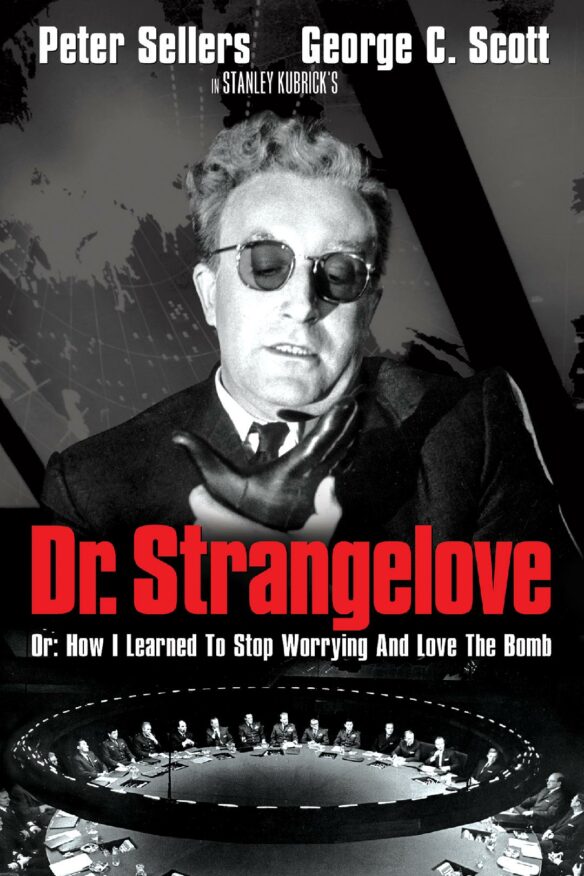
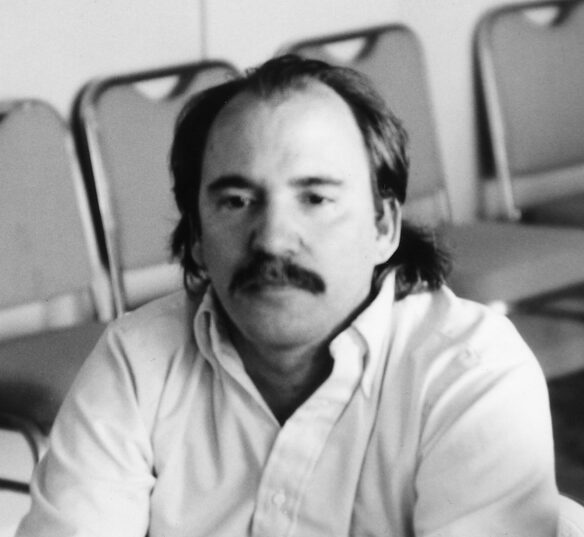
(4) SPINRAD QUESTION ON BBC SHOW. [Item by Steven French.] As seen on a recent edition of the BBC2 quiz show House of Games! (Apologies for the blurry photo.)

(5) BUDRYS FAN. The latest A Deep Look by Dave Hook is “Dave’s ‘Selected Short Fiction of Algis Budrys’”. Here’s the short take. Read Dave’s long analysis at the link.

The short: I’ve been a fan of science fiction by Algis Budrys for a long time. Looking recently, I was surprised that I did not find a “Best Of” or “Selected Short Fiction” collection by him. I decided to read more of his short fiction and create my own Table of Contents for a “Selected Short Fiction of Algis Budrys”. My Table of Contents would include the classic “Rogue Moon” novella, F&SF December 1960, the superlative “The End of Summer” novelette, Astounding November 1954, and “Forever Stenn” (AKA “The Ridge Around the World”), a short story, Satellite December 1957, and 23 more short works I rated “Great”. I would also include horror novelette “The Master of the Hounds” a novelette, The Saturday Evening Post Aug 27 1966. Although it’s not to my taste, I am not a huge fan of horror and it appears to be an appropriate choice. See my TOC below.

(6) HE WHO LIVES BY THE MUSKET. “Does This Skeleton Found Beneath a Dutch Church Belong to D’Artagnan, the Man Who Inspired ‘The Three Musketeers’?” asks Smithsonian Magazine.

Workers were repairing a Dutch church when they stumbled upon a skeleton hidden beneath the floor tiles. Now, officials say it could be the remains of Charles de Batz de Castelmore. The 17th-century French soldier—who is also known as D’Artagnan—is the inspiration behind The Three Musketeers by the French novelist Alexandre Dumas.

Experts are currently analyzing DNA recovered from the skeleton and comparing it with DNA from descendants of the real D’Artagnan’s father. In the meantime, however, they’re urging the public not to jump to conclusions before the analysis is complete.

“This has truly become a top-level investigation, in which we want to be absolutely certain—or as certain as ​possible—whether it is the famous musketeer,” independent archaeologist Wim Dijkman tells Reuters’ Toby Sterling and Piroschka van de Wouw….

… The real D’Artagnan was born into a noble family in France in the early 17th century. Like Dumas’ character, he served under Louis and rose through the ranks of the musketeers. In 1673, while fighting in the Franco-Dutch War, he was killed by a musket ball during the siege of Maastricht….

… The grave also contained several other pieces of evidence. “We found the bullet that put an end to his life, and we found a coin from 1660 in his grave,” Valke tells BBC News’ Paul Kirby…

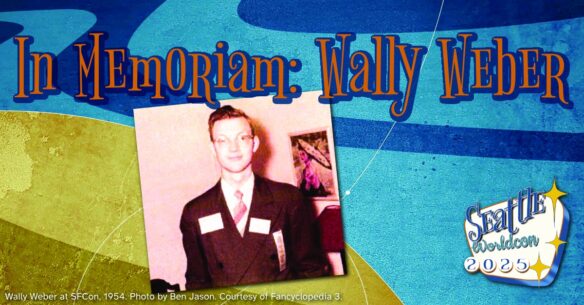
(7) ALAN BOSTICK (1959-2026). Bay Area fan Alan Bostick died March 23 while on a flight to the Irish poker open.

The Fancyclopedia notes he was part of the team that produced The Emperor Norton SF Hour. And that his fanzine Fast and Loose “was one of the first examples of the small, frequent fanzine format which was in vogue during the early 1980s.”

He is survived by his partners Lynn A. Kendall and Debbie Notkin.

(8) JUDY NEWTON OBITUARY. Judy Newton died peacefully, but unexpectedly this weekend – probably on Friday night (March 27), due to a heart issue. She will be buried in Arlington National Cemetery, next to her late husband, Barry Newton. 

Judy was a member of the Washington Science Fiction Association, where she served three terms as a Trustee, once as Vice President, and once as President (2009-2010).

She was a retiree from a government career at the National Institute of Standards and Technology.

She wrote a food blog, “Catillation – When You Lick Your Plate Clean!”

(9) TODAY’S BIRTHDAY.

[Written by Cat Eldridge.]

March 30, 1930John Astin, 96.

Ahhh, John Astin. I know him best as Gomez Addams in The Addams Family series, which was on the air shorter than I thought, lasting just two seasons and a little over sixty episodes. (It’s not streaming on one on the major streaming services.) He played him again in Halloween with the New Addams Family (which I’ve not seen but it is streaming on Prime) and voiced him thirty years later in The Addams Family, a two-season animated series which is not streaming. I’ll admit I’m not interested in animated series based off live series. Any live series. 

Oh, did you know he was in West Side Story? He played Glad Hand, well-meaning but ineffective social worker. No, you won’t find him in the credits as he wasn’t credited then but retroactively, he got credited for it which was good as he was a lead dancer. Brilliant film and I’ve no intention of watching the new version, ever. It’s streaming on Disney+. 

I’d talk about him being in Teen Wolf Too but let’s take the advice of Rotten Tomatoes reviewers and steer way clear of it. Like in a part of the multiverse where the Pixels are contently napping by the Gay Deceiver. Same for the two Killer Tomatoes films. I see he’s in Gremlins 2: The New Batchas a janitor but I can’t say I remember him, nor much of that forgettable film. 

So, series work… I was going to list all of his work but there’s way too much to do that, so I’ll be very selective. He’s The Riddler in two episodes of Batman and a most excellent Riddler he was. That series rather surprisingly is not streaming anywhere.

But that was nothing when compared to his role on The Adventures of Brisco County, Jr. as Prof. Albert Wickwire. He’s a charming, if somewhat absent-minded inventor who assists Brisco with diving suits, motorcycles, and even grander creations such as rockets and airships. Dare I say that this was an element of steampunk in the series? It was a great role for him. This is another series I surprised to find isn’t streaming anywhere. 

Finally, he has a recurring role as Mr. Radford (the real one) as opposed to Mr. Radford (the imposter) on Eerie, Indiana. A decidedly weird series that was unfortunately cancelled before it completed. It is streaming on Prime. 

So, let’s wish him a Happy Ninety-Sixth Birthday! 

John Astin

(10) COMICS SECTION.

(11) HARTWELL LIBRARY SALE. [Item by Daniel Dern.] James Cummins Bookseller is offering “Science Fiction and Fantasy from the Library of David G. Hartwell”.

A selection of books from the library of science fiction editor extraordinaire and discerning book collector David G. Hartwell (1941-2016), including many inscribed and association copies.

Prices range from (based on site sorting)(assuming I’m still within the Hartwell collection):

The Alchemical Marriage of Alistair Crompton, Sheckley, Robert (signed), $100 to Speaker for the Dead, Card, Orson Scott. (Proof Copy, Inscribed to His Editor), $3,750

Some quasi-random searches turn up this more-expensive item:

Destination Moon … With a new Introduction by David G. Hartwell. Heinlein, Robert A. Boston: Greg Press, 1979. (Includes Heinlein’s novelette, Destination Moon (originally published in Short Story Magazine for September 1950), Shooting Destination Moon, Heinlein’s essay on the making of the George Pal film, a reproduction of Facts About Destination Moon, an illustrated promotional booklet, and 13 full-page stills.

Signed copies of this edition are uncommon. This copy is inscribed: “To David Hartwell, warmest good wishes! Robert A. Heinlein”. Hartwell was co-editor of the Gregg Press series and author of the introduction.) Price: $9,000.00

(12) FINE HOBBIT DINING. “Girl Cooks 7 Hobbit Meals for Her Boyfriend’s Lord of the Rings Marathon” from Media Chomp, a 2022 article. Photos at the link.

Redditor NanoSpore‘s boyfriend had never seen The Lord of the Rings trilogy all the way through so she wanted to make their first marathon memorable. She cooked up some food for all 7 Hobbit meals and made it into an adventure! She really made hobbit meals for breakfast, second breakfast, elevenses, luncheon, afternoon tea, dinner, and supper:

SECOND BREAKFAST

[Thanks to Cat Eldridge, SF Concatenation’s Jonathan Cowie, Cora Buhlert, Ersatz Culture, Gary Farber, Rich Lynch, Daniel Dern, Mark Roth-Whitworth, Kathy Sullivan, Steven French, Mike Kennedy, Andrew Porter, and John King Tarpinian for some of these stories. Title credit belongs to File 770 contributing editor of the day Jayn.]

Pixel Scroll 2/27/26 Another Pluterday Night And I Ain’t Got Nobody (I Got Some Pixels ’Cause I Just Got Scrolled)

(1) EATING THE FANTASTIC. Scott Edelman invites listeners to savor sweet and sour beets with Liz Gorinsky in Episode 276 of the Eating the Fantastic podcast.

Liz Gorinsky

Most of the time when I invite you to tag along as I chat and chew, it’s because I’m at a convention and I’m hoping to replicate for you some of the joy I discovered back at the beginning of my con life — how sneaking away from those cons with friends was as much fun as the cons themselves. And with my con season about to rev up again, there’ll be plenty of episodes like that soon to come your way.

But this time around, I took advantage of a trip to Manhattan earlier this month to catch a theatrical adaptation by the Elevator Repair service of James’s Joyce’s Ulysses at the Public Theater to squeeze in lunch with one of the best editors and best people I know — Liz Gorinsky.

Liz has been a seven-time nominee for the Hugo Award in the Best Editor: Long Form category, an honor won in 2017. Liz also won one of George R. R. Martin’s Alfie Awards in the same category in 2015. After a lengthy career at Tor Books where Liz edited such novelists as Annalee Newitz and Jeff VanderMeer and acquired short fiction for the company’s online component, Liz founded Erewhon Books in 2018, and acted as president and publisher. Liz stepped down from that role in 2022 to pursue personal projects. Liz is also an ardent LARP-ist — which might not even be a word — and fan of immersive theater, so our conversation veered into those topics as well.

We discussed whether either of us would have turned out as you know us without having grown up in New York, the early ambitions to be a comic book editor, the legendary comic book couple who were childhood neighbors, whether or not there’s any difference between editing fiction and non-fiction, how to gracefully navigate the convention community, the first edit letter which made Liz nervous, what makes Liz realize a manuscript shows potential, how to cleanse your palate when reading slush to be sure what you think is good really is good, self-defining success as a writer, what told Liz it was time to take on the publisher role, the appeal of immersive theater, why LARPing isn’t acting, what we might have told James Joyce if we were editing Ulysses, the many reasons whatever you’re doing you should be doing for love, and much more.

(2) REMEMBERING THE STAR TREK TOS ENSEMBLE CAST. [Item by Steven French.] “George Takei: ‘I’ve spent two minutes longer in zero gravity than Shatner’”. Takei answers readers’ questions in the Guardian, including this one:

Which anecdotes about Leonard Nimoystill make you laugh? Raymonde

All the things that made Spock so fascinating as a half human/half alien were because Leonard was such a creative, imaginative and extraordinarily inventive actor. In the script, he had to greet a delegation of representatives from an alien planet by extending his hand. Leonard said: “Extending a hand is a very aggressive gesture, it should be something less threatening. The Jewish faith have this gesture with an open palm, to greet and say: ‘Live long and prosper.’”

The first season set up lots of facts about the Vulcan civilisation. He was being attacked by another alien, and the script had him punching the guy out. He said: “This is illogical. Why expend all this energy and risk tearing tissues and skin to incapacitate them? Spock wants to pinch the nerve centre that connects the brain to the rest of the body with his enormous Vulcan strength. All he has to do is pinch any adversary and they’ll collapse with no violence or broken bones or skin.”

Another aspect was his humanity. When they sold the rights to the Star Trek cartoon, the animation company hired Bill Shatner, Leonard Nimoy, Majel Barrett [Christine Chapel] and Jimmy Doohan [Scotty], with Jimmy Doohan and Leonard Nimoy voicing all the other male characters and Majel Barrett all the female characters. Leonard said: “What is important about Star Trek is the diversity. Coming together, working as a team. The two people who most represent diversity are Nichelle Nichols as Uhura and George Takei as Sulu. If they can’t be a part of this show, it’s not Star Trek and I’m not interested in doing it.” It was amazing that an actor was willing to sacrifice a job for two of his colleagues. That says a great deal about Leonard Nimoy – his sense of integrity in using whatever leverage he had for the sake of his two colleagues.

(3) POKÉMON INVESTMENT PERFORMANCE. “Hotter Than a Charizard’s Fire Blast: Pokémon Cards Outpace the S&P 500” – so Heritage Auctions’ Jesus Garcia told readers of HA’s Pop Goes the Culture newsletter.

Over the past 12 months, the Pokémon market has been absolutely on fire. Prices have surged across the board, from high-grade single cards to sealed booster boxes, with demand showing no signs of slowing down. What was once a nostalgic hobby has evolved into a full-blown collectibles powerhouse. In fact, according to The Wall Street Journal, the Pokémon market has outpaced the S&P 500—a staggering comparison that highlights just how strong this space has become.

One of the biggest drivers behind this growth has been the flood of new bidders entering the market. Collectors, investors, and lifelong fans are all competing for the same key pieces, pushing demand—and prices—higher for the most sought-after items. Whether it’s iconic vintage cards or pristine sealed products, competition is fiercer than ever.

Adding even more fuel to the fire is the upcoming 30th Anniversary of Pokémon.

With momentum like this, the future of the Pokémon market looks incredibly bright. As demand continues to grow and excitement builds toward the 30th Anniversary, it’s clear that Pokémon isn’t slowing down anytime soon. We can’t wait to see where the market goes next….

(4) LOST AND FOUND. [Item by Moshe Feder.] These small digital video cassettes were found while I was packing for my move. I’ve never owned a device that could record or play them. I have no idea who might have left them and the brief notes are of no help in guessing their content or ownership.

I’ve asked for help publicizing the find to people who won’t see it on Facebook. 

(5) NORMAN SPINRAD MEDICAL UPDATE. Lee Wood, Norman Spinrad’s ex, told Facebook followers the latest:

Okay, I’m in Paris, France, and no, it’s not a holiday. My 85 year old ex has been suffering from increasingly debilitating health issues culminating in a fall in his apartment where he lived in Paris, which took him first to Hôpital de la Pitié-Salpêtrière where he was treated for a very bad lung and bladder infection, then to Hôpital Charles Foix once the most critical issues had been sorted, along with a pacemaker implantation. Because I’m basically the closest thing he’s got to family anymore, I’m considered as de facto “next-of-kin” by the French social worker there, and he sent me to check out a nearby maison de retraite that is more like a really nice hotel even I would be happy to live in. So I gave it my “official” stamp of approval and my ex was moved there this week where, after a few rough patches adjusting (he really just wants to go home, and is refusing to admit that is highly unlikely to ever be possible ) he’s slowly accepting this is actually a pretty good place. Meanwhile, I’m currently staying in his apartment to try to sort through paperwork this is all going to require. 

(6) THE KING/BACHMAN ‘COLLABORATION’. Andy Hageman guides readers on “A Sojourn into the Stephen King Archive: ‘The Dark Half’” at Los Angeles Review of Books.

…When applying for archive access, I included on my proposed research agenda that I’d be exploring the typescript drafts of King’s complete Dark Tower series and those of several stories set in fictional Castle Rock, Maine. Seeing, holding, and smelling the oldest existing piece of paper on which Stephen King himself typed “The man in black fled across the desert, and the gunslinger followed” was a transcendent experience. Like Roland Deschain, I completed my Dark Tower sojourn and found myself filled with new perspectives and questions. But the file that absolutely captivated me was a typescript of the 1989 novel The Dark Half. Unlike any of the other drafts I examined, this one featured a series of Post-it notes that adhered to pages spanning the document, each with handwritten messages that capture the author’s mind at work.

These notes, combined with a title page and final resolution that differ dramatically from the published version, reveal the extent to which King was working through matters of identity and authorship when creating this novel, especially during a moment when he had recently been exposed as the author behind the pseudonym Richard Bachman. The archived typescript shows that King approached the processes of drafting and revising this novel as a real-time collaboration between himself and Bachman, whom he treated as an alter ego. The Dark Half was thus forged in a process of existential identity negotiation that transcended the limits of an individual author reflecting on and mourning the loss of his pseudonym. In light of this new evidence regarding the novel’s co-authored origins, The Dark Half merits renewed attention and analysis, whether you’re new to King’s work or what he refers to as a “Constant Reader.”…

(7) DAN SIMMONS (1948-2026). Dan Simmons, named a World Horror Grandmaster in 2013, died February 21 at the age of 77. His debut novel Song of Kali won a World Fantasy Award (1986), and his sff novel Hyperion won a Hugo (1990). His short story “This Year’s Class Picture” won the Theodore Sturgeon Memorial Award, the Bram Stoker Award, and the World Fantasy Award (1993). His novel Carrion Comfort won the British Fantasy Award and Bram Stoker Award. (He won a total of four Bram Stokers.)   

The family obituary is here: “Daniel Simmons Obituary”.

…In addition to teaching, reading and writing were the great loves of Dan’s life. As a child, he read everything he could find, spanning from comic books to literary classics and nonfiction. Throughout his life, he particularly loved learning about space, science, and history. Starting in early childhood, Dan had a remarkable gift for storytelling, which would become his life’s work. His first published story came out on the day his daughter Jane was born, a day that confirmed to him that his true love was his family.

In 1987, Dan took a daring leap and left teaching to follow his dream to work full-time as an author. His debut novel, Song of Kali (1985), was inspired by three days that he spent in Kolkata, India, and won the 1986 World Fantasy Award.

He went on to write thirty-one novels and short story collections, many of which were honored with accolades ranging from Bram Stoker awards, Locus awards, the Shirley Jackson award, and the prestigious Hugo award. His most meaningful award was an honorary doctorate from Wabash College, a place that changed his life and set him on a path towards a life well lived. His titles have been published in 28 foreign countries and translated into at least 20 languages, and his many book tours, conferences, and workshops took him all over the world.

Like his early reading pursuits, Dan always wrote about what he loved. He defied literary norms by writing across genres, switching between major publishers, and defying pressure to conform to formulaic novels. His works span from historical fiction to horror, hard-boiled crime, and speculative fiction. They explore topics ranging from Ernest Hemingway’s WWII Cuban spy ring to mountain climbing in the Himalayas. In 2018, his novel The Terror (2007) was released as an AMC limited series. Dan was a profoundly curious learner who delighted in connecting with other curious minds, and the many stories he dreamed up helped him connect with others throughout his entire life….

Nightmare Magazine’s “Interview: Dan Simmons” is very thorough discussion of his overall career, and includes the author’s contentions that negative reactions to political elements in his novel Flashback are misinformed.

[Dan Simmons] Which part of the reactions? Death threats? The fatwa that was put out on me by London imam? The hundreds of “I’d give this no stars if I could” Amazon reviews? The personal letters saying, “I used to read everything you wrote, but I’ll never read anything by you again”? I think there’s a lot of confused people out there.

Of course it’s a political novel: it’s a dystopian novel, but it’s a dystopian novel about a time when our country quits looking forward and turns its eyes completely to the [past] because of this drug flashback, which 97% of the people are using. Where they can relive the good parts of their lives and ignore all the crap that’s going on around them.

I’ve been called a Nazi. I’ve been called a racist. People who have no idea of my life, what I’ve done, how I’ve worked for civil rights throughout my life, or what my politics have been, and what Democratic candidates I’ve written speeches for. [Instead,] I’m [labeled] a racist and a Libertarian, which amuses me. (I had a Libertarian professor once—he was pretty smart, he made some sense, but I’m no Libertarian.)

But in Paul Weimer’s opinion, “Post 9/11, he went full on  fascist. And Olympos, the second half of Ilium takes a fascinating setup with posthuman Gods recreating the Trojan War for fun, and adds Anti-Muslim bigotry.

I rescued his 2006 April Message that caused me to stop reading him for good. You can only find it by the Wayback Machine: ‘Dan Simmons – Author’s Official Web Site’.

As glorious as some of his work was, I stopped reading him cold after that. Finis.

Meanwhile, Eric Berger focuses praise on the author’s greatest novel: “Hyperion author Dan Simmons dies from stroke at 77” at Ars Technica. Complete commentary at the link.

Dan Simmons, the author of more than three dozen books, including the famed Hyperion Cantos, has died from a stroke. He was 77.

Simmons, who worked in elementary education before becoming an author in the 1980s, produced a broad portfolio of writing that spanned several genres, including horror fiction, historical fiction, and science fiction. Often, his books included elements of all of these. This obituary will focus on what is generally considered his greatest work, and what I believe is possibly the greatest science fiction novel of all time, Hyperion….

(8) ROB GRANT (1955-2026). Red Dwarf co-creator, Rob Grant, died February 25 at the age of 70. He co-wrote the classic BBC sf comedy with Doug Naylor, which became a success after it debuted in 1988.

After Red Dwarf, Grant wrote two television series, The Strangerers and Dark Ages, and four solo novels, his last being Fat

Only a few days ago a new Red Dwarf tie-in novel was announced, a prequel Red Dwarf: Titan, co-authored by Grant and Andrew Marshall, which was to be released in July 2026. It doesn’t seem like the book was announced with any foreknowledge that he was that close to death.

(9) TODAY’S BIRTHDAY.

[Written by Cat Eldridge.]

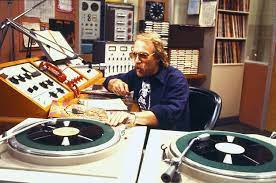
February 27, 1940 Howard Hesseman. (Died 2022.)

So yes, I’m doing Howard Hesseman so I can mention how much I liked him as Dr. Johnny Fever on WKRP in Cincinnati. Hesseman prepared for the role by actually DJing at KMPX-FM in San Francisco for several months. 

In interviews, the producers of the show said that persona was largely developed by him and the following opening words of him on the first show are all his doing. 

All right, Cincinnati, it is time for this town to get down! You’ve got Johnny—Doctor Johnny Fever, and I am burnin’ up in here! Whoa! Whoo! We all in critical condition, babies, but you can tell me where it hurts, because I got the healing prescription here from the big ‘KRP musical medicine cabinet. Now I am talking about your 50,000 watt intensive care unit… 

Now let’s talk about his genre roles. 

He was Fred in Tarantulas: The Deadly Cargo, a television horror film that has no rating on Rotten Tomatoes, but one person there says the only interesting thing was the real tarantulas. 

No, Clue, one of my all-time favorite films cannot be stretched to be considered genre, but I’m including it here because he, though uncredited, had the juicy role of The Chief. 

He was in the wonderful Flight of the Navigator as Dr. Louis Farsday, and then there’s the amusing thing Amazon Women on the Moon where he’s Rupert King in the “Titan Man” segment. 

He was Dr. Berg in the excellent Martian Child which based the David Gerrold’s Hugo Award winning novelette, not the novel based off it. 

Yes, he was in both Halloween II as Uncle Meat and Bigfoot as Mayor Tommy Gillis, neither career highlights by any measure.

I see he showed up on one of my favorite series, The Ray Bradbury Theatre, playing a character named Bayes: in “Downwind from Gettysburg”.

Around the that time, he went elsewhere to the new Outer Limits to be Dr. Emory Taylor in “Music of the Spheres”. 

I’m off to watch the pilot now…

(10) COMICS SECTION.

(11) FUTURE TENSE. The new Future Tense Fiction story for February 2026 is “What Would Akanda Do?” by Samit Basu.

The story is about a possible future Mumbai shaped by repressive politics, ubiquitous surveillance, and stark class divisions. Avi, an Indian cinema idol, has sold the rights to create AI-powered versions of his likeness for use not just in films and advertisements, but also in political contexts. When two young kids that Avi is close to disappear after a protest, Avi is forced to confront the ways that his image is being exploited while he searches for them.

The response essay is “The Dividing Towers of Mumbai” by Moira Shourie, executive director of Zócalo Public Square in Los Angeles and a former music programmer at MTV India in Mumbai.

… Basu’s story, the latest in the Future Tense Fiction series, is set in a future where the rich, connected, and famous live in towers that hover above the realities of extreme poverty and government oppression that dominate other parts of the city. These climate-controlled capsules filter out not just the stifling heat but also the hustle and bustle that gives the city its hyperactive character. Avi, Basu’s protagonist, is a movie star famous for patriotic roles in jingoistic, pro-government blockbusters. Long ago, Avi sold the legal rights to replicate, adapt, and AI-animate his likeness, and for years he has burrowed in the manufactured tranquility of the New Empire Complex, oblivious to how his hero image had been deployed to advance the ruling party’s political agenda. The Mumbai I encountered this winter hasn’t yet morphed into the possible future of Basu’s story, but it’s well on its way.

As I disembarked in Mumbai, I was struck by the scale of India’s digitalization. The massive crowd at passport control was processed faster than anything I’ve witnessed at JFK or LAX. There are dedicated sections for DigiYatra members, a system similar to TSA PreCheck, linked to your government-issued Aadhar card and biometrics. The residents of Basu’s Diamond Mumbai live in the sci-fi version of that passport hall, where people are branded with tattoos (for the well-off) and bulky implants (for everyone else) to track their activities and disseminate official communications.

Passport control was the stage for my first encounter with the new surveillance state. Upon scanning my passport, an officer asked me to accompany her to “secondary questioning,” where I was detained and asked whether I was there on business as a media executive or in a personal tourist capacity. Message received, I thought to myself. Over the next several days, my friends all revealed that when they gather they often turn off their phones and leave them in another room. Americans laugh nervously when we see Instagram ads related to products we mention in our cars or during family dinners; Indians take no chances with their private conversations, knowing well the extent of the surveillance they live with….

(12) LIBRARY OF CONGRESS NEWS. “Lost 19th century film by Méliès discovered at the Library”.

The reels of film were old and battered and no one knew what was on them.

They were from before World War I and had been shuttled around from basements to barns to garages and had just been dropped off at the Library. There were about 10 of them and they were rusted. Some were misshapen. The nitrate film stock had crumbled to bits on some; other strips were stuck together.

The librarians peeled them apart and gently looked them over, frame by frame.

And there, on one film, was a black star painted onto a pedestal in the center of the screen. The action was of a magician and a robot battling it out in slapstick fashion. It took a bit, but then the gasp of realization: They were looking at “Gugusse and the Automaton,” a long-lost film by the iconic French filmmaker George Méliès at his Star Film company.

The 45-second film, made around 1897, was the first appearance on film of what might be called a robot, which had endeared it to generations of science fiction fans, even if they knew it only by reputation. It had not been seen by anyone in likely more than a century. The find, made last September but now being announced publicly, is a small but important addition to the legacy of world cinema and one of its founders….

… “Gugusse,” for its part, is a one-shot, one-reel short filmed in front of a painted screen made to look like a workshop in which clocks and automatons were being made. For centuries, inventors and engineers had made wind-up automatons – contraptions full of gears and levers with a shell that looked like a person – that could, as the gears unwound, do all sorts of things, even writing and drawing.

In “Gugusse,” the magician (Méliès), winds up an automaton dressed like the famous clown Pierrot, which is standing on a pedestal. Once wound up, the clown begins to beat the magician with his walking stick. The magician retaliates by getting a huge sledgehammer and bashing the automaton over the head, with each blow seeming to shrink it in half, until it is just a small doll. The magician then smashes it into the floor….

(13) NETFLIX PUNTS. Rick Ellis of Too Much TV takes readers “Behind The Scenes Of Netflix’s Decision To Drop Bid For WBD”.

…So when I found myself a bit surprised on how this story turned this week, I wanted to understand what I had missed. Or at the very least, what I hadn’t been told about the behind-the-scenes discussions at Netflix this week. And after reaching out to every source I know, wading through WhatsApp messages from unhappy employees and speaking at length to more than a dozen Netflix employees with some understanding of the thinking that led to Thursday’s decision, I think I have a pretty good sense of what happened, and why.

The seeds of this decision were planted ten days ago when Netflix decided to allow Warner Bros. Discovery to open negotiations for a seven-day period with Paramount Skydance executives. It wasn’t something Netflix had to agree to do, its merger deal with WBD gave it exclusive negotiation rights. But I’ve been told the decision was driven in part by the steady drip of leaks to the press from people in David Ellison’s camp, often via Fox Biz Senior Correspondent and NY Post columnist Charles Gasparino. He continued to argue in his columns that Ellison was the only person who could get a deal done with the Trump Administration and he passed along a number of vague promises that Paramount Skydance was prepared to increase the terms of its previous “final offer.”

At some point, Netflix executives decided the best option was to see what Paramount was willing to do in an effort to win its merger bid. In part because that new “final offer” would provide a baseline for Netflix’s decision whether or not to increase its bid. But also because reopening the negotiations would make it less likely Paramount would attempt to block Netflix’s bid in court by claiming the WBD hadn’t been willing to hear a so-called “superior offer.” As one executive explained to me at the time, “It’s a gamble, but at the end of the day, we need clarity on the possible parameters of this deal.”

That seven-day negotiating period ended at midnight last Monday and the offer that came from Paramount Skydance upped the offer a dollar a share. But perhaps more importantly for the WBD board, it offered guarantees that the funding was in place, could pass banking muster and that there was a reliable source of bridge funding to cover the company during the transition.

I have been told by multiple sources that from the beginning, top Netflix executives were reluctant to increase their bid. Even if that meant losing their chance to acquire Warner Studios, HBO and HBO Max. “This is a very disciplined company when it comes to finances,” I was told. “We didn’t chase a bunch of live sports rights we couldn’t fully monetize, even when all the experts claimed we needed to do that to grow. Our content spend is in line with growth and we haven’t gotten into businesses just get into them. So there is a limit to how much we’re willing to overpay. Particularly since there is a strong belief here that IP is great. But only at the right price.”…

[Thanks to SF Concatenation’s Jonathan Cowie, Mark Roth-Whitworth, Moshe Feder, Sandra Miesel, Trey Palmer, Ersatz Culture, Joey Eschrich, Kathy Sullivan, Steven French, Mike Kennedy, Andrew Porter, John King Tarpinian, and Cat Eldridge for some of these stories. Title credit belongs to File 770 contributing editor of the day Andrew (not Werdna).]

Pixel Scroll 1/5/26 Scrolley The Gater Went Chomp, Chomp, Chomp

(1) PNH RETIRES. Three-time Hugo-winning editor Patrick Nielsen Hayden retired from Tor today, where he worked for 37 years.

Patrick Nielsen Hayden at BEA 2015. Photo by and (c) Andrew Porter.

John Scalzi paid tribute at Whatever in “Patrick Nielsen Hayden Retires”.

…The short version of this is, he’s one of the editors most responsible for how the science fiction and fantasy field looks today. Inasmuch as it’s in really excellent shape, creatively and commercially, that’s something to be very proud of….

Whatever also published a screenshot of Nielsen Hayden’s Facebook announcement.

(2) SELF-PUBLISHED FANTASY BLOG-OFF 11 APPROACHES THE STARTING LINE. Mark Lawrence opened SPFBO 11 for entries on January 3 and received over 550 submissions. The 300 finalists have already been randomly selected and assigned to SPFBO judging teams.

The judges for SPFBO 11 are:

Lawrence’s post here lists the books allotted to each judging team.

(3) NORMAN SPINRAD UPDATE. Lee Wood dropped an update about Norman Spinrad on his Facebook page.

…After much prolonged drama with unplugged misplaced missing phones, Norman has a new phone (Thank you, Joe!) and I finally managed to get my NZ company to fix whatever block was on mine so that Norman and I FINALLY got a chance to talk tonight, after about two weeks of no communication. 

Had a great hour long chat. He was quite chuffed with himself – he’d managed to get out of bed and walk on his own for the first time since he’s been in hospital. It was nice to have a conversation with him while he was happy and laughing, been awhile. He groused about doctors and nurses treating him “like a baby” but more because he’s been able to “prove them wrong” with walking again. 

He’s still quite ill and knows it, and promised me he’s not going to be entering into any marathons just yet. We’re collaborating on his latest/last novel together, which lifted his spirits when we talked about characters, etc. He was quite animated, and while he sometimes struggled to find the right words, he knew what he wanted to say, his mental acuity seems to have improved a fair bit. 

He knows I’m planning another trip back to Paris end of January in a few weeks, and is looking forward to that. It’s actually the best I’ve heard him in awhile, so fingers crossed the pacemaker has helped, the exercise will help, and there’s still some kick in the old jackass yet.  

Norman Spinrad at the 1975 Westercon in Oakland. Photo by and (c) Andrew Porter.

(4) CPB WILL BE DISSOLVED. “Corporation for Public Broadcasting Votes to Shut Down” – the New York Times tells why.

The Corporation for Public Broadcasting, which funded NPR, PBS and hundreds of local radio and TV stations across the United States for more than a half-century, said on Monday that its board of directors had voted to dissolve the organization because Congress cut off its federal money.

The vote formalized plans announced last year to wind down operations after lawmakers voted to strip more than $500 million in annual funding from the organization. Executives have been emptying the corporation’s coffers in recent months by making grants to public media organizations.

After the federal funding ended, executives at the corporation discussed putting the organization into hibernation, keeping it alive in case Congress eventually voted to restore its federal appropriation. But in a statement on Monday, the corporation said that allowing the organization to lie dormant could have resulted in “political manipulation or misuse,” threatening the independence of public media.

“C.P.B.’s final act would be to protect the integrity of the public media system and the democratic values by dissolving, rather than allowing the organization to remain defunded and vulnerable to additional attacks,” Patricia Harrison, the president and chief executive of the corporation, said in a statement…

(5) ARCHITECTURAL MYSTERY. On PNH’s retirement day it’s an interesting coincidence to read Curbed’s story “What construction workers found gutting the Flatiron Building” where Tor once headquartered. Photos at the link.

Plenty of stuff gets unearthed during renovations — old newspapers, wallpaper scraps, wide-plank wood floors, sometimes even windows. But no one expected to discover anything too surprising when the Brodsky Organization started gutting the interiors of the Flatiron Building for a condo conversion in 2024. (Brodsky, one of the building’s owners, is overseeing the project with the Sorgente Group.) The 123-year-old tower is, after all, one of the most extensively documented and photographed buildings in New York City. Besides the turn-of-the-century blueprints and construction drawings that have been preserved (around 40 pages — far less than the hundreds or thousands you’d get today, but hardly a thin record), it was an architectural and technological marvel of its era as one of the city’s first steel-frame skyscrapers, and documented as such. For decades, it also had a single office tenant, Macmillan Publishers, which presumably came to know the building’s quirks and secrets quite well.

In July, however, workers gutting the 18th floor noticed something strange. At the prow of the building overlooking Madison Square Park, demolition work had exposed part of a parapet wall along what had been a bay window. Pulling down the interior walls, they discovered the terrace, whose original use was confirmed by a drain that ran along the inside of the wall and ceiling.

Beyer Blinder Belle Architects & Planners, the firm overseeing the landmark’s exterior renovation, recognized the parapet — there was a matching one on the floor above. And that parapet on 19 encircled a small half-moon-shaped terrace, one of only two known outdoor spaces in the building. (The other, a terrace that edges the top floor, is a narrow space, originally used by the artists for whom the penthouse floor was built and enclosed by a high balustrade.) Examining photographs of the exterior, the architects saw that the columns on the 18th and 19th floors are continuous, with their base on the 18th floor and the capitals (the crown on top of the columns) on the 19th, and realized that the 18th floor had also originally been a terrace, one that had been hidden for so long that no one knew about it….

(6) PERCHANCE. Inverse calls these “The 11 Most Iconic Sci-Fi Stories About Sleep Of All Time”.

In some sci-fi narratives, the final frontier of human experience is space. In other stories, it’s time. But, in all cases, the real final frontier just might be what happens in our brains when we’re asleep. From prose to TV to film, the genre of science fiction has always tackled speculative tales about sleep with bold ideas and strange results. Is sleep something to master? Can we use sleep to save our lives? To destroy our way of life? What is the purpose of sleep in the future? Can we use it to travel in time?…

Inverse founds one PKD story was not enough – here’s what they said about their first pick.

7. WE CAN REMEMBER IT FOR YOU WHOLESALE BY PHILIP K. DICK

No survey of science fiction sleep stories would be complete without a mention of the work of Philip K. Dick. In fact, he was fixated on sleep, so his work appears twice on this list, which, in a sense, doesn’t even fully represent the author’s intense interest in the subject. To really dive deep into sci-fi sleep, you could read and discuss only PKD stories for the rest of your life. (A Scanner Darkly would be another honorable mention.)

But the 1966 story “We Can Remember It for You Wholesale” is easily one of the most enduring and excellent PKD stories on sleep because it’s essentially a meditation on where memory ends, and dreams begin. The story (and both film adaptations) center on the concept of placing false memories while a person is in a dream state with the intent of making those memories feel like real experiences. The story begins with Douglas Quail dreaming of going to Mars, desperately wanting to take the trip to the red planet. The service, Rekal, promises to give him those memories, make him believe it really happened. But the twist is, Quail’s dreams were never fiction, meaning the fictional dreams implanted by Rekal create reality-altering problems, not just for Quail, but for everyone around him, too. While the 1990 movie is phenomenal, and the 2012 version less so, neither contains the incredible twists of Dick’s original story, in which the layered dreams of Douglas Quail are more interesting, and perhaps, more real than anything the reader can imagine.

(7) UNCHAINED. Here’s another roundup of works now in the public domain, with some titles we haven’t Scrolled before: “Early Versions of Disney’s Pluto, Fleischer’s Betty Boop and Chic Young’s Blondie Have Entered the Public Domain” at Animation Magazine.

…Pluto’s earliest appearances from 1930 are now free to use, including his debut as an unnamed pooch in The Chain Gang and as Minnie Mouse’s dog “Rover” in The Picnic. Like early Betty Boop, these works lost U.S. copyright protection after 95 years. The name “Pluto” and his role as Mickey Mouse’s pet first appeared in The Moose Hunt (1931), which won’t enter the public domain until 2027. More familiar designs of the character also remain protected. Disney retains trademarks on the Pluto name and character, which means commercial uses that could cause confusion are still restricted, which is what is also the case with Steamboat Willie Mickey.

Other notable properties that entered the public domain on Jan. 1 are Agatha Christie’s The Murder at the Vicarage, the mystery writers first novel featuring the famous detective Miss Marple, Carolyn Keene’s first Nancy Drew mystery The Secret of the Old Clock,  Lewis Milestone’s Oscar-winning movie All Quiet on the Western Front, director Victor Heerman’s popular Marx Brothers movie Animal Crackers, and the songs But Not For Me by George and Ira Gershwin, Hoagy Charmichael’s “George on My Mind,” and Dream a Little Dream of Me” by Fabian Andre, Wilbur Schwandt and Gus Kahn. Piet’s Mondrian’s painting “Composition with Red, Blue and Yellow” is also on the list….

(8) TODAY’S BIRTHDAY.

[Written by Cat Eldridge.]

January 5, 1966Tananarive Due, 60.

This Scroll I’m very pleased to be looking at Tananarive Due, an author whose work is definitely more focused towards the noir side of our genre. 

Tananarive Due

She’s a native Floridian, born of civil rights activist Patricia Stephens Due and civil rights lawyer John D. Due, her mother named her after the French name for Antananarivo, the capital of Madagascar.  She’s married to Steve Barnes, and they live now in LA where their two children also live. 

Her first work was The Between, published thirty-one years ago. It was nominated for a Bram Stroker Award. Like much of her work, it straddles the thin line between the mundane and horror quite chillingly. 

Shortly after that, she started the dark fantasy and a bit soap opera-ish African Immortals series which ran over almost fifteen years and four novels. An Ethiopian family traded something away well over four centuries ago in a ritual that granted them true immortality. And one of them wants to invoke that ritual now… 

Eight years later, she’d write The Good House, one of the scariest haunted house stories I have ever encountered. Trigger warning: it deals with a suicide and the horror of it is very real here. 

Joplin’s Ghost followed shortly thereafter. Yes this is centered around the ragtime musican Scott Joplin and his haunting of a young female hip hop artist. It’s less of a horror novel than her works and more of a dark fantasy. Very well done.

Ghost Summer: Stories a decade on collected eighteen of her over thirty excellent short stories including the title story. Most of the rest, though not all, are in The Wishing Pool and Other Stories. The “Ghost Summer” story won a Carl Brandon Kindred Award and I love the story about who Carl Brandon is! The collection garnered a BFA. 

Her latest novel just out, The Reformatory: A Novel, is set in a Jim Crow Florida reformatory where the full horrors of the injustices of racism known no bounds of death. Really, really scary. 

Her quite well-crafted website can be found over here. She offers online courses including ones on Afrofuturism.

(9) COMICS SECTION.

(10) BACK IN THE DAY. [Item by Steven French.] Jordan Mechner on how he made the classic video game Prince of Persia: “’I wanted that Raiders of the Lost Ark excitement – you could die any minute’: how we made hit video game Prince of Persia”.

…Programming was very open back in the 1980s. You had to teach yourself, either from magazines, or by swapping tips. When you wrote a video game, you submitted it on a floppy disk to a publisher, like a book manuscript. In my freshman year at Yale university, I sent Deathbounce, an Asteroids-esque game for the Apple II computer, to Broderbund, my favourite games company. They rejected it, but took my next effort, Karateka, a side-scrolling beat-’em-up.

I wanted to do a platform game next, inspired by 1984’s The Castles of Dr Creep, where you could throw switches that opened doors and closed traps. I thought it would be cool to combine those puzzle elements with the same kind of fluid rotoscoped animation as Karateka, which was unusually realistic for the time. The opening scene of Raiders of the Lost Ark was also a big inspiration; I wanted the same excitement, like you could die at any moment. I devised a story about a princess locked in a tower by an evil vizier – and you have one hour to save her. It came from an unconscious place: the game describes the hero as an adventurer from a foreign land, but I realised later I was echoing my family’s history as Jewish refugees…

(11) HE’S READY. [Item by Andrew Porter.] I’ve set my DVR to record all the episodes: Bookish begins January 11 on PBS.

In Bookish, Gabriel Book, proprietor of an antiquarian bookshop in post-war London, 

relies on his vast collection to unravel baffling cases. He nurtures a group of loveable, yet troubled, individuals, providing informal protection and guidance. Bookish was created by and stars Mark Gatiss (Sherlock, Dr. Who).

(12) GOING ROGUE. [Item by Daniel Dern.] All three seem to be same story, but different foci in their lead sentence…
Astronomers have detected a massive, lonely world drifting through the darkness without a star to call home. This Saturn-sized rogue planet was discovered by an international team of scientists using the gravitational microlensing technique….

Astronomers just measured the mass of a free-floating planet without a star for the first time…

Most of the exoplanets we’ve discovered have been in relatively tight orbits around their host stars, allowing us to track them as they repeatedly loop around them. But we’ve also discovered a handful of planets through a phenomenon that’s called microlensing. This occurs when a planet passes between the line of sight between Earth and another star, creating a gravitational lens that distorts the star, causing it to briefly brighten.

The key thing about microlensing compared to other methods of finding planets is that the lensing planet can be nearly anywhere on the line between the star and Earth. So, in many cases, these events are driven by what are called rogue planets: those that aren’t part of any exosolar system at all, but they drift through interstellar space. Now, researchers have used microlensing and the fortuitous orientation of the Gaia space telescope to spot a Saturn-sized planet that’s the first found in what’s called the “Einstein desert,” which may be telling us something about the origin of rogue planets….

(13) WORST READ 2026. [Item by SF Concatenation’s Jonathan Cowie.] I had a number of good reads in 2025, but I had one really bad one and that was an article in Nature  “How to avoid nuclear war today”. And apocalypses are a trope of SF…
The Doomsday Clock (maintained by the Bulletin of the Atomic Scientists) moved last year and now sits at 89 seconds to midnight!  Last year was also the 80th anniversary of the first atomic (test) explosion and scientists met for a three-day symposium on how to prevent nuclear war.

From Russia’s grinding war in Ukraine and the simmering tensions between India and Pakistan that flared in May, to the US and Israeli attacks on Iranian nuclear facilities in June, the world is not short of conflicts involving one or more nuclear-armed nations.

But it’s not just the number of clashes that have the potential to escalate that are causing consternation. The previous great build-up of nuclear weapons, the cold war between the United States and the Soviet Union, essentially involved two, reasonably matched superpowers. Now, China is emerging as a third nuclear-armed superpower, North Korea is growing its nuclear arsenal and Iran has enriched uranium beyond what is needed for civilian use. India and Pakistan are also thought to be expanding their nuclear arsenals. Add to this the potential for online misinformation and disinformation to influence leaders or voters in nuclear-armed nations, and for artificial intelligence (AI) to bring uncertainty to military decision-making, and it’s clear that the rulebook has been ripped up…

[Thanks to Andrew Porter, John King Tarpinian, Cat Eldridge, Daniel Dern, SF Concatenation’s Jonathan Cowie, Mark Roth-Whitworth, Kathy Sullivan, Steven French, and Mike Kennedy for some of these stories. Title credit belongs to File 770 contributing editor of the day ULTRAGOTHA.]

Pixel Scroll 11/23/25 If A Pixel Scrolls In The Forest And There’s No One There To File It, Is It Really Fanac?

(1) 2026 WEBSTER AWARD FINALISTS. The Clarence Howard “Bud” Webster Award was founded in 2018 to recognize outstanding achievements in writing by Virginia authors. The award is presented at RavenCon.

We have created this award in honor of our long-time friend Bud Webster, who passed away in 2016. Bud was known for many things: his Bubba Pritchett series of short stories, his “Anthopology 101” column in the SFWA Bulletin, his work tracking down lost estates for deceased science fiction writers, his Book Geek table at local science fiction conventions, and so much more.

The 2026 finalists are:

  • Mike Allen — Trail of Shadows
  • Stephen Starring Grant — Mailman
  • Jason Hansa — A Skulk of Foxes
  • Dennis M. Myers — Secret of the Ombax
  • Bishop O’Connell — Stain of a Nation

(2) DIAGRAM PRIZE. The Bookseller has announced the winner of the 2025 Diagram Prize for Oddest Book Title of the Year.

The Pornographic Delicatessen: Midcentury Montréal’s Erotic Art, Media, and Spaces has won the 47th The Bookseller Diagram Prize for Oddest Book Title of the Year with a margin of victory as wafer-thin as the slices of brisket in the smoked beef sandwich at the Quebec metropolis’ iconic Schwartz’s Deli.

Matthew Purvis’ Concordia University Press-published tome – which examines how the city’s post-Second World War art scene became a “hotbed of eroticism” – has triumphed in the closest race in the world’s most august literary gong since the prize moved to a public vote 25 years ago. The Pornographic Delicatessen edged early bookies’ favourite Whack Job: A History of Axe Murder by a mere two votes – and it finished only four ahead of Why the Hindenburg Had a Smoking Lounge: Essays in Unintended Consequences. An examination of the voting patterns shows a flurry of support for The Pornographic Delicatessen just minutes before the Diagram online poll closed, vaulting it from third to first.     

The Pornographic Delicatessen’s share of the public vote was 23.7%, the lowest-ever for a Diagram winner…

(3) WITCHES CASHING IN. “Box Office: ‘Wicked For Good’ Opens to Record-Smashing $150M in U.S.” says The Hollywood Reporter.

…The Witches of Oz are making magic at the box office.

Universal’s Thanksgiving tentpole Wicked: For Good opened to a record-smashing $150 million in North America and $226 million worldwide after topping Friday’s North American chart with a massive $68.7 million from 4,115 theaters (that number includes $30.8 million in previews). Audiences are more than embracing the pic, giving it an A Cinemascore and a glowing 95 percent rating on Rotten Tomatoes. It earned rave exit numbers on Comscore; kids in particular were enthralled. Overseas, it likewise opened to a record-busting $76 million from 78 markets for a global start of $226 million….

(4) BUT NOT EVERYONE IS A FAN OF WICKED. “Conservatives Think Wicked Is a Perversion of L. Frank Baum’s Original Books” reports Vanity Fair.

When the first installment of Jon M. Chu’s Wicked premiered in 2024, online conservatives lambasted it for being too woke. The advocacy group One Million Moms even launched a boycott, arguing that the movie contained “a tremendous amount of witchcraft and sorcery.” Now the second film, Wicked: For Good, is hitting theaters, and conservative influencers are using new videos of Ariana Grande and Cynthia Erivo on the film’s press tour to revive the trend with a brand-new angle: Hollywood has ruined the traditional Wizard of Oz story we know and love.

The recent uproar started when the conservative rage-bait account Libs of TikTok shared a video in which Grande sent love to queer fans. “Oz has always been a queer place, a safe place for queer people, for every different color of the rainbow, for everybody,” the singer said. “Read the L. Frank Baum books. It’s the truth.”

In response, Brittany Hughes, a conservative influencer who makes videos for the Media Research Center, a conservative media nonprofit, said it was a reflection of the “narcissistic quacks” who inhabit Hollywood. “The L. Frank Baum books were written as a fairy tale for children. They were based on his personal life experiences, his childhood dreams, and a few family members,” she said in one such video. “I guarantee you, purple-haired, gender-bending unicorns with made-up pronouns never once crossed his mind. The original novel and the first Wizard of Oz film had nothing at all to do with being queer, and the fact that Hollywood now has to make everything gay doesn’t rewrite history.” (Vanity Fair has reached out to representatives for Universal Pictures for comment.)…

The article continues with additional quotes of that nature.

(5) SIX-WEEK WORKSHOP APPLICATIONS OPENING SOON. Clarion West will accept applications for its “Six-Week Writers Workshop” beginning December 1. Find about more about this year’s instructors and the virtual format at the link.

We’re excited to announce that applications for our 2026 Six-Week Workshop will open this year on December 1st, 2025

Our acclaimed Six-Week Workshop gives a cohort of emerging writers the space to hone their short fiction. Alongside their talented classmates and several accomplished instructors, students will build community, learn how to refine their stories, and grow in their craft…

(6) NOT HOW YOU’D EXPECT TO GET THERE. Youtuber Skepchick (Rebecca Watson) revealed to followers, “So I’m in the Epstein Files”.

Look. I know that on this channel, I often criticize prominent people for actions that I find detestable: accepting dark money and failing to disclose it, producing propaganda for Big Oil, silencing critics with phony libel lawsuits, and on and on. And inevitably in the comments there will be people saying that I’m a hypocrite because nobody’s perfect and one day someone will air out MY dirty laundry and reveal to the world that I’m not what I seem.

Well, after several decades in the public eye, I am finally faced with this exact scenario. Emails I sent fourteen years ago, which I expected to remain private, have just been made public by a congressional committee. 

That’s right: I’m in the Epstein files.

I know that this is going to be very disappointing for many of you, and for others it will be the ultimate vindication of what you always suspected was true: I am, in fact, a literate person who loathes sex predators and holds them accountable even in private. That’s it, that’s what’s in my private correspondence. I’m actually pretty pleased with this development, if I’m honest…

The reason is an email Watson sent to theoretical physicist Lawrence Krauss in 2011 asking him to verify that he’d said something quoted in the media, which Watson planned to use in an article.

(7) NORMAN SPINRAD MEDICAL UPDATE. Lee Wood, Norman Spinrad’s ex-wife, has told his Facebook followers:

“Norman is in hospital at the moment, has been for a couple months now. He had a fall in his apartment and is currently in a rehabilitation hospital in Paris. I’ve recently come back from seeing him for a couple weeks while he’s been suffering from a good many symptoms that have caused confusion, which comes and goes, he’s scheduled for a pacemaker that hopefully will help. He is still writing, although while I was there he asked me if I would be a collaborator with him to finish his latest novel, which is a new thing for us both, but he is still writing. I’m hoping to take another trip to Paris over the school holiday break (I’m a high school teacher mostly these days, in New Zealand, so it’s a hell of a flight) and will give small updates like this on his Facebook page.” 

(8) MEMORY LANE.

[Written by Paul Weimer.]

November 23, 1963Doctor Who premieres

By Paul Weimer: On this evening in 1963, Doctor Who premiered on the BBC.

But it would take years for me to see An Unearthly Child, the premiere of Doctor Who.  On PBS in NYC, the Fourth Doctor was the first Doctor widely shown in the states, and for years, was the only one. Eventually a channel on Long Island branched out from the Fourth Doctor, showing what they called “The Doctor Who movies”–basically an entire serial in one go on a Saturday evening. They started with the Fourth Doctor, moved to the then new to me Fifth Doctor.  And then after the end of the Fifth Doctor’s run (The Caves of Androzani), they then went back to the beginning. Back to the First Doctor…

Back to the premiere of Doctor Who…An Unearthly Child which happened on this date in 1963 on BBC.  I had already seen the First Doctor, but not the original actor. The First Doctor appears, as played by Richard Hurndall. So I knew the First Doctor as a somewhat crotchety figure…but William Hartnell’s appearance was completely revelatory as the original and sometimes very alien First Doctor.  He is brutal and savage and ready to commit a bit of murder right there in the first serial. I appreciated the mystery of the Doctor as Ian and Barbara try and figure out what’s so strange about their student, Susan, and the terror and horror in being cast in time and space. 

I think the episode holds up, the premiere of Doctor Who, even today. A story of progress, and tolerance, and trying to understand things beyond your ken (on several levels). And so ably directed by Verity Lambert, the BBC’s first female drama producer. 

Those “Doctor Who movies”, starting chronologically with An Unearthly Child, would cement my love of Doctors other than the Fourth (especially the Third) and I suppose in a sense were the original “binge watching” for Doctor Who. And the Doctor Who movie format made me ready, in 1996, for the TV movie, on a snowy television set. But that, as they say, is a story for another day.

(9) COMICS SECTION.

My latest cartoon for @theguardian.com books pages.

Tom Gauld (@tomgauld.bsky.social) 2025-11-16T16:15:32.885Z

(10) GALAXIES IN STEREO. The BBC is amazed:“’We’ve never seen this before’: The spectacular stereo images of giant galaxies”.

Queen guitarist Sir Brian May’s latest book explores the history, mystery and evolution of galaxies in a way never tried before – through 3D photography that takes years of painstaking work to create.

Many of us have looked at images of the galaxies around us and been overawed by the vastness of the Universe they hint at.

Ever-more-powerful telescopes – including some floating in orbit – have allowed us to see further and further into the dark gulf of space, showing huge, far-off galaxies that were previously invisible to human eyes.

But as impressive as these images are, they can’t convey the true scale. A two-dimensional image – no matter how impressive the device that took it – cannot show the breadth and depth of the billions of stars and cosmic gases contained in it.

That is, until now.

A trio of self-confessed astronomy nerds – Queen guitarist Sir Brian May, physicist Derek Ward-Thompson and astro-photographer J-P Metsavainio – set out to show what these galaxies might look like if you were somehow able to peer at them with eyes many, many light years apart….

The article proceeds to tell readers how to use a viewer to get the promised effect with the images shown there. However, Mike Kennedy says it can be even simpler than that:

It doesn’t really take a special viewer to see the images in 3-D. With my phone, I just used a stiff file folder placed so that the edge was between the two images and the opposite edge lined up vertically between my eyes. That way the right eye can see only the right image and the left eye can see only the left image—allowing the 3-D effect. Mind you, I’m sure their special viewer is less cumbersome and possibly a bit more effective. But a flat, stiff piece of card stock or whatever you have on hand will do the job as long as it is neither shiny enough to cause a reflection of the image nor colored in a way to be distracting.

(11) RESCUE ME. “A NASA Space Telescope Is Falling Out of the Sky. Can This Startup Save it?” asks Gizmodo.

An Earth-orbiting NASA telescope is slowly falling out of the sky, with a 90% chance of uncontrolled reentry by the end of 2026. To avoid this risk and extend the observatory’s lifespan, NASA has tapped an Arizona-based spaceflight startup to launch a daring rescue mission.

Katalyst Space Technologies, headquartered in Flagstaff, has received a $30 million award from NASA to give the Neil Gehrels Swift Observatory an orbital boost. To that end, Katalyst is developing the “LINK” spacecraft, designed to autonomously rendezvous with Swift and shift it into a more stable orbit.

Katalyst has less than eight months to get LINK off the ground and save Swift, with a launch deadline of June 2026. Oh, and according to a company announcement made Wednesday, it plans to launch the mission via a rocket dropped out of a plane. No biggie.

The Swift observatory launched in 2004 to observe gamma-ray bursts—the most violent explosions in the known universe. Over its two decades in low-Earth orbit, Swift has gradually lost altitude, as all satellites do. But recent spikes in solar activity have increased atmospheric drag on the spacecraft, accelerating its orbital decay to a concerning rate.

As Swift sinks back to Earth, atmospheric drag intensifies. At this rate, the observatory has a 50% chance of uncontrolled reentry by mid-2026 and a 90% chance by the end of next year, according to Katalyst. Though Swift would completely burn up in the atmosphere and pose no threat to people and property on Earth, NASA and Katalyst hope to extend its lifespan.

Katalyst has selected Northrop Grumman’s Pegasus rocket as the launch vehicle for this rescue mission. Pegasus is an air-launched rocket, meaning it gets dropped from a carrier aircraft at 40,000 feet (12,000 meters), then freefalls for five seconds before igniting its first-stage rocket motor and ascending to orbit.

Pegasus’s launch cadence has slowed significantly as cheaper, ground-launched rockets have become widely available. The Katalyst mission will be its first flight since 2021. According to the company, “Pegasus is the only system that can meet the orbit, timeline, and budget simultaneously.”

(12) YET ANOTHER LAUNCH COMPANY… AND WHAT’S INVOLVED. “Stoke Space goes for broke to solve the only launch problem that ‘moves the needle’” reports Ars Technica.

… Looking to the left, Lapsa saw a graveyard of sorts for commercial startups. Launch Complex 15 was leased to a promising startup, ABL Space, two years ago. After two failed launches, ABL Space pivoted away from commercial launch. Just beyond lies Launch Complex 16, where Relativity Space aims to launch from. The company has already burned through $1.7 billion in its efforts to reach orbit. Had billionaire Eric Schmidt not stepped in earlier this year, Relativity would have gone bankrupt.

Andy Lapsa may be a brainy rocket scientist, but he is not a billionaire. Far from it.

“When you start a company like this, you have no idea how far you’re going to be able to make it, you know?” he admitted.

Lapsa and another aerospace engineer, Tom Feldman, founded Stoke Space a little more than five years ago. Both had worked the better part of a decade at Blue Origin and decided they wanted to make their mark on the industry. It was not an easy choice to start a rocket company at a time when there were dozens of other entrants in the field….

… “It was a huge question in my head: Does the world really need a 151st rocket company?” he said. “And in order for me to say yes to that question, I had to very systematically go through all the other players, thinking about the economics of launch, about the business plan, about the evolution of these companies over time. It was very non-intuitive to me to start another launch company.”…

(13) CLOUDS OF WITNESS. The New Yorker follows “A Startup’s Bid to Dim the Sun”.

Stardust is the name of a small startup with enormous ambitions. The company, which is based in Israel and registered in Delaware, proposes to do nothing less than dim the sun. Its business plan is modelled on volcanoes. In a major eruption, millions of tons of sulfur dioxide get thrown up into the stratosphere. There, the gas reacts to form droplets of sulfuric acid that scatter sunlight back to space. The result is that less energy reaches the Earth and the planet cools. After Mt. Pinatubo, in the Philippines, blew its top, in 1991, average global temperatures dipped by almost one degree Fahrenheit.

Stardust seeks to market eruptions of its own. It is working to develop highly reflective particles that could be sprayed above the clouds, where they would drift around, mirrorlike, and, the theory goes, help combat global warming. The company calls this scheme “sunlight reflection technology,” although it is more commonly known as solar geoengineering. In one form or another, the idea has been kicking around for decades, but Stardust has taken it a major—some might say terrifying—step forward. The company says that it has created a new sort of reflective particle, the specific makeup of which it has so far declined to reveal. (It states that the particles are made from a material that is “safe for humans and ecosystems.”)…

… There are compelling arguments to be made for geoengineering, and these begin with the grim situation that we’re in. At the so-called Earth Summit, held in Rio de Janeiro in 1992, the U.S. and the vast majority of the nations on Earth pledged to prevent “dangerous” climate change. Since then, global carbon emissions have roughly doubled. In 2015, the countries of the world made another heartfelt commitment, this time to “pursue efforts” to hold anthropogenic warming to 1.5 degrees Celsius (almost three degrees Fahrenheit). Last year, temperatures nudged above 1.5 degrees Celsius, and it now appears increasingly unlikely that nations will limit warming to even two degrees Celsius (almost four degrees Fahrenheit). A climate-change denier currently occupies the White House, and his Administration is doing everything it can to lock in as much domestic fossil-fuel production as possible. It is also trying, with some success, to force its allies to do the same. A recent scientific report suggested that, even under the most optimistic warming scenario, the world’s coral reefs are still headed for oblivion; the oceans have simply become too hot for reefs to survive. “Earth’s climate and nature are already passing tipping points,” the report’s authors warn, and with every additional increment of warming, the chance of more irreversible damage grows. Another round of international climate negotiations is currently under way in Brazil, which the U.S. is not participating in. It seems doubtful that it will yield any major breakthroughs….

 [Thanks to Chris Barkley, Cat Eldridge, SF Concatenation’s Jonathan Cowie, Mike Allen, Andrew (not Werdna), Mark Roth-Whitworth, Steven French, Kathy Sullivan, Mike Kennedy, Andrew Porter, and John King Tarpinian for some of these stories. Title credit belongs to File 770 contributing editor of the day Patrick Morris Miller.]

Pixel Scroll 1/29/25 Take The Bits And Pixels, Put Your Old Phone Down

(1) SPINRAD RETIRING ASIMOV’S BOOK COLUMN. Norman Spinrad today told his mailing list that his “On Books” column, which has appeared in Asimov’s since 1983, soon will end its run.

I thought it would be best to be the one to announce that “Speculative Literature?” will be the last “On Books” that it would be the last column to be published in ASIMOV’S magazine rather than have the editor Sheila Williams do it. First because I made the decision myself after almost half a century, not her or anyone else did it. 

Not fired for any economical reason or anything but literary reasons which I think anyone who reads my last two “On Books” will under[stand] why when they read them whether they agree or not.

Dona could not live to see “Speculative Literature?” published but she lived to read it, and it was the last thing she worked with me one way or another and something she told me was that most real true literature these days was seldom appreciated by the masses, it was only fully appreciated and moved by truly literary readers and that has always been so.

Maybe so, but literature was central to the creation of culture, and cultures without speculative culture sooner or later end in the tarpits.

(2) CORALINE MUSICAL PRODUCTION CANCELLED. In the UK, “Stage adaptation of Coraline cancelled after allegations against Neil Gaiman” reports the Guardian.

A stage version of Neil Gaiman’s Coraline has been cancelled after allegations of sexual misconduct against the author.

The musical was to have been staged at Leeds Playhouse from 11 April to 11 May before touring to Edinburgh, Birmingham and Manchester.

In a joint statement on Wednesday, the co-production partners Leeds Playhouse, Royal Lyceum Theatre Edinburgh, Birmingham Rep and Home Manchester said: “We have decided our production of Coraline – a Musical will not proceed. After careful consideration, we feel it would be impossible to continue in the context of the allegations against its original author. Ticket holders have been contacted directly via email.”…

YouTuber MickeyJo Theatre devotes a 17-minute video not only to “Why the CORALINE musical is cancelled” but to considering why stage productions by or based on the work of Roald Dahl, J.K. Rowling – themselves now controversial – have gone ahead.

(3) WGA LIFETIME ACHIEVEMENT AWARD. “David Lynch To Posthumously Receive Writers Guild Laurel Award”Deadline has the story.

Screenwriter and director David Lynch, who died this month, has been named the recipient of the Writers Guild of America West’s 2025 Laurel Award for Screenwriting Achievement.

The guild says he was aware of the honor and accepted several weeks before his January 15 passing. It will be presented by his Blue Velvet and Twin Peaks star Kyle MacLachlan at the WGA Awards ceremony on February 15 .

The guild’s lifetime achievement award is presented to members who have “advanced the literature of motion pictures and made outstanding contributions to the profession of the screenwriter.”

(4) A LIKING FOR LYCANTHROPY. Doris V. Sutherland does a fine review of “Wolf Man (2025)” as part of “Werewolf Wednesday”.

… Where the 1941 film did much to codify the werewolf genre, the new film makes a point out of throwing away many of the conventions initiated by its ancestor.

This is not a story concerned with deadly silver, ghostly pentagrams or rhymes about the brightness of the Autumn moon. Having pared down the cinematic lycanthrope, does Wolf Man ‘25 bring any innovations to the table?…

(5) MAIL CALL. Deep Cuts in a Lovecraftian Vein analyzes another correspondence between two Weird Tales figures in “Her Letters to August Derleth: Everil Worrell”.

…In one, she describes a meeting of the League of American Pen Women, which concludes:

“At the end of this meeting, I found myself trying to give them a slight glimpse into the Cult of Chulthu [sic]! Although I was never much more than a “Square” observer on the C of C, I did my best—since there seemed to be a “Need to Know.” I’m more at ease with ordinary witchcraft, vampirism and demonology—perhaps. But, leave us all hang together. (And now I’m one of the Old Ones myself, chronologically speaking.)

N’Gai ? ?
—Everil Worrell to August Derleth, 12 Mar 1967”

(6) WRITING CONTESTS RESPOND TO LA FIRES. The Tomorrow Prize and Green Feather Award submission deadline has been extended to February 28. The competitions are open to LA County high school students – see full Submissions & Guidelines at the link.

(7) WALLY WEBER (1929-2025). Chair of the 1961 Worldcon Wally Weber died January 23 at the age of 95 reports Seattle Worldcon 2025. Entering fandom in 1947, he joined Seattle’s “Nameless Ones” group when it began around 1949.

Weber co-edited Cry of the Nameless, three-time Hugo nominee and winner of the 1960 Best Fanzine Hugo. (F.M. Busby, Elinor Busby, and Burnett Toskey were the other co-editors.)

He chaired the 1961 Worldcon, Seacon, held in Seattle. In 1963 he was voted the Trans-Atlantic Fan Fund delegate.

Above all he made fandom fun, sometimes at the expense of its more earnest practitioners as in this example from a 1963 issue of Cry: “The Farley File Menace, exposed by Wally Weber”.

…Bruce [Pelz] refers to the caper as, “Farley File on Fandom,” and describes it as a project in which information about fans is recorded on punched cards in such a manner that standard sorting machines (to which both Pelz and [Ron] Ellik are supposed to have access) can be used to pick out those fans included in the file who have whatever it might be the sorter is searching for. Suppose, for example, you live in New York and you want to write a letter to Bruce Pelz in Los Angeles, but after you have sealed the envelope you discover you don’t have a stamp. Before the age of the farley file you would have had to go out in the cold (assume it’s five o’clock in the morning and it’s snowing like crazy outside), find a place that is open where you can buy a stamp, and pay for one. But now, with the farley file in existence, you can avoid this. You just call Bruce on the phone (it will only be two o’clock in the morning in Los Angeles) and ask him for the names of the fans in New York who have an accumulated collection of stamps. Bruce then gets dressed, drives over to the UCLA campus, lets himself in the building where the sorter is located, goes back home to pick up the punched cards he forgot, remembers Ron Ellik had borrowed them to make duplicates to replace the set the FBI had taken from Ron, drives to wherever it is that Ron lives, breaks into Ron’s home since Ron is gone for the weekend, gets reported by the neighbors and captured by the police, and by the time he gets out of jail the weather has cleared up in New York, you’ve been able to obtain a new supply of stamps at your leisure, and the letter has been delivered to Bruce right along with his last paycheck from UCLA where he has been fired for not showing up for work for two weeks….

(8) MEMORY LANE.

[Written by Paul Weimer.]

January 29, 1964 — Dr. Strangelove (premiered on this date)

By Paul Weimer: I had heard about Dr. Strangelove for years without ever quite managing to see it, in those early days before streaming took off. My family seemed lukewarm to the idea of me renting a videotape.  And so I read about it, heard about it and wondered about it. 

Finally in the late 90’s I got my chance. In the halcyon days of the early internet, I won a random contest for people who responded to an early column transplanted from the newspaper to the internet about movies that were less than two hours long. My comment won me a DVD copy of Dr. Strangelove.

Happy day, I could finally see the film. 

I was stunned by the interesting angles and cinematography. I also had had no real conception that the movie was in black and white–I figure all the stills I saw were taken with a B&W camera, but I didn’t realize that the movie itself was in monochrome throughout. And my conception of the plot was a little off, too. 

And then there was Fail-Safe. I had managed to see Fail-Safe and so when I saw Dr. Strangelove, I saw the similarities and parallels immediately. They are both extremely interesting movies, with different takes on the same question of Mutual Assured Destruction. But Strangelove I think is superior and that’s because of the humor. 

The humor!  It’s probably my favorite dark comedy of the period, and I had had heard it was darkly humorous but to see it on screen. Peter Sellers in three roles. George C. Scott. Sterling Hayden and his precious bodily fluids. Slim Pickens riding a bomb to glory and destruction. Mine shaft gaps. And on, and on.

And yes, it is in black and white, and the camera choices, angles, and cinematography are revelatory, powerful and considered at all times. The movie is one of the best filmed I’ve ever seen. Not quite as revolutionary as Citizen Kane, say, but that same sort of boldness. 

It was robbed at the Oscars. Can you even remember My Fair Lady, the Best Picture winner that year?

And in our day and age (I need not explain more, do I?), the movie is ever more relevant, funny and true.

(9) COMICS SECTION.

(10) SEE IMAGINARY BOOKS. [Item by Steven French.] We’ve been here before but if any Filefolk happen to be in New York before Feb 15 or in San Francisco after March and have a hankering to see a reproduction of Death’s memoirs from the Discworld novels, then this is the exhibition for you: “Inside a Collection of ‘Imaginary’ Books” at Atlas Obscura.

ON A SNOWY SUNDAY AFTERNOON at the Center for Book Arts in Manhattan, Reid Byers is sitting in front of a group of students who have gathered for a very particular kind of book-making class.

Surrounded by the sturdy-looking tools of bookbinding—giant sheets of paper, a pegboard of hammers, a row of heavy book presses lining the windowsill—it’s easy to feel grounded in the materiality of the medium. But on the projector screen, a slide reads, “Collecting the imaginary”.

(11) THE CLAWS THAT CATCH. “AI haters build tarpits to trap and trick AI scrapers that ignore robots.txt”Ars Technica really shares little about how it’s done in the article, but it does suggest where you could learn more.

Last summer, Anthropic inspired backlash when its ClaudeBot AI crawler was accused of hammering websites a million or more times a day.

And it wasn’t the only artificial intelligence company making headlines for supposedly ignoring instructions in robots.txt files to avoid scraping web content on certain sites. Around the same time, Reddit’s CEO called out all AI companies whose crawlers he said were “a pain in the ass to block,” despite the tech industry otherwise agreeing to respect “no scraping” robots.txt rules.

Watching the controversy unfold was a software developer whom Ars has granted anonymity to discuss his development of malware (we’ll call him Aaron). Shortly after he noticed Facebook’s crawler exceeding 30 million hits on his site, Aaron began plotting a new kind of attack on crawlers “clobbering” websites that he told Ars he hoped would give “teeth” to robots.txt.

Building on an anti-spam cybersecurity tactic known as tarpitting, he created Nepenthes, malicious software named after a carnivorous plant that will “eat just about anything that finds its way inside.”…

… “A link to a Nepenthes location from your site will flood out valid URLs within your site’s domain name, making it unlikely the crawler will access real content,” a Nepenthes explainer reads….

According to ZADZMO code, “It [Nepenthes] works by generating an endless sequences of pages, each of which with dozens of links, that simply go back into a the tarpit. Pages are randomly generated, but in a deterministic way, causing them to appear to be flat files that never change. Intentional delay is added to prevent crawlers from bogging down your server, in addition to wasting their time. Lastly, optional Markov-babble can be added to the pages, to give the crawlers something to scrape up and train their LLMs on, hopefully accelerating model collapse.”

Returning to Ars Technica:

…When software developer and hacker Gergely Nagy, who goes by the handle “algernon” online, saw Nepenthes, he was delighted. At that time, Nagy told Ars that nearly all of his server’s bandwidth was being “eaten” by AI crawlers.

Already blocking scraping and attempting to poison AI models through a simpler method, Nagy took his defense method further and created his own tarpit, Iocaine. He told Ars the tarpit immediately killed off about 94 percent of bot traffic to his site, which was primarily from AI crawlers. Soon, social media discussion drove users to inquire about Iocaine deployment, including not just individuals but also organizations wanting to take stronger steps to block scraping.

Iocaine takes ideas (not code) from Nepenthes, but it’s more intent on using the tarpit to poison AI models. Nagy used a reverse proxy to trap crawlers in an “infinite maze of garbage” in an attempt to slowly poison their data collection as much as possible for daring to ignore robots.txt….

Taking its name from “one of the deadliest poisons known to man” from The Princess Bride, Iocaine is jokingly depicted as the “deadliest poison known to AI.” While there’s no way of validating that claim, Nagy’s motto is that the more poisoning attacks that are out there, “the merrier.” He told Ars that his primary reasons for building Iocaine were to help rights holders wall off valuable content and stop AI crawlers from crawling with abandon.

(12) CONTEMPORARY COMBAT IMAGINED. “Robot dog battles drone in fireworks fight, sparking future warfare concerns”. (View the video on YouTube here: “Future of #war”.)

A robotic dog fighting an aerial drone is the future of warfare that one would expect in science fiction.

But a video depicting this real-life scene has gone viral on social media sites in China and brought up discussions about a future where machines engage in warfare and what it would take to become the ultimate victor.

Fighting with drones has gone from futuristic to a common theme in warfare. At the turn of this century, the US flew its first drones with wings as wide as 66 feet (20 m) and a cruising altitude of 50,000 feet (15,000 m), but it cost millions of dollars to build one.

In just over two decades, drones have become smaller, nimbler, and so inexpensive to produce that they have become dispensable.

Last month, the Ukrainian defense ministry confirmed that its armed forces used more than 1.2 million drones in 2024 during the ongoing Russia-Ukraine War. On its part, Russia has produced over 1.4 million drones as both sides deploy hundreds of drones in their attacks….

(13) WHEN “SF” STANDS FOR STICKY FINGERS. Collider chronicles “How the Only Star Trek Prop To Survive Two Movies Made Its Way to the Small Screen”.

It’s not uncommon for actors to take home a prop that holds special significance for their character once filming wraps, or for eager fans to snatch up iconic items at an auction. The captain’s chair from the Enterprise bridge might seem like a less obvious — and more unwieldy — prop for someone to take home, but hauling a large piece of furniture around apparently hasn’t stopped certain people from snatching up Captain James T. Kirk‘s (William Shatner) chair over the years. Only one captain’s chair ever made it from one Star Trek movie to the next without being stolen, and that same chair lived long enough to unconventionally grace the small screen.

In 2013, actor and stand-up comedian Darrin Rose starred in a car insurance commercial tied to director J. J. Abrams‘ second Star Trek reboot film, Star Trek: Into Darkness. The ad — also starring Mr. and Mrs. Smith and Blue Eye Samurai’s Maya Erskine — spoofed the frequent ship-to-ship battles for which the franchise is known. After an alien vessel bumps into a Federation starship, the crew prepares for a hostile battle. Instead, the other captain awkwardly apologizes for grazing them and offers to trade insurance information.

According to a dual post on Rose’s Facebook and Instagram, the ad used the same captain’s chair prop from Abrams’ 2009 Star Trek movie as well as its follow-upInto Darkness. Because Abrams’ company, Bad Robot, produced the commercial, they automatically had access to the movies’ props, costumes, and makeup, and replicated a high-budget starship bridge — which makes the already clever tie-in commercial even funnier. As for how Chris Pine‘s Enterprise chair factors into the ad, Rose learned during filming that every other captain’s chair from previous Trek movies had met an unfortunate end….

[Thanks to Steven French, Kathy Sullivan, Teddy Harvia, Mark Roth-Whitworth, Mike Kennedy, Andrew Porter, John King Tarpinian, Chris Barkley, Cat Eldridge, SF Concatenation’s Jonathan Cowie for some of these stories. Title credit belongs to File 770 contributing editor of the day Jeff Smith and Neil Young.]

Pixel Scroll 10/9/24 As You Know, Boba

(1) WIN A DOCTOR WHO SCREENING. Doctor Who’s upcoming Christmas is getting a special early release for selected fans. As part of Doctor Who and Star Trek’s “Friendship is Universal” collaboration fans in the US and the UK are eligible to enter a competition to see the episode screened in their local movie theater for them and 30 others. Enter here: “Friendship Is Universal – a Festive Special Competition”.

Friendship is Universal is a celebration of the companionship and camaraderie that is at the heart of Doctor Who, both in the characters we love, and the heart (or hearts!) of every fan of the Whoniverse. Why not honour the friends and friendships you hold dear by entering this competition?

You could win the chance to bring Doctor Who to your local cinema this Christmas for an exclusive screening of the festive special, before it airs. Plus, you can invite your friends and family too!

To enter, please submit your details before 23:59 pm (BST) on 13 October 2024. Good luck!

(2) SF 101. Phil Nichols and Colin Kuskie tell listeners “Let’s Go Ape” in Episode 47 of the SF 101 podcast.

It’s fifty years since the TV series of Planet of the Apes debuted, enlivening the childhood of millions around the planet of the humans. Phil and Colin enjoyed the show as kids, but now undertake a celebratory rewatch, reviewing the adventures of Virdon (the blond one), Burke (the dark-haired one), and Galen (the hairy one).

We also have a Planet of the Apes quiz, and our usual round up of recommendations of past, present and future SF.

(3) MAKING A SALE OR SELLING OUT? “Can a Start-Up Help Authors Get Paid by A.I. Companies?” The New York Times finds The Authors Guild thinks “Yes”.  (Article is paywalled.)

…The Authors Guild, the largest and oldest professional organization for writers in the United States, is teaming with a new start-up, Created by Humans, to help writers license rights to their books to artificial intelligence companies.

The partnership, announced Wednesday, comes as authors and publishers are wrestling with the rapid incursion of artificial intelligence into the book world. The internet is already flooded with books generated by A.I., and sophisticated chatbots can instantly generate detailed summaries of books and spew out material in the voice and style of popular writers.

The Authors Guild has taken an aggressive stance against the unauthorized use of books by A.I. companies to train large language models, which power chatbots that can generate complex and often evocative text. Last year, it brought a class-action lawsuit on behalf of authors against OpenAI and its partner, Microsoft, arguing that using books to train Chat GPT’s chatbot without licensing the rights amounts to copyright infringement. (The Times also sued OpenAI and Microsoft last year, claiming copyright infringement of news content used by A.I. systems.)

By endorsing Created by Humans’ platform, the Authors Guild is in a sense acknowledging that there is no avoiding the disruption that A.I. has unleashed on the book business. Through their partnership, the Authors Guild will help Created by Humans develop informational webinars for authors that will explain how licensing works and what their options are.

“What’s good about licensing is it gives the author and the publisher control, as well as compensation, and it gives you the ability to say no,” said Mary Rasenberger, the chief executive of the Authors Guild, who will serve on Created by Humans’ advisory board. “Right now, it’s the A.I. companies that just went and crawled pirate websites and swept all that material in.”

Several A.I. companies have already registered interest in licensing book content through the platform, said Trip Adler, the co-founder and chief executive of Created by Humans. Adler declined to name the companies, citing nondisclosure agreements….

(4) NPR ON OCTAVIA BUTLER’S 2024. A 31-minute NPR article discusses “The Power And Prescience Of Octavia Butler’s ‘Parable Of The Sower’’ at the link.

It’s 2024. Extreme weather events due to global warming have overwhelmed parts of the United States. Water is increasingly scarce. The mass migration of people in search of more livable conditions has caused political tension and border closures. A drug epidemic spreads across the country. And a candidate for president promises he can fix the country’s problems with more religion and fewer regulations.

That’s the premise of Octavia E. Butler’s novel Parable of the Sower, which was published in 1993.

The novel contains a powerful and poignant vision of the United States of the future, one that rings scarily true in the present. The 2024 of Butler’s 1993 work isn’t so far away from the 2024 in which we’ll all currently living. Butler published a sequel, Parable of the Talents, in 1998. Both feature a protagonist named Lauren Olamina, a young woman trying to survive and make a life for herself….

(5) CRANIUM STRAINIUM. Camestros Felapton’s intelligence is not artificial but he’s still managed to give us this: “An image was put in my head & I can edit photos so now you get to see it as well”.

At File770 the eminent host replied to a post about the musical nature of the recent Joker film:

PJ Evans: Imagine the Arthur Freed Joker with Gene Kelly as Joker, Judy Garland as Harley Quinn, and let’s throw in Fred Astaire as the Riddler! “You made me love you”…”

(6) EXPANDED UNIVERSE. Dennis Wilson Wise, who served as a research consultant for PBS’ recent “Judy-Lynn del Rey: The Galaxy Gal” episode of Renegades, tells more of her story in a short article at The Conversation: “The woman who revolutionized the fantasy genre is finally getting her due”.

…Over the course of her career, del Rey earned a reputation as a superstar editor among her authors. Arthur C. Clarke, who co-wrote the screenplay for “2001: A Space Odyssey,” called her the “most brilliant editor I ever encountered,” and Philip K. Dick said she was the “greatest editor since Maxwell Perkins,” the legendary editor of Ernest Hemingway and F. Scott Fitzgerald.

She got her start, though, working as an editorial assistant – in truth, a “gofer” – for the most lauded science fiction magazine of the 1960s, Galaxy. There she learned the basics of publishing and rose rapidly through the editorial ranks until Ballantine Books lured her away in 1973.

Soon thereafter, Ballantine was acquired by publishing giant Random House, which then named del Rey senior editor. Yet her first big move was a risky one – cutting ties with Ballantine author John Norman, whose highly popular “Gor” novels were widely panned for their misogyny.Nonetheless, del Rey’s mission was to develop a strong backlist of science fiction novels that could hook new generations of younger readers, not to mention adults. One early success was her “Star Trek Log” series, a sequence of 10 novels based on episodes of “Star Trek: The Animated Series.”

But del Rey landed an even bigger success by snagging the novelization rights to a science fiction film that, at the time, few Hollywood executives believed would do well: “Star Wars.”…

Unfortunately, this scholar of fantasy literature doesn’t understand that it wasn’t a “Hugo committee” but Hugo voters who were responsible for her getting the award — the one Lester threw back in our faces, of course.

…Yet despite these accolades, Del Rey’s reputation continued to suffer from its own commercial success. Notably, Judy-Lynn del Rey was never nominated for a Hugo Award for best professional editor. When she died in 1986, the Hugo committee belatedly tried granting her a posthumous award, but her husband, Lester, refused to accept it, saying that it came too late….

(7) 2024 NOBEL PRIZE IN CHEMISTRY. [Item by Steven French.] Gamer wins Nobel Prize! Well, Hassabis started out as a games designer before developing Deep Mind’s AlphaFold programme which has helped scientists make major strides towards predicting complex protein structures (looks like AI is on a roll with this year’s prizes!)

The Nobel Prize in Chemistry 2024 goes —

One half to David Baker (University of Washington, Seattle, WA, USA; Howard Hughes Medical Institute, USA) “for computational protein design”

and the other half jointly to Demis Hassabis and John M. Jumper of Google DeepMind, London, UK “for protein structure prediction”

The Nobel Prize in Chemistry 2024 is about pro­teins, life’s ingenious chemical tools. David Baker has succeeded with the almost impossible feat of building entirely new kinds of proteins. Demis Hassabis and John Jumper have developed an AI model to solve a 50-year-old problem: predicting proteins’ complex structures. These discoveries hold enormous potential….

The Guardian did a feature about “Demis Hassabis: from video game designer to Nobel prize winner”.

Most 17-year-olds spend their days playing video games, but Britain’s latest Nobel prize winner spent his teenage years developing them.

Sir Demis Hassabis, who was jointly awarded the chemistry prize on Wednesday, got his big break in the tech world as co-designer of 1994’s hit game Theme Park, where players create and operate amusement parks.

Born in London to a Greek Cypriot father and Singaporean mother, Hassabis went on to gain a double first in computer science at Cambridge University, launch his own video game company, complete a PhD in cognitive neuroscience and then co-found the artificial intelligence startup DeepMind, which Google bought for £400m in 2014.

The 48-year-old was knighted for services to AI this year….

(8) EAGLE CON 2024.  Eagle Con 2024 will take place on Tuesday, October 15 and Wednesday, October 16 on the 3rd floor of the Cal State LA University Student Union in Los Angeles.

Space Cowboy Books owner Jean-Paul L. Garnier will take part in a panel of speculative poets as part of Eagle Con 2024 “Unfrakking the Future”, along with Wendy Van Camp, Pedro Iniguez, and Denise Dumars. The event is open to students and faculty. The panel runs on Wednesday Oct 16 from 12:20-1:25 p.m. Pacific.  

Also on October 16, from 4:35– 5:40 p.m., will be the Prism Award Presentation to Edward James Olmos (University Student Union 3rd Floor Los Angeles Room 308).

The Prism Award is given to creators who have made outstanding contributions to diversity in speculative genres across media. This year we honor legendary actor and Cal State LA alumnus Edward James Olmos. Among his many acting credits, Olmos has been a central character in two of the most important science fiction stories of all time: he was Gaff in the film Blade Runner (1982) and Admiral William Adama in the series Battlestar Galactica (2003-2009). Come hear him discuss his illustrious career and his life at Cal State LA.

Awardee: Edward James Olmos, actor (Blade Runner, Battlestar Galactica, Stand and Deliver, Mayans M.C., Miami Vice)

Moderator: Dr. Stephen Trzaskoma, Dean of the College of Arts and Letters

(9) DONA SADOCK DIES. Norman Spinrad today announced the death of his partner Dona Sadock.

Dona Sadock’s body has just died.  But her great spirit will allways be immortal.

(10) TODAY’S BIRTHDAY.

[Written by Mike Glyer.]

Born October 9, 1964 Guillermo del Toro, 60. Here at File 770 we’re big fans of filmmaker, director, and author Guillermo del Toro. And not just because of the great work he’s done – including Pan’s Labyrinth (he wrote its Nebula-winning script), The Shape of Water (which won him an Oscar as Best Director while the film took Best Picture), Guillermo del Toro’s Pinocchio (an Oscar for Best Animated Feature), plus two Hellboy movies, and Pacific Rim. He’s also an impressive and generous person.

Guillermo del Toro in 2023. Photo by Boungawa.

As John King Tarpinian, reporting on the del Toro signing at Mystery & Imagination in 2013, told us: “Guillermo is a kind, unassuming, down to earth man. When he heard a local bookshop, Mystery and Imagination, was just getting by in this age of internet sales and big box book stores he volunteered to do what turns out to be his only official signing of his new book, Pacific Rim, as a fund raiser… Once the event got started Guillermo was more than affable with all in attendance. He spoke with everybody, shook everybody’s hand. Guillermo was great with kids, a few of which had drawn their versions of the Kaiju. He’d stop and look at the drawing showing real appreciation at their attempts….”

He’s been inducted to the Science Fiction Hall of Fame (2017), and naturally has a star on the Hollywood Walk of Fame (2019).

However, he tells interviewers that there’s a price to pay for his work:

“I think the main sign of a good story for you is that it has to hurt. It has to dig deep into who you are … I jokingly say that Hellboy is autobiographical, but it is. The way I think about myself, and the way I think about my story with my wife, everything is in there, and Pan’s Labyrinth was incredibly personal, to the point where I showed it to my wife and she turned to me after seeing the movie complete and she said, ‘You felt that bad?’ And I said, ‘Yeah, I felt that bad.’ 

His latest project, a Frankenstein movie for Netflix, recently finished filming.

(11) COMICS SECTION.

(12) HOW COOL IS THIS? The Science Fiction and Fantasy Poetry Association (SFPA) now has badges that Elgin Award winners can put on the covers of their books.

(13) UM, ACTUALLY. “Online Rent-a-Sage” Bret Devereaux disputes the notion in some fantasy literature that systems of magic would be reduced to a kind of science and its practitioners would resemble engineers. The fifteen-post thread begins here.

And later…

(14) ROCK’N SFF. [Item by Steven French.] As is well known, Jimi Hendrix was a huge science fiction fan and this essay in Classic Rock looks at how his SF reading shaped his second album, Axis:Bold as Love: “Jimi Hendrix: the story of the Axis: Bold As Love album”.

If you were to write a science fiction novel set in the year 1967, it would be hard to imagine a more captivating cosmic messenger than Jimi Hendrix. With a wild afro that looked like a shock of electrical wires, psychedelic duds streaked with hues from the Crab Nebula and a strange language that was part-philosophical rambling, part screaming Stratocaster, he came to London, dropping jaws wherever he went. And since aliens always arrive on earth with a manifesto to help humanity, Hendrix’s was called, with futurist bravado, Axis: Bold As Love.

He’d already grabbed everyone’s attention early that year with his band The Experience’s debut Are You Experienced. So the second album seemed the ideal vessel for a message. Axis was recorded in fits and starts amidst a hectic tour schedule that included over 180 international dates (including package outings with such strange bedfellows like The Monkees and Englebert Humperdinck), many TV appearances, and a landmark appearance at the Monterey Pop Festival. It was seen by Hendrix’s manager Chas Chandler and Jimi’s labels Track in the UK and Reprise in the US as a quick follow-up release, a way to keep the conversation going with fans and critics. Considering it was followed less than a year later by Jimi’s double-album masterwork Electric Ladyland, it’s not surprising that Axis has suffered from a kind of middle child syndrome. But middle children can go to extremes to get attention, and this one often sounded like it was tuned to a radio station on another planet.

Not to belabor the extraterrestrial, but Hendrix even described the album as “science fiction rock ‘n’ roll,” and on the opener Up From The Skies, he sings from an alien’s point of view: “I wanna know about the new mother Earth, I wanna hear and see everything.” That fascination was there from his childhood. As a boy, Jimi claimed he saw a UFO, and he was obsessed with TV show Flash Gordon, even insisting that his family call him “Buster,” after the serial’s star Buster Crabbe.

(15) MOVING PICTURE OF THE DAY. Possibly inspired by Steve Vertlieb’s article “Hermann and Hitchcock: The Torn Curtain” posted on File 770 today, Andrew Porter sent this GIF.

[Thanks to John King Tarpinian, Chris Barkley, Cat Eldridge, Dann, Peer, SF Concatenation’s Jonathan Cowie, Steven French, Kathy Sullivan, Teddy Harvia, Mike Kennedy, and Andrew Porter for some of these stories. Title credit belongs to File 770 contributing editor of the day Daniel Dern.]

Pixel Scroll 1/10/24 Tom Swift And His Scrolling Pixels

(1) TEXAS LIBRARY ASSOCIATON ASKS TINGLE FOR DO-OVER. Today the Texas Library Association’s executive director Shirley Robinson published a “TLA Statement Regarding Author Chuck Tingle” which says they want him to reconsider participating in their annual conference, although it says nothing one way or the other about him going masked.

As you may know, the Texas Library Association is currently planning and securing speakers for our annual conference in April. Last fall, we extended an initial invitation to author Chuck Tingle to participate as a panelist at our Evening with Authors event. We later offered Mr. Tingle the opportunity to participate in a different conference event.

This was a misstep that we regret, and it is counter to our mission to ‘unite and amplify voices…through intentional equity, diversity, and inclusion.’

I contacted Mr. Tingle’s publisher today to apologize and to ask whether or not he might reconsider participating in our Evening with Authors event. I hope Mr. Tingle will accept, and we can discuss what has transpired so that we may all come to a place of greater understanding.

TLA has spent the last two years fighting for the freedom to read and freedom of knowledge in school libraries, and we are always on the side of authors. We set a high standard for ourselves, and in this instance, we did not meet it. In the future, we will be more diligent in our processes and clearer and more thoughtful when discussing opportunities with potential speakers at our events. I am sorry for this mistake. We will learn from this and do better in the future.

(2) FOR FAN MAIL. The US Postal Service will have a Dungeons & Dragons-themed stamp issue this year: “USPS Reveals Additional Stamps for 2024” at American Philatelic Society.

This stamp release marks the 50th anniversary of Dungeons & Dragons, described by its owners as the World’s Greatest Role-playing Game, that has become a cultural phenomenon. By inviting participants to imagine themselves as wizards, warriors and other adventurers in exciting and treacherous fantasy worlds, Dungeons & Dragons opened doors to whole new universes of creativity for generations of players. The pane of 20 stamps features 10 different designs that highlight characters, creatures and encounters familiar to players of the game. Greg Breeding, an art director for USPS, designed the stamps and pane with existing illustrations.

(3) TWO TO TANGO. The Guardian brings news of an unexpected collaboration: “Keanu Reeves and China Miéville to release collaborative novel The Book of Elsewhere”.

…Their joint novel is titled The Book of Elsewhere and is set in the world of the BRZRKR comic book series created by Reeves, first published in 2021. It follows an immortal warrior on a millennia-long journey to understand his immortality.

The novel is due to be published on 23 July by Penguin. Reeves, who is best known for his roles in The Matrix and John Wick franchises, said it was “extraordinary” to work with Miéville. “China did exactly what I was hoping for – he came in with a clear architecture for the story and how he wanted to play with the world of BRZRKR, a world that I love so much. I was thrilled with his vision and feel honoured to be a part of this collaborative process.”…

…“Sometimes the greatest games are those you play with other people’s toys,” said Miéville on the collaboration. “It was an honour, a shock and a delight when Keanu invited me to play. But I could never have predicted how generous he’d be with toys he’s spent so long creating,” he added….

…Upon its release, BRZRKR, created with writer Matt Kindt and artist Ron Garney, became the highest-selling original comic book series debut in more than 25 years. The comic will also be adapted into a live-action Netflix film starring Reeves and an anime series….

(4) ON THE ROAD AGAIN. Annalee Newitz soon will be touring to promote their far-future epic The Terraformers. Check the venue website to reserve free tickets.

(5) ALDERMAN Q&A. NPR interviews Naomi Alderman whose new book “’The Future’ asks if technology will save humanity or accelerate its end”.

NPR’s Ari Shapiro speaks with author Naomi Alderman on her new novel, The Future, which asks whether the giants of technology more likely to save humankind or accelerate its end.

…ALDERMAN: When I heard about these billionaires building their bunkers, I immediately thought of Lot. So this is a story that is about how you cannot escape from a terrible situation. If you think that, oh no, I’m powerful; I can escape; I can go to my bunker; I’m going to be all right, you just have to know that you take it with you. On a more broad level, I think Bible stories, particularly the stories of Genesis – I grew up reading them in the original Hebrew because I grew up very religious Jewish. And it seems to me that those stories are the foundations of what we might call Western civilization now, and we have sort of ceded them to religious education. So you learn those stories if you have a strong biblical schooling where you’re maybe taught that all of this is literally true, but actually, they’re incredibly important stories.

SHAPIRO: So, like, everybody can talk about the lesson of Icarus. Don’t fly too close to the sun.

ALDERMAN: Right…

(6) HE FOUGHT THE LAW AND THE LAW LOST. AND SO DID HE. Norman Spinrad’s latest “Norman Spinrad at Large” tells why he hasn’t had a new novel out for years.

…When I read that I am “One of the Four “Great Speculative Writers of the Past”  I feel that I’m reading my own obituary. Sometimes when I am asked about things of my history I feel like I’m writing it.  

Which, I suppose, is one good reason to let my Wikipedia answer such questions instead of myself. When I’m interviewed I’m much more interested in talking about what I’ve written about than talking about myself.

And another reason is that I don’t have time for much of such pondering of my past. I am indeed still crazy after all these years.  Since my last new published novel THE PEOPLE’S POLICE in 2017 I’ve written dozens of  my On Books column in Asimov’s. Songs.  Journalism. This and that in the arts world. Political screeds. Published short stories and novellas, some of which are waiting to become a novel. Even  a full first draft of a novel which needs a proper publisher with a good editor.

So why have I not published a new novel since THE PEOPLE’S POLICE in 2017?

That’s a story you won’t find in my wikipedia. That’s a story that is still going on.

There is a lot of talk today that because of the Woke vs. Maga literary political war,  white male writers are finding it unfairly difficult getting their work published. Well, I confese that I am a white man, but I don’t think that is what had happened to me. 

What Tor books did to THE PEOPLE’S POLICE is why I haven’t been able to publish a novel ever since. My editor on it there was the great David Hartwell.  I was so confident of what he would  do for the publication that Dona and I went to  New Orleans on our own money to shoot promotional video for the book, knowing of course that Tor itself would not pay for any such thing.

But when we came back to New York, the shit hit the fan. David Harwell died in an accident, which among other things, turned THE PEOPLE’S POLICE into what is called a orphan book, meaning no one in Tor championed its publication.  A horrible cover of a black cop and a white cop back to back on the hardcover against what the novel was actually hopefully about.

No one showed me the cover until it was too late to change,, telling me that David had approved it while he was still alive without showing it me, which he never would have done, and Tor refused to do anything at all with the videos that we had fronted with several thousand dollars of our money or even spend any at all on promoting the book.

What with the cover and the refusal of Tor to spend anything at all,  what could have been a big seller at least in the South, the hard cover sanked.  As you might imagine, I was not amused, but I thought a good cover, a just conver, could be put on the trade paperback, and Tor would have the freebee video for nothing.

Instead I was told that there would be no trade paperback. Well I was already crazy and did what most writers were not crazy enough to do. I went to war with Tor.  And I won it. I got back my novel away from them so that I could at least create my own trade paperback on Amazon where it still is the only place you can find it.

But I paid a high price for my victory.  I lost my agent because no agent can fight on the side of his writer against a publisher, and indeed shouldn’t for the sake of his other writers.  And by then, it was becoming just about impossible get a proper publisher to even look at a novel except through an agent.  And thusfar  there has been no agent willing to  take a chance on “One of the Four Great Speculative Writers of the Past.”…

(7) DARRAH CHAVEY OBITUARY. Wisconsin fan Darrah Chavey died January 6, 2024 from complications of heart surgery.

He was a mathematics professor at Beloit College in Wisconsin, teaching Computer Science, Ethnomathematics, and Ballroom Dancing.  

He was a member of the Beloit Science Fiction and Fantasy Association.  He was an active volunteer in putting on WisCon for a number of years, including running the “Internet Lounge”.

As a contributor to the Internet Science Fiction Database, one of his specialties was SF by women authors, especially works before the mid-80’s. Some of his research was captured on the SF Gender page.

He is survived by his wife Peggy Weisensel Chavey and other family members.

(8) TERRY BISSON (1942-2024). Author Terry Bisson died January 10 at the age of 81. He was especially well-known for short stories including “Bears Discover Fire”, winner of the Hugo and Nebula and Theodore Sturgeon Memorial awards, and ”They’re Made Out of Meat”. His story “macs” also won a Nebula (2001), as well as French and Spanish sff awards.

He recently was profiled in The New Yorker, “Terry Bisson’s History of the Future”, which noted his beginnings in the sff field.

…He sold his first science-fiction novel, “Wylrdmaker,” to the publisher David Hartwell in 1981, for fifteen hundred dollars. The novel was pulp: it told the story of Kemen of Pastryn, a satirical futuristic version of Conan the Barbarian. It wasn’t the book Bisson wanted to write, he told me, but “it was the smartest thing I ever did. That’s when I discovered you didn’t have to be fucking Hemingway or Fitzgerald to write a novel.” His second novel, “The Talking Man,” was more of a passion project—it was a fantasy novel set in the rural South, with junkyards instead of castles…

He also wrote many film novelizations, including William Gibson’s Johnny Mnemonic; Virtuosity; The Fifth Element by Luc Besson; Alien Resurrection; Dreamworks’ Galaxy Quest; and The Sixth Day, and three Jonny Quest novels, plus other media tie-in novels.

(9) MEMORY LANE.

[Written by Cat Eldridge.]

1987 — Sharyn McCrumb’s Highland Laddie Gone, published in hardcover by Avon Bokks thirty-seven years ago, is the third of the Elizabeth MacPherson mysteries and I think can safely discuss the setting of this novel and the prime character. 

Sharyn McCrumb I’ve covered before, looking at several of her Ballad novels here as well as the genre Jay Omega series as well.  

These novels are apparently her take at Agatha Christie as she has told interviewers. Now I don’t see that when I it read them but none-the-less Elizabeth MacPherson, forensic anthropologist, who’s from Scotland is a delightful central character. 

Most of these novels are set in the mid Atlantic region of the States, and this one was no exception. The mystery is set at a Highland Games of which there are some hundred in the US alone. Now consider men wearing kilts, haggis on a stick, far too many bagpipes (and I like them) and way too much Scottish themed junk for sale. And everyone is of course Scottish for the day. Now she, our writer, manages to find the humor in all of that and make it quite interesting. 

(Yes, I’m part Scottish. Scotch-Irish on my maternal side. No, not Scottish-Irish as I had to explain to more one person who said Scotch was a drink. Scotch-Irish are descendants of Ulster Protestants who emigrated from Ulster to North America during the 18th and 19th centuries. And I’m Welsh on the paternal side.) 

MacPherson has to solve her mystery while dealing with the eccentric culture of the Highland Games. I think that McCrumb did a spot-on job of capturing the feel of those games. 

Here’s our Beginning…

CLAN CHATTAN 

Dear Elizabeth, How are you? It’s been ages! Due to a security leak in your organization (your mom), I have obtained your address and am writing to ask a favor. (In business school they teach us to come to the point in the first paragraph.) Did you know that I’m getting my MBA at Princeton! The folks are so thrilled about it—Daddy’s plastered bumper stickers on every vehicle we own, even the riding lawn mower. It’s quite sweet, really, to see them so happy. Your mother didn’t say what you were doing. 

Haven’t seen you at the Highland games festivals since high school. You really ought to come to one. Surely you’re not still upset about the dance competition. Goodness, there’s so much more to a festival than that! There’s the hospitality tent, and the nametag chairman. Not everybody is meant to be graceful, you know. 

Anyway, I hope I can persuade you to come to the Labor Day games (see enclosed brochure), because there is something that I need a volunteer for. You remember Cluny, don’t you? He’s fine, as reserved as ever. For the past two years, I’ve been the person in charge of him for the festivals. You know how they like a pretty girl to show him off. Well, this year I simply can’t come! I’ll be in Europe during term break with my flatmate. So, I need someone to take my place. Buffy and Pax and Cammie-Lynn were all booked up, so I’m hoping that you’ll show the old Clan spirit and volunteer for the job. But if you can’t afford it, do say so, and I’ll understand. 

Please let me know soon about this. I’m off to Europe next week. Oh, and what have you been doing lately? Teaching? Got to run! 

Mary-Stuart Gillespie

(10) TODAY’S BIRTHDAY.

[Written by Cat Eldridge.]

Born January 10, 1957 George Alec Effinger. (Died 2002.) I first experienced him when I read the Marîd Audran novels (Gravity FailsA Fire in The Sunand The Exile Kiss). Though he set them in a 22nd-century Middle East, the setting isn’t really faithful to that reality but reflects more the city of New Orleans where he lived much of his life. Truly exceptional novels. 

He started work on a fourth Audran novel, Word of Night, but died before that work was completed. The existing two chapters of Word of Night that he did complete are now available in Budayeen Nights, along with the other Budayeen stories and some other short stories as which was edited by Marty Halpern at Golden Gryphon. 

The “Schrödinger’s Kitten” novelette won a Hugo at Noreascon 3, it also garnered a Sturgeon and Nebula too;  his “Marîd Changes His Mind” novella was nominated for a Nebula but was withdrawn for a Hugo after the nomination was declined. 

He wrote a lot, and I do mean a lot, of novels besides the Marîd Audran works  but I’ll confess that I’m largely unfamiliar with most of them. I’ve immensely enjoyed The Red Tape War co-written with Resnick and Jack L. Chalker, but that’s it. Anyone care to give an opinion on the rest of his novels? 

I see he did the scripts for about a dozen comics, one of which was “The Mouse Alone!” in which he created the character of a young Gray Mouser. Huh. That was the Sword of Sorcery #5 issue, DC Comics, Nov.-Dec. 1973. 

And I was surprised to learn he did a Sandman story as well, “Seven Nights in Slumberland” which ran in The Sandman: Book of Dreams. I must’ve read it at some point as I read that anthology. It’s a very good anthology too.

Planet of the Apes novels? Really? Anyone here read these? 

George Alec Effinger in 1988. Photo by and (c) Andrew Porter.

(11) ANNIVERSARY CELEBRATION.

[Item by Cat Eldridge.]

2001–So this date was when The Lord of the Rings: The Fellowship of the Ring film was premiered at the Odeon Leicester Square in London twenty-three years ago. 

I don’t as a rule watch films or series based off literary works that I deeply, madly love. That’s because I’ve got in my mind’s eye my own vision of what each character looks like already, what the landscape is and so forth. So I’m usually disappointed by what is visually created by even the best of our video creators.  Not their fault of course. 

I cannot begin to remember the number of times that I’ve read The Fellowship of the Ring as it is a novel that I both deeply loved and found to be one that I find always is fresh when I read it. Forty years on since by my first reading of it and now I’m listened to being the tale narrated by Andy Serkis, and I was once again deeply and fully delighted by this story as written by Tolkien.

The very first words of “When Mr. Bilbo Baggins of Bag End announced that he would shortly be celebrating his eleventy-first birthday with a party of special magnificence, there was much talk and excitement in Hobbiton” were enough to draw me and they’ve drawn me ever since. The rest of the novel is just as good. 

So did Peter Jackson do that to me? Very much not at all. He was faithful to the source material as he much as could be given the difference in story telling mediums, and the script as written by him, his wife Fran Walsh and Philippa Boyens (they were the writing team for all of the Tolkien films) was quite delightful indeed.

The actors? Stellar they were, one and all in creating the feel that characters of this novels had come alive. I can’t possibly detail all of them here. I really can’t. My favorites? Ian Holm as Bilbo Baggins, Elijah Wood as Frodo Baggins, Ian McKellen as Gandalf and John Rhys-Davies as Gimli. Those are my favorite actors the first time that I watched it and they remained so with repeated reviewings. 

McKellen it is said by several sources was the fourth choice as the first three approached to play that role turned it down because of ill health — Patrick McGoohan, Anthony Hopkins and Christopher Plummer. 

Oh and the universe they inhabited.  John Howe and Alan Lee were deeply involved as conceptual artists throughout the project, Lee mainly on the architecture such as creating Hobbiton; Howe on characters such as Gandalf, the Ents and the Balrog. Weta was responsible first such things as armour, miniatures and weapons. 

Oh those Ents. They were just what I expected them to be, perfectly realised to be what was in my minds eye. I did look for a nicely crafted one after the film came out even then they were they were running well several hundred dollars unfortunately. Still want one to have who will sit among my plants here. 

So let’s not forget the New Zealand landscape standing in for Middle-earth.  It worked magnificently as it has on oh so many occasions for other series and films now. I felt like I was seeing Middle-earth made real. 

So I fell in love with it and have stayed so. And therefore I’m not at all surprised that it won at Hugo at ConJosé. It certainly deserved that Hugo. 

(12) COMICS SECTION.

  • Baldo isn’t sure what he can buy with this.
  • Shoe features a writer with a disturbing perspective.

(13) NEXT TREK. “Star Trek: New Movie in the Works at Paramount Set Before 2009 Film” according to The Hollywood Reporter.

After years of stops and startsParamount is making a step toward returning Star Trek to the big screen. Toby Haynes, who directed episodes of of the Star Wars series Andor, will helm a new feature, with Seth Grahame-Smith writing.

This would mark the first feature for Haynes, who helmed the dark, celebrated Star Trek-inspired episode of Black Mirror, “USS Callister.”

Deadline’s article adds, “Insiders add that the final chapter in that main series, Star Trek 4, remains in active development.”

(14) THE APPRENTICE RETURNS. The Mary Sue rejoices: “Heck Yeah, We’re Getting Season 2 of ‘Ahsoka’!”

Ahsoka‘s renewal is welcome, if unsurprising. The series premiere got 14 million views in the first five days following its premiere, and the series holds an 86% fresh rating on Rotten Tomatoes. Ahsoka joins Andor, which is also getting a second season.

Ahsoka stars Rosario Dawson as Ahsoka Tano, a former Jedi Padawan apprenticing under Anakin Skywalker. Dawson first played the character in season two of The Mandalorian followed by an appearance in The Book of Boba Fett. The first season of Ahsoka premiered on Disney+ in August 2023 with 8 episodes….

(15) EXPOSURE. The LA Public Library announced a way for indie authors to submit their e-books for circulation. The info doesn’t discuss any payment for authors.

The Los Angeles Public Library is partnering with BiblioBoard to bring the Indie Author Project public library e-book discover service to L.A. residents.

Indie Author Project provides L.A.’s self published authors a wonderful opportunity to submit their e-book for circulation at LAPL, libraries throughout California, and possibly libraries nationwide. This is a great way to reach a wider reading audience and build buzz on your book.

Indie Author Project also provides adventurous readers access to exciting new literary voices in a variety of genres. Discover a great new author before they make it big!

Click here if you are interested in submitting your title and read the terms of agreement.

Submissions must be in the epub or pdf file format—here are a few sites that provide simple free tools to convert files from MS Word to epub: Online-ConvertZamzar. Or, use our free Pressbooks tool to create a professional quality formatted ebook file.

(16) ARTIST INTELLIGENCE. [Item by Steven French.] What do you do when you don’t have a photo to go with a creepy story about a Tennessee ghost or an Aboriginal Australian cryptid? You ask an illustrator for an equally spooky image of course! Atlas Obscura shared its best illustrations of the year: “In 2023, We Illustrated the Darkest Corners of the Human Imagination”.

At Atlas Obscura, we’re always curious about the unusual, and that doesn’t always lend itself to photos. So we turn to an amazing army of illustrators to bring readers into our stories. This year, we noticed that many of our favorite illustrations were commissioned to depict the dark and the mysterious—pretty on-brand for us—whether it’s of menacing creatures of the spring, un-jolly characters of Christmas, or myths of the Egyptian underworld. Our artists around the globe took on the art direction challenges with spooky glee, and brought these unearthly stories to life with bewitching visuals….

…Illustrator Harshad Marathe generally enjoys working on otherworldly subject matter, such as mythology, or creatures, demons, and dieties. So he took naturally to the Egyptian sun god, on a boat towed on snakes, in a desert. He conceived other trippy and colorful scenes for our series on Egypt’s netherworld, a highlight of our annual month-long Halloween bacchanalia….

(17) VIDEO OF THE DAY. The trailer has dropped for Monolith, available in theaters and on digital beginning February 16.

While trying to salvage her career, a disgraced journalist begins investigating a strange conspiracy theory. But as the trail leads uncomfortably close to home, she is left to grapple with the lies at the heart of her own story.

[Thanks to Andrew Porter, John King Tarpinian, Chris Barkley, Daniel Dern, Ita, Kathy Sullivan, Carl, Cat Eldridge, SF Concatenation’s Jonathan Cowie, Steven French, and Mike Kennedy for some of these stories. Title credit belongs to File 770 contributing editor of the day Jeff Smith.]

Pixel Scroll 6/19/23 Frenemy Mine

(1) BIOLOGY LESSON. We can learn along with Matt Wallace:

(2) KGB. Ellen Datlow has shared her photos from the Fantastic Fiction at KGB reading on June 14 where “Nathan Ballingrud read from his novel The Strange and Dale Bailey read from his story ‘I Married a Monster from Outer Space’ and both made the crowd very happy.”

(3) COVER ART UNCOVERED. Alex Shvartsman has revealed the cover for The Digital Aesthete. See preorder information at the link.

We now have a cover for the anthology of stories about artificial minds interacting with art. The stories and the art are created by humans (the cover is drawn and designed by the spectacular K.A. Teryna!)

(4) NO, NO, IT WOULD BE A LITERARY SOCIETY. Norman Spinrad’s first attempt to explain his idea was completely successful. Everybody knew exactly what he meant. Now he tries to remedy that with a cagier post, “SFS and SFWA”.

I think I should this make this clear. SFWA means Science Fiction and Fantasy Writers Association. SFS means Speculative Fiction Society. SFWA has existed for a long time and I was elected its president three times. Speculative Fiction Society is something that does not yet exist, it is something that may or may not exist in a possible future, it is, well, speculative fiction.

SFS is not an enemy of SFWA nor would it be mean to replace it. SFS is not a new invention. SFWA was born as society of speculative fiction writers. Damon Knight and Kate Wilhelm invited writers of their choice to their large house in Milford annually to meet each other and bring stories of theirs to read his small society. Stories of which they were proud, stories they felt had literary problems, and to some extent, stories that they had trouble finding proper publication.

Although we all well knew that the price of liberty was taking care of business, this was primerily a literary society. The core was to help each other create better literature. But business being what it was, Damon said that we should create something that could also help writers take care of business. Not quite a union like the Screen Writers of America, but something that could act like one when called to, a Science Fiction Writers of America.

The SFWA.

The SFWA, now calls itself the Science Fiction and Fantacy Writers Association. As such, it sometimes does act like a union when it comes to the rights and economic problems of its members. But it no longer functions as a literary society devoted to the literary health and evolution of speculative fiction.

Indeed it has now become a legally non-profit corporation, whose bottom line is not literature, but the bottom line, dedicated to maximum numbers of various levels of memberships, selling various fandom goods like baseball or soccer teams, behaving more like the Science Fiction and Fantasy Fandom Association.

An SFS, a Speculative Fiction Society, could never take the place of this Science Fiction and Fantasy Fandom Associaton. It could not do it, it would not want to do it, it would not want to destroy it. It would not be a corporation, not-profit or not.

The literary concept of speculative fiction is at least as ancient as Plato’s REPUBLIC and it was captured as “science fiction,” “sci-fi,” and yes, SF, by publishing fluke, and the purpose of a Speculative Fiction Society would be to rescue what should be a central literature of any dynamic society.

A famous and almost you might say snotty French publisher that calls itself “Less Belles Lettres” wanted to publish a book celebrating its hundredth birthday. They wanted to publish a book called “Les Futures des Belles Lettres,” a double meaning in French, the future of the publisher and the future of serious literature.

They asked me to write whatever I wanted to as long as the story I did that. I wrote a story called BELLES LETTRES AD ASTRA. A hundred years in the future the central literature would have to be be speculative fiction

(5) HOWDY. Literary Hub delivers a post “In Praise of Sci-Fi Legend Connie Willis’s Cinematic Universe” inspired by her new book Roswell.

…Centered on Francie, a young woman traveling to New Mexico to stop her college roommate’s UFO-themed wedding, Roswell is a kind of self-learning punchline algorithm. A skeptic regarding all things flying saucer, Francie is of course abducted. From there on out, the novel’s escalation through repetition is unceasing. The way Monument Valley has been mislocated in old western films, the way playing solitaire invites unsolicited advice, the way language empties itself semiotically if explained for too many hours to a cute, terrifying little alien: all turn the plot forward like fine teeth in a gearbox.

Francie eventually helps her captor, a pretty decent non-humanoid fellow, learn English thanks to the aforementioned western films. “I AINT NEVER GULLED A PARDNER,” the alien initially repeats without understanding; astute readers will hear another turn of the machine. The idea of “PARDNERS” becomes vital not only for surviving Las Vegas hotels and an Elvis-themed wedding, but essential to Francie saving her friends and at least one planet….

(6) ABOUT GOLIATH. Abigail Nussbaum is one of the participants in a “Roundtable on Goliath by Tochi Onyebuchi at Strange Horizons” which she discusses at Lawyers, Guns and Money:

I mentioned Tochi Onyebuchi’s Goliath in my Hugo ballot post, and reviewed it on my blog. But the further I get away from it, the more convinced I become that this is one of the major science fiction novels of 2022, and that neither I nor the fandom as a whole have done enough to promote or discuss it. I was therefore thrilled when Strange Horizons reviews editor Dan Hartland proposed a roundtable discussion of the novel. Along with A.S. Lewis, Archita Mittra, and Jonah Sutton-Morse, it was a thrill to go deep into this remarkable, challenging book….

And here’s the link: “Tochi Onyebuchi’s Goliath: A Roundtable By Dan Hartland, A. S. Lewis, Archita Mittra, Abigail Nussbaum, and Jonah Sutton-Morse”:

Jonah Sutton-Morse: Thanks for gathering us—I’m really looking forward to this.

I have, I think, an answer to what the book is “about,” and moreso to “where did your focus wind up landing,” but I’m not sure they’re particularly satisfying, so I’m looking forward to reading other answers to this.

My focus in Goliath wound up landing on the moments and edges outside the stories that the book tells. There’s a way that Goliath is straightforwardly a story about ecological collapse, capitalism scavenging on leftover fragments, and the destructive impulses of gentrification and racism that we can see in national US news stories every day. But it struck me that, while the book was aware of that story, and expected the reader to be able to follow it (and this is a book that I found hard to follow), my focus kept falling on the pieces outside that story. The impulse to scavenge the remnants of a city is less interesting than the people who do the basic manual work of hammering the bricks. The people who leave ecological collapse are less interesting than those who remain—and even among those who left, the most interesting are those at the margins who eventually return. The mechanics of living in climate collapse, and enduring the policing that comes with the intrusion of wealth, are acknowledged but less interesting than an adventure collecting wild horses, or a group of people playing Spades and talking trash.

I don’t really like saying that this novel is “about” the lives and details around the edge of the destructive forces that regularly lead my national headlines (and I realize that the “Winter” section that Dan puts at the heart of the book at least partly complicates my reading), but it is those lives and details that my focus landed on….

(7) MEMORY LANE.

2011[Written by Cat Eldridge from a choice by Mike Glyer.]

The author of tonight’s Beginning, Saladin Ahmed is an Eisner Award-winning comic book writer for the debut of the Black Bolt series. He also wrote the Miles Morales: Spider-Man series. He is currently writing Miles Morales: Spider-Man and Exiles. Finally in this vein, I want to note his work on The Magnificent Ms. Marvel series.

His only novel, Throne of the Crescent Moon, where our Beginning is from, was nominated for a Hugo at Chicon 7. Dublin 2019 saw him pick up a Best Graphic Story nomination for Abbot.

He’s written but a double handful of short fiction sff stories, six of which are collected in Engraved on the Eye: Short Fantasy & Science Fiction.

And now his Beginning…

NINE DAYS. 

Beneficent God, I beg you, let this be the day I die!

The guardsman’s spine and neck were warped and bent but still he lived. 

He’d been locked in the red lacquered box for nine days. 

He’d seen the days’ light come and go through the lid-crack. Nine days. He held them close as a handful of dinars. Counted them over and over. Nine days. Nine days. Nine days. If he could remember this until he died he could keep his soul whole for God’s sheltering embrace. 

He had given up on remembering his name.

The guardsman heard soft footsteps approach, and he began to cry. Every day for nine days the gaunt, black-bearded man in the dirty white kaftan had appeared. Every day he cut the guardsman, or burned him. But worst was when the guardsman was made to taste the others’ pain.

The gaunt man had flayed a young marsh girl, pinning the guardsman’s eyes open so he had to see the girl’s skin curl out under the knife. He’d burned a Badawi boy alive and held back the guardsman’s head so the choking smoke would enter his nostrils. The guardsman had been forced to watch the broken and burned bodies being ripped apart as the gaunt man’s ghuls fed on heart-flesh. He’d watched as the gaunt man’s servant-creature, that thing made of shadows and jackal skin, had sucked something shimmering from those freshly dead corpses, leaving them with their hearts torn out and their empty eyes glowing red.

These things had almost shaken the guardsman’s mind loose. Almost. But he would remember. Nine days. Nine…. All-Merciful God, take me from this world!

(8) TODAY’S BIRTHDAYS.

[Compiled by Cat Eldridge.]

  • Born June 19, 1915 Julius Schwartz. He’s best known as a longtime editor at DC Comics, where at various times he was primary editor for the Superman and Batman lines. Just as interestingly, he founded the Solar Sales Service literary agency (1934–1944) where Schwartz represented such writers as  Bradbury, Bester,  Bloch, Weinbaum, and Lovecraft which included some of Bradbury’s very first published work and Lovecraft’s last such work. He also published Time Traveller, one of the first fanzines along with Mort Weisinger and Forrest J Ackerman. (Died 2004.)
  • Born June 19, 1921 Louis JourdanFear No Evil and Ritual of Evil, two TV horror films in the late Sixties, appear to be his first venture into our realm. He’d play Count Dracula in, errr, Count Dracula a few years later. And then came the role you most likely remember him for, Dr. Anton Arcane in Swamp Thing which he reprised in The Return of Swamp Thing. Definitely popcorn films. Oh, and let’s not forget he was Kamal Khan, the villain in Octopussy! (Died 2015.)
  • Born June 19, 1926 Josef Nesvadba. A Czech writer, best known for his SF short stories, many of which have appeared in English translation. ISFDB lists a number of stories as appearing in English and two collections of his translated stories were published, In The Footsteps of the Abominable Snowman: Stories of Science and Fantasy and Vampires Ltd. : Stories of Science and Fantasy. Neither’s available in digital format. (Died 2005.)
  • Born June 19, 1947 Salman Rushdie, 78. Everything he does has some elements of magic realism in it. (Let the arguments begin on that statement.) So which of his novels are really genre? I’d say The Ground Beneath Her FeetGrimus (his first and largely forgotten sf novel), Two Years Eight Months and Twenty-Eight Nights and Haroun and the Sea of Stories. If you’ve not read anything by him, I’d start with The Ground Beneath Her Feet which is by far both one of his best works and one of his most understandable ones as well.
  • Born June 19, 1952 Virginia Hey, 71. Best known for her role as Pa’u Zotoh Zhaan in the fabulous Farscape, series and playing the Warrior Woman in Mad Max 2: The Road Warrior. She’s also Rubavitch, the mistress of KGB Head, General Pushkin, in The Living Daylights. She also had a brief appearance as a beautician in The Return of Captain Invincible, an Australian musical comedy superhero film.
  • Born June 19, 1954 Kathleen Turner, 69. One of her earliest roles was in The Man with Two Brains as Dolores Benedict. Somewhat of a Fifties retro feel with that title. Of course, she voiced sultry Jessica Rabbit in Who Framed Roger Rabbit, one of my favorite all time films. I still haven’t seen all of the Roger Rabbit short films that were done. She voiced Constance in Monster House a few years later, and was in Cinderella, a television film where she was the lead of the Wicked Stepmother Claudette.
  • Born June 19, 1957 Jean Rabe, 66. She’s a genre author and editor who has worked on the DragonlanceForgotten RealmsRogue Angel and BattleTech series, as well as many others. Ok, I admit to a degree of fascination with such writers as I’m a devotee of the Rogue Angel audiobooks that GraphicAudio does and she’s written according to ISFDB five of the source novels under the house name of Alex Archer.  
  • Born June 19, 1978 Zoe Saldana, 45.  She was born with the lovely birth name of Zoë Yadira Saldaña Nazario. First genre role was Anamaria in Pirates of the Caribbean: The Curse of the Black Pearl. She’s Nyota Uhura in the new Trek series and she’s also Neytiri in the Avatar franchise. She portrays Gamora in the MCU, beginning with Guardians of the Galaxy, a truly great film. I’ll confess that I’ve not yet seen the other Guardians of the Galaxy films. Should I? 

(9) THEY’RE NOT LOSING AN X-MAN, THEY’RE GAINING AN AVENGER. This September, Tony Stark and Emma Frost tie the knot in the X-Men #26 and Invincible Iron Man #10 crossover event.

Today IGN exclusively revealed the upcoming connecting covers for X-MEN #26 and INVINCIBLE IRON MAN #10, which feature the long awaited wedding between Emma Frost and Tony Stark. Debuting in September, both issues are written by Gerry Duggan with art by Stefano Caselli (X-MEN #26), Juan Frigeri (INVINCIBLE IRON MAN #10), and stunning covers by Lucas Werneck.

 First, in X-MEN #26, the moment we swore would never happen—heck, the moment EMMA FROST swore would never happen—is here at last! As the Frost/Stark knot is tied, Emma’s mutant family reacts to this surprise news! Then, readers are cordially invited to the wedding of Anthony Edward Stark and Emma Grace Frost in INVINCIBLE IRON MAN #10. Come join the lucky couple as they exchange vows. Attire is Hellfire formal. Orchis raid to follow. Plus some exclusive wedding extras!

(10) ROMITA JR. Q&A. “’The greatest man I’ve met’: iconic comics artist John Romita Sr. remembered by his son” at the Gothamist.

To many of our listeners, your dad was an artist who created and designed characters at both Marvel and DC. He’s best known for drawing Spider-Man in the ’60s and ’70s. He had a hand in creating Wolverine, the Punisher and Luke Cage, among others. But who was he to you?

He’s the guy who taught me how to hit a curve ball, and that was almost as [important] to me as learning how to draw Spider-Man’s eyes properly. It was so much more than just the art. I was talking to my brother about the fact that when it rained on the weekends in the summertime, we would watch old movies together and he would tell us what was about to happen. And the scenes in “On the Waterfront” have stuck with me forever since. That’s the part I remember, is how much time he spent with us.

And then he taught us so many things. It was more than just the art mentor to me – and yet he never forced anything on me, as far as art went. He told me, “I’m not gonna tell you what to do. You come to me and ask me a question. If you do something wrong, I’ll proactively act that way.” So the man just did everything right with my brother and me. It was fantastic.

Like I said, as much as he helped with my art-world life, he was that way with all aspects of our lives. He was a brilliant man….

(11) IN ANOTHER FATHER’S DAY. [Item by Cora Buhlert.] Here’s an interesting video about the cargo vessel MS München, which vanished in December 1978 and is believed to have been sunk by a rogue wave:  I remember this case very well, though I was only five when it happened. But my Dad worked for Hapag Lloyd, the shipping company which owned the München, at the time and so the search for the missing vessel was a big topic in our home. I’m not sure if my Dad helped to design the München — he was a naval architect for Hapag Lloyd —  but he definitely knew some of those who were lost and attended the memorial service for the crew and passengers.The loss of the München also overshadowed the launch celebration for the new Hapag Lloyd cruise liner MS Europa only 8 days after the München vanished. My Mom and many other women opted to wear black evening gowns for the launch banquet.

(12) COMING ATTRACTION. [Item by SF Concatenation’s Jonathan Cowie.] I had only just alerted Filers as to Matt O’Dowd’s safe distance from a supernova (see (16) in the June 15 Scroll) in his PBS Space-Time video when new research indicates that the Red Giant Betelgeuse is in the late stage of core carbon burning, and a good candidate for the next Galactic supernova. It had been thought it might be many centuries away but it could be as close as a few decades. Fortunately Betelgeuse is hundreds of light years away.  Nonetheless it should be visible in the day time and maybe some Filers who are on the young side might just witness it.  In fact it may have already exploded just that the light has not reached us…! (See the pre-print Saio, H. et al (2023) “The evolutionary stage of Betelgeuse inferred from its pulsation periods”. Monthly Notices of the Royal Astronomical Society.)

(13) DOUBLE YOUR PLEASURE. The Smithsonian Magazine says “Cats May Have Been Domesticated Twice”. You know, given the independent nature of cats that just sounds so likely. However, the headline meant something different than what I first assumed.

Whether they were being worshipped as gods or transformed into memes, the relationship between cats and humans goes back a long ways. There are more than 500 million domestic house cats around the world, all of which are descended from a single subspecies of wildcat. But according to new research, there might have been a second, more recent (and unrelated) instance of cats becoming domesticated in China.

Most archaeologists believe that cats probably domesticated themselves more than 10,000 years ago when the fluffy little murderbeasts realized they could get an easy meal by staking out Neolithic storerooms and farms for the rats and mice that were attracted to human settlements. More cats meant fewer rodents, which meant more crops for the hard-working humans. Over time, our ancestors started taking care of the felines, leading to the modern house cat, Grennan Milliken writes for Popular Science.

But this story of a second line began a few years ago, when researchers uncovered several cat bones near Quanhucun, an early farming village in central China. The bones were about 5,300 years old and analysis of their chemistry showed these felines likely survived on a diet of grain-fed rodents, suggesting they at least hunted for dinner near the town’s millet stores.

The scientists found a few indications of domestication, according to the study recently published the journal PLOS One. First, based on the wear of its teeth, the remains of one of the cats seemed much older than the others, perhaps suggesting that someone took care of the cat as it got older, writes David Grimm for Science. These cats also were all slightly smaller than their wild counterparts, and one was even buried as a complete skeleton.

“That’s evidence of special treatment,” study author Jean-Denis Vigne tells Grimm. “Even if what we’re seeing here is not full domestication, it’s an intensification of the relationship between cats and humans.”

Further analysis showed that these cats did not descend from the same subspecies as the modern house cat, but actually belonged to a species known as “leopard cats,” Grimm reports. This means that the leopard cat lineage is genetically distinct from our modern fuzz balls….

(14) BUSINESS IS BOOMING. Apparently this “New England theater one of just 30 in the world to see this Hollywood blockbuster as intended”.

…When Nolan’s ‘Oppenheimer’ hits theaters in July, the Providence Place Cinemas 16 in Rhode Island will present the $100 million epic in IMAX 70mm film, one of just 30 movie theaters in the world to do so.

Without getting too technical, 70mm is regarded as the best possible projection for films. Frames are more than three times larger than a typical celluloid, allowing for a much richer and fuller picture than is typically found in modern theaters….

…In addition to the upscale picture, portions of ‘Oppenheimer’ were filmed in black and white, meaning Nolan had to practically invent a new format of film.

The film about J. Robert Oppenheimer, the theoretical physicist who oversaw the development of first atomic bomb during World War II, drops on July 21. The pristine film formats will be especially pivotal in viewing the Trinity Test, the first detonation of a nuclear weapon.

“We knew that this had to be the showstopper. We’re able to do things with picture now that before we were really only able to do with sound in terms of an oversize impact for the audience, an almost physical sense of response to the film,” said Nolan in a recent interview.

(15) VIDEOS OF THE DAY. [Item by SF Concatenation’s Jonathan Cowie.] Media Death Cult’s Moid Moidelhoff has just made three mini-documentaries on science fiction.  There is nothing really new here for the seasoned SF fan but some of these were shot on location.  The first video looks at SF’s origins and includes a trip to Mary Shelly’s grave and Woking’s Martian tripod.

The second video examines SF’s Golden Era with the rise of the classic pulp magazines and the big three – Asimov, Clarke and Heinlein – before moving on to Wyndham.

 He ends with the interest in dystopias, autocratic dictatorships and mutually assured destruction.  Could Bradbury’s Fahrenheit 451 dumbed-down world ever come about? In part, shot on location at the Jodrell Bank radio telescope and an English village that could be Midwich… The final video ponders on SF’s present-day state. There was the rise of the new wave with Moorcock and then in the US with Ellison. And we also got Dick and cyberpunk before cyberpunk, and Gibson. Could we be about to embark on the most exciting period of science fiction?

[Thanks to Cat Eldridge, SF Concatenation’s Jonathan Cowie, Mike Kennedy, Alan Baumler, Cora Buhlert, Andrew Porter, John King Tarpinian, Chris Barkley, Michael Toman for some of these stories. Title credit belongs to File 770 contributing editor of the day Daniel Dern.]

Pixel Scroll 6/17/23 Whoever Lives In Glass Pixels Should Not Throw Scrolls

(1) MEDICAL UPDATE. Ursula Vernon got a biopsy on a lump, and the results are unfortunate.

(2) MOVING WORDS. David Gerrold has opened a GoFundMe appeal to “Help Move David Gerrold’s Family To Vermont”. He offers a couple of free ebooks as an incentive to go to the link and read the whole thing.

…As many of you know, we’re planning to move to Vermont as soon as we can. It’s about the right schools for the kids, the right environment for Sean and Alyce’s health and work, and the right place for me to (eventually) retire. We have been working hard to get this house in shape, get all of our paperwork in order, and find a place that suits our specific needs.

…Right now, I’m the sole support of my family. I’m doing my best, but there’s a WGAW strike, so there are options that are on hold and if the past is any guide, will probably evaporate when the strike ends. Alyce has a toddler and a baby to take care of, so going back to work is out of the question for her. For various reasons, Sean has to rethink his career options, so he’s concentrating on being the best dad he can, and that’s fine with me too. Being a dad is good for him and good for the kids.

So right now, it’s all on me. I’ve got some resources, just not enough. So, I’m asking for a little help. Anything you can contribute will be greatly appreciated. It will get us where we need to be….

(3) THE GATES WE KEEP. Norman Spinrad’s latest “At Large SF” asks how to “Save The SF Magazines From AI, Amazon, And SFWA?” But is this a cure?

It is no secret that the three traditional ink and paper SF magazines, Asimov’s, Analog, and Fantasy and Science Fiction, are in deep trouble, and perhaps not as obviously so are the main online SF magazines. All of them are overrun with AI created submissions and how what was once SFWA, a professional SF writers’ union in all but name, has become just as much a part of the problem, if not worse.

When the SFWA, of which I was one of the creators, if you wanted to be a full member, as I remember, you had to have published 3 stories in magazines accepted as professional, or one novel published by such a book publisher.

This more or less continued while I was three time president, and until fairly recently. In those days, there were no more that 1000 full members of SFWA, but rather rapidly it has now become bloated by about 2500 members of all sorts of memberships which you can join and remain as long as you pay for one the various levels of available membership. And you can also buy even more sorts of official SFWA stuff, a perfect fannish economic operation.

Back in the day, you could write “Member of SFWA” on the header of your submission as long as it was true, and it could mean some thing to an editor, and it might get your story read above the slush pile….

And SFWA membership now plays the same lucrative game. Now since anyone could email anything anywhere without having print it, put it into an envelope, and mail it into the slushpile, anyone can do likewise for free, and of late, you don’t have to really be human, to make the slushpiles even more enormous.

And to make matters worse, since sales in book stories or even drug stores have largely disappeared,, the magazines were forced to largely resort to online subscriptions, meaning Amazon, which has now stopped serving them.

What is more, the SF magazines have for some time become just about the last magazines containing any real short stories, and if they should disappear, so might the literary short story, period.

What can be done about this? It seems to me that the magazines are making a big mistake worrying about what to do about the AI submissions and trying find ways to filter them out of the slushpiles. The answer to that, of course, would be AI slush readers, which at least could be easily taught to recognize each other, if not to recognize the 10% of literary interest.

So what I propose is to look backwards instead of forward to the original SFWA. Call it simply the SF Society. It could be the top of the SFWA or it could be independent, it doesn’t matter. As the original SFWA, there is a membership requirement of say the same 3 published stories by the approved magazines or maybe books too, but with a difference.

If you are a member of the SFS you are entitled to say so on your submissions to any SFS approved publications. But the SFS does not approve the publishers, they approve themselves! They just understand that the SFS mark on a submission means that the writer is a member and they can read it atop of the slushpile, it’s not a requirement, it’s a service.

But where does that leave would-be writers who believe they have what it takes to join the SFS? Look backward. There have long been SF writing schools where you must not just pay but where you must send a story and have it be accepted by a literary board as sufficiently promising.

But SFS is not a school. It has its own literary approval board for the sufficiently promising writers. So who is on the approval board?

Look much further back to Plato’s REPUBLIC. Plato was skeptical of democracy, so he wrote what amounted to the very first skeptical fiction in the form of the non historical Atlantis, ruled by proper philosophers such as himself. And who had selected them? Philosophers who had already been approved by other such philosophizers and so far up the line.

Okay, this is not democracy, but we are not talking about selecting rulers. An SFS approval board could be self-elected SFS member volunteers. Or even magazine editors as well who might want to serve and were approved by the SFS approval board….

(4) TIDHAR Q&A. “Pulp Fiction: PW Talks with Lavie Tidhar” at Publishers Weekly.

An unlikely cast is pulled into the hunt for lost pulp classic Lode Stars in World Fantasy Award winner Tidhar’s metafictional sci-fi romp The Circumference of the World (Tachyon, Sept.).

What inspired this story?

It began so long ago it’s hard to say! The very early seeds for it were born on Vanua Lava in Vanuatu, back in 2007, where the first section of the book takes place. I became interested in the little-known story of the WWII Coastwatchers there and climbed to their hill fort, which is much as it appears in the novel. But that was just one strand; then I had to wait for the others to materialize.

And how did they?

The black holes came from a novelette I wrote that was also called “Lode Stars.” I ran into someone who told me they thought there was more to it, which haunted me because I realized they were right. The section about hapless book dealers in 2001 London was conceived of as a trip to a vanished past. All those bookshops are long gone, and I was trying to catch a bit of the soul of that world before it disappeared. Which, in a way, is the whole theme of the book: how much of what we are is what we remember and what happens if those memories are lost?…

(5) COSY DELENDA EST. Cora Buhlert does an impressively thorough roundup of the players and viewpoints represented in the recent social media flash about “cosy horror” in “Same Old Debate, New Clothes: The Cozy Horror Controversy”. She begins:

Sigh. It’s that time of the year again and we’re having the same old debate again whether some interlopers are trying to ruin the purity of the genre and gentrify it by writing and reading the wrong sort of books.

This time around, the focus is not Hopepunk or what a certain podcast termed Squeecore, but cozy horror, cozy fantasy’s spookier sibling.

The current debate seems to have been sparked by an episode of the Books in the Freezer podcast about cozy horror (which I haven’t listened to yet), which received some pushback on Twitter, and in particular by a recent article on The Mary Sue by Julia Glassman on the cozy horror phenomenon and the backlash against it. Though the term “cozy horror” isn’t new. Here is an article by Jose Cruz from Nightmare Magazine, a horror mag, about cozy horror from 2021 and I’m pretty sure Cruz didn’t invent the term either. The phenomenon is much older anyway. What is now called cozy horror goes back to the ghost stories of the nineteenth century. A genre that – as Jess Nevins pointed out on Twitter – has triggered criticism and backlash for almost two hundred years now. And the reason was that ghost stories were mostly read and written by women. So yup, it’s plain old misogyny….

And Cora ends:

… In short, it’s all depressingly familiar and I probably should have just ignored this latest flare-up of this ages old argument, but the whole cozy horror debate annoyed me enough to put in my two cents.

Cora’s conclusion reminds me of a favorite H. L. Mencken remark, that it is best to spend life sitting in the brewery drinking beer, but sometimes he couldn’t help but rush out and break a bottle over someone’s head.

(6) HWA PRIDE. The Horror Writers Association blog continues its thematic interviews in “A Point of Pride: Interview with Lee Mandelo”.

What was it about the horror genre that drew you to it? 

Anything that provokes strong feeling, I’m into that—and horror, alongside erotica, devotes itself so well to powerful, bodily emotions. As a weird gay child of the ’90s, I was probably destined to love horror. There was such a huge boom in scary books, movies, and so on by LGBTQ+ artists going on during that decade. Unsurprising, given things like the HIV/AIDS epidemic, alongside government abandonment and surging social persecution through the late ’80s onward. I didn’t have that context as a kid, but I had the materials, and they left strong impressions on me! 

Looking back now, I feel like being drawn to horror—a place where stories about being an “outsider” and also experiencing extreme dread and fear could be made somehow safe to explore, in their own strange way—was only natural.

(7) MEMORY LANE.

1978[Written by Cat Eldridge from a choice by Mike Glyer.]

Vonda N. McIntyre is an author I’m well familiar with as I’ve read her Dreamsnake (we get our Beginning this Scroll), The Moon and the Sun and The King’s Daughter. Anyone read her Starfarers series? I’ve not but it looks potentially readable and certainly how she came to write it is a fascinating story indeed. 

Pocket Books decided to have her do novelizations of Star Trek II: The Wrath of KhanStar Trek III: The Search for Spock, and Star Trek IV: The Voyage Home. She created names for Trek characters that later became canon, including Hikaru Sulu, and Kirk’s mother Winona.

She’s won a number of Awards including one at Seacon ’79 for Dreamsnake which was also nominated for a Ditmar. She won a Nebula for Of Mist, and Grass, and Sand novelette (also nominated for a Hugo) and another one for her The Moon and The Stars novel. 

Another one I feel left us far too early though she had seven decades of life.  She died of metastatic pancreatic cancer. Damn.

Here’s our Beginning…

The little boy was frightened. Gently, Snake touched his hot forehead. Behind her, three adults stood close together, watching, suspicious, afraid to show their concern with more than narrow lines around their eyes. They feared Snake as much as they feared their only child’s death. In the dimness of the tent, the strange blue glow of the lantern gave no reassurance. 

The child watched with eyes so dark the pupils were not visible, so dull that Snake herself feared for his life. She stroked his hair. It was long, and very pale, dry and irregular for several inches near the scalp, a striking color against his dark skin. Had Snake been with these people months ago, she would have known the child was growing ill.

“Bring my case, please,” Snake said.

The child’s parents started at her soft voice. Perhaps they had expected the screech of a bright jay, or the hissing of a shining serpent. This was the first time Snake had spoken in their presence. She had only watched, when the three of them had come to observe her from a distance and whisper about her occupation and her youth; she had only listened, and then nodded, when finally they came to ask her help. Perhaps they had thought she was mute. 

The fair-haired younger man lifted her leather case. He held the satchel away from his body, leaning to hand it to her, breathing shallowly with nostrils flared against the faint smell of musk in the dry desert air. 

Snake had almost accustomed herself to the kind of uneasiness he showed; she had already seen it often.

(8) TODAY’S BIRTHDAYS.

[Compiled by Cat Eldridge.]

  • Born June 17, 1903 William Bogart. Yes, another one who wrote Doc Savage novels under the pseudonym Kenneth Robeson, some with Lester Dent. Between 1949 and 1947, he or they wrote some fifteen Doc Savage novels in total. Some of them would get reprinted in the late Eighties in omnibuses that also included novels done with Lester Dent. (Died 1977.)
  • Born June 17, 1927 Wally Wood. Comic book writer, artist and independent publisher, best known for his work on EC Comics’ Mad magazine, Marvel’s Daredevil, and Topps’s landmark Mars Attacks set. He was the inaugural inductee into the comic book industry’s Jack Kirby Hall of Fame, and was later inducted into the Will Eisner Comic Book Hall of Fame. (Died 1981.)
  • Born June 17, 1931 Dean Ing. I’m reasonably sure the first thing I read by him was Soft Targets which I really liked and I know I read all of his Man-Kzin Wars stories as I went through a phase of reading all that popcorn literature set in Niven’s universe. (Died 2020.)
  • Born June 17, 1941 William Lucking. Here because he played Renny in Doc Savage: Man of Bronze. (I know I’ve seen it, but I’ll be damn if I remember much about it.)  He’s also had one-offs in Mission: ImpossibleThe Incredible HulkThe American HeroThe QuestVoyagersX-FilesThe Lazarus ManMilleniumDeep Space Nine and Night Stalker. (Died 2021.)
  • Born June 17, 1953 Phyllis Weinberg, 70. She’s a fan who was married to fellow fan Robert E. Weinberg (died 2016). They co-edited the first issue of The Weird Tales Collector, and she co-edited the Weinberg Tales with him, Doug Ellis and Robert T. Garcia. She, along with Nancy Ford and Tina L. Jens, wrote “The Many Faces of Chicago” essay that was that was in the 1996 WFC guide. The Weinbergs co-chaired the World Fantasy Convention In 1996.
  • Born June 17, 1982 Jodie Whittaker, 41. The Thirteenth Doctor who did three series plus several upcoming specials. She played Ffion Foxwell in the Black Mirror‘s “The Entire History of You”, and was Samantha Adams in Attack the Block, a horror SF film. I like her version of The Doctor a lot with David Tennant being my other favorite modern Doctor. 
  • Born June 17, 1982 Arthur Darvill, 41. Actor who’s has in my opinion had two great roles. The first was playing Rory Williams, one of the Eleventh Doctor’s companions. The second, and to my mind the more interesting of the two, was playing the time-traveler Rip Hunter in the Legends of Tomorrow, a Time Lord of sorts. (And yes, I know where the name came from.) He also played Seymour Krelborn in The Little Shop of Horrors at the Midlands Arts Centre, and Mephistopheles in Doctor Faustus at Shakespeare’s Globe.  

(9) COMICS SECTION.

(10) A DWAYNE MCDUFFIE CALL OUT. [Item by Daniel Dern.] In the next-to-last and final episodes of the WB’s The Flash series, Chester (who, a season or so ago replaced Cisco as Team Flash’s science/tech nerd) (in Chester’s case, as a blerd), uttered, in moments of surprise/stress: “Sweet N.K. Jemisin!” and “Dazzling Dwayne McDuffie!”

The late Dwayne McDuffie wrote a lot of comics and an animated series, including, for DC, some Justice League, Batman, and others, see The DC Universe by Dwayne McDuffie  (I’m using HooplaDigital links; should be available in hardcopy from many libraries and comic/book stores, digitally presumably also from DC, probably ditto ComiXology and Libby.)

I know him best for co-founding Milestone Comics in the early 1990s which, per Wikipedia, “focused on underrepresented minorities in American comics”, including Static (also became an animated series), and my favorite, Icon, (see Icon Vol. 1: A Hero’s Welcome and Icon Vol. 2: The Mothership Connection.)

Milestone comics were published and distributed by DC, but were, at the time, in separate universes… which led to multi-part crossover, with, IIRC, one of my favorite cover gimmicks, namely little sticky-plastic decals of the characters (similar to Colorforms, but I don’t think that term’s been genericized) on a sealed-plastic bag (so I don’t think I opened that copy, I’d have to check my Milestone box…).

As of a few years ago, the Milestone Universe got shuffled/merged into DC main continuity, along with some character rebooting. (E.g., Virgil “Static” Hawkins, last I checked, was working at STAR Labs.)

(11) PICARD AND FRIENDS. Deadline has a superlative interview with the Picard cast: “’Star Trek: Picard’s Patrick Stewart, Gates McFadden, Jonathan Frakes”.

DEADLINE: Do you remember your first meeting with one another, way back in 1986?

JONATHAN FRAKES: I do remember the first time I met Patrick. We’d been called into the makeup trailer to meet the great king of makeup, Michael Westmore. Patrick and I introduced ourselves to one another, and we got right into a cricket versus baseball conversation that eventually led to him becoming a big LA Dodgers fan [laughs].

GATES McFADDEN: I was doing a play with Linda Hunt called The Matchmaker, down in La Jolla. Patrick came down to see it. We went out to dinner and it was all very exciting; we found we had a lot of mutual friends who were in the Royal Shakespeare Company. We talked all night. We both said, “I don’t know, I’m nervous about this whole thing…”

PATRICK STEWART: I remember people telling me not to worry about signing a six-year contract. They said, “You’ll be lucky to make it through the first season.” You cannot revive an iconic series, that’s what they told us. I was told, “Get a plane ticket, come over here, do the show, make some money for the first time in your life, and work on your tan, then you can go home.”

FRAKES: You have to remember, audiences were not ready for a bald English captain with a French name. And a Klingon on the bridge, and a blind guy driving. It was a very strange environment and people were skeptical to say the least. I didn’t know anything about Star Trek. Neither did Gates, or Brent [Spiner], or Patrick. I think [Michael] Dorn did, and I know your space son, Gates, Wil Wheaton did. But we had different tastes in television — in spite of the fact that my wife, the wonderful Genie Frakes, had a poster of Captain Kirk on her bedroom wall when she was a kid [laughs].

McFADDEN: Brent said the same, that we just didn’t know if this was a good idea.

Johnny, do you remember the first time I met you? We went to a costume fitting the day before a shoot, and I was so excited and intense about it all. It was a silly scene in a shopping mall. I said, “Can we rehearse? Can we go over the scene?” You looked at me and just said, “Sure.” After about three times, you were like, “I think we’ve got it.” It was a four-line scene [laughs]. But I’d never done anything like this; committed to a series like that.

STEWART: Of course, I found out eventually that I was also signing up for six years of Jonathan Frakes.

FRAKES: Hey, now [laughs].

(12) SFF STALWART. Linda Hamilton of Terminator, Resident Alien and Beauty and the Beast fame has been cast in ‘Stranger Things’ Season 5 reports Variety.

Stranger Things” Season 5 is adding Linda Hamilton to its cast. The announcement was made Saturday as part of Netflix’s annual Tudum event.

Exact details on the character Hamilton will be playing are being kept under wraps….

(13) BACK IN THE BLACK. On CBS Saturday Morning, “Black Mirror” Charlie Brooker discusses the show’s return.

“Black Mirror,” the science-fiction series, has released a new season after four years. Ahead of the release of the new episodes, “CBS Saturday Morning” sat down with Charlie Brooker, the creative mind behind the show. Jeff Glor reports.

(14) THE ENCELADUS FIZZ. “A ‘Soda Ocean’ on a Moon of Saturn Has All the Ingredients for Life” reports the New York Times.

Enceladus — the sixth-largest of Saturn’s 146 moons — has a liquid ocean with a rocky floor under its bright, white and frosty surface. Ice volcanoes spew frozen grains of material into space, generating one of the many rings circling the planet.

Now, a team of researchers has discovered that those icy grains contain phosphates. They found them using data from Cassini, a joint NASA-European orbiter that concluded its study of Saturn, its rings and moons in 2017. It is the first time phosphorus has been found in an ocean beyond Earth. The results, which add to the prospect that Enceladus is home to extraterrestrial life, were published on Wednesday in the journal Nature.

“We weren’t expecting this. We didn’t look for it,” said Frank Postberg, a planetary scientist at the Free University of Berlin who led the study. He described the realization that they had found phosphates (chemicals containing the element phosphorus) as a “tantalizing moment.”

With the discovery of phosphorus on the ocean world, scientists say they have now found all of the elements there that are essential to life as we know it. Phosphorus is a key ingredient in human bones and teeth, and scientists say it is the rarest bio-essential ingredient in the cosmos. Planetary researchers had previously detected the other five key elements on Enceladus: carbon, hydrogen, nitrogen, oxygen and sulfur (the last of which has been tentatively detected).

(15) CAN’T FLY AWAY. Scientific American focuses on “The Mystery of Australia’s Paralyzed Parrots”.

…Cases of what is called lorikeet paralysis syndrome (LPS) have been increasing over the past decade, says veterinarian Claude Lacasse of the RSPCA Wildlife Hospital in the eastern Australian city of Brisbane. It is now considered one of Australia’s most significant wildlife diseases. But scientists are baffled as to what is causing it….

Native to Australia’s eastern seaboard, rainbow lorikeets dwell in forest and scrubland and in leafy coastal suburbs. They are the country’s most common backyard bird. The charismatic parrots typically drink the nectar of the fragrant blossoms of native trees and shrubs. But widespread habitat loss, heavy rains that damage blossoms and severe wildfires have increasingly driven lorikeets to other food sources, including fruit, seeds and, strangely, even meat. This increasing variety in their diet is one reason it’s so difficult to identify what’s making them sick….

To take on the mystery, Phalen and his team set up a citizen science project on iNaturalist, a social network for biodiversity observations, asking people in LPS hotspots to take photographs of wild lorikeets feeding on plants.

(16) DIGITAL AFTERLIVES. [Item by SF Concatenation’s Jonathan Cowie.] What’s it all about? Search me.  Some say 42, but other may want more than a two digit answer (no raising of fingers here).  And then again, what happens next? Is there an afterlife? Gosh, I hope not.  Too much trouble with this one.  Besides, if there was an afterlife it must be awfully crowded by now. (Still, I suppose one benefit might be finally being able to meet aliens?) Anyway, this week Isaac Arthur ponders digital afterlives…

For as long as we have had history and likely before, people have contemplated a life after this one, but might we one day create artificial afterlives? And if so, will we create heavens or hells?

This last reminds me of an Iain Banks novel…

[Thanks to Michael Toman, Cat Eldridge, SF Concatenation’s Jonathan Cowie, Christopher Rowe, Danny Sichel, Daniel Dern, Cora Buhlert, Mike Kennedy, Andrew Porter, John King Tarpinian, and Chris Barkley for some of these stories. Title credit belongs to File 770 contributing editor of the day Jeff Jones.]

Pixel Scroll 2/8/23 Eight Scrolls A Week

(1) CONGRATULATIONS LEE! LASFS member Lee Gold has been awarded a Hall of Fame plaque from the Academy of Adventure Gaming Arts & Design for her work on Alarums & Excursions. As John Hertz explained in his APA-Lzine Vanamonde #1531:

Alarums and Excursions is an amateur press association founded in 1975, edited and published by Lee Gold. It won Best Amateur Adventure Gaming Magazine, 1984; Best Amateur Game Magazine, 1999;Best Amateur Game Periodical, 2000 & 2001.

In a way A&E began here, when fannish enthusiasm for the new Dungeons & Dragons game was so cluttering dominating pervading APA-L that Bruce Pelz suggested LG start a new apa for it.

The Academy of Adventure Gaming Arts & Design, and the annual Origins fair, seem to indicate a surge of playfulness in the late 1970s. If tabletop board games includes backgammon, checkers, chess, go, they are millennia old; Sorry (1929), Monopoly (1935), Clue (1947; Cluedo outside the United States), Scrabble (1949), may indicate a surge in the first half of the 20th Century; but adventure gaming seems different from any of them.

(2) PUT THAT LAUNCH ON HOLD. At Idle Words, Maciej Cegłowski contends there are very good reasons “Why Not Mars”.

…At this point, it is hard to not find life on Earth. Microbes have been discovered living in cloud tops[28], inside nuclear reactor cores[29], and in aerosols high in the stratosphere[30]. Bacteria not only stay viable for years on the space station hull, but sometimes do better out there[31] than inside the spacecraft. Environments long thought to be sterile, like anoxic brines at the bottom of the Mediterranean sea[32], are in fact as rich in microbial life as a gas station hot dog. Even microbes trapped for millions of years in salt crystals[33] or Antarctic ice[34] have shown they can wake up and get back to metabolizing[35] without so much as a cup of coffee.

The fact that we failed to notice 99.999% of life on Earth until a few years ago is unsettling and has implications for Mars. The existence of a deep biosphere in particular narrows the habitability gap between our planets to the point where it probably doesn’t exist—there is likely at least one corner of Mars that an Earth organism could call home. It also adds support to the theory that life may have started as an interplanetary infection, a literal Venereal disease that spread across the early solar system by meteorite[36]. If that is the case, and if our distant relatives are still alive in some deep Martian cave, then just about the worst way to go looking for them would be to land in a septic spacecraft…

(3) SPINRAD PUTS OUT A CALL. At “Norman Spinrad At Large And Commons” the author calls fresh attention to his 2017 book The People’s Police (on Amazon in various formats, and no longer at the cited $4 price for the paperback, but the Kindle edition is cheaper than that.)

The People’s Police. Ok, I never thought I would dare to do this, but in the current situation, I feel I must.  THE PEOPLE’S POLICE is the last novel I have had published, and perhaps the reason I have no current agent and no current major publisher.  It was published in hard cover by Tor, and despite my outrage, with a cover that made its politics and spirit say exactly the opposite of what the novel was saying.  Well, I thought, after the result, I could get Tor to do the right thing with the paperback cover.  Instead Tor refused to publish any paperback cover. I had to fight very hard to free the novel from Tor, and do it myself.

And I did, and I not only published this large paperback edition myself, I made it all by myself, cover and all.  And not only is it available on Amazon, the price is a lowly $4.  Because I believed then, and all the more now, THE PEOPLE’S POLICE is not only the title of a book, but what the people of America need to read, because a people’s police is what they need to have, and deserve to have, and it is better to light even the smallest candle than to curse the darkness.

(4) DOUBLE THE PLEASURE. In “Writing With Mirrors”, Ziv Wities, assistant editor at Diabolical Plots, shows how similarities and opposites are a powerful tool in storytelling. Which can mean identical clones, or alternate universes, but these mirrors are everywhere, in stories of every tone and style.

(5) FORD’S IN HIS FLIVVER. “Harrison Ford: ‘I Know Who the F–k I Am’” is the headline of The Hollywood Reporter’s interview. Sure, he knows – but is he going to tell us?

Your Shrinking character Paul is, I would imagine, closer to how you are in real life than your other roles. He’s low-key, smart, affable but also sometimes grumpy. Would that be fair?

I don’t have Parkinson’s [like Paul] or a deep knowledge of therapy, and I’m not in business with a couple of fucking maniacs. But I recognize that maybe he’s like me. Or maybe he’s not like me — and that’s acting.

So whether he is or isn’t is not something you’d want me to know.

You’ve hit on the first rule of Acting Club: Don’t talk about acting….

(6) B5 REMAINS IN SUSPENSE. J. Michael Straczynski continues to wait, like the rest of us: “Babylon 5 Update: 2/7/23” on Patreon.

…Networks and streamers don’t just make a decision not to pick something up, and then not tell anyone. I’ve been in the television business for longer than there have been clouds, and I’ve never seen that happen. I’ve never even heard of it happening. If they pick up the project, they call; if they don’t pick up the project, they call. Again, they’re not shy about making that call: it gets done every day, every week, every month, every year.

It’s real simple: “Joe, listen, we loved the script but we couldn’t make the deal/money/schedule work, so we’re going to have to pass, but please be sure to bring us something else next development cycle.” Click, disconnect, move on. Easy-peasy, no harm, no foul, nature of the biz.

And my very next act, within the minute, would be to post the information to everyone reading this, because that’s also a part of the process.

But again: that call has not come. Not to me, my agent, or my attorney. Not to nobody.

Does this mean B5 is going to happen? No.

Does this mean it’s not going to happen? No….

A year ago, in “B5 CW News”, he also reported:

… I received a call from Mark Pedowitz, President of The CW. (I should mention that Mark is a great guy and a long-time fan of B5. He worked for Warners when the show was first airing, and always made sure we got him copies of the episodes before they aired because he didn’t want to wait to see what happened next.)

Calling the pilot “a damned fine script,” he said he was taking the highly unusual step of rolling the project and the pilot script into next year, keeping B5 in active development while the dust settles on the sale of the CW.

Here’s the bottom line:

Yesterday, Babylon 5 was in active development at the CW and Warner Bros. for fall 2022.

Today, Babylon 5 is in active development at the CW and Warner Bros. for fall 2023.

That is the only difference….

(7) ELLISON WONDERLAND NEWS. Straczynski also wrote a public Patreon post with an “Update on Harlan House Restoration”. Here’s the beginning. Many more details at the link, and a bunch of interesting photos.

A follow-up for all of Harlan’s fans who are also here…on Wednesday I went up to Ellison Wonderland to meet with Don Kline, who for thirty or so years has been the primary contractor and construction person working on the house to realize Harlan’s vision for the place.  

The prior week Don and Tim Kirk, who was also one of Harlan’s main architectural designers, had met at the house to do a full appraisal of the work that needs to be done to return the Lost Aztec Temple of Mars to its original condition.  This week’s meeting was for Don to take those conversations and translate them into a plan of action that has now begun….

(8) HEAR A Q&A WITH KAREN JOY FOWLER TOMORROW. Booth author Karen Joy Fowler will be interviewed by the Mark Twain House’s Mallory Howard on February 9. Free registration at the link. The event begins at 7:00 Eastern.

Karen Joy Fowler joins us to discuss her new novel about the family behind one of the most infamous figures in American history: John Wilkes Booth. Longlisted for the 2022 Booker Prize, Booth explores the multiple scandals, family triumphs, and criminal disasters of the Booth family. Considered the “Best Book of the Year” by NPR and one of the “Most Anticipated Books 2022” by Kirkus ReviewsBooth is a portrait of a country in the throes of change and a vivid exploration of the ties that make, and break, a family. 

(9) CHAN DAVIS ONLINE MEMORIAL. A Memorial for Chandler Davis, who died September 24, will be held via Zoom on March 12 at 2:00 p.m. Eastern. Register here.

We will gather to share appreciations of Chandler’s rich and loving life, his commitments, and his ways in the world. The program will also include a sampling of Chan’s poetry and songs. There will be opportunities for in-person and virtual guests to share reminiscences.

(10) MEMORY LANE.

1990 [Compiled by Cat Eldridge.] Steven Brust ‘s Cowboy Feng’s Space Bar and Grille

Ok, let’s note that I don’t have to like a novel to think it has a truly great Beginning  which is what Steven Brust ‘s Cowboy Feng’s Space Bar and Grille has. And as know from my previous essay on this work, neither I or the author like this novel. 

The set-up that Brust gives us for his Cowboy Feng’s Space Bar and Grille novel is one of the best I’ve ever read. It’s got delicious food, Irish music, an explanation of why the bar is named Cowboy Feng’s Space Bar and Grille and even a note about what the plot is. All in four paragraphs. Four really great paragraphs. 

And yes, it’s now available from the usual suspects.

Cowboy Feng’s Space Bar and Grille has the best matzo ball soup in the galaxy. Lots of garlic, matzo balls with just the right consistency to absorb the flavor, big chunks of chicken, and the whole of it seasoned to a biting perfection. One bowl, along with maybe a couple of tamales, will usually do for a meal. 

As for entertainment, Feng gets some of the best Irish musicians you’ll ever hear—good instrumental backing, fine singing, some stupendous fiddle playing, and driving energy. Hell, some of the songs are actually Irish. 

I was there that Thursday, sitting in my favorite booth—back middle, just under the picture of the big, grinning Chinese fellow with the mustache and the cowboy hat—while I waited for the rest of my band, the Jig-Makers, to finish tuning. It’s my favorite booth because you can see the whole dining room to your right and most of the taproom to your left, and you get a great view of the stage. 

We weren’t playing tonight, but Fred, the manager, let us use the stage to practice. The place used to have live music every Wednesday and Thursday, as well as on the weekends, but it didn’t pay, so Fred canceled it. He was the practical sort; not me, I’m sentimental. This has caused me any number of difficulties, but there it is. My other problem is that I’m easily distracted. Sorry about that. Where was I? Oh, yeah. Thursday. Which reminds me: Did you hear the one about how, after the nuclear attack, the town of Sanctuary, Venus, had to change its name? To Sanctuary, Jupiter? Anyway, Thursday was the day someone lobbed an atomic warhead at Jerrysport, Mars, and reduced it to rubble.

(11) TODAY’S BIRTHDAYS.

[Compiled by Cat Eldridge.]

  • Born February 8, 1828 Jules Verne. So how many novels by him are you familiar with? Personally I’m on first-hand terms with Twenty Thousand Leagues Under the SeaJourney to the Center of the Earth and Around the World in Eighty Days. That’s it. It appears that he wrote some sixty works and a lot were genre. And, of course, his fiction became the source for many other works in the last century as well. (Died 1905.)
  • Born February 8, 1905 Truman Bradley. He was the host of syndicated Science Fiction Theatre series which ran from 1955 to 1957. It aired its last episode on this day in 1957.  On Borrowed Time, a fantasy film, is his only other SFF work. (Died 1974.)
  • Born February 8, 1918 Michael Strong. He was Dr. Roger Korby in the most excellent Trek episode of “What Are Little Girls Made Of?” He also showed up in Green HornetMission ImpossibleI-Spy (ok I consider it genre even if you don’t), Galactica 1980Man from AtlantisThe Six Million Dollar ManPlanet of The ApesKolchak: The Night Stalker and The Immortal. (Died 1980.)
  • Born February 8, 1938 Ned Brooks. A Southern fan involved for six decades in fandom and attended his first Worldcon in 1963. Brooks’ notable fanzines included It Comes in the Mail. He wrote two associational works, Hannes Bok Illustration Indexand Revised Hannes Bok Checklist back in the days when print reigned surpreme. ISDBF shows that he was quite the letter writer. Mike has an appreciation of him here. (Died 2015.)
  • Born February 8, 1953 Mary Steenburgen, 70. She first acted in a genre way as Amy in Time After Time. She followed that up by being Adrian in A Midsummer Night’s Sex Comedy which I suppose is sort of genre though I’ll bet some you will dispute that. She shows up next in the much more family friendly One Magic Christmas as Ginny Grainger. And she has a part in Back to the Future Part III as Clara Clayton Brown which she repeated in the animated series. And, and keep in mind this is not a full list, she was also in The Last Man on Earth series as Gail Klosterman.
  • Born February 8, 1962 Malorie Blackman, 61. Her excellent Noughts and Crosses series explores racism in a dystopian setting. (They’re published as Black & White in the States.) She also wrote a Seventh Doctor short story, “The Ripple Effect” which was published as one of the Doctor Who 50th Anniversary e-Shorts. She’s readily available on all digital platforms. 
  • Born February 8, 1969 Mary Robinette Kowal, 54. Simply a stellar author and an even better human being. I’m going to select Ghost Talkers as the work by her that I like the most. Now her Forest of Memory novella might be even more stellar.  She’s also a splendid voice actor doing works of authors such as John Scalzi, Seanan McGuire and Kage Baker. I’m particularly amazed by her work on McGuire’s Indexing series. Awards? Oh, yes. She has a Hugo Award for Best Novelette, a Hugo Award for Best Novel, a Nebula Award for Best Novel, another Hugo Award for Best Related Work, an Astounding Award for Best New Writer, and finally a Hugo Award for Best Short Story. Impressive indeed. So let’s have Paul Weimer have the last words on her: “I thought it was Shades of Milk and Honey for a good long while, but I think Calculating Stars is my favorite. Although, I will now add that if you want the best one-volume Mary Robinette Kowal reading experience, take a space cruise with her newest, The Spare Man (which is just superb in audio).”
  • Born February 8, 1979 Josh Keaton, 44. He voiced the Hal Jordan / Green Lantern character in the most excellent Green Lantern: The Animated series which lasted but one season of twenty six episodes though they did end it properly. Yea! I’m also very impressed with his Spider-Man that he did for The Spectacular Spider-Man series. 

(12) AVATAR FINALLY FALLS FROM BOX OFFICE #1. After leading films at the box office for several weeks, Avatar: The Way of Water was knocked off by the opening of M. Night Shyamalan’s newest movie, Knock at the Cabin says The Hollywood Reporter.

M. Night Shyamalan’s newest movie, Knock at the Cabin, topped the domestic chart with $14.2 million from 3,643 theaters. While the psychological-tinged horror pic has bragging rights to finally being the film to topple Avatar: The Way of Water from the stop spot, it is nevertheless the lowest North American opening of any film directed by Shyamalan….

The James Cameron-directed Avatar: The Way of Water fell to No. 3 in its eighth weekend of play in North America with roughly $10.8 million from 3,310 theaters to finish the weekend with a global total of $2.174 billion, not far behind Cameron’sTitanic ($2.194 billion).

Disney and 20th Century’s The Way of Water is expected to ultimately overtake Titanic to become the third top-grossing film of all time at the worldwide box office behind the original Avatar and Avengers: Endgame. Overseas, the Avatar sequel has already sailed past Titanic ($1.538 billion versus $1.535 billion), a feat it accomplished over the weekend. One wrinkle: a 3D version of Titanic is being rereleased on Feb. 10 by Disney and Paramount….

(13) REVENGE AT LAST. Paul Weimer reviews the finale of a new edition of the classic Demon Princes series at Nerds of a Feather: “Review: The Book of Dreams by Jack Vance”.

… In the course of the book, even with his money and power and influence, Gersen has a difficult time in pinning down Treesong, who proves in the course of this novel to be the most elusive of the Demon Princes.  Treesong survives more attempts for Gersen to confront and finish him than any of his other opposition. It is not until Gersen gets a hold of the Book that he finally has a lever to finally draw Treesong into a vulnerable position.  Treesong is perhaps this series’ Joker, unpredictable yet methodical, inconsistent, and yet having wide range plans and the will and ability to carry them out, forceful and yet vulnerable in certain spots. He is more complicated than any of the other Demon Princes and that makes him a fascinating antagonist, all the way to the final confrontation…

(14) THE COMET MADNESS OF 1910. The Mark Twain House hosts astronomer Pamela Gay’s interview with Comet Madness author Richard Goodrich on February 16. Free registration here.

“I came in with Halley’s Comet,” said Mark Twain in 1909, “It is coming again next year. The Almighty has said, no doubt, ‘Now there are these two unaccountable freaks; they came in together, they must go out together.’” He died on April 21, 1910—one day after the comet had once again reached its perihelion.  

But the fulfillment of Twain’s prophecy wasn’t the only strange thing that happened that year. In Comet Madness: How the 1910 Return of Halley’s Comet (Almost) Destroyed Civilization, author and historian Richard J. Goodrich examines the 1910 appearance of Halley’s Comet and the ensuing frenzy sparked by media manipulation, bogus science, and outright deception. The result is a fascinating and illuminating narrative history that underscores how we behave in the face of potential calamity – then and now. 

(15) A WORLD IN NEED OF SAVING. At Nerds of a Feather, Arturo Serrano unpacks the moral issues in an impressive new novel: “Review: The Mountain in the Sea by Ray Nayler”. And what book could be more appropriate for a deep dive?

… Moreover, in keeping with the novel’s anti-individualistic stance, the moral failures that set the plot in motion are never ascribed to one character or one faction. Sealife depletion is not caused by this one company’s greed; it’s humankind’s greed. Rights violations are not allowed by this one government’s negligence; it’s humankind’s negligence. Securing a future for all lifeforms is not this one hero’s duty; it’s humankind’s duty. And yet, the individual characters we follow through the story aren’t diluted in an all-blurring mass movement. They remain conscious of their uniqueness, but also of their connection to the whole. The novel’s message is not one of annulling the individual, just one of expanding the scope of moral analysis….

(16) IS IT A CHEAT? THEN DON’T READ. “Hogwarts Legacy: How to find all the pages for the Field Guide” at USA Today.

The Wizard’s Field Guide is the main way you can check your progress in Hogwarts Legacy. You receive it once you are sorted into your Hogwarts house, and it keeps record of every enemy type you face. It also challenges you to do certain things, and will reward you with upgrades and cosmetics.

However, before you can fill it out, you need to find all of the pages for it. These are scattered all over Hogwarts, Hogsmeade, and the surrounding Highlands. There are over 150 to find, and you’ll want to get them all if you are aiming for 100% completion.

Here is how to find all the Field Guide pages in Hogwarts Legacy….

(17) EJECT! According to Variety, “’Fawlty Towers’ Set for Revival at Castle Rock With John Cleese”.

Classic British sitcom “Fawlty Towers” is being revived at Castle Rock Entertainment with original series writer and star John Cleese and his daughter Camilla Cleese set to write and star.

Matthew George, Rob Reiner, Michele Reiner and Derrick Rossi are executive producing the series for Castle Rock Television, which is developing the project. 

“Fawlty Towers,” written by John Cleese and Connie Booth, originally ran in two seasons of six episodes each that were broadcast on the BBC in 1975 and 1979.  The series followed the unfortunate exploits of Basil Fawlty (John Cleese) as he struggled to keep his hotel and marriage afloat….

(18) VIDEO OF THE DAY. Ryan George enacts the “Velma Pitch Meeting”.

HBO Max decided to dive into the adult animation arena with VELMA, the Scooby Doo spinoff from Mindy Kaling. Despite negative reviews from pretty much everyone, the show seems to be the talk of the Internet. Or maybe that’s because of them… Velma definitely raises some questions. Like where’s Scooby Doo in the Scooby Doo show? Why is every single character just a completely different person than the character they’re based on? Why is everyone so mean? Why does everyone love Velma? Why are they trying so hard to be snarky and meta? To answer all these questions, check out the pitch meeting that led to Velma.

[Thanks to Cat Eldridge, Mike Kennedy, John King Tarpinian, Ziv Wities, Jim Janney, John Hertz, Chris Barkley, Andrew Porter, and Michael Toman for some of these stories. Title credit belongs to File 770 contributing editor of the day by Soon Lee.]