(1) CELEBRATE VONDA MCINTYRE’S LAST NOVEL. Clarion West will hold “The Curve of the World Virtual Launch Event” via Zoom on May 16. RSVP at the link.

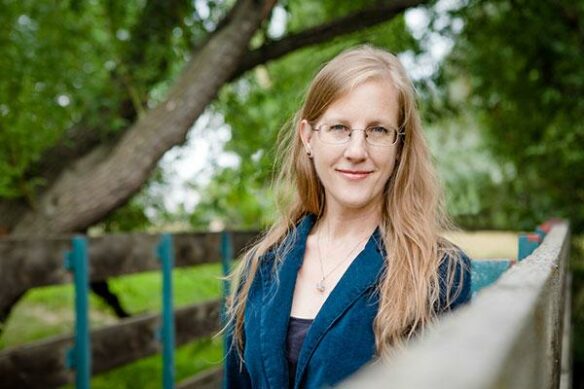
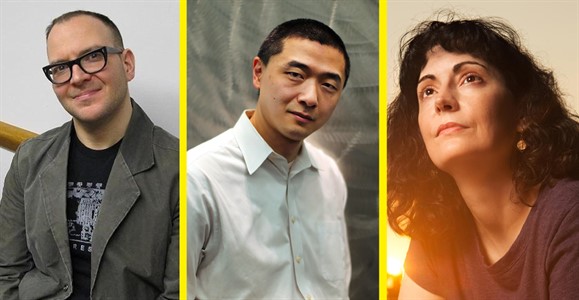
It’s finally here—the release of The Curve of the World, the last novel written by CW Founder Vonda N. McIntyre! When she died in 2019, the manuscript was complete. Once Aqueduct Press acquired the book, bringing it to publication involved a careful and collaborative process between four people: Nisi Shawl, Debbie Notkin, Kath Wilham, and Timmi Duchamp.
Join us for a virtual reading and conversation with the team that brought Vonda N. McIntyre’s last book to the world! (Can’t make it to the party? You can still pre-order your copy here.)
(2) DEEPLY RECOMMENDED. A Deep Look by Dave Hook praises “’Dark Matter: A Century of Speculative Fiction from the African Diaspora’, Sheree Renée Thomas editor, 2000 Aspect/Warner Books”. Here is the Short take. Read the Long analysis is at the link.
The Short: I finally read Dark Matter: A Century of Speculative Fiction from the African Diaspora, Sheree R. Thomas editor, 2000 Aspect/Warner Books. It includes 29 works of short fiction and seven essays, from 1887 to 2000. It was a World Fantasy Award winner and Locus Award nomination. Although my favorites were the classic novelette “The Evening and the Morning and the Night” by Octavia E. Butler, Omni, May 1987, and the superlative short story “Aye, and Gomorrah …” by Samuel R. Delany, from Dangerous Visions, Harlan Ellison editor, 1967 Doubleday, I was even more pleased to both discover new fiction by authors I did not know and to read the very educational and interesting essays. My overall, average rating was 3.64, or “Very good”. Strongly recommended.
(3) GRADUATION DAY. Nnedi Okorafor told Facebook readers all about giving the commencement address at UIC.
Yesterday, I returned to University of Illinois Chicago to deliver the commencement speech for the College of Liberal Arts and Sciences.
As an alum who earned both her Master’s and PhD there, returning in this way felt…surreal. Ten thousand people were in that auditorium. TEN THOUSAND.
New milestone.
And *then* afterward…so many people, including the provost, said it was one of the best commencement speeches they’d heard. I’m still processing that….
…I can’t believe I DID it. I stood up there. I spoke about the need to be creative in this world inundated with AI, to lean in to what makes you you, to be ready to strategically adapt, to be curious and interested, that empathy is a strength and always has been, and more.
What an honor. What a full-circle moment. What a day….

(4) JUDGE DROPS THE GAVEL ON DOGE. “Federal Judge Orders Reinstatement of NEH Grants” reports Publishers Weekly.
The Authors Guild and other plaintiffs notched a significant victory on May 7, when a federal court in New York issued a permanent injunction against the National Endowment for the Humanities and the Department of Government Efficiency.
Judge Colleen McMahon of the Southern District of New York sided with the plaintiffs on all three of their claims, invoking protections provided by the First and Fifth Amendments and DOGE’s overreach.
The court ordered the reinstatement of more than 1,400 NEH grants, representing more than $100 million in congressionally appropriated funds, canceled en masse by DOGE between April 1–3, 2025.
The decision resolves two consolidated complaints, both filed in May 2025. The Authors Guild et al. v. NEH et al. was brought by the Authors Guild and seven individual NEH grantees, while American Council of Learned Societies et al. v. NEH et al. was brought by the ACLS, American Historical Society, and Modern Language Association. The lawsuits were so similar that the court determined they should be combined.
The court concluded that the termination of the NEH grants violated the First Amendment by engaging in viewpoint discrimination….
(5) UNDERSTAND: HOW READING MADE US. [Item by SF Concatenation’s Jonathan Cowie.] There is a marvelous little series currently on BBC Radio 4 on Understand: How Reading Made Us (trailer).
One of the programme’s regular’s is the SF/F writer Naomi Alderman, but that’s not the thing. I caught the second episode which among other things charted how reading has changed: apparently everyone used to read out loud and it was a noteworthy rarity – commented upon – if someone read silently. But the big thing it put forward was the argument that the rise of the novel in the eighteenth century and into the nineteenth drove much social change: they presented a reasonable case.
The episode 2 pitch is…
Reading seems an unremarkable skill. When we say something is as “easy as ABC”, we mean it is very easy indeed. In fact, learning to read has dramatic and irreversible consequences for people and for societies. Learning to read permanently alters your brain. It changes the emotions you experience and the way you relate to others. When a society learns to read the consequences are dramatic: wars break out, revolutions erupt and new political systems spring into being. Reading made us who we are. With time spent reading – and even reading ability – starting to nosedive, Times writer James Marriott explores how reading changed humanity, and what might happen if we stop.
In this programme, James asks whether the spread of novel reading in the 18th century caused a moral revolution, whether a book played a role in the abolition of slavery, and whether the rise of reading, a solitary and slightly lonely activity, was one of the factors setting us on the path to our atomized and isolated modern society.
The series is available on BBC Sounds with episode 1 here and episode 2 here. A third episode will be broadcast next week. This is free in the UK, but outside the UK you may need a subscription.

(6) ROBOT MONK. [Item by Evelyn C. Leeper.] Speaking of Becky Chambers, did everyone see the Guardian’s story about how the Jogyesa temple in Seoul held an initiation ceremony for a robot to become a monk? “I, robe-ot: the android monk working to reboot the faith of South Korea’s Buddhists”.
Amid rows of colourful lanterns strung across the courtyard of Jogyesa temple in Seoul, an unusual ceremony unfolded this week: monks held a Buddhist initiation for a humanoid robot draped in saffron robe.
They placed a string of 108 prayer beads around the robot’s neck and affixed a lantern festival sticker to its mechanical arm in place of the traditional yeonbi ritual, in which burning incense is lightly pressed against the skin.
The robot was then presented with a formal certificate listing its manufacture date, 3 March 2026, where a human initiate’s birth date would normally appear.
“At first we discussed it casually,” Venerable Sungwon, the order’s cultural affairs director, says about the robot ceremony’s origins. “It began almost as a joke. But the more we thought about it, the more serious it became.
“Robots are entering our lives so quickly, and people feel familiar with them … They’re becoming part of our community.”
Venerable Sungwon’s temple is the headquarters of the Jogye order, South Korea’s largest Buddhist denomination, and the initiation of its first robot monk comes at a time of uncertainty for the group, as they grapple with falling participation and interest.
Just 16% of South Koreans now identify as Buddhist, down from about 23% in 2005. Among people in their twenties, the figure drops to 8%. Last year, the Jogye order ordained just 99 new monks, down from more than 200 a decade earlier.
Yet by another measure, Buddhism has never been more popular. Under its president, Ven Jinwoo, the Jogye order has aggressively courted younger Koreans through what observers call “hip Buddhism” using merchandise, meditation apps and viral marketing.
The ordination of Gabi – the 130cm humanoid robot – forms part of this effort to reach more Koreans….
(7) TODAY’S BIRTHDAY.
[Written by Cat Eldridge.]
May 11, 1918 — Richard P. Feynman. (Died 1988.)
I’ll admit that I don’t begin to understand what most of the work Richard P. Feynman did as a theoretical physicist. I seriously doubt most of you do.
While at Princeton, Feynman was recruited for the theoretical division of the Manhattan Project, the very, very secret U.S. Army laboratory set up in Los Alamos, for the purpose of developing the atomic bomb. He was present at the first detonation of an atomic bomb.
In 1965, he shared the Nobel Prize in Physics with Julian Schwinger and Sin-Itiro Tomonaga. The three each created new mathematical tools for a theory called quantum electrodynamics, which describes how subatomic particles interact with light.
Now there is the matter his influence on the genre. Although as I said was his work in theoretical physics, Feynman was largely pioneered the field of quantum computing and was solely responsible for the concept of nanotechnology. So yes, two widely used SF concepts are from him.
By the late Fifties, he was already popularizing his love of physics through books and lectures including lectures on nanotechnology called There’s Plenty of Room at the Bottom, and a multi volume publication of his undergraduate lectures, The Feynman Lectures on Physics. Yes, these are available from the usual suspects.
He also became known through his autobiographical works Surely You’re Joking, Mr. Feynman! and What Do You Care What Other People Think?. Naturally there would be books written about him. The biography by James Gleick, Genius: The Life and Science of Richard Feynman is the one I’ll single out as being the best.
It’s worth noting last is that he was selected to be a member the Presidential Rogers Commission that investigated the Space Shuttle Challenger disaster.
Lis Carey notes that during the Challenger explosion hearings, Feynman demonstrated on camera that an O-ring dropped into ice water lost all the resilience critical to its function on the shuttle solid rocket fuel tanks.

(8) COMICS SECTION.
- Mother Goose and Grimm witness an unexpected complaint.
- Reality Check gets a wrong diagnosis.
- Zen Pencils quotes Bill Watterson.
(9) EXCAVATING SOUNDTRACKS. “Lost Movie Music? On CD? La-La Land Is an Anomaly. (And a Success.)” The New York Times tells about this successful niche business. (Behind a paywall.)
In 1979, the composer Harry Manfredini descended into a New Jersey basement to put together music for an indie slasher film. He was working with a quickly approaching deadline, a small group of players and a minuscule budget. “We weren’t even in a recording studio,” Manfredini remembered in an interview. “On the raw tracks, you could hear the chairs squeaking and the pages turning.”
The resulting score, with its sinister strings and eerie whispers, would be heard by millions of moviegoers when “Friday the 13th” opened the next year. But the film’s soundtrack never earned a stand-alone release. Nor did the numerous “Friday the 13th” sequels Manfredini worked on throughout the decade.
So he was surprised when, in 2011, MV Gerhard and Matt Verboys, the founders of the label La-La Land Records, approached him with an ambitious plan: They wanted to release every piece of music they could find from the first six “Friday the 13th” movies — even snippets barely a minute long.
“I thought they were crazy,” Manfredini said. “I told them, ‘Some of that music is pretty boring — it’s playing as people run through the woods. It’s never going to sell.’”
But La-La Land was able to track down and restore music that Manfredini, 82, hadn’t heard in decades. And the label’s six-disc “Friday the 13th” compilation sold out within days of being announced. It’s one of the hundreds of expansive, exhaustive soundtrack collections La-La Land has released since forming in 2002.
The company scours movie studio archives and composers’ personal collections to locate as much music as possible from older films or TV recordings, often turning up work that’s been misplaced or forgotten….
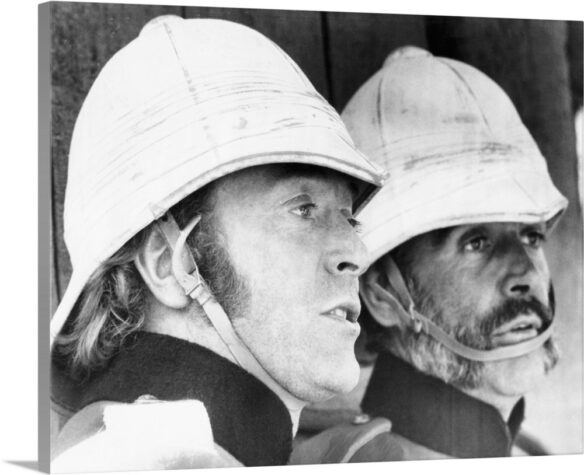
…In La-La Land’s early days, the label released soundtracks for a handful of contemporary films — like the 2004 Ashton Kutcher drama “The Butterfly Effect” — as well as genre films (“Creepshow”) and Hollywood classics (“Zulu Dawn”)….
…At first, Gerhard and Verboys didn’t have access to big franchise films or superstar composers. But they didn’t necessarily need them. To some soundtrack fans, it doesn’t matter if a movie is a blockbuster or a bomb, so long as they connect to its music. One of the label’s more recent hits is a two-disc collection of Jerry Goldsmith’s playfully dramatic score from the schlocky 1985 action-adventure “King Solomon’s Mines.”
“There are a lot of terrible movies that have great music,” said Nathan Pickup, 42, a corporate trainer in Riverview, Fla., who has more than 600 soundtrack CDs in his collection. “What I love is the narrative elements of film scoring. If there are themes I can pick out from a score, or certain moods it creates, that’s enough for me.”
Throughout the 2000s and 2010s, as Gerhard and Verboys earned the trust of studio executives and musicians, La-La Land began working with more blue-chip pop-culture properties: “Star Trek,” “Batman: The Animated Series,” the Harry Potter films….
(10) MOUNT UP! Variety reports “Fourth Wing TV Series Ordered at Amazon”.
Get ready, riders: The long-gestating “Fourth Wing” TV adaptation has been ordered to series at Amazon‘s Prime Video.
Based on the best-selling “The Empyrean” romantasy book series from author Rebecca Yarros, “Fourth Wing” is set inside the brutal world of Basgiath War College, where there is only one rule: graduate or die. Twenty-year-old Violet Sorrengail was always expected to live a quiet life — but she’s sent on an entirely different path when her mother, a general in the military, orders her to join the hundreds of candidates striving to become dragon riders, the elite of Navarre….
…“Fourth Wing” executive producer Michael B. Jordan announced the series pickup at the end of Amazon’s upfront presentation to TV advertisers at the Beacon Theatre on Monday….
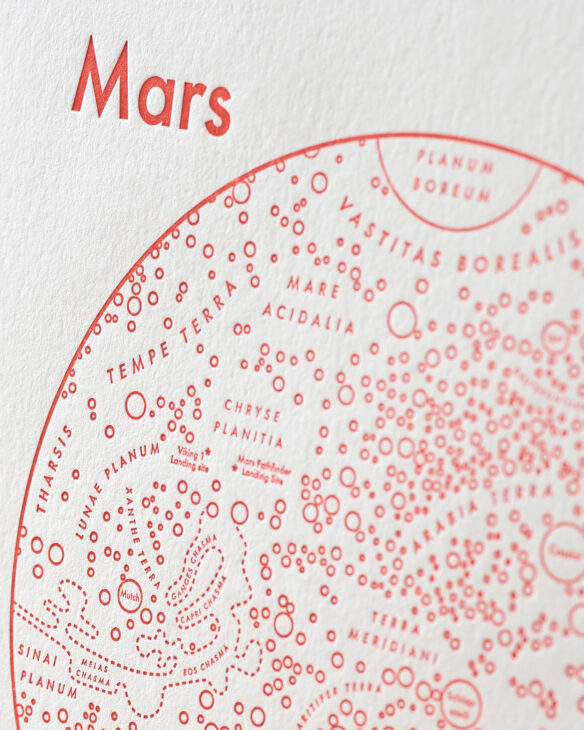
(11) WHERE COULD LIFE BE – IF IT EXISTS – ON MARS? [Item by SF Concatenation’s Jonathan Cowie.] The concept of Martian life is an old SF trope. The tardigrade (multicelled) species is a tough little critter capable of surviving extreme drying, freezing, heat, radiation, the vacuum of space, but it would find life on the UV irradiated and chemically toxic surface of Mars virtually impossible. However, simple prokaryotic cells are another matter and there are examples on Earth that could survive on Mars, but where exactly? Where on Mars could life survive? Physicist Matt O’Dowd, over at the PBS Space-Time YouTube channel, trespasses into biological and environmental science territory to consider exactly where we should look for life on Mars…! You can see the 20-minute video here or below…
[Thanks to John King Tarpinian, Cat Eldridge, SF Concatenation’s Jonathan Cowie, Evelyn C. Leeper, Chris Barkley, Mark Roth-Whitworth, Kathy Sullivan, Steven French, Mike Kennedy, and Andrew Porter for some of these stories. Title credit belongs to File 770 contributing editor of the day Bill.]