(1) HELP MICHAEL WHELAN SOLVE A MYSTERY. Mike Jackson, the webmaster at MichaelWhelan.com, hopes “the collective knowledge of fandom might recall the publishing origins of Michael Whelan’s painting The Mad Poet. He recalled it was commissioned back in 1977 to accompany a Robert E. Howard poem, likely by Armand Eisen at The Morning Star Press, but we can’t find a record of where it was printed. There’s more background in our weekly newsletter today: ‘Descent into Madness’.”
For clues and what they already know, get the full rundown at the link. And here’s the mission, if you choose to accept it:
Help solve the mystery…
Where did THE MAD POET first appear in print?
Send us clues, photos, and recollections so we can fill in the publication history of this magical, fan favorite painting.
(2) A MODIFIED NOVELLAPALOOZA. Chapter Adventure does a roundup about “The 15 Novellas Nominated for 2026 Locus, Nebula and Hugo Awards”.
…Below are the 15 novellas that have nominated across all 3 awards in 2026. You’ll find a very diverse mix including cozy robot restaurants, gothic fairy tale retellings, murder mysteries set in space, fairy tales about sisters and Faerie, witches and curses, haunted coal mines, and climate allegories told from a mountain’s point of view. The first two on the list appear on all three major award ballots this year. If you’re not sure where to start reading, these are the ones generating the most buzz….
First on the list is –
Automatic Noodle, Annalee Newitz
Hugo Nebula Locus
Genre: Cozy Sci-Fi | Pages: 163
In a near-future San Francisco still rebuilding from a devastating war of independence from the rest of the United States, a group of deactivated food-service robots come back online in an abandoned ghost kitchen. With no human oversight and a debt they must pay to stay free, they make a bold decision: open their own restaurant, serving the city’s most exceptional hand-pulled noodles. When a targeted wave of one-star fake reviews threatens to tank their business, the bots must investigate the sabotage and call on their community to survive in a world that wasn’t built for them.
(3) WALTER SCOTT PRIZE FOR HISTORICAL FICTION. The Walter Scott Prize for Historical Fiction 2026 Shortlist dropped on April 16. The five shortlisted titles are:
- The Pretender by Jo Harkin (Bloomsbury)
- The Matchbox Girl by Alice Jolly (Bloomsbury)
- Benbecula by Graeme Macrae Burnet (Polygon)
- Once The Deed Is Done by Rachel Seiffert (Virago)
- Seascraper by Benjamin Wood (Viking)
(4) YOU CAN ONLY PICK TEN. Collider’s list of “10 Greatest Sci-Fi Book Masterpieces, Ranked” is probably the list you would have written off the top of your head if somebody asked to do it thirty years ago. The only choice that wasn’t obvious to me was number nine… number nine… number nine…

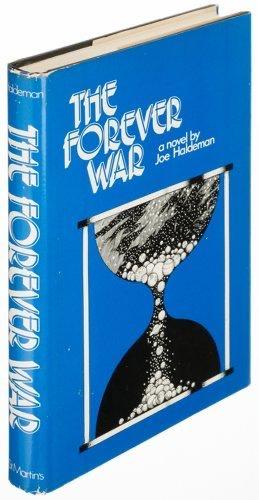
9. ‘The Forever War’ (1974)
“I wasn’t trying to destroy the world. I was trying to survive.” The Forever War follows a soldier drafted into an interstellar conflict where relativistic space travel causes time dilation, meaning that every mission sends him decades or centuries into the future. The plot tracks his repeated deployments, each one making him more alienated from the society he is supposedly defending. The protagonist becomes a relic, increasingly unable to relate to evolving cultural norms, even as the war itself becomes increasingly abstract and purposeless.
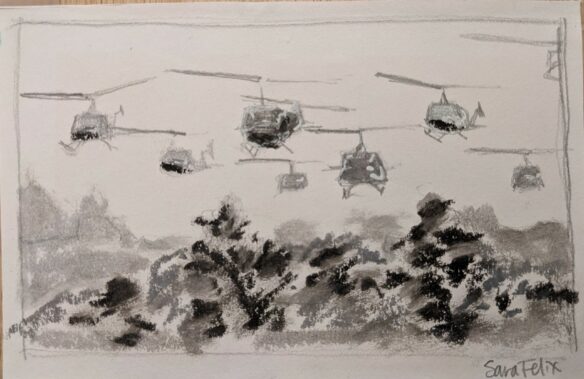
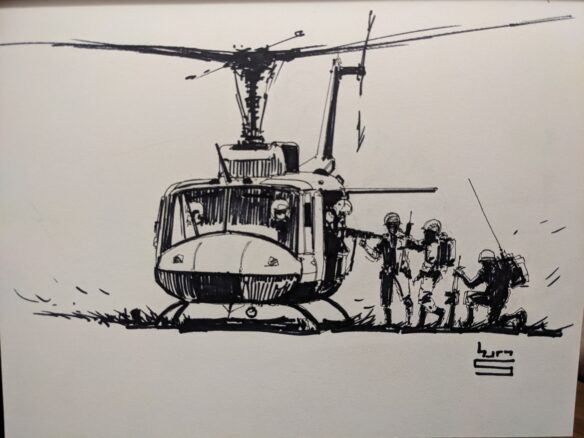
Written by a Vietnam War veteran, the novel reads as both sci-fi and a bitter memoir, The Hurt Locker meets The Time Machine. Indeed, The Forever War strips away the genre’s usual heroism and replaces it with bureaucratic absurdity and moral exhaustion. The brilliance of the book lies in how it uses its pulpy, hard science elements to drive the character development and emotional investigation. Here, time dilation isn’t a gimmick but a mechanism through which to explore the trauma of war.
(5) VERDICT ON TYSON’S BOOK. Alec Nevala-Lee pans Neil deGrasse Tyson’s new book in the New York Times: “Book Review: ‘Take Me to Your Leader,’ by Neil deGrasse Tyson”. (Behind a paywall.)
… Tyson notes that movies and television shows tend to feature aliens with “a head, two eyes, a mouth, shoulders, two arms, two hands and 10 fingers,” presumably because of the physical limitations of “human actors paid to don alien costumes,” and he gently chides their creators for being insufficiently imaginative.
Oddly enough, however, he almost entirely ignores an art form that isn’t constrained by practical considerations — the dazzlingly inventive world of science fiction novels and short stories. While he mentions a handful of literary works — “Slaughterhouse-Five,” “The Andromeda Strain,” “Contact” — if Tyson really wanted to explore scientific ideas through depictions of aliens, why not devote a paragraph to, say, “Mission of Gravity,” Hal Clement’s 1953 novel set on a rapidly rotating planet populated by intelligent centipedes?
This lack of engagement is a giveaway. Tyson doesn’t seem all that interested in science fiction; it’s frankly unclear if he even likes it, or feels any need to approach it on its own terms….
(6) THAT WOULD BE NO. Variety asks and answers the question “Would Oscar Inclusion Standards Disqualify Any Best Picture Winners?”.
Andy Samberg answered this one for us back in 2020.
Here’s the short version (because we’ve gone over this). Every best picture winner in the Academy’s 98-year history — from the silent-era film “Wings” in 1929 through the most recent political action epic “One Battle After Another” this past March — clears the Academy’s Representation and Inclusion Standards. That also includes “Oppenheimer,” the film directed by Christopher Nolan, with whom Elon Musk had no problem until this past week. And Nolan’s upcoming adaptation of Homer’s “The Odyssey,” whenever the Academy gets a look at it, would also clear the inclusion standards, and it’s not because Lupita Nyong’o was cast as Helen of Troy.
Musk spent the back half of the week yelling at a movie that doesn’t come out until July. The world’s richest man went on X to announce that Nolan “desecrated the Odyssey so that he would be eligible for an Academy Award,” then sharpened it again on Friday: “Who specifically is the asshole who added DEI lies to Academy Awards eligibility instead of it just being about making the best movie?”
He doesn’t actually want an answer. But I’ll give one, and it’s going to be boring, a huge problem for everyone amplifying him. The standards don’t do what he thinks they do, and the entire history of the category proves it.
A quick refresher, because nobody screaming about these rules has read them. The Academy announced the standards in 2020. They phased in over two information-gathering years and became a best picture requirement for the 2024 eligibility year, which is why “Anora” — Sean Baker’s $6 million indie dramedy that walked off with five Oscars at the 97th ceremony — was the first winner to compete under them, followed by Paul Thomas Anderson’s “One Battle After Another.”
A film has to meet two of four standards. Again, two of the four. Not all four.
Standard A is on-screen: a lead or significant supporting actor from an underrepresented racial or ethnic group, or a 30% ensemble drawn from two underrepresented groups, or a storyline centered on one. Standard B is the creative team: department heads, broader crew, or 30% crew composition. Standard C is the distribution or financing company’s paid apprenticeships and training. Standard D is in-house senior executives or consultants across the company’s development, marketing, publicity and distribution….
(7) PUNCH BROTHERS. NPR tells what it’s like when “Robots battle it out in Detroit’s Robowar”.
In the back of a church in an anonymous stretch of 7 Mile in Detroit dotted with industrial lots and fast food stores, performers dressed as giant robots battle it out in front of a live audience behind bullet-proof glass.
“We have these nine foot tall metal gladiators that shoot exploding projectiles at 20 rounds a second,” says Art Cartwright, the impresario who founded both the church, Global Empowerment Ministries, and the organization behind the robot show, The Interactive Combat League.
The show, running every few months, is called Robowar. Cartwright’s two enterprises have little to do with each other, he says, save for sharing space and introducing members of his community to potential employment in robotics.
“Metropolitian Detroit right now leads the nation in robotics,” Cartwright says. “We have more robots than any other place in America.”
But the gleaming, glowing-eyed stars of the Interactive Combat League are nothing like industrial robots that help assemble automobiles. They are played by humans wearing what might be considered mech suits. Robots fighting each other as entertainment is a cultural fantasy that goes back at least to 1956, when Richard Matheson’s short story “Steel” was published in The Magazine of Fantasy & Science Fiction. It was adapted into a 1963 episode on the TV show The Twilight Zone, and helped inspire the 2011 movie, Real Steel….
(8) MEMORY LANE.
[Written by Paul Weimer.]
The Empire Strikes Back (1980)
By Paul Weimer: The Empire Strikes Back. The Greatest of the Star Wars films?
Possibly.
Like Star Wars, I didn’t get to see this one in the theater. I didn’t get any playsets for this one, no Cloud City playset, unfortunately. I had a sketchy idea of the events of the movie from seeing Return of the Jedi, and the Atari 2600 videogame. Oh, and the vector laser arcade game. So I knew only a sketch of the movie and its events.
It would be when it aired on TV in the mid-80’s (along with Star Wars itself, and after I had seen ROTJ) that I would finally see the movie.
Best script of the entire nine movies? Possibly. For freshness and reinvention, the original Star Wars has Empire beat, but Star Wars can be slow going in places, where Empire is much leaner, meaner and more controlled in its blaster fire. We see how Lucas clearly had changed his mind about Luke and Leia and started the turn toward Leia and Han. We meet Yoda, in his best incarnation. Force Ghost Obi-Wan. And just the casual way Vader deflects the laser fire from Han Solo was just so good. It answered the question of “Why don’t you just shoot him?” that I had wondered since his lightsaber fight in Star Wars.
And of course, “Luke, I am your Father.” One of the greatest twists in modern cinema, bar none. Was Vader lying? Why did Obi-Wan lie if he wasn’t? It brings Luke and the Rebellion to a low point not long after, Han captured, the rebellion scattered to the wind. In the Hero’s Journey, this is about as low as things can get in the trilogy. The middle of trilogies is hard, often flabby or repetitive. Empire is none of these. It’s the exception that proves the rule.

(9) COMICS SECTION.
- Brevity emphasizes the oink in Hogwarts.
- Brewster Rockit gets pranked.
- Carpe Diem is fully in tune.
- Crabgrass can’t fool all the people all the time.
- Liō watches with the fan club
- Rhymes with Orange believes it runs in the family.
- Strange Brew traces late night note taking to early days.
(10) YOUR SECRET IDENTITY. MyHeroIDUSA would like to sell you “The Hero Mode Wallet”, made of “premium vegan leather”. For states where the driver’s license design lends itself, the wallet makes the ID photo look like you in a superhero mask.


(11) KOREAN MONSTER MOVIE. Variety likes this one: “Na Hong-jin’s Overlong Monster Mash is Bad CGI Inside Brilliant Action”.
For a decade, since 2016’s extraordinarily uncanny horror-hybrid “The Wailing,” fans of Korean director Na Hong-jin have been peering anxiously at the horizon awaiting his next uncategorizable genre mash-up. More recently, like a bumbling local police chief removing his mirrored aviators to squint at an unidentifiable what-the-hell-is-that wreaking havoc in the distance, we’ve tracked reports of his new project, which despite a high-profile international cast and the largest budget in Korean film history, remained until the last second shrouded in secrecy. Now that “Hope” is here — hilarious, unwieldy, overlong and featuring some of the most breathtakingly elegant action moviemaking of this or any year — one has to ask if anything could possibly have lived up to the anticipation.
It’s a question that seems mischievously on writer-director Na’s mind, as for a good portion of the outstandingly berserk first hour, it seems possible we will never actually see the creature causing the gloriously choreographed mayhem that is bedeviling the small town of Hope Harbor, South Korea. This shabby hamlet is close enough to its northern neighbor/nemesis that weathered billboards warn against landmines and urge residents to “Report Spies!” and “Guard Against Infiltrators!”
It is maybe the late ’80s — in any case, pre-cellphones — and Bum-seok (an irreplaceable Hwang Jung-min, reuniting with Na after “The Wailing”), the chief of police in this one-horse town, has been called out to a vast flat field on its outskirts to investigate the gorily mysterious mutilation of a large cow. Its carcass has been discovered by a group of hunters led by Sung-ki (Zo In-Sung), who is Bum-seok’s second cousin. Here, everybody knows or is related to everyone else, as will be proven in just a few minutes when Bum-seok will be pegging it down the devastated streets and alleyways of Hope Harbor, namechecking every second bloodied corpse he passes….
… It’s hard to overstate just how wildly entertaining this first hour is: a kind of riff on, of all things, Ron Underwood’s cult classic “Tremors,” only scaled up in expanse as well as expense, with genius cinematographer Hong Kyung-pyo (“Parasite,” “Burning,” “The Wailing”) wielding his gliding camera with such insolent grace that it seems like serenely sarcastic commentary on the chaos and carnage of Lee Hwokyoung’s production design.
There are team-ups and fuck-ups and every character is, well, a character….
(12) OUTSTANDING IN ITS FIELD. “A lucky ‘metal detectorist’ found the Sheriff of Nottingham’s ring, valued at $11,000” reports Yahoo!
In a deliciously ironic turn of fate, a retired merchant navy engineer in England has found a treasure that would have made his country’s most popular folk hero proud. Graham Harrison, a 65-year-old metal detector enthusiast, discovered a gold signet ring that once belonged to the Sheriff of Nottingham.
The discovery was made on a farm in Rushcliffe, Nottinghamshire, 26.9 miles from Sherwood Forest. The forest is known worldwide for being the mythological home of Robin Hood and his band of Merry Men. A central road that traversed the forest was notorious in Medieval times for being an easy place for bandits to rob travelers going to and from London.
Today, the forest is a designated National Nature Reserve. It contains ancient oaks that date back thousands of years, making it an important conservation area….
…Harrison sent the ring to the British Museum’s Portable Antiquities Scheme to have it authenticated.
After doing some research they found that it was once owned by Sir Matthew Jenison, who was the Sheriff of Nottingham between 1683 and 1684….
(13) WEIRD VIDEO OF THE DAY. “Bobbin’s Sacrifice” from Saturday Night Live.
A man (Will Ferrell) sacrifices himself to help save a kingdom.
[Thanks to Steven French, Mike Kennedy, Andrew Porter, Cora Buhlert, Mike Jackson, John King Tarpinian, Cat Eldridge, SF Concatenation’s Jonathan Cowie, Chris Barkley, Mark Roth-Whitworth, and Kathy Sullivan for some of these stories. Title credit belongs to File 770 contributing editor of the day Cat Eldridge.]