Pixel Scroll 3/20/26 Project Hello, Dolly!

(1) SFWA NEBULA AWARDS POLICY VS. LLM-USE. SFWA President Kate Ristau today responded to File 770’s questions about “How SFWA Is Administering the Nebula Awards Policy Against LLM-Use”.

Seven of the 61st Nebula Awards finalists announced on March 15 were labeled with an asterisk denoted as meaning —

*Provisional nomination; awaiting acceptance and response on LLM-use.

File 770 asked SFWA (1) what is the deadline for providing the response, and (2) will finalists be removed/replaced if they do not comply?…

Answers at the link.

(2) ONE WEEK LEFT TO NOMINATE FOR THE HUGOS. LAcon V today reminded everyone this is the last week to make your nominations for the 2026 Hugo Awards. Nominations close Saturday March 28, 2026 at Noon Pacific. (You are only eligible to nominate for the Hugo Awards if you became a member of LAcon V by January 31, 2026, or were a member of the Seattle Worldcon 2025. )

(3) HOME GROWN RONDO NOMINEE. Congratulations to Steve Vertlieb whose File 770 article “Merian C. Cooper: A King And A God In The World He Knew” is a finalist in the 2026 Rondo Awards Best Article category.

The awards voting is open to the public and Steve would be delighted to have your support. He asks, “Please send your vote along with your name and e-mail address to [email protected].”
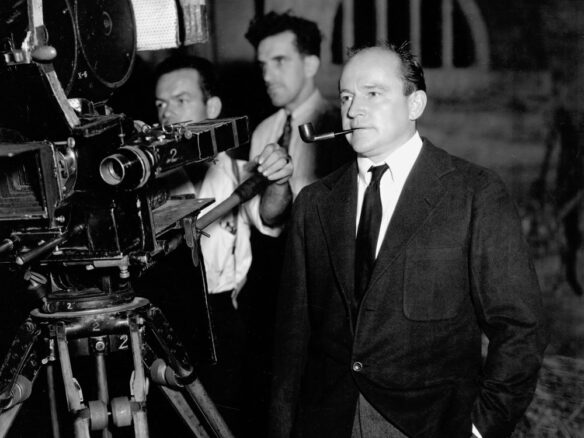
Merian C. Cooper as a director.

(4) MINDING THE STORE. Deadline says “Box Office: ‘Project Hail Mary’ Headed To Strong $71M+ U.S. Opening”.

 Amazon MGM Studios‘ Project Hail Mary is shooting for a massive $31M today (including previews) and the best opening of 2026 so far with $71.1M at 4,007 runs. That’s also the best opening ever for an Amazon MGM Studios movie, ahead of Creed III‘s $58.3M back in 2023.

(5) HAIL DIRECTORS. The New York Times asks “What the ‘Project Hail Mary’ Directors Learned From a Firing” – the link bypasses the paywall.

â€ĶLord and Miller have long relished tackling concepts that shouldn’t work, since their directorial debut, “Cloudy With a Chance of Meatballs” (2009), the animated adaptation of the classic children’s book, which has very little by way of story other than falling food. Next, they leveled up, turning a kitschy retro television property into a critically acclaimed comedy with “21 Jump Street” (2012). Their sequel to that, “22 Jump Street” (2014), came out the same year as “The Lego Movie,” which, instead of being the crass brand extension you might have expected, was a beloved, zany hit that celebrated creativity.

But the two filmmakers had not actually directed a feature in 12 years. They were working on Lucasfilm’s Han Solo spinoff movie, before being fired over “different creative visions” and replaced by Ron Howard, who would complete “Solo: A Star Wars Story” (2018). Since then, they have become best known as the Oscar-winning producers of the “Spider-Verse” movies, featuring adventurous animation that has often been imitated.

“Project Hail Mary,” with a screenplay by Drew Goddard, represents their return to directing and it does so on a grand scaleâ€Ķ.

â€ĶAfter the “Solo” job didn’t go the way you hoped, what did you think your path was going to be?

LORD We’ve been busy the whole time. But I think we’re always looking to find ways to do something that no one else is doing. When we set out to make “Solo,” what I love about those movies is they’re independent films, so we were interested in that and in that character. And that’s the energy we brought to “Spider-Verse.” We can do something in animation that hasn’t been done yet.

Approaching [“Project Hail Mary”], it was almost contrarian to make a movie that’s so affirming about a topic that is on everyone’s mind, which is this idea that we’re doomed. What I love about Andy’s book and what we’ve always tried to do in our work is not just present problems but try to suggest solutions. This movie is suggesting that we are capable.

Hopefully the audience comes out and they feel a little more capable in part because Ryan was really interested in this choice that he was only going to be good at one thing, and he was going to be bad at everything else. He’s bad at space, he’s afraid constantly. Clumsy. And he has social anxiety, but he’s really good at microbiologyâ€Ķ.

(6) AN SF MOVIE WITH SCIENCE? [Item by Steven French.] Astrophysicist Sara Webb gives her considered verdict on the movie Project Hail Mary: “Project Hail Mary is packed with hard science. An astrophysicist breaks it down”.

As an astrophysicist, my world revolves around the wonders of space and the mysteries of the universe. This means I can be a tough critic of science fiction books and films that explore these topics.

But when I walked out of a recent preview screening of the film adaptation of Andy Weir’s 2021 science fiction novel “Project Hail Mary,” I had tears of joy in my eyes. The filmmakers had done justice not just to the original story, but also to the science at the heart of it.

(7) PUBLISHER TAKES DOWN HORROR NOVEL WITH SUSPECTED AI INVOLVEMENT. [Item by Ersatz Culture.] “Hachette pulls horror novel Shy Girl after suspected AI use” reports the Guardian.

Hachette Book Group has withdrawn a horror novel after allegations circulated online that its author relied heavily on artificial intelligence. The book is to be discontinued in the UK after being published in November 2025, and its US launch date has been cancelled.

The book, Shy Girl by Mia Ballard, had been scheduled for release in the US this spring under Hachette’s Orbit imprint. However, the publisher confirmed it had halted publication after an internal review. The title has also been removed from online retailers including Amazon, and will no longer be distributed in the UK.

The decision was first reported by the New York Times and comes after weeks of online speculation about the novel’s origins, during which readers on platforms such as Goodreads and Reddit had questioned whether sections of the text bore hallmarks of AI-generated proseâ€Ķ

And here is the New York Times story, “Horror Novel ‘Shy Girl’ Canceled Over Suspected A.I. Use” (behind a paywall.)

Hachette Book Group, one of the largest publishers in the United States, pulled a forthcoming horror novel on Thursday in a decision that followed widespread allegations online that the author, Mia Ballard, relied heavily on artificial intelligence to write the book.

On Thursday, a day after The New York Times approached Hachette citing evidence that the novel appeared to be A.I.-generated, the company said it was pulling the book from publication. By Thursday afternoon, the novel was removed from Amazon and the Hachette website.

Hachette told The Times that its Orbit imprint decided not to publish “Shy Girl,” which was due out in the United States this spring, after conducting a thorough and lengthy review of the text. Hachette said it will also discontinue the book in the U.K., where it was published last fall and has sold 1,800 print copies, according to NielsenIQ BookData.

“Hachette remains committed to protecting original creative expression and storytelling,” a Hachette spokeswoman said. She added that Hachette requires all submissions to be original to the authors, and asks authors to disclose to the company whether they are using A.I. during the writing process.

In an email to The Times late on Thursday night, Ballard denied using A.I. to write “Shy Girl,” contending that an acquaintance she hired to edit the self-published version of the novel had used A.I.

“This controversy has changed my life in many ways and my mental health is at an all time low and my name is ruined for something I didn’t even personally do,” she wrote, noting that she could not elaborate on how the book had been edited with A.I. because she was pursuing legal actionâ€Ķ.

This Reddit post from two months ago has a good write-up, and links to earlier investigations, YT videos, etc: “Shy Girl by Mia Ballard. Does anyone else think this was written by ChatGPT?”

Ersatz Culture also reports the UK publisher listing had some author blurbs, including 3-time Hugo Best Fan Writer finalist Bitter Karella.  The blurbs are all for this particular book, not for other work by this author that might not have been AI. The booksellers websites have taken down most of these by now:

MEG SMITHERMAN, author of Thrum and Entity

Lyrical prose gives way to a visceral nightmare in this gripping downward spiral of a novel. Both horrifying and gruesomely cathartic, Shy Girl is a study of female agency and bodily autonomy that is relentless and sickening in its violence, yet deeply satisfying. Not for the faint of heart, Shy Girl is a must read for all the weird girls out there.

HANNAH WHITTEN, New York Times bestselling author of The Foxglove King

Completely unique and utterly bonkers. Shy Girl is the most disturbing book I’ve read in years – and I mean that as high praise.

RACHEL EVE MOULTON, author of Tantrum [from Waterstones, still online at this time]

Gia’s desperation leads her to Nathan – a potential sugar daddy who might just solve all her financial problems. When Gia says ‘yes’ to his specific predilections, the result is viscous unraveling of autonomy that teaches Gia – and the reader – about the long-game of revenge. Shy Girl demonstrates the resilience of women, a lesson on the pleasure of going feral. A gore-filled ode to feminist rage that I will never, ever forget. Warning: this book may just make a girl go feral.

BITTER KARELLA, author of Moonflow

Mia Ballard has crafted a chilling, terrifying tale of romance gone awry, luring you in with head pats and skritchies and then fucking disembowels you. Hard to read, impossible to put down! I loved it! You will never look at puppy play the same way again!

OLIVIE BLAKE, New York Times bestselling author of Girl Dinner

This book put me THROUGH IT. Shy Girl is a gut punch of a story, as much about violation and horror as it is about agency and revenge. Mia Ballard is a f*cking powerhouse.

(8) TODAY’S BIRTHDAY.

[Written by Cat Eldridge.]

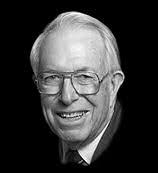
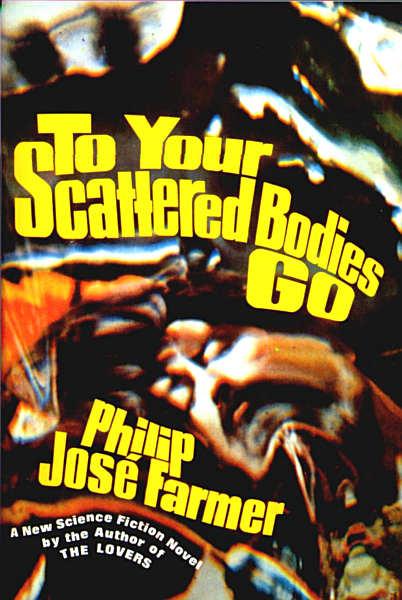
March 20, 1932Jack Cady. (Died 2004.)

So let’s seeâ€Ķ Ghost stories are a good place to begin I think. McDowell’s Ghost gives a fresh spin on the trope of seeing a War Between The States ghost, and The Night We Buried Road Dog is another ghost story set in early Sixties Montana. 

Jack Cady

Now The Well is not quite a ghost story as such but it’s a haunted house story of sorts heavy on the horror, really heavy on the horror. 

Not a ghost story as such but equally impressive is Inagehi which is the story of a young Cherokee woman who inherits a mountain and the mystery of her father’s death. 

Now Dark Dreaming with Carol Orlock reminds me just a bit of He Who Shapes in its use of the darker side of dreams. Well much darker than Zelazny ever did. Don’t read later at night.

Cady’s The Man Who Could Make Things Vanish is a tale of a man who make anything disappear against an organization that might or might exist wanting to rule the world. 

He wrote more novels than that but those are the ones I’m familiar with. 

He also wrote quite a bit of short fiction, some sixty pieces I figure. Phantoms: Collected Writings, Volume 1 and Fanthoms: Collected Writings, Volume 2, both done a decade ago, collect about forty-five pieces of short fiction. Both are available at the usual suspects. 

Those ‘Wards? He won a Nebula and Stoker for a novella, “The Night We Buried Road Dog”; the World Fantasy Award was for a short collection, The Sons of Noah & Other Stories; and the final one was the International Horror Guild Award a warded for Outstanding achievements in the field of Horror and Dark Fantasy.

(9) COMICS SECTION.

  • Bliss knows two superheroes who need a better greeting.
  • Dinosaur Comics points out what the Romans lacked. 
  • Lio tries to pick a direction. 
  • Thatababy looks forward to gardening.
  • xkcd makes star formation sound like a bad thing.

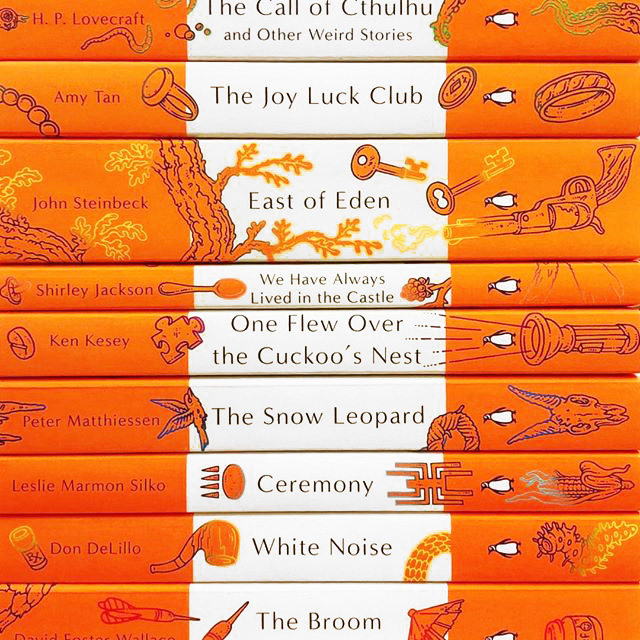
(10) PENGUIN UK COVER DESIGN COMPETITION SHORTLIST. Last year Penguin Books UK announced the Penguin Cover Design Award as an opportunity for ambitious artists:

Do you want a career in design or illustration, but are yet to land your first role?   

Would you like to experience real book cover design briefs and receive feedback from an Art Director?

The Penguin Cover Design Award is your opportunity to take on the role of a book cover designer and build your portfolio. 

Prizes include a six-month mentorship with a designer at Penguin, as well as a Wacom Intuos Pro Medium tablet and Penguin books to the value of ÂĢ100. 

This month 20 2026 shortlisted entries were posted on the Penguin website. They’re very impressive!

Both of the covers (adult and children) that contestants were asked to design are SFnal, namely Pratchett’s Night Watch and L’Engle’s A Wrinkle in Time. 

The winner will be announced in April.

(11) BIN THERE, DONE THAT. The Guardian’s Stuart Heritage has an entertaining and thoughtful article about Oscar ceremony waste: “The Oscars red carpet was in a skip. Then a woman took it home for her flat. What else could be repurposed?”

â€ĶThe story goes that, prior to the Oscars, while out on a walk, Thalia noticed rolls and rolls of pristine red carpet still encased in plastic wrapping. This made her wonder what happens to the carpet after the awards, which in turn sent her out on a mission around the back of the Dolby Theatre on Monday morning. While filming herself for TikTok, Thalia found a giant (and clean) skip filled with dozens of rolled-up pieces of carpet. “These are huge. Is it insane to take a huge piece?” she asked her viewers. Long story short, she now has a huge piece of the Oscars red carpet in her living roomâ€Ķ.

(12) ADD THIS TO YOUR COLLECTIBLE BUCKET LIST. “’Super Mario Galaxy Movie’ popcorn cauldron has made history. See how” – USA Today shows us.

A teeny tiny popcorn bucket, made with a miniature Bowser in mind, just made history.

The recordholder for “World’s Smallest Popcorn Container,” according to Guinness World Records, is a snack container inspired by a tiny cauldron featured in the upcoming “Super Mario Galaxy Movie”.

Dubbed a “faithful replica” of Bowser’s tiny cauldron, the concession accessory serves as a “playful homage” to the new film, opening in theaters April 1.

Measuring 2.6 inches at its widest point, the tiny cauldron can hold anywhere between five and 11 kernels of popcorn, making it the “smallest functional popcorn vessel on record,” according to Guinness.

In recent years, movie theaters have garnered attention for their wacky popcorn buckets, including the sandworm-like bucket for “Dune Part Two,” disappearing illusion box for “Now You See Me: Now You Don’t” and a baby sling carrier for “Despicable Me 4,” worn on the front of the chestâ€Ķ.

(13) NO FOOLIN’. “Nasa returns moon rocket to pad and targets 1 April launch” reports the Guardian.

Nasa has begun returning its towering SLS rocket and Orion spacecraft to its Florida launch pad before a planned flyby of the moon, after completing necessary repairs.

Artemis engineers began the manoeuvre, which can take up to 12 hours, at 8pm local time. The US space agency will then begin the final preparations before its next launch window opens on 1 April.

The immense orange-and-white Space Launch System rocket and the Orion vessel will be slowly wheeled out of the assembly building at the Kennedy Space Center in Florida and painstakingly moved 4 miles (6.5km) to launch pad 39B.

If the tests are satisfactory, three US astronauts and one Canadian will head to the moon and fly around Earth’s satelliteâ€Ķ.

Update: And today NASA sent subscribers this news flash:

At 11:21 a.m. EDT on Friday, March 20, NASA’s Artemis II SLS (Space Launch System) rocket and Orion spacecraft arrived at Launch Pad 39B after an 11-hour journey from the Vehicle Assembly Building at the agency’s Kennedy Space Center in Florida. 

NASA’s crawler-transporter 2 began itsâ€Ŋ4-mile trek with the integrated SLS and Orion stacked on top of the mobile launcher at 12:20 a.m. EDT. Moving at a maximum speed of justâ€Ŋ0.82 mph, the crawler carried the 322-foot-tall Moon rocket and spacecraft slowly and steadily toward the pad. 

Now that the rocket is at Pad 39B, NASA teams are gearing up for the final stretch of prelaunch preparations ahead of launch as soon as Wednesday, April 1. 

(14) I AM A MOUTH AND I MUST SCREAM. [Item by N.] In the penultimate episode of the indie animation hit The Amazing Digital Circus everything finally comes to a head.

[Thanks to Andrew Porter, John King Tarpinian, Cat Eldridge, N., Ersatz Culture, Danny Sichel, SF Concatenation’s Jonathan Cowie, Mark Roth-Whitworth, Kathy Sullivan, Steven French, and Mike Kennedy for some of these stories. Title credit belongs to File 770 contributing editor of the day Daniel Dern.]

Pixel Scroll 3/10/26 “Honest” John Barlow’s New & Used Pixels And Scrolls: You Can Get Better, But You Can’t Pay More

(1) HAPPY 100TH AMAZING! Today is the 100th anniversary of the first appearance of Amazing Stories. The magazine’s current publisher, Steve Davidson, says:

â€ĶOur best information informs us that the magazine was first distributed on Wednesday, March 10th, 1926. It was a cold day in Manhattan, the city where The Experimenter Publishing Company was headquartered. No doubt that Hugo Gernsback was happy to see it’s bright, neon yellow cover on the newsstands, featuring an illustration by an artist who would soon come to be known as the father of Science Fiction art, Frank R. Paul.

Gernsback established the Science Fiction genre by not only giving it a magazine where it could express itself, he defined its original parameters in his opening editorial titled “A New Kind Of Magazine”. He stated that “scientifiction” was

“a charming romance interwoven with scientific fact and prophetic vision”

which today we interpret as meaning a well-written, entertaining story, based in known scientific understanding and extrapolating into possible futuresâ€Ķ.

(2) WHAT COULD BE MORE CONVENIENT?  A Workshop for Professional Novelists – Sandusky, Ohio, 2026 has been announced on The World of Cat Rambo. The workshop runs from September 10-14. Full details and cost information at the link. Applications are open until March 31. Cat Rambo talked about it today in a new Facebook video.

Working together, Donald Maass and C.C. Finlay have created a workshop for mid-career writers: those novelists who are already creating income from their books, whether they are traditionally or independently published, but still want more. 

Donald Maass, a renowned name in the craft of writing, and founder of the Donald Maass Literary Agency, along with C.C. Finlay, a successful novelist and award-winning editor, will  co-teach a workshop for professional novelists in conjunction with the Wayward Wormhole. Scheduled for September 2026, this critique-focused weekend offers a twist on most craft workshops by assuming applicants are already well past the basics and are interested in forwarding their skills with professional guidance and quality peer critiques. This workshop is for those who reach higher.

Donald Maass founded the Donald Maass Literary Agency in New York in 1980. He is the author of The Career NovelistWriting the Breakout NovelThe Fire in FictionThe Breakout NovelistWriting 21st Century FictionThe Emotional Craft of Fiction, and over sixty novels.

C.C. Finlay has published five novels and a short story collection. His fiction has been nominated for the Hugo Award for Best Novella, the Nebula Award for Best Novella, and the Sidewise Award. In 2003 he was a finalist for the John W. Campbell Award for Best New Writer In January 2015, Finlay was named the ninth editor of The Magazine of Fantasy and Science Fiction, and served until the January/February 2021 issue. In 2021, he won a World Fantasy Award for his work editing the magazine.

The Wayward Wormhole is an off-shoot of the Rambo Academy for Wayward Writers, which has been serving up classes, workshops, and community for writers since 2011. 

To find out more about the Sandusky workshop, which is open to traditionally and independently published writers, see Workshop for Professional Novelists – Sandusky, Ohio, 2026.

(3) BADGES AND RIBBONS AS ARTISTIC COLLECTIBLES. James Bacon noted, “I was delighted to see Irish comic artist Anthea West selling amazing badges and ribbons as an artistic collectable amongst her vast selection of creative amazingness at Dublin Comic Con”.

(4) JEOPARDY! [Item by Andrew Porter.] Tonight on Final Jeopardy the category was “Books and Authors.”

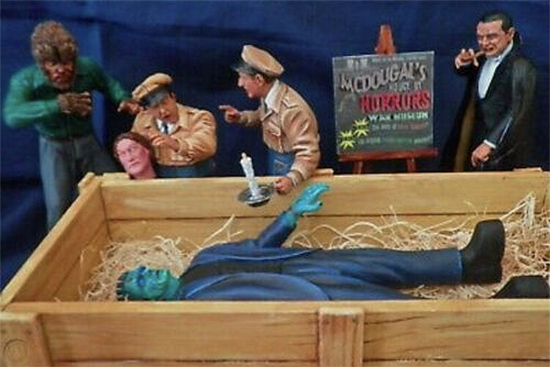
CLUE: In this 1897 work the title character enters an inn with his face almost entirely covered in bandages.

All three contestants got it wrong!

What is “The Man in the Iron Mask?”

What is “The Phantom of the Opera?”

What is “Dracula?”

Correct answer (which I guessed in about 3 nanoseconds), “What is ‘The Invisible Man’?”

(5) SILVERBERG Q&A. Author and (of course!) fan Robert Silverberg gave was interviewed by Edie Stern via Zoom during Corflu 43 in February. The session now can be viewed on YouTube.

Robert Silverberg, award winning author and science fiction icon, has given many interviews, but none like this. In this entertaining and very charming discussion, conducted via zoom for a full Corflu audience, Bob talks about his fannish career, from his early days in the Queens Science Fiction League, to his entry in FAPA, and how he went from “seething with the desire to be a professional SF writer” to writing over a thousand books and shorter works. In this recording, you’ll find wonderful anecdotes about Bob’s fannish life from his first convention and introduction to Harlan Ellison, to his friendships with larger than life figures Bill Rotsler and Bob Tucker, and many stories of Lee Hoffman, Dean Grennell, Randall Garrett and others. You’ll hear stories of conventions, of editors and the back and forth of Q&A with a room full of fanzine fans.

(6) DON’T STEAL THIS BOOK. [Item by Steven French.] Signatories include Alan Moore, Alastair Reynolds and Kazuo Ishiguro: “Thousands of authors publish ‘empty’ book in protest over AI using their work” reports the Guardian.(Direct link — Don’t Steal This Book.)

About 10,000 writers have contributed to Don’t Steal This Book, in which the only content is a list of their names. Copies of the work are being distributed to attenders at the London book fair on Tuesday, a week before the UK government is due to issue an assessment on the economic cost of proposed changes in copyright law.

By 18 March ministers must deliver an economic impact assessment as well as a progress update on a consultation about the legal overhaul, against a backdrop of anger among creative professionals about how their work is being used by AI firms.

The organiser of the book, Ed Newton-Rex, a composer and campaigner for protecting artists’ copyright, said the AI industry was “built on stolen work â€Ķ taken without permission or payment”.

He added: “This is not a victimless crime – generative AI competes with the people whose work it is trained on, robbing them of their livelihoods. The government must protect the UK’s creatives, and refuse to legalise the theft of creative work by AI companies.”

Other authors who have contributed their names to the book include the Slow Horses author, Mick Herron; the author Marian Keyes; the historian David Olusoga; and Malorie Blackman, the writer of Noughts and Crossesâ€Ķ.

(7) LEE MARTINDALE OBITUARY. Writer, Named Bard, and toastmistress Lee Martindale died March 10.  

In a 2004 interview Martindale told Strange Horizons:

KMH: Have you had any personal experiences that helped shape your career as a writer?

LM: In 1991, a viral inflammation left me, very suddenly, the better part of a paraplegic. Part of what enabled me to get my head around that and move on with my life was being able to take something I did in the occasional spare minute to full-time. My husband encouraged the move. He’s also a solid first reader, a good proof-reader, and remarkably adept at knowing when to slide sandwiches under the office door and tiptoe away.

She sold her first story in 1992, “YearBride,” to Marion Zimmer Bradley for the Snows of Darkover anthology (1994).

During her career she published four collections. She also edited the anthology Such A Pretty Face, the first anthology to bring together stories featuring fat protagonists. Said Martindale, “the fat characters were strong and positive; they didn’t apologize for taking up space.”

Lee Martindale in 2016.

Martindale joined SFWA in 1999, and became a Lifetime Active Member, serving two 3-year terms on the Board of Directors. She was the author and driving force behind the organization’s Accessibility Guidelines. Beginning in 2005, she served as the Mediation Specialist on the Grievance Committee and in 2008 she took on the position of SFWA Ombudsman.

She received the Kevin O’Donnell, Jr. Service to SFWA Award in 2019. When SFWA President Cat Rambo announced the award she reflected on her time working with Martindale, “Lee’s service to SFWA includes driving the creation of SFWA’s accessibility guidelines, which have been used by dozens of events outside SFWA’s own, serving for years on the SFWA board and representing it there and at events with a consistent, fair, and business-minded presence, and her current role as part of SFWA’s Grievance Committee. She was a leader in diversity issues such as accessibility and the size rights movement, publishing a book of essays, Prejudice by the Pound, in 2008â€Ķ..”

(8) MEMORY LANE.

[Written by Cat Eldridge.]

Frederik Pohl’s Gateway Wins the Hugo for Best Novel (1978)

Forty-eight years ago at IguanaCon II where Tim Kyger was the Chair, Harlan Ellison was the pro guest, and Bill Bowers was the fan guest, Frederik Pohl’s Gateway won the Hugo for Best Novel. 

The other nominated works for that year were The Forbidden Tower by Marion Zimmer Bradley, Lucifer’s Hammer by Larry Niven and Jerry Pournelle, Time Storm by Gordon R. Dickson, and Dying of the Light by George R. R. Martin. 

Pohl’s novel was serialized in the November and December 1976 issues of Galaxy prior to its hardcover publication by St. Martin’s Press. A short concluding chapter, cut before publication, was later published in the August 1977 issue of Galaxy.

It would win damn near every other major Award there was as it garnered the John Campbell Memorial for Best Science Fiction Novel, the Locus Award for Best First Novel, the Nebula Award for Novel and even the Prix Pollo Award for Best Science Fiction Novel published in France. It was nominated for but did not win the Ditmar Award. 

It’s the opening novel in the Heechee saga, with four sequels that followed. It is a most exceptional series. I’ve read I think all of them. 

I’m chuffed that Pohl was voted a Hugo for Best Fan Writer at Aussiecon 4. Who can tell what works got him this honor? 

Gateway of course is available at the usual suspects. 

If I’m remembering right, there was talk of a film for awhile.

(9) COMICS SECTION.

(10) EXPANDED ICONOGRAPHY. “Penguin Random House UK unveils Playful Penguins” at Famous Campaigns. [Click for larger image.]

There are brand mascots. And then there are birds with an 90-year publishing pedigree.

Penguin Random House UK has introduced the ‘Playful Penguins’, a new suite of illustrations created as part of its wider visual identity refresh.

Think less corporate logo, more character ensemble cast.

Illustration has been stitched into Penguin’s DNA since 1935, when Edward Young sketched the original bird for the brand’s launchâ€Ķ.

(11) OBSTACLES TO MAKING AN EARTHLIKE MARS. [Item by Steven French.] Looks like those who read Kim Stanley Robinson (referenced here), including certain billionaires, are going to have to put a pin in their dreams, at least for a while: “Terraforming Mars isn’t a climate problem—it’s an industrial nightmare” at Phys.org.

Even when the idea of terraforming Mars was originally put forward, the idea was daunting. Changing the environment of an entire planet is not something to do easily. Over the following decades, plenty of scientists and engineers have looked at the problem, and most have come to the same conclusion—we’re not going to be able to make Mars anything like Earth anytime soon. A new paper available in pre-print on arXiv from Slava Turyshev of NASA’s Jet Propulsion Laboratory is a good explainer as to whyâ€Ķ.

â€Ķ Continuing to raise the overall atmospheric pressure would eventually result in a global pressure of 62.7 mbar, which is enough pressure so that human blood wouldn’t boil on the surface at 37℃. That sounds like a necessity if we’re truly going to “terraform” Mars. The final step would be a fully breathable atmosphere with a thick nitrogen buffer and around 210 mbar of oxygen (and 500 mbar total pressure), along with a much higher temperature.

While those might seem like reasonable goals for a project as massive as terraforming the planet, the scale really gets terrifying when talking about what each of those milestones actually means. For example, to get to just 1 mbar of pressure, we would need to add 3.89×10¹⁵ kg of gas. That is almost equivalent to the entire mass of Deimos—Mars’ smaller moon. Scaling that up to a full breathable atmosphere requires more like 1018 kg, such as Janus, an irregular moon of Saturn. To be fair to the optimists out there, there are expected to be hundreds of bodies of that size in the solar system, so for the purpose of giving atmosphere to one of the eight planets, it might be worth sacrificing oneâ€Ķ.

(12) JUDGE DREDD. [Item by SF Concatenation’s Jonathan Cowie.] I first encountered Judge Dredd way back when I was barely into my 20s and I have stuck with him over the years. (Well, he is the law and you know how I am when it comes to constitution adherence.)  Back in the day, before 2000AD was a well known thing, my college SF society, Hatfield PSIFA (now Hertfordshire University PSIFA), went to visit the 2000AD offices on a couple of occasions, had Dredd story writer Alan Grant as the guest at one of its annual dinners, and the 2000AD team as one of the GoHs at the second Shoestringcon, (the other GoH was Ian Watson â€“ since you didn’t ask). That spawned a few puffs for our group in 2000AD itself including a PSIFA Mega-City One block and Tharg saying that he is off to ‘Hatfeeld’s world’..

Since those early days – frighteningly nearly half a century ago – Dredd has gone on to have his own monthly Megazine, two cinematic adaptations (an awful Stallone one that turned a small profit, and an excellent, modest-budget Karl Urban one that failed to make a profit and so we lost the two sequels that had been story-outlined), countless Dredd novels, and a number of similarly-titled computer games and even a trilogy of Batman comic cross-overs.  The Dreddverse is surprisingly big.

And now, from the wastes of the Cursed Earth. Otto, of the Exits Examined YouTube channel, has taken a 50-minute dive into the world of Dredd, and I can testify that it is well informed.

“The Complicated History of Judge Dredd” includes some good tips on how to catch up on Judge Dredd depending on how much time you wish to invest.

[Thanks to Steven French, Mike Kennedy, Andrew Porter, Juli Marr, John King Tarpinian, Cat Eldridge, SF Concatenation’s Jonathan Cowie, Mark Roth-Whitworth, and Kathy Sullivan for some of these stories. Title credit belongs to File 770 contributing editor of the day Steve Davidson.]

Pixel Scroll 10/18/24 G-L-O-R-I-A Road

(0) TODAY’S TITLE INSPIRATION. Daniel says he found retroactive inspiration in the fact that the group Them which performed “G-L-O-R-I-A” included Van Morrison.

(1) WEIRD NATURE. “The author has no problem embracing the inscrutable and uncanny; it’s what fuels his fiction” says Publishers Weekly: “Jeff VanderMeer Journeys into the Unknown”.

â€ĶThe fantastical petri dish of Area X springs largely from VanderMeer’s experiences with nature and wild spaces. His parents were Peace Corps volunteers in Fiji when he was a boy. “It was pretty much what you’d expect from a tropical paradise,” he says. He would marvel at the eels and frogs at the local botanical gardens, and his father, an entomologist, would take him out to see the rhinoceros beetles on the region’s outer islands. He learned at an early age to experience a certain awe of the natural world. But he also suffered from serious asthma attacks and allergies.

“There was this weird contrast between things being so beautiful and also sometimes feeling very physically miserable,” he says. “That was a juxtaposition that I think comes through in the work, where you have really beautiful things, and then things that are disturbing or unsettling at the same time.”â€Ķ

(2) GOOD OMENS SCUTTLEBUTT. Social media outlets are echoing this basic story today: “According to various sources but still pending official confirmation, the last instalment of Good Omens could take the form of a TV movie….” at Good Omens News on Instagram.

The Sun took the same scanty information and turned it into this headline – “Huge TV show with two A-list Hollywood star lead ‘axed’ after creator is ‘cancelled’ over scandal” – however, in the body of the article it also said the project may be converted to a TV movie.

Behind a paywall, UK Production News has posted this information:

(3) TEN DEEP CUTS. At Bluesky, Bobby Derie of Deep Cuts in a Lovecraftian Vein shares “Ten facts about Lovecraft that might need more explanation.” Thread starts here

The first item is:

1) "The Dunwich Horror" may have been inspired by a horror novel from the author of THE VELVETEEN RABBIT.deepcuts.blog/2022/04/09/t…

Deep Cuts in a Lovecraftian Vein (@deepcuts.bsky.social) 2024-10-18T12:16:44.158Z

(4) ELLIPTICAL THOUGHTS. [Item by Steven French.] Here’s Kate Gardner’s review of Samantha Harvey’s Booker & Ursula LeGuin Prize nominated novel Orbital in Physics World: “Around the world in 16 orbits: a day in the life of the International Space Station”.

The ISS is almost a time capsule, hearkening back to the end of the Cold War. It now looks likely that Russia will pull out – or be ejected – from the mission before its projected end date of 2030.

Viewed from the ISS, no borders are visible, and the crew joke comfortably about their national differences. However, their lives are nevertheless dictated by strict and sometimes petty rules governing, for example, which toilet and which exercise equipment to use. These regulations are just one more banal reality of life on the ISS, like muscle atrophy, blocked sinuses or packing up waste to go in the next resupply craftâ€Ķ.

â€ĶHarvey manages to convey that these details are quotidian. But she also imbues them with beauty. During one conversation in Orbital, a character sheds four tears. He and a crew mate then chase down each floating water droplet because loose liquids must be avoided. It’s a small moment that says so much with few words.

Orbital has been shortlisted for both the 2024 Booker Prize (winner to be announced on 12 November) and the 2024 Ursula K Le Guin Prize for Fiction (the winner of which will be announced on 21 October). The recognition reflects the book’s combination of literary prose and unusual globe-spanning (indeed, beyond global) perspective. Harvey’s writing has been compared to Virginia Woolf – a comparison that is well warranted. And yet Orbital is as accessible and educational as the best of popular science. It’s a feat almost as astonishing as the existence of the ISSâ€Ķ.

(5) NO JOKE. “Why did Joker 2 lose so much money? And how on earth did it cost so much in the first place?” The Guardian sets out to find the answers.

To quote Heath Ledger’s version of the clown prince of crime, maybe some wag should be scrawling “Why so serious?” on glass-fronted offices at Warner Bros Discovery this week, as executives there contemplate the box-office implosion of Joker: Folie à Deux. A catastrophic $37.7m opening weekend, the largest second-weekend drop for a DC film (81%), a worldwide take currently standing at a piddling $165m â€Ķ how has the studio gone from the 2019 original, a billion-grosser that was then the highest earning R-rated film, to this?

If nothing else, the Joker is proving true to his reputation as an agent of chaos. But he is also the most beloved of comic-book villains from a storied franchise; a draw almost on par with Batman himself, making the disaster all the more unthinkable. With bubonic word of mouth, Joker: Folie à Deux is now projected to lose $125m-200m, depending on whose budget estimate you believe. If it’s the $300m figure being generally touted for production and marketing, then this is clearly what has hobbled the film; it would leave it needing as much as $475m to break even. Risky reinventions of hallowed pop-cultural icons are a lot more feasible on the first film’s sensible $60m budget.

â€Ķ But chastising the fanbase so openly is tantamount to box office self-harm (probably why the director refused to test-screen Joker: Folie à Deux). The impunity of a $300m budget seems to have led Phillips to mistake this for an auteur film, and shooting during a period of regime change at both Warner and DC reportedly allowed him to operate with weak oversight. According to Variety, he refused to liaise with new DC heads James Gunn and Peter Safran, saying: “With all due respect to them, this is kind of a Warner Bros movie.” But he also pushed back on new Warner president David Zaslav’s suggestions for lowering the budget, including moving the shoot to London rather than Los Angelesâ€Ķ.

(6) DON’T CHANGE THAT CHANNEL. The 2026 Worldcon has a mascot: “Introducing Fuzzy: The LAcon V Channel Island Fox Mascot”.

The Channel Island fox is pure California: an animal unique to the coastal islands in the southern part of the state, whose habitat, once threatened to the point of extinction, is now thriving due to conservation. Fuzzy, the playful Channel Island fox depicted at right, exemplifies the spirit of California and joins us on our expedition to LAcon V in 2026 as our official convention mascot.

Artist Teddy Harvia has captured Fuzzy’s likeness so elegantly, yet so playfully, through many illustrations yet to be revealed by LAcon V. Fuzzy will join us throughout the next two years on all our adventures, all hand-drawn by Teddy.

Fuzzy has been named in honor of our friend and colleague, Marilyn “Fuzzy Pink” Niven, a long-time participant in Southern California and American science fiction fandom and the wife of celebrated author Larry Niven. Fuzzy Pink Niven passed away in December 2023, leaving behind a legacy of friendship and service to fandom that can never be replaced. We could think of no greater tribute to her than to bring her spirit along with us on our adventure, and we are very grateful to Larry for his blessingâ€Ķ.

(7) TODAY’S BIRTHDAY.

[Written by John Hertz, Laura Molesworth and Mike Glyer.]

Born October 18, 1924 Voltaire Molesworth. (Died 1964.) Vol Molesworth was an Australian fan historian and small press publisher. In 1939 he co-founded the Futurian Society of Sydney – which suffered endless keruffles, like so many fan groups — and started the fanzine Luna. The next year he also published Cosmos.

Being a diabetic, Vol (as he was known) was ineligible for service in World War II but during these years he gained his wide experience in all aspects of journalism. He also wrote fiction. By the time he was 20 Vol had written a number of short novels published in paperback, the most widely known being his science fiction novel The Stratosphere Patrol.

He led a revival of the Sydney Futurians in 1947, becoming one of the leading Australian fans in the 1950s. He played a major role in the three Australian Natcons held in Sydney during the ’50s. He founded and operated the Futurian Press.

Molesworth wrote A History of Australian Science Fiction Fandom 1935-1963 and the earlier An Outline History of Australian Fandom I.

Outside of fandom, he was a mathematician and amateur radio operator and managed the University of New South Wales’ radio station. He was married to Laura Molesworth.

(8) MEMORY LANE.

[Written by Cat Eldridge.]

Anniversary — Farscape: The Peacekeeper Wars (2005)

Once upon a time, a beloved SF series got cancelled, and yes there is absolutely nothing unusual in that happening, it happens more often than it should. What is extremely unusual is that it got a second chance to have a proper ending in the Farscape: The Peacekeeper Wars, seventeen years ago. 

So let’s tell the tale of how that happened. Farscape arrived here twenty-three ago when Deep Space Nine was just wrapping up and Voyager was well into its seven-year-run. It started fine and ratings were strong until the fourth season and that, combined with regime change here in the States on who was picking up the tab for the two million dollars per episode led an abrupt end. 

Fans being fans weren’t going to let things end that way, nor should we. (Yes, I loved the show. Deeply, unreservedly. I think it was one of the best series ever made, if not the best.) A massive campaign was undertaken with of course emails, letters, phone calls, and phone calls pleading with the network to reverse the cancellation. 

Even Bill Amend who created the Fox Trot series had his Jason Fox character direct his ire at SciFi and demand that they change their mind.

Well, they did, sort of. A fifth season didn’t happen after all. What did happen in some ways I think was even better though I know that isn’t a popular opinion among those who wanted a full season. 

What we got was the two episode, one hundred-and eighty-minute Farscape: The Peacekeeper Wars which I thought splendidly wrapped things up. Every single storyline that wasn’t dealt with during the series was during this film.

SPOLER ALERT HERE.

We got a baby too. Yes, our Peacekeeper gives birth in a fountain in the middle of a firefight, insists she’s married while in labor, carries her baby unscathed through a battle. I assume that the baby was a puppet from the Henson labs. It was terribly cute.

END OF SPOILERS

I’ve watched it at least a half dozen times, probably more, in the last fifteen years. The Suck Fairy in her steel toed boots is obviously scared of those Aussie actors (and the non-Aussie one as well) as she slinks away to harass someone else. 

Just looked at Rotten Tomatoes — not at all surprisingly, it carries a ninety-two percent rating among audience reviewers there. It’s streaming at Amazon Prime and Peacock. .

(9) COMICS SECTION.

(10) ANOTHER STAN LEE CAMEO. “DOT announces limited sale of commemorative ‘Stan Lee Way’ street signs to honor Bronx-born comic book legend” reports the Bronx Times.

The New York City Department of Transportation announced it is selling a limited number of “Stan Lee Way” commemorative street signs through the Department of Citywide Administrative Services’ CityStore. The master comic book writer grew up in the Bronx, attending DeWitt Clinton High School.

“A cultural icon, Stan Lee, has gifted the world with stories that captivate, inspire, and make us believe in the heart of a hero,” said NYC DCAS Commissioner Louis A. Molina. “With this sign release, you have a chance to gift yourself or the superhero in your life a piece of history.”

In 2021, the city co-named a portion of University Avenue between Brandt Place and West 176th Street where he lived, “Stan Lee Way”. The Bronx native revolutionized the comic book world by developing complex characters with relatable flaws and layered plot lines.

(11) BIRD WORDS. The Hollywood Reporter is there when “The Penguin’s Colin Farrell, Cristin Milioti Tease Episode 5 at NYCC”.

The Penguin star and executive producer Colin Farrell was joined on Thursday at New York Comic Con for a mid-season discussion by showrunner and fellow EP Lauren LeFranc, as well as co-stars Cristin Milioti, Rhenzy Feliz, Deirdre O’Connell, Michael Kelly, and Clancy Brown, where they debuted two sneak peaks for the crowd for episode five, before going in-depth on what’s motivating the characters.

In the first clip, Oz (Farrell) and Victor (Feliz) share a sentimental moment where they discuss their relationship loyalty, while Oz’s car burns in the background. “It’s you and me now, kid until the end,” Oz says, before he and his henchman make a surprise visit to rough up Sal’s (Brown) son, before paying him and his wife a visit in prison to set up an exchangeâ€Ķ 

(12) MILLIE BOBBY BROWN SFF. “’The Electric State’ trailer is all Millie Bobby Brown and robots in an alternate sci-fi ’90s” – Mashable sets the scene.

Robots are in exile and Millie Bobby Brown is on the road to revenge in Netflix’s star-studded sci-fi adventure, set in the apparently “retro” ’90s (fml).

Based on Simon StÃĨlenhag’s graphic novel and directed by the MCU’s Anthony and Joe Russo, The Electric State sees Brown in the lead as Michelle, a teen without a family who meets a robot called Cosmo. But surprise, Cosmo is controlled by a human — her long lost brother no less! He’s across the country somewhere, and there’s sinister circumstances afoot, so Michelle and Cosmo hit the road to find himâ€Ķ.

[Thanks to John King Tarpinian, Chris Barkley, Cat Eldridge, SF Concatenation’s Jonathan Cowie, Steven French, Kathy Sullivan, Teddy Harvia, Mike Kennedy, and Andrew Porter for some of these stories. Title credit belongs to File 770 contributing editor of the day Daniel Dern.]

Pixel Scroll 6/20/24 Brush Up Your ScrollSpeare, Start Pixeling Now

(1) THIS WAY TO THE EGRESS. “Fairy Doors are Popping Up all Around Brooklyn Heights. Why?” asks La Voce di New York.

Brooklyn Heights is beginning to look like something out of a storybook, as there have been numerous sightings of fairy doors throughout the neighborhood.

More than a dozen of these tiny doors, made in different sizes, decorations, and colors, have been found on trees on Pineapple, Willow, Cranberry, and Middagh streets, in addition to others.

According to experts, fairy doors are actually portals to the fairy dimension, and some friendly artistic humans have been known to construct these gateways.

In a survey conducted by the Brooklyn Eagle’s Magic and Enhancements Bureau, 100% of the neighborhood respondents said they welcomed the fairies.

“We are thrilled, but not surprised, that the fairy folk have decided that Brooklyn Heights is a great place to make home,” Lara Birnback, executive director of the Brooklyn Heights Association, told the Eagle. “Please let them know that if they have any questions about landmarking permits or where to find the best Negroni in the neighborhood, they should give the BHA a call.”

Some long-time residents of Brooklyn Heights said they’ve never seen so many fairies in the neighborhood.

“I’m extremely happy they’ve arrived- and in force,” Dr. Jon Berall, a physician and inventor, told the Eagle. “These are tricky times and we need all the help we can get.”

While numerous people have said they have spotted the doors, only a few have been lucky enough to spot the fairies themselvesâ€Ķ.

(2) TEDDY HARVIA CARTOON. Teddy is keeping the aarrgh in Argus.

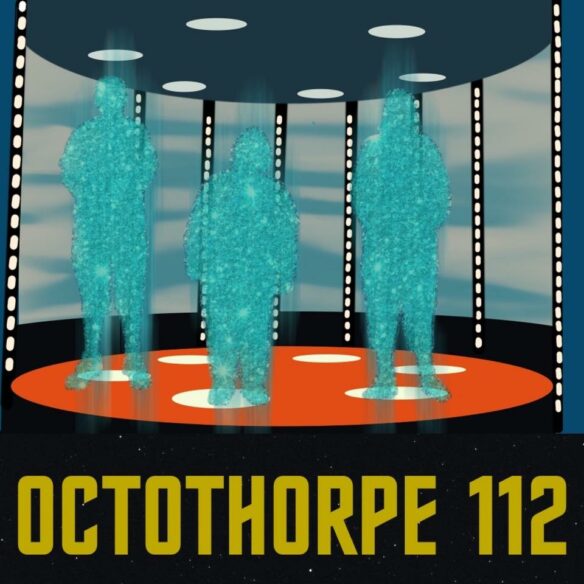
(3) OCTOTHORPE. In Episode 112 of the Octothorpe podcast, “Ceilidhs I Have Been to Are Not, Generally Speaking, Competitive”, hosts John Coxon, Alison Scott, and Liz Batty beam down for a look at the financial report from Levitation (Eastercon 2024) before talking about FunCon, the UK Games Expo, and the upcoming Glasgow Worldcon. An uncorrected transcript is available here.

Octothorpe 112 is beaming down to a planet near you! In this episode we look at the financial report from Levitation (Eastercon 2024) before talking about FunCon, the UK Games Expo, and the upcoming Glasgow Worldcon.

Artwork is by Hugo Award Finalist, EspaÃąa Sheriff.

John, Alison and Liz stand in the transporter on a Constitution-class Federation starship. They are mid-transportation, made of sparkles instead of fully fleshed out. The words “Octothorpe 112” appear beneath them.

(4) FATAL TITANTIC DIVE. WIRED has obtained copies of internal documentation to use as the basis of its story: “The Titan Submersible Disaster Shocked the World. The Exclusive Inside Story Is More Disturbing Than Anyone Imagined”

â€ĶThe model had imploded thousands of meters short of the safety margin OceanGate had designed for.

In the high-stakes, high-cost world of crewed submersibles, most engineering teams would have gone back to the drawing board, or at least ordered more models to test. Rush’s company didn’t do either of those things. Instead, within months, OceanGate began building a full-scale Cyclops 2 based on the imploded model. This submersible design, later renamed Titan, eventually made it down to the Titanic in 2021. It even returned to the site for expeditions the next two years. But nearly one year ago, on June 18, 2023, Titan dove to the infamous wreck and imploded, instantly killing all five people onboard, including Rush himself.

The disaster captivated and horrified the world. Deep-sea experts criticized OceanGate’s choices, from Titan’s carbon-fiber construction to Rush’s public disdain for industry regulations, which he believed stifled innovation. Organizations that had worked with OceanGate, including the University of Washington as well as the Boeing Company, released statements denying that they contributed to Titan.

A trove of tens of thousands of internal OceanGate emails, documents, and photographs provided exclusively to WIRED by anonymous sources sheds new light on Titan’s development, from its initial design and manufacture through its first deep-sea operations. The documents, validated by interviews with two third-party suppliers and several former OceanGate employees with intimate knowledge of Titan, reveal never-before-reported details about the design and testing of the submersible. They show that Boeing and the University of Washington were both involved in the early stages of OceanGate’s carbon-fiber sub project, although their work did not make it into the final Titan design. The trove also reveals a company culture in which employees who questioned their bosses’ high-speed approach and decisions were dismissed as overly cautious or even fired. (The former employees who spoke to WIRED have asked not to be named for fear of being sued by the families of those who died aboard the vessel.) Most of all, the documents show how Rush, blinkered by his own ambition to be the Elon Musk of the deep seas, repeatedly overstated OceanGate’s progress and, on at least one occasion, outright lied about significant problems with Titan’s hull, which has not been previously reported.

A representative for OceanGate, which ceased all operations last summer, declined to comment on WIRED’s findingsâ€Ķ.

(5) DONALD SUTHERLAND (1935-2024). [Item by Mike Kennedy.] Actor Donald Sutherland died June 20. His son, Kiefer Sutherland, made the announcement on X.com:

“With a heavy heart, I tell you that my father, Donald Sutherland, has passed away. I personally think one of the most important actors in the history of film. Never daunted by a role, good, bad or ugly. He loved what he did and did what he loved, and one can never ask for more.”

Though not known primarily for his sfnal work, with about 200 credits to his name Sutherland did have quite a few notable genre appearances. He would probably be best known in that respect for his role as President Snow in the Hunger Games movies, playing Merrick in the Buffy the Vampire Slayer movie, and being the lead in the 1978 remake of Invasion of the Body Snatchers. He also had a lead role in 1994‘s adaptation of Heinlein’s The Puppet Masters.

â€Ķ “It’s characters who make pictures,” he told The Times in 1995. “Essentially my job is to provide information about them.” 

Deep in his career, as he shifted between leading and character parts, Sutherland thrived in smaller roles that ordinarily called for an older actor who’d long ago been typecast as a villain or a kooky sidekick. But Sutherland had the winning ability to transform those small roles into complex characters who often helped elevate the filmâ€Ķ.

(6) TODAY’S BIRTHDAY.

[Compiled by Cat Eldridge.]

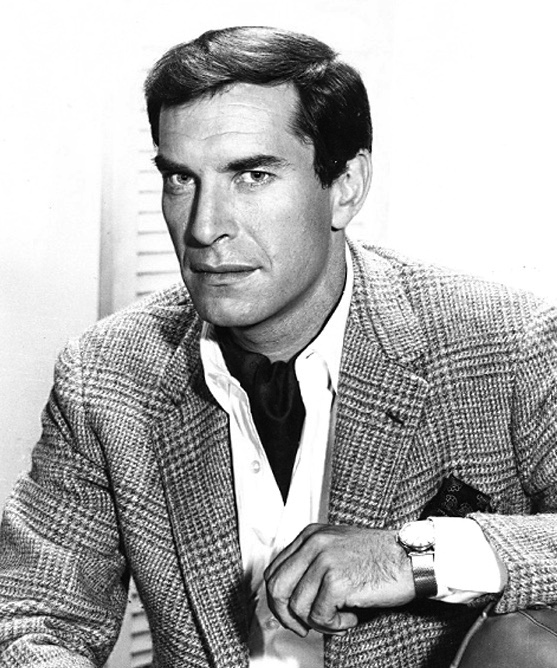
June 20, 1928 Martin Landau. (Died 2017.) Martin Landau’s first genre adjacent role I discovered was a quite minor one as a character named Leonard in Alfred Hitchcock’s North by Northwest.  

His first actual genre role was on The Twilight Zone as the character Dan Hotaling. “Mr. Denton on Doomsday”. The town drunk Al Denton (played by Dan Duryea whose final role was the Cold War propaganda SF film The Bamboo Saucer â€” please don’t ask), once a feared gunslinger but now an object of pity and scorn, is forced to draw against a sadistic bully (the Martin Landau character). This being The Twilight Zone I think you can guess what deservedly happens. 

He’d have one more appearance in The Twilight Zone as Major Ivan Kuchenko in “The Jeopardy Room” where as an escaped political prisoner who is attempting to defect, he is trapped inside a hotel room in an unnamed, neutral country. He is told the room is, in various ways deadly to him and he cannot leave. His captors have him as their victim, or so it seems? Remember this is The Twilight Zoneâ€Ķ

Martin Landau in 1968.

From there he moves on to The Outer Limits, where he was the featured performer in two episodes. The first was “The Man Who Was Never Born” (originally titled “Cry of the Unborn”) in which he was Andro, one of the few survivors of a biological disaster brought on by an ambitious scientist who isolated and developed a viral symbiont from an interstellar microbe. The story from there is about love and time travel and, well, that’s enough in case that some here decades on hasn’t seen it.

The second story has him playing Richard Bellero in “The Bellero Shield”, which takes its plot possibly from MacBeth notes more than one reviewer largely because of Richard’s conniving wife, Judith.  The story, however, has to do with technology gone awry, an alien who offers redemption and, well I’m stopping there.

He is as brilliant in both roles that he did for The Outer Limits as he was in his two Twilight Zone roles. For the moment setting aside his Mission: Impossible role, any other genre performances?

He was much in demanding in the Sixties, so he made one-off appearances on I-Spy as Danny Preston in “Danny Was a Million Laughs”;  as George Grimm in The Wild Wild West in “The Night of the Red Eyed Madman”, a juicy role for him as our agents find a militant group planning to overthrow the federal government, led by the insane General Grimm played by, oh guess; again in The Man from U.N.C.L.E., he was the lead villain role of Count Zark in “The Bat Cave Affair” a Thrush agent, operating out of Transylvania who has developed a worldwide menace involving bats. His role on Get Smart is as Max’s new face in â€œPheasant Under Glass”. Max needs a new face to be part of the secret rescue plan after letting his photograph be published. Landau provides that face but was uncredited in the episode. 

Now let’s talk about hisother two major roles. He played Rollin Hand, which the Mission: Impossible fandom wiki describes as â€œan actor, a magician, and a master of disguises and voices who billed himself as ‘The Man Of A Million Faces’ and ‘The World’s Greatest Impersonator’. It goes on to call him a grifter, a term I don’t remember from that series but which was used to describe Sophie Devereux on Leverage.  He had a wonderful intensity to him in that role. 

To achieve many of Rollin’s acts of impersonation, some of the characters he imitated were played by him in a double role under extensive make-up. This technique is used prominently in the first episode of the series, where Landau plays dictator similar to Castro whom Rollin must impersonate during a national broadcast. When Landau and his wife at that time, Barbara Bain, left the show after the third season, and Leonard Nimoy joined the series as The Great Paris which was essentially the same role as Rollin.

His other major series role was John Koenig, the ninth and, as far as is known, last Commander of Moonbase Alpha. I’d like to say I’ve a clear picture of him in that role but I don’t think that I’ve seen more than a handful of episodes of the Moonbase Alpha series.

I’m stopping now before this Birthday gets any longer. Really I am. 

(7) COMICS SECTION.

(8) N3F LAUREATE AWARDS. The National Fantasy Fan Federation decided to squander a 2024 Laureate Award on an exhibition of schadenfreude at the expense of the Hugos.

 The 2024 Laureate Awards

  • Best Fan Writer: Heath Row
  • Best Fan Editor: Janice L. Newman
  • Best Non-N3F Fan Publication: Spartacus
  • Best N3F Fanzine: Tightbeam
  • Best Fan Web Site: galacticjourney.org/
  • Best Novel: To Spy a Star by Jonathan Nevair
  • Best Shorter Work or Anthology: Simultaneous Times, Vol. 3, ed. Jean-Paul L. Garnier
  • Best Editor: (a tie) Lida Quillen (Twilight Times Books) / Jean-Paul L. Garnier (Space Cowboy Books)
  • Best History of SF Work: 2023 First Fandom Annual “First Fandom Conversations”
  • Best None of the Above: Best example of how not to run fan awards: The 2023 Hugo Awards

 (9) BRIDGERTON INTEREST SAGS. JustWatch analyzed the split-season model and found that interest in Bridgerton Season 3 Part 2 dropped by 48.9%.

They created this report by pulling data from the week following the release of Bridgerton, and compared it to the previous two seasons. JustWatch Streaming Charts are calculated by user activity, including: clicking on a streaming offer, adding a title to a watchlist, and marking a title as ‘seen’. This data is collected from >40 million movie & TV show fans per month. It is updated daily for 140 countries and 4,500 streaming services.

(10) VIDEO OF THE DAY. From Gizmodo we learn that “The Penguin’s New Trailer Teases the Crimes That Come After The Batman”.

Max has released a second trailer for The Penguin, its upcoming spinoff of Matt Reeves’ The Batman starring Colin Farrell as crime lord Oswald Cobblepottâ€Ķ.

[Thanks to, Mike Kennedy, Andrew Porter, John King Tarpinian, Jean-Paul L. Garnier, Chris Barkley, Cat Eldridge, SF Concatenation’s Jonathan Cowie, Steven French, Teddy Harvia, and Kathy Sullivan for some of these stories. Title credit belongs to File 770 contributing editor of the day Andrew (not Werdna).]

Pixel Scroll 4/29/24 I Grow Old, I Shall Wear My Pixels Scrolled

(1) DEAD SCIENCE FOR YOUR ENTERTAINMENT. James Davis Nicoll brings us “Five SF Novels Inspired by Disproven Scientific Theories” at Reactor.

The history of science is filled with beautiful hypotheses slain by ugly facts. The tendency of the universe to disregard the professional needs of hard-working scientists is something about which little can be done1. In fact, disproof is a vital and necessary element for scientific progress, no matter how vexing it must have been to Thomas Gold2. However, in that interval between hypothesis and disproof, a sufficiently enticing model can inspire intriguing science fiction stories.

Here’s one of his exhibits:

Quicksand Moon Dust

Prior to space probes landing on the Moon, the precise nature of the lunar surface was unknown. Among the contending models was Thomas Gold’s4 proposal that the lunar surface could be covered in a layer of fine dust. Depending on the properties and the depth, the layer might act like quicksand5. As it happens, the lunar surface is dusty, but visitors do not have to worry about sinking into it. That is the only good news. Lunar dust is actually much nastier than Gold envisioned. Abrasive lunar dust is a hazard to machines and humans alike.

Arthur C. Clark’s A Fall of Moondust (1961) embraced the most extreme case of Gold’s model. Deep dry dust seas are traversed by lunar boats conveying tourists. A mishap strands a boat deep beneath the lunar surface. Will rescuers locate and retrieve the tourists in time, or will they smother or be boiled in their own body heat6?

(2a) KGB. Fantastic Fiction at KGB reading series hosts Ellen Datlow and Matthew Kressel present John Wiswell and Anya Johanna DeNiro on Wednesday, May 8, 2024 at 7:00 p.m. Eastern. KGB Bar (85 East 4th Street, New York, NY 10003; Just off 2nd Ave, upstairs.)

JOHN WISWELL

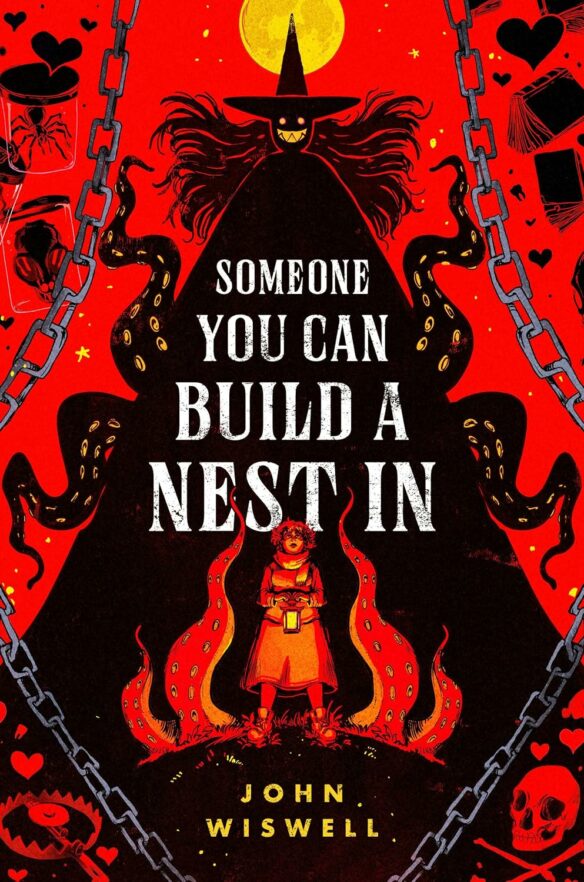
John Wiswell’s novel Someone You Can Build A Nest In was published by DAW Books in April and received starred reviews in Library Journal and BookPage, and was named one of the Best of the Best in SFF for 2024 by Ingram. His short fiction has won the Nebula Award and Locus Award, and been a finalist for the Hugo, British Fantasy, and World Fantasy Awards. His fiction has been translated into ten languages. He teaches for Clarion West and for the Rambo Academy. More about him can be found at https://linktr.ee/johnwiswell.

ANYA JOHANNA DENIRO

Anya Johanna DeNiro is the author of the short novel OKPsyche from Small Beer Press and City of a Thousand Feelings from Aqueduct Press, which was on the Honor Roll for the Otherwise Award. She has also been a finalist for the Sturgeon Award and the Crawford Award, and shortlisted for the O. Henry Award. She lives in Saint Paul, Minnesota.

(2b) IT WASN’T FOR THE TUXEDO. “But Why a Penguin?” wonders JSTOR Daily.

Historian Richard Hornsey writes that Penguin publisher Allen Lane had an avowedly “leftist vision of social-democratic progress.” Lane aimed for a democratizing public sphere with an “engaged public readership,” though one perhaps not as left-left as the contemporary Left Book Club (1936–1948). What Lane used to reach these ends was pure capitalism: “the techniques of mass production, distribution, and retail.”

And an adorable black-and-white flightless bird.

“Choosing a brand character, and specifically a penguin, allowed [Lane] to appropriate the utopian dynamic of mass consumption and mold it to fit his own progressive cultural project,” writes Hornseyâ€Ķ.

(3) THEY SAY IT AIN’T SO. “Avengers Directors Say Marvel Flops Aren’t Superhero Fatigue” in Variety.

â€Ķ“There’s a big generational divide about how you consume media,” [filmmaker Joe Russo] continued. “There’s a generation that’s used to appointment viewing and going to a theater on a certain date to see something, but it’s aging out. Meanwhile the new generation are ‘I want it now, I want to process it now’, then moving onto the next thing, which they process whilst doing two other things at the same time. You know, it’s a very different moment in time than it’s ever been. And so I think everyone, including Marvel, is experiencing the same thing, this transition. And I think that really is probably what’s at play more than anything else.”â€Ķ

(4) GOT ENOUGH FINGERS? The Mary Sue is ready in case you were about to ask “Just How Many ‘Planet Of The Apes’ Films Are There, Anyway?”

â€ĶCounting Kingdom of the Planet of the Apes, which premieres next month, there are 10 total films set in the varying canons of Planet of the Apes.

Things kicked off with the original Planet of the Apes movie back in 1968; that film would go on to spawn four sequels, Beneath the Planet of the Apes (1970), Escape from the Planet of the Apes (1971), Conquest of the Planet of the Apes (1972), and Battle for the Planet of the Apes (1973)â€Ķ

(5) TODAY’S BIRTHDAY.

[Written by Paul Weimer.]

Born April 29, 1908 Jack Williamson. (Died 2006.)

By Paul Weimer: Jack Williamson. What does one say about an author who had been published continuously from the 1920’s up to the 2000s?  Resilience. Staying power? An inexhaustible imagination?

All of these, and more, I say. 

Jack Williamson

I first came across Williamson in the large collection of works that my elder brother, whom I think I’ve mentioned before got me into science fiction in the first place, had.  That was The Humanoids, which includes his novelette “With Folded Hands”, a dystopia of unthinking robots and servitors gaining sentience, and basically (although expressed as “the Prime Directive”) following Isaac Asimov’s Law of Robotics and moving to take over the world, in an effort to protect humanity. It’s definitely a horror dystopic takeover of the world, as humans who resist the Mechanicals are taken away and lobotomized to prevent them disrupting the new society.  And it’s an unhappy ending, as Underhill, our main character, and Sledge, the original creator of the Mechanicals, ultimately fail in stopping the takeover. 

I’d read 1984 and Brave New World at this point, but to have a straight up science fiction story defy what was to me the cardinal trope of “the good guys must WIN” made an impression on me. Over the next decades, I encountered Williamson’s work time and again, since his prolific output meant that his works kept showing up in back corners of libraries, a story here and there in a collection, and the original book I read always simmered in my mind. This was an author with power and verve and not afraid to take chances. 

Stonehenge Gate, his last novel, naturally, I had to read, and it was much of the “old time religion” of Williamson’s work that did feel something of a throwback to earlier models and eras of science fiction, but it charmed me all the same. And how could I resist a novel with a premise of a few friends basically finding a Stargate in the middle of the Sahara (the titular Stonehenge Gate) and going through to find out what was on the other side? The novel winds up pulling in elements of revolution, the origin of life on Earth and in general a cracking adventure running across multiple worlds and encountering some very strange alien species. It’s a fine capstone to an extensive and abiding body of work. 

But it is The Legion of Time that really sticks out for me, even more than The Legion of Space (Space adventure), or Darker Than You Think (lycanthropes!) or his return to exploring dystopias in the Starchild books.  The Legion of Time, which consists of a pair of stories, is the codifying pieces of science fiction for the idea of a Time War. Poul Anderson, the “Temporal Cold War” of Star TrekThe Big TimeTravelers, and Loki all owe a huge debt of gratitude to Williamson and coming up with the idea of multiple futures and factions in the future trying to influence the past to make their version of the timeline be the official and real one. There is also a Larry Niven Svetz story where he runs into someone trying to change the timeline from Svetz’s crapsack future (which he inadvertently created) back to the future that he is from, the nuclear war hellscape better than Svetz’s world.  

The Legion of Time itself centers on a single choice, a “Jonbar Hinge”, where events are manipulated to make one young boy’s choice to either lead the world into a world of superscience and technology and freedom, or into a dread and horrible dystopia (once again, Williamson with the dystopias) where force and brutality are backed up by darker versions of the superscience of the original world. We also get a love story of sorts, as our hero Lanning feels both for Lethonee, the ruler of the utopia superscience state, and also feels attraction for the femme fatale Sorainya. And yet, even so, even as Sorianya is clearly the “Villainess”, Lethonee in her own way is as determined and forthright to make her version of the future come about as her darker duplicate. But the choice of worlds, and which of these two futures is the better for humanity, is always clear. Williamson makes no bones about being clear eyed about the dangers of dystopias and how one must risk much in order to keep them from coming about. One might not always succeed (see The Humanoids) but one must always try

Long live his work!

(6) COMICS SECTION.

  • Bizarro features a fantasy medical breakthrough, or is it breakdown? 
  • Eek! lets us witness an awkward dinner conversation.
  • Thatababy honors Trina Robbins.
  • Pardon My Planet comments on timing and the medical supply chain, after a fashion.

(7) GET OUT. “The Best Escape Rooms in the World Have a Global Competition” at Atlas Obscura.

â€ĶEscape rooms might seem like casual entertainment, but there’s actually science and a very serious global competition involved. Called Top Escape Rooms Project Enthusiasts’ Choice Awards (TERPECA), the competition gives annual awards for the best escape rooms in the world.

Nominated rooms include games like 60 Seconds to Escape in Gurnee, Illinois, involving skeletons popping out at people down hallways, or Madness Toledo in Spain, featuring biohazard spills, unleashed monsters, and a huge Alien-esque creature taking up most of a room, ready to mow participants down with its toothy jaws. Diego Esteban, the owner of Madness, describes the competition as “the Oscars of escape rooms.”â€Ķ

â€Ķ [There] is a surprising amount of science that goes into creating them. A methodology called Escape Room Theory dictates how escape rooms are designed and built. The theory consists of a series of “rules” designers are encouraged to follow—like ensuring each item is used only once (or there’s only one answer to a specific puzzle), making individual puzzles solvable in five minutes or less, and allowing for non-linear puzzles, meaning that one item in a room doesn’t necessarily solve the puzzle you work on in another room. The goal is ultimately to not frustrate participants or lead them down a road that’s tedious or unsolvableâ€Ķ.

(8) SCORES 9 OUT OF 10. Nerds of a Feather’s Haley in “Review: Calypso by Oliver K. Langmead” tells why —

This awe-inspiring and utterly beautiful novel told in verse will make you think, feel, and wonder why there aren’t more contemporary authors writing sci-fi that is both full of ideas and jaw-droppingly well writtenâ€Ķ.

(9) A HUGO FINALIST. In “Hugo 24 Novel: The Adventures of Amina al-Sirafi by Shannon Chakraborty”, reviewer Camestros Felapton says he can’t wait for the sequels.

Time to set sail for adventure! Yeah, people we’ve got a map in the front of the book, we’ve got a retired legendary pirate captain pulled out of retirement for just one last job, we’ve got a crew of talented misfits and we have a truly evil magician after a magical relic. Djinn, monsters, magic, all we need is some Ray Harryhausen stop-motion monsters and a great time is guaranteedâ€Ķ.

(10) COLONIZING BINARY SYSTEMS. [Item by SF Concatenation’s Jonathan Cowie.] Life around a binary system is fairly common and SF sub-trope, the classic example being the two suns setting in Star Wars.

Indeed, in real life we have already found planets orbiting two stars.

This weekend, futurologist Isaac Arthur looked at the possibility of colonizing such worlds…

There are billions of binary star systems in our galaxy, including many of those stars closest to us. Can such systems host life, and what would it be like to live under two suns?

[Thanks to John King Tarpinian, Chris Barkley, Cat Eldridge, SF Concatenation’s Jonathan Cowie, Steven French, Teddy Harvia, Kathy Sullivan, Mike Kennedy, and Andrew Porter for some of these stories. Title credit belongs to File 770 contributing editor of the day Lis Carey.]

Pixel Scroll 6/25/22 File The Pixels, Lest They Squeak Or Scroll

(1) OKORAFOR’S LOVE FOR COMICS. It started when she was seven: “From Gareld to Black Panther: Nnedi Okorafor on the Power of Comics” at Literary Hub.

My path to writing the big black cat started with a fat orange cat.

I’ve always been attracted to comics. Even before the word, it was the black line that drew me (pun intended). It began when I was about seven years old in the early ’80s with . . . Gareld. My father was an avid Chicago Sun-Times newspaper reader, and every day he would sit at the dinner table and read it. It was while hanging around him that I noticed that there was a comics page every day. The Family CircusHi and LoisBloomsburyCalvin and HobbesMommaZiggy—there were so many I enjoyed. And, oh man, on Sunday, there were pages of comics, and they were in color! I loved these little stories told in pictures. But I became most obsessed with Gareldâ€Ķ.

(2) FUTURE TENSE. “This, But Again” by David Iserson, about life as a recurring simulation, is this month’s story from Future Tense Fiction, a monthly series from Future Tense and Arizona State University’s Center for Science and the Imagination about how technology and science will change our lives.

There’s an accompanying response essay by Eric Schwitzgebel, “If We’re Living in a Simulation, the Gods Might Be Crazy”.

That we’re living in a computer simulation—it sounds like a paranoid fantasy. But it’s a possibility that futurists, philosophers, and scientific cosmologists treat increasingly seriously. Oxford philosopher and noted futurist Nick Bostrom estimates there’s about a 1 in 3 chance that we’re living in a computer simulation. Prominent New York University philosopher David J. Chalmers, in his recent book, estimates at least a 25 percent chance. Billionaire Elon Musk says it’s a near-certainty. And it’s the premise of this month’s Future Tense Fiction story by David Iserson, “This, but Again.”

Let’s consider the unnerving cosmological and theological implications of this idea. If it’s true that we’re living in a computer simulation, the world might be weirder, smaller, and more unstable than we ordinarily supposeâ€Ķ

(3) KEEP WATCHING THE SKIES. “See rare alignment of 5 planets and moon in stunning photo” at Space.com.

The rare sight of five bright planets lining up with the moon wowed skywatchers around the world Friday, with some gearing up for more this weekend to see a planetary sight that won’t happen again until 2040.

Throughout June, Mercury, Venus, Mars, Jupiter and Saturn have lined up from left to right, in their orbital order from the sun, before dawn in the southeastern sky. Early Friday (June 24), the moon joined the planet parade in an awesome sight captured by astrophotographer Wright Dobbs, a meteorologist for the U.S. National Weather Service in Tallahassee, Floridaâ€Ķ.

(4) “US IN FLUX” RETURNS. In 2020 ASU’s Center for Science and Imagination published Us in Flux, a series of 11 flash-fiction stories and virtual events about community, collaboration, and resilience in the face of transformative events. They’re back!

This summer, we’re presenting a second cycle of Us in Flux stories and events, providing glimpses of better futures shaped by new social arrangements, communities, and forms of governance, with a focus on bottom-up creativity and problem-solving at the local level. Our stories will present civic experiments, envisioning the collectives, systems, and activities that could power the functional, equitable, and thriving communities of the future.  

 We’ll publish one story and host one event each month from June to September 2022.

 Our first story is “Becoming Birch” by Carter Meland, about rock music, unexpected connections, and northern Minnesota forests. The story is available to read now, And you can view a conversation about the story’s themes and implications with Carter and Grace Dillon, professor of Indigenous Nations Studies at Portland State University and editor of Walking the Clouds: An Anthology of Indigenous Science Fiction.

(5) YOU’RE OUT OF THERE. The #KickedFromTheJediOrderFor meme has inspired some funny tweets (and some obnoxious duds, what else is new?) Here are two I liked.

(6) SLOWER THAN LIGHT. James Davis Nicoll ransacks the genre for “Scientifically Plausible SF Settings That Provide an Alternative to FTL Travel” at Tor.com.

Suppose for the moment that one was a science fiction author and was trying to imagine a plausible setting in which a multitude of inhabited worlds were within easy, quick reach. Further suppose that one did not care to discard relativity, but likewise was not keen on a setting where time dilation plays a significant role. What is one to do?

How many authors have tried to come up with settings that meet all these demands? More than you’d expectâ€Ķ.

(7) PAGES OUT OF HISTORY.  Publisher Penguin has established an online gallery, The Art of Penguin Science Fiction. Click on individual covers to see them larger. The Table of contents link takes you to a chronological discussion of the designs and artists.

(8) GORN WITH THE WIND. MeTV drops the challenge: “How well do you know the memorable Gorn episode of Star Trek?” I got 9 out of 12 – I expect you to do better!

The original Star Trek series was philosophical, strange, deadly serious and wonderfully wacky – sometimes all in the same episode! One of those episodes is the first season outing “Arena.” It has since become a legendary entry in the franchise for its reptilian villain – the Gorn. Though immensely strong, the green, glitter-eyed monster doesn’t exactly move at warp speed.

How well do you remember this iconic space adventure? Test your might, at least when it comes to Star Trek details, in this “Arena” episode quiz!

(9) KEN KNOWLTON (1931-2022). “Ken Knowlton, a Father of Computer Art and Animation, Dies at 91” reports the New York Times.

â€ĶIn 1962, after finishing a Ph.D. in electrical engineering, Dr. Knowlton joined Bell Labs in Murray Hill, N.J., a future-focused division of the Bell telephone conglomerate that was among the world’s leading research labs. After learning that the lab had installed a new machine that could print images onto film, he resolved to make movies using computer-generated graphics.

“You could make pictures with letters on the screen or spots on the screen or lines on the screen,” he said in a 2016 interview, recalling his arrival at Bell Labs. “How about a movie?”

Over the next several months, he developed what he believed to be the first computer programming language for computer animation, called BEFLIX (short for “Bell Labs Flicks”). The following year, he used this language to make an animated movie. Called “A Computer Technique for the Production of Animated Movies,” this 10-minute film described the technology used to make it.

Though Dr. Knowlton was the only person to ever use the BEFLIX language —he and his colleagues quickly replaced it with other tools and techniques — the ideas behind this technology would eventually overhaul the movie businessâ€Ķ.

â€ĶAt Bell Labs, Dr. Knowlton realized that he could create detailed images by stringing together dots, letters, numbers and other symbols generated by a computer. Each symbol was chosen solely for its brightness — how bright or how dark it appeared at a distance. His computer programs, by carefully changing brightness as they placed each symbol, could then build familiar images, like flowers or facesâ€Ķ.

(10) MEMORY LANE

1972 – [By Cat Eldridge.] Philip JosÃĐ Farmer’s To Your Scattered Bodies Go wins Hugo.

At the round earth’s imagin’d corners, blow Your trumpets, angels, and arise, arise From death, you numberless infinities Of souls, and to your scattered bodies go — English poet John Donne’s “Holy Sonnets”, number seven

Fifty years ago at the very first L.A. Con which was indeed attended by OGH, one of the finest novels ever written won the Hugo for Best Novel. That was the first of three Riverworld novels, To Your Scattered Bodies Go, and its author was Philip JosÃĐ Farmer who was there as Mike remembers hearing his acceptance speech.

It had been published by the Putnam Publishing Group in June of the previous year. The cover art was done by Ira Cohen.

To Your Scattered Bodies Go, and all of the Riverworld series, is based off of his unpublished novel Owe for the FleshTo Your Scattered Bodies Go was originally serialized as two separate novellas: “The Day of the Great Shout” which appeared in the January 1965 issue of Worlds of Tomorrow and “The Suicide Express” which appeared in the March 1966 issue of that magazine.

It has been made into two films, neither of which I’ve seen nor have any intention of seeing. 

(11) TODAY’S BIRTHDAYS.

[Compiled by Cat Eldridge.]

  • Born June 25, 1903 — George Orwell. George Orwell, born Eric Blair in 1903. I’m not sure if Animal Farm counts as fantasy, but 1984 is clearly Science Fiction, and it may hold the record for the most neologisms added to English by a single SF book. Orwell was mostly known as a journalist and essayist, including his spats with H.G. Wells, most notably in “Wells, Hitler and the World State”. (Died 1950.) (Alan Baumler)
  • Born June 25, 1925 — June Lockhart, 97. Maureen Robinson on Lost in Space which amazingly only ran for three seasons despite my feeling that it ran a lot longer. It’s on Amazon Prime and Netflix currently. She has a number of genre one-offs including Voyage to the Bottom of the Sea, The Man from U.N.C.L.E., The Greatest American Hero and Babylon 5. Babylon 5? Huh. She appeared in the Lost in Space film as Principal Cartwright. 
  • Born June 25, 1935 — Charles Sheffield. He was the President of the Science Fiction and Fantasy Writers of America and of the American Astronautical Society. He won both the Nebula and Hugo Awards for his novelette “Georgia on My Mind” and a John W. Campbell Memorial Award for Best SF Novel for Brother to Dragons which is an amazing read. Much of his fiction is in his Heritage Universe series; the linked short stories of space traveler Arthur Morton McAndrew are a sheer comic delight. Besides his Hugo Award at ConAdian (1994) for “Georgia on My Mind”, he had several nominations as well. Chicon V (1991) picked two, “A Braver Thing” novellette and the “Godspeed” short story.  Oh, and he was toastmaster at BucConeer.  (Died 2002.)
  • Born June 25, 1947 — John Maddox Roberts, 75. Here for being prolific with his Conan pastiches, seven to date so far. I’ll also single out his The SPQR series beginning with SPQR which are police-procedural mystery novels set in Ancient Rome. Someone at the Libertarian Futurist Society really, really likes the Island Worlds as it has been nominated three times for the Prometheus Hall of Fame.
  • Born June 25, 1951 — Priscilla Olson, 71. She and her husband have been involved with NESFA Press’s efforts to put neglected SF writers back into print and have edited myriad writers such as Chad Oliver and Charles Harness, plus better-known ones like Jane Yolen.  She’s chaired a number of Boskones, and created the term “prosucker” which I must admit is both elegant and really ugly at the same time.
  • Born June 25, 1956 — Anthony Bourdain. That’s a death that hit me hard. Partly because he’s round my age, partly because, damn, he seemed so interested in everything that I couldn’t conceive him committing suicide. And yes, he was one of us with three works to his credit: Get Jiro!,  (with Joe Rose and Langdon Foss), Get Jiro: Blood and Sushi (with Joe Rose and Ale Garza) and Hungry Ghosts (with Joel Rose, Alberto Ponticelli, Irene Koh, Paul Pope). The first two are on DC, the latter‘s on Berger Books. (Died 2018.)
  • Born June 25, 1981 — Sheridan Smith, 41. She makes the Birthday list for being Lucie Miller, a companion to the Eighth Doctor in his Big Finish audio adventures starting in 2006 and running through at least this year. Her only video genre work was being in The Huntsman: Winter’s War as Mrs Bromwyn.

(12) COMICS SECTION.

  • The Argyle Sweater takes you back to the Marvel writers’ room of long ago.
  • Baby Blues shows a family on the way home from a comic con, and which parent got the better deal with their divided responsibilities.
  • The Flying McCoys has a superhero with no feeling for certain things.

(13) WILLIAMS BIRTHDAY CONCERT. [Item by Martin Morse Wooster.] In the Washington Post, Michael Andor Brodeur reviews John WIlliams’s 90th birthday concert at the Kennedy center, which had appearances by Steven Spielberg and Daisy Ridley and Yo-Yo Ma on stage. “Composer John Williams feted with birthday gala fit for the big screen”.

â€ĶTo drive home the evening’s big-screen energy there was â€Ķ a big screen, suspended over the orchestra and showing various montages, call-ins and clips. (This included a full screening of Kobe Bryant and Glen Keane’s Oscar-winning 2017 short film, “Dear Basketball,” accompanied by the orchestra and movingly introduced via video by the late NBA star’s wife, Vanessa Bryant.)

(Perhaps best of all, there was quiet on the set! I heard nary a beep nor bloop from the sold-out crowd. Good job, y’all. Oscars for everyone!)

Yet despite all the big names and Hollywood-level production values of the celebration, what stood out the most (and lingered the longest in my mind on the walk home) was the unexpected intimacy of Williams’s music, which feels hard-wired in my DNA, enmeshed in multiple dimensions of my memory and experience (and quite likely yours)â€Ķ.

(14) LIGHTYEAR MIGHT MAKE MONEY YET. [Item by Cat Eldridge.] The Sox Vinyl Collectible by Super 7 is life sized. The ultimate SJW robotic companion, I’d say. And it’s only $400 but that includes the carrier.  And a robotic mouse too. 

Attention Space Ranger Recruits! Sideshow and Super 7 present the new Sox Vinyl Collectible! Sox the cat is Buzz Lightyear’s PCR (Personal Companion Robot) and now he can be your pal too!

From Disney and Pixar’s Lightyear, this premium vinyl figure is engineered to be truly “life-sized” and measures about 20” long from nose to tail, and almost 15” tall to the tip of his ears. Fully poseable and wearing a faux leather collar with real metal name tag, Sox is accompanied by his small mouse protocol robot with a glow-in-the-dark tail.

This limited edition premium collectible comes packaged in a “Property of Star Command” cat carrier to display with the rest of your Disney collection!

(15) ISS.CON. “Astronaut cosplays as ‘Gravity’ spacefarer in space station shot” at Space.com.

The only flaw in this cosplay is the hair, joked European astronaut Samantha Cristoforetti.

The Italian astronaut posed on the International Space Station in just about the same way as Sandra Bullock, who visited the orbiting complex fictionally in the 2013 movie “Gravity.” Cristoforetti wore a similar outfit to Bullock, who played fictional NASA astronaut Ryan Stone in a rousing adventure sparked by a cloud of space debris that struck Stone’s space shuttle on-screen.

(16) NEVER TELL SOMEONE TO SMILE. [Item by Mike Kennedy.] Screen Rant says “Happiness Turns To Horror In Smile Trailer Starring Sosie Bacon”. (It’s a grim trailer.)

The trailer for Paramount Picture’s new horror film Smile might make viewers instead want to scream. Sosie Bacon (Mare of Easttown) stars in the film by writer/director Parker Finn. Smile is Finn’s first feature, and is adapted from his own horror short Laura Hasn’t Slept, which won the SXSW Film Festival’s special jury Midnight Short award. While Bacon began her acting career in 2005 in her father Kevin Bacon’s film Loverboy, this is her first leading role in a feature film.

The unsettling trailer released by Paramount Pictures shows Bacon as a psychiatrist named Dr. Rose Cotter who witnesses a patient gruesomely kill herself after the patient sees the form of a terrifying entity. After the incident, Rose seems to be followed by that same supernatural force, which spreads via a literally infectious smile and kills all those around her. It turns out her troubling past may hold the secret to unlocking her frightening presentâ€Ķ.

(17) OINKATASTROPHE. [Item by Mike Kennedy.] Xenotransplantation appears in genre fiction from time to time. In a recent real-world incidence, a heart from a genetically-engineered pig was transplanted into a human with heart failure. Initially the transplant was a great success, but a puzzling and unexpected mechanism of failure presented itself. The patient died after 60 days. So what happened? “Pig heart transplant failure: Doctors detail everything that went wrong” at Ars Technica.

Earlier this year, news broke of the first experimental xenotransplantation: A human patient with heart disease received a heart from a pig that had been genetically engineered to avoid rejection. While initially successful, the experiment ended two months later when the transplant failed, leading to the death of the patient. At the time, the team didn’t disclose any details regarding what went wrong. But this week saw the publication of a research paper that goes through everything that happened to prepare for the transplant and the weeks following.

Critically, this includes the eventual failure of the transplant, which was triggered by the death of many of the muscle cells in the transplanted heart. But the reason for that death isn’t clear, and the typical signs of rejection by the immune system weren’t present. So, we’re going to have to wait a while to understand what went wrongâ€Ķ.

(18) HEY ABBOTT. Aurora offers a resin model kit based on Abbott and Costello Meet Frankenstein “McDougals Frankenstein Crate Scene” – for a mere $319.99.

You Get All Accurate Likeness Unpainted Models of Wilbur Gray with Mcdougals Dummy head, Chick Young with wagging finger and Spook Candle, Strange Frankenstein laying in Wooden textured Crate Model Plus special sculpture study Dracula and Wolfman. Model comes with realistic Frankensteins Wood Crate with House of Horrors address on it Plus 2 easels with Mcdougals Sign and Dracula lengend. wood floor base comes with raised logo name plate also hammer and crow bar.

[Thanks to Cat Eldridge, Mike Kennedy, Martin Morse Wooster, JJ, Joey Eschrich, Will R., John King Tarpinian, Chris Barkley, Andrew Porter, and Michael Toman for some of these stories. Title credit belongs to File 770 contributing editor of the day Stuart Hall.]

Pixel Scroll 11/8/21 The Martian Chronocules

(1) A LONG AND WINDING ROAD TO RECOVERY. John Varley had a heart attack followed by a quadruple bypass in February, and later was hospitalized with a post-vaccination breakthrough Covid infection, all of which he’s written about in “What a year this has been” posted October 26. In the midst of that he contracted pneumonia, which fortunately can be fought with antibiotics:

â€ĶI don’t have the bottle near me here but to the best of my recollection the ones I’m taking now are Placeboxydrine, Oxyplaceboxicillizole, and Cryptosporidiosicil, which I was already taking. Added to that was my daily dose of Jeremiah Peabody’s Polyunsaturated Quick-Dissolving Fast-Acting Pleasant-Tasting Green and Purple Pill. If those bad boys don’t KO the bacteria, nothing will.

I feel pretty confident that I will survive this. I’m much less certain that I will recover my already-depleted physical faculties. But I try not to worry about that. So in that spirit I’ve devised a little game. Since it’s beyond question (in my mind, at least) that my trials are not over, I asked my old friend Job (not Jobs) what sort of disease I might encounter next as I wend my way through this vale of tearsâ€Ķ 

(2) KGB. Fantastic Fiction at KGB reading series hosts Ellen Datlow and Matthew Kressel present C. S. E. Cooney and Robert V.S. Redick in person on Wednesday, November 17 at 7:00 p.m. Eastern at the KGB Bar. (Address here.)

  • C. S. E. Cooney

C. S. E. Cooney lives in Queens, New York. She won the World Fantasy Award for her collection Bone Swans in 2016, and her new collection, Dark Breakers comes out from Mythic Delirium in February 2022. Her forthcoming novel Saint Death’s Daughter will be out with Solaris in April 2022. Currently, she and her husband, author Carlos Hernandez, are co-developing a TTRPG about “Inquisition and Aliens” called Negocios Infernales.

  • Robert V.S. Redick

Robert V.S. Redick is a novelist, teacher, editor, and international development consultant with 30 years experience in the Neotropics and Southeast Asia. He is the author of seven novels, including The Red Wolf Conspiracy and The Fire Sacraments epic fantasy trilogy. His most recent novel Sidewinders, was published in July. He won the New Millennium Writings Award and was a finalist for the Thomas Dunne Novel Award. He lives with his partner, Dr. Kiran Asher, in Western Massachusetts.

(3) BANGED UP PUBLISHER. Wishes for a quick and full recovery to John Gregory Betancourt of Wildside Press and The Black Cat Mystery and Science Fiction Ebooks who injured himself in a fall, as he told his mailing list today in this message titled “Disaster Strikes!”

I’m afraid I tripped and took a bad fall yesterday afternoon, which injured my ankle, knee, right wrist, and some fingers on my left hand. After hours at the emergency room, I was fortunate to learn nothing was actually broken, despite the pain and grotesque swelling of my wrist, but there is a lot of soft tissue damage. I can still type a bit with three fingers on my left hand and two on the right, but it is painful and slow. Our production level is going to be down until I can use at least my hands properly again. I am hoping for under two weeks. At the very least when the wrist brace comes off.

I will be unable to email copies of Black Cat Weekly issue 10 to paid subscribers this week. Please stop by the web site, bcmystery.com, and download your copies from the paid subscribers area.  It is a good issue.

All of the material for issue 11 is here, so it should be done on schedule.

I am going to take advantage of the forced down-time to try to master voice dictation software. I am using Google Voice to write this email, but it is not good enough. It does not support quotation marks, which boggles the mind. It is fine for straight text like an email, however.

(4) GENRE OVERCOMERS. Panelists Oghenechovwe Donald Ekpeki, Jherane Patmore of Rebel Women Lit, Onyx Pages, and Alex Brown will be discussing the purpose of sff genre labels and how Black authors use or transcend them in “What’s in a Genre: Black Authors and SFF” which streams on YouTube November 13 at 10:00 a.m. Pacific.

(5) HUGO UP, CLARKE DOWN. Kris V-M published the results of their survey of SF readers on Twitter, which collected 2,033 responses. Who’s read the winners of various awards? Thread starts here. People mostly don’t read Hugo winner They’d Rather Be Right, but there are six Clarke Award winners that fared even worse.

(6) WHO YA GONNA RECALL? The Ghostbusters: Afterlife “final trailer” dropped today. In theaters November 19.

From director Jason Reitman and producer Ivan Reitman, comes the next chapter in the original Ghostbusters universe. In Ghostbusters: Afterlife, when a single mom and her two kids arrive in a small town, they begin to discover their connection to the original ghostbusters and the secret legacy their grandfather left behind. The film is written by Jason Reitman & Gil Kenan.

(7) EVERYTHING BUT THE OINK. Bad Wolf Archives shared these Christopher Eccleston memories – and it’s hard to get this last image out of my mind now.

(8) ANDREW CARNEGIE MEDALS. The shortlist for the 2022 Andrew Carnegie Medals for Excellence in Fiction and Nonfiction was unveiled today. The titles that made the finals are at the link. None of the longlisted books of genre interest made the shortlist. The two medal winners will be announced on January 23. The Carnegie Medal winners will each receive $5,000.

(9) JOCULARITY. “Big Money in Dead People” was the title of a news roundup that included this report from The Wrap: “AMC Networks Earnings: ‘Walking Dead’ Return Leads to 22% Rise in US Ad Sales”.

AMC Networks’ U.S. ad sales rose 22% year-over-year during the third quarter of 2021, when AMC’s “The Walking Dead” premiered its 11th and final season, the company reported Friday.

(10) MEDIA BIRTHDAY.

2007 â€” Fourteen years ago, The New Mel Brooks Musical: Young Frankenstein opened on Broadway. Based rather obviously off the Brooks film, with the music and lyrics, not surprisingly, by Brooks. Who helped wrote the accompanying book. The original Broadway cast was Roger Bart as Frederick Frankenstein, Shuler Hensley  as The Monster, Christopher Fitzgerald as Igor, Megan Mullally as Elizabeth, Sutton Foster as Inga and Fred Applegate as Inspector Kemp / Hermit. It began previews on October 11, 2007, and opened on the date I noted above at the Lyric Theatre (then the Hilton Theatre) and closed on January 4, 2009, after 485 performances. Reception was mixed with the Times calling it a “overblown burlesque revue” but the Post calling it “very good indeed”. A few critics of course compared it unfavorably to The Producers which suggests they weren’t very good critics. 

(11) TODAY’S BIRTHDAYS.

[Compiled by Cat Eldridge.]

  • Born November 8, 1847 Abraham “Bram” Stoker. You know that he’s author of Dracula but did you know that he wrote other fiction such as The Lady of the Shroud and The Lair of the White Worm? Of course you do, being you. The short story collection Dracula’s Guest and Other Weird Stories was published in 1914 by Stoker’s widow, Florence Stoker. (Died 1912.)
  • Born November 8, 1898 Katharine Mary Briggs. British folklorist and author who wrote A Dictionary of Fairies: Hobgoblins, Brownies, Bogies, and Other Supernatural Creatures , and the four-volume Dictionary of British Folk-Tales in the English Language, and the excellent Kate Crackernuts novel. Her The Anatomy of Puck: An Examination of Fairy Beliefs among Shakespeare’s Contemporaries and Successors is a fascinating read. (Died 1980.)
  • Born November 8, 1914 Norman Lloyd. Yes, those dates are right. His longest genre role was as Dr. Isaac Mentnor on the most excellent Seven Days series. He’s been on Next Gen, Get Smart! in the form of the Nude Bomb film and visited The Twilight Zone, and in a fair of horror films from The Dark Secret of Harvest Home to The Scarecrow. (Died 2021.)
  • Born November 8, 1932 Ben Bova. He published more than one hundred twenty books, and as the editor of Analog he won six Hugo Awards. He later worked as editorial director at Omni. Hell he even had the thankless job of SFWA President. (Just kidding. I think.) I couldn’t hope to summarize his literary history so I’ll single out his Grand Tour series that though it’s uneven as overall, it’s splendid hard sf, as well as his Best of Bova short story collections put out recently in three volumes on Baen. What’s your favorite works by him?  (Died 2020.)
  • Born November 8, 1952 Alfre Woodard, 69. I remember her best from Star Trek: First Contact where she was Lily Sloane, Cochrane’s assistant. She was also Grace Cooley in Scrooged, and polishing her SJW creds, she once voiced Maisie the Cat in The Brave Little Toaster Goes to School. And yes, I know she’s portrayed a character in Marvel Universe. I just like the more obscure roles. 
  • Born November 8, 1955 Jeffrey Ford, 66. Winner of a very impressive seven World Fantasy Awards as well every other award given to writers of fantastic literature. Really there’s too many to list here. He’s got two Hugo nominations, one at Torcon 3 for his “Creation” short story, another at Noreascon 4 for ”The Empire of Ice Cream” novelette “.  And yes, his Well-built City trilogy is amazing.
  • Born November 8, 1956 Richard Curtis, 65. One of Britain’s most successful comedy screenwriters, he’s making the Birthday List for writing “Vincent and the Doctor”, a most excellent Eleventh Doctor story. He was also the writer of Roald Dahl’s Esio Trot which isn’t really genre but it’s Roald Dahl who’s certainly is one of us some of the time, isn’t he? (Please don’t deconstruct that sentence.) And he directed Blackadder which is most decidedly genre.
  • Born November 8, 1968 Parker Posey, 53. Doctor Smith on the rebooted Lost in Space series. I’ve not seen it, so how is it?  She was in a film based on based Dean Koontz’s version of Frankenstein. And she shows in Blade: Trinity as well which I’ll admit I liked.

(12) COMICS SECTION.

(13) GUITARDIS. [Item by Olav Rokne.] Already the only Doctor Who to have earned an Academy Award, Peter Capaldi’s now set his sights on the music charts with his first album of music in 41 years. The Glaswegian actor played in a rock quartet in the 1970s, but put that aside to pursue a (highly successful) acting career. Although numerous sci-fi stars (such as William Shatner, Brent Spiner, and Milla Jojovich) have recorded pop albums in the past, I believe Capaldi will be the first lead actor from Doctor Who to have done so. So far the music critics are generally impressed with the musicianship and lyricism. The linked article includes the first single from Capaldi’s album St. Christopher. “Peter Capaldi on taking centre-stage with first album for 41 years” in The Sunday Post.

â€ĶNow, 41 years later, he has returned to his first love. On November 19, Capaldi will release his debut album, St Christopher – more than four decades after The Dreamboys put out their first and only single, Bela Lugosi’s Birthday, on the indie label St Vitus Dance.

The album was produced by his friend Robert Howard, better known as Dr Robert of hit 1980s band The Blow Monkeys and, discussing his passion for music, the former Time Lord spun back through the years to reminisce about the scene that first captured his imaginationâ€Ķ.

(14) AHH, THE CLASSICS. Iconic Marvel superhero stories are being published in volumes as part of the Penguin Classics Marvel Collection.

Calling all Marvel fans and Classics lovers! We are thrilled to announce that we’ve partnered with Marvel Comics to publish a new series, the Penguin Classics Marvel Collection. This collection of carefully curated comic book anthologies presents the original stories and seminal tales of key Marvel characters, and serves as a testament to Marvel’s transformative impact on the fantasy genre and across popular culture. For the first time, these classic stories of some of the most iconic super heroes in the history of American comics, including The Amazing Spider-ManBlack Panther, and Captain America, are Penguin Classics. Learn more about the action-packed, must-read new series featuring forewords by Jason Reynolds, Nnedi Okorafor, and Gene Luen Yang!

(15) MUPPETS NEWS. Did you know that Big Bird — not the actor playing him, the character — tweeted that he had gotten vaccinated?

(16) LISTEN IN. Cat Rambo will talk about their forthcoming book release, You Sexy Thing and tell about “Three Tools For Plotting That Every Writer Needs” at the Parsec-SFF.org meeting on November 20. Register for the Zoom meeting here. It’s free. Parsec is a club in Pittsburgh, PA.

(17) REPORTING FROM THE FRONT LINES. Writer Jo Lindsay Walton, who Filers may remember as creator of the Sputnik Awards, is also a Research Fellow in Critical and Cultural Theory at the Sussex Humanities Lab, and he participated in a presentation at COP26 – “Communicating climate risk – what works and what doesn’t” – which can be viewed on YouTube.

(18) THE NIGHTMARE BEFORE LANDING. [Item by Mike Kennedy.] You may recall reports last year of a man in a jet pack near LAX — sighted on two occasions by pilots approaching the airport. This was puzzling in no small part because the altitude and duration of the flight seemed to be well beyond known jet pack capabilities.

The FBI has a new theory—call it Jack the unripper. Recent pics in the LA area have surfaced of what seems to be a Jack Skellington balloon floating around. Could the erstwhile jet pack rider have been the same? One supposes it’s possible such a balloon filled with helium could’ve reached a significant altitude without ripping. I can see it now, every Party City and Halloween Express will be asked to comb their invoices for suspicious purchases. “Jet pack sighting: FBI says ‘possible jet pack man’ spotted near Los Angeles International Airport may have been balloon”.

[Thanks to Michael Toman, Cat Eldridge, Mike Kennedy, Olav Rokne, Martin Morse Wooster, JJ, John King Tarpinian, and Andrew Porter for some of these stories. Title credit belongs to File 770 contributing editor of the day Daniel Dern.]

Pixel Scroll 5/28/20 When There Is No Pixel Tossed, Nor Wind To Scroll.

(1) PETAL PUSHERS. The latest story in ASU’s Center for Science and the Imagination’s Us in Flux project launched today: “Fourth and Most Important,” a story about coded messages, clandestine drone deliveries, and surprising alliances by Nisi Shawl.

The fourth of the Five Petals of the New Bedford Rose, Integration, is called by some its most important. Primacy of place goes to the first petal, Thought, of course—but linear primacy is deemed by practitioners of the Five Petals to be overrated.

—From “A Thousand Flowers of Thought: Schisms within the New Bedford Rose”

On Monday, June 1 at 4 p.m. Eastern, they’ll have another virtual event on Zoom with Nisi Shawl in conversation with Ayana Jamieson, founder of the Octavia E. Butler Legacy Network.  

(2) FIRST FIFTH. Happy blogoversary Camestros! “Happy Five Years Today”. How could we have gotten through those puppy days without you?

â€ĶThe very last post of May was the other thing I needed a blog to explain: how to vote in an era of trolls https://camestrosfelapton.wordpress.com/2015/05/31/hugo-voting-strategy-high-bar-no-award/ What I was anticipating was more spoilery/trolling tactics in the future. The idea was that we might end up with slates every year and on the slates there would be some stuff that actually was good put there to mess with our heads — what we would later call ‘hostages’.

(3) WHAT’S ON THE MENU? Scott Edelman invites listeners to join New York Times best-selling novelist Justina Ireland in Episode 122 of his Eating the Fantastic podcast.

Justina Ireland

Once upon a time, I had a wonderful Persian lunch with Justina Ireland at Orchard Market & Cafe outside of Baltimore. The food was delicious, and the conversation on which you were meant to eavesdrop was delightful. Unfortunately, after that, things did not go as planned.

If you want to know what I mean by that, check out our chat on the latest episode of Eating the Fantastic.

Justina Ireland is the author of the New York Times best-selling novel Dread Nation, as well as the recently published sequel Dark Divide. She’s a World Fantasy Award-winner for her former role as the co-editor in chief of FIYAH Literary Magazine of Black Speculative Fiction. She also written Star Wars: Flight of the Falcon: Lando’s Luck, several novels in the middle grade fantasy series Devils’ Pass, including Evie Allen vs. the Quiz Bowl Zombies and Zach Lopez vs. the Unicorns of Doom, and many more. Vulture has called her “the most controversial figure in young-adult literature.”

We discussed whether having written zombie novels has helped her deal with the pandemic, her biggest pet peeve when she hears other writers talk about writing, where she falls in the fast vs. slow zombies debate (and how she’s managed to have the best of both worlds), our very different reasons for not having read Harry Potter, the way she avoided sequelitis in Dark Divide, what it was like playing in the Star Wars sandbox, why it’s easier to lie when writing from a first person point of view, the franchise character she most wishes she could write a novel about, the main difference between science fiction and YA communities, how Law & Order gives comfort during these trying times, and much more.

(4) WHAT THE WELL-DRESSED BIRD WILL BE READING. The Bookseller applauds as “Penguin Classics boldly goes into science fiction”.

Penguin Classics is to launch a new series of science fiction—with livery designed by Penguin art director Jim Stoddart—which will aim “to challenge stereotypes about the genre and celebrate science fiction as the essential genre of modern times”. 

Penguin Classics Science Fiction will kick off with 10 titles in August, with a further 10 to follow in November. The launch list will include two books by giants of world SF who have not often been published in English: Andreas Eschbach’s The Hair Carpet Weavers (translated by Doryl Jensen) and AngÃĐlica Gorodischer’s Trafalgar (Amelia Gladhart). German superstar Eschbach has only had three of his more than 40 novels translated into English; The Hair Carpet Weavers is his 1995 space opera debut. The 91-year-old Argentine Gorodischer is arguably Latin America’s best-known SF writer and Trafalgar follows the titular roguish intergalatic trader through a series of adventures. 

â€Ķ Other titles on the August launch are Kurt Vonnegut’s Cat’s Cradle, Edwin Abbott’s Flatland and Ten Thousand Light-years from Home by James Tiptree Jr, the pseudonym of pioneering American feminist SF writer Alice Bradley Sheldon.

(5) WHERE ELSE CAN SHE SEARCH? [Item by Cmm.]  I recently read the story “A Witch in Time” by Herb Williams for a Librivox short SF collection. It appears to be his only publication, from If magazine, February 1955. He’s new to our catalog so I’ve been trying to find any birth or death date. He is not in Wikipedia or the Science Fiction encyclopedia, and I’m not sure his Goodreads listing is accurate — I think he may be lumped under another Herb Williams there. HIs name is too common to have much luck with searching obituaries or Find A Grave, which is another of my go-tos when I’m trying to track down info on an obscure author.

I’m wondering if the name might ring a bell with you or some of the elders in the fan community as one of those authors who was mainly known as a fan but who published professionally once or twice? Anything that might give me a thread to pull, like a guy with that name who was in Chicago or something, would help.

Also if you or any of the other fandom and older-SF knowledgeable folks know of additional resources that I could try to see if I could figure out anymore would be really helpful, like maybe where If magazine’s archives are collected (if there is such a thing) or a person to reach out to who has done bibliographies or has a great memory for 50s SF authors or something?

The other possibility is if “Herb Williams” was a pseudonym used one time — sometimes taht seems to have happened in the 30s-50s era magazines when an author had two stories in the same issue. I tried searching on just the story title to see if it connects to any other author but no luck there.

(6) WOTW IS ON THE AIR. The LA Times’ Justin Chang calls “‘The Vast of Night’ is an ingenious, beautifully crafted ode to 1950s sci-fi paranoia”.

The first thing you see in “The Vast of Night,” Andrew Patterson’s ingenious and surprising debut feature, is an old 1950s-style TV set broadcasting a show called “Paradox Theater.” It’s clearly modeled on classic anthology series like “The Twilight Zone,” complete with portentous Rod Serling-esque narration that ushers us into “a realm between clandestine and forgotten,” then goes on to rattle off nearly half a dozen charmingly overwrought synonyms, including “a frequency caught between logic and myth.”

Forced to supply my own description, I’d say that “The Vast of Night” exists somewhere at the intersection of radio, television and cinema, and that it excavates some of our fondest old-timey memories of all three in order to build something playfully, strikingly newâ€Ķ. 

â€ĶThere are lengthy passages in “The Vast of Night” when you could close your eyes with little loss of dramatic impact. And Patterson, perhaps eager to test the limits of his experiment, sometimes cuts to a black screen mid-dialogue, an audacious touch that allows the dialogue to carry the story. Elsewhere, however, the director gives you a lot to look at. Adam Dietrich’s production design is a marvel of vintage automobiles and analog recording equipment. The gifted cinematographer Miguel I. Littin-Menz pulls off a handful of arresting transitional moments, his camera showily traversing the New Mexico nightscape in sinuous extended tracking shots.

(7) DIAGNOSIS GENRE. Rob Latham surveys a specialized field in “Zones of Possibility: Science Fiction and the Coronavirus” in LA Review of Books.

â€Ķ   In any case, no form of literature has more boldly confronted the possibility of global crisis and catastrophe than SF has, from its outset in the 19th century. Mary Shelley’s 1826 novel The Last Man is the quintessential tale of a worldwide pandemic — an outbreak of plague that gradually kills off the entire population, leaving at the end a single, lonely survivor. A recent essay on the novel in TLS shows how its conception emerged, in part, from a massive cholera outbreak that was exacerbated by incompetent public health measures, leading Shelley to conclude that “humanity is the author of its own disasters, even those that seem purely natural or beyond our control.” With its geographic sweep, attention to the interplay of science and politics, and vivid rendering of deserted cities and depopulated landscapes, The Last Man established a template that has been followed by most subsequent narratives of apocalyptic pandemics, in and outside the SF genre, from Stephen King’s The Stand (1978) to Margaret Atwood’s Oryx and Crake (2003) to Emily St. John Mandel’s Station Eleven (2014).

(8) NOVIK NEWS. Deadline reports another popular sff author’s work may get adapted into a motion picture: “Universal & Mandeville Films Partner On Naomi Novik’s ‘Scholomance’ Series”.

Universal has won the film rights for Naomi Novik’s YA novel Scholomance Random House series, putting the first novel A Deadly Education into development with Mandeville Films’ Todd Lieberman and David Hoberman.

The first book takes us into a dangerous school for the magically gifted where failure means certain death. There are no teachers, no holidays, friendships are purely strategic, and the odds of survival are never equal. Once you’re inside, there are only two ways out: you graduate or you die. 

(9) SAVED FROM KRYPTON’S CUTTING ROOM FLOOR. We Got This Covered says there’s yet another bonus in the director’s cut: “Justice League Snyder Cut Will Reportedly Feature Supergirl”.

Given that he recently claimed up to 75% of the movie will be footage that we’ve never seen before, Zack Snyder’s cut of Justice League already looks to have enough plot threads to resolve without the possibility of introducing any more. However, the filmmaker’s time at the helm of the DCEU wasn’t exactly characterized by light and breezy narratives, with Batman V Superman: Dawn of Justice in particular packed with enough content to fill three movies, and now that he’s finally got the chance to realize his original vision, he may as well go for broke.

In a recent watch party for Man of Steel, Snyder confirmed that a glimpse of an open pod on the Kryptonian ship was a deliberate nod towards his plans to expand the mythology and eventually introduce Supergirl into the shared universe, even though he’d already denied the very same thing two years previouslyâ€Ķ.

(10) TODAY’S BIRTHDAYS.

[Compiled by Cat Eldridge and John Hertz.]

  • Born May 28, 1847 – Bithia Croker.  Irish horsewoman who hunted with the Kildare; married, moved to British India, wrote for a distraction during the hot season.  Forty-two novels (17 set in India, 1 Burma, 7 Ireland), translated into French, German, Hungarian, Norwegian; we can claim Beyond the Pale and her seven collections of shorter stories. (Died 1920.)  [JH]
  • Born May 28, 1908 – Ian Fleming.  Chitty Chitty Bang Bang is about a flying car.  Of IF’s James Bond books, Moonraker is SF, as we discussed at Boskone L, with Peter Weston testifying where the British rocket program was at the time; at the end of the story, Bond and the girl (as she would have been called in 1955) – oh, I won’t spoil it.  (Died 1964) [JH]
  • Born May 28, 1919 — Don Day. A fan active in the 1940s and ’50s In Portland, Oregon, and a member of the local club.  He was editor of The Fanscient (and of its parody, Fan-Scent), and perhaps the greatest of the early bibliographers of sf. He published bibliographies in The Fanscient and also published the Day Index, the Index to the Science Fiction Magazines 1926-1950.   He ran Perri Press, a small press which produced The Fanscient and the Index of Science Fiction Magazines 1926-1950.  He chaired NorWesCon, the 1950 Worldcon, after the resignation of Jack de Courcy. (Died 1979.) (CE)
  • Born May 28, 1923 Natalie Norwick. She had a number of genre roles in the Sixties including being Martha Leighton in “The Conscience of the King”, a Trek episode, and appearing as Josette duPres Collins on Dark Shadows. (Died 2007.) (CE)
  • Born May 28, 1929 Shane Rimmer. A Canadian actor and voice actor,  best remembered for being the voice of Scott Tracy in puppet based Thunderbirds during the Sixties. Less known was that he was in Dr. Strangelove as Captain “Ace” Owens, and Diamonds Are Forever and Live and Let Die in uncredited roles. He even shows up in Star Wars as a Rebel Fighter Technician, again uncredited. (Died 2019.) (CE)
  • Born May 28, 1930 – Frank Drake, 90.  Astronomer and astrophysicist.  National Academy of Sciences, American Acad. of Arts & Sciences.  Co-designed the Pioneer Plaques; supervised the Voyager Golden Records; thus our next-door neighbor.  Lapidarist.  Raises orchids.  [JH]
  • Born May 28, 1936 Fred Chappell, 84. Dagon, his first novel, retells a Cthulhu Mythos story as a realistic Southern Gothic tale. His Falco the Shadow Master’s Apprentice series has a handful of excellent stories, uncollected so far as I can tell, plus a novel, A Shadow All of Light, which is available from the usual digital suspects. (CE)
  • Born May 28, 1954 – Kees van Toorn.  Dutch fan, translator, publisher.  Chaired 48th Worldcon, at the Hague.  Served on con committees in the Netherlands, Germany, the United Kingdom, the U.S., Canada. Two European SF Awards.  This Website https://confiction1990.com is about his Worldcon and a planned reunion.  [JH]
  • Born May 28, 1954 – Betsy Mitchell.  Long fruitful career at Baen, Bantam, Warner, Del Rey, editing 150 titles, several becoming N.Y. Times Best Sellers; now, Betsy Mitchell Editorial Services.  Guest of Honor at Archon XIV, 4th Street Fantasy Con (1992), Armadillocon XXII, Bosone XLI, Ad Astra XXV, Loscon XL.  [JH]
  • Born May 28, 1977 – Ursula Vernon.  Oor Wombat has published two dozen novels, as many shorter stories, and as many covers too, sometimes as T. Kingfisher.  Two Hugos, a Nebula, two Mythopoeic and two WSFA (Washington, D.C, SF Ass’n) Small Press awards.  Here’s her Amazon author page.  [JH]
  • Born May 28, 1984 Max Gladstone, 36. His debut novel, Three Parts Dead, is part of the Craft Sequence series, and his shared Bookburners serial is most excellent. This Is How You Lose the Time War (co-written with Amal El-Mohtar) is a finalist for the Hugo Award for Best Novella this year. (CE)
  • Born May 28, 1985 Carey Mulligan, 35. She’s here because she shows up in a very scary Tenth Doctor story, “Blink”, in which she plays Sally Sparrow. Genre adjacent, she was in Agatha Christie’s Marple: The Sittaford Mystery as Violet Willett. (Christie gets a shout-out in another Tenth Doctor story, “The Unicorn and the Wasp”. (CE)

(11) COMICS SECTION.

(12) UH, FELLOWSHIP, THAT’S THE WORD. End the month on a high note – Josh Gad’s Reunited Apart brings together the cast of Lord of the Rings on Sunday, May 31 at 9 a.m. PT/12 p.m. ET. Here’s a teaser with Sean Astin.

SYFY Wire reports Josh Gad has already delivered a mermaid reunion: “Splash Stars Tom Hanks & Daryl Hannah Dive Into Charity Reunion (And Talk Tail Tales)”

After posting a teaser video in which he demanded Ron Howard — who directed the classic fantasy rom-com back in 1984 — deliver Tom Hanks to viewers, both Gad and Howard made good on their tease Tuesday when they convened for a chat that included Hanks himself, as well as costars Daryl Hannah and Eugene Levy, co-writers Lowell Ganz and Babaloo Mandel, and producer Brian Grazer. The chat doubled as a fundraiser for DIGDEEP, a nonprofit working to provide water and sanitation access to more than two million Americans who still don’t have those utilities.

(13) THE FIRST HUNDRED YEARS. Bob Madle’s about to celebrate his 100th birthday on June 2. First Fandom Experience turned back the pages to acquaint readers with “Robert A. Madle In 1930s Fandom”. Lots of scans of photos and fanzine items.

â€Ķ In a 2006 conversation with John L. Coker III, Madle recalled:

“My very first letter appeared in the July 1935 Pirate Stories.  I was a Gernsback fan, and anything he published I picked up.  I read his editorial in the first issue.  He said that they will publish pirate stories of the past, the present, and yes, even of the future.  So, I wrote a letter saying that they ought to publish a novel about a space pirate and they should get Edmond Hamilton to write it.  They printed the letter and I won a year’s subscription to Wonder Stories.  I was fourteen years old and I thought that this was one of the greatest things that ever happened.”

(14) BOK TALK. “Rediscovered: A Letter from Hannes Bok” at Don Herron’s website. The scan of a typewritten letter from 1943.

[Noted] book and pulp (and autograph, and letter, and miscellania) collector Kevin Cook thought some of you might like to peruse a letter the legendary fantasy artist Hannes Bokâ€Ķ 

(15) THEY STAB IT WITH THEIR STEELY KNIVES. James Davis Nicoll “Five SF Stories That Mix Swords and Starships” at Tor.com.

Inspired by an engaging time-filler meme on social media , my thoughts returned to that venerable roleplaying game Traveller, profiled on Tor.com earlier this year. Anyone who has played Traveller (or even just played with online character generation sites like this one) might have noticed that a surprising number of the characters one can generate are skilled with blades. This may see as an odd choice for a game like Traveller that is set in the 57th century CE, or indeed for any game in which swords and starships co-exist. Why do game authors make these choices?

(16) SOMETHING TO DO. “Ministry of Silly Walks comes to Sonning during lockdown”, a BBC video.

The residents of a Berkshire village have been filmed re-enacting one of British comedy’s most famous sketches.

Monty Python fan James Ruffell put up signs outside his house in Sonning informing people they were entering the jurisdiction of the Ministry of Silly Walks.

He filmed the results with a motion-controlled webcam and uploaded the subsequent silliness to Facebook.

(17) WEIRD, NOT SILLY. LA’s NBC affiliate recommends you “Walk Haunted Pasadena (While Staying at Home)”.

So you’ve popped by Old Pasadena in the past, to pick up dinner or to find the perfect scarf for your mom or to search for something rosy for that one cousin who is obsessed with what happens along Colorado Boulevard on New Year’s Day each and every year.

But while strolling through the century-old alleys, on the way to the restaurant or shop, you suddenly feel a chill, a skin prickle, a sense that something vaporous or strange is nearby.

Is it a ghost? Or the knowledge that the historic city is a favorite among phantom fans?

Venture deeper into the strange and chilling tales of the Crown City on Friday evening, May 29.

That’s when Pasadena Walking Tours will lead its “Haunted Pasadena” tour, an at-home adventure that you can enjoy from your couch.

So, for sure: Stay in your slippers for this one and leave the sneakers by the front door.

(18) LOST AND FOUND. “Half the matter in the universe was missing – we found it hiding in the cosmos” reports Yahoo! There were several steps in finding the solution. One of them was —

â€ĶIn 2007, an entirely unanticipated opportunity appeared. Duncan Lorimer, an astronomer at the University of West Virginia, reported the serendipitous discovery of a cosmological phenomenon known as a fast radio burst (FRB). FRBs are extremely brief, highly energetic pulses of radio emissions. Cosmologists and astronomers still don’t know what creates them, but they seem to come from galaxies far, far away.

As these bursts of radiation traverse the universe and pass through gasses and the theorized WHIM, they undergo something called dispersion.

The initial mysterious cause of these FRBs lasts for less a thousandth of a second and all the wavelengths start out in a tight clump. If someone was lucky enough – or unlucky enough – to be near the spot where an FRB was produced, all the wavelengths would hit them simultaneously.

But when radio waves pass through matter, they are briefly slowed down. The longer the wavelength, the more a radio wave “feels” the matter. Think of it like wind resistance. A bigger car feels more wind resistance than a smaller car.

The “wind resistance” effect on radio waves is incredibly small, but space is big. By the time an FRB has traveled millions or billions of light-years to reach Earth, dispersion has slowed the longer wavelengths so much that they arrive nearly a second later than the shorter wavelengths.

Therein lay the potential of FRBs to weigh the universe’s baryons, an opportunity we recognized on the spot. By measuring the spread of different wavelengths within one FRB, we could calculate exactly how much matter – how many baryons – the radio waves passed through on their way to Earthâ€Ķ

(19) GETTIING THE POINT. Charles Veley and Anna Elliott, in “Sherlock Holmes And The Womanly Art Of Self-Defense” on CrimeReads, discuss their series of Sherlock Holmes pastiches with Holmes and his daughter, Lucy James, and what sort of self-defense skills Victorian women had.

â€ĶA woman’s chief weapon, as the female self-defense movement began to gain traction, was the hat pin. These long (up to 6 inches), frequently jeweled pins were used to secure the elaborate hats of the day to a woman’s hair, but they could also be wielded with dangerous purpose in the event that a woman was attacked or threatened by a “masher.” In 1912, a hatpin was even used to foil an attempted robbery. Elizabeth Foley, an 18-year-old bank employee, was walking home with a male colleague who carried the entire payroll for the bank staff. They were attacked by a robber who knocked the male colleague down. But Elizabeth, undaunted, reached for her hatpin and jabbed at the robber’s face. The attacker ran away.

(20) NOT DESPICABLE THIS TIME. Gru and the Minions have made a PSA.

The World Health Organization, the United Nations Foundation and Illumination have partnered to release a public service announcement featuring the famous Minions characters and Gru, voiced by actor Steve Carrell, to show how people can stay safe from COVID-19

[Thanks to JJ, Mike Kennedy, Jon Ault, Martin Morse Wooster, John King TArpinian, Chip Hitchcock, Cat Eldridge, John Hertz, Michael Toman, and Andrew Porter for some of these stories. Title credit goes to File 770 contributing editor of the day Xtifr.]

Pixel Scroll 1/13/20 Hey Airbender, Bend A Little Space-Time For Me

(1) STORY DECK. From the fertile mind of James Davis Nicoll – “Five SF Works to Read If You’ve Ever Played Traveller” at Tor.com. First on the list —

Becky Chambers’ Wayfarers series

Both The Long Way to a Small, Angry Planet and A Closed and Common Orbit are quite Traveller-esque, the first with its small commercial vessel crewed by a diverse assortment of characters struggling to stay afloat in a demanding universe, and the second features the sort of horrifying backstory implied by Traveller’s notorious character generation system.

(2) THE WHY. BBC’s The Why Factor analyzes the appeal of  â€œDystopias”.

23 minute audio

Released On: 13 Jan 2020

Available for over a year

Dystopic fiction is going through a bit of a boom at the moment, but why is it that we can’t seem to get enough of stories where ordinary people struggle to survive against an all-powerful state or in a post- apocalyptic world? Is it because they reflect the anxieties we already feel about the world we live in, or because they allow us to escape it. 

Shabnam Grewal asks Why is Dystopic fiction so appealing? 

(3) PRATCHETT. BBC Radio 4’s “Good Omens” webpage includes a section about “Terry Pratchett on Neil Gaiman” which is an extract from the hardback edition of Good Omens, published by Gollancz. This is probably not recent, but it’s news to meâ€Ķ

â€ĶHe also had a very bad hat. It was a grey homburg. He was not a hat person. There was no natural unity between hat and man. That was the first and last time I saw the hat. As if subconsciously aware of the bad hatitude, he used to forget it and leave it behind in restaurants. One day, he never went back for it. I put this in for the serious fans out there: If you search really, really hard, you may find a small restaurant somewhere in London with a dusty grey homburg at the back of a shelf. Who knows what will happen if you try it on?

(4) DEVIL IS IN THE DETAILS. “Lucifer Season 5 Announces Musical Episode”Comicbook.com has the story.

Details about “Blood Celestial Karaoke Jam” aren’t being released just yet, but what we do know is that this episode will be different from the 1940s-set episode. That episode, which will be the fourth of the final season, reportedly will contain only two song performances and not a full plot built around singing and dancing. Even with that being the case, the noir episode should be highly entertaining for fans as it will offer an alternate version of Lucifer (Tom Ellis) and Mazikeen (Lesley-Ann Brandt) singing together. The rest of the cast will also be part of that episode but won’t be playing the characters fans are most familiar with in the series given its past setting.

“I can’t tease too much!” Ellis said previously about the episode. “I would say on this episode, we take a trip down memory lane with Lucifer. We tell a story that answers the question a lot of fans have been asking actually.”

(5) IN TIME OF MOURNING. David Gerrold deftly addresses an issue on Facebook.

When Harlan Ellison died, there were people who were quick to point out what a terrible human being he was. And yes, that was their experience of him. Okay.

Over here, Harlan was my big brother. He saved my life. I knew he had human failings. We all do. Harlan’s were considerable. (So are mine.) So what? His impact on me — and on many — was enormous. And those of us who had benefited from his various kindnesses were saddened by his loss. He was important to us.

But to those who needed to vent their unfulfilled angers — “Have you no decency? At long last, have you no sense of shame?”

In such a circumstance, I would ask, “Why do you want to add to the pain of the close friends and family? What do you gain?”

Or is your own self-righteous need to dredge up your own angers one more time so important that the feelings of others are irrelevant to you?

What I’m talking about is the lack of empathy — and the inability to recognize the consequences of one’s own actions.

What I have learned (the hard way) is that maturity and wisdom are best demonstrated by keeping one’s mouth shut and listening harder. There might still be something to learn that is more important than my own unresolved issues.

Does this have anything to do with any recent events in the SF community?

Oh, probably.

(6) MORBIUS. Sony Pictures has dropped a teaser trailer for Morbius. “Teaser”? It’s almost three minutes long!

One of Marvel’s most compelling and conflicted characters comes to the big screen as OscarÂŪ winner Jared Leto transforms into the enigmatic antihero, Michael Morbius. Dangerously ill with a rare blood disorder, and determined to save others suffering his same fate, Dr. Morbius attempts a desperate gamble. What at first appears to be a radical success soon reveals itself to be a remedy potentially worse than the disease.

(7) RESNICK GOFUNDME CONTINUES. The target amount has been raised to $70,000 for the “Help Mike Resnick’s widow pay off medical bills” GoFundMe.

UPDATE on 01/13/2020: Carol and Laura would like to very much thank all of Mike’s friends, peers, and donators for their condolences and amazingly generous donations. Carol is just now starting to discover how expensive everything is following Mike’s passing, and it has been quite overwhelming. Your support has helped comfort her through a very hard time.

As you may be aware, Carol does not earn an income herself, and Mike was unable to work for a good slice of this year, due to multiple surgeries and illnesses. Yet she still has funeral arrangements to cover, a mortgage to pay, food to put on the table, and way too many bills to pay off. Every dollar donated helps her set up a new existence without her life partner.

We have changed the fundraiser goal to help meet her current needs, and while we understand you may have donated already (for which we are profoundly grateful), we ask if you could please share the fundraiser on your social media accounts again to help raise awareness. Your well wishes alone, and supportive words, have been so valued. Thank you, from the bottom of our hearts.

(8) TODAY IN HISTORY.

  • January 13, 1939 Son Of Frankenstein premiered. It  starred Boris Karloff and Bela Lugosi, and was the third entry in Universal Studios’ Frankenstein series and the last to feature Boris Karloff as the Monster. Directed and produced by Rowland V. Lee, Wyllie Cooper wrote the script in which he created the Igor character. The box office was remarkable and Universal Studios ordered The Ghost Of Frankenstein several years later with Lon Chaney Jr. in the title role. It has an amazing 91% rating among critics and 71% among reviewers at Rotten Tomatoes.
  • January 13, 1964 The Outer Limits aired the sixteenth episode of its first season, a comedy called “Controlled Experiment”. Yes comedy and the only one that they did.  Written and directed by Leslie Stevens, it starred Grace Lee Whitney of Trek fame as Carla Duveen and The Martians in a story well worth seeing. You can see it here.
  • January 13, 1980 Dr. Franken first aired. Directed by Marvin J. Chomsky and Jeff Lieberman from a script by Jeff Lieberman, it starred Robert Vaughn as Dr. Arno Franken in a modern retelling of this that tale. Robert Perault played the John Doe in  Room 841 whom I assume was The Monster. The All Movie Site says no network or sponsor cared enough to purchase this pilot film for a weekly series emerge from it.
  • January 13, 1989Deepstar Six premiered. It was directed  by Sean S. Cunningham and produced by  him and Patrick Markey from a screenplay by Lewis Abernathy and Geof Miller from the story that  Abernathywrote. (I know that’s a lot of credits.) The sprawling cast included included Greg Evigan, Nancy Everhard, Miguel Ferrer, Nia Peeples and Matt McCoy. It was extremely poorly received by critics and audience members alike. Currently it’s got a a 0% rating at Rotten Tomatoes among critics but only seven have been found that expressed an opinion, and it gets just 23% among the many reviewers there gave their opinion.  

January 13, 2008 — Fox Television premiered Terminator: The Sarah Connor Chronicles. It starred Lena Headey, Thomas Dekker and Summer Glau, it lasted two seasons and thirty one episodes. (It actually had a wrap-up to it.) It was narrated by Lena Headey who you’ll remember as Ma-Ma in Dredd. At Rotten Tomatoes, critics (77%) and reviewers (85%) really liked it but it never got better than mediocre ratings. 

(9) TODAY’S BIRTHDAYS.

[Compiled by Cat Eldridge.]

  • Born January 13, 1893 Clark Ashton Smith. One SFF critic deemed him one of “the big three of Weird Tales, with Robert E. Howard and H. P. Lovecraft“. This is while some readers found him excessively morbid — as L. Sprague de Camp said of him, “nobody since Poe has so loved a well-rotted corpse.” If you’ve not read his work, Nightshade has collected it in The Collected Fantasies of Clark Ashton Smith, five volumes in total. They’re all available in Kindle editions. (Died 1961.)
  • Born January 13, 1933 Ron Goulart, 87. First I must acknowledge that he is very prolific and uses many pseudonyms,  to wit Kenneth Robeson, Con Steffanson, Chad Calhoun, R.T. Edwards, Ian R. Jamieson, Josephine Kains, Jillian Kearny, Howard Lee, Zeke Masters, Frank S. Shawn, and Joseph Silva. (Wow!) You did the see Doc Savage one in there, didn’t you? I’m reasonably sure that the I’ve read a lot of his fiction including the Flash Gordon series, his Avenger series, maybe a bit of the Vampirella novels, the Incredible Hulk definitely, not the Groucho Marx series though it sounds fun, and, well, damn he’s prolific. So what have you have read by him that you like? 
  • Born January 13, 1938 William B. Davis, 82. Best remembered I say as the Smoking Man. (need I say which series? I think not.) He’s had a long career in SFF video with roles in The Dead Zone, Mindstorm, Beyond the Stars, Snakehead Terror, Rise of the Damned, Singularity Principle, and my fav title for one of his his works, Medium Raw: Night of the Wolf. 
  • Born January 13, 1938 Billy Gray, 82. Here’s here for being Bobby Benson in The Day the Earth Stood Still. He’s certainly not here for CPO Fred Twining in The Navy vs. the Night Monsters, the other SFF film he did which rates a 26% by reviewers at Rotten Tomatoes. His Wiki page has him retiring from acting in 1977 but he appeared in 1996 as the Majordomo in The Vampyre Wars which was his last acting role. 
  • Born January 13, 1938 Charlie Brill, 82. His best remembered role, well at least among us, is as the Klingon spy Arne Darvin in “The Trouble with Tribbles”. And yes he’ll show in the DS9 episode that repurposed this episode to great effect. He was the voice of Grimmy in the animated Mother Goose and Grimm series, as well having one-offs in They Came from Outer Space, The Munsters Today, Sliders, The Incredible Hulk, Wonder Woman and Super Train. Not even genre adjacent but he was a recurring performer on Rowan & Martin’s Laugh-In. 
  • Born January 13, 1943 Richard Moll,  77. Most will best remember him best from Night Court — that’s not genre unless the Magic Judge Harry did was real — but I’ve found that he voiced Harvey Dent aka Two-Face on Batman: The Animated Series which I recognized him from. He had SFF other appearances on Buck Rogers in the 25th Century, Mork & Mindy, Fantasy Island, Jurassic: Stone Age, Headless Horseman, Scary Movie 2, The Flintstones and Metalstorm: The Destruction of Jared-Syn. 
  • Born January 13, 1945 Joy Chant,  75. Chant is an odd case as she only wrote for a short period between 1970 and 1983 but she produced the brilliant House of Kendreth trilogy, consisting of  Red Moon and Black Mountain, The Grey Mane of Morning and When Voiha Wakes. Her other main work, and it is without doubt absolutely brilliant, is The High Kings, illustrated lavishly by George Sharp and designed by David Larkin with editing by Ian and Betty Ballantine. It is intended as a reference work on the Arthurian legends and the Matter of Britain with her amazing retellings of the legends. I’ve got one reference to her writing Fantasy and Allegory in Literature for Young Readers but no cites for it elsewhere. Has anyone actually read it?
  • Born January 13, 1960 Mark Chadbourn, 60. ‘ve read his Age of Misrule series in which the Celtic Old Gods are returning in modern times and they’re not very nice but they make for very entertaining reading. It’s followed by the Dark Age series which is just as well-crafted. His two Hellboy novels are actually worth reading as well.
  • Born January 13, 1968 Ken Scholes, 52. His major series, and it’s quite worth reading, The Psalms of Isaak.  His short stories, collected so far in three volumes, are also worth your precious reading time. He wrote the superb “ Rock of Ages” for METAtropolis: Green Space.
  • Born January 13, 1982 Ruth Wilson, 38. She’s Marisa Coulter in BBC’s His Dark Materials series. She’s in Depp’s The Lone Ranger as Rebecca Reid. (Yes, it’s genre. There’s a wendigo as a story device,) in the horror film I Am the Pretty Thing That Lives in the House, she was Lili Saylor. Finally I note she was Sara (Number 313) in the remake of The Prisoner. Having seen and enjoyed the original series, I skipped this happily when it came out. 

(10) MORE STEVE STILES. The artwork Steve Stiles did for the Baltimore Sun in the Eighties and Nineties can be viewed here.

(11) IN THE QUEUE. Is it funny? Well, its at least well-told. Thread starts here.

(12) A REALLY GRAPHIC NOVEL. “Strip artist: Local cartoonist collects 10 years of smutty sci-fi comics” – an interview in the Brooklyn Paper.

â€ĶMigdal also wanted to create an inclusive erotic novel, one that would be a fun and exciting read for audiences of any orientation. But it took a little while to work out the kinks in his art style, said the author. 

“I had to develop my artistic skills to draw naked people that didn’t look like a pile of legos,” Migdal said. “But also drawing images that were representing body positivity and figuring out how to get that on to the page.” 

The story follows Ana?s Phalese, a Brooklynite who meets a visitor from another world — Fauna Lokjum, the Liquorice Princess of Candy World — who is on the run from an arranged marriage to a supervillain. The two hop across dimensions and explore their sexualities while trying to save the world from Fauna’s would-be fiance.  

(13) BURN A LITTLE. Parts of the western US are still arguing over how to back down from the old Forest Service policy of preventing all fires, realizing that small fires helped reduce the fuel for huge fires. Australia is now looking at the same issue: “Aboriginal planners say the bush ‘needs to burn'”.

For thousands of years, the Indigenous people of Australia set fire to the land.

Long before Australia was invaded and colonised by Europeans, fire management techniques – known as “cultural burns” – were being practised.

The cool-burning, knee-high blazes were designed to happen continuously and across the landscape.

The fires burn up fuel like kindling and leaf detritus, meaning a natural bushfire has less to devour.

Since Australia’s fire crisis began last year, calls for better reintegration of this technique have grown louder. But it should have happened sooner, argues one Aboriginal knowledge expert.

“The bush needs to burn,” says Shannon Foster.

She’s a knowledge keeper for the D’harawal people – relaying information passed on by her elders – and an Aboriginal Knowledge lecturer at the University of Technology Sydney (UTS).

…While modern-day authorities do carry out hazard reduction burning, focusing on protecting lives and property, Ms Foster says it’s “clearly not working”.

“The current controlled burns destroy everything. It’s a naive way to practise fire management, and it isn’t hearing the Indigenous people who know the land best.

“Whereas cultural burning protects the environment holistically. We’re interested in looking after country, over property and assets.

…”Cool burning replenishes the earth and enhances biodiversity – the ash fertilises and the potassium encourages flowering. It’s a complex cycle based on cultural, spiritual and scientific knowledge.”

They also create a mosaic of ecologies, Ms Foster says, and this can lead to beneficial micro-climates.

(14) BE ALERT. Penguin is releasing We Have Always Lived in the Castle and The Call of Cthulhu as part of its new brand:

Orange you glad we included Penguin Orange? This vivid collection of beloved modern classics is a nod to our old-school, tri-band heritage design, featuring custom illustrations by artist Eric Nyquist that take everything to the next level.

(15) THE SCENT OF A BOOK. The BBC’s Miguel Trancozo Trevino reports on “The people trying to save scents from extinction”

The smells of ordinary life, from traditional pubs to old books, are part of our culture and heritage – and many of them are in danger of being lost.

Imagine an old leather-bound book just pulled out from a wooden shelf. Its yellowed pages release dust as they open. Even before you begin to read the book, the unique smell of it fills your nose.

This familiar scent is not only a simple pleasure for people who like to peruse libraries and bookshops. These smells have a cultural heritage value, and they are at risk of being lost. For every old book that falls apart, is thrown away or kept locked behind a temperature-controlled curatorial door, these scents become harder to experience. It is a problem that is far from unique to books – from perfumeries and pubs to entire cities, the background scents of our lives are changing all the time.

For Cecilia Bembibre, a researcher at the UCL Institute for Sustainable Heritage, the smell of old books is important. She is developing different techniques to recover “extinct” scents from the past and to preserve those around today for the future.

It’s a facet of heritage that is often, quite literally, overlooked. “The proposals made by cultural heritage spaces such as galleries, museums, historic houses, are mostly focused on the sight,” says Bembibre. “The engagement they propose tends to be visual. [With] some exceptions, the stimulation of senses, like the objects that can be touched or smelled, is reserved for children.”

…In 2003, Unesco adopted a convention to safeguard intangible cultural heritage, which includes social practices, oral traditions and performing arts. Where, though, were the scents? For centuries there have been cultural practices where smell plays a vital role, like the Spanish Fiesta of the patios in Cordova or the Holy Week processions in PopayÃĄn, Colombia. In 2018, the skills related to perfumery in Pays de Grasse, France, were included on the intangible heritage list. No scents themselves, however, are listed.

(16) TECHNICAL PROWESS. Sure, the excuse to post this non-sff film is that it was shot on a phone – but the real reason is that it’s very sweet.

A film about three generations of Chinese women coming together at Chinese New Year. Shot on iPhone 11 Pro. Directed by Theodore Melfi. Cinematography by Lawrence Sher. Starring Zhou Xun, China’s leading actress.

(17) JEAN-RELUCTANT PICARD. “Patrick Stewart Didn’t Want To Reprise Captain Picard In A Post-Brexit World”. The NPR piece includes interview excerpts, and audio link to full interview including his impression of the version of the voiceover intro that was recorded but fortunately not used.

â€ĶStewart says, in a post-President Trump and post-Brexit world, the United States and the United Kingdom, in particular, distanced themselves from what the United Federation of Planets — Star Trek’s fictional interstellar union of planets that share democratic goals — represented.

“The European Union always made me feel, well, we are heading towards our own Federation of Planets somewhere down the line that will come about. And I am angry, disappointed and embarrassed by our decision to leave the Union,” the English-born actor said in an interview with Weekend Edition Sunday.

Much like Picard, Stewart is uninterested in playing a part — fictional or not — if it doesn’t mesh with his beliefs.

It wasn’t until the producers described the transformed landscape they envisioned for Picard that Stewart got on board. “The Federation” has swung isolationist, and the new Picard is very different.

(18) VIDEO OF THE DAY. In “The Way Out” on Vimeo, Jeon You-jin explains what happens when little girls chase balloons.

[Thanks to Andrew Porter, John King Tarpinian, Mike Kennedy, Martin Morse Wooster, JJ, Chip Hitchcock, Michael Toman, and Cat Eldridge for some of these stories. Title credit goes to File 770 contributing editor of the day Daniel Dern.]

Pixel Scroll 2/19/17 Put A Pinch Of Pixel Into Five Cups Of Scrolls And Knead Until It Becomes Lembas

(1) MOUNT TBR. Telluride, Colorado has a new cultural resource – the Clute Science Fiction Library. [Via Ansible Links.]

The library, a program of the Telluride Institute, contains over 11,000 volumes, many of them first editions. It is located on Colorado Avenue next to Ghost Town Grocer.

The Clute Science Fiction Library is intended to be a place of excellence for scholars, writers and researchers, according to Pamela Lifton-Zoline, vice president and founding trustee of the Telluride Institute, a nonprofit that works to enrich “the health of environments, cultures, and economies,” according to the organization’s website.

The volumes were a private collection belonging to John Clute, an award-winning author, essayist and editor of “The Encyclopedia of Science Fiction.” Clute contributed over 2 million words and thousands of entries to the encyclopedia.

Clute, who resides in England, has been a trustee of the Telluride Institute since its inception in 1985 — but he has been friends with Lifton-Zoline since high school, where she remembers meeting him in their French class.

“He came into this French class and he was just so exotic, (being) from Canada. We became really good friends,” Lifton-Zoline said. “(The library) is a work of friendship as much as it is a work of ownership.”

She added, “He has promised to bless the library with his visits, his presence, his connections and his whole community of wonderful writers.”

Clute has visited Telluride more times than he can count. He will return again in June 2017, this time to give an inaugural lecture at the Sheridan Opera House entitled: “Those Who Do Not Know Science Fiction are Condemned to Repeat it.”

(2) THE MUSIC INSIDE YOU. Articles that reference Diana Pavlac Glyer’s Inklings research in Bandersnatch don’t usually begin with a great big photo of Beyonce and a hook about the Grammys. The exception is Jeff Goins’ “Why You’ll Never Do Your Best Work Alone”.

When it was released on April 23, 2016, Lemonade credited 72 writers—and earned a swift public backlash as a result. One person on Twitter wrote, “Is this the time of year where we call BeyoncÃĐ a musical genius even though she has 50 [to] 100 writers and producers for each album[?]” Another said, “BeyoncÃĐ has FIFTEEN writers on one of her songs. But she’s a genius, they say.”

â€ĶBeyoncÃĐ’s detractors believe geniuses work alone, but history and modern research both suggest notâ€Ķ.

â€ĶDiana Glyer has spent decades studying the Inklings, that famous literary group that birthed the careers of C.S. Lewis, J.R.R. Tolkien, and others. And as she sees it, the myth of the starving artist who works alone is not only wrong, it “robs writers and other creatives of the possibility of writing the way that writing or creating normally takes place, which is in a community.”

Embracing that reality, rather than resisting it, can actually encourage creativity itself by helping us find like-minded creatives to collaborate with. If anything, our success is contingent on our ability to work well with others—which may be just one reason why employers seem so desperate lately to hire people with high emotional intelligence and interpersonal skills. Of course, we need to spend significant amounts of time alone with our craft. But we also need significant amounts of time with people who can guide us in doing better work.

Otherwise, creative output becomes a much slower, more grueling slog than it needs to be. As Glyer puts it, “the life of an artist, [or of] any kind of creator, is fraught with discouragement. You need people to correct your path.”

(3) SHARING THE SHIELD. In her article “My grandfather helped create Captain America for times like these”, Megan Margulies tells Washington Post readers about her grandfather, Captain America co-creator Joe Simon, and how Captain America “came to symbolize the immense love I had for my grandfather” but also Captain America’s shield is “again serving as a tool to fight all that threatens our Constitution and our national decency.”

Amid the masses of strangers gathered to protest at the Boston Women’s March, I spotted something familiar: that shield — red, white and blue — a simple design that holds the weight of so much conviction. Captain America’s iconic getup caught my eye, not only because of the principles it stands for but because he reminds me of another hero of mine. On Dec. 20, 1940, a year into World War II, my grandfather Joe Simon and Jack Kirby, both sons of Jewish immigrants, released the first issue of “Captain America.” The cover featured Cap slugging Adolf Hitler . Because the United States didn’t enter the war until late 1941, a full year later, Captain America seemed to embody the American spirit more than the actions of the American government.

As Cap socked the FÞhrer, many rejoiced, but members of the German American Bund, an American pro-Nazi organization, were disgusted. Jack and my grandfather were soon inundated with hate mail and threatening phone calls, all with the same theme: “Death to the Jews.” As the threats continued, Timely Comics employees became nervous about leaving their building in New York. Then my grandfather took a call from Mayor Fiorello La Guardia, who promised to send police officers to protect them. “I was incredulous as I picked up the phone, but there was no mistaking the shrill voice,” my grandfather recalled in his book “The Comic Book Makers.” “’You boys over there are doing a good job,’ the voice squeaked, ‘The City of New York will see that no harm will come to you.’”

(4) BACK TO THE BEAR FLAG. David Klaus sent the following link with a comment: “I have been saying for twenty years that Heinlein accurately predicted an eventual balkanization of the U. S., particularly a ‘California Confederation’ made up of today’s California, Oregon, and Washington ad depicted in Friday — although Northern California is probably more likely to band with the two other states while Southern California will set apart on its own.” — “’California is a nation, not a state’: A fringe movement wants a break from the U.S.”, in the Washington Post.

About 15 people huddled in a luxury apartment building, munching on danishes as they plotted out their plan to have California secede from the United States.

“I pledge allegiance, to the flag, of an independent California,” Geoff Lewis said as he stood in a glass-walled conference room adorned with California’s grizzly-bear flag and a sign reading “California is a nation, not a state.”

Sweaty onlookers from the gym across the hall peered in curiously.

Bolstered by the election of President Trump, the group, Yes California, is collecting the 585,407 signatures necessary to place a secessionist question on the 2018 ballot. Its goal is to have California become its own country, separate and apart from the United States.

(5) EXPANDING HORIZONS. The Everyone: Worlds Without Walls Kickstarter reached its minimum goal in the first five days. Since then editor Tony C. Smith has announced the addition of a story by Lavie Tidhar, and now a previously unpublished story by Ken Liu.

(6) WHEN THE EMPIRE STRUCK BACK. Washington Post columnist John Kelly continues his investigation of the Internet myth that the paper fired its film critic for giving Star Wars a bad review (“Would you believe that a Post critic was fired for hating ‘Star Wars’? Well, don’t”). He finds that, like most Internet myths, it’s a garbled version of the truth. Washington Star film critic Tom Dowling stopped writing film reviews (he continued to work for the newspaper) shortly after a May 1980 review where he called The Empire Strikes Back a “two-hour corporate logo explaining the future of the Star Wars industry.”

Several readersâ€Ķwrote to say it was the Washington Star’s Tom Dowling who was canned for a pan — not of the first film, but its sequel, “The Empire Strikes Back.” True?

“It’s a little more complicated than that,” Dowling said when Answer Man rang the retired newspaperman up at his home in Northwest Washington. “The story is true as far as it goes. I don’t know how far it factually goes.”

â€ĶNever, he wrote, “had such unlimited resources, unparalleled good will and guaranteed formula of success been frittered away in such irreparable fashion.”

For most of its history, the Evening Star was the dominant newspaper in Washington, but by 1980 it had fallen behind The Post. It had been bought in 1978 by Time magazine, which that very week had put Darth Vader on the cover. The story inside noted: “In many ways the new film is a better film than ‘Star Wars,’ visually more exciting, more artful and meticulous in detail.”

Was it corporate embarrassment that got Dowling the ax? Hard to prove. Dowling said that years later, at a reunion of Star employees, a former editor sidled up and told him that Time magazine had a “secret interest” in the movie and executives were worried his pan would discourage people from going to see it.

“I have no idea if that was true,” Dowling said.

But the review had apparently irritated someone. Dowling filed a few more reviews — “The Gong Show Movie,” “Fame” — before Star editor Murray Gart moved him to a column called “Federal Cases” that poked fun at government bureaucracy. (“Actually, it was the most fun I’ve ever had in newspapers,” Dowling said.)

(7) ALDRIDGE OBIT. British artist, graphic designer and illustrator Alan Aldridge died February 17 at the age of 73. Best known as the creator of album covers for The Who (A Quick One) and Elton John (Captain Fantastic), he also worked as Penguin Books’ art director for a number of years. His SF cover artwork and design for Penguin Books is discussed at length here. Andrew Porter observes, “To say he was not popular with Penguin’s owners and the authors published would not be amiss.”

By 1967 Allen Lane was harbouring deep misgivings about the direction Tony Godwin was taking Penguin with regard to the marketing and distribution of fiction. Lane felt that the covers being designed by Alan Aldridge et al. were becoming too commercial and increasingly tasteless. To Lane such covers were undignified and not in keeping with Penguin’s reputation. Worse still, the use of images he regarded as titillating or even offensive was an insult to the books’ authors, some of whom were now making their own feelings known, with more than one threatening to move to another publisher.

Matters were made worse by Godwin’s desire to sell Penguin books in non-traditional outlets such as supermarkets. Lane disliked the idea and as booksellers joined authors to protest at the way Penguin was heading so the rift between the two men deepened. To Lane, Aldridge’s ‘vulgar covers’ and Godwin’s ‘gimmicky selling’ were a threat to over thirty years of Penguin tradition and brand identity. If left unchecked it would only be a matter of time before the books were being packaged and sold just like any other consumer product. The crisis came to a head in late April and early May, with a boardroom bust-up that resulted in Godwin’s departure and Lane’s barbed comment that ‘a book is not a tin of beans’.

(8) TODAY IN HISTORY

Thought to be introduced at the 1893 Chicago World’s Fair by brothers F.W. and Louis Rueckheim, legend has it the caramel-coated treat got its name three years later when a salesman — impressed by the process that kept the concoction from sticking together — exclaimed in delight: “That’s cracker jack!”

(9) A ROOM OF KIRK’S OWN. A Boca Raton mansion with Star Trek and other pop culture themed rooms is on the market for $30M.

The nine-bedroom home belongs to Marc Bell, whose portfolio has included Penthouse and Adult Friend Founder over the years. The entrepreneur equipped his one-of-a-kind estate with rooms modeled after the popular TV series/movie franchise, including the bridge from the Starship Enterprise, which serves as the home theater.

Designed by architect Randall Stofft, the Mediterranean villa also features a full-scale Borg model, a fictional alien race first appearing in the Star Trek television series. Other details include a Call-of-Duty-modeled video game room, retro arcade, 16 bathrooms, resort-style pool with waterfalls, wine room, gourmet kitchen, and a full basketball court.

The Star Trek-themed room shows up at the 1-minute mark of this sales video.

https://vimeo.com/98578254

(10) HELP ME OBI-WAN. Your wallet may need rescuing after you’ve bought all these — “Hasbro 40th anniversary ‘Star War’ toys recreate classic movie scenes”.

Hasbro has unveiled a new line of retro-style Black Series toys for the 40th anniversary of Star Wars this spring. And they’re unveiling them with this series of photos featuring the playthings recreating memorable scenes from the film.

Although these new 6-inch toys are much larger than the Kenner originals that hit shelves in late 1977, they are displayed in similar bubble and card packaging — for an extra helping of nostalgia. (Hasbro acquired Kenner in 1991.) Each of the toys retails for $19.99 and will be available later this spring.

Above, you see the new Black Series Han, Leia, and Luke fleeing Darth Vader and his Stormtroopers in a scene aboard the Death Star.

(11) CAST A GIANT SHADOW. New posts at the Shadow Clarke site. Two more jurors introduce themselves, plus a “guess the shortlist and win the books” competition.

The Centre for Science Fiction and Fantasy at Anglia Ruskin University is delighted to host a competition for readers to guess the short list.

The winner, thanks to the generosity of the Arthur C Clarke Award, will receive copies of all six of this year’s shortlisted novels.

To enter, post a comment in reply to this post with a list of six books (no more, no fewer), selected from the list of 86 eligible submissions, along with a rationale as to why you think that shortlist will be the ones which the judges have chosen. Pingbacks won’t be accepted as entries.

That is what makes the Clarke Award great. The fact that it doesn’t conform to genre stereotypes, the fact that it bucks the trend, the fact that it regards science fiction as the broadest of broad churches, and will look anywhere within that spectrum for the best. And that restless, wide-ranging aspect of the award is what gets people arguing about it. And that argument is good, not just for the award itself (though it does keep the award alive in people’s minds), but for science fiction as a whole. Because the more the Clarke Award challenges our expectations, the more it opens us up to an ever wider, ever changing sense of what science fiction is and can be.

Let’s face it, the biggest debate within science fiction at the moment is the debate surrounding the Sad and Rabid Puppies, and that debate is all about narrowing science fiction. The Puppies want to enclose and limit the genre, restrict it to a narrow spectrum that resembles the science fiction they remember from the 1950s: overwhelmingly masculine, almost entirely American, distinctly technophiliac, and ignoring the literary changes that have occurred within the genre over the last half century. This is science fiction that repeats what has gone before, that depends upon its familiarity; this is science fiction that is not going anywhere new. Okay, some work that fits within this spectrum can be interesting and important, but it cannot be, it should not be, the whole of science fiction. The best way to counter the Puppies’ argument is with the sort of expansionist, innovative, challenging argument about science fiction that has traditionally been associated with the Clarke Award.

I don’t particularly like SF, which is also to say that I am very particular about SF. My relationship to SF has been long, unbidden, unlabeled, and mostly uninformed, and I suspect this is the case for the majority of human beings who are not in fandom, but who have, at some point, been drawn to a kind of storytelling that presents the world in a way that’s different from our reality. Those same folks who are non-fans might not want to read books because they think books are boring (they often are), they don’t read SF because they think it’s dorky (it often is), and they’re not involved in fandom because there’s life to live (though perhaps not for very much longer). I completely get this. Even the term “SF” is relatively new to me: I doubt I’ve ever said “SF” in public, much less “SFnal”; in fact, I’m pretty sure I’ve never said “SFnal” out loud. SFnal. I said it. It echoed off the kitchen walls and it sounded unfamiliar and now I feel weird.

So you don’t have to tell me there’s a problem in SF. There are a number of problems, not the least of which are its fannish exclusiveness and its inability to properly recognize itself, its shortcomings, and its potential.

SPIELS ON WHEELS. Messy Chic has a cool gallery of old bookmobile photographs.

Long before Amazon was bringing books to your doorstep, there was the Bookmobile! A travelling library often used to provide books to villages and city suburbs that had no library buildings, the bookmobile went from a simple horse-drawn cart in the 19th century to large customised vehicles that became part of American culture and reached their height of popularity in the mid-twentieth century. Let’s take a little trip down memory lane with this forgotten four-wheelerâ€Ķ

[Thanks to Mark-kitteh, JJ, Andrew Porter, Martin Morse Wooster, David K.M. Klaus, and John King Tarpinian for some of these stories. Title credit goes to File 770 contributing editor of the day Peer Sylvester.]